
1. Search Result
Search Result
Results for "

modification sites

" in MedChemExpress (MCE) Product Catalog:

29

Inhibitors & Agonists

2

Screening Libraries

2

Fluorescent Dye

4

Biochemical Assay Reagents

2

Peptides

3

Natural
Products

3

Click Chemistry

7

Oligonucleotides

Cat. No. Product Name Target Research Areas Chemical Structure
  • HY-145746

    Fluorescent Dye PD-1/PD-L1 Inflammation/Immunology Cancer
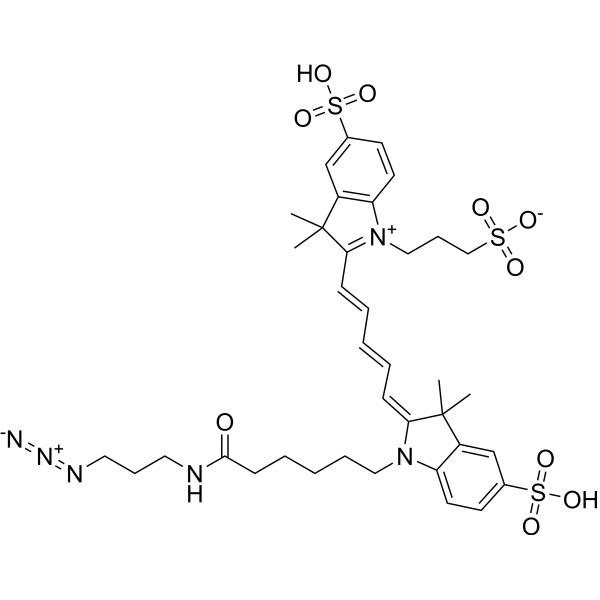
    Sulfo-Cy5 azide is a near-infrared fluorescent probe with favorable click chemistry reactivity. Sulfo-Cy5 azide enables fluorescence imaging, tissue and cellular visualization of PD-L1 in tumors, and site-specific modification of anti-PD-L1 antibodies. Sulfo-Cy5 azide has been employed for RNA labeling and imaging. Sulfo-Cy5 azide can be conjugated to targeting agents for fluorescence imaging in atherosclerosis and breast cancer models (Ex/Em = 645/670 nm) .
    Sulfo-Cy5 azide
  • HY-153083

    mRNA SARS-CoV Infection
    COVID-19 Spike Protein mRNA (N1-Me-Pseudo UTP) is an mRNA encoding the SARS-CoV-2 spike protein with enhanced performance via chemical modification. COVID-19 Spike Protein mRNA (N1-Me-Pseudo UTP) replaces natural uridine (UTP) with N1-Me-Pseudo UTP, which effectively reduces immunogenicity and improves stability and translation efficiency. The 3' UTR of COVID-19 Spike Protein mRNA (N1-Me-Pseudo UTP) optimizes AU-rich elements through HuR anchor sites, exhibiting higher translation efficiency. COVID-19 Spike Protein mRNA is widely used in COVID-19-related scientific research and vaccine development .
    COVID-19 Spike Protein mRNA(N1-Me-Pseudo UTP)
  • HY-126192

    PiB; 6-OH-BTA-1

    Amyloid-β Neurological Disease
    Pittsburgh Compound B (PiB) is a blood-brain barrier-permeable, specific deposition PET tracer that binds to Aβ(1-40) fibrils with a Ki value of 678.4 nM. Through click chemical modification (a clickable Pittsburgh Compound B derivative is prepared by introducing a PEG3 linker and an alkynyl group at the 6-hydroxy site of Pittsburgh Compound B, followed by covalent conjugation with azide-labeled fluorescent dyes or affinity tags via copper-catalyzed azide-alkyne cycloaddition (CuAAC)), Pittsburgh Compound B and its conjugates can be used for fluorescence imaging, ultrastructural studies, and enrichment and characterization of Aβ complexes. Pittsburgh Compound B is applicable to Alzheimer's disease research .
    Pittsburgh Compound B
  • HY-113138
    3-Methyluridine
    1 Publications Verification

    N3-Methyluridine

    Endogenous Metabolite Metabolic Disease
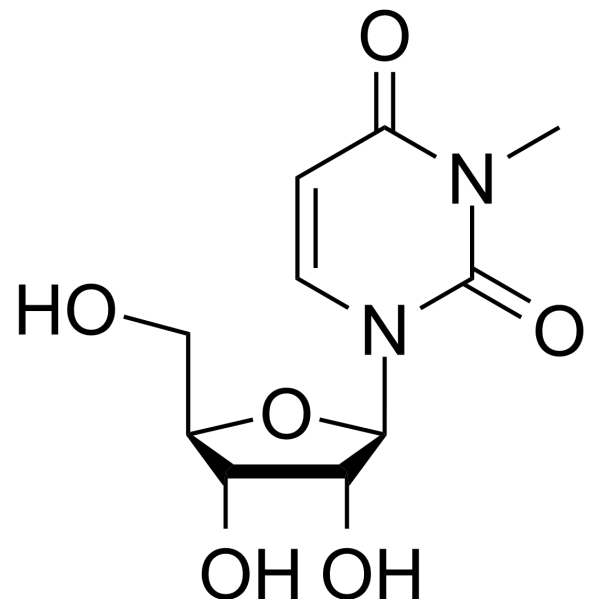
    3-Methyluridine (m 3U; N3-Methyluridine) is a methylated nucleotide present in ribosomal RNA (rRNA), mainly targeting specific base sites of RNA molecules such as 23S rRNA. 3-Methyluridine can introduce a methyl group at the N3 position of uracil, affecting the secondary structure stability and base pairing ability of RNA, and regulating ribosome function. For example, it affects ribosomal subunit binding and tRNA interaction. 3-Methyluridine is often used as a key raw material for the synthesis of modified nucleotides, and is used to construct RNA oligonucleotides containing methylation modifications to study the effects of RNA methylation on gene expression and drug resistance .
    3-Methyluridine
  • HY-P5506

    Complement System Others
    C5a Receptor agonist, W5Cha (Peptide 1) is a selective complement C5a receptor (C5aR) agonist (EC50=0.2 μM), a hexapeptide derived from the C-terminus of C5a with specific amino acid modifications. C5a Receptor agonist, W5Cha is able to interact with the Arg-206 site of the C5a receptor through its C-terminal arginine, thereby activating the receptor .
    C5a Receptor agonist, W5Cha
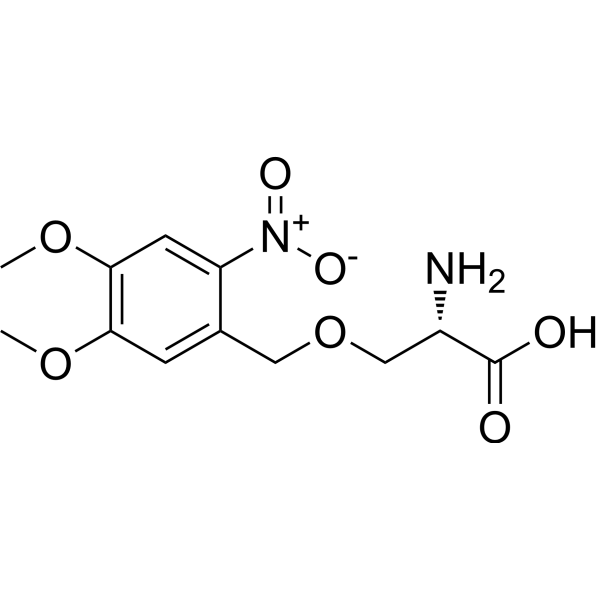
  • HY-136276

    Amino Acid Derivatives Others
    DMNB-caged-Serine is a photocaged amino acid. DMNB-caged-Serine can be used as a catalytic residue, hydrogen bonding partner or site of post-translational modification. DMNB-caged-Serine can be used for the control of protein phosphorylation .
    DMNB-caged-Serine
  • HY-W006886

    Amino Acid Derivatives Others
    Fmoc-(R)-2-(7-octenyl) Ala-OH is an unnatural Fmoc-protected amino acid and modification module. Fmoc-(R)-2-(7-octenyl) Ala-OH serves as a key building block for all-hydrocarbon cross-linking modification of antimicrobial peptides, and facilitates the generation of stapled peptide derivatives. When introduced into specific sites of the parent peptide, Fmoc-(R)-2-(7-octenyl) Ala-OH effectively increases the α-helix content of the peptide chain, thereby significantly enhancing its antimicrobial activity and proteolytic stability. Fmoc-(R)-2-(7-octenyl) Ala-OH is widely used in research on bacterial infections and the development of related antimicrobial agents . Stapled peptide is a specially chemically modified polypeptide. It locks the peptide chain into a stable α-helical structure by introducing a "staple"-like chemical bridge (usually an all-carbon backbone) at specific positions of the peptide chain.
    Fmoc-(R)-2-(7-octenyl)Ala-OH
  • HY-164583

    Phosphoramidites DNA/RNA Synthesis Others
    DMTr-2'-O-C22-rA-3'-CE-Phosphoramidite is an RNA phosphoramidite monomer. DMTr-2'-O-C22-rA-3'-CE-Phosphoramidite allows site-specific introduction of a 2'-O-C22 lipophilic modification at adenosine positions to construct double-stranded RNA (dsRNA) molecules with extrahepatic delivery capability. DMTr-2'-O-C22-rA-3'-CE-Phosphoramidite supports target gene silencing in skeletal muscle, cardiac muscle and adipose tissue by enhancing the lipophilicity and tissue uptake efficiency of dsRNA. DMTr-2'-O-C22-rA-3'-CE-Phosphoramidite can be used for the construction and mechanism research of nucleic acid silencing molecules .
    DMTr-2'-O-C22-rA-3'-CE-Phosphoramidite
  • HY-119390

    DNA Methyltransferase Cancer
    AA-CW236 is a MGMT (O6-methylguanine DNA methyltransferase) inhibitor. AA-CW236 targets MGMT active site Cys145 for covalent modification .
    AA-CW236
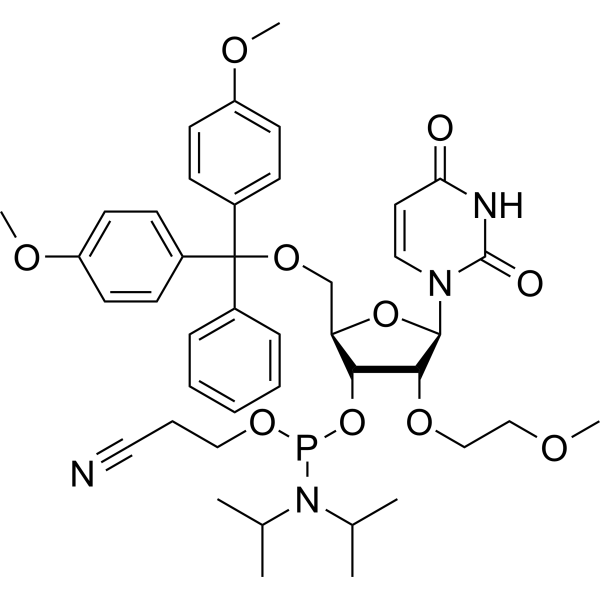
  • HY-W570886

    DNA/RNA Synthesis Cancer
    2'-O-MOE-U is a nucleic acid modification group (Phosphoramidite) with 3'-exonuclease inhibitory activity. 2'-O-MOE-U also exhibits gene silencing activity and double-stranded oligonucleotide stability. By forming steric interactions with 3'-exonuclease residues, 2'-O-MOE-U anchors the 3'-end of the siRNA guide strand in the hAgo2 PAZ domain, thereby regulating double-stranded thermal stability and enhancing base-pairing specificity. 2'-O-MOE-U does not induce IFNα production, can be incorporated at multiple sites of siRNA to enhance RNAi activity, and produces a synergistic effect with 2'-F modification. 2'-O-MOE-U has been widely used in studies related to breast cancer and other diseases .
    2'-O-MOE-U
  • HY-164582

    Phosphoramidites DNA/RNA Synthesis Others
    DMTr-2'-O-C22-rC (Ac)-3'-CE-Phosphoramidite is an RNA phosphoramidite monomer. DMTr-2'-O-C22-rC (Ac)-3'-CE-Phosphoramidite enables site-specific introduction of 2'-O-C22 lipophilic modification at cytidine positions during oligonucleotide synthesis, which is used to construct double-stranded RNA (dsRNA) molecules with extrahepatic delivery capability. DMTr-2'-O-C22-rC (Ac)-3'-CE-Phosphoramidite supports target gene silencing in skeletal muscle, cardiac muscle and adipose tissue by enhancing the lipophilicity and tissue uptake efficiency of dsRNA. Construction and mechanism study of DMTr-2'-O-C22-rC (Ac)-3'-CE-Phosphoramidite nucleic acid silencing molecules .
    DMTr-2'-O-C22-rC(Ac)-3'-CE-Phosphoramidite
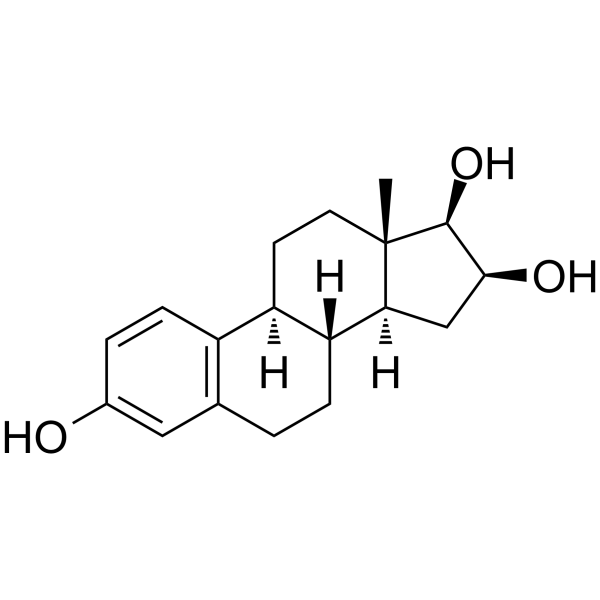
  • HY-130046

    16-epi-Estriol; 16β,17β-Estriol

    UGT Bacterial Infection Inflammation/Immunology
    16-Epiestriol (16-epi-Estriol; 16β,17β-Estriol) is a natural stereoisomer of estriol and an anti-inflammatory agent that targets UGT. The Ki values of 16-Epiestriol against human UGT1A10 and UGT2B7 are 98.1 μM and 162 μM, respectively. As a glucuronidation substrate, 16-Epiestriol can be modified at the 3-OH, 16-OH and 17-OH sites by various UGT enzymes; in liver microsomes, the modification mainly occurs at the 16-OH and 17-OH sites, while reactions take place at all three sites in intestinal microsomes. 16-Epiestriol acts on the phase II inflammatory process by blocking edema mediated by prostaglandins and leukocyte infiltration. It lacks glycogenic activity or any effect on blood glucose levels, and serves as an important candidate molecule in the research of inflammatory diseases .
    16-Epiestriol
  • HY-164581

    Phosphoramidites DNA/RNA Synthesis Others
    DMTr-2'-O-C22-rG (ibu)-3'-CE-Phosphoramidite is an RNA phosphoramidite monomer for oligonucleotide synthesis. DMTr-2'-O-C22-rG (ibu)-3'-CE-Phosphoramidite enables site-specific introduction of 2'-O-C22 lipophilic modification at guanosine positions to construct double-stranded RNA (dsRNA) molecules with extrahepatic delivery capability. DMTr-2'-O-C22-rG (ibu)-3'-CE-Phosphoramidite supports target gene silencing in skeletal muscle, cardiac muscle and adipose tissue by enhancing the lipid solubility and tissue uptake efficiency of dsRNA. DMTr-2'-O-C22-rG (ibu)-3'-CE-Phosphoramidite can be used for the construction and mechanism research of nucleic acid silencing molecules .
    DMTr-2'-O-C22-rG(ibu)-3'-CE-Phosphoramidite
  • HY-157006A

    Biochemical Assay Reagents Others
    TCO-PEG3-NH2 is a click chemistry reagent, it contains a TCO group that can undergo an inverse electron demand Diels-Alder reaction (iEDDA) with molecules containing Tetrazine groups. The amino group of TCO-PEG3-NH2 can react with compounds containing carboxyl, ester, or other reactive groups to form stable amide bonds, enabling site-specific conjugation or modification of biomolecules.
    TCO-PEG3-NH2
  • HY-W1048851C

    4-Arm-PEG20000-Mal

    Biochemical Assay Reagents Others
    4-Arm-PEG20000-Maleimide can be used for site-specific protein and peptide modification and can be used for drug delivery .
    4-Arm-PEG20000-Maleimide
  • HY-W671129

    Antibiotic Fungal Infection
    Frenolicin B is a covalent enzyme inhibitor and an orally active antiparasitic agent, with an IC50 of 0.2 μM against human Prx1. Frenolicin B selectively inhibits Glutaredoxin 3 via covalent modification of the active-site cysteines Cys159/Cys261. Frenolicin B selectively inhibits Peroxiredoxin 1 via covalent modification of the active-site cysteines Cys83/Cys173. Frenolicin B can be used in research related to colon cancer, breast cancer, lung cancer and malaria .
    Frenolicin B
  • HY-177787A

    Nucleoside Antimetabolite/Analog Others
    2'-Deoxy-N-methyl-AMP ammonium is an N6-substituted adenine nucleotide derivative and a glycosyl donor. On one hand, 2'-Deoxy-N-methyl-AMP ammonium acts as a specific substrate for N6-methyl-AMP aminohydrolase, and it is catalytically converted to dIMP to participate in the nucleotide metabolic cycle. On the other hand, 2'-Deoxy-N-methyl-AMP ammonium also serves as a guanosine diphosphate (GDP)-linked fucose derivative donor, driving site-specific glycoconjugation of proteins under the mediation of α-1,3-fucosyltransferase. 2'-Deoxy-N-methyl-AMP ammonium is an important molecular tool for investigating the mechanisms of nucleotide modification and protein glycosylation .
    2'-Deoxy-N-methyl-AMP ammonium
  • HY-D2911

    Biochemical Assay Reagents Metabolic Disease
    Pantetheine probe PP-3 (Compound PP-3) is an alkynyl group connector probe. Pantetheine probe PP-3 selectively enriches and maps modification sites (e.g., Ser231 on DHRS2). Pantetheine probe PP-3 is promising for research of metabolic disorders (e.g., fatty acid synthesis dysregulation) .
    Pantetheine probe PP-3
  • HY-134389

    N6-Phenyladenosine-3',5'-cyclic monophosphate

    PKA Cancer
    6-Phe-cAMP is a site-selective and highly membrane-permeant activator of protein kinase A (PKA), with a strong preference for site A of both isozymes. 6-Phe-cAMP can undergo phosphorothioate modification .
    6-Phe-cAMP
  • HY-W1048851A

    4-Arm-PEG5000-Mal

    Biochemical Assay Reagents Others
    4-Arm-PEG5000-Maleimide can be used for site-specific protein and peptide modification and can be used for drug delivery .
    4-Arm-PEG5000-Maleimide
  • HY-W1048851D

    4-Arm-PEG40000-Mal

    Biochemical Assay Reagents Others
    4-Arm-PEG40000-Maleimide can be used for site-specific protein and peptide modification and can be used for drug delivery .
    4-Arm-PEG40000-Maleimide
  • HY-157140

    Biochemical Assay Reagents Others
    HibK is is a new type of histone mark that is widely distributed in histone proteins. HibK as a useful tool can be used for probing post-translational modification by site-specifically incorporate HibK into proteins .
    HibK
  • HY-Z15868

    Nucleoside Antimetabolite/Analog Infection
    5-Hydroxycytidine is the RNA modified nucleoside that can be found in the 23S rRNA of bacteria E. coli. 5-Hydroxycytidine modifies at the C2501 site, exhibits a higher modification level in stationary cells. 5-Hydroxycytidine exhibits a higher modification level in radiation resistant Radius than in E. coli .
    5-Hydroxycytidine
  • HY-137028

    PD157432

    EGFR Cancer
    2'-Thioadenosine (PD157432) is a selective and irreversible inhibitor of ErbB-1 and ErbB-2, with an IC50 of 45 µM for ErbB-2. 2'-Thioadenosine covalently inactivates ErbB-1 via modification of a cysteine residue at the active site .
    2′-Thioadenosine
  • HY-131455A

    Biochemical Assay Reagents Others
    Biotin-C1-PEG3-C3-amido-C5-Gly-Arg-Gly-N3 TFA is used for detection of modification site for N-myristoylated and GPI-anchored proteins in blood-stage P. falciparum . Biotin-C1-PEG3-C3-amido-C5-Gly-Arg-Gly-N3 (TFA) is a click chemistry reagent, it contains an Azide group and can undergo copper-catalyzed azide-alkyne cycloaddition reaction (CuAAc) with molecules containing Alkyne groups. It can also undergo strain-promoted alkyne-azide cycloaddition (SPAAC) reactions with molecules containing DBCO or BCN groups.
    Biotin-C1-PEG3-C3-amido-C5-Gly-Arg-Gly-N3 TFA
  • HY-186091

    Amino Acid Derivatives Others
    AcdK is a non-natural amino acid and a precursor of allysine. AcdK allows site-specific incorporation into target proteins in E. coli via the amber suppression strategy. AcdK enables site-specific lysine dimethylation or monomethylation modification of target proteins. AcdK can synthesize site-specific lysine-methylated variants of histone H3 and p53, which is applicable for investigating the substrate specificity and catalytic function of epigenetic enzymes .
    AcdK
  • HY-130046R

    16-epi-Estriol (Standard); 16β,17β-Estriol (Standard)

    Endogenous Metabolite Reference Standards Bacterial Infection Inflammation/Immunology
    16-Epiestriol (Standard) is the analytical standard of 16-Epiestriol (HY-130046). This product is intended for research and analytical applications. 16-Epiestriol (16-epi-Estriol; 16β,17β-Estriol) is a natural stereoisomer of estriol and an anti-inflammatory agent that targets UGT. The Ki values of 16-Epiestriol against human UGT1A10 and UGT2B7 are 98.1 μM and 162 μM, respectively. As a glucuronidation substrate, 16-Epiestriol can be modified at the 3-OH, 16-OH and 17-OH sites by various UGT enzymes; in liver microsomes, the modification mainly occurs at the 16-OH and 17-OH sites, while reactions take place at all three sites in intestinal microsomes. 16-Epiestriol acts on the phase II inflammatory process by blocking edema mediated by prostaglandins and leukocyte infiltration. It lacks glycogenic activity or any effect on blood glucose levels, and serves as an important candidate molecule in the research of inflammatory diseases .
    16-Epiestriol (Standard)
  • HY-180467

    ADC Linker Cancer
    Neu5Ac-2Galβ1-3Glc-oxazoline-(2)Me (Compound G12) is a disaccharide linker. Neu5Ac-2Galβ1-3Glc-oxazoline-(2)Me can be efficiently recognized by the endo-glycosidase Endo-S2 and can be directedly transferred to the conserved N-glycosylation site (Asn297 position) of the antibody's Fc domain through enzymatic catalytic reactions, thereby achieving site-specific modification of the antibody. Neu5Ac-2Galβ1-3Glc-oxazoline-(2)Me can be used for for the synthesis of antibody-conjugated drugs (ADCs) .
    Neu5Ac-2Galβ1-3Glc-oxazoline-(2)Me
  • HY-113138R

    N3-Methyluridine (Standard)

    Endogenous Metabolite Reference Standards Metabolic Disease
    3-Methyluridine (Standard) is the analytical standard of 3-Methyluridine. This product is intended for research and analytical applications. 3-Methyluridine (m3U; N3-Methyluridine) is a methylated nucleotide present in ribosomal RNA (rRNA), mainly targeting specific base sites of RNA molecules such as 23S rRNA. 3-Methyluridine can introduce a methyl group at the N3 position of uracil, affecting the secondary structure stability and base pairing ability of RNA, and regulating ribosome function. For example, it affects ribosomal subunit binding and tRNA interaction. 3-Methyluridine is often used as a key raw material for the synthesis of modified nucleotides, and is used to construct RNA oligonucleotides containing methylation modifications to study the effects of RNA methylation on gene expression and drug resistance .
    3-Methyluridine (Standard)

Inquiry Online

Your information is safe with us. * Required Fields.

Salutation


Country or Region *

Applicant Name *


Organization Name *

Department *


Email Address *


Product Name *

Cat. No.


Requested quantity *

Phone Number *


Remarks

Inquiry Online

Inquiry Information

Product Name:
Cat. No.:
Quantity:
MCE Japan Authorized Agent:

