

1. Search Result
Search Result
Results for "

multiple

" in MedChemExpress (MCE) Product Catalog:

1518

Inhibitors & Agonists

52

Screening Libraries

16

Fluorescent Dye

30

Biochemical Assay Reagents

96

Peptides

18

MCE Kits

92

Inhibitory Antibodies

209

Natural
Products

13

Recombinant Proteins

76

Isotope-Labeled Compounds

18

Antibodies

9

Click Chemistry

25

Oligonucleotides

1

GMP Molecules

Cat. No. Product Name Target Research Areas Chemical Structure
  • HY-P99392

    JNJ-7957; JNJ-64007957; Tecvayli

    CD3 Cancer
    Teclistamab is a human bispecific antibody to BCMA and CD3 that recognizes BCMA on target cells and CD3 on T cells and induces T cell-mediated cytotoxicity leading to T cell activation and subsequent target cell lysis. Teclistamab can be used in studies of diseases related to multiple myeloma (MM) .
    Teclistamab
  • HY-154812

    KTX-1001

    Histone Methyltransferase CD44 Cancer
    Gintemetostat (KTX-1001) is an orally active, highly specific NSD2/MMSET histone methyltransferase inhibitor with human NSD2 IC50 values ranging 0.460-2.17 nM and NSD2 SET domain IC50 of 2.32 nM and Kd values ranging 6.3-70.4 nM .Gintemetostat reduces H3K36me2 levels, impairs multiple myeloma cell adhesion and colony formation, enhances cytotoxicity, boosts T-cell activation, and sensitizes resistant multiple myeloma cells to other agents .Gintemetostat can be used for the research of multiple myeloma and relapsed and refractory multiple myeloma .
    Gintemetostat
  • HY-P9976
    Isatuximab
    1 Publications Verification

    ch38SB19; hu38SB19; SAR-650984

    CD38 Apoptosis Cancer
    Isatuximab is a monoclonal antibody targeting the transmembrane receptor and ectoenzyme CD38, a protein highly expressed on hematological malignant cells, including those in multiple myeloma (MM). Isatuximab has antitumor activity via multiple biological mechanisms, including antibody-dependent cellular-mediated cytotoxicity, complement-dependent cytotoxicity, antibody-dependent cellular phagocytosis, and direct induction of apoptosis without crosslinking. Isatuximab also directly inhibits CD38 ectoenzyme activity, which is implicated in many cellular functions .
    Isatuximab
  • HY-P99113
    Inebilizumab
    1 Publications Verification

    MEDI-551

    ADC Antibody CD19 Inflammation/Immunology
    Inebilizumab is an anti-CD19 monoclonal antibody (mAb) with enhanced antibody-dependent cell-mediated cytotoxicity against B cells. Inebilizumab can be used for multiple sclerosis and neuromyelitis optica research .
    Inebilizumab
  • HY-NP138

    Biochemical Assay Reagents Inflammation/Immunology Cancer
    NP-OVAL (Ovalbumin) is a complex formed by 4-Hydroxy-3-nitrophenylacetyl (NP, a hapten) with Ovalbumin (OVAL, a carrier protein). NP-OVAL (Ovalbumin) can induce specific immune responses and NP-specific antibodies production. NP-OVAL (Ovalbumin) can accelerate the construction of multiple myeloma models .
    NP-OVAL (Ovalbumin)
  • HY-172085

    IFNAR DNA/RNA Synthesis c-Myc CDK Cancer
    SH514 is an orally active IRF4 inhibitor (IC50 = 2.63 μM). SH514 binds to the IRF4-DBD domain, thereby inhibiting the interaction of IRF4 protein with DNA (KD = 1.28 μM). SH514 can inhibit the proliferation of IRF4-high-expressing NCI-H929 and MM.1R cells, and displays no cytotoxicity for normal cells. SH514 significantly downregulates the expression of IRF4 downstream target genes concentration-dependently. SH514 inhibits the expression of cell cycle-related proteins CDC2, Cyclin B1, Cyclin D1, Cyclin E1, and CMYC in Multiple Myeloma cells. SH514 can induce DNA damage and increase the expression of γH2AX. SH514 effectively inhibits the proliferation of multiple myeloma tumors .
    SH514
  • HY-B0546
    Procaine
    2 Publications Verification

    Histone Demethylase DNA/RNA Synthesis Bacterial Neurological Disease Cancer
    Procaine is a DNA-demethylating agent. Procaine acts through multiple targets and has a slow onset and a short duration of action .
    Procaine
  • HY-134582
    dCBP-1
    10+ Cited Publications

    PROTACs Epigenetic Reader Domain Cancer
    dCBP-1 is a potent and selective heterobifunctional degrader of p300/CBP based on Cereblon ligand. dCBP-1 is exceptionally potent at killing multiple myeloma cells and ablates oncogenic enhancer activity driving MYC expression .
    dCBP-1
  • HY-P1846
    Jagged-1 (188-204)
    Maximum Cited Publications
    16 Publications Verification

    Notch Cancer
    Jagged-1 (188-204) is a fragment of the Jagged-1 (JAG-1) protein with Notch agonist activity. JAG-1 is a Notch ligand highly expressed in cultured and primary multiple myeloma (MM) cells. JAG-1 induces maturation of monocyte-derived human dendritic cells .
    Jagged-1 (188-204)
  • HY-P99616

    MOR-202

    CD38 Cancer
    Felzartamab (MOR-202) is a human monoclonal antibody that targets CD38 and can be used in multiple myeloma research .
    Felzartamab
  • HY-118266
    BTdCPU
    3 Publications Verification

    Phosphatase Apoptosis Cancer
    BTdCPU is a potent heme regulated inhibitor kinase (HRI) activator that promotes eIF2α phosphorylation and induces apoptosis in Dexamethasone (HY-14648) (Dex)-resistant cancer cells. BTdCPU can be used in the study of cancers such as multiple myeloma and Dex-resistant multiple myeloma .
    BTdCPU
  • HY-16699
    Nexturastat A
    3 Publications Verification

    HDAC Cancer
    Nexturastat A is a potent, selective HDAC6 inhibitor. Nexturastat A has inhibitory for HDAC6 with an IC50 of 5 nM. Nexturastat A can be used for the research of multiple myeloma (MM) .
    Nexturastat A
  • HY-100430
    CCF642
    1 Publications Verification

    Apoptosis PDI Cancer
    CCF642 is a potent protein disulfide isomerases (PDI) inhibitor with an IC50 of 2.9 μM. CCF642 causes acute endoplasmic reticulum (ER) stress in multiple myeloma cells accompanied by apoptosis-inducing calcium release. CCF642 has broad anti-multiple myeloma activity .
    CCF642
  • HY-120145
    MST-312
    2 Publications Verification

    Telomerase Inhibitor IX

    Telomerase Cancer
    MST-312 is a telomerase inhibitor. MST-312 is a chemically modified derivative of green tea epigallocatechin gallate (EGCG). MST-312 can be used for the research of cancer, such as multiple myeloma (MM) .
    MST-312
  • HY-15381
    Fingolimod phosphate
    1 Publications Verification

    FTY720 phosphate

    LPL Receptor Infection Neurological Disease Inflammation/Immunology
    Fingolimod phosphate (FTY720 phosphate) is an orally active sphingosine 1-phosphate (S1P) receptor agonist. Fingolimod phosphate can promote the neuroprotective effects of microglia. Fingolimod phosphate can be used for the research of multiple sclerosis and neurologic diseases .
    Fingolimod phosphate
  • HY-B0546A
    Procaine hydrochloride
    2 Publications Verification

    Histone Demethylase DNA/RNA Synthesis Bacterial Neurological Disease Cancer
    Procaine hydrochloride is a DNA-demethylating agent. Procaine hydrochloride acts through multiple targets and has a slow onset and a short duration of action .
    Procaine hydrochloride
  • HY-145757
    Elevenostat
    1 Publications Verification

    JB3-22

    HDAC Apoptosis Caspase Cancer
    Elevenostat (JB3-22) is a selective HDAC11 inhibitor with an IC50 of 0.235 µM. Elevenostat can induce apoptosis of multiple myeloma cells and has anti-tumor effect. In addition, Elevenostat inhibits the maturation of mouse oocytes .
    Elevenostat
  • HY-P991490

    CD38 CD3 TNF Receptor Cancer
    ISB2001 is a trispecific antibody targeting CD38, CD3 and BCMA. ISB2001 effectively counteracts tumor immune escape mechanisms caused by antigen downregulation, antigen loss, soluble factor competition and other factors. ISB2001 is applicable to relevant research on multiple myeloma and relapsed/refractory multiple myeloma .
    ISB2001
  • HY-10406
    Talmapimod
    3 Publications Verification

    SCIO-469

    p38 MAPK TNF Receptor Interleukin Related VEGFR Apoptosis Neurological Disease Metabolic Disease Inflammation/Immunology Cancer
    Talmapimod (SCIO-469) is an orally active and selective inhibitor of p38α MAPK with an IC50 of 9 nM. Talmapimod inhibits the secretion of inflammatory factors (such as TNFα, IL-1β, IL-6, and VEGF) by suppressing the p38α MAPK pathway, and it also inhibits angiogenesis and osteoclast activation. Talmapimod inhibits the growth of multiple myeloma cells and induces apoptosis. Talmapimod can be used to study various hematological malignancies (such as multiple myeloma, myelodysplastic syndrome) .
    Talmapimod
  • HY-P9989

    REGN5458

    CD3 TNF Receptor Cancer
    Linvoseltamab (REGN5458) is a bispecific T-cell engager (BiTE) antibody that specifically binds to B cell maturation antigen (BCMA) and CD3 of T cells, thereby directing T cells to multiple myeloma (MM) cells expressing BCMA and activating T cells to kill tumor cells. Linvoseltamab can be used in research of relapsed/refractory multiple myeloma (RRMM) .
    Linvoseltamab
  • HY-142812
    GRK6-IN-1
    4 Publications Verification

    G Protein-coupled Receptor Kinase (GRK) Aurora Kinase IGF-1R Neurological Disease Cancer
    GRK6-IN-1 (Compound 18) is the inhibitor for G protein-coupled receptorkinase 6 (GRK6) with an IC50 of 3.8-8 nM. GRK6-IN-1 also inhibits GRK7, GRK5, GRK4 and GRK1 with IC50s of 6.4, 12, 22 and 52 nM, respectively. GRK6-IN-1 has the potential for the research of multiple myeloma .
    GRK6-IN-1
  • HY-145990
    FABPs ligand 6
    1 Publications Verification

    MF6

    FABP Inflammation/Immunology
    FABPs ligand 6 (MF6) is an FABP5 and FABP7 inhibitor with KD values of 874 nM and 20 nM, respectively. FABPs ligand 6 can be used for multiple sclerosis research .
    FABPs ligand 6
  • HY-111790
    M3258
    5 Publications Verification

    Proteasome Apoptosis Cancer
    M3258 is an orally bioavailable, potent, reversible and highly selective immunoproteasome subunit LMP7 (β5i) inhibitor. M3258 exerts high biochemical (IC50=3.6 nM) and cellular (IC50=3.4 nM) potency against the LMP7 subunit. M3258 shows strong antitumor efficacy in multiple myeloma xenograft models. M3258 leads to a significant and prolonged suppression of tumor LMP7 activity and ubiquitinated protein turnover and the induction of apoptosis in multiple myeloma cells .
    M3258
  • HY-P9960

    2H7; PRO70769; RG1594

    CD20 Inflammation/Immunology
    Ocrelizumab (Ocrevus) is a humanized anti-CD20 monoclonal antibody. Ocrelizumab can induce B cell depletion and inhibit multiple sclerosis lesions in mice through antibody dependent cytotoxicity (ADCC) .
    Ocrelizumab
  • HY-10224A
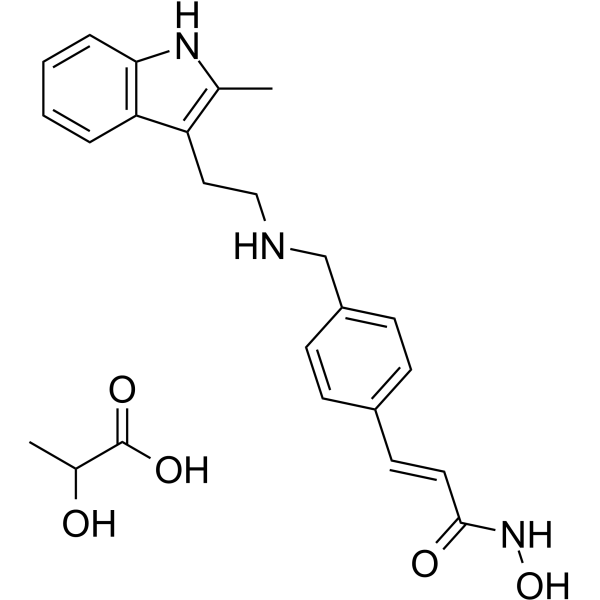
    Panobinostat lactate
    80+ Cited Publications

    LBH589 lactate; NVP-LBH589 lactate

    HDAC HIV Autophagy Apoptosis Infection Cancer
    Panobinostat lactate is a potent and orally active non-selective HDAC inhibitor. Panobinostat lactate has antineoplastic activities. Panobinostat lactate effectively disrupts HIV latency. Panobinostat lactate induces cell apoptosis and autophagy. Panobinostat lactate can be used for the study of refractory or relapsed multiple myeloma .
    Panobinostat lactate
  • HY-109192
    Tolebrutinib
    5+ Cited Publications

    SAR442168; PRN2246

    Btk Neurological Disease
    Tolebrutinib (SAR442168) is a potent, selective, orally active and brain-penetrant inhibitor of Bruton tyrosine kinase (BTK), with IC50s of 0.4 and 0.7 nM in Ramos B cells and in HMC microglia cells, respectively. Tolebrutinib exhibits efficacy in central nervous system immunity. Tolebrutinib can be used for the research of multiple sclerosis (MS) .
    Tolebrutinib
  • HY-142817
    GRK6/Aurora A-IN-1
    3 Publications Verification

    G Protein-coupled Receptor Kinase (GRK) Aurora Kinase Cancer
    GRK6/Aurora A-IN-1 is a dual inhibitor of G protein-coupled receptor kinase 6 (GRK6)/Aurora A, with IC50 values of 120 nM and 11 nM, respectively. GRK6 is a key kinase required for the survival of multiple myeloma (MM) cells. GRK6-IN-2 has the potential for research on multiple myeloma .
    GRK6/Aurora A-IN-1
  • HY-147158

    Molecular Glues Cancer
    ZXH-1-161 is a potent CRBN modulator that selectively induces the degradation of GSPT1 in a CRBN-dependent manner. ZXH-1-161 can inhibit the proliferation of multiple myeloma cells and exhibits antitumor activity .
    ZXH-1-161
  • HY-137655

    Protein Arginine Deiminase Cancer
    BMS-P5 is a selective and orally active peptidylarginine deiminase 4 (PAD4) inhibitor with an IC50 of 98 nM. BMS-P5 shows selective for PAD4 over PAD1, PAD2, and PAD3. BMS-P5 blocks multiple myeloma (MM)-induced neutrophil extracellular trap (NET) formation and delays progression of MM in a syngeneic mouse model .
    BMS-P5
  • HY-137655A

    Protein Arginine Deiminase Cancer
    BMS-P5 free base is a selective and orally active peptidylarginine deiminase 4 (PAD4) inhibitor with an IC50 of 98 nM. BMS-P5 free base shows selective for PAD4 over PAD1, PAD2, and PAD3. BMS-P5 free base blocks multiple myeloma (MM)-induced neutrophil extracellular trap (NET) formation and delays progression of MM in a syngeneic mouse model .
    BMS-P5 free base
  • HY-125471
    VK-1727
    1 Publications Verification

    EBV Infection Inflammation/Immunology Cancer
    VK-1727 is a selective small molecule inhibitor of EBNA1. VK-1727 can reduce EBNA1 DNA binding activity. VK-1727 selectively blocks the proliferation and metabolic activity of EBV+ cells, instead of EBV- cells. VK-1727 is used in multiple sclerosis research .
    VK-1727
  • HY-148787

    SAR443820; DNL788

    RIP kinase Neurological Disease Inflammation/Immunology
    Oditrasertib (SAR443820) is an orally active, BBB-penetrable and selective reversible inhibitor of RIPK1. Oditrasertib can be used in the research of chronic inflammatory central nervous system diseases, such as amyotrophic lateral sclerosis and multiple sclerosis .
    Oditrasertib
  • HY-105019A
    Melflufen hydrochloride
    1 Publications Verification

    Melphalan flufenamide hydrochloride

    DNA Alkylator/Crosslinker Apoptosis Cancer
    Melflufen (Melphalan flufenamide) hydrochloride, a dipeptide proagent of Melphalan, is an alkylating agent. Melflufen hydrochloride shows antitumor activity against multiple myeloma (MM) cells and inhibits angiogenesis. Melflufen hydrochloride induces irreversible DNA damage and cytotoxicity in MM cells .
    Melflufen hydrochloride
  • HY-18712
    BG45
    4 Publications Verification

    HDAC Apoptosis Caspase Cancer
    BG45 is a potent HDAC3 inhibitor with IC50 values of 0.289, 2, 2.2 and ﹥20 μM for HDAC3, HDAC1, HDAC2 and HDAC6, respectively. BG45 selectively targets multiple myeloma (MM) cells and induces caspase-dependent apoptosis .
    BG45
  • HY-128360

    PROTACs Bcl-2 Family Apoptosis Caspase Cancer
    dMCL1-2 is a potent, selective MCL1 PROTAC degrader based on a Cereblon ligand, with a KD value of 30 nM for binding to MCL1. dMCL1-2 induces ubiquitination and degradation of MCL1. dMCL1-2 degrades MCL1, cleaves Caspase-3, and induces Apoptosis. dMCL1-2 can be used in research related to multiple myeloma .
    dMCL1-2
  • HY-161672

    IRE1 Cancer
    G-5758 is a selective and orally effective IRE1α inhibitor with an IC50 of 38 nM (detected by the XBP1s luciferase reporter cell assay). G-5758 is still well tolerated in rats at oral doses up to 500 mg/kg. G-5758 can be used in the research of multiple myeloma .
    G-5758
  • HY-122153

    Cannabinoid Receptor Cardiovascular Disease Inflammation/Immunology
    VSN-16 is a cannabinoid receptor agonist with vasodilatory activity. VSN-16 can be used for the study of multiple sclerosis .
    VSN-16
  • HY-P99454

    ABBV-838

    Antibody-Drug Conjugates (ADCs) Cancer
    Azintuxizumab vedotin (ABBV-838) is an antibody–drug conjugate (ADC) targeting a unique epitope of CD2 subset 1, a cell-surface glycoprotein expressed on multiple myeloma cells .
    Azintuxizumab vedotin
  • HY-105019
    Melflufen
    1 Publications Verification

    Melphalan flufenamide

    DNA Alkylator/Crosslinker Apoptosis Cancer
    Melflufen (Melphalan flufenamide), a dipeptide proagent of Melphalan, is an alkylating agent. Melflufen shows antitumor activity against multiple myeloma (MM) cells and inhibits angiogenesis. Melflufen induces irreversible DNA damage and cytotoxicity in MM cells .
    Melflufen
  • HY-P991183

    CD28 CD38 CD3 Cancer
    SAR442257 is a humanized IgG4-S228P, kappa monoclonal antibody targeting CD38 and CD28 on multiple myeloma cells and co-stimulates CD3 and CD28 on T cells .
    SAR-442257
  • HY-119383

    Wnt β-catenin Cancer
    iCRT-5 is a β-catenin-regulated transcription (CRT) inhibitor. iCRT-5 can block Wnt/β-catenin reporter activity and down regulate β-catenin expression. iCRT-5 can be used for the research of multiple myeloma .
    iCRT-5
  • HY-163409

    Wnt β-catenin Inflammation/Immunology Cancer
    CKG012 is an inhibitor for Wnt/βcatenin signaling pathway. CGK012 inhibits release of HMGB1 and transcription of β-catenin, exhibits attenuating activities against cecal ligation and puncture (CLP)-induced sepsis and multiple myeloma cancer .
    CGK012
  • HY-128063

    CXCR Inflammation/Immunology
    CXCR3 antagonist 1 (compound 6c) is a selective and non-cytotoxic CXCR3 antagonist (IC50=0.06 µM). CXCR3 antagonist 1 has potential in researching inflammatory diseases (including inflammatory bowel disease, multiple sclerosis, rheumatoid arthritis, and diabetes) .
    CXCR3 antagonist 1
  • HY-117684
    Cabamiquine
    1 Publications Verification

    DDD107498; DDD-498; M5717

    Parasite CaMK Infection
    Cabamiquine (DDD107498) is a potent and orally active antimalarial agent, inhibits multiple life-cycle stages of the parasite, with an EC50 of 1 nM against P. falciparum 3D7. Cabamiquine inhibits protein synthesis by targeting eEF2/CaMKIII, with an EC50 of 2 nM for WT-PfeEF2 .
    Cabamiquine
  • HY-115992

    CDK Cancer
    CDK4/6-IN-9 (compound 10) is a selective CDK4/6 inhibitor with an IC50 of 905 nM for CDK6/cyclin D1. CDK4/6-IN-9 has the potential for multiple myeloma (MM) research .
    CDK4/6-IN-9
  • HY-157216

    HDAC Cancer
    HDAC1 Degrader-1 (compound 1a) is an HDAC1 degrader with anticancer activity. HDAC1 Degrader-1 significantly reduces HDAC1 levels in MM.1S multiple myeloma cells .
    HDAC1 Degrader-1
  • HY-126361A
    ZK824190 hydrochloride
    1 Publications Verification

    Ser/Thr Protease PAI-1 Inflammation/Immunology
    ZK824190 hydrochloride is an orally available and selective urokinase plasminogen activator (uPA) inhibitor as a potential treatment for multiple sclerosis. IC50s of 237, 1600 and 1850 nM for uPA, tPA, and Plasmin, respectively .
    ZK824190 hydrochloride
  • HY-126361

    Ser/Thr Protease PAI-1 Inflammation/Immunology
    ZK824190 is an orally available and selective urokinase plasminogen activator (uPA) inhibitor as a potential treatment for multiple sclerosis. IC50s of 237, 1600 and 1850 nM for uPA, tPA, and Plasmin, respectively .
    ZK824190
  • HY-117684A
    Cabamiquine succinate
    1 Publications Verification

    DDD107498 succinate; DDD-498 succinate; M5717 succinate

    Parasite CaMK Infection
    Cabamiquine (DDD107498) succinate is a potent and orally active antimalarial agent, inhibits multiple life-cycle stages of the parasite, with an EC50 of 1 nM against P. falciparum 3D7. Cabamiquine succinate inhibits protein synthesis by targeting eEF2/CaMKIII, with an EC50 of 2 nM for WT-PfeEF2 .
    Cabamiquine succinate
  • HY-125939

    Proteasome Cancer
    Bortezomib-pinanediol is a proteasome inhibitor and a prodrug of Bortezomib (HY-10227). Bortezomib-pinanediol inhibits cell growth and can be used for study of multiple myeloma .
    Bortezomib-pinanediol

Inquiry Online

Your information is safe with us. * Required Fields.

Salutation


Country or Region *

Applicant Name *


Organization Name *

Department *


Email Address *


Product Name *

Cat. No.


Requested quantity *

Phone Number *


Remarks

Inquiry Online

Inquiry Information

Product Name:
Cat. No.:
Quantity:
MCE Japan Authorized Agent:

