8 Results for "

natural enemies

" in MedChemExpress (MCE) Product Catalog:
Products (8)

8 Results for "natural enemies" in MCE Product Catalog:

Cat. No.: HY-N7058
CAS No.: 488-10-8
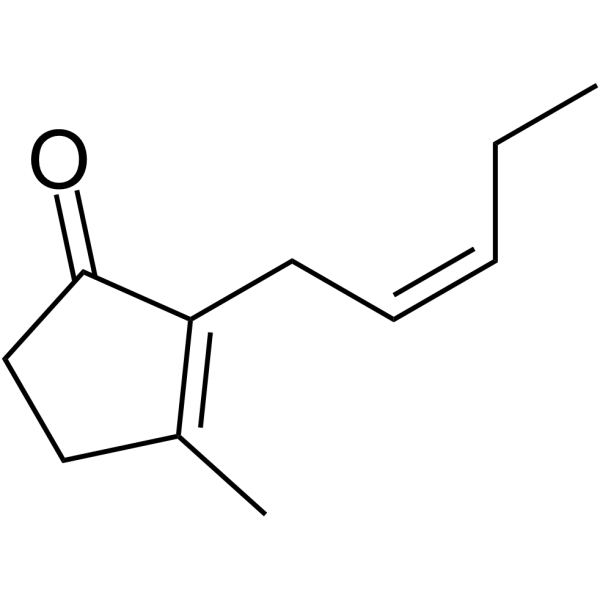
Cis-Jasmone is a plant-derived natural product. Cis-Jasmone is constitutively released by many flowers and sometimes by leaves as an attractant for pollinators or as a chemical cue for host location by insect flower herbivores. Cis-Jasmone treatment of crop plants not only induces direct defense against herbivores, but also induces indirect defense by releasing VOCs that attract natural enemies .
loading...
    loading...
Cat. No.: HY-N7058R
CAS No.: 488-10-8
cis-Jasmone (Standard) is the analytical standard of cis-Jasmone. This product is intended for research and analytical applications. Cis-Jasmone is a plant-derived natural product. Cis-Jasmone is a plant-derived natural product. Cis-Jasmone is constitutively released by many flowers and sometimes by leaves as an attractant for pollinators or as a chemical cue for host location by insect flower herbivores. Cis-Jasmone treatment of crop plants not only induces direct defense against herbivores, but also induces indirect defense by releasing VOCs that attract natural enemies .
loading...
    loading...
Cat. No.: HY-W585959
CAS No.: 62235-06-7
(E,E)-4,8,12-Trimethyl-1,3,7,11-tridecatetraene (TMTT), a sesquiterpene, is the major herbivore-induced plant volatile that help in defense directly by acting as repellants and indirectly by recruiting insects' natural enemies. (E,E)-4,8,12-Trimethyl-1,3,7,11-tridecatetraene attractes Asian corn borer (ACB, Ostrinia furnacalis) larvae. External supplementation with (E,E)-4,8,12-Trimethyl-1,3,7,11-tridecatetraene hampered the larvae's ability to locate pre-infested maize .
loading...
    loading...
Cat. No.: HY-N7058S
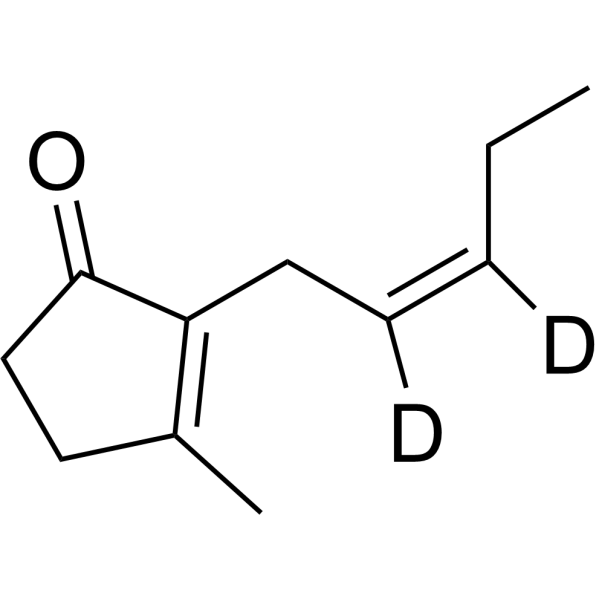
Cis-Jasmone-d2 is deuterated labeled Cis-Jasmone (HY-N7058). Cis-Jasmone is a plant-derived natural product. Cis-Jasmone is constitutively released by many flowers and sometimes by leaves as an attractant for pollinators or as a chemical cue for host location by insect flower herbivores. Cis-Jasmone treatment of crop plants not only induces direct defense against herbivores, but also induces indirect defense by releasing VOCs that attract natural enemies .
loading...
    loading...
Cat. No.: HY-P10034
CAS No.: 141281-40-5
Synonyms: Pss-PT
Target:  

Endogenous Metabolite

Research Areas:  

Endocrinology

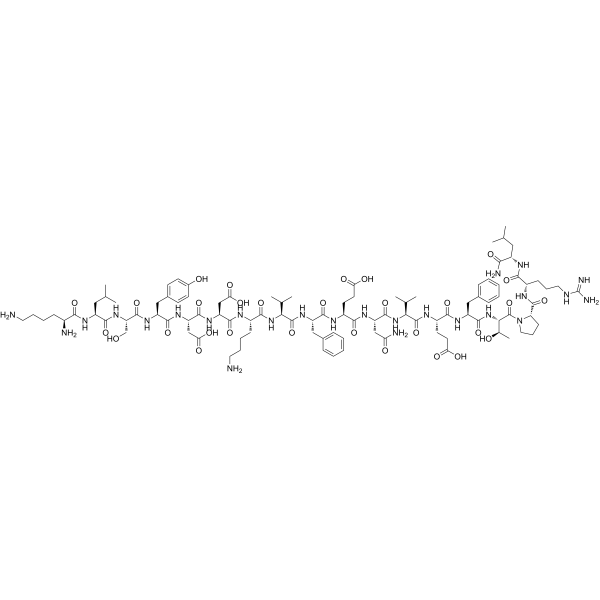
Pheromonotropin (Pseudaletia separata) (Pss-PT) is an armyworm (Pseudaletia separata) pheromone with the C-terminal pentapeptide FXPRL-amide. Pheromonotropin (Pseudaletia separata) belongs to the PK/PBAN family and stimulates sex pheromone biosynthesis in moths, mediating feeding (intestinal muscle contraction), development (embryonic diapause, pupal diapause, and pupation), and defense against natural enemy insects wait .
loading...
    loading...
Cat. No.: HY-W017140S
CAS No.: 1335436-01-5
Synonyms: SBMP-d3
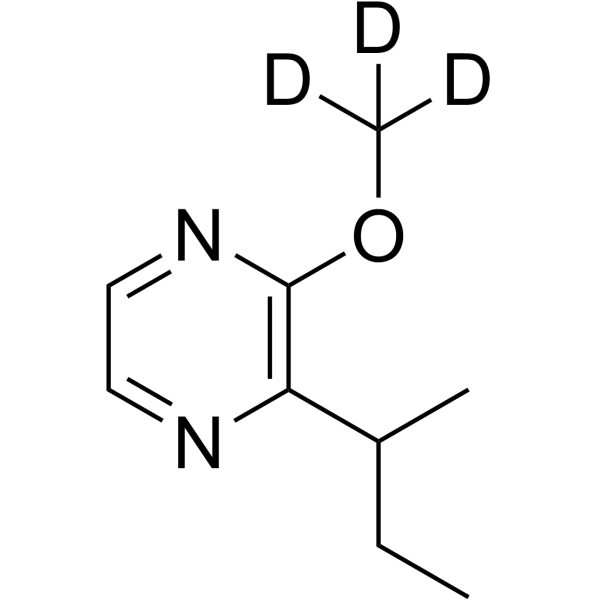
2-Sec-butyl-3-methoxypyrazine-d3 is deuterated labeled cis-?Jasmone (HY-N7058). Cis-Jasmone is a plant-derived natural product. Cis-Jasmone is constitutively released by many flowers and sometimes by leaves as an attractant for pollinators or as a chemical cue for host location by insect flower herbivores. Cis-Jasmone treatment of crop plants not only induces direct defense against herbivores, but also induces indirect defense by releasing VOCs that attract natural enemies .
loading...
    loading...
Cat. No.: HY-W614464
CAS No.: 30507-70-1
Target:  

Sex Pheromone

Research Areas:  

Others

(9Z,12E)-Tetradeca-9,12-dien-1-yl acetate is a main active component of the sex pheromone of Spodoptera frugiperda, which has the advantages of the safety to the environment and the natural enemies, and without insecticides resistance .
loading...
    loading...
Cat. No.: HY-W585885
CAS No.: 19945-61-0
(3E)-4,8-Dimethylnona-1,3,7-triene, a sesquiterpene, is the major herbivore-induced plant volatile that help in defense directly by acting as repellants and indirectly by recruiting insects' natural enemies. (3E)-4,8-Dimethylnona-1,3,7-triene attractes Asian corn borer (ACB, Ostrinia furnacalis) larvae. External supplementation with (3E)-4,8-Dimethylnona-1,3,7-triene hampered the larvae's ability to locate pre-infested maize.
loading...
    loading...

