1. Search Result
Search Result
Results for "

neurons.

" in MedChemExpress (MCE) Product Catalog:

709

Inhibitors & Agonists

7

Screening Libraries

16

Fluorescent Dyes

9

Biochemical Assay Reagents

115

Peptides

5

MCE Kits

8

Inhibitory Antibodies

95

Natural
Products

2

Recombinant Proteins

39

Isotope-Labeled Compounds

1

Antibodies

2

Click Chemistry

14

Oligonucleotides

1

GMP Molecules

Cat. No. Product Name Target Research Areas Chemical Structure
  • HY-W008719
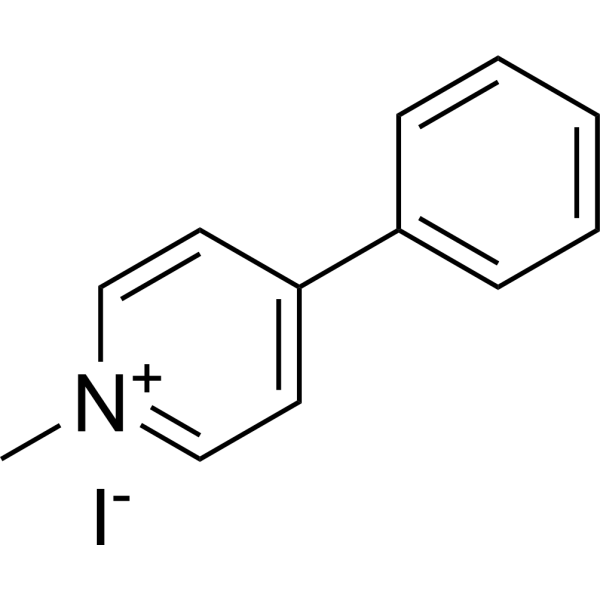
    MPP+ iodide
    30+ Cited Publications

    Mitochondrial Metabolism Neurological Disease
    MPP+ iodide, a toxic metabolite of the neurotoxin MPTP, causes symptom of Parkinson's disease in animal models by selectively destroying dopaminergic neurons in substantia nigra. MPP+ iodide is taken up by the dopamine transporter into dopaminergic neurons where it exerts its neurotoxic action on mitochondria by affecting complex I of the respiratory chain. MPP+ iodide is also a high affinity substrate for the serotonin transporter (SERT) .
    MPP+ iodide
  • HY-109101
    Risdiplam
    5+ Cited Publications

    RG7916; RO7034067

    DNA/RNA Synthesis Neurological Disease
    Risdiplam (RG7916) is an orally administered, centrally and peripherally distributed SMN2 pre-mRNA splicing modifier that increases survival motor neuron (SMN) protein levels .
    Risdiplam
  • HY-19620
    Branaplam
    10+ Cited Publications

    LMI070; NVS-SM1

    DNA/RNA Synthesis Potassium Channel Cancer
    Branaplam (LMI070; NVS-SM1) is a highly potent, selective and orally active survival motor neuron-2 (SMN2) splicing modulator with an EC50 of 20 nM for SMN. Branaplam inhibits human-ether-a-go-go-related gene (hERG) with an IC50 of 6.3 μM. Branaplam elevates full-length SMN protein and extends survival in a severe spinal muscular atrophy (SMA) mouse model .
    Branaplam
  • HY-79494
    Glyoxalic acid (50%w/w in water)
    3 Publications Verification

    NSC 27785; Formylformic acid; Oxalaldehydic acid

    Endogenous Metabolite Neurological Disease
    Glyoxalic acid (NSC 27785) (50%w/w in water) is an organic compound that is both an aldehyde and a carboxylic acid. Glyoxalic acid (50%w/w in water) induces fluorescence. Glyoxalic acid (50%w/w in water) is used to study neurons .
    The product has a content (w/w) of 50%, meaning that the mass of Glyoxalic acid in a 250 g Size is 125 g.
    Glyoxalic acid (50%w/w in water)
  • HY-N0532

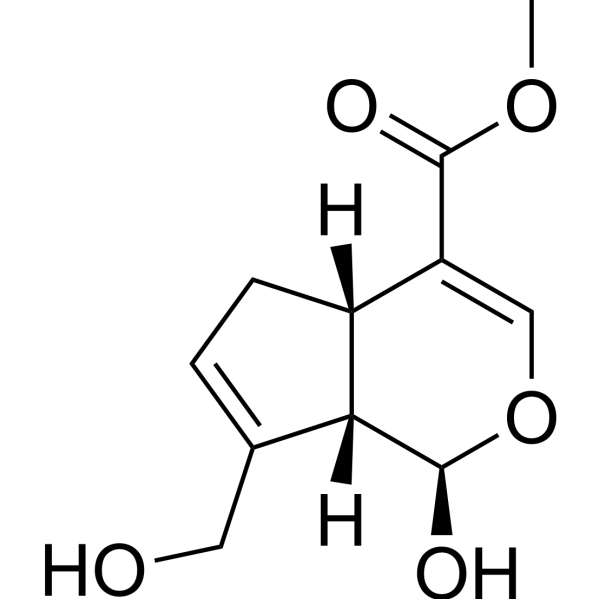
    MMP Pyroptosis Apoptosis Neurological Disease Metabolic Disease
    Morroniside has neuroprotective effect by inhibiting neuron apoptosis and MMP2/9 expression.
    Morroniside
  • HY-P0198
    Neuropeptide Y (human,rat,mouse)
    3 Publications Verification

    Neuropeptide Y (29-64), amide

    Neuropeptide Y Receptor Neurological Disease Endocrinology
    Neuropeptide Y (human,rat,mouse) is involved in Alzheimer's disease (AD) and protects rat cortical neurons against β-Amyloid toxicity.
    Neuropeptide Y (human,rat,mouse)
  • HY-W008350
    (+)-Sparteine
    1 Publications Verification

    Pachycarpine

    nAChR Neurological Disease
    (+)-Sparteine is a natural alkaloid acting as a ganglionic blocking agent. (+)-Sparteine competitively blocks nicotinic ACh receptor in the neurons.
    (+)-Sparteine
  • HY-135013

    TRP Channel Neurological Disease
    Umbellulone is an active constituent of the leaves of Umbellularia californica. Umbellulone stimulates the TRPA1 channel in a subset of peptidergic, nociceptive neurons, activating the trigeminovascular system via this mechanism .
    Umbellulone
  • HY-126436A

    L-Ornithine homopolymer hydrobromide (MW 30000-70000)

    Biochemical Assay Reagents Neurological Disease
    Poly-L-ornithine hydrobromide (MW 30000-70000) is a poly-lysine derivative with a molecular weight of 30000-70000. Poly-L-ornithine hydrobromide (MW 30000-70000) binds to the surface of cell culture vessels through positively charged amino acid residues to form a coating that promotes cell adhesion and provides cells with a matrix environment required for growth. Poly-L-ornithine hydrobromide (MW 30000-70000) is used as a coating agent in cell culture and can be used for the study of primary culture of neurons (such as dopaminergic neurons and oligodendrocytes) .
    Poly-L-ornithine hydrobromide (MW 30000-70000)
  • HY-15515
    SEA0400
    15+ Cited Publications

    Na+/Ca2+ Exchanger Cardiovascular Disease
    SEA0400 is a novel and selective inhibitor of the Na +-Ca 2+ exchanger (NCX), inhibiting Na +-dependent Ca 2+ uptake in cultured neurons, astrocytes, and microglia with IC50s of from 5 to 33 nM.
    SEA0400
  • HY-101888
    Cresyl Violet acetate
    2 Publications Verification

    Fluorescent Dye Neurological Disease
    Cresyl Violet acetate is a dye, which can be used to stain neurons.
    Cresyl Violet acetate
  • HY-19620A
    Branaplam hydrochloride
    10+ Cited Publications

    LMI070 hydrochloride; NVS-SM1 hydrochloride

    DNA/RNA Synthesis Potassium Channel Cancer
    Branaplam (LMI070; NVS-SM1) hydrochloride is a highly potent, selective and orally active survival motor neuron-2 (SMN2) splicing modulator with an EC50 of 20 nM for SMN. Branaplam hydrochloride inhibits human-ether-a-go-go-related gene (hERG) with an IC50 of 6.3 μM. Branaplam hydrochloride elevates full-length SMN protein and extends survival in a severe spinal muscular atrophy (SMA) mouse model .
    Branaplam hydrochloride
  • HY-13106
    Olodanrigan
    4 Publications Verification

    EMA401; PD-126055; (S)-EMA400

    Angiotensin Receptor Cardiovascular Disease Neurological Disease Endocrinology
    Olodanrigan (EMA401) is a highly selective, orally active, peripherally restricted angiotensin II type 2 receptor (AT2R) antagonist. It is under development as a neuropathic pain therapeutic agent. Olodanrigan (EMA401) analgesic action appears to involve inhibition of augmented AngII/AT2R induced p38 and p42/p44 MAPK activation, and hence inhibition of DRG neuron hyperexcitability and sprouting of DRG neurons .
    Olodanrigan
  • HY-N0061
    Ethyl ferulate
    3 Publications Verification

    Reactive Oxygen Species (ROS) Neurological Disease
    Ethyl ferulate, a naturally lipophilic derivative of ferulic acid originally derived from Rhizoma Chuanxiong, induces heme oxygenase-1 (HO-1) and protects rat neurons against oxidative stress . Ethyl ferulate also protects neurons against amyloid β peptide (1-42)-induced oxidative stress and neurotoxicity .
    Ethyl ferulate
  • HY-B0834

    (RS)-Indoxacarb; DPX-JW062

    Environmental Pollutants Sodium Channel Neurological Disease
    Indoxacarb ((±)-Indoxacarb; DPX-JW062) is a broad-spectrum oxadiazine insecticide with high insecticidal activity and low mammalian toxicity. Indoxacarb blocks insect sodium channels in nerve preparations and isolated neurons .
    (±)-Indoxacarb
  • HY-13530
    CAY10505
    5 Publications Verification

    PI3K Apoptosis Cancer
    CAY10505 is a potent and selective PI3Kγ inhibitor with an IC50 of 30 nM in neurons.
    CAY10505
  • HY-W018061
    Traxoprodil
    2 Publications Verification

    CP101,606

    iGluR Neurological Disease
    Traxoprodil (CP101,606) is a potent and selective NMDA antagonist and protect hippocampal neurons with an IC50 of 10 nM.
    Traxoprodil
  • HY-NP143

    Biochemical Assay Reagents Neurological Disease
    Nerve Growth Factor 2.5S, murine submaxillary gland is a neurotrophic polypeptide required for normal growth and development of sympathetic and embryonic sensory neurons and certain cholinergic neurons in the central nervous system. Nerve Growth Factor 2.5S, murine submaxillary gland has only β-subunit , and shows nerve growth-promoting activity .
    Nerve Growth Factor 2.5S,murine submaxillary gland
  • HY-Y0519

    Endogenous Metabolite Neurological Disease Cancer
    Pyrimidine is a nitrogen-containing heterocyclic compound and endogenous metabolite. Pyrimidine derivatives can be used in pancreatic cancer, triple-negative breast cancer, colon carcinoma and neuron research .
    Pyrimidine
  • HY-122672
    Adhesamine
    1 Publications Verification

    FAK Neurological Disease
    Adhesamine, dumbbell-shaped molecule, activates MAPK/FAK pathway. Adhesamine promotes adhesion and growth of mammalian cells. Adhesamine accelerates the differentiation and improves the survival of mice hippocampal neurons in primary culture .
    Adhesamine
  • HY-124061

    Protease Activated Receptor (PAR) Neurological Disease Inflammation/Immunology
    GB83 is a potent PAR2 antagonist. GB83 reverses neutrophil elastase‐induced synovitis and pain. GB83 blocks the effect of MET-1 supernatant on NG neurons .
    GB83
  • HY-103180

    2-Chloro-N-cyclopentyl-2′-C-methyladenosine

    Adenosine Receptor Neurological Disease
    2'-MeCCPA is a potent and selective A1 adenosine receptors (A1AR) agonist. 2'-MeCCPA efficiently inhibits cAMP modulation in both direct pathway medium spiny neurons (dMSNs) and indirect pathway medium spiny neurons (iMSNs) .
    2'-MeCCPA
  • HY-P0198A
    Neuropeptide Y (human,rat,mouse) TFA
    3 Publications Verification

    Neuropeptide Y Receptor Neurological Disease Endocrinology
    Neuropeptide Y (human) TFA is involved in Alzheimer's disease (AD) and protects rat cortical neurons against β-Amyloid toxicity.
    Neuropeptide Y (human,rat,mouse) TFA
  • HY-126112

    Drug Derivative Neurological Disease
    Mephenoxalone is a muscle relaxant with anti-anxiety activity. Mephenoxalone has neuropharmacologic activity in vivo. Mephenoxalone inhibits neuron transmission and can relax skeletal muscles by inhibiting the reflex arc .
    Mephenoxalone
  • HY-113316A

    Endogenous Metabolite Opioid Receptor Neurological Disease
    (±)-Salsolinol hydrochloride is the hydrochloride form of (±)-Salsolinol (HY-113316). (±)-Salsolinol hydrochloride is a Dopamine (HY-B0451)-derived endogenous metabolite. (±)-Salsolinol hydrochloride activates μ-opioid receptors (MORs), reduces GABAergic transmission, increases the excitability of dopamine (DA) neurons, and thus accelerates the sustained firing of neurons in the posterior ventral tegmental area (pVTA) .
    (±)-Salsolinol hydrochloride
  • HY-19434

    Trans-(±)-ACP

    mGluR Metabolic Disease
    trans-ACPD, a metabotropic receptor agonist, produces calcium mobilization and an inward current in cultured cerebellar Purkinje neurons.
    trans-ACPD
  • HY-120079
    MSN-125
    4 Publications Verification

    Bcl-2 Family Apoptosis Cancer
    MSN-125 is a potent Bax and Bak oligomerization inhibitor. MSN-125 prevents mitochondrial outer membrane permeabilization (MOMP) with an IC50 of 4 μM. MSN-125 potently inhibits Bax/Bak-mediated apoptosis in HCT-116, BMK Cells, and primary cortical neurons, protects primary neurons against glutamate excitotoxicity .
    MSN-125
  • HY-N1978
    3'-Methoxypuerarin
    2 Publications Verification

    Others Neurological Disease
    3'-Methoxypuerarin (3'-MOP) is an isoflavone extracted from radix puerariae that shows neuron protection activity.
    3'-Methoxypuerarin
  • HY-P1186

    Eledoisin-Related Peptide; Eledoisin RP

    Neurokinin Receptor Neurological Disease
    Eledoisin Related Peptide is a Substance P analog that excites neurons and triggers behavioral responses. Eledoisin Related Peptide is also a tachykinin receptor ligand.
    Eledoisin Related Peptide
  • HY-13056
    SMND-309
    1 Publications Verification

    Drug Metabolite Neurological Disease
    SMND-309 is a metabolite of salvianolic acid B, and exhibits neuroprotective effects in cultured neurons and in permanent middle cerebral artery occlusion rats .
    SMND-309
  • HY-N0137A

    Drug Intermediate Neurological Disease
    (R)-Tetrahydropapaverine hydrochloride is the isomer of Tetrahydropapaverine hydrochloride (HY-N0137), and can be used as an experimental control. Tetrahydropapaverine hydrochloride is one of the Tetrahydroisoquinolines. Tetrahydropapaverine hydrochloride has neurotoxic effects on dopamine neurons .
    (R)-Tetrahydropapaverine hydrochloride
  • HY-107498

    iGluR Neurological Disease
    GNE-8324 is a selective GluN2A positive allosteric modulator. GNE-8324 selectively enhances NMDA receptor (NMDAR)-mediated synaptic responses in inhibitory but not excitatory neurons .
    GNE-8324
  • HY-P1387

    Amyloid-β Apoptosis Neurological Disease
    β-Amyloid (1-40) (rat) is a rat form of the amyloid β-peptide, which accumulates as an insoluble extracellular deposit around neurons, giving rise to the senile plaques associated with Alzheimer's disease (AD). β-Amyloid (1-40) (rat) increases 45Ca 2+ influx, induces neurodegeneration in the rat hippocampal neurons of the CA1 subfield. β-Amyloid (1-40) (rat) induces apoptosis. β-Amyloid (1-40) (rat) can be used for the research of Alzheimer's disease .
    β-Amyloid (1-40) (rat)
  • HY-153383
    PDCD4-IN-1
    2 Publications Verification

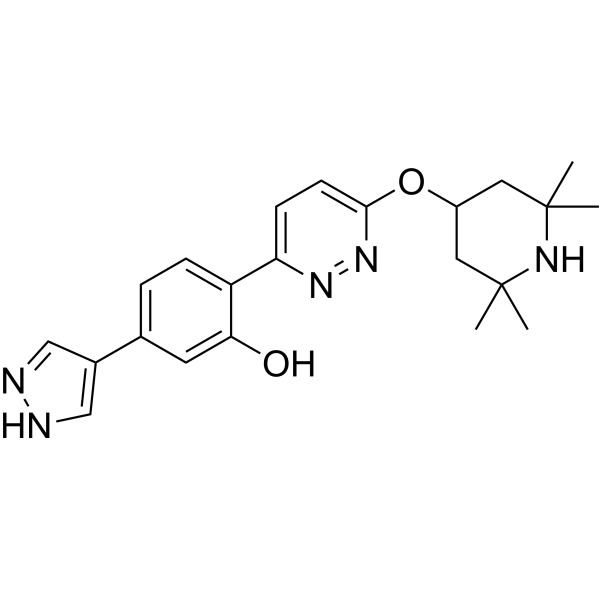
    Programmed Cell Death 4 (PDCD4) Cancer
    PDCD4-IN-1(compound 20031600) is a PDCD4 inhibitor with a Kd value of 350 nM, which can promote the expression of BDNF in hippocampal neuron cell HT-22 .
    PDCD4-IN-1
  • HY-122672A
    Adhesamine diTFA
    1 Publications Verification

    FAK Neurological Disease
    Adhesamine diTFA is a dumbbell-shaped molecule that activates the MAPK/FAK pathway. Adhesamine promotes the adhesion and growth of mammalian cells, accelerates the differentiation of primary cultured mouse hippocampal neurons, and enhances their survival rate .
    Adhesamine diTFA
  • HY-100797

    (±)-CPP

    iGluR Neurological Disease
    (RS)-CPP ((±)-CPP) is a potent and selective NMDA antagonist. (RS)-CPP inhibits central neuron responses, and has anticonvulsant activity .
    (RS)-CPP
  • HY-W008719S

    Mitochondrial Metabolism Neurological Disease
    MPP+-d3 (iodide) is deuterium labeled MPP+ (iodide). MPP+ iodide, a toxic metabolite of the neurotoxin MPTP, causes symptom of Parkinson's disease in animal models by selectively destroying dopaminergic neurons in substantia nigra. MPP+ iodide is taken up by the dopamine transporter into dopaminergic neurons where it exerts its neurotoxic action on mitochondria by affecting complex I of the respiratory chain. MPP+ iodide is also a high affinity substrate for the serotonin transporter (SERT) .
    MPP+-d3iodide
  • HY-104031

    Notch Neurological Disease
    tCFA15 is a trimethyl cyclohexenonic long chain fatty alcohol containing 15 carbon atoms on the side chain, promotes the differentiation of neurons, and may regulates Notch signaling.
    tCFA15
  • HY-167709

    20.25-Diazacholesterol

    Xanthine Oxidase Neurological Disease
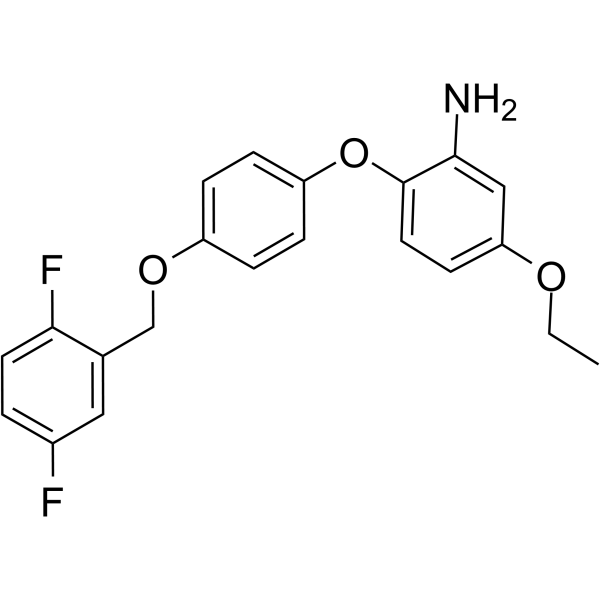
    Azacosterol (20.25-Diazacholesterol), also known as Diazasterol, acts as a DHCR24 inhibitor and initiates a cascade of reactions in cortical neurons after being administered orally or via intraperitoneal injection.
    Azacosterol
  • HY-101889

    Oxazine 9 perchlorate

    Fluorescent Dye Neurological Disease
    Cresyl Violet perchlorate is a red fluorescent stain, which can be used to stain neurons.
    Cresyl Violet perchlorate
  • HY-162712

    Orexin Receptor (OX Receptor) Tau Protein Neurological Disease
    OX-201 is an orally active, blood-brain barrier-permeable OX2R agonist with an EC50 of 8.0 nM. OX-201 activates OX2R to induce wakefulness and neuronal activation. OX-201 promotes the release of neuron activity-dependent tau protein from neurons into the interstitial fluid of hippocampal tissues. OX-201 is applicable to research related to Alzheimer's disease and tauopathies .
    OX-201
  • HY-B0887C

    1R-cis-NRDC-143

    Parasite Infection
    1R-cis-Permethrin is an insecticide and neurotoxin. 1R-cis-Permethrin affects neuron membranes by prolonging sodium channel activation .
    1R-cis-Permethrin
  • HY-13106A

    EMA401 sodium; PD-126055 sodium

    Angiotensin Receptor Neurological Disease Endocrinology
    Olodanrigan (EMA401) sodium is a highly selective, orally active, peripherally restricted angiotensin II type 2 receptor (AT2R) antagonist. Olodanrigan sodium is under development as a neuropathic pain therapeutic agent. Olodanrigan sodium analgesic action appears to involve inhibition of augmented AngII/AT2R induced p38 and p42/p44 MAPK activation, and hence inhibition of DRG neuron hyperexcitability and sprouting of DRG neurons .
    Olodanrigan sodium
  • HY-108479

    SR140333

    Neurokinin Receptor Neurological Disease
    Nolpitantium (SR140333) is a potent, selective, competitive, non-peptide tachykinin NK1 receptor antagonist. Nolpitantium blocks the activation of rat thalamic neurons after nociceptive stimulation .
    Nolpitantium
  • HY-P0249A

    Potassium Channel Neurological Disease
    Phe-Met-Arg-Phe amide trifluoroacetate is an activator of K + current, with ED50 of 23 nM in the peptidergic caudodorsal neurons.
    Phe-Met-Arg-Phe amide trifluoroacetate
  • HY-B1304A
    (+)-Sparteine sulfate pentahydrate
    1 Publications Verification

    (+)-Lupinidine sulfate pentahydrate

    nAChR Neurological Disease
    (+)-sparteine (sulfate pentahydrate) is a ganglionic blocking agent. (+)-Sparteine competitively blocks nicotinic ACh receptor in the neurons .
    (+)-Sparteine sulfate pentahydrate
  • HY-N1838

    Others Neurological Disease
    Dehydromaackiain is a potent Neurogenin2 (Ngn2) promoter activator. Dehydromaackiain promotes differentiation of neural stem cells into neurons .
    Dehydromaackiain
  • HY-P10979

    Neuropeptide S Receptor Neurological Disease
    Buccalin is a neuropeptide that colocalizes with small molecule cardioactive peptides in neuronal B15. When exogenously applied to the ARC neuromuscular junction, Buccalin reduces the amplitude of muscle contraction induced by motor neuron firing and acts only presynaptically. Buccalin has no effect on the rate of muscle relaxation and reduces motor neuron-induced ARC excitatory junction potentials without affecting contraction produced by direct acetylcholine action on the muscle .
    Buccalin
  • HY-N0949

    Others Neurological Disease
    (-)-Variabilin (compound 13) is an Neurogenin2 (Ngn2) promoter activator isolated from Butea superba. (-)-Variabilin promotes differentiation of neural stem cells into neurons .
    (-)-Variabilin
  • HY-114550

    iGluR Neurological Disease
    LY339434 is a potent and selective agonist for the hydrochloride receptor GluR5. LY339434 affects the rapid death of neurons through n-methyl-D-aspartate (NMDA) receptors .
    LY339434

Inquiry Online

Your information is safe with us. * Required Fields.

Salutation


Country or Region *

Applicant Name *


Organization Name *

Department *


Email Address *


Product Name *

Cat. No.


Requested quantity *

Phone Number *


Remarks

Inquiry Online

Inquiry Information

Product Name:
Cat. No.:
Quantity:
MCE Japan Authorized Agent:

