1. Search Result
Search Result
Results for "

nitric oxide

" in MedChemExpress (MCE) Product Catalog:

620

Inhibitors & Agonists

1

Screening Libraries

22

Fluorescent Dyes

20

Biochemical Assay Reagents

24

Peptides

1

MCE Kits

1

Inhibitory Antibodies

246

Natural
Products

5

Recombinant Proteins

38

Isotope-Labeled Compounds

8

Antibodies

3

Oligonucleotides

Targets Recommended:
Cat. No. Product Name Target Research Areas Chemical Structure
  • HY-B1777
    Spermine
    5+ Cited Publications

    NSC 268508; Neuridine

    Endogenous Metabolite Bacterial Reactive Oxygen Species (ROS) DNA/RNA Synthesis Infection Neurological Disease Inflammation/Immunology
    Spermine is a natural antioxidant and anti-inflammatory agent. Spermine is known to inhibit some bacterial cultures, especially strains of Staphylococcus aureus. Spermine induces neurotoxicity in the striarum dose-dependently. Spermine can reversibly inhibits DNA synthetic response, mixed lymphocyte response and the induction of cytolytic lymphocyte response in primary cultures of murine spleen cells. Spermine tetrahydrochloride is a polyamine nitric oxide donor that can provide nitric oxide to platelets and inhibit platelet activation to a certain extent concentration-dependently. Spermine tetrahydrochloride occurs in mammalian tissues, plants, bacteria, ribosomes and bacteriophage. Spermine tetrahydrochloride inhibits primary human embryo lung fibroblasts in vitro .
    Spermine
  • HY-B0300
    Penicillamine
    3 Publications Verification

    D-(-)-Penicillamine

    Cuproptosis Drug Metabolite Inflammation/Immunology Cancer
    Penicillamine (D-(-)-Penicillamine) is a penicillin metabolic degradation product, can be used as a heavy metal chelator. Penicillamine increases free copper and increases oxidative stress. Penicillamine has effect of seizures through nitric oxide/NMDA pathways. Penicillamine is a potential immune modulator. Penicillamine can be used for the research of Wilson disease, rheumatoid arthritis, and cystinuria .
    Penicillamine
  • HY-136278
    DETA NONOate
    5+ Cited Publications

    Diethylamine NONOate; NOC-18

    NO Synthase Cardiovascular Disease
    DETA NONOate (NOC 18) is an exogenous nitric oxide (NO) donor. DETA NONOate shows a slow release normal amounts of NO and long-acting .
    DETA NONOate
  • HY-N0577
    Apiin
    1 Publications Verification

    Apigenin 7-O-apiosylglucoside; Apigenin 7-(2-O-apiosylglucoside)

    NO Synthase Inflammation/Immunology
    Apiin is a flavonoid glycoside-based iNOS inhibitor. Apiin inhibits the expression of inducible nitric oxide synthase in activated macrophages. Apiin exhibits anti-inflammatory activity .
    Apiin
  • HY-110275

    Keap1-Nrf2 NO Synthase Infection Inflammation/Immunology
    RA839 is a selective Nrf2/ARE pathway agonist and non-covalent small molecule binder of Keap1 (Kd is approximately 6 μM). RA839 prevents inducible nitric oxide synthase expression and nitric oxide release. RA839 exerts anti-rotaviral and anti-inflammatory effects .
    RA839
  • HY-B1777A
    Spermine tetrahydrochloride
    5+ Cited Publications

    Endogenous Metabolite Bacterial Reactive Oxygen Species (ROS) DNA/RNA Synthesis Infection Neurological Disease Inflammation/Immunology
    Spermine tetrahydrochloride is a polyamine nitric oxide donor that can provide nitric oxide to platelets and inhibit platelet activation to a certain extent concentration-dependently. Spermine tetrahydrochloride occurs in mammalian tissues, plants, bacteria, ribosomes and bacteriophage. Spermine tetrahydrochloride inhibits primary human embryo lung fibroblasts in vitro. Spermine is a natural antioxidant and anti-inflammatory agent. Spermine is known to inhibit some bacterial cultures, especially strains of Staphylococcus aureus. Spermine induces neurotoxicity in the striarum dose-dependently. Spermine can reversibly inhibits DNA synthetic response, mixed lymphocyte response and the induction of cytolytic lymphocyte response in primary cultures of murine spleen cells .
    Spermine tetrahydrochloride
  • HY-W074890
    Palmitoylglycine
    1 Publications Verification

    N-palmitoyl glycine

    Calcium Channel NO Synthase Neurological Disease Inflammation/Immunology
    Palmitoylglycine (N-palmitoyl glycine), an endogenous lipid that acts as a modulator of calcium influx and nitric oxide () production in sensory neurons. Palmitoylglycine is linked to an increased risk of Background Brugada syndrome (BrS) and interacts with BrS-associated proteins, demonstrating moderate binding affinities for DCC, CR1, CTSB, NAAA, DEFB1, EPHA1, IGF1/IGFBP3/ALS, and LTA .
    Palmitoylglycine
  • HY-W003969

    Ascensil; 2-Amino-4-methylpyridine

    NO Synthase Inflammation/Immunology
    Aminopicoline (Ascensil) is a potent and non-selective inhibitor of nitric oxide synthase (NOS) isoenzymes (iNOS, nNOS, eNOS). Aminopicoline competes with arginine at the substrate-binding site of nitric oxide synthase, reduces cellular nitric oxide production, inhibits the elevation of plasma nitrate, increases mean arterial pressure at high doses, and also serves as a basis for radiolabeled ligands to localize nitric oxide synthase binding sites. Aminopicoline can be used in the research of diseases associated with septic shock, joint inflammation, intestinal inflammation, and CNS inflammation .
    Aminopicoline
  • HY-107260

    Lucidenic acid D2

    NO Synthase COX Infection Inflammation/Immunology Cancer
    Lucidenic acid D is a highly oxidized triterpenoid with anti-inflammatory and antiviral activities. Lucidenic acid D attenuates lipopolysaccharide-induced release of proinflammatory cytokines and nitric oxide, reduces the expression of inducible nitric oxide synthase (iNOS) and cyclooxygenase-2 (COX-2), and inhibits skin inflammation. Lucidenic acid D suppresses 12-O-tetradecanoylphorbol-13-acetate (TPA)-induced expression of Epstein-Barr virus (EBV) early antigen and maintains the viability of Raji cells. Lucidenic acid D can be used in studies of cancer chemoprevention .
    Lucidenic acid D
  • HY-101394
    Spermine NONOate
    2 Publications Verification

    NO Synthase Others
    Spermine NONOate is a complex of nitric oxide (NO) with spermine and acts as a NO donor. Spermine NONOate can be used for NO aqueous solutions preparing .
    Spermine NONOate
  • HY-N0724
    Mesaconitine
    2 Publications Verification

    TNF Receptor Neurological Disease
    Mesaconitine is a nitric oxide synthase activator. Mesaconitine drives extracellular Na + and Ca 2+ influx into endothelial cells, increases intracellular Na + and Ca 2+ concentrations, and triggers nitric oxide release. Mesaconitine is applicable for pain-related research .
    Mesaconitine
  • HY-160424
    DEANO sodium
    1 Publications Verification

    Diethylamine NONOate sodium; Diethylamine nitric oxide sodium

    Reactive Oxygen Species (ROS) Xanthine Oxidase Others
    DEANO sodium is notric oxide donor. DEANO sodium potentiates the abilitv of hypoxanthine/xanthine oxidase to induce lipid peroxidation as well as DNA single- and double-strand breaks .
    DEANO sodium
  • HY-18732
    L-NMMA
    10+ Cited Publications

    Tilarginine; Methylarginine

    NO Synthase Neurological Disease Inflammation/Immunology Cancer
    L-NMMA (Tilarginine) is a non-selective and competitive inhibitor of nitric oxide synthase. L-NMMA inhibits three subtypes, namely nNOS, eNOS, and iNOS, and reduces NO production . L-NMMA alleviates mechanical allodynia, thermal hyperalgesia, and choroidal fibrosis. L-NMMA is applicable to research related to nociception, bone cancer pain, and myopia .
    L-NMMA
  • HY-15509A
    Semapimod tetrahydrochloride
    4 Publications Verification

    CNI-1493; CPSI-2364 tetrahydrochloride

    TNF Receptor Interleukin Related p38 MAPK Inflammation/Immunology Cancer
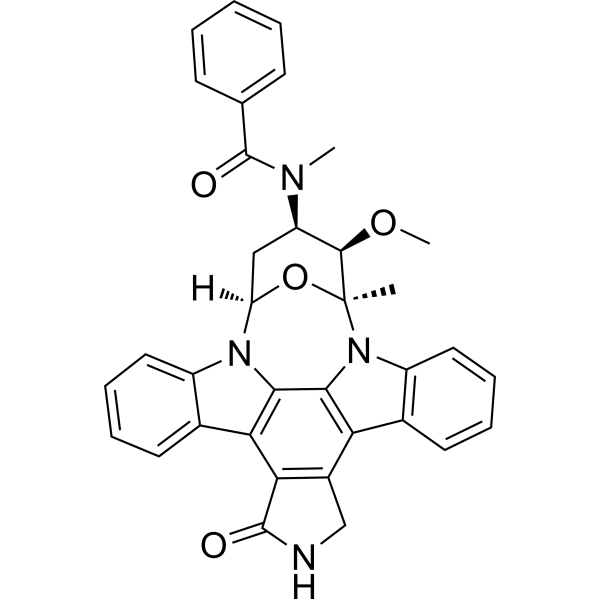
    Semapimod tetrahydrochloride (CNI-1493), an inhibitor of proinflammatory cytokine production, can inhibit TNF-α, IL-1β, and IL-6. Semapimod tetrahydrochloride inhibits TLR4 signaling (IC50≈0.3 μM). Semapimod tetrahydrochloride inhibits p38 MAPK and nitric oxide production in macrophages. Semapimod tetrahydrochloride has potential in a variety of inflammatory and autoimmune disorders .
    Semapimod tetrahydrochloride
  • HY-W013435

    Fluorescent Dye Others
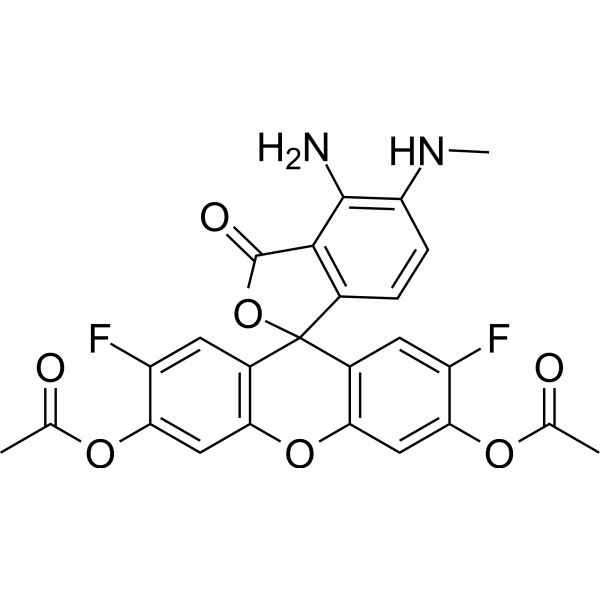
    1,2-Diaminoanthraquinone is a sensitivity, specificity and nontoxic nitric oxide (NO) fluorescent probe. 1,2-Diaminoanthraquinone can be used to detect NO productions in live cell and animals with a maximum of absorption at about 540 nm and a detection limit of 5 μM for NO .
    1,2-Diaminoanthraquinone
  • HY-145846
    iNOs-IN-1
    1 Publications Verification

    NO Synthase Interleukin Related Inflammation/Immunology
    iNOs-IN-1 (YPW) is a potent inducible nitric oxide synthase (iNOS) inhibitor. iNOs-IN-1 can significantly inhibit the expression of IL-6 and iNOS, as well as reduce LPS-induced NO generation with dose-dependent manner in mouse macrophages. Anti-inflammatory effects .
    iNOs-IN-1
  • HY-139419

    NCX 470

    Prostaglandin Receptor Cardiovascular Disease Neurological Disease
    Bimatoprost grenod (NCX 470) is a second-generation nitric oxide (NO)-donating prostaglandin analogue. Bimatoprost grenod effectively lowers intraocular pressure (IOP) in animal models of ocular hypertension and glaucoma by activating bimatoprost-mediated uveoscleral outflow and NO mediated conventional outflow. Bimatoprost grenod can be used for the research of cular hypertension and glaucoma .
    Bimatoprost grenod
  • HY-W062836

    Guanylate Cyclase Cardiovascular Disease
    BAY 41-8543 is an orally active, nitric oxide (NO)-independent stimulator of soluble guanylyl cyclase (sGC). BAY 41-8543 has vasodilator activity in the pulmonary and systemic vascular beds in the rat. BAY 41-8543 has antiplatelet effects and has the potential for cardiovascular diseases research .
    BAY 41-8543
  • HY-N3393

    β-catenin Inflammation/Immunology
    Lethedioside A is a Enhancer of split 1 (Hes1) inhibitor with an IC50 of 9.5 μM. Lethedioside A inhibits Hes1 dimer formation. Lethedioside A exhibits weak inhibition of TCF4/β-catenin complex formation. Lethedioside A inhibits nitric oxide production by activated immune cells .
    Lethedioside A
  • HY-P4641

    Trp-Phe

    Angiotensin-converting Enzyme (ACE) Endothelin Receptor Cardiovascular Disease
    H-Trp-Phe-OH (Trp-Phe) is an ACE inhibitor and endothelial function regulator, with an ACE IC50 of 0.318 mg/mL. H-Trp-Phe-OH increases nitric oxide concentration, reduces endothelin-1 (ET-1) levels, and reverses norepinephrine-mediated endothelial cell dysfunction. H-Trp-Phe-OH exhibits antihypertensive activity. H-Trp-Phe-OH can be used in studies related to hypertension and atherosclerosis .
    H-Trp-Phe-OH
  • HY-161612

    Tyrosinase SOD COX NO Synthase Keap1-Nrf2 Inflammation/Immunology
    Mycosporine 2 glycine is an anti-inflammatory agent and TYRP1 inhibitor. Mycosporine 2 glycine inhibits the expression of inflammatory genes and reduces nitric oxide production. Mycosporine 2 glycine binds tightly to the active pocket of TYRP1 and inhibits the activity of melanogenesis-related enzymes. Mycosporine 2 glycine can be used in the research of hyperpigmentation and inflammation-related diseases .
    Mycosporine 2 glycine
  • HY-12124

    NO Synthase Cardiovascular Disease
    BBS-4 is a potent and selective inducible nitric oxide synthase (NOS2) dimerization inhibitor, with an IC50 of 0.49 nM. BBS-4 can protect mice from the cardiovascular dysfunction of sepsis .
    BBS-4
  • HY-N3426

    NO Synthase Akt AMPK Metabolic Disease
    Kazinol B, a prenylated flavan with a dimethyl pyrane ring, is an inhibitor of nitric oxide (NO) production. Kazinol B improves insulin sensitivity by enhancing glucose uptake via the insulin-Akt signaling pathway and AMPK activation. Kazinol B has the potential for diabetes mellitus research .
    Kazinol B
  • HY-153092

    BI-685509

    Guanylate Cyclase Cardiovascular Disease Metabolic Disease
    Avenciguat (BI-685509) is a potent and orally active sGC activator. Avenciguat restores cyclic guanosine monophosphate (cGMP) and improves functionality of nitric oxide (NO) pathways. Avenciguat can be used in research of chronic kidney disease (CKD) and diabetic kidney disease (DKD) .
    Avenciguat
  • HY-116885

    NO Synthase Inflammation/Immunology
    Thunalbene is a stilbene derivative isolated from Thunia alba. Thunalbene has a weak inhibitory effect on nitric oxide production and is not cytotoxic .
    Thunalbene
  • HY-N10214

    NO Synthase Inflammation/Immunology
    (-)-10,11-Dihydroxyfarnesol is a compound isolated from an endolichenic fungus Cryptomarasmius aucubae. (–)-10,11-Dihydroxyfarnesol significantly inhibits nitric oxide (NO) production .
    (-)-10,11-Dihydroxyfarnesol
  • HY-N10857

    Others Others
    12-Hydroxymyricanone is a nature product that could be isolated from the roots of Myrica nana. 12-Hydroxymyricanone inhibits the release of nitric oxide with an IC50 value of 30.19 μM .
    12-Hydroxymyricanone
  • HY-130579

    L-VNIO hydrochloride

    NO Synthase NADPH Oxidase Cardiovascular Disease Neurological Disease
    Vinyl-L-NIO (L-VNIO) hydrochloride is a neuronal nitric oxide synthase (NOS) inhibitor with a rat Ki of 0.10 μM. Vinyl-L-NIO hydrochloride inhibits NADPH oxidase activity, attenuates renal fibrosis, inflammation, oxidative stress indices, and albuminuria. Vinyl-L-NIO hydrochloride can be used for the research of parkinson's disease, migraine headache, and hypertension .
    Vinyl-L-NIO hydrochloride
  • HY-103385

    NO-Aspirin

    Apoptosis Inflammation/Immunology Cancer
    NCX4040 (NO-Aspirin), a non-steroidal anti-inflammatory drug (NSAID), is a nitric oxide (NO) releasing form of Aspirin. NCX4040 induces apoptosis in PC3 metastatic prostate cancer cells. NCX4040 has anti-inflammatory and anti-cancer effects .
    NCX4040
  • HY-W074890R

    N-palmitoyl glycine (Standard)

    Reference Standards Calcium Channel NO Synthase Neurological Disease Inflammation/Immunology
    Palmitoylglycine (Standard) is the analytical standard of Palmitoylglycine. This product is intended for research and analytical applications. Palmitoylglycine (N-palmitoyl glycine), an endogenous lipid that acts as a modulator of calcium influx and nitric oxide () production in sensory neurons. Palmitoylglycine is linked to an increased risk of Background Brugada syndrome (BrS) and interacts with BrS-associated proteins, demonstrating moderate binding affinities for DCC, CR1, CTSB, NAAA, DEFB1, EPHA1, IGF1/IGFBP3/ALS, and LTA[1][2][3].
    Palmitoylglycine (Standard)
  • HY-118160

    NSC 73233

    NO Synthase Inflammation/Immunology Cancer
    PPM-18 (NSC 73233), a potent anti-inflammatory agent, inhibits nitric oxide synthase expression. PPM-18 is a potent inhibitor of iNOS expression by blocking the binding of NF-κB to promoter . PPM-18, an analog of Vitamin K, induces autophagy and apoptosis in bladder cancer cells through ROS and AMPK signaling pathways .
    PPM-18
  • HY-153056

    NO Synthase Others
    BNN3 is a caged nitric oxide (NO) donor. BNN3 is membrane-permeant and incorporated in the lipid membrane .
    BNN3
  • HY-N2838

    NO Synthase Inflammation/Immunology
    Alismol is a natural sesquiterpene. Alismol shows promising inhibitory effects on INF-γ-induced nitric oxide production in murine macrophage RAW264.7 cells .
    Alismol
  • HY-146309

    NO Synthase Inflammation/Immunology
    iNOS-IN-2 (Compound 53) is a potent down-regulator of inducible nitric oxide synthase (iNOS) protein. iNOS-IN-2 effectively inhibits the NO production (IC50=6.4 μM). iNOS-IN-2 has a potential therapeutic effect on chronic inflammation .
    iNOS-IN-2
  • HY-P10159

    Bacterial Infection
    Diplacol ia a natural compound from from Mimulus clevelandi and shows potent inhibitory activities against lipopolysaccharide (LPS)-induced nitric oxide production .
    DJK-5
  • HY-134221

    Adrenergic Receptor Reactive Oxygen Species (ROS) Cardiovascular Disease
    S-Nitroso-N-acetylcysteine is a nitric oxide donor. S-Nitroso-N-acetylcysteine has a tissue vascular dilation effect, which can enhance liver microcirculation and effectively prevent ischemia-reperfusion injury in fatty liver. S-Nitroso-N-acetylcysteine can reduce liver fibrosis in rats with cirrhosis .
    S-Nitroso-N-acetylcysteine
  • HY-N11657

    Sanggenone A

    NF-κB Keap1-Nrf2 Inflammation/Immunology
    Sanggenon A (Sanggenone A) exerts anti-inflammatory effects by regulating NF-κB and HO-1/Nrf2 signaling pathways in BV2 and RAW264.7 cells. Sanggenon A markedly inhibits the Lipopolysaccharide (LPS; HY-D1056)-induced production of nitric oxide .
    Sanggenon A
  • HY-D2966

    Fluorescent Dye Others
    TMR-NO-BG is a hybrid probe (Ex/Em: 557 nm/571 nm). TMR-NO-BG covalently connects the tetramethylrhodamine (TMR) lactone NO sensing unit with the SNAP-tag reactive benzyl guanine (BG) for achieving subcellular-specific nitric oxide (NO) detection .
    TMR-NO-BG
  • HY-N12139

    NO Synthase Cancer
    Nitric oxide production-IN-1(Compound 1) is a inhibitor of NO Production which isolated from Tupistra chinensis. Nitric oxide production-IN-1(Compound 1) inhibits NO production in rat abdomen macrophages induced by lipopolysaccharide
    Nitric oxide production-IN-1
  • HY-N3473

    NO Synthase Neurological Disease
    Isomaculosidine is an alkaloid that can be isolated from D. dasycarpus. Isomaculosidine can inhibit nitric oxide (NO) production in lipopolysaccharide (LPS)-stimulated BV2 microglial cells .
    Isomaculosidine
  • HY-N10218

    Others Inflammation/Immunology
    Sterpurol D is a compound of the sterpurane sesquiterpenoid. Sterpurol D significantly inhibits nitric oxide (NO) production .
    Sterpurol D
  • HY-N3602A

    Rengyolone

    TNF Receptor NF-κB NO Synthase Inflammation/Immunology
    rel-Cleroindicin F (Rengyolone) is a cyclohexyl acetyl compound that can be isolated from the fruit of forsythia and has anti-inflammatory activity. It strongly inhibits the production of nitric oxide (NO) and tumor necrosis factor-alpha (TNF-α). rel-Cleroindicin F does this by downregulating the activity of NF-κB and NF-κB kinases in RAW 264.7 cells stimulated by LPS (HY-D1056), thus inhibiting the expression of inducible nitric oxide synthase (NO Synthase) and nitric oxide production .
    rel-Cleroindicin F
  • HY-117601

    FXR NO Synthase Inflammation/Immunology
    11-Deoxyalisol B, a triterpene, shows the potent inhibitory activity on Lipopolysaccharide (LPS)-induced nitric oxide (NO) production .
    11-Deoxyalisol B
  • HY-105407

    NO Synthase Inflammation/Immunology
    GW 273629 is a selective nitric oxide synthase inhibitor. GW 273629 exhibits anti-inflammation effect .
    GW 273629
  • HY-145882

    Fluorescent Dye Others
    BOD-NH-NP is an activatable fluorescent probe for imaging endogenous nitric oxide via the eNOS enzymatic pathway .
    BOD-NH-NP
  • HY-N9092

    (E)-geranylferulic acid

    NO Synthase Infection Inflammation/Immunology
    Geranyl ferulate ((E)-geranylferulic acid), isolated from Zingiber officinale, exhibits inhibitory effect on the production of nitric oxide (NO) .
    Geranyl ferulate
  • HY-164361

    NO Synthase Inflammation/Immunology
    α-Gracinoic acid is a Chalcone (HY-121054) derivative with anti-inflammatory activity. α-Gracinoic acid inhibits nitric oxide production catalyzed by inducible nitric oxide synthase (iNOS) in lipopolysaccharide (LPS)-treated RAW 264.7 cells .
    2′-Hydroxy-2,3-dimethoxychalcone
  • HY-N10217

    NO Synthase Inflammation/Immunology
    Paneolilludinic acid is a compound isolated from an endolichenic fungus Cryptomarasmius aucubae. Paneolilludinic acid significantly inhibits nitric oxide (NO) production .
    Paneolilludinic acid
  • HY-107546

    Guanylate Cyclase Cardiovascular Disease
    CFM 1571 hydrochloride is the stimulator of the nitric oxide receptor, soluble guanylate cyclase (sGC) with an EC50 and IC50 of 5.49 μM and 2.84 μM, respectively. Soluble guanylate cyclase (sGC) is a key signal-transduction enzyme activated by nitric oxide (NO). CFM 1571 hydrochloride has the potential for the research of cardiovascular and other diseases .
    CFM 1571 hydrochloride
  • HY-155551

    NO Synthase Inflammation/Immunology
    Anti-inflammatory agent 46 (compound 7h) is an anti-inflammatory agent with nitric oxide (NO) inhibitory effect. Anti-inflammatory agent 46 binds to iNOS with low energies, inhibits swelling in mice (at dose of 10 mg/kg) .
    Anti-inflammatory agent 46

Inquiry Online

Your information is safe with us. * Required Fields.

Salutation


Country or Region *

Applicant Name *


Organization Name *

Department *


Email Address *


Product Name *

Cat. No.


Requested quantity *

Phone Number *


Remarks

Inquiry Online

Inquiry Information

Product Name:
Cat. No.:
Quantity:
MCE Japan Authorized Agent:

