14 Results for "

paeonia lactiflora

" in MedChemExpress (MCE) Product Catalog:
Products (14)

14 Results for "paeonia lactiflora" in MCE Product Catalog:

Cat. No.: HY-131488
CAS No.: 23532-11-8
Purity:  99.81%
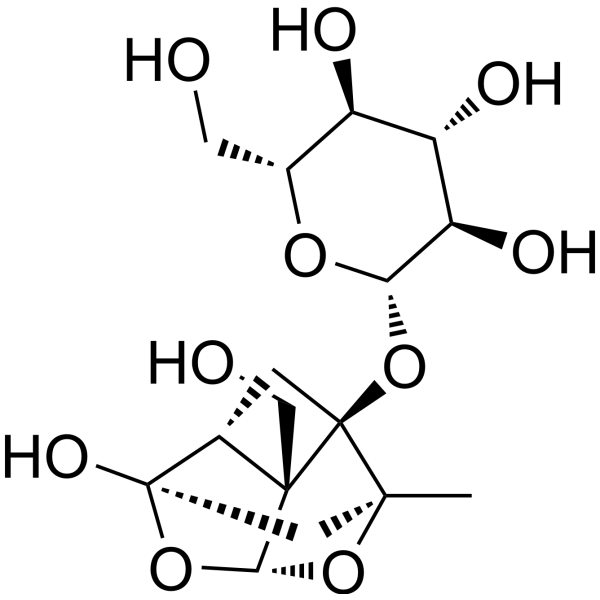
8-Debenzoylpaeoniflorin, a monoterpene glycoside, is a natural product that could be isolated from the dried root of Paeonia lactiflora Pall. 8-Debenzoylpaeoniflorin has antihyperglycemic activity .
loading...
    loading...
Cat. No.: HY-N10480
CAS No.: 1201580-97-3
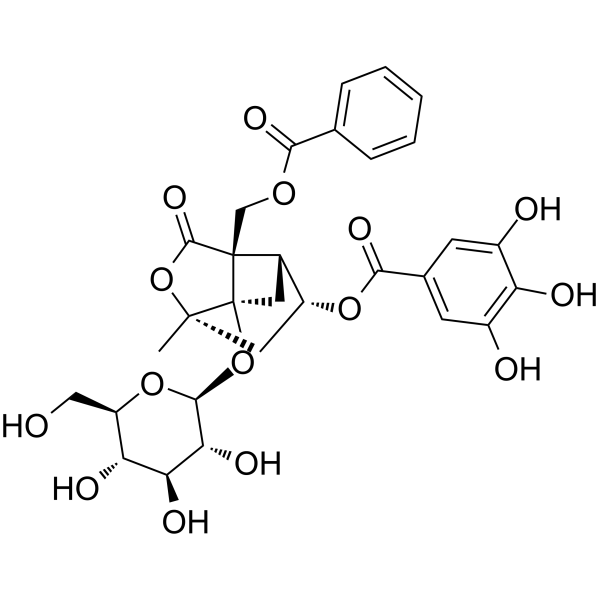
4-O-Galloylalbiflorin is a natural product that can be derived from the root of Paeonia lactiflora pall .
loading...
    loading...
Cat. No.: HY-N9917
CAS No.: 929042-36-4
Synonyms: 6′-O-Galloylalbiflorin
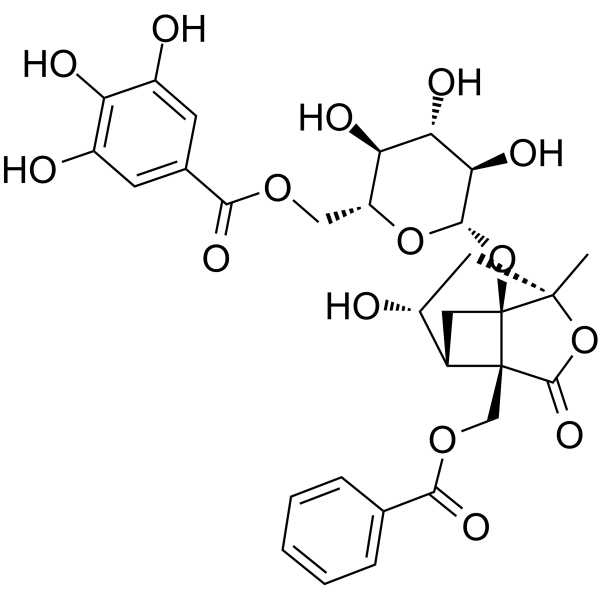
Galloylalbiflorin (6′-O-Galloylalbiflorin) is an androgen receptor (AR) antagonist (IC50=53.3 μM) and can be found in the roots of Paeonia lactiflora. Galloylalbiflorin shows anti-androgens activity .
loading...
    loading...
Cat. No.: HY-N21493
Paeonia lactiflora polysaccharide is a polysaccharide derived from Paeonia lactiflora.
loading...
    loading...
Cat. No.: HY-N20837
Paeonia lactiflora extract is an extract isolated fromPaeonia lactiflora.
loading...
    loading...
Cat. No.: HY-N7601
CAS No.: 184103-78-4
Synonyms: Paeonivayin
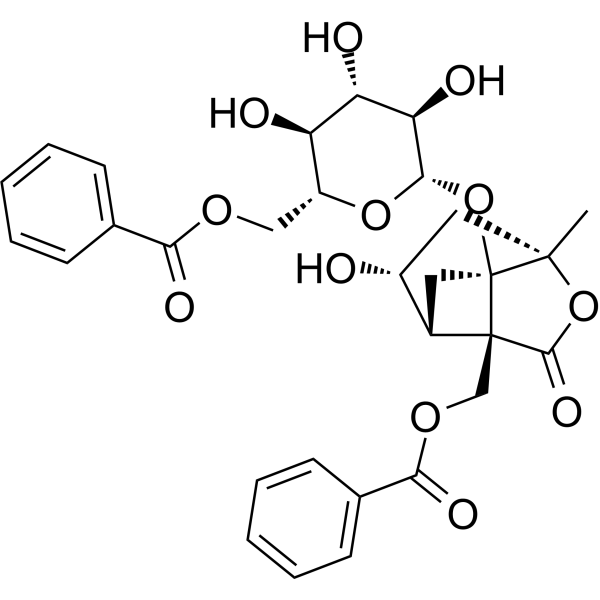
Benzoylalbiflorin, a monoterpenoid, is isolated from paeonia lactiflora. paeonia lactiflora is a traditional Chinese medicine that has been used for the research of rheumatoid arthritis, to alleviate inflammation, amenorrhea, epistaxis, abdominal pain, and other symptoms .
loading...
    loading...
Cat. No.: HY-N8746
CAS No.: 848031-94-7
threo-1-(4-Hydroxy-3-methoxyphenyl)propane-1,2-diol is a Phenylpropanoids product that can be isolated from the roots of Paeonia lactiflora .
loading...
    loading...
Cat. No.: HY-N9090
CAS No.: 1280602-81-4
erythro-1-(4-Hydroxy-3-methoxyphenyl)propane-1,2-diol is a Phenylpropanoids product that can be isolated from the roots of Paeonia lactiflora .
loading...
    loading...
Cat. No.: HY-N17329
CAS No.: 105132-92-1
trans-Gnetin H is a natural product that can be found in Paeonia lactiflora?Pall..
loading...
    loading...
Cat. No.: HY-N17509
CAS No.: 14605-16-4
3β-Hydroxy-oleana-11,13 (18)-dien-28-oic acid (compound 3) is a triterpenoid compound present in Paeonia japonica and peony calli. 3β-Hydroxy-oleana-11,13 (18)-dien-28-oic acid is also a biotransformation product of oleanolic acid .
loading...
    loading...
Cat. No.: HY-N15335
CAS No.: 1175517-20-0
Anti-inflammatory agent 98 (Compound 8) is a potent NO production inhibitor with an IC50 value of 14.79 μM. Anti-inflammatory agent 98 is a benzofuran with anti-inflammatory activities, which is found in the roots of Paeonia lactiflora Pall .
loading...
    loading...
Cat. No.: HY-187062
CAS No.: 209969-75-5
Paeonidanin is a monoterpenoid glycoside with an IC50 > 100 μM for nitric oxide production inhibition in lipopolysaccharide-activated microglia and macrophages. Paeonidanin suppresses lipopolysaccharide-induced production of nitric oxide, interleukin-6, and tumor necrosis factor alpha in macrophages and microglia.Paeonidanin can be used for the research of inflammation .
loading...
    loading...
Cat. No.: HY-N17139
CAS No.: 1001644-88-7
6'-O-Glucopyranosylalbiflorin is a monoterpene glycoside compound containing two β-D-glucose units, which has bone formation-promoting effects. 0.01-10 μM 6'-O-Glucopyranosylalbiflorin shows significant activity against osteoblast MC3T3-E1 cells, promoting alkaline phosphatase activity and calcium deposition to stimulate osteoblast differentiation. 6'-O-Glucopyranosylalbiflorin can be used in research of osteoporosis. 6'-O-Glucopyranosylalbiflorin can be naturally extracted from the dried roots of Paeonia lactiflora Pall. (peony) from Vinh Phuc province, Vietnam .
loading...
    loading...
Cat. No.: HY-N18182
CAS No.: 172705-25-8
Mudanpioside E is an orally effective paeoniflorin-type monoterpene glycoside antiallergic agent, with an IC50 of 40.34 μM against IgE-mediated β-hexosaminidase release. Mudanpioside E reverses the inhibitory effect of the modified Xiaoqinglong Decoction extract (paeonia root component removed) on passive cutaneous anaphylaxis in mice. Mudanpioside E itself shows no activity against passive cutaneous anaphylaxis. Mudanpioside E can be used in research related to allergic diseases .
loading...
    loading...
  • 1

