1. Search Result
Search Result
Pathways Recommended: Stem Cell/Wnt Cell Cycle/DNA Damage
Results for "

parenchymal cell

" in MedChemExpress (MCE) Product Catalog:

15

Inhibitors & Agonists

1

Screening Libraries

1

Biochemical Assay Reagents

1

Peptides

5

Natural
Products

2

Isotope-Labeled Compounds

1

Oligonucleotides

Cat. No. Product Name Target Research Areas Chemical Structure
  • HY-Y0698
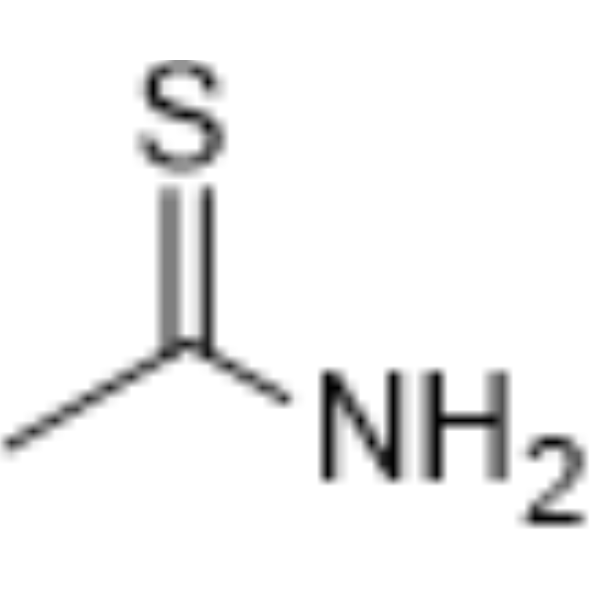
    Thioacetamide
    4 Publications Verification

    Acetothioamide; TAA; Thiacetamide

    Necroptosis Neurological Disease Inflammation/Immunology Cancer
    Thioacetamide (TAA) is an indirect hepatotoxin and causes parenchymal cell necrosis. Thioacetamide requires metabolic activation by microsomal CYP2E1 to thioacetamide-S-oxide initially and then to thioacetamide-S-dioxide, which is a highly reactive metabolite, and its reactive metabolites covalently bind to proteins and lipids thereby causing oxidative stress and centrilobular necrosis. Thioacetamide can induce chronic liver fibrosis, encephalopathy and other events model .
    Thioacetamide
  • HY-113293B
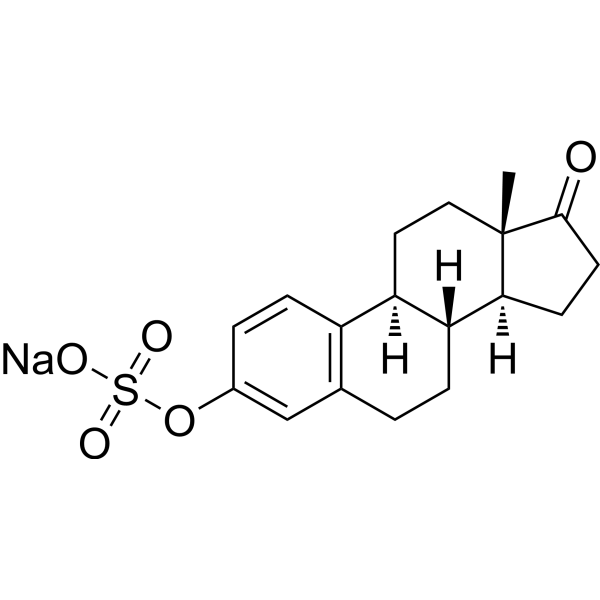
    Estrone sulfate sodium
    3 Publications Verification

    Endogenous Metabolite Estrogen Receptor/ERR Metabolic Disease Cancer
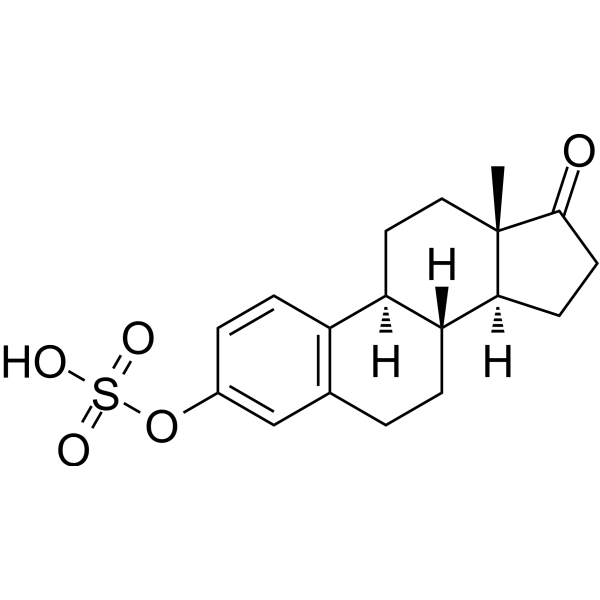
    Estrone sulfate sodium is an inactive endogenous estrogen that can be converted into Estrone (HY-B0234) and Estradiol (HY-B0141). Estrone sulfate sodium is also a substrate of the OATP1B3 transporter. Estrone sulfate sodium can be converted into Estrone and Estradiol in normal mammary parenchymal cells. Estrone sulfate sodium stimulates the growth of nitrosomethylurea-induced mammary tumors in ovariectomized rats and the colony formation of dispersed nitrosomethylurea mammary cells, with conversion into Estrone and Estradiol occurring both in vivo and in vitro during this process. Estrone sulfate sodium is applicable to breast cancer-related research .
    Estrone sulfate sodium
  • HY-134781
    CKK-E12
    4 Publications Verification

    Liposome Others
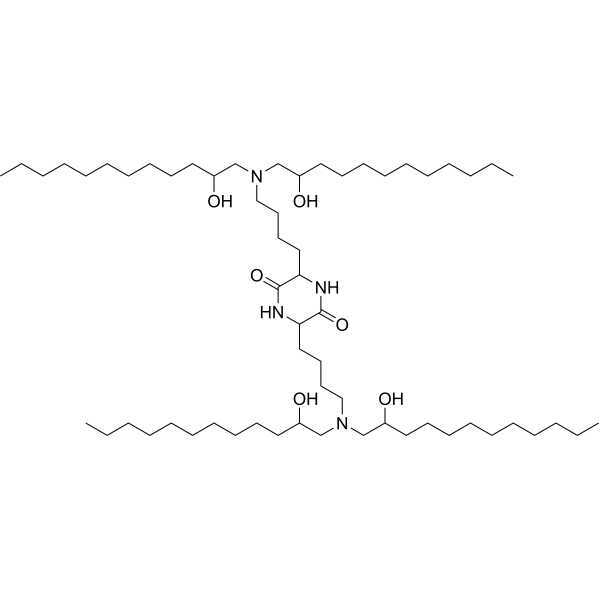
    CKK-E12 is a ionizable lipid in combination with other lipids make up the lipid nanoparticles which are used to deliver RNA-based research. CKK-E12 is highly selective toward liver parenchymal cell in vivo,
    CKK-E12
  • HY-113293A
    Estrone sulfate potassium
    3 Publications Verification

    Endogenous Metabolite Estrogen Receptor/ERR Metabolic Disease Cancer
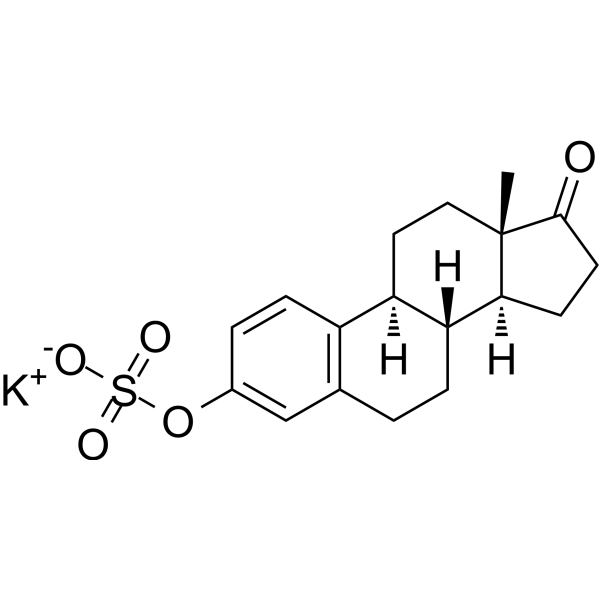
    Estrone sulfate potassium is an inactive endogenous estrogen that can be converted into Estrone (HY-B0234) and Estradiol (HY-B0141). Estrone sulfate potassium is also a substrate of the OATP1B3 transporter. Estrone sulfate potassium can be converted into Estrone and Estradiol in normal mammary parenchymal cells. Estrone sulfate potassium stimulates the growth of nitrosomethylurea-induced mammary tumors in ovariectomized rats and the colony formation of dispersed nitrosomethylurea mammary cells, with conversion into Estrone and Estradiol occurring both in vivo and in vitro during this process. Estrone sulfate potassium is applicable to breast cancer-related research .
    Estrone sulfate potassium
  • HY-N7543

    HIV Endothelin Receptor Infection Metabolic Disease
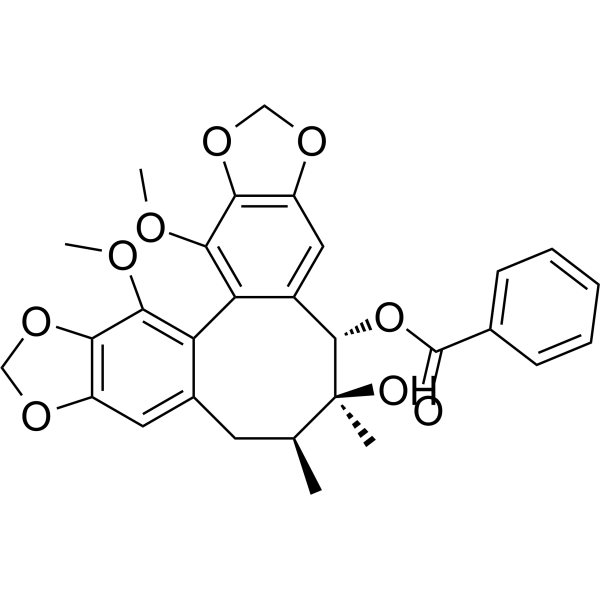
    Schisantherin D is a lignan. Schisantherin D can be isolated from Kadsura interior. Schisantherin D downregulates the expression of ETBR and inhibits the secretion of ECM and ET-1. Schisantherin D alleviates EtOH + ET-1-induced hepatocyte cytotoxicity. Schisantherin D potently inhibits HIV replication in cells .
    Schisantherin D
  • HY-113293BS1

    Isotope-Labeled Compounds Endogenous Metabolite Estrogen Receptor/ERR Metabolic Disease Cancer
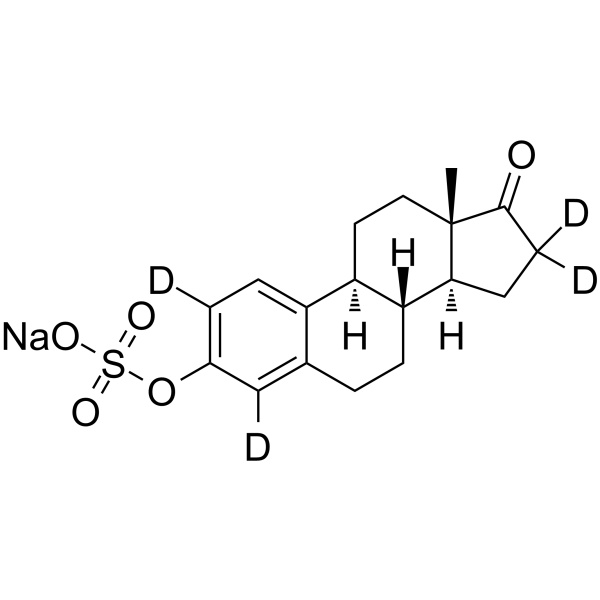
    Estrone sulfate-d4 sodium is the deuterium labeled Estrone sulfate sodium (HY-113293B). Estrone sulfate sodium is an inactive endogenous estrogen that can be converted into Estrone (HY-B0234) and Estradiol (HY-B0141). Estrone sulfate sodium is also a substrate of the OATP1B3 transporter. Estrone sulfate sodium can be converted into Estrone and Estradiol in normal mammary parenchymal cells. Estrone sulfate sodium stimulates the growth of nitrosomethylurea-induced mammary tumors in ovariectomized rats and the colony formation of dispersed nitrosomethylurea mammary cells, with conversion into Estrone and Estradiol occurring both in vivo and in vitro during this process. Estrone sulfate sodium is applicable to breast cancer-related research .
    Estrone sulfate-d4 sodium
  • HY-172762

    HDAC Molecular Glues Histone Demethylase Cancer
    S234984 is a molecular glue degrader. S234984 forms a stable ternary complex with wild-type KBTBD4 E3 ligase and HDAC2 to drive neomorphic ubiquitination and degradation of CoREST1 and LSD1. S234984 can be used for the research of medulloblastoma .
    S234984
  • HY-113293

    Endogenous Metabolite Estrogen Receptor/ERR Metabolic Disease Cancer
    Estrone sulfate is an inactive endogenous estrogen that can be converted into Estrone (HY-B0234) and Estradiol (HY-B0141). Estrone sulfate is also a substrate of the OATP1B3 transporter. Estrone sulfate can be converted into Estrone and Estradiol in normal mammary parenchymal cells. Estrone sulfate stimulates the growth of nitrosomethylurea-induced mammary tumors in ovariectomized rats and the colony formation of dispersed nitrosomethylurea mammary cells, with conversion into Estrone and Estradiol occurring both in vivo and in vitro during this process. Estrone sulfate is applicable to breast cancer-related research .
    Estrone sulfate
  • HY-113293BS

    Isotope-Labeled Compounds Endogenous Metabolite Estrogen Receptor/ERR Metabolic Disease Cancer
    Estrone sulfate-d5 sodium is the deuterium labeled Estrone sulfate sodium (HY-113293B). Estrone sulfate sodium is an inactive endogenous estrogen that can be converted into Estrone (HY-B0234) and Estradiol (HY-B0141). Estrone sulfate sodium is also a substrate of the OATP1B3 transporter. Estrone sulfate sodium can be converted into Estrone and Estradiol in normal mammary parenchymal cells. Estrone sulfate sodium stimulates the growth of nitrosomethylurea-induced mammary tumors in ovariectomized rats and the colony formation of dispersed nitrosomethylurea mammary cells, with conversion into Estrone and Estradiol occurring both in vivo and in vitro during this process. Estrone sulfate sodium is applicable to breast cancer-related research .
    Estrone sulfate-d5 sodium
  • HY-W032848
    Tinoridine
    1 Publications Verification

    Y-3642

    COX Inflammation/Immunology
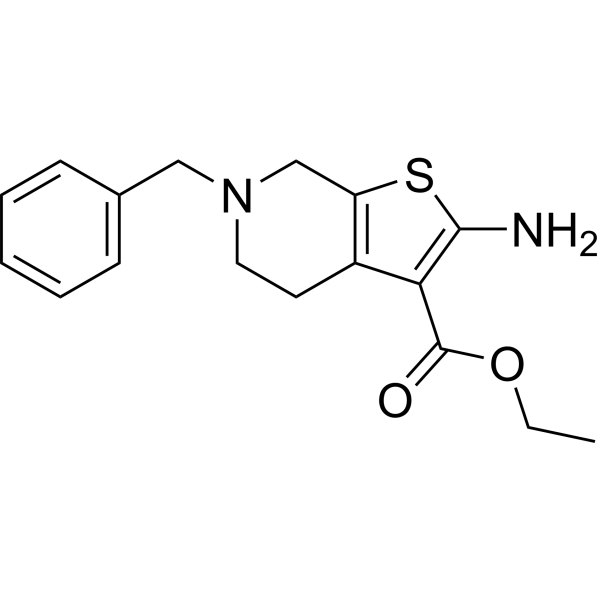
    Tinoridine (Y-3642) is an orally active non-steroidal anti-inflammatory agent with potent antiperoxidative ability and radical scavenger activity. Tinoridine acts function by inhibiting COX enzyme, involves in hepatotoxicity inhibition. .
    Tinoridine
  • HY-115381

    Endogenous Metabolite Cardiovascular Disease
    Lipoxin A5 is an eicosapentaenoic acid derived from pig white blood cells. Lipoxin A5 slowly contracted the guinea pig lung parenchymal strips with a contractile force similar to that of LXA4 and LXB4.2, but LXA5 did not have the vasodilating effect on the aortic smooth muscle shown by LXA4 and LXB4.2 .
    Lipoxin A5
  • HY-P3803

    Neurokinin Receptor Neurological Disease
    [D-Pro4,D-Trp7,9] Substance P (4-11) is a potent antagonist of Substance P (HY-P0201). [D-Pro4,D-Trp7,9] Substance P (4-11) decreases plasma aldosterone (ALDO) concentration .
    [D-Pro4,D-Trp7,9] Substance P (4-11)
  • HY-Y0698R

    Acetothioamide (Standard); TAA (Standard); Thiacetamide (Standard)

    Necroptosis Reference Standards Inflammation/Immunology
    Thioacetamide (Standard) is the analytical standard of Thioacetamide (HY-Y0698). This product is intended for research and analytical applications. Thioacetamide (TAA) is an indirect hepatotoxin and causes parenchymal cell necrosis. Thioacetamide requires metabolic activation by microsomal CYP2E1 to thioacetamide-S-oxide initially and then to thioacetamide-S-dioxide, which is a highly reactive metabolite, and its reactive metabolites covalently bind to proteins and lipids thereby causing oxidative stress and centrilobular necrosis. Thioacetamide can induce chronic liver fibrosis, encephalopathy and other events model .
    Thioacetamide (Standard)
  • HY-113293BR

    Reference Standards Endogenous Metabolite Estrogen Receptor/ERR Metabolic Disease Cancer
    Estrone sulfate sodium (Standard) is the analytical standard of Estrone sulfate sodium (HY-113293B). This product is intended for research and analytical applications. Estrone sulfate sodium is an inactive endogenous estrogen that can be converted into Estrone (HY-B0234) and Estradiol (HY-B0141). Estrone sulfate sodium is also a substrate of the OATP1B3 transporter. Estrone sulfate sodium can be converted into Estrone and Estradiol in normal mammary parenchymal cells. Estrone sulfate sodium stimulates the growth of nitrosomethylurea-induced mammary tumors in ovariectomized rats and the colony formation of dispersed nitrosomethylurea mammary cells, with conversion into Estrone and Estradiol occurring both in vivo and in vitro during this process. Estrone sulfate sodium is applicable to breast cancer-related research.
    Estrone sulfate sodium (Standard)
  • HY-182640

    Adrenergic Receptor Cardiovascular Disease Metabolic Disease Inflammation/Immunology
    SM-11044 is a β-adrenoceptor agonist with Ki values of 18.1 μM (β1), 4.1 μM (β2) and 1.3 μM (β3), showing higher binding selectivity for the β3-adrenoceptor. SM-11044 stimulates cAMP accumulation in cells expressing this receptor. SM-11044 mediates ileal relaxation, tracheal relaxation, pulmonary parenchymal relaxation, increased right atrial heart rate and adipocyte lipolysis .
    SM-11044

Inquiry Online

Your information is safe with us. * Required Fields.

Salutation


Country or Region *

Applicant Name *


Organization Name *

Department *


Email Address *


Product Name *

Cat. No.


Requested quantity *

Phone Number *


Remarks

Inquiry Online

Inquiry Information

Product Name:
Cat. No.:
Quantity:
MCE Japan Authorized Agent:

