1. Search Result
Search Result
Results for "

phytochemical

" in MedChemExpress (MCE) Product Catalog:

21

Inhibitors & Agonists

17

Natural
Products

2

Isotope-Labeled Compounds

Cat. No. Product Name Target Research Areas Chemical Structure
  • HY-N0003
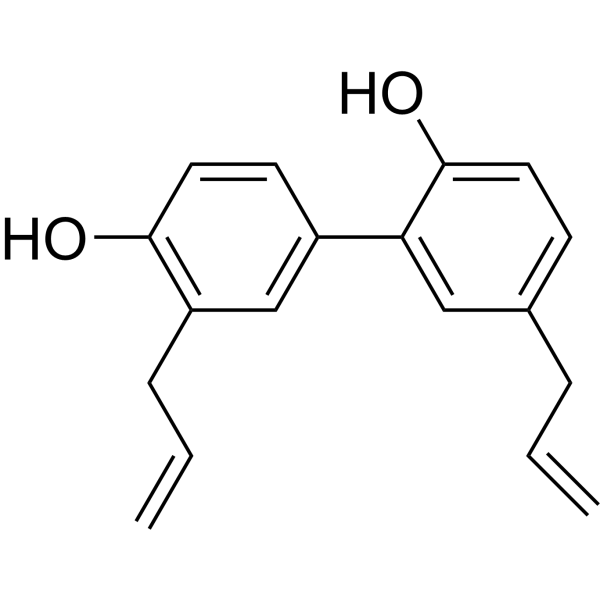
    Honokiol
    Maximum Cited Publications
    66 Publications Verification

    NSC 293100

    Akt Autophagy HCV ERK Cancer
    Honokiol is a bioactive, biphenolic phytochemical that possesses potent antioxidative, anti-inflammatory, antiangiogenic, and anticancer activities by targeting a variety of signaling molecules. It inhibits the activation of Akt. Honokiol can readily cross the blood brain barrier .
    Honokiol
  • HY-N2524

    EGFR Cancer
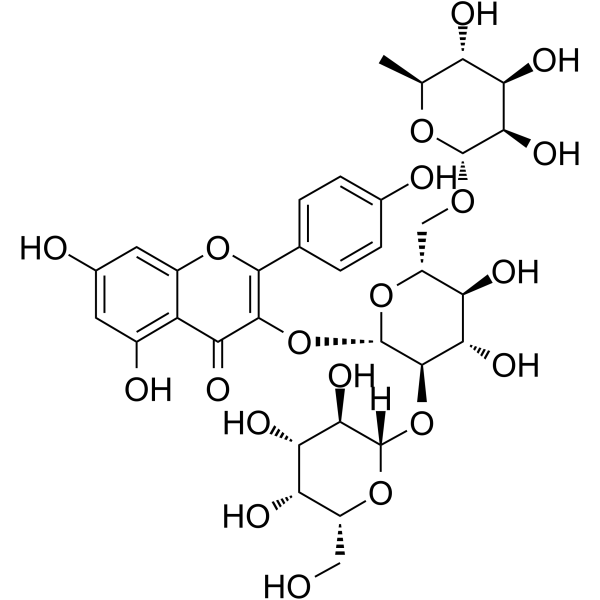
    Camelliaside A is a phytochemical and also a HER2 ligand. Camelliaside A shows no inhibitory effect on mycelial growth of Rhizoctonia solani, indicating no antifungal activity against this pathogen. Camelliaside A is applicable to breast cancer-related research .
    Camelliaside A
  • HY-N0690
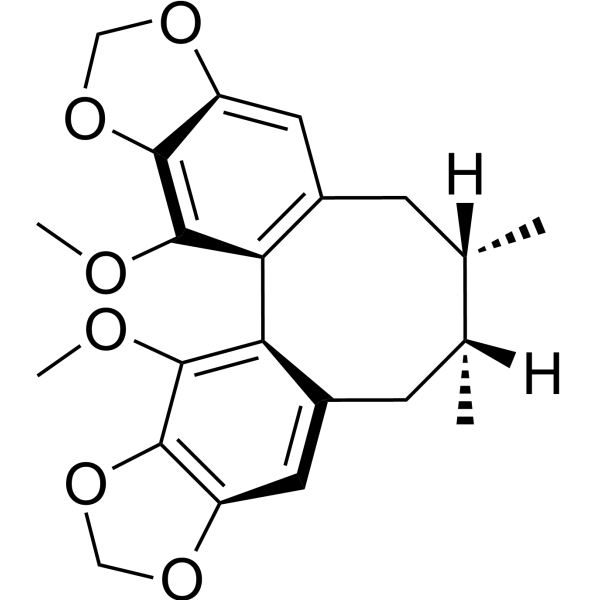
    Schisandrin C
    5 Publications Verification

    Schizandrin-C; Wuweizisu-C

    Apoptosis Neurological Disease Inflammation/Immunology Cancer
    Schisandrin C (Schizandrin-C) is a phytochemical lignan isolated from Schizandra chinensis . Schisandrin C has diverse biological activities, including anticancer, anti-inflammatory and antioxidant effects. Schisandrin C can be used for cancer, alzheimer’s disease, and liver diseases research . Schisandrin C induces cell apoptosis .
    Schisandrin C
  • HY-N10543

    HBV Infection
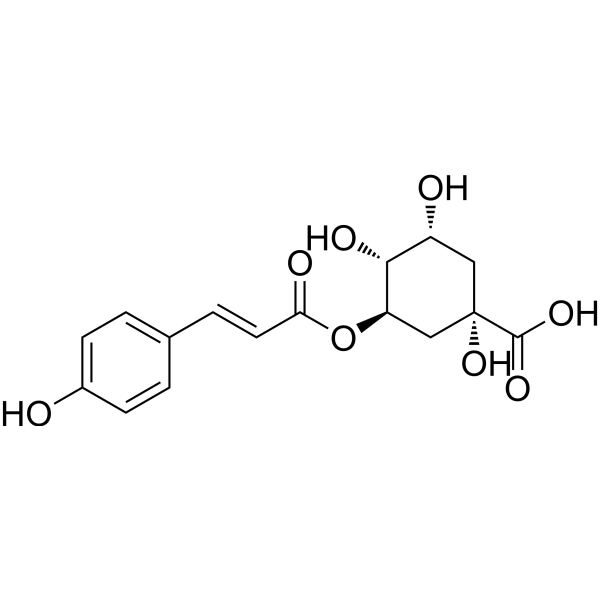
    5-O-(E)-p-Coumaroylquinic acid, a quinic acid derivative, is a potent phytochemical agent against hepatitis B virus .
    5-O-(E)-p-Coumaroylquinic acid
  • HY-N8307

    NO Synthase NF-κB Akt AMPK Calcium Channel Inflammation/Immunology
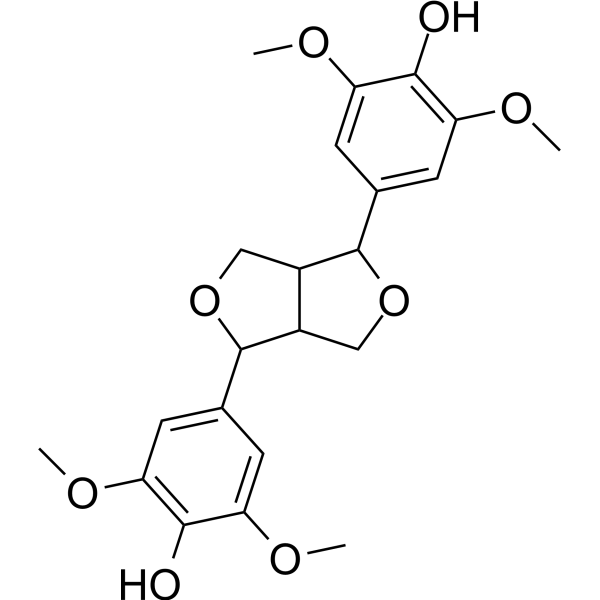
    Syringaresinol is a lignan-type phytochemical with anti-inflammatory activities. Syringaresinol inhibits the NF-κB and AKT signaling pathway in IL-1β-activated mouse chondrocytes. Syringaresinol increases phosphorylation of AMPK, eNOS, and intracellular Ca 2+ levels in HUVECs. Syringaresinol attenuates osteoarthritis progression in mice with Destabilization of the Medial Meniscus (DMM)-induced osteoarthritis. Syringaresinol can be used for the study of osteoarthritis (OA) .
    Syringaresinol
  • HY-N4226

    AP-1 COX Inflammation/Immunology
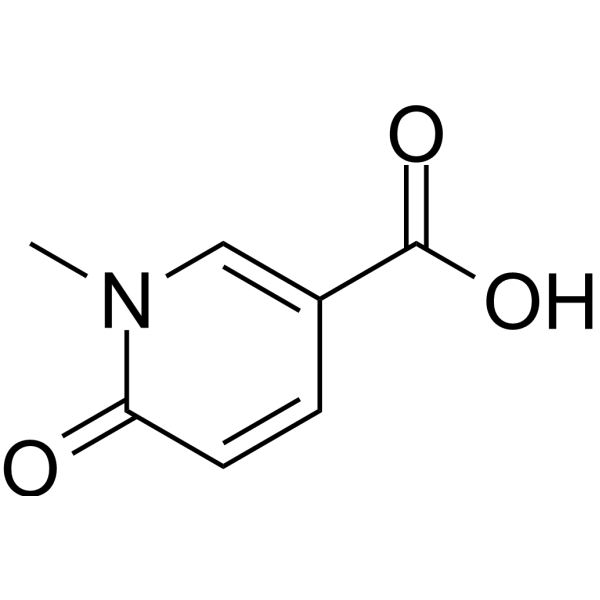
    1-Methyl-6-oxo-1,6-dihydropyridine-3-carboxylic acid is an AP-1 inhibitor which can be found in Cordyceps bassiana. 1-Methyl-6-oxo-1,6-dihydropyridine-3-carboxylic acid downregulates the expression of COX-2. 1-Methyl-6-oxo-1,6-dihydropyridine-3-carboxylic acid can be used for the study of atopic dermatitis .
    1-Methyl-6-oxo-1,6-dihydropyridine-3-carboxylic acid
  • HY-120784

    Drug Derivative Others
    Hexafluoro-diallylhexaflurobisphenol is a Honokiol analogue (HA). Honokiol is a bioactive, biphenolic phytochemical that possesses potent antioxidative, anti-inflammatory, antiangiogenic, and anticancer activities by targeting a variety of signaling molecules .
    Hexafluoro-diallylhexaflurobisphenol
  • HY-W067056

    Methyl (E)-3-phenylpropenoate

    Drug Derivative Inflammation/Immunology
    Methyl (E)-cinnamate (EMC), a phytochemical constituent isolated from Alpinia katsumadai Hayata, is a natural flavor compound with anti-inflammatory properties. Methyl (E)-cinnamate is widely used in the food and commodity industry .
    Methyl (E)-cinnamate
  • HY-403587

    Others Others
    3-(4-Nitrophenyl)-1H-pyrazol-5(4H)-one is a natural product found in Caesalpinia sappan. Caesalpinia sappan contains various phytochemicals and is considered a plant with significant medicinal value .
    3-(4-Nitrophenyl)-1H-pyrazol-5(4H)-one
  • HY-W067056S1

    Methyl(E)-3-phenylpropenoate-d7

    Isotope-Labeled Compounds Inflammation/Immunology
    Methyl(E)-cinnamate-d7 is the deuterium labeled Methyl (E)-cinnamate . Methyl (E)-cinnamate (EMC), a phytochemical constituent isolated from Alpinia katsumadai Hayata, is a natural flavor compound with anti-inflammatory properties. Methyl (E)-cinnamate is widely used in the food and commodity industry .
    Methyl(E)-cinnamate-d7
  • HY-N0003R

    NSC 293100 (Standard)

    Reference Standards Akt Autophagy HCV ERK Cancer
    Honokiol (Standard) is the analytical standard of Honokiol. This product is intended for research and analytical applications. Honokiol is a bioactive, biphenolic phytochemical that possesses potent antioxidative, anti-inflammatory, antiangiogenic, and anticancer activities by targeting a variety of signaling molecules. It inhibits the activation of Akt. Honokiol can readily cross the blood brain barrier .
    Honokiol (Standard)
  • HY-N0690R

    Schizandrin-C (Standard); Wuweizisu-C (Standard)

    Reference Standards Apoptosis Cardiovascular Disease Inflammation/Immunology Cancer
    Schisandrin C (Standard) (Schizandrin-C (Standard)) is the analytical standard of Schisandrin C (HY-N0690). This product is intended for research and analytical applications. Schisandrin C (Schizandrin-C) is a phytochemical lignan isolated from Schizandra chinensis . Schisandrin C has diverse biological activities, including anticancer, anti-inflammatory and antioxidant effects. Schisandrin C is a molecular glue. Schisandrin C can be used for cancer, alzheimer’s disease, and liver diseases research . Schisandrin C induces cell apoptosis .
    Schisandrin C (Standard)
  • HY-N4016

    Phospholipase Neurological Disease
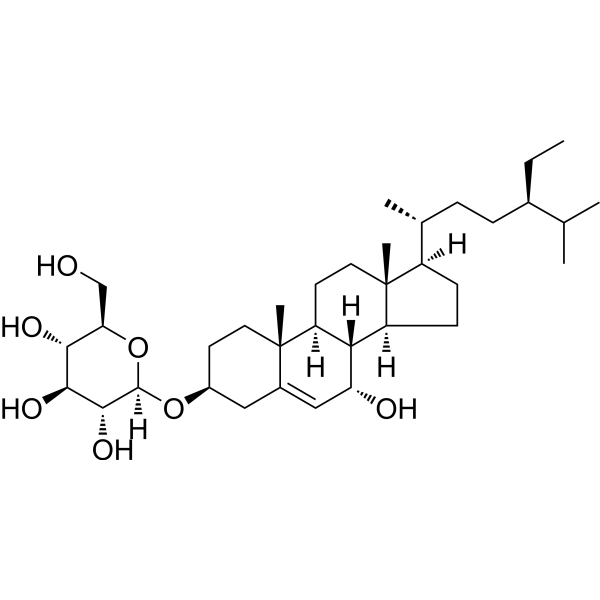
    Ikshusterol 3-O-glucoside is a phytochemical that inhibits PLA2 from snake venoms .
    Ikshusterol 3-O-glucoside
  • HY-N13205

    Others Metabolic Disease
    Mulberry Extract is a mulberry extract, and its components include: Anthocyanidins. Mulberry Extract regulates sugar and lipid metabolism, lowers blood sugar and increases insulin secretion. Its blood sugar regulating effect may be attributed to the phytochemicals it contains, mainly 1-deoxynojirimycin, flavonoids, phenolic compounds and polysaccharides. .
    Mulberry Extract
  • HY-N3517A

    Drug Derivative Inflammation/Immunology
    cis-Oxyresveratrol 3'-O-β-D-glucopyranoside is a derivative of Oxyresveratrol (HY-N1430) and can be found in mulberry branches. cis-Oxyresveratrol 3'-O-β-D-glucopyranoside exhibits antioxidant activity .
    cis-Oxyresveratrol 3'-O-β-D-glucopyranoside
  • HY-121286

    Others Others
    Echinatine is an active compound. Echinatine can be derived from C. barrelieri. C. barrelieri exhibits strong antioxidant activity .
    Echinatine
  • HY-N18250

    Drug Derivative Others
    2,2,7,7-Tetramethyltricycloundec-5-en-4-one is a phytochemical that can be found in the acetone extract of Laurus nobilis L. leaves grown in Saudi Arabia .
    2,2,7,7-Tetramethyltricyclo[6.2.1.01,6]undec-5-en-4-one
  • HY-W067056R

    Methyl (E)-3-phenylpropenoate (Standard)

    Reference Standards Others Inflammation/Immunology
    Methyl (E)-cinnamate (Standard) is the analytical standard of Methyl (E)-cinnamate. This product is intended for research and analytical applications. Methyl (E)-cinnamate (EMC), a phytochemical constituent isolated from Alpinia katsumadai Hayata, is a natural flavor compound with anti-inflammatory properties. Methyl (E)-cinnamate is widely used in the food and commodity industry .
    Methyl (E)-cinnamate (Standard)
  • HY-N19039

    Bacterial Infection Metabolic Disease Inflammation/Immunology
    Aerva Lanata Extract is a versatile herbal extract with a wide range of bioactive compounds and medicinal properties. Aerva Lanata Extract contains various phytochemicals such as flavonoids, terpenoids, alkaloids, tannins, and phenolic compounds. Aerva Lanata Extract shows significant antioxidant, antimicrobial, anti-cancer, anti-inflammatory, and anti-diabetic activities.
    Aerva lanata extract
  • HY-W067056S

    Methyl(E)-3-phenylpropenoate-d5

    Isotope-Labeled Compounds Inflammation/Immunology
    Methyl (E)-cinnamate-d5 is the deuterium labeled Methyl (E)-cinnamate . Methyl (E)-cinnamate (EMC), a phytochemical constituent isolated from Alpinia katsumadai Hayata, is a natural flavor compound with anti-inflammatory properties. Methyl (E)-cinnamate is widely used in the food and commodity industry .
    Methyl (E)-cinnamate-d5
  • HY-N19083

    Bacterial Inflammation/Immunology
    Tecomella undulata Extract, also known as Rohida extract, is a valuable botanical extract derived from the bark and leaves of the Tecomella undulata plant native to the Indian Thar Desert and is rich in bioactive compounds such as flavonoids, quinones, triterpenoids, and other phytochemicals that contribute to its diverse therapeutic properties. This extract is widely recognized for its hepatoprotective effects demonstrated through its ability to protect against liver damage induced by toxins such as paracetamol and carbon tetrachloride by normalizing elevated liver enzyme levels reducing oxidative stress and improving liver function. Additionally, it exhibits significant anti-inflammatory activity comparable to standard drugs like indomethacin and has been used to treat conditions like ascites and hepatosplenomegaly while also showing immunomodulatory effects by enhancing both humoral and cell-mediated immune responses and possessing antimicrobial properties that make it effective against various pathogens. Recent research suggests that Tecomella undulata may have potential in managing nonalcoholic steatohepatitis (NASH) by reducing body weight insulin resistance and improving liver function markers making it a versatile natural remedy with significant applications in hepatoprotection anti-inflammation and immune support.
    Tecomella undulata extract

Inquiry Online

Your information is safe with us. * Required Fields.

Salutation


Country or Region *

Applicant Name *


Organization Name *

Department *


Email Address *


Product Name *

Cat. No.


Requested quantity *

Phone Number *


Remarks

Inquiry Online

Inquiry Information

Product Name:
Cat. No.:
Quantity:
MCE Japan Authorized Agent:

