
Search Result
Results for "
prodrug models
" in MedChemExpress (MCE) Product Catalog:
2
Isotope-Labeled Compounds
| Cat. No. |
Product Name |
Target |
Research Areas |
Chemical Structure |
-
- HY-P99101
-
|
AEX-4089; MGC026 antibody
|
ADC Antibody
|
Cancer
|
|
Vobramitamab is a humanized B7-H3 monoclonal antibody (mAb). Vobramitamab conjugated with prodrug seco-DUBA (HY-132180A) via a cleavable linker, to form antibody-drug conjugate (ADC), the MGC018. MGC018 displays potent antitumor activity in preclinical tumor models of breast, ovarian, and lung cancer, as well as melanoma .
|
-
-
- HY-108292
-
|
|
NF-κB
|
Neurological Disease
Cancer
|
|
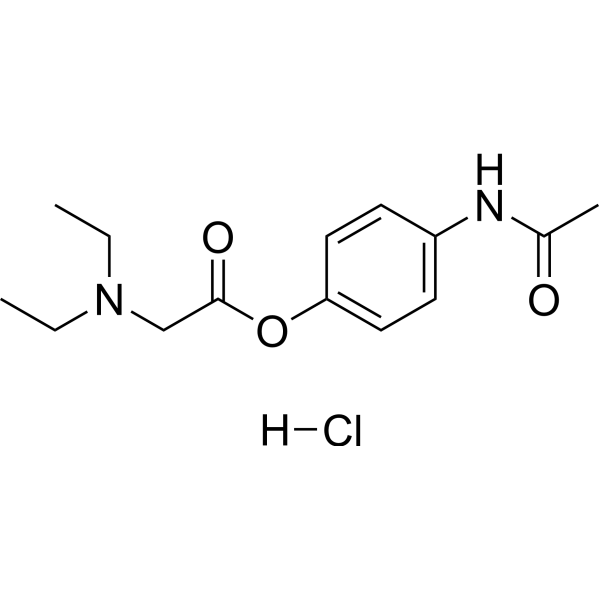
Propacetamol hydrochloride is an orally active prodrug of paracetamol and an inducer of acute liver injury models, with multiple properties including antinociception, antioxidation and gastroprotection. Propacetamol hydrochloride potentiates Tramadol and attenuates Aspirin (HY-14654)-induced gastric mucosal damage and lipid peroxidation. Under specific conditions, Propacetamol hydrochloride also acts as a hepatotoxic inducer, triggering acute liver injury, oxidative stress and apoptosis, with strain differences in toxicity sensitivity. Propacetamol hydrochloride can be used in the research of acute liver injury, drug-induced hepatotoxicity and gastric mucosal damage .
|
-
-
- HY-118956
-
|
ABT-431 hydrochloride; DAS-431 hydrochloride
|
Dopamine Receptor
|
Neurological Disease
|
|
Adrogolide hydrochloride (ABT-431 hydrochloride) is a chemically stable prodrug that can convert to the dopamine D1 receptor agonist A-86929. Adrogolide hydrochloride ameliorates the MPTP (HY-15608)-induced Parkinson's Disease in marmoset model, reduces the dyskinesias tendency. Adrogolide hydrochloride reverses Risperidone (HY-11018)-induced cognitive deficits in monkey .
|
-
-
- HY-178239
-
|
|
Drug Metabolite
AMPK
Reactive Oxygen Species (ROS)
|
Inflammation/Immunology
|
|
DX-8951 Hydroxy-acid is a prodrug of phosphoramide. ProAX can effectively increase intracellular ATP levels. DX-8951 Hydroxy-acid activates the AMPK signaling pathway by increasing the AMP/ATP ratio. DX-8951 Hydroxy-acid can enhance mitochondrial function and antioxidant capacity while reducing reactive oxygen species (ROS) levels. DX-8951 Hydroxy-acid has shown significant anti-aging and longevity effects in both human fibroblast and nematode models .
|
-
-
- HY-17484
-
|
CP 65703
|
Drug Derivative
|
Inflammation/Immunology
|
|
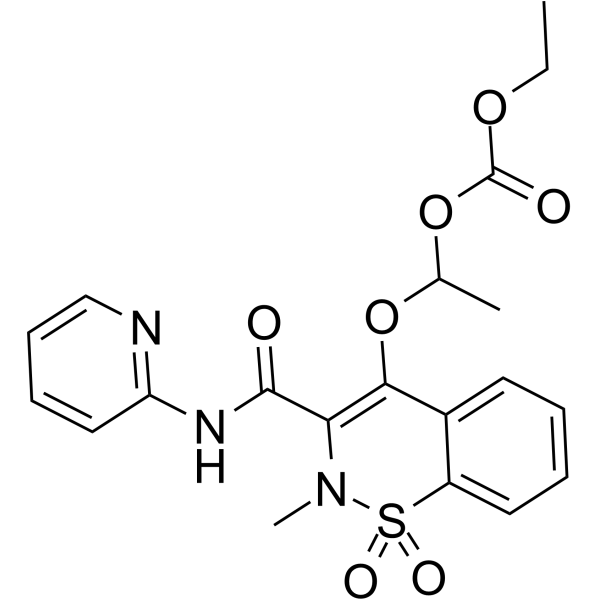
Ampiroxicam is an orally active prodrug of non-steroidal anti-inflammatory drug (NSAID). Ampiroxicam inhibits paw swelling in adjuvant-induced arthritis and acute inflammation models, and suppresses phenylbenzoquinone-induced stretching responses in mice. Ampiroxicam is rapidly and completely converted to Piroxicam (HY-B0253) via non-specific esterases and first-pass metabolism. Ampiroxicam induces contact hypersensitivity and photosensitivity reactions through photoproducts generated by UVA. Ampiroxicam can be used in research related to photosensitivity, adjuvant-induced arthritis, rheumatism, osteoarthritis and other inflammatory diseases .
|
-
-
- HY-134160
-
|
5-DHFU; 5-Fluorodihydropyrimidine-2,4-dione; 5-Fluorodihydrouracil
|
Nucleoside Antimetabolite/Analog
|
Cancer
|
|
5,6-Dihydro-5-Fluorouracil (5-DHFU; 5-Fluorodihydropyrimidine-2,4-dione) is the active metabolite of the thymidylate synthase inhibitor prodrug 5-fluorouracil (HY-90006), which is formed from 5-fluorouracil by dihydropyrimidine dehydrogenase (DPD). 5,6-Dihydro-5-Fluorouracil is cytotoxic to HaCaT keratinocytes (IC50=13.5 μM). Intravenous administration of 5,6-Dihydro-5-Fluorouracil (90 mg/kg/wk) in combination with 5-fluorouracil and the DPD inhibitor eniluracil (HY-10533) slows tumor growth in a rat colon cancer model.
|
-
-
- HY-176869
-
|
|
Drug Derivative
|
Cancer
|
|
EMC-AANL-DOX is a legumain-activated prodrug conjugate of Doxorubicin (DOX) (HY-15142A). EMC-AANL-DOX shows antitumor activity in mouse models of neuroblastoma (NB), breast cancer (4T1), fibrosarcoma (HT1080), and colorectal cancer liver metastases (CT26). EMC-AANL-DOX can be used for cancer research .
|
-
-
- HY-P10759
-
|
|
Peptide-Drug Conjugates (PDCs)
Aminopeptidase
|
Cancer
|
|
DTS-201 sodium (CPI-0004Na) is a peptidic prodrug of Doxorubicin (HY-15142A). DTS-201, comprising the tetrapeptide portion, is cleaved by endopeptidases in the tumor environment to produce metabolites that subsequently enter the cell and are converted to active Doxorubicin. DTS-201 shows antitumoral efficacy in tumor xenograft models of prostate, breast, and lung cancer .
|
-
-
- HY-178239A
-
|
|
Drug Metabolite
AMPK
Reactive Oxygen Species (ROS)
|
Inflammation/Immunology
|
|
DX-8951 Hydroxy-acid sodium is a prodrug of phosphoramide. DX-8951 Hydroxy-acid sodium can effectively increase intracellular ATP levels. DX-8951 Hydroxy-acid sodium activates the AMPK signaling pathway by increasing the AMP/ATP ratio. DX-8951 Hydroxy-acid sodium can enhance mitochondrial function and antioxidant capacity while reducing reactive oxygen species (ROS) levels. DX-8951 Hydroxy-acid sodium has shown significant anti-aging and longevity effects in both human fibroblast and nematode models .
|
-
-
- HY-159925
-
|
|
Cyclic GMP-AMP Synthase
|
Infection
Inflammation/Immunology
|
|
QKY-613 is a prodrug that enhances immune surveillance by targeting nucleic acid modification pathways. QKY-613 promotes the selective incorporation of 6mdA (N6-methyldeoxyadenosine) into viral DNA, enhancing the phase separation potential of DNA, thereby increasing the activation of cGAS and strengthening host immune surveillance. In virus-infected mouse models, QKY-613 significantly reduced mortality in aged mice. QKY-613 holds promise for research on nucleic acid modification-based immune surveillance mechanisms .
|
-
-
- HY-125356
-
|
|
Beta-lactamase
|
Infection
|
|
ETX0282 is an orally active prodrug, with its active form being ETX1317. ETX0282 and ETX1317 are β-lactamase inhibitors of the dioxolane-dibenzo-p-heptane (DBO) type. ETX0282 exhibits high stability during intestinal absorption and can be efficiently converted into ETX1317 in the liver. ETX0282 alone has no bactericidal activity, but in a mouse model of neutropenic thigh infection, it can significantly reduce bacterial load when used in combination with Cefpodoxime Proxetil (HY-N7101). ETX0282 can be used for the study of infections caused by drug-resistant Gram-negative bacteria .
|
-
-
- HY-178819
-
|
|
Integrin
Drug Intermediate
|
Cancer
|
|
NM-001 is a theranostic prodrug that targets ανβ3 integrin. NM-001 consists of cRGD and GFLG peptides, a DCM fluorophore and Chlorambucil (HY-13593). NM-001 internalizes into lysosomes of tumor cells via the cRGD peptide, and generates NM-002 (HY-178820) and Chlorambucil through intracellular cleavage at the GFLG peptide by overexpressed Cathepsin B (CTSB). NM-001 exhibits green fluorescence under physiological conditions, and converts to NIR fluorescence by CTSB activation. NM-001 has significant antitumor activity with low toxicity in HeLa cell xenografts mouse models. NM-001 can be used for real-time drug release monitoring research .
|
-
-
- HY-179221
-
|
|
HIV
|
Infection
|
|
HIV-1-IN-89 (Compound 20a-D) is a prodrug of 20a (an HIV-1 protease inhibitor). HIV-1-IN-89 has better pharmacokinetic properties. HIV-1-IN-89 can be used for studying the resistance to HIV-1 .
|
-
-
- HY-176771
-
|
|
Drug Intermediate
|
Inflammation/Immunology
|
|
Tapinarof prodrug-1 (Compound 31) is an orally active prodrug of Tapinarof (HY-109044). Tapinarof is an AhR agonist. Tapinarof prodrug-1 has an improving effect in the TNBS-induced mouse model of inflammatory bowel disease. Tapinarof prodrug-1 can be used in the research of inflammatory diseases .
|
-
-
- HY-175257
-
|
|
PARP
Reactive Oxygen Species (ROS)
Apoptosis
NF-κB
ERK
Bcl-2 Family
TGF-β Receptor
EGFR
Cadherin
|
Cancer
|
|
Theophylline-platinum(IV) prodrug-1 is a PARP-1 inhibitor. Theophylline-platinum(IV) prodrug-1 enhances DNA
damage, ROS production, mitochondrial dysfunction, apoptosis and S-phase arrest, along with reducing invasion and metastasis in cells. Theophylline-platinum(IV) prodrug-1 exhibits superior antitumor activity in the xenograft SKOV3-BRCA1-KD tumor model. Theophylline-platinum(IV) prodrug-1 can be used for the study of ovarian cancer .
|
-
-
- HY-134521
-
|
|
COX
|
Inflammation/Immunology
|
|
Diclofenac amide is a prodrug for Diclofenac sodium (HY-15037). Diclofenac amide is an orally active inhibitor for COX-1/2, that inhibits the production of prostaglandins (PG) and thromboxanes (TX). Diclofenac amide exhibits anti-inflammatory efficacy in Carrageenan (HY-125474)-induced rat paw edema model without causing gastric ulcer (300 μmol/kg) .
|
-
-
- HY-161838
-
|
|
ATM/ATR
|
Cancer
|
|
ICT10336 is a hypoxia-responsive prodrug of ATR inhibitor, AZD6738 (HY-19323). ICT10336 is hypoxia-activated and specifically releases AZD6738 only in hypoxic conditions in vitro. This can inhibit ATR activation (T1989 and S428 phosphorylation) and subsequently abrogate HIF1a-mediated adaptation of hypoxic cancers cells, thus selectively inducing cell death in 2D and 3D cancer models. ICT10336 is a metabolic substrate of CYPOR activity.
|
-
-
- HY-179418
-
|
|
Apoptosis
|
Cancer
|
|
Ceritinib-platinum(IV)-4-phenylbutyrate (complex 7) is a Ceritinib (HY-15656)-conjugated Platinum(IV) prodrug with anticancer activity. Ceritinib-platinum(IV)-4-phenylbutyrate induces S-phase arrest, DNA damage responses, and apoptosis. Ceritinib-platinum(IV)-4-phenylbutyrate combines cytotoxicity with immune and anti-invasive activation in cancer cell models. Ceritinib-platinum(IV)-4-phenylbutyrate can be used for cancer research, such as non-small cell lung cancer (NSCLC) .
|
-
-
- HY-147015
-
|
|
Orthopoxvirus
|
Infection
|
|
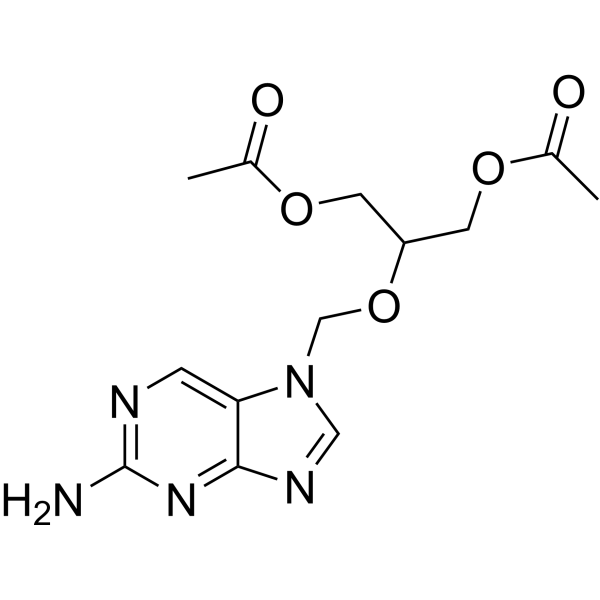
HOE961, the diacetate ester proagent of S2242, is active against respiratory cowpox virus infections, is orally active in infection models. Anti-orthopoxvirus activity .
|
-
-
- HY-134160S
-
|
5-DHFU-13C,15N2; 5-Fluorodihydropyrimidine-2,4-dione-13C,15N2; 5-Fluorodihydrouracil-13C,15N2
|
Isotope-Labeled Compounds
Nucleoside Antimetabolite/Analog
|
Cancer
|
|
5,6-Dihydro-5-Fluorouracil- 13C, 15N2 (5-DHFU- 13C, 15N2) is the 13C- and 15N-labeled labeled 5,6-Dihydro-5-Fluorouracil (HY-134160). 5,6-Dihydro-5-Fluorouracil (5-DHFU; 5-Fluorodihydropyrimidine-2,4-dione) is the active metabolite of the thymidylate synthase inhibitor prodrug 5-fluorouracil (HY-90006), which is formed from 5-fluorouracil by dihydropyrimidine dehydrogenase (DPD). 5,6-Dihydro-5-Fluorouracil is cytotoxic to HaCaT keratinocytes (IC50=13.5 μM). Intravenous administration of 5,6-Dihydro-5-Fluorouracil (90 mg/kg/wk) in combination with 5-fluorouracil and the DPD inhibitor eniluracil (HY-10533) slows tumor growth in a rat colon cancer model.
|
-
-
- HY-W811579
-
|
|
Bacterial
|
Infection
|
|
Bensuldazic acid (compound 4f) is a lipophilic 3,5-disubstituted tetrahydro-2H-1,3,5-thiadiazine-2-thione (THTT) derivative that can be used as a prodrug model. Bensuldazic acid has antifungal activity .
|
-
-
- HY-W811579A
-
|
|
Bacterial
|
Infection
|
|
Bensuldazic acid sodium (compound 4f) is a lipophilic 3,5-disubstituted tetrahydro-2H-1,3,5-thiadiazine-2-thione (THTT) derivative that can be used as a prodrug model. Bensuldazic acid has antifungal activity .
|
-
-
- HY-176149
-
|
|
CaMK
MMP
AMPK
Apoptosis
Autophagy
|
Cancer
|
|
Fluoxetine-Conjugated Platinum(IV) prodrug-1 (Compound 8) is an eEF2K inhibitor. Fluoxetine-Conjugated Platinum(IV) prodrug-1 inhibits cancer cell proliferation, induces DNA damage, cell cycle arrest at S phase and apoptosis. Fluoxetine-Conjugated Platinum(IV) prodrug-1 induces ROS accumulation and mitochondrial dysfunction. Fluoxetine-Conjugated Platinum(IV) prodrug-1 inhibits TNBC cell migration and invasion by inhibiting MMP-2 activity. Fluoxetine-Conjugated Platinum(IV) prodrug-1 induces autophagy in TNBC cells by activating AMPK. Fluoxetine-Conjugated Platinum(IV) prodrug-1 has antitumor activity and activates immunosuppression in the 4T1-Luc mouse model. Fluoxetine-Conjugated Platinum(IV) prodrug-1 can be used in triple-negative breast cancer (TNBC) research .
|
-
-
- HY-175201
-
|
|
LPL Receptor
STAT
|
Cancer
|
|
pro-FTY, a FTY720 (HY-12005) anticancer prodrug, is a sphingosine-1-phosphate (S1P) (HY-108496) inhibitor. pro-FTY specifically inhibits S1P signaling in cancer cells using a drug delivery system (DDS) that reacts with acrolein. pro-FTY significantly inhibits the survival of breast cancer cells, including multidrug-resistant cells and its organoids resistant to Paclitaxel (HY-B0015) or Doxorubicin (HY-15142A). pro-FTY potently suppresses tumor growth in 4T1 cells or organoids xenograft tumors mice model while avoiding lymphocytopenia .
|
-
-
- HY-178451
-
|
|
Apoptosis
|
Cancer
|
|
NQO1-responsive prodrug is a prodrug of Gemcitabine (dFdC) (HY-17026) with anti-cancer effect. NQO1-responsive prodrug remains stable in plasma and liver/intestinal S9 fractions, releasing dFdC in an NQO1-dependent manner. NQO1-responsive prodrug induces S-phase arrest and apoptosis. NQO1-responsive prodrug inhibits tumor growth in an A549 xenograft mouse model. NQO1-responsive prodrug can be used for breast and non-small cell lung cancer (NSCLC) research .
|
-
-
- HY-169832
-
|
|
Drug Intermediate
|
Others
|
|
Sulfanegen is a 3-mercaptopyruvate prodrug and cyanide antidote. Sulfanegen converts toxic cyanide into a relatively non-toxic substance. Sulfanegen, alone or in combination with Cobinamide, has detoxification effect in mouse models of cyanide poisoning .
|
-
-
- HY-159924
-
|
|
Opioid Receptor
|
Neurological Disease
|
|
DBPR116 is a prodrug of BPRMU191 (HY-159923) with blood-brain barrier penetration capability. DBPR116 significantly improves the delivery of centrally targeted drugs. In combination with the antagonist Naltrexone (HY-76711), DBPR116 demonstrated superior safety and analgesic efficacy compared to morphine in various in vivo pharmacological studies, including thermal pain models, cancer pain models, constipation, sedation, psychological dependence, heart rate, and respiratory frequency. As a prodrug strategy for peripheral administration, DBPR116 effectively alleviates pain while reducing adverse effects, showing potential as a safer opioid analgesic .
|
-
-
- HY-168143
-
|
|
Histone Methyltransferase
|
Cancer
|
|
YD1342 is a prodrug of YD1130, which exhibits potent inhibitory effects on cellular substrate methylation, breast cancer cell clonogenicity, and tumor growth in animal models, exceeding or matching known PRMT4-specific inhibitors. .
|
-
-
- HY-174433
-
|
|
Influenza Virus
|
Infection
|
|
PAN endonuclease-IN-4 (Compound 41) is an inhibitor of PAN endonuclease with antiviral properties. PAN endonuclease-IN-4 is the prodrug of 39-(S). PAN endonuclease-IN-4 can significantly suppress viral replication in an A/WSN/33 infected mouse model .
|
-
-
- HY-149065
-
|
|
α-synuclein
|
Neurological Disease
|
|
D-685, a prodrug of D-520, exhibits higher in vivo anti-Parkinsonian efficacy in a reserpinized Parkinson's disease (PD) animal model than the parent D-520. D-685 reduces accumulation of human α-synuclein (α-syn) protein. D-685 exhibits facile brain penetration .
|
-
-
- HY-106154
-
|
|
Peptide-Drug Conjugates (PDCs)
Aminopeptidase
|
Cancer
|
|
DTS-201 (CPI-0004) is a peptidic prodrug of Doxorubicin (HY-15142A). DTS-201, comprising the tetrapeptide portion, is cleaved by endopeptidases in the tumor environment to produce metabolites that subsequently enter the cell and are converted to active Doxorubicin. DTS-201 shows antitumoral efficacy in tumor xenograft models of prostate, breast, and lung cancer .
|
-
-
- HY-168927
-
|
|
Apoptosis
Pyroptosis
PANoptosis
|
Cancer
|
|
Apoptosis inducer 36 (Compound 42) exhibits anti-leukemic activity through reduction of leukemia stem cells (LSCs) and induction of differentiation. Apoptosis inducer 36 inhibits the proliferation of AML cells, arrests cell cycle at G1 phase, and induces PANoptosis including apoptosis, pyroptosis and necrosis. Prodrug of apoptosis inducer 36 exhibits orally active antitumor efficacy in mouse model .
|
-
-
- HY-W747879
-
|
|
Isotope-Labeled Compounds
COX
|
Inflammation/Immunology
|
|
Diclofenac Amide- 13C6 is the 13C-labeled Diclofenac amide (HY-134521). Diclofenac amide is a prodrug for Diclofenac sodium (HY-15037). Diclofenac amide is an orally active inhibitor for COX-1/2, that inhibits the production of prostaglandins (PG) and thromboxanes (TX). Diclofenac amide exhibits anti-inflammatory efficacy in Carrageenan (HY-125474)-induced rat paw edema model without causing gastric ulcer (300 μmol/kg) .
|
-
-
- HY-169986S
-
|
|
JAK
|
Inflammation/Immunology
|
|
TyK2-IN-21-d3 (Compound 3c) is the orally active prodrug of the tyrosine kinase 2. TyK2-IN-21-d3 exhibits good chemical stability in aqueous system under different pHs. TyK2-IN-21-d3 alleviates the effect of gastric acid changes on drug absorption and improve the drug bioavailability in rat model .
|
-
-
- HY-176712
-
|
|
GSNOR
Apoptosis
|
Neurological Disease
|
|
GSNOR-IN-1, a prodrug of GSNOR-IN-2 (HY-176275), is a BBB-penetrable S-nitrosoglutathione reductase (GSNOR) inhibitor. GSNOR-IN-1 has significant protective activity against OGD/R-induced injury. GSNOR-IN-1 regulates calcium signaling and synaptic function via Clstn1 S-nitrosation and inhibits neuronal apoptosis. GSNOR-IN-1 significantly reduces infarct volume while improving neurological deficits in ischemic stroke rat models. GSNOR-IN-1 has neuroprotective activity, promising for ischemic stroke research .
|
-
-
- HY-17484R
-
|
CP 65703 (Standard)
|
Reference Standards
|
Inflammation/Immunology
|
|
Ampiroxicam (Standard) is the analytical standard of Ampiroxicam. This product is intended for research and analytical applications. Ampiroxicam is an orally active prodrug of non-steroidal anti-inflammatory drug (NSAID). Ampiroxicam inhibits paw swelling in adjuvant-induced arthritis and acute inflammation models, and suppresses phenylbenzoquinone-induced stretching responses in mice. Ampiroxicam is rapidly and completely converted to Piroxicam (HY-B0253) via non-specific esterases and first-pass metabolism. Ampiroxicam induces contact hypersensitivity and photosensitivity reactions through photoproducts generated by UVA. Ampiroxicam can be used in research related to photosensitivity, adjuvant-induced arthritis, rheumatism, osteoarthritis and other inflammatory diseases.
|
-
-
- HY-15334
-
|
|
VEGFR
|
Cancer
|
|
CEP-5214, derived from a new indenopyrrolocarbazole template, is a potent inhibitor of vascular endothelial growth factor R2 (VEGF-R2) tyrosine kinase. Structurally, it features optimal substitutions at positions 9 (ethoxymethyl) and 12 (hydroxypropyl) on the indeno[2,1-a]pyrrolo[3,4-c]carbazole-5-one scaffold, leading to high potency against VEGF-R2 (IC50 8 nM). Compound 21 (CEP-5214) exhibits low-nanomolar inhibition of human VEGF-R tyrosine kinases (IC50 4 nM for VEGF-R2/KDR), with good selectivity over other kinases. The compound demonstrated significant cellular and in vivo antitumor activity across various models and advanced into phase I clinical trials as a water-soluble prodrug (CEP-7055) to enhance oral bioavailability .
|
-
-
- HY-182360
-
|
|
PERK
Eukaryotic Initiation Factor (eIF)
Bcl-2 Family
Apoptosis
Reactive Oxygen Species (ROS)
STING
DNA/RNA Synthesis
PD-1/PD-L1
|
Cancer
|
|
Cytisine-Platinum(IV) Prodrug-1 is a Pt(IV) prodrug incorporating the natural compound Cytisine (HY-N0175) with antiproliferative activity against tumor cells. Cytisine-Platinum(IV) Prodrug-1 promotes calcium transfer across the IP3R1-GRP75-VDAC1 axis to drive mitochondrial calcium overload. Cytisine-Platinum(IV) Prodrug-1 initiates unfolded protein response via PERK, eIF2α, ATF4, and CHOP to modulate Bcl-2 and Bax, triggering apoptosis. Cytisine-Platinum(IV) Prodrug-1 induces mitochondrial dysfunction, ROS production, reduced ATP synthesis, DNA damage, and S-phase cell cycle arrest. Cytisine-Platinum(IV) Prodrug-1 activates the cGAS-STING pathway, reduces PD-L1 expression, drives immunogenic cell death. Cytisine-Platinum(IV) Prodrug-1 exhibits high physiological stability, efficient cellular accumulation, and enhanced platinum-DNA binding, and inhibits tumor growth in mouse models with reduced systemic toxicity. Cytisine-Platinum(IV) Prodrug-1 can be used for the research of lung cancer .
|
-
-
- HY-185585
-
|
|
Drug Intermediate
|
Cancer
|
|
JNJ-27548547, Mitomycin C (HY-13316) prodrug, is a Mitomycin C and lipophilic group conjugate. JNJ-27548547 undergoes thiolytic cleavage of its dithiobenzyl linker in the presence of reducing agents to release active substance Mitomycin C. JNJ-27548547 is formulated into pegylated liposomes (PL-MLP) with high antitumor activity in mice models .
|
-
-
- HY-179719
-
|
|
Bacterial
Drug Intermediate
|
Infection
|
|
Anti-MRSA agent 41 (Compound 3d) is a prodrug of Mupirocin (HY-B0958), being a cholesterol disulfide conjugate of Mupirocin. Anti-MRSA agent 41 shows no antibacterial activity or cytotoxicity in vitro. Anti-MRSA agent 41 demonstrates strong anti-MRSA infection efficacy in systemic bacteremia and pneumonia mouse models. Anti-MRSA agent 41 can be used in antibiotic resistance research .
|
-
-
- HY-181777
-
|
|
EGFR
|
Cancer
|
|
Mal-Pip-ValCit-PAB-AZ7550 is a prodrug of EGFR inhibitor. Mal-Pip-ValCit-PAB-AZ7550 selectively binds covalently to albumin via its maleimide moiety. Mal-Pip-ValCit-PAB-AZ7550 exhibits potent in vivo anticancer activity in non-small cell lung cancer xenograft models. Mal-Pip-ValCit-PAB-AZ7550 can be used in research related to non-small cell lung cancer .
|
-
-
- HY-181865
-
|
|
Cholinesterase (ChE)
Drug Intermediate
|
Neurological Disease
|
|
BuChE-IN-22 is a pseudo-irreversible butyrylcholinesterase (BuChE) inhibitor, with IC50 values of 4 nM and 157 nM against hBuChE and hAChE, respectively. It also acts as a prodrug of 7-hydroxysertraline. BuChE-IN-22 releases 7-hydroxysertraline during BuChE inhibition. BuChE-IN-22 completely reverses Aβ25-35-induced short-term and long-term memory impairments in a mouse model of Alzheimer's disease. BuChE-IN-22 can be used in research related to Alzheimer's disease .
|
-
-
- HY-182268
-
|
|
Bacterial
Interleukin Related
TNF Receptor
|
Infection
Inflammation/Immunology
|
|
Antibiofilm agent-21 is an orally active prodrug of Antibiofilm agent-20 (HY-182268) with glucuronidation. Antibiofilm agent-21 avoids absorption in the small intestine via reduced membrane permeability, improving colon delivery rate, and converts to its active form in the colon. Antibiofilm agent-21 increases colon length and reduces IL-17 and TNF-α levels in a murine DSS (HY-116282C)-induced colitis model. Antibiofilm agent-21 can be used for the research of inflammatory bowel disease .
|
-
-
- HY-185150
-
|
9-(2-Phosphonylmethoxy)ethylguanine
|
DNA/RNA Synthesis
CMV
|
Infection
Inflammation/Immunology
Cancer
|
|
PMEG is a nuclear DNA polymerases α, δ, and ε inhibitor that causes DNA chain termination, inhibits DNA synthesis, induces cytotoxicity in dividing cells. PMEG is an acyclic nucleotide phosphonate that forms an active phosphorylated metabolite, PMEG diphosphate, within cells. PMEG has activity against leukemia and melanoma in rodent models. PMEG has poor cell permeability; its prodrug is Rabacfosadine (GS-9219) (HY-13640). PMEG shows antiviral activity against against various DNA virus infections including murine cytomegalovirus (MCMV) and human cytomegalovirus (HCMV). PMEG can be used for the research of non-hodgkin's lymphoma [1][2].
|
-
-
- HY-111103A
-
|
|
PAK
|
Cancer
|
CZh226 hydrochloride is a potent and selective PAK4 inhibitor with an IC50 of 18 nM, and its selectivity for PAK1 is 346 times. The oral bioavailability of CZh226 hydrochloride is poor, and it requires the use of the prodrug PAK4-IN-1 (HY-130628) to improve absorption and metabolic stability. CZh226 hydrochloride can be used for research on colorectal cancer and melanoma .
|
-
-
- HY-179379
-
|
|
Drug Derivative
|
Inflammation/Immunology
|
|
EP4 receptor agonist 3 prodrug (Compound 9) is a prodrug of EP4 receptor agonist (Compound 1a). EP4 receptor agonist 3 prodrug itself has no agonistic activity on the EP4 receptor and needs to be specifically hydrolyzed by intestinal alkaline phosphatase (IAP) in the intestine to release the active molecule, which then exerts the EP4 receptor agonistic effect locally in the intestine. EP4 receptor agonist 3 prodrug has colonic targeting properties and significantly alleviates colitis in mice .
|
-
| Cat. No. |
Product Name |
Target |
Research Area |
-
- HY-P10759
-
|
|
Peptide-Drug Conjugates (PDCs)
Aminopeptidase
|
Cancer
|
|
DTS-201 sodium (CPI-0004Na) is a peptidic prodrug of Doxorubicin (HY-15142A). DTS-201, comprising the tetrapeptide portion, is cleaved by endopeptidases in the tumor environment to produce metabolites that subsequently enter the cell and are converted to active Doxorubicin. DTS-201 shows antitumoral efficacy in tumor xenograft models of prostate, breast, and lung cancer .
|
| Cat. No. |
Product Name |
Target |
Research Area |
Image |
-
- HY-P99101
-
|
AEX-4089; MGC026 antibody
|
ADC Antibody
|
Cancer
|
|
Vobramitamab is a humanized B7-H3 monoclonal antibody (mAb). Vobramitamab conjugated with prodrug seco-DUBA (HY-132180A) via a cleavable linker, to form antibody-drug conjugate (ADC), the MGC018. MGC018 displays potent antitumor activity in preclinical tumor models of breast, ovarian, and lung cancer, as well as melanoma .
|
-
(5)
| Cat. No. |
Product Name |
Chemical Structure |
-
- HY-134160S
-
|
|
|
5,6-Dihydro-5-Fluorouracil- 13C, 15N2 (5-DHFU- 13C, 15N2) is the 13C- and 15N-labeled labeled 5,6-Dihydro-5-Fluorouracil (HY-134160). 5,6-Dihydro-5-Fluorouracil (5-DHFU; 5-Fluorodihydropyrimidine-2,4-dione) is the active metabolite of the thymidylate synthase inhibitor prodrug 5-fluorouracil (HY-90006), which is formed from 5-fluorouracil by dihydropyrimidine dehydrogenase (DPD). 5,6-Dihydro-5-Fluorouracil is cytotoxic to HaCaT keratinocytes (IC50=13.5 μM). Intravenous administration of 5,6-Dihydro-5-Fluorouracil (90 mg/kg/wk) in combination with 5-fluorouracil and the DPD inhibitor eniluracil (HY-10533) slows tumor growth in a rat colon cancer model.
|
-
-
- HY-W747879
-
|
|
|
Diclofenac Amide- 13C6 is the 13C-labeled Diclofenac amide (HY-134521). Diclofenac amide is a prodrug for Diclofenac sodium (HY-15037). Diclofenac amide is an orally active inhibitor for COX-1/2, that inhibits the production of prostaglandins (PG) and thromboxanes (TX). Diclofenac amide exhibits anti-inflammatory efficacy in Carrageenan (HY-125474)-induced rat paw edema model without causing gastric ulcer (300 μmol/kg) .
|
-
| Cat. No. |
Product Name |
|
Classification |
-
- HY-175201
-
|
|
|
Azide
|
|
pro-FTY, a FTY720 (HY-12005) anticancer prodrug, is a sphingosine-1-phosphate (S1P) (HY-108496) inhibitor. pro-FTY specifically inhibits S1P signaling in cancer cells using a drug delivery system (DDS) that reacts with acrolein. pro-FTY significantly inhibits the survival of breast cancer cells, including multidrug-resistant cells and its organoids resistant to Paclitaxel (HY-B0015) or Doxorubicin (HY-15142A). pro-FTY potently suppresses tumor growth in 4T1 cells or organoids xenograft tumors mice model while avoiding lymphocytopenia .
|
Your information is safe with us. * Required Fields.
Inquiry Information
- Product Name:
- Cat. No.:
- Quantity:
- MCE Japan Authorized Agent:

