8 Results for "

scar tissue

" in MedChemExpress (MCE) Product Catalog:
Products (8)

8 Results for "scar tissue" in MCE Product Catalog:

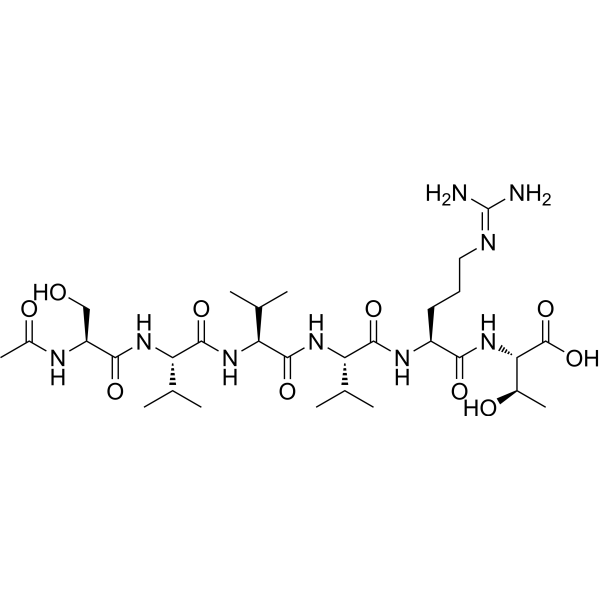
Cat. No.: HY-P5225
CAS No.: 1400634-44-7
Target:  

PGC-1α

Research Areas:  

Others

Acetyl hexapeptide-38 is a tissue repair promoter that targets fibroblasts in the dermis of the skin. It works by promoting collagen synthesis in the dermis and thickening of subcutaneous fat. Acetyl hexapeptide-38 can activate the skin repair mechanism, increase the collagen content in the dermis, improve the skin tissue structure, and has the activity of promoting local tissue repair. Acetyl hexapeptide-38 can be used in the field of cosmetic medicine to repair congenital soft tissue defects, reduce tear grooves and nasolabial folds, eliminate postoperative scars, and conduct micro-plastic surgery of skin tissue .
loading...
    loading...
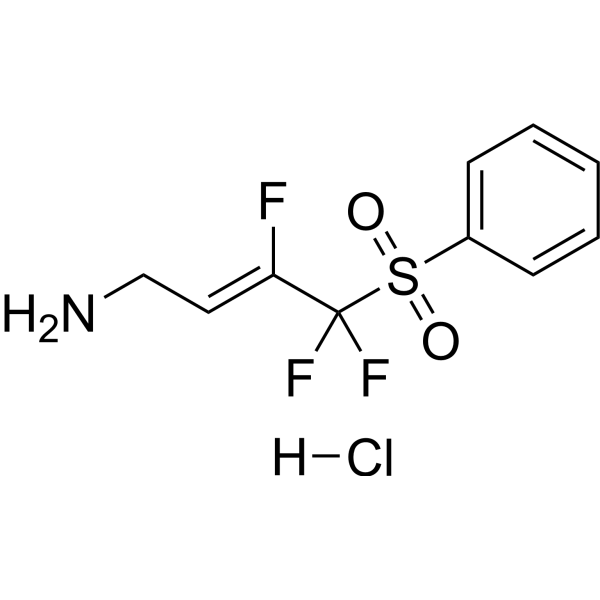
Cat. No.: HY-151499A
CAS No.: 2584947-79-3
Purity:  99.83%
Target:  

Monoamine Oxidase

Research Areas:  

Inflammation/Immunology

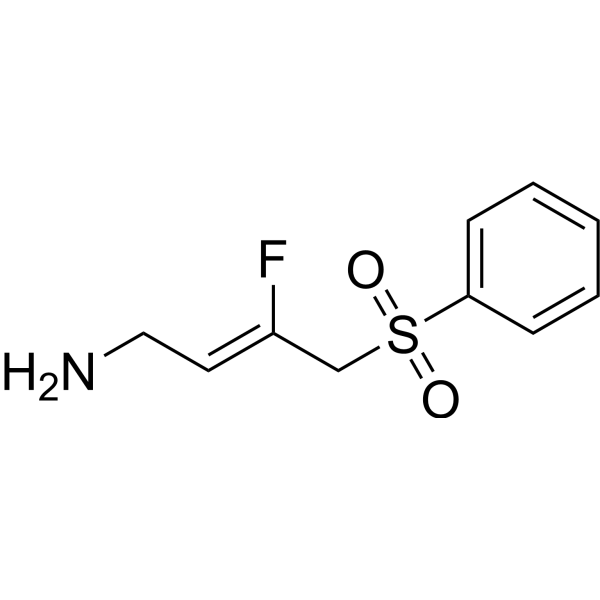
PXS-6302 hydrochloride is an irreversible lysyl oxidase inhibitor with IC50s of 3.7 μM (Bovine LOX), 3.4 μM (rh LOXL1), 0.4 μM (rh LOXL2), 1.5 μM (rh LOXL3), 0.3 μM (rh LOXL4), respectively. PXS-6302 hydrochloride has readily skin penetrability, reduces collagen deposition and significantly improves scar appearance .
loading...
    loading...
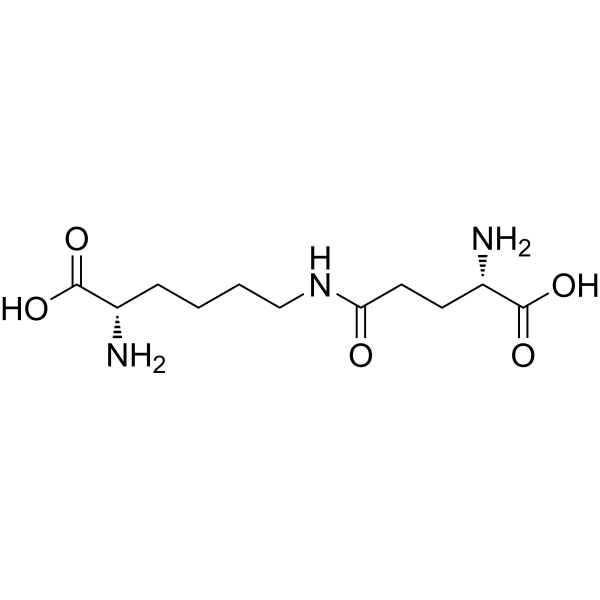
Cat. No.: HY-113089
CAS No.: 17105-15-6
Synonyms: H-Glu(H-Lys-OH)-OH; γ-Glu-ε-Lys
Epsilon-(gamma-glutamyl)-lysine (H-Glu (H-Lys-OH)-OH) is an isodipeptide formed during the proteolytic degradation of proteins containing Nε-(γ-glutamyl)-lysine cross-links. Epsilon-(gamma-glutamyl)-lysine serves as a substrate for γ-glutamylamine cyclotransferase, which specifically cleaves it. Epsilon-(gamma-glutamyl)-lysine is applicable to studies related to transglutaminase-mediated protein cross-linking and turnover, γ-glutamylamine cyclotransferase activity, glaucoma, and tissue scar formation .
loading...
    loading...
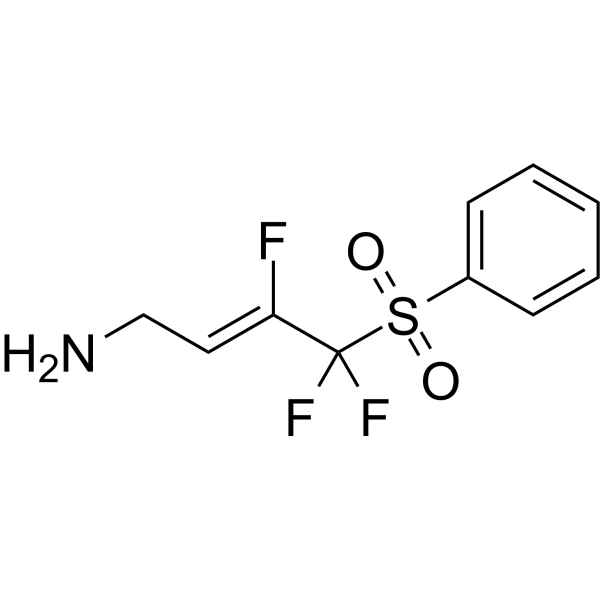
Cat. No.: HY-151499
CAS No.: 2584947-54-4
Target:  

Monoamine Oxidase

Research Areas:  

Others

PXS-6302 is an irreversible lysyl oxidase inhibitor with IC50s of 3.7 μM (Bovine LOX), 3.4 μM (rh LOXL1), 0.4 μM (rh LOXL2), 1.5 μM (rh LOXL3), 0.3 μM (rh LOXL4), respectively. PXS-6302 has readily skin penetrability, reduces collagen deposition and significantly improves scar appearance .
loading...
    loading...
Cat. No.: HY-117200
CAS No.: 351062-08-3
Purity:  ≥98.0%
Synonyms: Nec-7
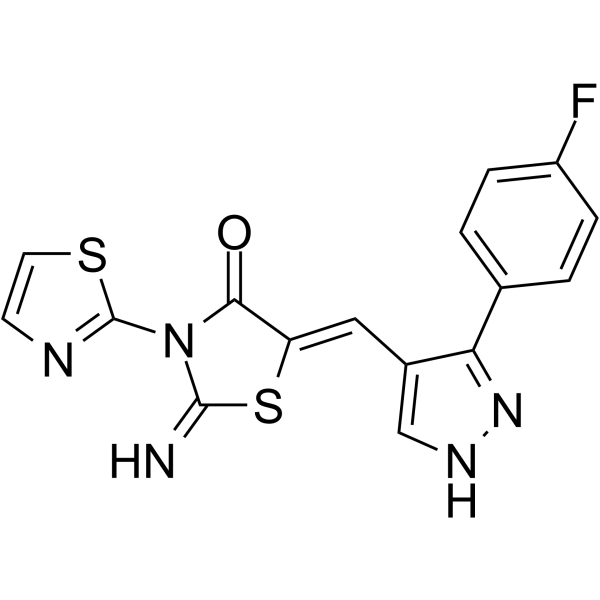
Necrostatin-7 (Nec-7) is a Necroptosis inhibitor with an EC50 of 10.6 μM. Necrostatin-7 inhibits signal transduction from RANK to NFATc1 without affecting the activation of MAPK or NF-κB. Necrostatin-7 suppresses the expression levels of Acp5, Atp6v0d2, Ctsk and Dcstamp. Necrostatin-7 reduces myocardial infarction size, ameliorates adverse left ventricular remodeling, decreases myocardial wall stress, reduces the amount and length of scar tissue, and improves left ventricular function. Necrostatin-7 exerts cardioprotective effects in a rat model of permanent coronary artery occlusion. Necrostatin-7 can be used in research related to osteolytic bone diseases and myocardial infarction .
loading...
    loading...
Cat. No.: HY-151498A
CAS No.: 2409964-40-3
Purity:  99.71%
Target:  

Monoamine Oxidase

Research Areas:  

Others

PXS-4787 hydrochloride is a specific and effective pan-LOX (lysyl oxidase) inhibitor for abolishing lysyl oxidase activity. PXS-4787 hydrochloride inhibits LOX with IC50s of 2 μM (Bovine LOX), 3.2 μM (rh LOXL1), 0.6 μM (rh LOXL2), 1.4 μM (rh LOXL3), 0.2 μM (rh LOXL4), respectively. PXS-4787 hydrochloride reduces deposition and crosslinking of collagen I secreted by human fibroblasts .
loading...
    loading...
Cat. No.: HY-151498
CAS No.: 2409963-50-2
Target:  

Monoamine Oxidase

Research Areas:  

Others

PXS-4787 is a specific and effective pan-LOX (lysyl oxidase) inhibitor for abolishing lysyl oxidase activity. PXS-4787 inhibits LOX with IC50s of 2 μM (Bovine LOX), 3.2 μM (rh LOXL1), 0.6 μM (rh LOXL2), 1.4 μM (rh LOXL3), 0.2 μM (rh LOXL4), respectively .
loading...
    loading...
Cat. No.: HY-L185
2,535 compounds

Fibrosis is a kind of repair response to long-term tissue damage, which is mainly manifested by excessive deposition of extracellular matrix (ECM) and scar formation. Myofibroblasts are the main generating cells of extracellular matrix, and their activation process is related to various pathological mechanisms including Oxidative stress, chronic inflammation and cytokine secretion. Fibrosis can occur in many organs, such as kidneys, liver, heart, lungs, etc. Continuous fibrosis can lead to the destruction of the normal structure of tissues and organs, and if not controlled in time, may cause organ failure or even life-threatening.

MCE contains 2,535 compounds targeting ant-fibrosis targets such as TGF-β, PI3K, Wnt, MMP, etc. These compounds have clear or potential anti-fibrosis activity and can be used for mechanism research and drug screening of fibrosis diseases.

