
1. Search Result
Search Result
Results for "

selective cytotoxicity

" in MedChemExpress (MCE) Product Catalog:

396

Inhibitors & Agonists

7

Fluorescent Dyes

3

Biochemical Assay Reagents

15

Peptides

17

Inhibitory Antibodies

33

Natural
Products

2

Isotope-Labeled Compounds

3

Click Chemistry

3

Oligonucleotides

Cat. No. Product Name Target Research Areas Chemical Structure
  • HY-129905
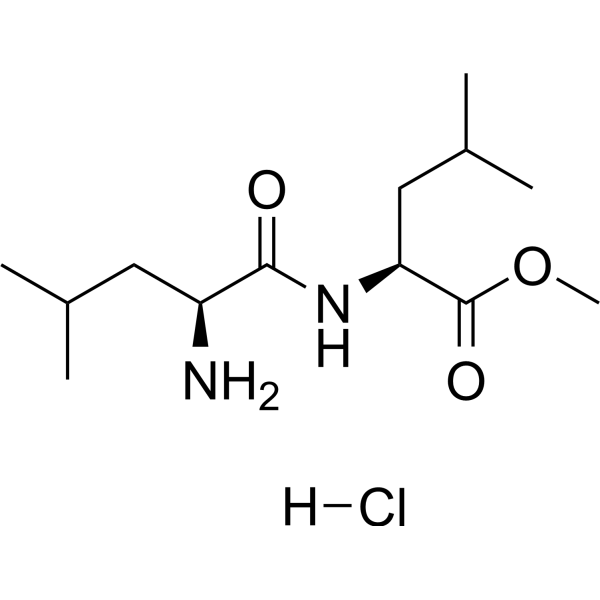
    L-Leucyl-L-Leucine methyl ester hydrochloride
    Maximum Cited Publications
    18 Publications Verification

    LLOMe hydrochloride; Leu-Leu methyl ester hydrochloride; H-Leu-Leu-OMe hydrochloride

    Endogenous Metabolite Inflammation/Immunology
    L-Leucyl-L-Leucine methyl ester (LLOMe) hydrochloride, a dipeptide condensation product of L-leucine methyl ester generated by human monocytes or polymorphonuclear leukocytes, selectively eliminates lymphocytes with cytotoxic potential. L-Leucyl-L-Leucine methyl ester hydrochloride also can induce endolysosomal pathway stress .
    L-Leucyl-L-Leucine methyl ester hydrochloride
  • HY-133122
    UCB-9260
    3 Publications Verification

    TNF Receptor Inflammation/Immunology Cancer
    UCB-9260, an orally active compound, inhibits TNF signaling by stabilising an asymmetric form of the trimer. UCB-9260 is selective for TNF over other superfamily members, and binds TNF with a similar Kd of 13 nM .
    UCB-9260
  • HY-P9948

    Campath-IH

    Apoptosis Cancer
    Alemtuzumab (Campath-IH) is a humanized monoclonal antibody against CD52. Alemtuzumab does not cross-react with murine CD52. Alemtuzumab selectively targets the CD52 antigen to induce profound lymphocyte depletion, followed by recovery of T and B cells with regulatory phenotypes. Alemtuzumab is capable of complement-dependent cytotoxicity and antibody-dependent cell-mediated cytotoxicity (ADCC), as well as induction of apoptosis. Alemtuzumab has the potential for B-cell chronic lymphocytic leukaemia research .
    Alemtuzumab
  • HY-101374A

    (+)-BRD4780

    Imidazoline Receptor Caspase Mitochondrial Metabolism Lactate Dehydrogenase Cardiovascular Disease Neurological Disease Cancer
    AGN 192403 (BRD4780) hydrochloride is a potent and selective imidazoline-1 receptor antagonist with a Ki value of 42 nM. AGN 192403 hydrochloride is also a TMED9 inhibitor. AGN 192403 hydrochloride shows protective effects on oxidative cytotoxicity and mitochondrial inhibitor-induced cytotoxicity in astrocytes. AGN 192403 hydrochloride mitigates the proliferation and migration of differentiated glioma tumor cells. AGN 192403 hydrochloride can be used for glioma tumor and neurological diseases research .
    AGN 192403 hydrochloride
  • HY-12456

    Antibiotic ADC Payload DNA Alkylator/Crosslinker Necroptosis Apoptosis Cancer
    Duocarmycin SA is an orally active antitumor antibiotic with an IC50 of 10 pM . Duocarmycin SA is an extremely potent cytotoxic agent capable of inducing a sequence-selective alkylation of duplex DNA. Duocarmycin SA demonstrates synergistic cytotoxicity against glioblastoma multiforme (GBM) cells treated with proton radiation in vitro .
    Duocarmycin SA
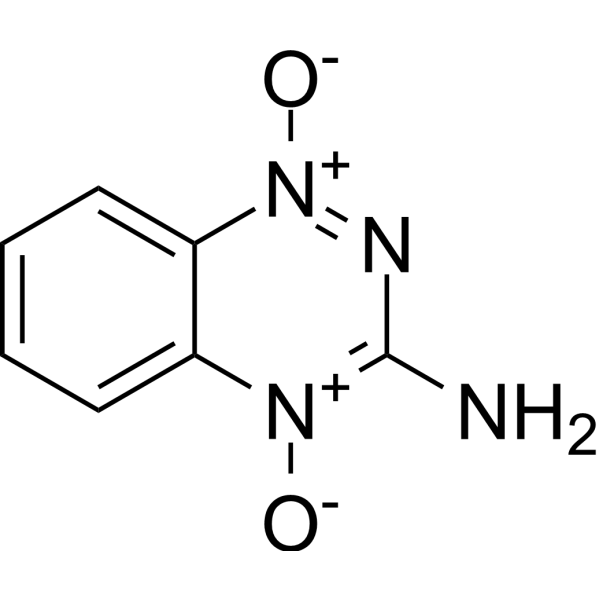
  • HY-13767
    Tirapazamine
    10+ Cited Publications

    SR259075; SR4233; Win59075; SML 0552; SR 259075; Tirazone

    DNA/RNA Synthesis Cancer
    Tirapazamine (SR259075) is an anticancer agent that shows selective cytotoxicity for hypoxic cells in solid tumors, thereby inducing single-and double-strand breaks in DNA, base damage, and cell death. Tirapazamine is an anticancer and bioreductive agent.Tirapazamine (SR259075) can enhance the cytotoxic effects of ionizing radiation in hypoxic cells .
    Tirapazamine
  • HY-P9961

    GSK1841157; OMB-157

    CD20 Cancer
    Ofatumumab is a fully human anti-CD20 monoclonal antibody that induces antibody-dependent cell-mediated cytotoxicity (ADCC) and complement-dependent cytotoxicity (CDC) in CD20-expressing B lymphocytes. Ofatumumab has strong lytic activity against CD20-positive B lymphocytes and eliminates CD20-positive tumor cells through ADCC and CDC. Ofatumumab is particularly effective against drug-resistant cells with low CD20 expression and can be applied to the research of chronic lymphocytic leukemia (CLL) .
    Ofatumumab
  • HY-12406
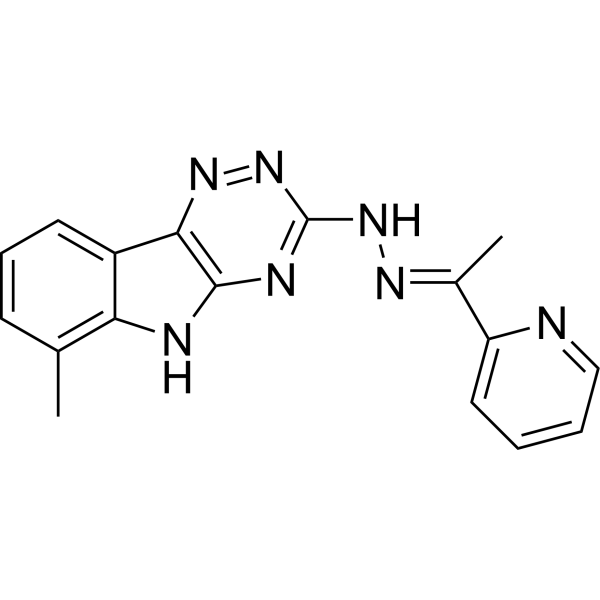
    VLX600
    2 Publications Verification

    Oxidative Phosphorylation Mitochondrial Metabolism Autophagy Cancer
    VLX600 is an iron-chelating inhibitor of oxidative phosphorylation (OXPHOS). VLX600 causes mitochondrial dysfunction and induces a strong shift to glycolysis. VLX600 displays selective cytotoxic activity against malignant cell and induces autophagy. Anticancer activity .
    VLX600
  • HY-114322
    VZ185
    2 Publications Verification

    PROTACs Epigenetic Reader Domain Cancer
    VZ185 is a potent, fast, and selective von Hippel-Lindau based dual degrader probe of BRD9 and BRD7 with DC50s of 4.5 and 1.8 nM, respectively. VZ185 is cytotoxic in EOL-1 and A-402 cells, with EC50s of 3 nM and 40 nM, respectively .
    VZ185
  • HY-111606

    Ligands for Target Protein for PROTAC Cancer
    DUPA, belongs to a class of glutamate ureas, is used as the targeting moiety in agent conjugate to selectively deliver cytotoxic agents to prostate cancer cells .
    DUPA
  • HY-18976
    UF010
    2 Publications Verification

    JAK HDAC NF-κB Toll-like Receptor (TLR) MyD88 Interleukin Related Neurological Disease Inflammation/Immunology Cancer
    UF010 is a selective inhibitor of class I HDAC. UF010 has cytotoxicity to cancer cells and reduces neuroinflammation in the hippocampus. UF010 can be used for the research of neurological diseases .
    UF010
  • HY-P990026

    ABC-008

    C-type Lectin-like Receptors (CTLRs) Inflammation/Immunology
    Ulviprubart (ABC-008) is a monoclonal antibody targeting the KLRG1 receptor that selectively depletes highly differentiated cytotoxic T cells. Ulviprubart can be used in the study of inclusion body myositis (IBM) .
    Ulviprubart
  • HY-132247

    Estrogen Receptor/ERR Cancer
    ErSO is a selective anticipatory unfolded protein response (a-UPR) activator. ErSO acts through ERα to elicit strong and sustained cytotoxic activation of the a-UPR. ErSO can be used for the research of cancer .
    ErSO
  • HY-10996A
    KHS101 hydrochloride
    1 Publications Verification

    FGFR Neurological Disease Cancer
    KHS101 hydrochloride is a selective neuronal differentiation inducer that can cross the blood-brain barrier. KHS101 hydrochloride exhibits selective cytotoxicity against glioblastoma multiforme (GBM). KHS101 hydrochloride interacts with transforming acidic coiled-coil protein (TACC3). KHS101 hydrochloride can be used in GBM research .
    KHS101 hydrochloride
  • HY-135470
    Nifurpirinol
    1 Publications Verification

    P-7138

    Bacterial Infection
    Nifurpirinol (P-7138) is a selective prosubstrate of bacterial nitroreductase (NTR). NTR catalyzes the reduction of nifurpirinol to generate cytotoxic metabolites that induce apoptosis in target cells. Nifurpirinol selectively ablates NTR-expressing cells such as pancreatic β cells, osteoblasts, dopaminergic neurons, and podocytes in transgenic zebrafish models. Nifurpirinol can be used in regeneration studies and disease modeling such as focal segmental glomerulosclerosis (FSGS) .
    Nifurpirinol
  • HY-121087
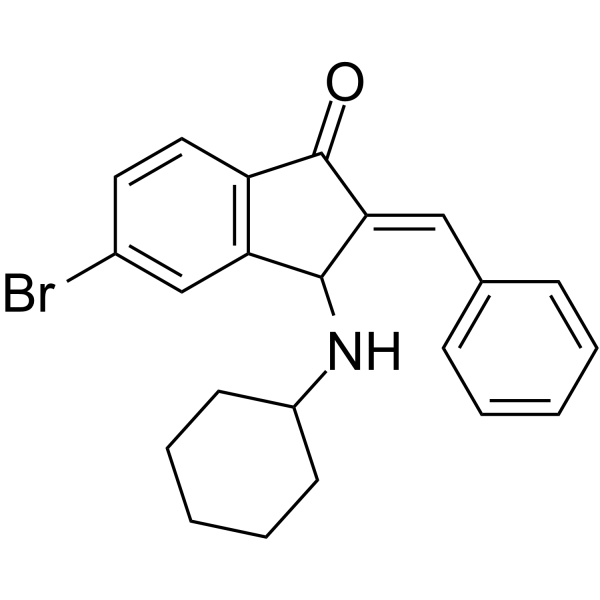
    BCI-215
    3 Publications Verification

    Phosphatase Cancer
    BCI-215 is a potent and tumor cell-selective dual specificity MAPK phosphatase (DUSP-MKP) inhibitor. BCI-215 has cytotoxicity for tumor cells but not normal cells .
    BCI-215
  • HY-P1103
    CTCE-9908
    1 Publications Verification

    CXCR Cancer
    CTCE-9908 is a potent and selective CXCR4 antagonist. CTCE-9908 induces mitotic catastrophe, cytotoxicity and inhibits migration in CXCR4-expressing ovarian cancer cells .
    CTCE-9908
  • HY-D2318

    Fluorescent Dye Others
    Flipper-TR 5 is a Flipper probe containing a terminal carboxylate for retention on the plasma membrane. Flipper-TR 5 selectively labels the cytoplasmic membrane, and exhibits excellent mechanical sensitivity, negligible cytotoxicity and controllable phototoxicity .
    Flipper-TR 5
  • HY-100746
    STF-62247
    2 Publications Verification

    Autophagy Cancer
    STF-62247 is an autophagy inducer that selectively cytotoxic to VHL-deficient renal cell carcinoma (IC50 of 0.625 μM and 16 μM in RCC4 and RCC4/VHL cells, respectively) .
    STF-62247
  • HY-157131
    TRPV2-selective blocker 1
    2 Publications Verification

    TRP Channel Neurological Disease
    TRPV2-selective blocker 1 is a TRPV2-selective blocker that inhibits calcium influx and ionic currents. TRPV2-selective blocker 1 exhibits an IC50 of 6.3 μM against rat TRPV2, and shows no activity against TRPV1, TRPV3 or TRPV4 channels. TRPV2-selective blocker 1 attenuates macrophage phagocytosis, LPS-induced macrophage migration, and calcium microdomains generated by peripheral TRPV2. TRPV2-selective blocker 1 is non-cytotoxic and can be used to investigate the function of TRPV2 during immune processes .
    TRPV2-selective blocker 1
  • HY-W028690
    DNMDP
    4 Publications Verification

    Phosphodiesterase (PDE) Cancer
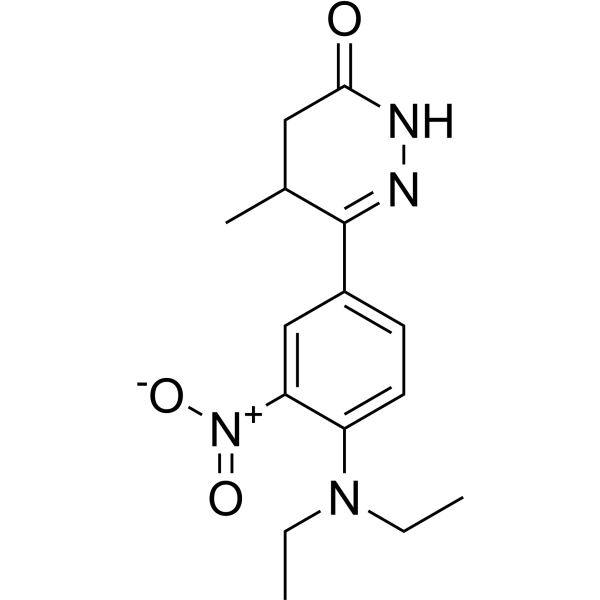
    DNMDP, a phosphodiesterase 3A (PDE3A) inhibitor, is a potent and selective cancer cell cytotoxic agent. DNMDP binding to PDE3A promotes an interaction between PDE3A and Schlafen 12 (SLFN12). DNMDP shows clear cell-selective cytotoxicity .
    DNMDP
  • HY-173072

    Pregnane X Receptor (PXR) Others
    SJPYT-310 is a selective PXR antagonist. SJPYT-310 shows no significant cytotoxicity .
    SJPYT-310
  • HY-17605A
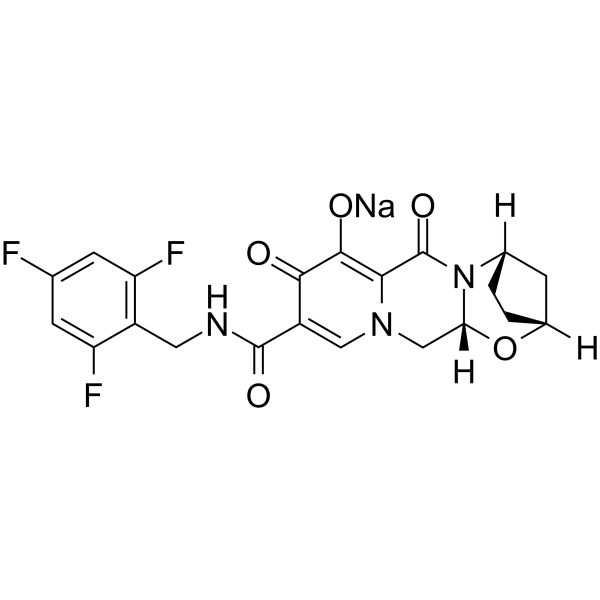
    Bictegravir sodium
    15+ Cited Publications

    GS-9883 sodium

    HIV Integrase HIV Infection
    Bictegravir sodium is a potent inhibitor of HIV-1 integrase, with an IC50 of 7.5 nM. Bictegravir sodium exhibits potent and selective anti-HIV activity and low cytotoxicity .
    Bictegravir sodium
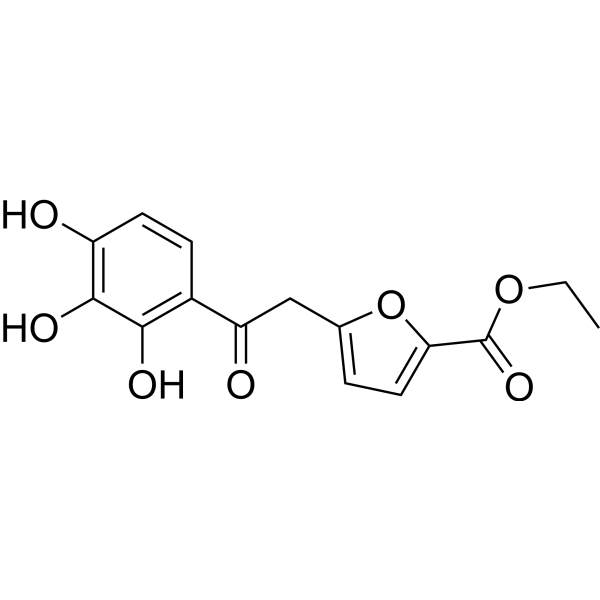
  • HY-N1039A

    Others Cancer
    Manool is a diterpene from Salvia officinalis. Manool induces selective cytotoxicity in cancer cells. Manool arrests the cancer cells at the G(2)/M phase of the cell cycle .
    Manool
  • HY-P991061

    CHS-114; SRF-114

    CCR Cancer
    Tagmokitug (CHS-114; SRF-114) is a fully human IgG1 antibody targeting CCR8. Tagmokitug selectively binds to human CCR8 (Kd = 502 pM) and mediates the death of CCR8-expressing cells via antibody-dependent cellular cytotoxicity and antibody-dependent cellular phagocytosis. Tagmokitug selectively eliminates intratumoral regulatory T cells, induces tumor growth inhibition, remodels the tumor immune microenvironment, and promotes the differentiation of cytotoxic CD8 + T cell subsets. Tagmokitug can be used for the research of solid tumors .
    Tagmokitug
  • HY-147652

    DNA Stain Others
    G-quadruplex DNA fluorescence probe 1 (Compound E1) is a selective G-quadruplex DNA targeting fluorescent probe. G-quadruplex DNA fluorescence probe 1 can pass through membrane and enter living cells with low cytotoxicity .
    G-quadruplex DNA fluorescence probe 1
  • HY-118762

    Cathepsin Cancer
    KGP94 is a selective inhibitor of cathepsin L with an IC50 of 189 nM . KGP94 inhibits migration and invasion of metastatic carcinoma and shows low cytotoxicity (GI50=26.9 µM) against various human cell lines .
    KGP94
  • HY-13562

    AQ4N

    NO Synthase Cancer
    Banoxantrone (AQ4N), as a prototype hypoxia selective cytotoxin, can be reduced to AQ4, a potent topoisomerase II inhibitor. Banoxantrone selectively kills hypoxic cells via an iNOS-dependent mechanism. Banoxantrone shows a potent cytotoxicity and hypoxia-selective effect enhanced by radiation .
    Banoxantrone
  • HY-121088

    P-glycoprotein Cardiovascular Disease Others
    Ceefourin 2 is a potent and highly selective inhibitor of MRP4. Ceefourin 2 inhibits the transport of MRP4 substrates but is not selective for other ABC transporters. Ceefourin 2 shows lower cytotoxicity and higher microsomal and acid stability .
    Ceefourin 2
  • HY-149290

    Prostaglandin Receptor Cancer
    AMX12006 is a potent, selective and orally active EP4 antagonist with an IC50 value of 4.3 nM. AMX12006 shows cytotoxic and antitumor activity .
    AMX12006
  • HY-130013

    Fluorescent Dye Others
    HKYellow-AM (6/12-mixture) is a yellow fluorescent probe that can detect ONOO- in living cells and tissues with high selectivity and sensitivity without cytotoxicity .
    HKYellow-AM (6/12-mixture)
  • HY-123554

    Apoptosis Cancer
    Flavagline FL3 is a flavagline with potent and selective cytotoxicity in cancer cells.Flavagline FL3 induces apoptosis of HL60 and Hela cells by triggering the translocation of Apoptosis Inducing Factor (AIF) and caspase-12 to the nucleus .
    Flavagline FL3
  • HY-122751

    Phosphodiesterase (PDE) Cancer
    (R)-DNMDP is a potent and selective cancer cell cytotoxic agent. (R)-DNMDP, the R-form of DNMDP, binds PDE3A directly. (R)-DNMDP has a 500-fold lower EC50 compared to the (S)-enantiomer in HeLa cell line .
    (R)-DNMDP
  • HY-178946

    IRE1 Cancer
    IA107 is a potent, selective, and allosteric IRE1α RNase (IC50 = 16 nM (non phosphorylated), IC50 = 9 nM (phosphorylated)) inhibitor. IA107 can inhibit endoplasmic reticulum stress-induced XBP1 mRNA splicing and protein expression, and has no cytotoxicity .
    IA107
  • HY-130612

    Epigenetic Reader Domain PROTACs Cancer
    PROTAC BRD2/BRD4 degrader-1 (compound 15) is a potent and selective BET protein BRD4 and BRD2 degrader, connected by ligands for Cereblon and BET. PROTAC BRD2/BRD4 degrader-1 rapidly induces reversible, long-lasting, and unexpectedly selective removal of BRD4 and BRD2 over BRD3. It effectively inhibits solid tumors with low cytotoxic effect. PROTAC BRD2/BRD4 degrader-1 is composed of the BET inhibitor, a linker, and the ligand thalidomide for cereblon (CRBN)/cullin 4A .
    PROTAC BRD2/BRD4 degrader-1
  • HY-75577

    Drug Intermediate Cancer
    4-Amino-3-methoxybenzoic acid is a drug intermediate that can be used to construct benzothiazole compounds with anti-breast cancer activity .
    4-Amino-3-methoxybenzoic acid
  • HY-101374

    (+)-BRD4780 free base

    Imidazoline Receptor Mitochondrial Metabolism Caspase Lactate Dehydrogenase Cardiovascular Disease Neurological Disease Cancer
    AGN 192403 (BRD4780) is a potent and selective imidazoline-1 receptor antagonist with a Ki value of 42 nM. AGN 192403 is also a TMED9 inhibitor. AGN 192403 shows protective effects on oxidative cytotoxicity and mitochondrial inhibitor-induced cytotoxicity in astrocytes. AGN 192403 mitigates the proliferation and migration of differentiated glioma tumor cells. AGN 192403 can be used for glioma tumor and neurological diseases research .
    AGN 192403
  • HY-135275

    Bcl-2 Family Cancer
    BCL-XL-IN-4 (compound 10) is a potent and selective BCL-XL inhibitor with Ki values of 0.042, 170 nM for BCL-XL, BCL-2, respectively. BCL-XL-IN-4 shows cytotoxicity .
    BCL-XL-IN-4
  • HY-146819

    Carbonic Anhydrase Cancer
    Compound 9 is the most effective against tumor specific Ca ix/ca XII (ki=29.1 and 8.8 nm), so it is possible to evaluate its cytotoxicity and selectivity to HepG-2, HCT-116 and MCF-7 cancer cell lines in vitro, and its IC50 values to tumor cells are 1.78, 1.94 and 3.07, respectively μ M. It showed that it had obvious cytotoxicity.
    CAIX/CAXII-IN-1
  • HY-17605AR

    GS-9883 sodium (Standard)

    Reference Standards HIV Integrase HIV Infection
    Bictegravir (sodium) (Standard) is the analytical standard of Bictegravir (sodium). This product is intended for research and analytical applications. Bictegravir sodium is a potent inhibitor of HIV-1 integrase, with an IC50 of 7.5 nM. Bictegravir sodium exhibits potent and selective anti-HIV activity and low cytotoxicity .
    Bictegravir sodium (Standard)
  • HY-105314

    Others Cancer
    LY-33169 is an antitumor agent. LY-33169 had selective cytotoxicity against Colon Adenocarcinoma-38, Human Colon-116, Human Prostate LNCaP, and Human Breast WSU-Br-1 cells .
    LY-33169
  • HY-146548

    Apoptosis Bcl-2 Family Caspase PARP Cancer
    Anticancer Agent 43 is a potent anticancer agent. Anticancer Agent 43 induces apoptosis by caspase 3, PARP1, and Bax dependent mechanisms. Anticancer Agent 43 induces DNA damage .
    Anticancer agent 43
  • HY-16984

    Itk Inflammation/Immunology
    GNE-4997 is a potent and selective interleukin-2-inducible T-cell kinase (ITK) inhibitor with a Ki of 0.09 nM, and the correlation between the basicity of solubilizing elements in GNE-4997 and off-target antiproliferative effects reduces cytotoxicity .
    GNE-4997
  • HY-147971

    Parasite Topoisomerase Infection Cancer
    Anticancer agent 75 is a potent anticancer agent. Anticancer agent 75 shows cytotoxicity and selectivity in cancer cell lines. Anticancer agent 75 shows cytotoxicity to normal human kidney cell lines is at least 35 times lower than that of the Doxorubicin standard. Anticancer agent 75 shows good activity of antiplasmodial .
    Anticancer agent 75
  • HY-146418

    Flavivirus Infection
    Antiviral agent 20 (Compound 17b) is a selective inhibitor against Zika virus infection with an EC50 of 4.5 µM. Antiviral agent 20 has low cytotoxicity .
    Antiviral agent 20
  • HY-178940

    Apoptosis Checkpoint Kinase (Chk) CDK DNA/RNA Synthesis Bcl-2 Family Caspase Cancer
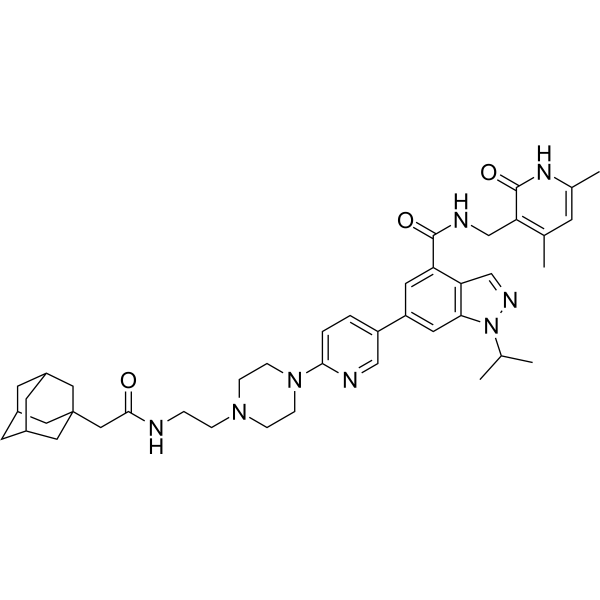
    Apoptosis inducer 49 is a selective apoptosis inducer with high specificity against CCRF-CEM leukemia cells (IC50 = 2.68 μM). Apoptosis inducer 49 enhances RNA synthesis and replication stress, activates the Chk1-p21 axis, leading to S-phase arrest. Apoptosis inducer 49 can inhibit Bcl-2 and activate caspase-3. Apoptosis inducer 49 can be used for the study of Leukemia .
    Apoptosis inducer 49
  • HY-P1103A

    CXCR Cancer
    CTCE-9908 TFA is a potent and selective CXCR4 antagonist. CTCE-9908 TFA induces mitotic catastrophe, cytotoxicity and inhibits migration in CXCR4-expressing ovarian cancer cells .
    CTCE-9908 TFA
  • HY-111402

    Erizomycin; NSC 246134

    Bacterial Antibiotic Infection
    Pyridomycin (Erizomycin) is a selective and low cytotoxic inhibitor of Mycobacterium tuberculosis that effectively targets InhA. Pyrdomycin is also an antibiotic that can be obtained from metabolites of Dactylosporangium fulvum. Pyrdomycin can be used in the study of bacterial infections such as tuberculosis .
    Pyridomycin
  • HY-101280

    NAMPT Cancer
    LB-60-OF61 is a NAMPT inhibitor and is a cytotoxic compound with a selectivity towards MYC overexpressing cell lines .
    LB-60-OF61
  • HY-101280A

    NAMPT Cancer
    LB-60-OF61 hydrochloride is a potent NAMPT (nicotinamide phosphoribosyltransferase) inhibitor. LB-60-OF61 hydrochloride is a cytotoxic compound with a selectivity towards MYC overexpressing cell lines .
    LB-60-OF61 hydrochloride

Inquiry Online

Your information is safe with us. * Required Fields.

Salutation


Country or Region *

Applicant Name *


Organization Name *

Department *


Email Address *


Product Name *

Cat. No.


Requested quantity *

Phone Number *


Remarks

Inquiry Online

Inquiry Information

Product Name:
Cat. No.:
Quantity:
MCE Japan Authorized Agent:

