



MMG-11 quarterhydrate
Based on 5 publication(s) in Google Scholar
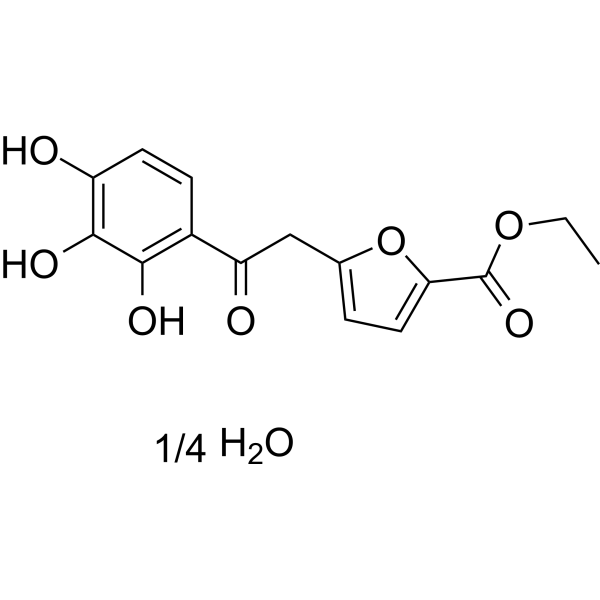
MMG-11 quarterhydrate is a potent and selective human TLR2 antagonist with low cytotoxicity. MMG-11 quarterhydrate inhibits both TLR2/1 and TLR2/6 signaling with IC50s of 1.7 μM for Pam3CSK4-induced hTLR2/1 and 5.7 μM for Pam2CSK4-induced hTLR2/6 responses.
For research use only. We do not sell to patients.
- Purity : 98.74%
- Formula: C15H14O7.1/4H2O
- Molecular Weight:310.78
-
Storage:Powder -20°C, 3 years , 4°C, 2 years ; In solvent -80°C, 6 months , -20°C, 1 month

To place orders, for customer services and technical support, please contact: MedChemExpress USA
Tel: 609-228-6898 E-mail: [email protected] [email protected]


-
 Biological Activity
-
Chemical Information
-
Solvent & Solubility
- Purity & Documentation
- References
-
 Help & FAQs


Publications Citing Use of MedChemExpress (MCE) MMG-11 quarterhydrate
More Customer Validation & Images

-
Flow Cytometry
-
WB
-
Flow Cytometry
-
Cell Proliferation/Viability Assay
-
WB


Biological Activity
Description
IC50 & Target
[1]|
TLR2 |
In Vitro
MMG-11 neither shows cellular toxicity nor interference with signaling induced by other TLR agonists, IL-1β or TNF. MMG-11 (0.01-100 μM) shows no cytotoxic effects up to 100 μM in peripheral blood mononuclear cells (PBMCs)[1].
MedChemExpress (MCE) has not independently confirmed the accuracy of these methods. They are for reference only.
-
Cell Line:PBMCs
-
Concentration:0.01, 1, 10, 100 µM
-
Incubation Time:
-
Result:Showed no cytotoxic effects up to 100 µM.


Chemical Information
-
Appearance Solid
-
Molecular Weight 310.78
-
Formula C15H14O7.1/4H2O
-
Color Off-white to light yellow
-
SMILES
OC1=C(O)C(O)=C(C(CC2=CC=C(C(OCC)=O)O2)=O)C=C1.[1/4].O
-
Shipping
Room temperature in continental US; may vary elsewhere.
-
Storage
Powder -20°C 3 years 4°C 2 years In solvent -80°C 6 months -20°C 1 month


Publications (5)
-
Journal Impact Factor
-
Most Recent
-
Cell Commun Signal
Neutrophil extracellular traps induced by the hypoxic microenvironment in gastric cancer augment tumour growth. [Abstract]2023 May 1;21(1):86. PMID: 37127629
MMG-11 quarterhydrate purchased from MedChemExpress. Usage Cited in: Cell Commun Signal. 2023 May 1;21(1):86. [Abstract]
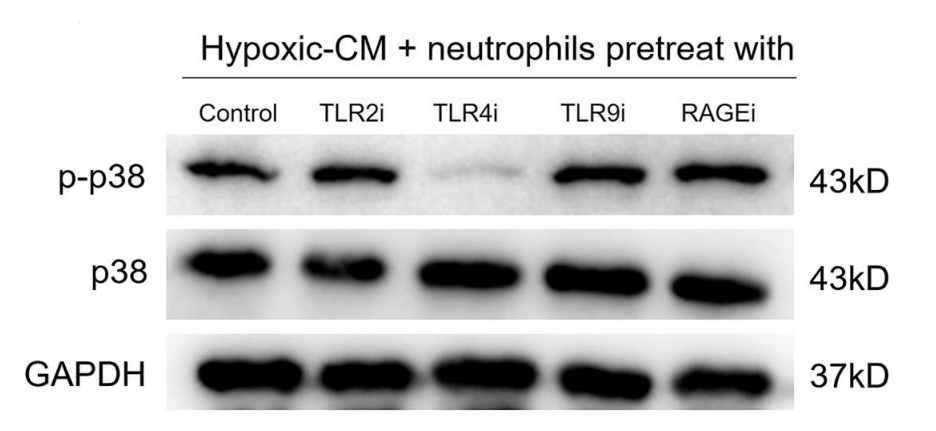
Neutrophils isolated from healthy individuals were pretreated with inhibitors of TLR2 (HY-112146; MMG-11), TLR4 (HY-107575; TLR4-IN-C34 ), TLR9 (HY-131952; TLR7/8/9-IN-1) and RAGE (HY-P2268; RAGE antagonist peptide) for 1 h prior to coculture with hypoxic-CM from GC cells, and the p-p38 level in neutrophils was measured by western blotting.
MMG-11 quarterhydrate purchased from MedChemExpress. Usage Cited in: Cell Commun Signal. 2023 May 1;21(1):86. [Abstract]
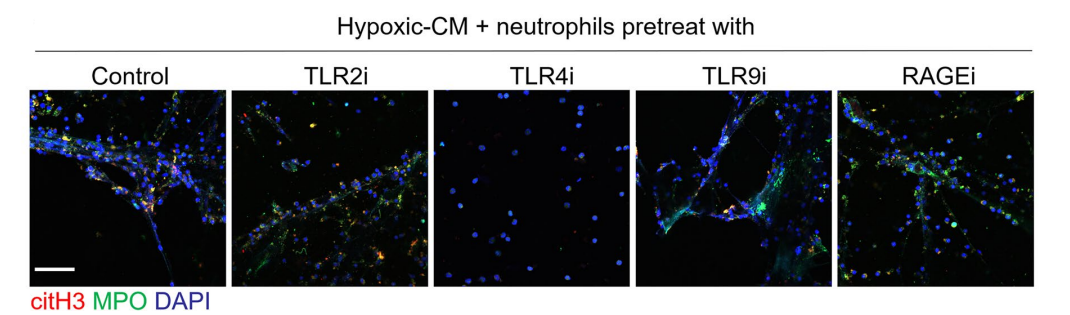
Neutrophils isolated from healthy individuals were pretreated with inhibitors of TLR2 (HY-112146; MMG-11), TLR4 (HY-107575; TLR4-IN-C34 ), TLR9 (HY-131952; TLR7/8/9-IN-1) and RAGE (HY-P2268; RAGE antagonist peptide) for 1 h prior to coculture with hypoxic-CM from GC cells, and the NET formation was detected with MPO and citH3 staining. Magnification: 20 × . Scale bars: 50 μm. All values are the means ± SDs. ns = not significant, **P < 0.01
-
Mol Immunol
Impact of knockdown LincRNA-Cox2 on apoptosis of macrophage infected with Bacillus Calmette-Guérin. [Abstract]2021 Feb:130:85-95. PMID: 33250268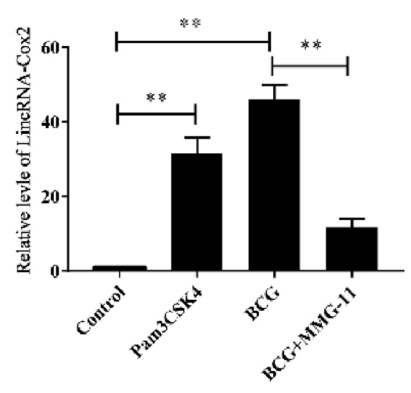
MMG-11 quarterhydrate purchased from MedChemExpress. Usage Cited in: Mol Immunol. 2021 Feb:130:85-95. [Abstract]
RAW264.7 cells were treated with Pam3CSK4 BCG or MMG-11 for 12 h respectively. The expression of LincRNA-Cox2 was detected by qRT-PCR.
-
Adv Biol (Weinh)
HMGB1 Derived from the Pyroptotic Microenvironment Promotes Macrophage Extracellular Traps in Hirschsprung-Associated Enterocolitis. [Abstract]2025 Sep;9(9):e00761. PMID: 40464207
MMG-11 quarterhydrate purchased from MedChemExpress. Usage Cited in: Adv Biol (Weinh). 2025 Sep;9(9):e00761. [Abstract]
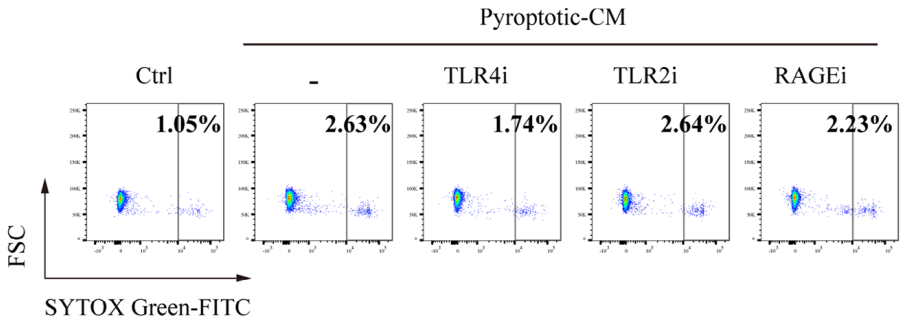
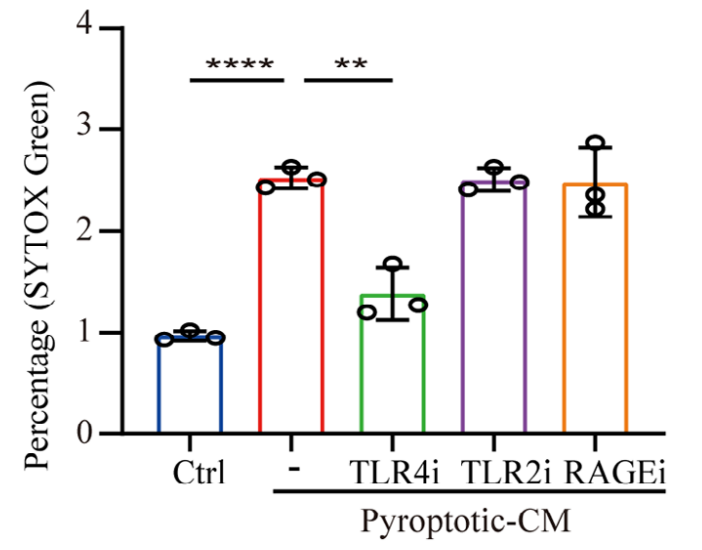
The MET formation of macrophages pretreated with inhibitors of TLR2 (HY‐112146; MMG-11), TLR4 (HY‐11109; Resatorvid) and RAGE (HY‐P2268; RAGE antagonist peptide) prior to incubation with pyroptotic‐CM was evaluated with SYTOX Green staining and detected by flow cytometry.
MMG-11 quarterhydrate purchased from MedChemExpress. Usage Cited in: Adv Biol (Weinh). 2025 Sep;9(9):e00761. [Abstract]
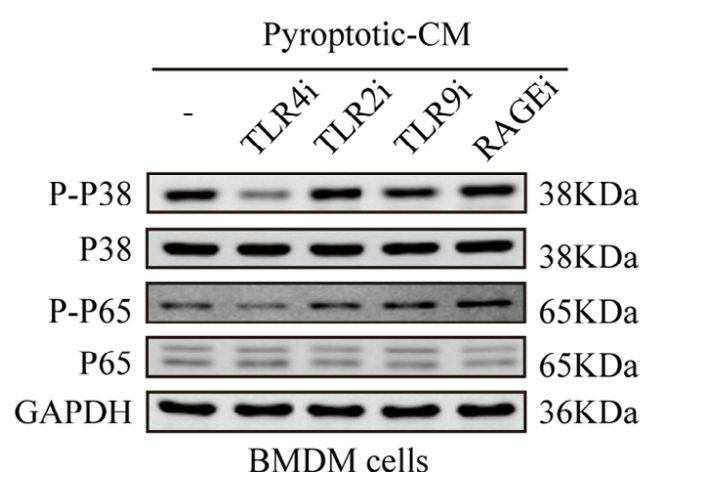
Macrophages were pretreated with inhibitors of TLR2 (MMG-11; HY‐112146), TLR4 (Resatorvid; HY‐11109), TLR9 (TLR7/8/9-IN-1; HY-131952) and RAGE (RAGE antagonist peptide; HY‐P2268) prior to coculture with pyroptotic‐CM, and the p‐p38 and p‐p65 levels in macrophages were measured by western blotting.
MMG-11 quarterhydrate purchased from MedChemExpress. Usage Cited in: Adv Biol (Weinh). 2025 Sep;9(9):e00761. [Abstract]
The MET formation of macrophages pretreated with inhibitors of (MMG-11; HY‐112146), TLR4 (Resatorvid; HY‐11109) and RAGE (RAGE antagonist peptide; HY‐P2268) prior to incubation with pyroptotic‐CM was detected by flow cytometry.
-
J Nat Med
Rice-derived glucosylceramides activate innate immune responses in myeloid lineage differentiated dendritic cells via toll-like receptors 2 and 4. [Abstract]2025 Oct 24. PMID: 41136819 -
Biomed Pharmacother
Baicalin attenuates acetaminophen-induced acute liver injury through inhibiting TLR2-dependent neutrophil extracellular trap formation. [Abstract]2025 Sep 17:192:118569. PMID: 40967078
MMG-11 quarterhydrate purchased from MedChemExpress. Usage Cited in: Biomed Pharmacother. 2025 Sep 17:192:118569. [Abstract]
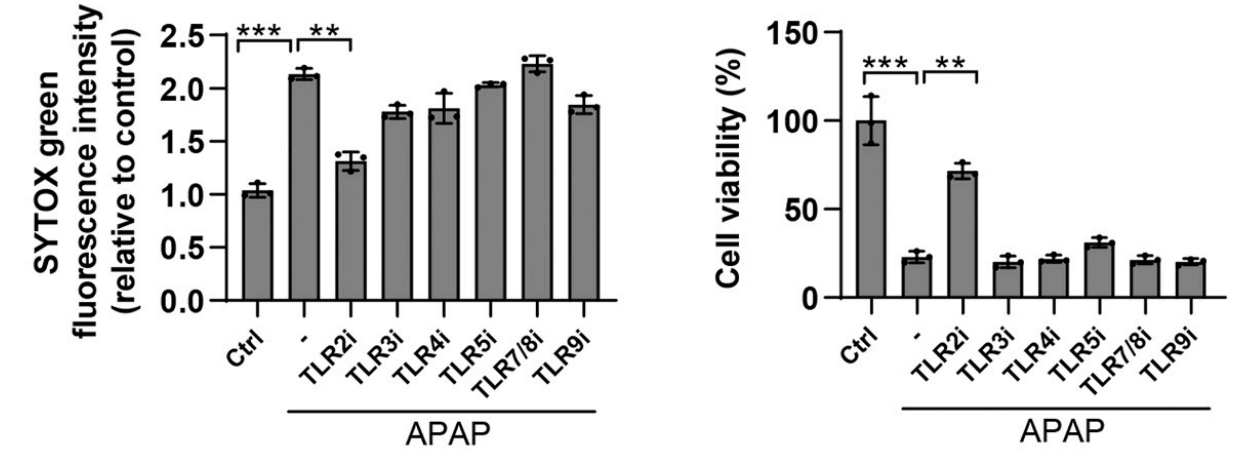
APAP-induced NETs formation through TLR2/NLRP3/GSDMD signaling. Sytox green-based NETosis assay and ATP-based cell viability. TLR2i (MMG-11, HY-112146).


Solvent & Solubility
In Vitro:
DMSO : 100 mg/mL (321.77 mM; Need ultrasonic; Hygroscopic DMSO has a significant impact on the solubility of product, please use newly opened DMSO)
Please refer to the solubility information to select the appropriate solvent. Once prepared, please aliquot and store the solution to prevent product inactivation from repeated freeze-thaw cycles.
Storage method and period of stock solution: -80°C, 6 months; -20°C, 1 month. When stored at -80°C, please use it within 6 months. When stored at -20°C, please use it within 1 month.
Please refer to the solubility information to select the appropriate solvent. Once prepared, please aliquot and store the solution to prevent product inactivation from repeated freeze-thaw cycles.
Storage method and period of stock solution: -80°C, 6 months; -20°C, 1 month. When stored at -80°C, please use it within 6 months. When stored at -20°C, please use it within 1 month.
Concentration (start) × Volume (start) = Concentration (final) × Volume (final)
In Vivo:
Select the appropriate dissolution method based on your experimental animal and administration route.
- For the following dissolution methods, please ensure to first prepare a clear stock solution using an In Vitro approach and then sequentially add co-solvents:
- To ensure reliable experimental results, the clarified stock solution can be appropriately stored based on storage conditions. As for the working solution for In Vivo experiments, it is recommended to prepare freshly and use it on the same day.
- The percentages shown for the solvents indicate their volumetric ratio in the final prepared solution. If precipitation or phase separation occurs during preparation, heat and/or sonication can be used to aid dissolution.
Add each solvent one by one: 10% DMSO 90% (20% SBE-β-CD in Saline)
Solubility: ≥ 2.5 mg/mL (8.04 mM); Clear solution
This protocol yields a clear solution of ≥ 2.5 mg/mL (saturation unknown).
Taking 1 mL working solution as an example, add 100 μL DMSO stock solution (25.0 mg/mL) to 900 μL 20% SBE-β-CD in Saline, and mix evenly.
Preparation of 20% SBE-β-CD in Saline (4°C, storage for one week): 2 g SBE-β-CD powder is dissolved in 10 mL Saline, completely dissolve until clear.
Add each solvent one by one: 10% DMSO 40% PEG300 5% Tween-80 45% Saline
Solubility: ≥ 2.08 mg/mL (6.69 mM); Clear solution
This protocol yields a clear solution of ≥ 2.08 mg/mL (saturation unknown).
Taking 1 mL working solution as an example, add 100 μL DMSO stock solution (20.8 mg/mL) to 400 μL PEG300, and mix evenly; then add 50 μL Tween-80 and mix evenly; then add 450 μL Saline to adjust the volume to 1 mL.
Preparation of Saline: Dissolve 0.9 g sodium chloride in ddH₂O and dilute to 100 mL to obtain a clear Saline solution.
In Vivo Dissolution Calculator
Please enter the basic information of animal experiments:
-
-
-
-
Recommended: Prepare an additional quantity of animals to account for potential losses during experiments.
Please enter your animal formula composition:
-
%DMSO +
Recommended: Keep the proportion of DMSO in working solution below 2% if your animal is weak.
-
%+
-
+%Tween-80 + +
-
%Saline +
The co-solvents required include: DMSO, . All of co-solvents are available by MedChemExpress (MCE). , Tween 80. All of co-solvents are available by MedChemExpress (MCE).
Working solution concentration: 0.22 mg/mL
Method for preparing stock solution: mg drug dissolved in μL DMSO. Stock solution concentration: mg/mL.
1. Take μL DMSO stock solution;
2. Add μL .
μL , mix evenly;
3. Then add μL Tween 80, mix evenly;
4. Then add μL
Please ensure that the stock solution in the first step is dissolved to a clear state, and add co-solvents in sequence. You can use ultrasonic heating (ultrasonic cleaner, recommended frequency 20-40 kHz), vortexing, etc. to assist dissolution.


Purity & Documentation
-
Data Sheet (275 KB)
-
SDS (251 KB)
- English - EN (251 KB)
- Français - FR (251 KB)
- Deutsch - DE (251 KB)
- Norwegian - NO (251 KB)
- Español - ES (251 KB)
- Swedish - SV (251 KB)
- Italian - IT (251 KB)
- Korean - KR (251 KB)
- Portuguese - PT (251 KB)
-
Handling Instructions (2659 KB)
References


Complete Stock Solution Preparation Table
Please refer to the solubility information to select the appropriate solvent. Once prepared, please aliquot and store the solution to prevent product inactivation from repeated freeze-thaw cycles.
Storage method and period of stock solution: -80°C, 6 months; -20°C, 1 month. When stored at -80°C, please use it within 6 months. When stored at -20°C, please use it within 1 month.
| Optional Solvent | Concentration Solvent Mass | 1 mg | 5 mg | 10 mg | 25 mg |
|---|---|---|---|---|---|
| DMSO | 1 mM | 3.2177 mL | 16.0886 mL | 32.1771 mL | 80.4428 mL |
| 5 mM | 0.6435 mL | 3.2177 mL | 6.4354 mL | 16.0886 mL | |
| 10 mM | 0.3218 mL | 1.6089 mL | 3.2177 mL | 8.0443 mL | |
| 15 mM | 0.2145 mL | 1.0726 mL | 2.1451 mL | 5.3629 mL | |
| 20 mM | 0.1609 mL | 0.8044 mL | 1.6089 mL | 4.0221 mL | |
| 25 mM | 0.1287 mL | 0.6435 mL | 1.2871 mL | 3.2177 mL | |
| 30 mM | 0.1073 mL | 0.5363 mL | 1.0726 mL | 2.6814 mL | |
| 40 mM | 0.0804 mL | 0.4022 mL | 0.8044 mL | 2.0111 mL | |
| 50 mM | 0.0644 mL | 0.3218 mL | 0.6435 mL | 1.6089 mL | |
| 60 mM | 0.0536 mL | 0.2681 mL | 0.5363 mL | 1.3407 mL | |
| 80 mM | 0.0402 mL | 0.2011 mL | 0.4022 mL | 1.0055 mL | |
| 100 mM | 0.0322 mL | 0.1609 mL | 0.3218 mL | 0.8044 mL |


MMG-11 quarterhydrate Related Classifications
HY-112146A Related Classifications
 Powered by Bioz