1. Search Result
Search Result
Results for "

sheep liver

" in MedChemExpress (MCE) Product Catalog:

10

Inhibitors & Agonists

1

Biochemical Assay Reagents

2

Natural
Products

Targets Recommended:
Cat. No. Product Name Target Research Areas Chemical Structure
  • HY-W017068

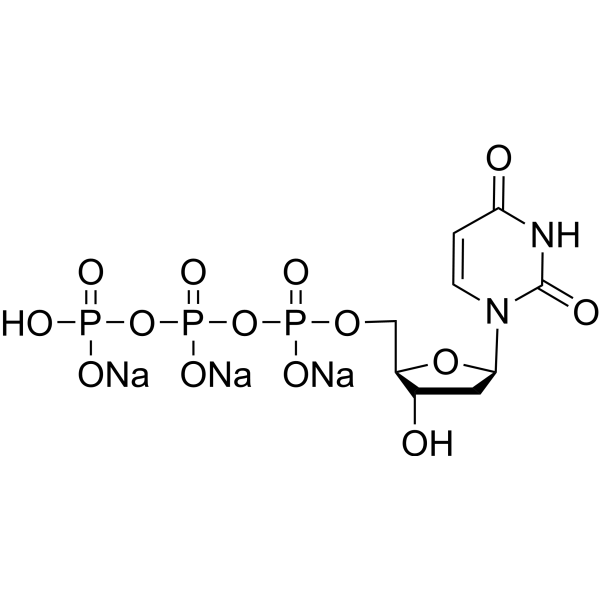
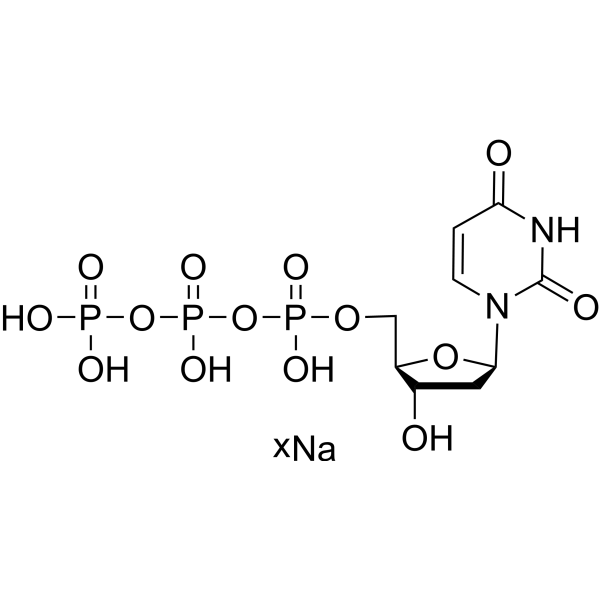
    2'-Deoxyuridine-5'-triphosphate trisodium salt

    DNA/RNA Synthesis Others
    dUTP trisodium (2´-Deoxyuridine, 5´-Triphosphate) is the salt form of dUTP. dUTP is a metabolic intermediate in both procaryotes and eucaryotes. dUTP can be used in PCR and RT-PCR to replace dTTP, resulting in the uracil-containing PCR products suitable for most standard applications. dUTP is found to inhibit the enzyme - Cytidine Aminohydrolase from sheep liver .
    dUTP trisodium
  • HY-B0488
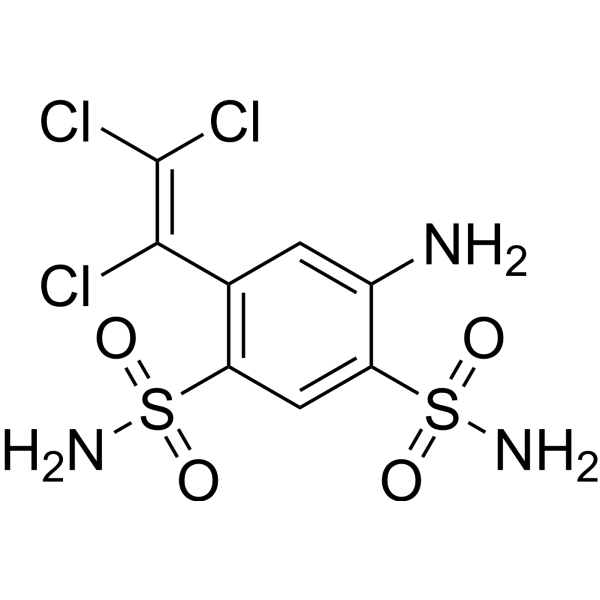
    Clorsulon
    1 Publications Verification

    L631529; MK401

    Parasite Infection
    Clorsulon (L631529; MK401) is an orally active flukicidal agent. Clorsulon inhibits glycolysis, the primary energy production pathway in flukes. Clorsulon is also a competitive inhibitor of 3-phosphoglycolate and ATP, inhibiting glucose utilization and acetate and propionate formation by mature Fasciola hepatica in vitro. Clorsulon can be used in studies of liver fluke (Fasciola hepatica and Fasciola gigantica) infection in calves and sheep .
    Clorsulon
  • HY-B0400B

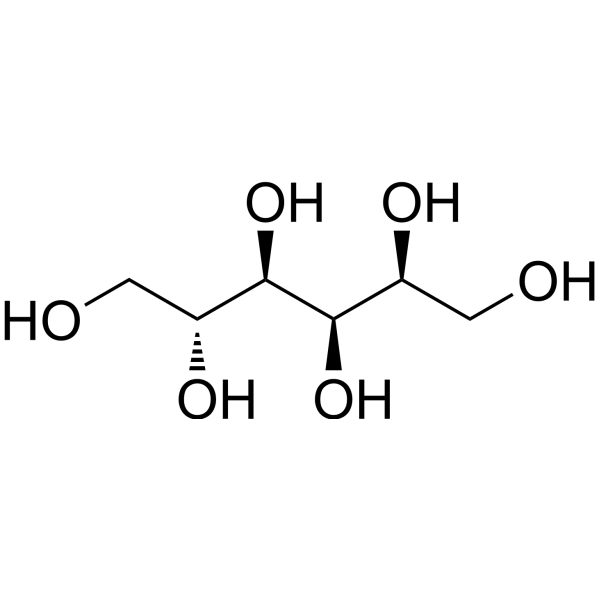
    Sorbito, for cell culture; D-Glucitol, for cell culture

    Environmental Pollutants Biochemical Assay Reagents Others
    D-Sorbitol (D-Glucitol), for cell culture is a six-carbon sugar alcohol that can be used as a sugar substitute. D-Sorbitol, for cell culture serves as an osmotic regulator, cryoprotectant and carbon source in various plant and microbial cell culture media .
    D-Sorbitol, for cell culture
  • HY-W009706

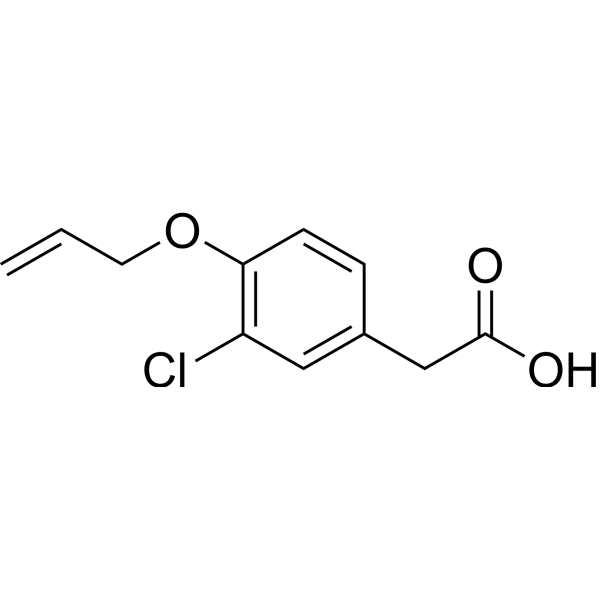
    Allopydin; W-7320

    Prostaglandin Receptor Neurological Disease Inflammation/Immunology
    Alclofenac (Allopydin) is an orally active prostaglandin synthase inhibitor with anti-inflammatory, analgesic and antipyretic activities. Alclofenac irreversibly inhibits platelet aggregation. Alclofenac can be used in research related to rheumatoid arthritis, osteoarthritis, ankylosing spondylitis, low back pain and sciatica .
    Alclofenac
  • HY-130581

    Bacterial Cardiovascular Disease Inflammation/Immunology
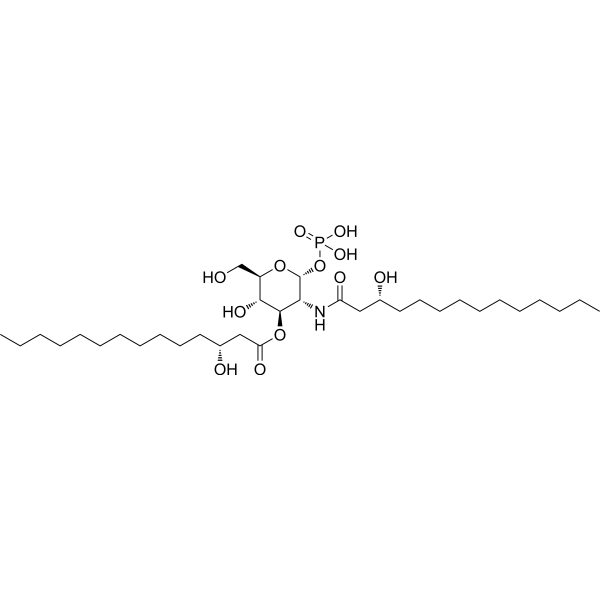
    Lipid X is a 2,3-diacylglucosamine-1-phosphate that serves as the monosaccharide precursor of lipid A, possessing both LPS antagonist and weak agonist activities. Lipid X exerts protective effects by inhibiting tumor necrosis factor production, monocyte procoagulant activity, and neutrophil priming. Lipid X may induce transient pulmonary hypertension, neutropenia, and mild pyrogenic effects in laboratory animals. Lipid X has low toxicity and no in vitro antibacterial activity, but it significantly reduces mortality following Gram-negative bacterial infection and endotoxin exposure. Lipid X tends to accumulate in liver tissue, binds to circulating cellular components, and can be converted to lipid Y through transesterification. Lipid X can be used in research on Gram-negative bacterial sepsis, endotoxemia, and associated pulmonary hypertension .
    Lipid X
  • HY-W017068A

    2'-Deoxyuridine-5'-triphosphate sodium salt

    Biochemical Assay Reagents Others
    dUTP sodium is the salt form of dUTP. dUTP is a metabolic intermediate in both procaryotes and eucaryotes. dUTP can be used in PCR and RT-PCR to replace dTTP, resulting in the uracil-containing PCR products suitable for most standard applications. dUTP is found to inhibit the enzyme - Cytidine Aminohydrolase from sheep liver .
    dUTP sodium
  • HY-114969

    NSC 233846; SYD 230; Tremerad

    Parasite Infection
    Clioxanide is a potential anti-liver fluke (Fasciola hepatica) agent. The results showed that Clioxanide showed no efficacy against 4-week-old or 19-week-old flukes at doses of 135 mg/kg or 200 mg/kg. In contrast, hexachloroethane was very effective against older flukes, reaching 100% efficacy at lower doses. The study pointed out that laboratory mice may not be suitable for screening potential compounds against liver fluke infections in ruminants such as cattle and sheep. In addition, no obvious toxic reactions were observed in mice with Clioxanide .
    Clioxanide
  • HY-B0488R

    L631529 (Standard); MK401 (Standard)

    Reference Standards Parasite Infection
    Clorsulon (Standard) is the analytical standard of Clorsulon (HY-B0488). This product is intended for research and analytical applications. Clorsulon (L631529; MK401) is an orally active flukicidal agent. Clorsulon inhibits glycolysis, the primary energy production pathway in flukes. Clorsulon is also a competitive inhibitor of 3-phosphoglycolate and ATP, inhibiting glucose utilization and acetate and propionate formation by mature Fasciola hepatica in vitro. Clorsulon can be used in studies of liver fluke (Fasciola hepatica and Fasciola gigantica) infection in calves and sheep .
    Clorsulon (Standard)
  • HY-W517092

    1,2,3,4,7,8,9-HpCDF

    Aryl Hydrocarbon Receptor Cytochrome P450 Metabolic Disease Inflammation/Immunology
    1,2,3,4,7,8,9-Heptachlorodibenzofuran (1,2,3,4,7,8,9-HpCDF) is a compound that induces the expression of CYP1A1 and CYP1B1 genes in human peripheral blood lymphocytes, while also promoting the expression of the aryl hydrocarbon receptor repressor (AhRR). 1,2,3,4,7,8,9-Heptachlorodibenzofuran can increase ethoxyresorufin-O-deethylase (EROD) activity in isolated human peripheral blood lymphocytes in a concentration-dependent manner, which serves as a marker of CYP1A1 activity. Furthermore, 1,2,3,4,7,8,9-Heptachlorodibenzofuran exhibits immunosuppressive effects by reducing the number of splenic plaque-forming cells in mice and increasing aryl hydrocarbon hydroxylase (AHH) activity in liver microsomes of mice injected with sheep red blood cells. 1,2,3,4,7,8,9-Heptachlorodibenzofuran can be used in research in the fields of immunology, metabolic diseases, and environmental toxicology .
    1,2,3,4,7,8,9-Heptachlorodibenzofuran
  • HY-N10625A

    5α-Cyprinol

    Phosphatase Metabolic Disease
    Cyprinol (5α-Cyprinol) is an orally active bile salt and xenochemical pheromone . Cyprinol impairs renal function and increases plasma ALP activity in rats, induces diel vertical migration in Daphnia spp., enhances the permeability of the rectal mucosa to water-soluble compounds, and aids lipid digestion in fish. Cyprinol can be used in studies of fish toxicity and acute renal failure .
    Cyprinol

Inquiry Online

Your information is safe with us. * Required Fields.

Salutation


Country or Region *

Applicant Name *


Organization Name *

Department *


Email Address *


Product Name *

Cat. No.


Requested quantity *

Phone Number *


Remarks

Inquiry Online

Inquiry Information

Product Name:
Cat. No.:
Quantity:
MCE Japan Authorized Agent:

