
14 Results for "

silica nanoparticles

" in MedChemExpress (MCE) Product Catalog:
Products (14)

14 Results for "silica nanoparticles" in MCE Product Catalog:

1
1 Cited Publications
Cat. No.: HY-D1375
CAS No.: 2183440-44-8
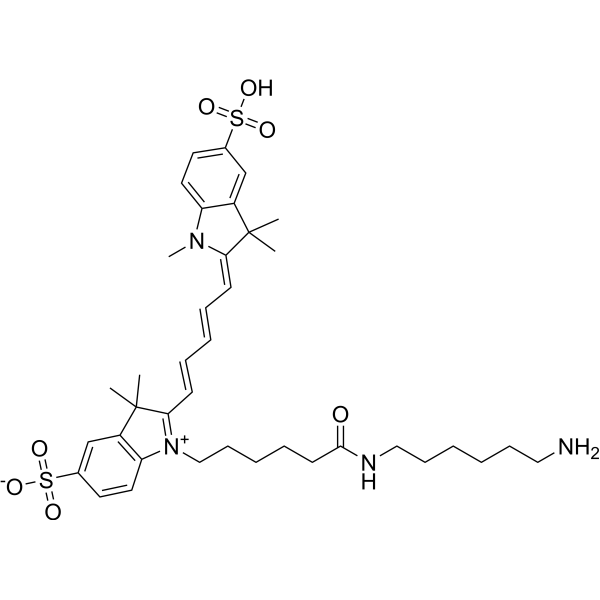
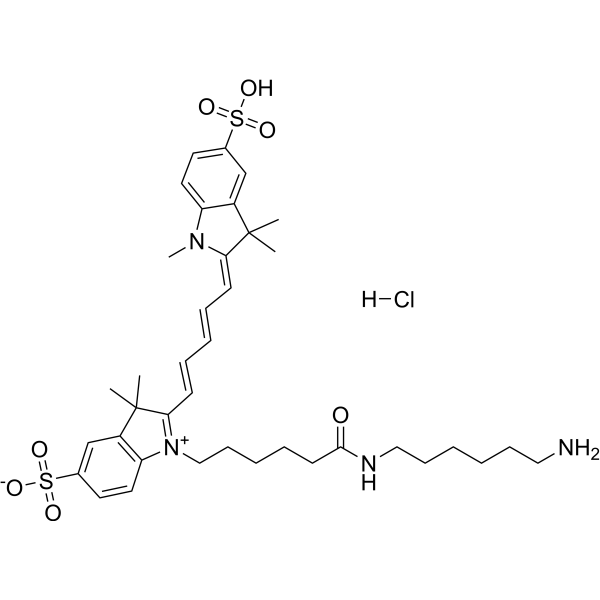
Sulfo-Cy5 amine is a Cyanine 5 (Cy5) (HY-D0821) dye derivative with an amine group. Sulfo-Cy5 amine can endow silica nanoparticles with fluorescent properties, be internalized by cancer cells, and exhibit enhanced photostability after being incorporated into silica nanoparticles. Its maximum excitation wavelength is approximately 646 nm, and maximum emission wavelength is approximately 662 nm .
loading...
    loading...
1
1 Cited Publications
Cat. No.: HY-15929
CAS No.: 14348-40-4
Synonyms: 2,4,6-Tribromo-3-hydroxybenzoic acid
TBHBA (2,4,6-Tribromo-3-hydroxybenzoic acid) is a chemical colorimetric agent and nanomaterial surface modifier. TBHBA can react with some oxidants (such as H2O2) to generate high-absorbance quinoneimine dyes, which enhance the sensitivity of HDL cholesterol enzymatic determination. TBHBA can be used as a bromine-containing coupling agent to modify the surface of silica nanoparticles through esterification reaction. Thereby, organic flame retardant groups are introduced to improve the thermal stability and flame retardant properties of nanocomposites. TBHBA can be used in clinical biochemical testing (such as serum lipoprotein analysis) and the preparation of flame-retardant polymer nanocomposites .
loading...
    loading...
Cat. No.: HY-140646
CAS No.: 24991-53-5
Purity:  99.39%
Synonyms: Poly(ethylene glycol)-bis-amine 2000
Research Areas:  

Cancer

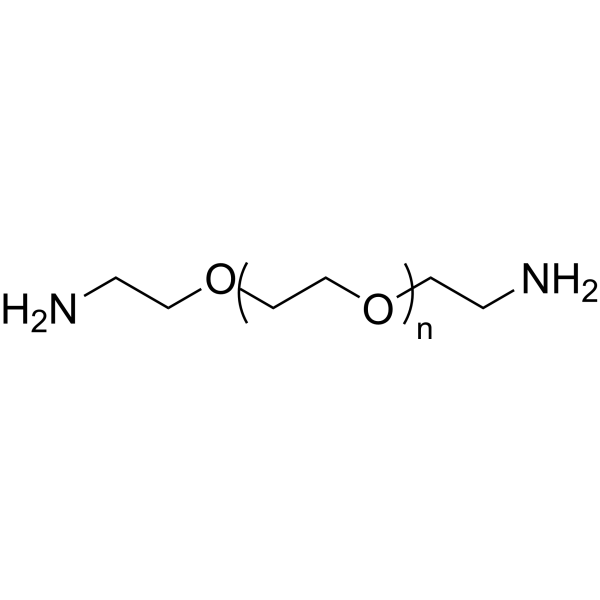
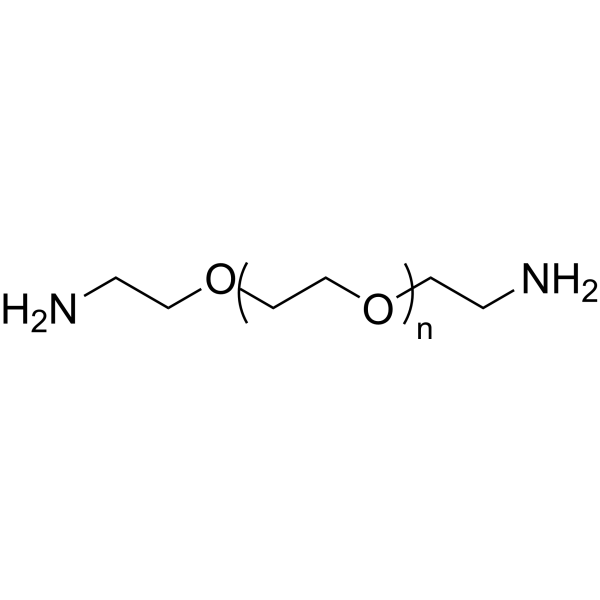
PEG2000-bis-amine (Poly(ethylene glycol)-bis-amine 2000) is a diamine-terminated polyethylene glycol and conjugate linker. PEG2000-bis-amine endows the surface of carbon capsules with stealth properties, biocompatibility, and free amino groups for antibody conjugation. PEG2000-bis-amine acts as a reducing agent and passivating agent to promote the formation and assembly of silver nanoparticles on silica nanospheres, and increases the number of silver nanoparticles on the silica surface .
loading...
    loading...
Cat. No.: HY-W243303J
CAS No.: 9003-01-4
Poly(acrylic acid) (MW 250000) is a synthetic cationic electrolyte containing abundant carboxyl groups (-COOH), which exhibits excellent water absorption and retention properties and is often cross-linked to form hydrogels. Poly(acrylic acid) (with a molecular weight of 250,000). Poly(acrylic acid) (MW 250000) can be used as a non-collagenous analog in the biomimetic mineralization research of type I collagen. Poly(acrylic acid) (MW 250000) has pH responsiveness and biocompatibility and is often used as a drug carrier, surface modifier and functional material .
loading...
    loading...
Cat. No.: HY-P5832
CAS No.: 836606-84-9
Target:  

TGF-beta/Smad RUNX

Research Areas:  

Metabolic Disease

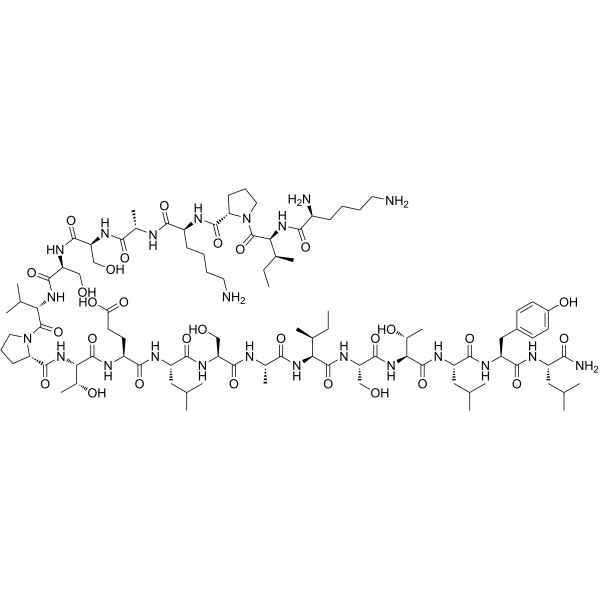
BMP2-derived peptide is an osteogenic inducer and BMP receptor ligand. BMP2-derived peptide binds to BMP receptors on the cell surface to form a complex, activates the downstream Smad signaling pathway, and regulates the expression of osteogenic transcription factors. BMP2-derived peptide effectively promotes the adhesion, proliferation, osteogenic differentiation and mineralization of bone marrow mesenchymal stem cells, significantly up-regulates the mRNA levels of OCN, Runx2 and type I collagen, and increases alkaline phosphatase activity and calcium deposition. BMP2-derived peptide induces osteoblast differentiation and ectopic bone regeneration, and improves cranial bone defect repair. Meanwhile, BMP2-derived peptide enhances the cytocompatibility of mesoporous silica nanoparticles, synergistically increases osteogenic activity with Dexamethasone (HY-14648), serving as an important tool for bone defect repair research .
loading...
    loading...
Cat. No.: HY-42984
CAS No.: 916753-62-3
BHQ-2 NHS is a fluorescence dark quencher with an absorption spectrum spanning 550-650 nm that overlaps with tetramethylrhodamine (TMR) emission. BHQ-2 NHS quenches TMR fluorescence when conjugated to mesoporous silica nanoparticles. BHQ-2 NHS can be used for the research of cancer .
loading...
    loading...
Cat. No.: HY-W017831
CAS No.: 25021-08-3
Research Areas:  

Others

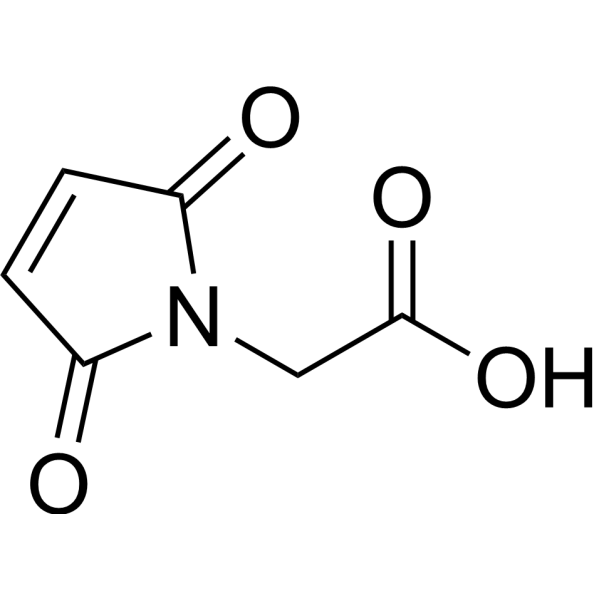
2-Maleimido acetic acid is a maleimide-containing carboxylic acid ligand used to prepare Pt(IV) complexes capable of undergoing Diels-Alder reaction with furan derivatives for drug targeting and delivery applications .
loading...
    loading...
Cat. No.: HY-140649
CAS No.: 24991-53-5
Purity:  ≥98.0%
Synonyms: Poly(ethylene glycol)-bis-amine 20000
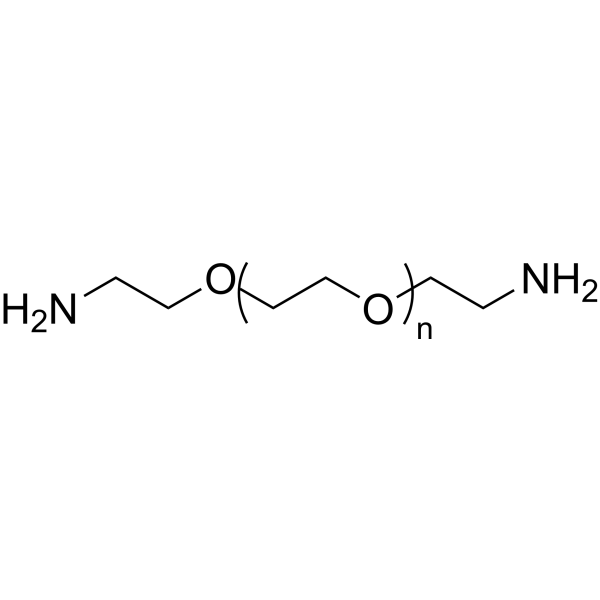
PEG20000-bis-amine (Poly(ethylene glycol)-bis-amine 20000) is a diamine-terminated polyethylene glycol and conjugate linker. PEG20000-bis-amine endows the surface of carbon capsules with stealth properties, biocompatibility, and free amino groups for antibody conjugation. PEG20000-bis-amine acts as a reducing agent and passivating agent to promote the formation and assembly of silver nanoparticles on silica nanospheres, and increases the number of silver nanoparticles on the silica surface.
loading...
    loading...
Cat. No.: HY-140647
CAS No.: 24991-53-5
Synonyms: Poly(ethylene glycol)-bis-amine 3400
PEG3400-bis-amine (Poly(ethylene glycol)-bis-amine 3400) is a diamine-terminated polyethylene glycol and conjugate linker. PEG3400-bis-amine endows the surface of carbon capsules with stealth properties, biocompatibility, and free amino groups for antibody conjugation. PEG3400-bis-amine acts as a reducing agent and passivating agent to promote the formation and assembly of silver nanoparticles on silica nanospheres, and increases the number of silver nanoparticles on the silica surface.
loading...
    loading...
Cat. No.: HY-174929A
Synonyms: DBCO-PEG5000-NH2
DBCO-PEG5000-Amine (DBCO-PEG5000-NH2) is a polyethylene glycol derivative containing dibenzocyclooctyne. DBCO-PEG-Amine is a universal, modular "bridge molecule": it forms stable covalent linkage with target materials (e.g., MSN or polymers) via the amino group at one end, while the DBCO group at the other end enables efficient, specific, and biocompatible click chemical conjugation with any azide-bearing biological entities (e.g., bacteria, cells) in subsequent steps .
loading...
    loading...
Cat. No.: HY-172351A
CAS No.: 24991-53-5
PEG6000-bis-amine is a diamine-terminated polyethylene glycol (MW≈6000) and conjugate linker. PEG6000-bis-amine endows the surface of carbon capsules with stealth properties, biocompatibility, and free amino groups for antibody conjugation. PEG6000-bis-amine acts as a reducing agent and passivating agent to promote the formation and assembly of silver nanoparticles on silica nanospheres, and increases the number of silver nanoparticles on the silica surface .
loading...
    loading...
Cat. No.: HY-172351
CAS No.: 24991-53-5
PEG400-bis-amine is a diamine-terminated polyethylene glycol and conjugate linker. PEG400-bis-amine endows the surface of carbon capsules with stealth properties, biocompatibility, and free amino groups for antibody conjugation. PEG400-bis-amine acts as a reducing agent and passivating agent to promote the formation and assembly of silver nanoparticles on silica nanospheres, and increases the number of silver nanoparticles on the silica surface.
loading...
    loading...
Cat. No.: HY-D1375A
Sulfo-Cy5 amine hydrochloride is a Cyanine 5 (Cy5) (HY-D0821) dye derivative with an amine group. Sulfo-Cy5 amine hydrochloride can endow silica nanoparticles with fluorescent properties, be internalized by cancer cells, and exhibit enhanced photostability after being incorporated into silica nanoparticles. Its maximum excitation wavelength is approximately 646 nm, and maximum emission wavelength is approximately 662 nm .
loading...
    loading...
Cat. No.: HY-P11887
CAS No.: 1174559-81-9
VHPKQHR is a peptide-based delivery enhancer that binds to VCAM-1. VHPKQHR enables intracellular internalization of relevant nanomaterials and facilitates the targeted delivery of miRNA inhibitors to inflamed endothelial cells and endothelial cells activated by disturbed flow. When conjugated with magnetic mesoporous silica nanoparticles, VHPKQHR achieves targeted accumulation at atherosclerotic plaque sites. When displayed on the surface of polyelectrolyte complex micelles, VHPKQHR enhances the relevant effects of anti-miR-92a in Apoe -/- mice. When conjugated with ultrasmall superparamagnetic iron oxide nanoparticles, VHPKQHR forms a contrast agent for T1-weighted magnetic resonance imaging. VHPKQHR can be used in research related to atherosclerosis, stenosis and rheumatoid arthritis .
loading...
    loading...
  • 1

