1. Search Result
Search Result
Results for "

study of carbohydrates

" in MedChemExpress (MCE) Product Catalog:

500

Inhibitors & Agonists

3

Screening Libraries

489

Biochemical Assay Reagents

1

Peptides

4

Natural
Products

2

Isotope-Labeled Compounds

7

Click Chemistry

Cat. No. 상품명 Target 연구분야 Chemical Structure
  • HY-W698390

    Biochemical Assay Reagents Others
    3′-Sialyl-N-acetyllactosamine is a class of biochemical reagents used in glycobiology research. Glycobiology studies the structure, synthesis, biology, and evolution of sugars. It involves carbohydrate chemistry, enzymology of glycan formation and degradation, protein-glycan recognition, and the role of glycans in biological systems. This field is closely related to basic research, biomedicine, and biotechnology .
    3′-Sialyl-N-acetyllactosamine
  • HY-W718145

    Biochemical Assay Reagents Others
    D-Mannose,6-(dihydrogen phosphate) (sodium) is a class of biochemical reagents used in glycobiology research. Glycobiology studies the structure, synthesis, biology, and evolution of sugars. It involves carbohydrate chemistry, enzymology of glycan formation and degradation, protein-glycan recognition, and the role of glycans in biological systems. This field is closely related to basic research, biomedicine, and biotechnology .
    D-Mannose,6-dihydrogen phosphate sodium
  • HY-W441330

    Biochemical Assay Reagents Others
    L-Erythrulose is a class of biochemical reagents used in glycobiology research. Glycobiology studies the structure, synthesis, biology, and evolution of sugars. It involves carbohydrate chemistry, enzymology of glycan formation and degradation, protein-glycan recognition, and the role of glycans in biological systems. This field is closely related to basic research, biomedicine, and biotechnology .
    L-Erythrulose
  • HY-W142618

    Biochemical Assay Reagents Others
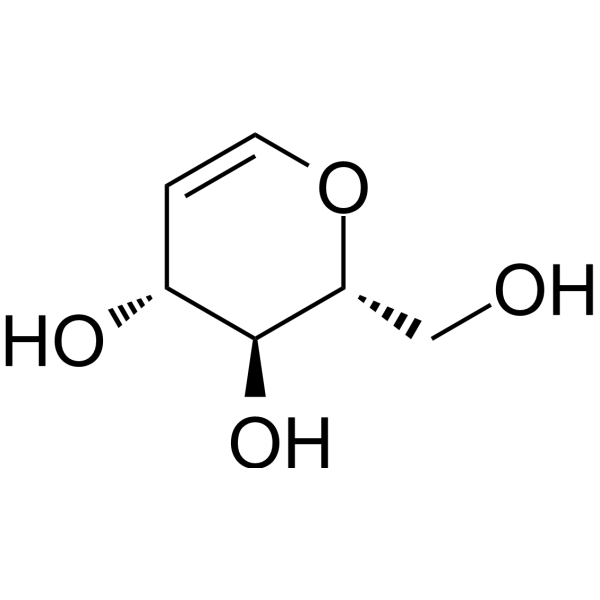
    D-Glucal is an organic compound belonging to the family of aldoses, which are monosaccharides containing an aldehyde functional group. It has a six-carbon structure and is derived from glucose by oxidation of the primary alcohol group at carbon 1 to an aldehyde group. D-Glucal is a white crystalline solid that is soluble in water and has a sweet taste. It is an important intermediate in the chemical synthesis of a wide variety of compounds, including pharmaceuticals, agrochemicals, and natural products. D-Glucal can be converted into other carbohydrate derivatives such as glycosides, glycoconjugates and amino sugars. It also plays a role in the study of carbohydrate chemistry, where it is used as a chiral building block for the synthesis of complex structures.
    D-Glucal
  • HY-113048A
    Erythronic acid potassium
    1 Publications Verification

    Endogenous Metabolite Metabolic Disease
    Erythronic acid potassium is an endogenous metabolite of carbohydrates that can be used in the study of metabolism-related diseases. It plays a key role in the onset and improvement of hyperuricemia and is related to mitochondrial dysfunction in transaldolase deficiency .
    Erythronic acid potassium
  • HY-W540687

    Biochemical Assay Reagents
    Disialyloctasaccharide is a class of biochemical reagents used in glycobiology studies. Glycobiology studies the structure, synthesis, biology, and evolution of sugars. It deals with carbohydrate chemistry, glycan formation and degradation enzymology, protein-glycan recognition, and the role of glycans in biological systems. The field is closely related to basic research, biomedicine and biotechnology .
    Disialyloctasaccharide
  • HY-W556338

    Biochemical Assay Reagents
    α-D-Glucose 1-phosphate (dipotassium) is a biochemical reagent used in the study of glycobiology. Glycobiology studies the structure, synthesis, biology, and evolution of sugars. It deals with carbohydrate chemistry, glycan formation and degradation enzymology, protein-glycan recognition, and the role of glycans in biological systems. The field is closely related to basic research, biomedicine and biotechnology .
    α-D-Glucose 1-phosphate dipotassium
  • HY-W854445
    Lewis-b tetrasaccharide
    1 Publications Verification

    Biochemical Assay Reagents Others
    Lewis-b tetrasaccharide is a class of biochemical reagents used in glycobiology research. Glycobiology studies the structure, synthesis, biology, and evolution of sugars. It involves carbohydrate chemistry, enzymology of glycan formation and degradation, protein-glycan recognition, and the role of glycans in biological systems. This field is closely related to basic research, biomedicine, and biotechnology .
    Lewis-b tetrasaccharide
  • HY-W795464

    Biochemical Assay Reagents
    3-Phosphono pyruvic acid is a class of biochemical reagents used in glycobiology research. Glycobiology studies the structure, synthesis, biology, and evolution of sugars. It deals with carbohydrate chemistry, glycan formation and degradation enzymology, protein-glycan recognition, and the role of glycans in biological systems. The field is closely related to basic research, biomedicine and biotechnology .
    3-Phosphono pyruvic acid
  • HY-W145682

    Blood Group H

    Biochemical Assay Reagents Others
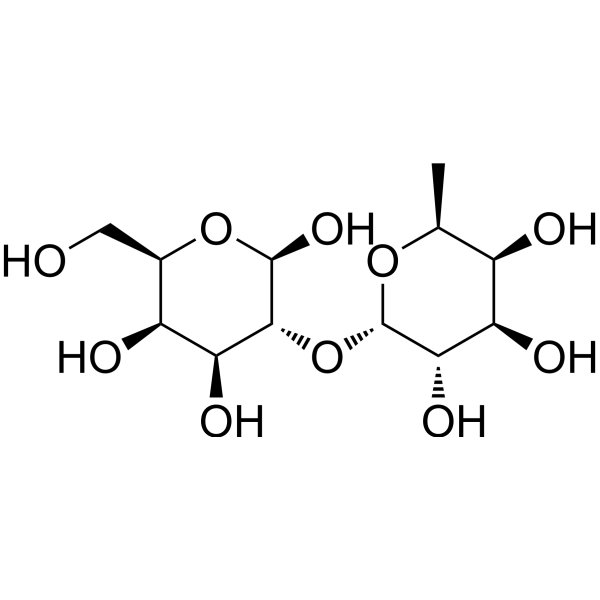
    Blood group H carbohydrate is a carbohydrate containing two monosaccharides, fucose and galactose, linked by α1-2 glycosidic bonds. It is the precursor of ABO blood group antigens, which are present on the surface of red blood cells and play a role in immune recognition and transfusion compatibility. Type H disaccharides have diverse applications in biochemical research, especially in the study of carbohydrate-protein interactions and the biosynthesis of blood group antigens. In addition, it can be used as a diagnostic tool to identify ABO blood group phenotypes.
    Blood group H disaccharide
  • HY-113048

    Endogenous Metabolite Metabolic Disease
    Erythronic acid is an endogenous metabolite of carbohydrates that can be used in the study of metabolism-related diseases. It plays a key role in the onset and improvement of hyperuricemia and is related to mitochondrial dysfunction in transaldolase deficiency .
    Erythronic acid
  • HY-166976

    Biochemical Assay Reagents Others
    Trifucosyllacto-N-hexaose is a class of biochemical reagents used in glycobiology research. Glycobiology studies the structure, synthesis, biology, and evolution of sugars. It involves carbohydrate chemistry, enzymology of glycan formation and degradation, protein-glycan recognition, and the role of glycans in biological systems. This field is closely related to basic research, biomedicine, and biotechnology .
    Trifucosyllacto-N-hexaose
  • HY-167291

    Biochemical Assay Reagents Others
    D-Arabinose 5-phosphate (sodium) is a class of biochemical reagents used in glycobiology research. Glycobiology studies the structure, synthesis, biology, and evolution of sugars. It involves carbohydrate chemistry, enzymology of glycan formation and degradation, protein-glycan recognition, and the role of glycans in biological systems. This field is closely related to basic research, biomedicine, and biotechnology .
    D-Arabinose 5-phosphate sodium
  • HY-W088238

    Biochemical Assay Reagents Others
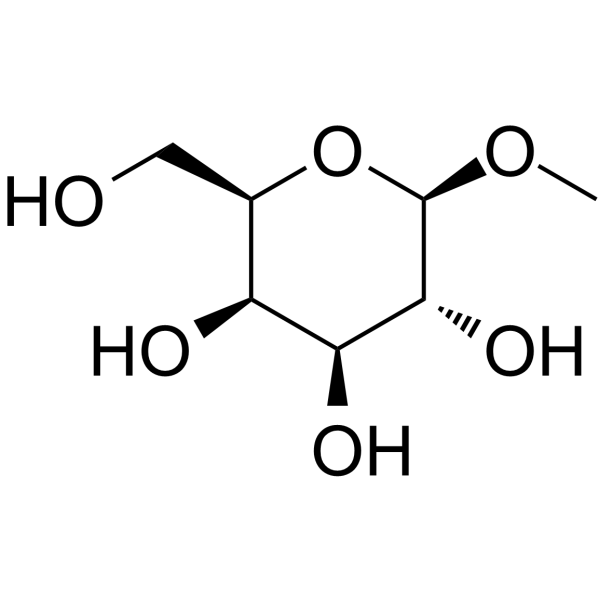
    Methyl α-D-galactopyranoside is a class of biochemical reagents used in glycobiology research. Glycobiology studies the structure, synthesis, biology, and evolution of sugars. It involves carbohydrate chemistry, enzymology of glycan formation and degradation, protein-glycan recognition, and the role of glycans in biological systems. This field is closely related to basic research, biomedicine, and biotechnology .
    Methyl α-D-galactopyranoside
  • HY-145501A

    Biochemical Assay Reagents Others
    Sucrose hexasulfate (potassium) is a class of biochemical reagents used in glycobiology research. Glycobiology studies the structure, synthesis, biology, and evolution of sugars. It involves carbohydrate chemistry, enzymology of glycan formation and degradation, protein-glycan recognition, and the role of glycans in biological systems. This field is closely related to basic research, biomedicine, and biotechnology .
    Sucrose hexasulfate potassium
  • HY-W242887

    Biochemical Assay Reagents Others
    D-Gulose (50% in water) is a class of biochemical reagents used in glycobiology research. Glycobiology studies the structure, synthesis, biology, and evolution of sugars. It involves carbohydrate chemistry, enzymology of glycan formation and degradation, protein-glycan recognition, and the role of glycans in biological systems. This field is closely related to basic research, biomedicine, and biotechnology .
    D-Gulose (50% in water)
  • HY-W699750

    Biochemical Assay Reagents Others
    6-α-D-Glucopyranosyl maltotriose is a class of biochemical reagents used in glycobiology research. Glycobiology studies the structure, synthesis, biology, and evolution of sugars. It involves carbohydrate chemistry, enzymology of glycan formation and degradation, protein-glycan recognition, and the role of glycans in biological systems. This field is closely related to basic research, biomedicine, and biotechnology .
    6-α-D-Glucopyranosyl maltotriose
  • HY-W048232

    Biochemical Assay Reagents Others
    Allyl α-D-mannopyranoside is a class of biochemical reagents used in glycobiology research. Glycobiology studies the structure, synthesis, biology, and evolution of sugars. It involves carbohydrate chemistry, enzymology of glycan formation and degradation, protein-glycan recognition, and the role of glycans in biological systems. This field is closely related to basic research, biomedicine, and biotechnology .
    Allyl α-D-mannopyranoside
  • HY-W012515

    Biochemical Assay Reagents Others
    1,3-Dihydroxyacetone dimer can be used as an aldose, serving as a model compound for studying the structure and function of carbohydrates. 1,3-Dihydroxyacetone dimer is a kind of biological materials or organic compounds that are widely used in life science research .
    1,3-Dihydroxyacetone dimer
  • HY-116956A

    Biochemical Assay Reagents Others
    L-Erythrose (solution) (70% in water) is an aldose carbohydrate that has been used in glycation studies and to characterize erythrose reductase activity.
    L-Erythrose (solution) (70% in water)
  • HY-W708061

    Biochemical Assay Reagents
    Benoxaprofen glucuronide is a class of biochemical reagents used in the study of glycobiology. Glycobiology studies the structure, synthesis, biology, and evolution of sugars. It deals with carbohydrate chemistry, glycan formation and degradation enzymology, protein-glycan recognition, and the role of glycans in biological systems. The field is closely related to basic research, biomedicine and biotechnology .
    Benoxaprofen glucuronide
  • HY-167804

    Biochemical Assay Reagents
    Beclomethasone 21-propionate is a class of biochemical reagents for the study of glycobiology. Glycobiology studies the structure, synthesis, biology, and evolution of sugars. It deals with carbohydrate chemistry, glycan formation and degradation enzymology, protein-glycan recognition, and the role of glycans in biological systems. The field is closely related to basic research, biomedicine and biotechnology .
    Beclomethasone 21-propionate
  • HY-W740685

    Biochemical Assay Reagents
    Deferasirox acyl-β-D-glucuronide is a class of biochemical reagents used in the study of glycobiology. Glycobiology studies the structure, synthesis, biology, and evolution of sugars. It deals with carbohydrate chemistry, glycan formation and degradation enzymology, protein-glycan recognition, and the role of glycans in biological systems. The field is closely related to basic research, biomedicine and biotechnology .
    Deferasirox acyl-β-D-glucuronide
  • HY-W340093

    Biochemical Assay Reagents
    Probenecid acyl β-D-glucuronide is a class of biochemical reagents used in the study of glycobiology. Glycobiology studies the structure, synthesis, biology, and evolution of sugars. It deals with carbohydrate chemistry, glycan formation and degradation enzymology, protein-glycan recognition, and the role of glycans in biological systems. The field is closely related to basic research, biomedicine and biotechnology .
    Probenecid acyl β-D-glucuronide
  • HY-W791535

    Biochemical Assay Reagents
    4-Hydroxy propofol 1-O-β-D-glucuronide is a class of biochemical reagents used in the study of glycobiology. Glycobiology studies the structure, synthesis, biology, and evolution of sugars. It deals with carbohydrate chemistry, glycan formation and degradation enzymology, protein-glycan recognition, and the role of glycans in biological systems. The field is closely related to basic research, biomedicine and biotechnology .
    4-Hydroxy propofol 1-O-β-D-glucuronide
  • HY-W700218

    Biochemical Assay Reagents
    4-Hydroxy propofol 4-O-β-D-Glucuronide is a class of biochemical reagents used in the study of glycobiology. Glycobiology studies the structure, synthesis, biology, and evolution of sugars. It deals with carbohydrate chemistry, glycan formation and degradation enzymology, protein-glycan recognition, and the role of glycans in biological systems. The field is closely related to basic research, biomedicine and biotechnology .
    4-Hydroxy propofol 4-O-β-D-Glucuronide
  • HY-W699956

    Biochemical Assay Reagents
    Methyl 2,3, 4-tri-o-Benzyl-D-Galactopyranoside is a class of biochemical reagents used in the study of glycobiology. Glycobiology studies the structure, synthesis, biology, and evolution of sugars. It deals with carbohydrate chemistry, glycan formation and degradation enzymology, protein-glycan recognition, and the role of glycans in biological systems. The field is closely related to basic research, biomedicine and biotechnology .
    Methyl 2,3,4-Tri-O-benzyl-D-galactopyranoside
  • HY-W145552

    4-Methoxyphenyl 3-O-allyl-beta-D-galactopyranoside

    Biochemical Assay Reagents Others
    4-Methoxyphenyl 3-O-Allyl-β-D-galactopyranoside is an organic compound belonging to the family of galactopyranosides. It is often used as a building block for the synthesis of more complex glycosides and glycoconjugates. 4-Methoxyphenyl 3-O-Allyl-β-D-galactopyranoside has various applications in biochemical research, especially in the study of carbohydrate metabolism and protein-carbohydrate interactions. This compound contains an allyl protecting group that can be selectively removed using palladium-catalyzed conditions to reveal hydroxyl functionality for further chemical modification.
    4-Methoxyphenyl 3-O-allyl-β-D-galactopyranoside
  • HY-W339603

    Biochemical Assay Reagents
    4-O-acetyl-3,6-di-O-(tert-butyldiphenylsilyl) -d-Glucal is a class of biochemical reagents used in the study of glycobiology. Glycobiology studies the structure, synthesis, biology, and evolution of sugars. It deals with carbohydrate chemistry, glycan formation and degradation enzymology, protein-glycan recognition, and the role of glycans in biological systems. The field is closely related to basic research, biomedicine and biotechnology .
    4-O-Acetyl-3,6-di-O-(tert-butyldiphenylsilyl)-D-glucal
  • HY-W013865

    Biochemical Assay Reagents Others
    2-Nitrophenyl β-D-xylopyranoside is a synthetic sugar derivative that can be used to study the interaction mechanisms between enzymes, proteins, and carbohydrates. 2-Nitrophenyl b-D-xylopyranoside is a kind of biological materials or organic compounds that are widely used in life science research .
    2-Nitrophenyl b-D-xylopyranoside
  • HY-W699477

    Biochemical Assay Reagents Others
    Anthrose is a class of biochemical reagents used in glycobiology research. Glycobiology studies the structure, synthesis, biology, and evolution of sugars. It involves carbohydrate chemistry, enzymology of glycan formation and degradation, protein-glycan recognition, and the role of glycans in biological systems. This field is closely related to basic research, biomedicine, and biotechnology .
    Anthrose
  • HY-167261

    Biochemical Assay Reagents Others
    Polygalacturonic acid (potassium) is a class of biochemical reagents used in glycobiology research. Glycobiology studies the structure, synthesis, biology, and evolution of sugars. It involves carbohydrate chemistry, enzymology of glycan formation and degradation, protein-glycan recognition, and the role of glycans in biological systems. This field is closely related to basic research, biomedicine, and biotechnology .
    Polygalacturonic acid potassium
  • HY-166978

    Biochemical Assay Reagents Others
    D-Lyxosylamine is a class of biochemical reagents used in glycobiology research. Glycobiology studies the structure, synthesis, biology, and evolution of sugars. It involves carbohydrate chemistry, enzymology of glycan formation and degradation, protein-glycan recognition, and the role of glycans in biological systems. This field is closely related to basic research, biomedicine, and biotechnology .
    D-Lyxosylamine
  • HY-W415791

    Biochemical Assay Reagents Others
    D-Lactal is a class of biochemical reagents used in glycobiology research. Glycobiology studies the structure, synthesis, biology, and evolution of sugars. It involves carbohydrate chemistry, enzymology of glycan formation and degradation, protein-glycan recognition, and the role of glycans in biological systems. This field is closely related to basic research, biomedicine, and biotechnology .
    D-Lactal
  • HY-W701232

    Biochemical Assay Reagents
    epi-Sancycline (hydrochloride) is a class of biochemical reagents used for glycobiology research. Glycobiology studies the structure, synthesis, biology, and evolution of sugars. It deals with carbohydrate chemistry, glycan formation and degradation enzymology, protein-glycan recognition, and the role of glycans in biological systems. The field is closely related to basic research, biomedicine and biotechnology .
    epi-Sancycline hydrochloride
  • HY-W854386

    Biochemical Assay Reagents Others
    B-Pentasaccharide is a class of biochemical reagents used in glycobiology research. Glycobiology studies the structure, synthesis, biology, and evolution of sugars. It involves carbohydrate chemistry, enzymology of glycan formation and degradation, protein-glycan recognition, and the role of glycans in biological systems. This field is closely related to basic research, biomedicine, and biotechnology .
    B-Pentasaccharide
  • HY-W699102

    Biochemical Assay Reagents Others
    Methyl fucopyranoside is a class of biochemical reagents used in glycobiology research. Glycobiology studies the structure, synthesis, biology, and evolution of sugars. It involves carbohydrate chemistry, enzymology of glycan formation and degradation, protein-glycan recognition, and the role of glycans in biological systems. This field is closely related to basic research, biomedicine, and biotechnology .
    Methyl fucopyranoside
  • HY-W698823

    Biochemical Assay Reagents Others
    Laminaribiose octaacetate is a class of biochemical reagents used in glycobiology research. Glycobiology studies the structure, synthesis, biology, and evolution of sugars. It involves carbohydrate chemistry, enzymology of glycan formation and degradation, protein-glycan recognition, and the role of glycans in biological systems. This field is closely related to basic research, biomedicine, and biotechnology .
    Laminaribiose octaacetate
  • HY-W412723

    β-D-Glucopyranuronic acid tetraacetate

    Biochemical Assay Reagents
    1,2,3, 4-tetra-o-acetyl-β-d-glucuronic acid (β-D-Glucopyranuronic acid tetraacetate) is a class of biochemical reagents used in the study of glycobiology. Glycobiology studies the structure, synthesis, biology, and evolution of sugars. It deals with carbohydrate chemistry, glycan formation and degradation enzymology, protein-glycan recognition, and the role of glycans in biological systems. The field is closely related to basic research, biomedicine and biotechnology .
    1,2,3,4-Tetra-O-acetyl-β-D-glucuronic acid
  • HY-W039896

    α-D-Mannopyranoside, 2-propyn-1-yl

    Biochemical Assay Reagents
    Propargyl A-D-Mannopyranoside (α-D-Mannopyranoside, 2-propyn-1-yl) is a class of biochemical reagents used in the study of glycobiology. Glycobiology studies the structure, synthesis, biology, and evolution of sugars. It deals with carbohydrate chemistry, glycan formation and degradation enzymology, protein-glycan recognition, and the role of glycans in biological systems. The field is closely related to basic research, biomedicine and biotechnology .
    Propargyl a-D-mannopyranoside
  • HY-W331816

    Biochemical Assay Reagents Others
    myo-Inositol,hexaacetate is a class of biochemical reagents used in glycobiology research. Glycobiology studies the structure, synthesis, biology, and evolution of sugars. It involves carbohydrate chemistry, enzymology of glycan formation and degradation, protein-glycan recognition, and the role of glycans in biological systems. This field is closely related to basic research, biomedicine, and biotechnology .
    myo-Inositol,hexaacetate
  • HY-W701762

    Biochemical Assay Reagents Others
    D-Maltotriose peracetate is a class of biochemical reagents used in glycobiology research. Glycobiology studies the structure, synthesis, biology, and evolution of sugars. It involves carbohydrate chemistry, enzymology of glycan formation and degradation, protein-glycan recognition, and the role of glycans in biological systems. This field is closely related to basic research, biomedicine, and biotechnology .
    D-Maltotriose peracetate
  • HY-167561

    Biochemical Assay Reagents Others
    Linear B trisaccharide is a class of biochemical reagents used in glycobiology research. Glycobiology studies the structure, synthesis, biology, and evolution of sugars. It involves carbohydrate chemistry, enzymology of glycan formation and degradation, protein-glycan recognition, and the role of glycans in biological systems. This field is closely related to basic research, biomedicine, and biotechnology .
    Linear B trisaccharide
  • HY-W698721

    Biochemical Assay Reagents Others
    N-Acetylmuramic acid methyl ester is a class of biochemical reagents used in glycobiology research. Glycobiology studies the structure, synthesis, biology, and evolution of sugars. It involves carbohydrate chemistry, enzymology of glycan formation and degradation, protein-glycan recognition, and the role of glycans in biological systems. This field is closely related to basic research, biomedicine, and biotechnology .
    N-Acetylmuramic acid methyl ester
  • HY-W739406

    Biochemical Assay Reagents Others
    D-Cellopentose heptadecaacetate is a class of biochemical reagents used in glycobiology research. Glycobiology studies the structure, synthesis, biology, and evolution of sugars. It involves carbohydrate chemistry, enzymology of glycan formation and degradation, protein-glycan recognition, and the role of glycans in biological systems. This field is closely related to basic research, biomedicine, and biotechnology .
    D-Cellopentose heptadecaacetate
  • HY-W416188

    Biochemical Assay Reagents Others
    N-Carbobenzyloxy mannosamine is a class of biochemical reagents used in glycobiology research. Glycobiology studies the structure, synthesis, biology, and evolution of sugars. It involves carbohydrate chemistry, enzymology of glycan formation and degradation, protein-glycan recognition, and the role of glycans in biological systems. This field is closely related to basic research, biomedicine, and biotechnology .
    N-Carbobenzyloxy mannosamine
  • HY-W854390

    Biochemical Assay Reagents Others
    β-L-Allopyranose is a class of biochemical reagents used in glycobiology research. Glycobiology studies the structure, synthesis, biology, and evolution of sugars. It involves carbohydrate chemistry, enzymology of glycan formation and degradation, protein-glycan recognition, and the role of glycans in biological systems. This field is closely related to basic research, biomedicine, and biotechnology .
    β-L-Allopyranose
  • HY-W698432

    Biochemical Assay Reagents Others
    D-(+)-Cellohexose eicosaacetate is a class of biochemical reagents used in glycobiology research. Glycobiology studies the structure, synthesis, biology, and evolution of sugars. It involves carbohydrate chemistry, enzymology of glycan formation and degradation, protein-glycan recognition, and the role of glycans in biological systems. This field is closely related to basic research, biomedicine, and biotechnology .
    D-(+)-Cellohexose eicosaacetate
  • HY-27949

    Biochemical Assay Reagents Others
    N-Acetyllactosamine Heptaacetate is a class of biochemical reagents used in glycobiology research. Glycobiology studies the structure, synthesis, biology, and evolution of sugars. It involves carbohydrate chemistry, enzymology of glycan formation and degradation, protein-glycan recognition, and the role of glycans in biological systems. This field is closely related to basic research, biomedicine, and biotechnology .
    N-Acetyllactosamine Heptaacetate
  • HY-W747581

    Biochemical Assay Reagents Others
    Deoxycorticosterone 21-glucoside is a class of biochemical reagents used in glycobiology research. Glycobiology studies the structure, synthesis, biology, and evolution of sugars. It involves carbohydrate chemistry, enzymology of glycan formation and degradation, protein-glycan recognition, and the role of glycans in biological systems. This field is closely related to basic research, biomedicine, and biotechnology .
    Deoxycorticosterone 21-glucoside

온라인 문의

Your information is safe with us. * Required Fields.

호칭


Country or Region *

고객명 *


회사명 *

Department *


메일주소 *


상품명 *

Cat. No.


Requested quantity *

전화번호 *


비고

온라인 문의

Inquiry Information

상품명:
Cat. No.:
수량:
MCE Japan Authorized Agent:

