1040 Results for "

tools

" in MedChemExpress (MCE) Product Catalog:
Products (1040)

1040 Results for "tools" in MCE Product Catalog:

118
118 Publications Verification
Cat. No.: HY-P1410
CAS No.: 1209500-46-8
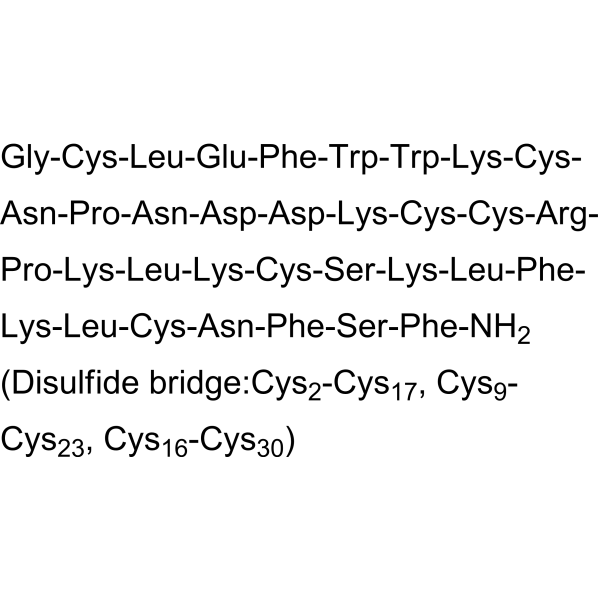
GsMTx4 is a spider venom peptide that selectively inhibits cationic-permeable mechanosensitive channels (MSCs) belonging to the Piezo and TRP channel families. GsMTx4 also blocks cation-selective stretch-activated channels (SACs) , attenuates lysophosphatidylcholine (LPC)-induced astrocyte toxicity and microglial reactivity. GsMTx4 is an important pharmacological tool for identifying the role of these excitatory MSCs in normal physiology and pathology .
118
118 Publications Verification
Cat. No.: HY-P1410A
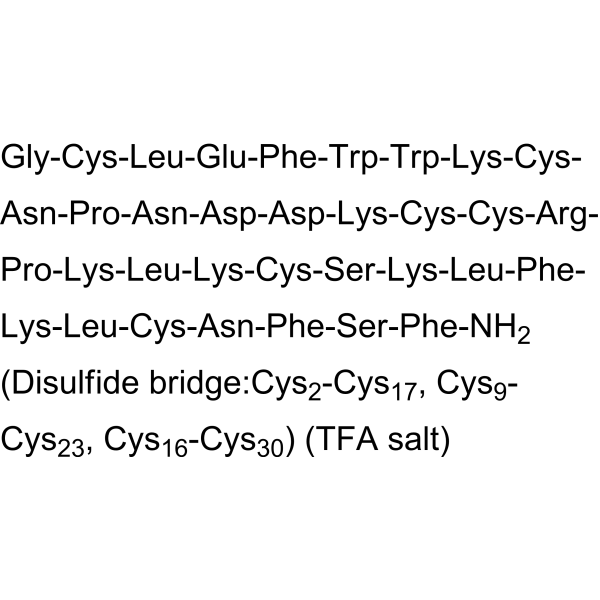
GsMTx4 TFA is a spider venom peptide that selectively inhibits cationic-permeable mechanosensitive channels (MSCs) belonging to the Piezo and TRP channel families. GsMTx4 TFA also blocks cation-selective stretch-activated channels (SACs) , attenuates lysophosphatidylcholine (LPC)-induced astrocyte toxicity and microglial reactivity. GsMTx4 TFA is an important pharmacological tool for identifying the role of these excitatory MSCs in normal physiology and pathology .
66
66 Cited Publications
Cat. No.: HY-112490
CAS No.: 344423-98-9
Pureté:  99.64%
Domaines de recherche:  

Cardiovascular Disease Others

Atorvastatin calcium salt trihydrate is a drug belonging to the statin class of drugs used to lower blood cholesterol levels. Atorvastatin calcium salt trihydrate has unique chemical properties that make it an effective tool in controlling high levels of low-density lipoprotein (LDL) cholesterol and triglycerides in the body, reducing the risk of heart attack and stroke. Atorvastatin calcium salt trihydrate works by inhibiting HMG-CoA reductase, the enzyme responsible for producing cholesterol in the liver.
15
15 Cited Publications
Cat. No.: HY-103311
CAS No.: 11103-72-3
Pureté:  ≥97.0%
Synonyms: Ammoniated ruthenium oxychloride
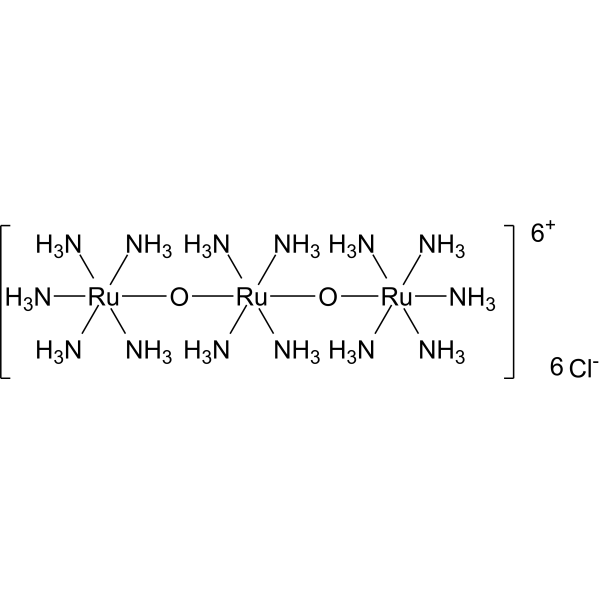
Ruthenium red (Ammoniated ruthenium oxychloride) is a polycationic dye widely used for electron microscopy (EM) of cells, tissues and vegetative bacteria. Ruthenium red strongly reacts with phospholipids and fatty acids and binds to acidic mucopolysaccharides. Ruthenium red is a L-type calcium current (ICa) blocker .
14
14 Cited Publications
Cat. No.: HY-13991
CAS No.: 285986-88-1
Pureté:  99.88%
Target:  

Ras Apoptosis

Domaines de recherche:  

Cancer

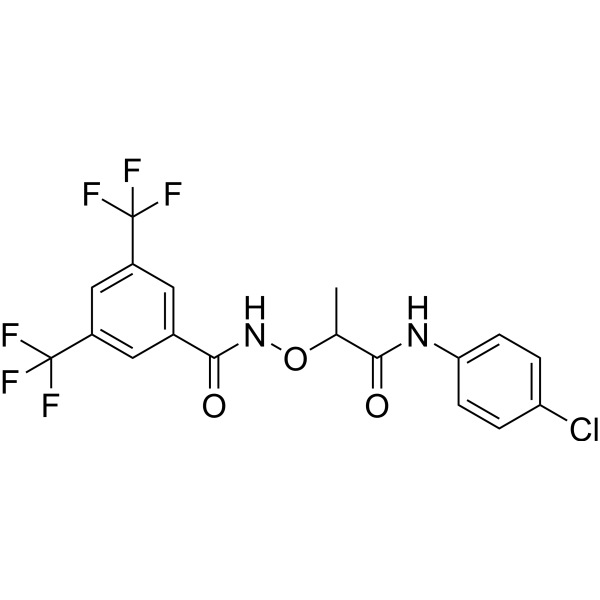
CCG-1423 is an inhibitor of Rho/MRTF/SRF pathway. CCG-1423 shows activities in several cancer cells. CCG-1423 is a promising lead compound for the development of novel pharmacologic tools, and it can be used for the research of cancer and diabetes .
12
12 Cited Publications
Cat. No.: HY-B0572
CAS No.: 13463-41-7
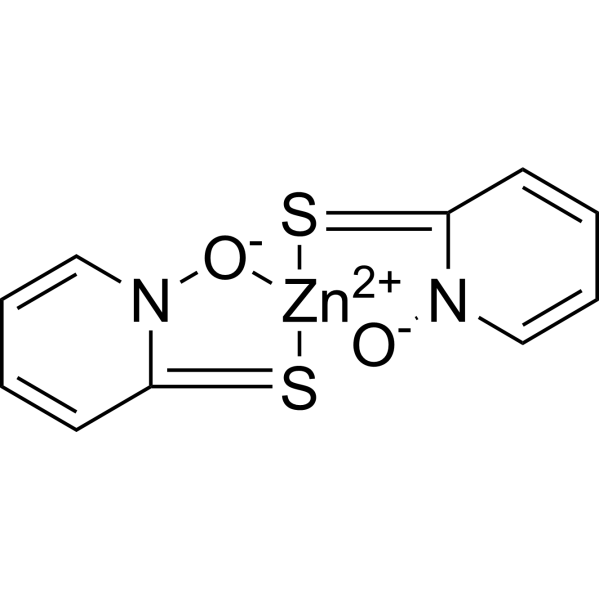
Zinc Pyrithione is an antifungal and antibacterial agent disrupting membrane transport by blocking the proton pump . Zinc Pyrithione is also a copper ionophore that delivers copper into cells and is a useful tool for studying cuproptosis .
12
12 Cited Publications
Cat. No.: HY-12794
CAS No.: 1383716-40-2
Pureté:  99.63%
Target:  

PI3K Autophagy

Domaines de recherche:  

Neurological Disease Cancer

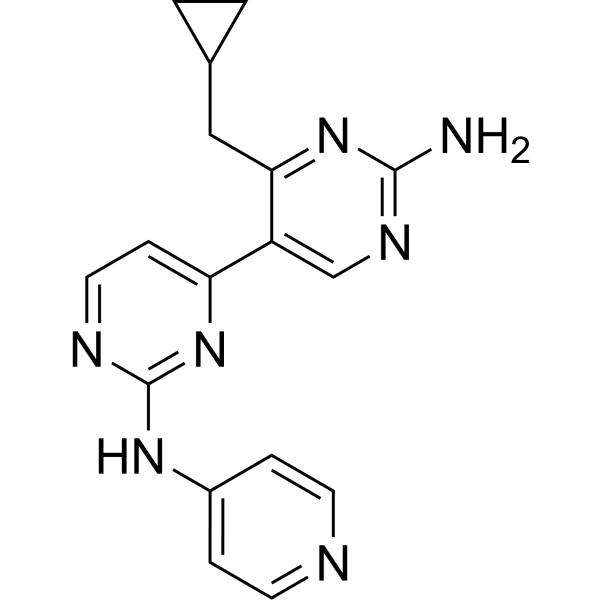
Vps34-PIK-III is an orally active and selective VPS34 inhibitor (IC50=18 nM). Vps34-PIK-III effectively inhibits autophagy and can be used as a molecular tool. vps34-PIK-III is also a PI3K inhibitor that inhibits the expression of genes in liver cancer stem cells (CSCs) .
11
11 Cited Publications
Cat. No.: HY-14414
CAS No.: 1216744-19-2
Pureté:  99.87%
Synonyms: SR6452
Target:  

REV-ERB Apoptosis

Domaines de recherche:  

Metabolic Disease

GSK4112 (SR6452) is a Rev-erbα agonist with an EC50 value of 0.4 μM. GSK4112 can be used as a chemical tool to probe the function of Rev-erbα in transcriptional repression, regulation of circadian biology, and metabolic pathways .
11
11 Cited Publications
Cat. No.: HY-103371
CAS No.: 82749-70-0
Pureté:  99.83%
Domaines de recherche:  

Neurological Disease

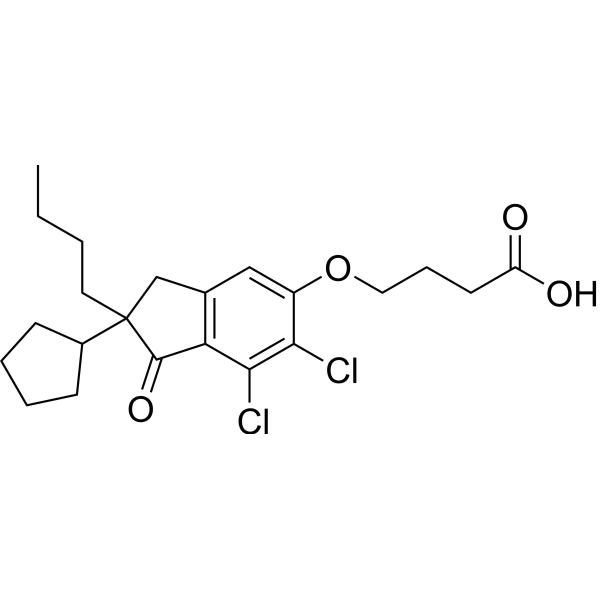
DCPIB is a selective, reversible and potent inhibitor of volume-regulated anion channels (VRAC). DCPIB voltage-dependently activates potassium channels TREK1 and TRAAK, and inhibits TRESK, TASK1 and TASK3 (IC50s: 0.14, 0.95, 50.72 μM, respectively). DCPIB is also a selective blocker of swelling-induced chloride current (ICl,swell), with an IC50 of 4.1 μM. DCPIB is a useful tool for investigating structure-function studies of K2P channels .
10
10 Cited Publications
Cat. No.: HY-12970A
CAS No.: 2070015-25-5
Pureté:  98.15%
Domaines de recherche:  

Cancer

EPZ020411 hydrochloride is a selective inhibitor of PRMT6 with an IC50 of 10 nM, it has >10 folds selectivity for PRMT6 over PRMT1 and PRMT8. EPZ020411 hydrochloride can be used for the research of cancer .
10
10 Cited Publications
Cat. No.: HY-12970
CAS No.: 1700663-41-7
Pureté:  98.07%
Domaines de recherche:  

Cancer

EPZ020411 is a selective inhibitor of PRMT6 with an IC50 of 10 nM, has >10 folds selectivity for PRMT6 over PRMT1 and PRMT8. EPZ020411 can be used for the research of cancer .
9
9 Cited Publications
Cat. No.: HY-103312
CAS No.: 88903-69-9
Pureté:  ≥99.0%
Synonyms: (-)-Xestospongin C
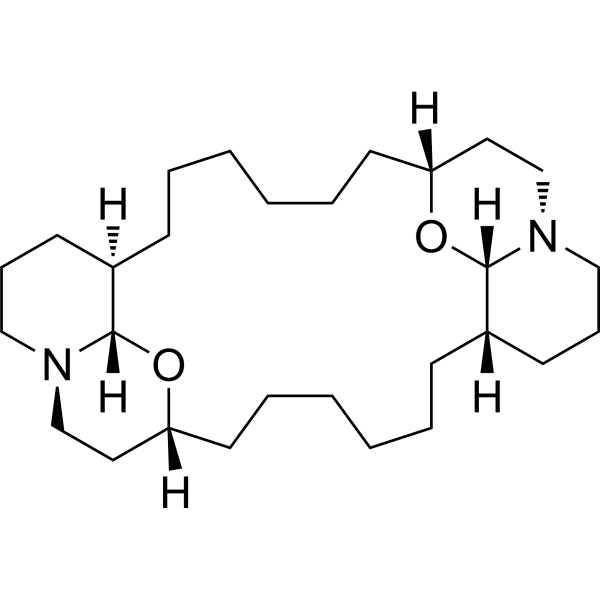
Xestospongin C ((-)-Xestospongin C) is a selective, reversible inositol 1,4,5-trisphosphate receptor (IP3R) inhibitor. Xestospongin C acts as an inhibitor of the sarcoplasmic/endoplasmic reticulum Ca 2+ ATPase (SERCA) pump of internal stores. Xestospongin C blocks IP3-induced Ca 2+ release from cerebellar microsomes with an IC50 of 358 nM. Xestospongin C is a valuable tool for investigating the structure and function of IP3Rs and Ca 2+ signaling in neuronal and nonneuronal cells .
8
8 Cited Publications
Cat. No.: HY-116677
CAS No.: 510758-28-8
Pureté:  99.78%
Synonyms: TBTA
Target:  

MOFs

Domaines de recherche:  

Others

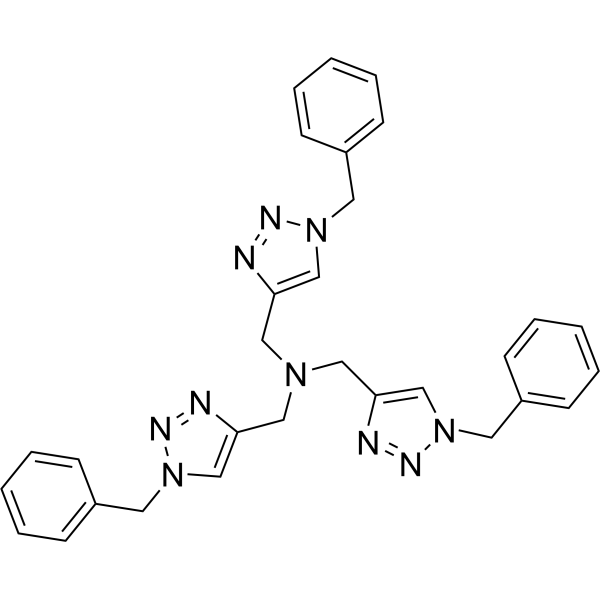
Tris(benzyltriazolylmethyl)amine (TBTA) is a ligand that acts as a biochemical tool for the tagging of proteins and enzymes .
7
7 Cited Publications
Cat. No.: HY-18102
CAS No.: 1215085-92-9
Target:  

Androgen Receptor

Domaines de recherche:  

Neurological Disease

GLPG0492 is an orally active, non-steroidal selective androgen receptor modulator. GLPG0492 exerts functional transactivation by binding to the ligand-binding domain of the receptor, exhibiting preferential partial agonist activity in muscle and bone tissues with low activity in reproductive tissues. GLPG0492 effectively counteracts muscle atrophy-related pathways, significantly enhances muscle strength, maintains motor ability, reduces fibrosis and improves electrophysiological parameters. GLPG0492 prevents immobilization-induced muscle atrophy and regulates muscle mass homeostasis, serving as a valuable tool compound for studies on Duchenne muscular dystrophy, muscle loss and various types of disuse musculoskeletal atrophy .
6
6 Cited Publications
Cat. No.: HY-12345
CAS No.: 947914-18-3
Pureté:  98.62%
Target:  

Potassium Channel

Domaines de recherche:  

Cardiovascular Disease

ML365 is a selective two-pore domain potassium channel KCNK3/TASK1 inhibitor, with an IC50 of 4 nM. ML365 acts as a pharmacological tool that can be used to examine the specific roles of TASK1 channels .
6
6 Cited Publications
Cat. No.: HY-162288
CAS No.: 3036029-72-5
Target:  

DNA/RNA Synthesis

Domaines de recherche:  

Cancer

FAZ-3532 is a G3BP inhibitor (Kd = 0.54 μM) which binds to the NTF2L nsP3 binding pocket in G3BP1. FAZ-3532 disrupts the co-condensation of RNA, G3BP1, and caprin 1. FAZ-3532 inhibits G3BP-driven stress granule formation. FAZ-3532 can be studied as a powerful tool to probe the biology of stress granules and a promising interventions designed to modulate stress granule formation .
5
5 Cited Publications
Cat. No.: HY-115576
CAS No.: 1809031-84-2
Pureté:  99.54%
Domaines de recherche:  

Neurological Disease Cancer

P62-mediated mitophagy inducer (PMI) is a P62-mediated mitophagy activator. P62-mediated mitophagy inducer activates mitochondrial autophagy without recruitment of Parkin or collapse of the mitochondrial membrane potential and remains active in cells lacking a fully functional PINK1/Parkin pathway. P62-mediated mitophagy inducer serves as a pharmacological tool to study the molecular mechanisms of mitosis, avoiding toxicity and some of the non-specific effects associated with the sudden dissipation of mitochondria lacking membrane potential .
5
5 Cited Publications
Cat. No.: HY-141539
CAS No.: 2755823-12-0
Pureté:  99.93%
Domaines de recherche:  

Cancer

SETDB1-TTD-IN-1 is a SETDB1 methyltransferase activator and SETDB1-TTD competitive inhibitor (Kd of 88 nM), and selectivity for SETDB1-TTD over other tudor and bromodomain proteins. SETDB1-TTD-IN-1 stimulates methyltransferase activity via increased catalytic activity, promotes Akt1 Lys64 methylation, Akt1 Thr308 phosphorylation and activation. SETDB1-TTD-IN-1 prevents SETDB1-TTD-histone H3 peptide association, induces global gene expression changes, exhibits cellular target engagement, and acts as a tool compound for SETDB1-TTD function exploration. SETDB1-TTD-IN-1 can be used for the research of breast cancer .
4
4 Cited Publications
Cat. No.: HY-145232
CAS No.: 3016307-75-5
Pureté:  98.76%
Synonyms: OGTAC-3
Domaines de recherche:  

Neurological Disease Cancer

PhosTAC7 is a heterobifunctional molecule named as a Phosphorylation Targeting Chimera (PhosTAC). PhosTAC7 can dephosphorylate the PDCD4 protein, FOXO3a protein, and tau protein by recruiting serine/threonine protein phosphatase 2A (PP2A). PhosTAC7 offers the advantage of selectively modulating the phosphorylation state of individual target proteins, making it a promising tool for research in cancer and tau protein-related neurodegenerative diseases (Alzheimer's disease) .
4
4 Cited Publications
Cat. No.: HY-122882
CAS No.: 2519537-70-1
Pureté:  98.90%
Target:  

E1/E2/E3 Enzyme

Domaines de recherche:  

Inflammation/Immunology

HOIPIN-8 is a potent inhibitor of linear ubiquitin chain assembly complex (LUBAC) with an IC50 of 11 nM. HOIPIN-8 is a HOIPIN-1 derivative with enhanced the potency by 255-fold in the petit-LUBAC inhibition, and 10-fold and 4-fold in the LUBAC- and TNF-α-mediated NF-κB activation, respectively than HOIPIN-1. HOIPIN-1 is a promising tool to explore the cellular functions of LUBAC .

