



P62-mediated mitophagy inducer
Based on 6 publication(s) in Google Scholar
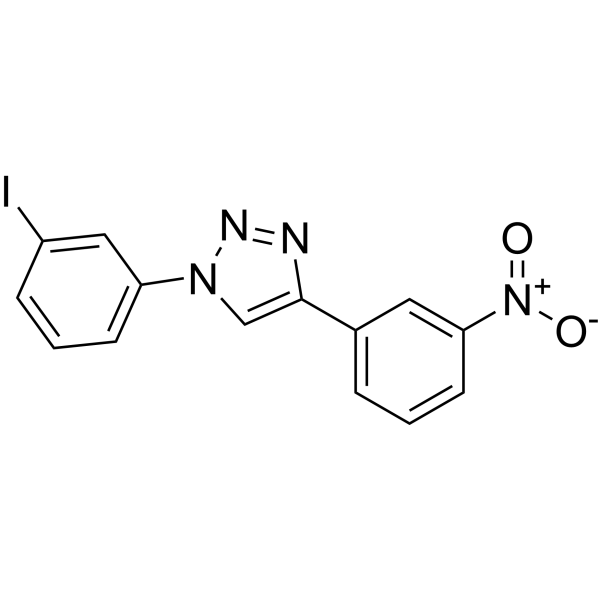
P62-mediated mitophagy inducer (PMI) is a P62-mediated mitophagy activator. P62-mediated mitophagy inducer activates mitochondrial autophagy without recruitment of Parkin or collapse of the mitochondrial membrane potential and remains active in cells lacking a fully functional PINK1/Parkin pathway. P62-mediated mitophagy inducer serves as a pharmacological tool to study the molecular mechanisms of mitosis, avoiding toxicity and some of the non-specific effects associated with the sudden dissipation of mitochondria lacking membrane potential.
For research use only. We do not sell to patients.
- Purity : 99.54%
- CAS No.: 1809031-84-2
- Formula: C14H9IN4O2
- Molecular Weight:392.15
-
Storage:Powder -20°C, 3 years ; In solvent -80°C, 2 years , -20°C, 1 year

To place orders, for customer services and technical support, please contact: MedChemExpress USA
Tel: 609-228-6898 E-mail: [email protected] [email protected]


-
 Biological Activity
-
Chemical Information
-
Solvent & Solubility
- Protocols
- Purity & Documentation
- References
-
 Help & FAQs


-
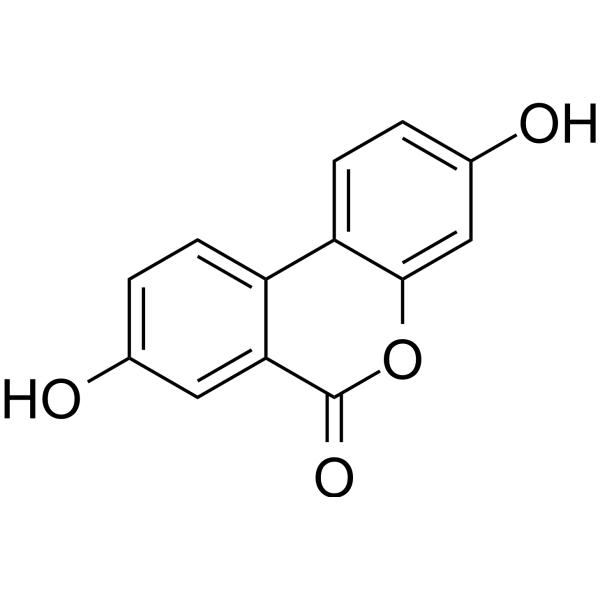
HY-100599
Urolithin AMitophagy Activator -
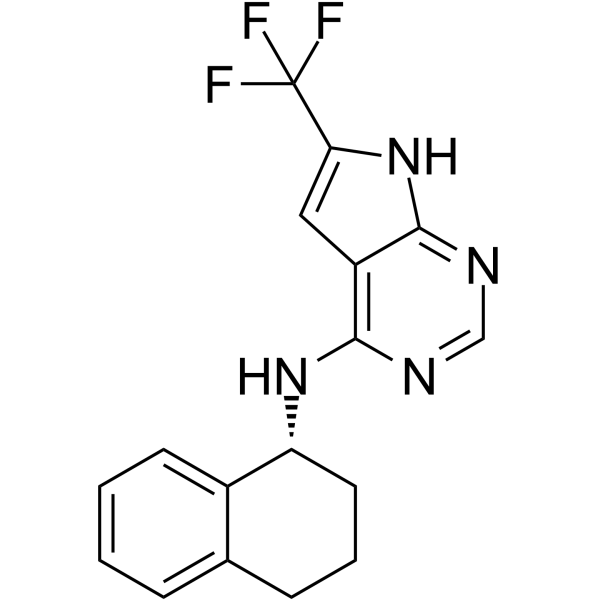
HY-152943
MTK458Mitophagy Activator -
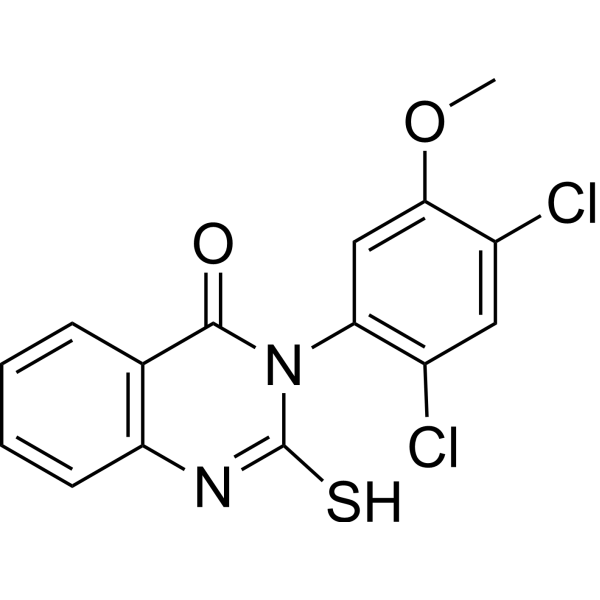
HY-15886
Mdivi-1Drp1 Inhibitor -
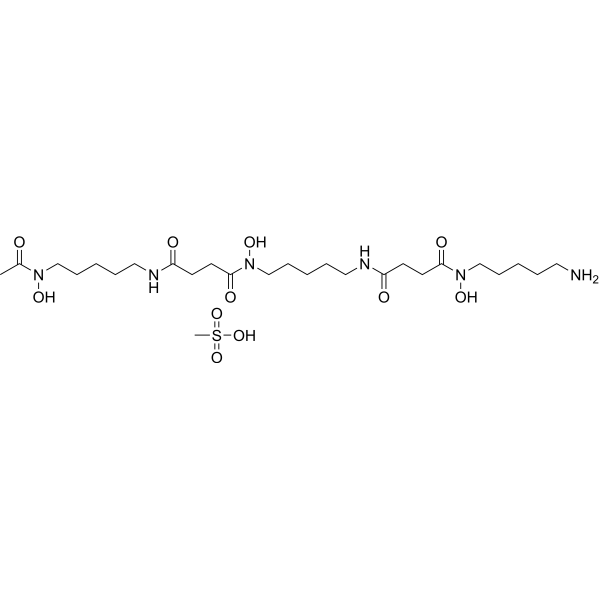
HY-B0988
Deferoxamine mesylateIron Chelator -
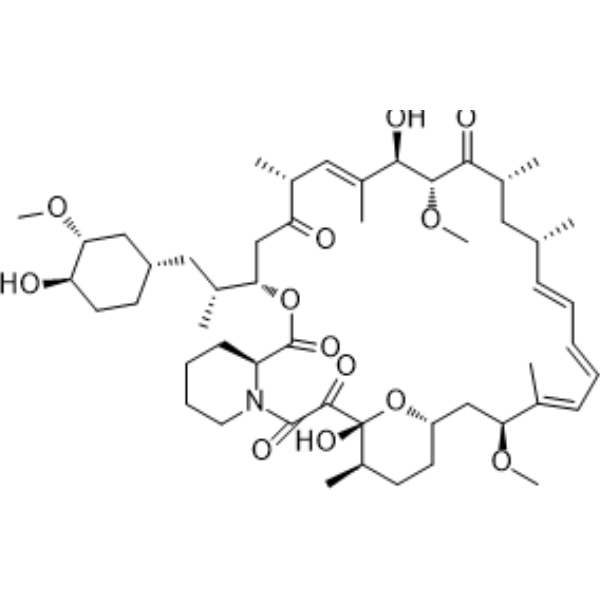
HY-10219
RapamycinmTOR Inhibitor -
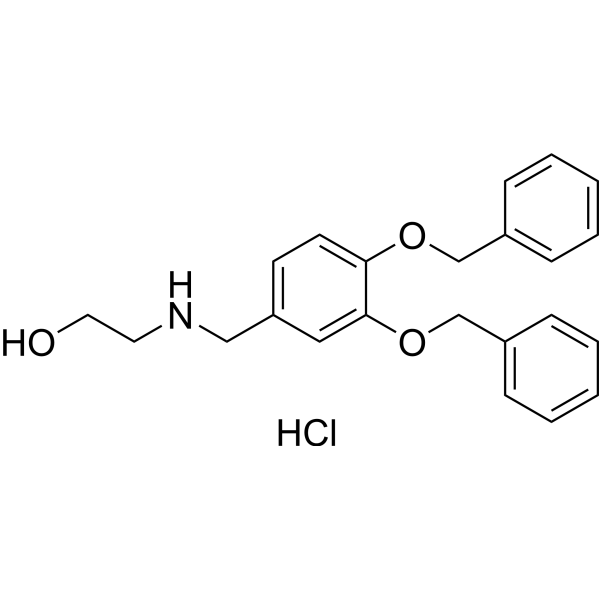
HY-W688687
XIE62-1004-AAutophagy Inducer -
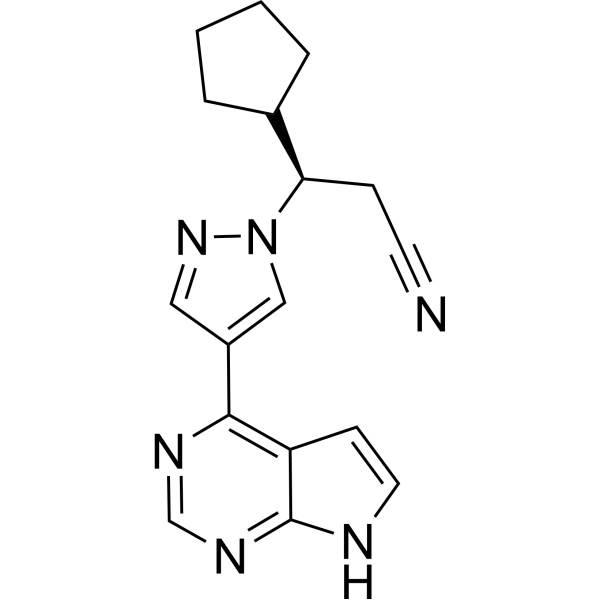
HY-50856
RuxolitinibJAK1/2 Inhibitor -
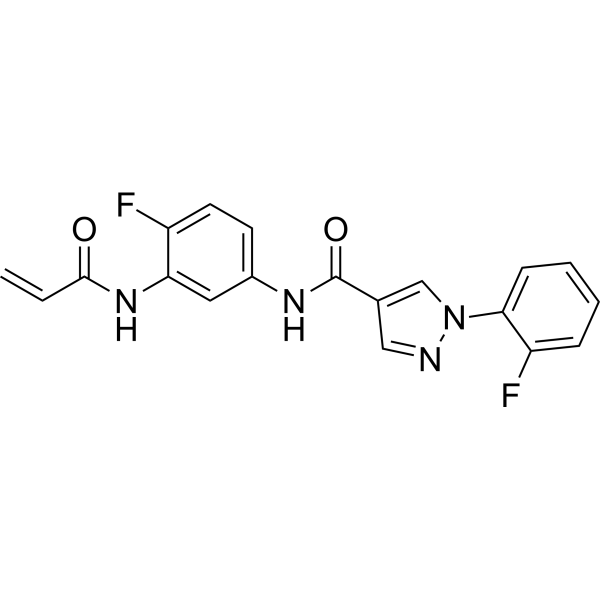
HY-128892
EN6Autophagy Activator -
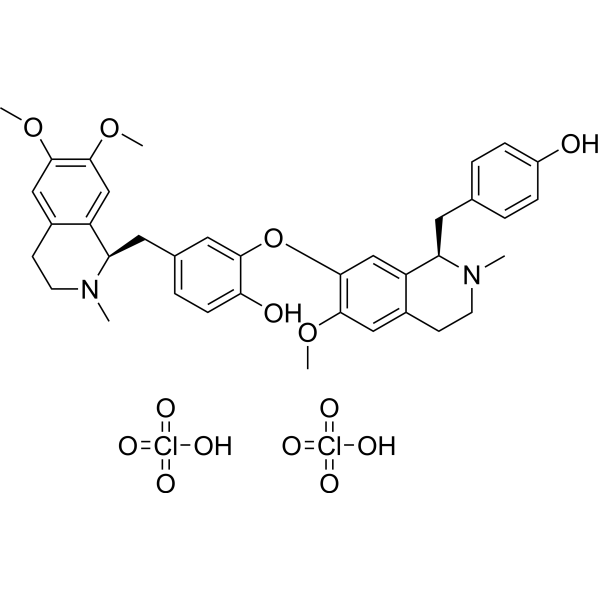
HY-N0485
Liensinine DiperchlorateAutophagy Inhibitor -
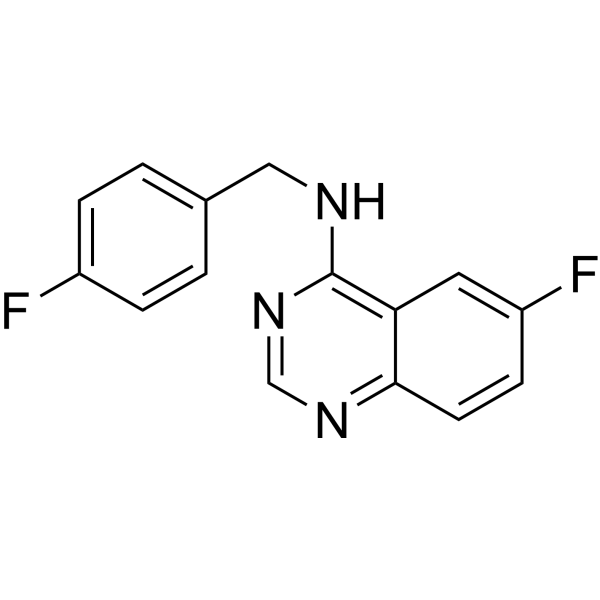
HY-12990
Spautin-1Autophagy Inhibitor -
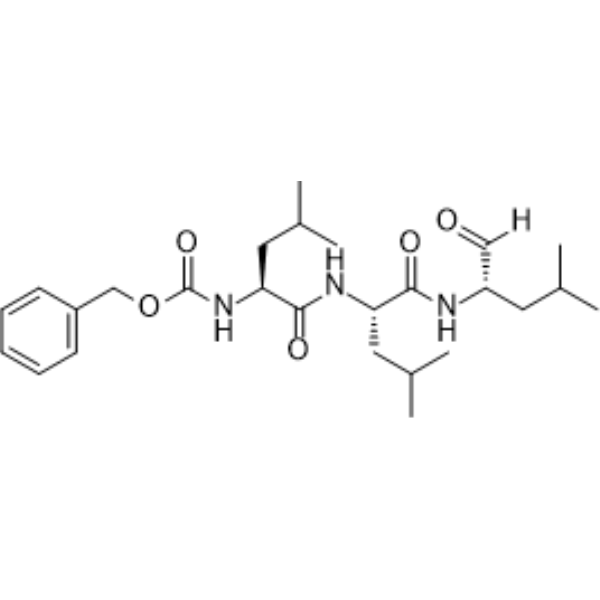
HY-13259
MG-132Proteasome Inhibitor -
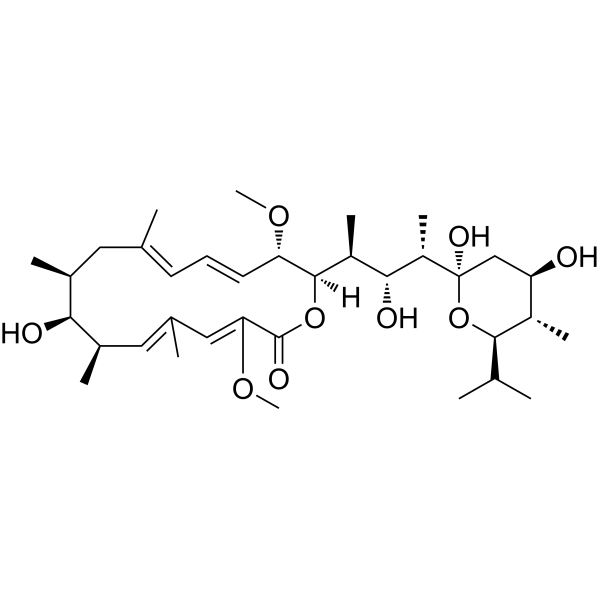
HY-100558
Bafilomycin A1V-ATPase Inhibitor
Publications Citing Use of MedChemExpress (MCE) P62-mediated mitophagy inducer
More- Autophagy. 2025 Jan;21(1):80-101. [Abstract]
- Genes Dis. 2023 Sep 2;11(6):101074. [Abstract]
- Free Radic Biol Med. 2026 Jun 27:254:391-404. [Abstract]
- Radiother Oncol. 2024 Jan:190:110028. [Abstract]
- Cancer Res Commun. 2023 Feb 21;3(2):297-308. [Abstract]
- bioRxiv. 2025 May 13:2025.05.12.653519. [Abstract]
 Customer Validation & Images

-
Cell Proliferation/Viability Assay

-
WB

-
IF

-
WB

-
IF


Biological Activity
Description
IC50 & Target
mitophagy[1].
In Vitro
P62-mediated mitophagy inducer (10 μM; 0, 1, 3, 6, 24 h) stabilizes Nrf2 and (10 μM; 9 h) upregulates P62 expression activating mitophagy[1].
P62-mediated mitophagy (10 μM; 24 h) acts downstream of the PINK1/Parkin signaling pathway in MEFs[1].
P62-mediated mitophagy inducer positively affects mitochondrial poly-ubiquitination and coupling[1].
MedChemExpress (MCE) has not independently confirmed the accuracy of these methods. They are for reference only.
-
Cell Line:MEFs
-
Concentration:10 µM
-
Incubation Time:9 h
-
Result:Significantly increased p62 mRNA levels.
-
Cell Line:MEFs
-
Concentration:10 µM
-
Incubation Time:24 h
-
Result:Demonstrated Parkin-independent induction of mitochondrial recruitment of P62.
-
Cell Line:MEFs
-
Concentration:10 µM
-
Incubation Time:0, 1, 3, 6, 24 h
-
Result:Exhibited maximum Nrf2 levels after 6 h and remained elevated at 24 h.
Clinical Trial
| NCT Number | Sponsor | Condition | Start Date |
Phase

|
|---|---|---|---|---|
| NCT01329991 | 2011-05 | PHASE1 |


Chemical Information
-
CAS No. 1809031-84-2
-
Appearance Solid
-
Molecular Weight 392.15
-
Formula C14H9IN4O2
-
Color Light yellow to yellow
-
SMILES
O=[N+](C1=CC(C2=CN(C3=CC=CC(I)=C3)N=N2)=CC=C1)[O-]
-
Shipping
Room temperature in continental US; may vary elsewhere.
-
Storage
Powder -20°C 3 years In solvent -80°C 2 years -20°C 1 year


Publications (6)
-
Journal Impact Factor
-
Most Recent
-
Autophagy
MANF facilitates breast cancer cell survival under glucose-starvation conditions via prkn-mediated mitophagy regulation. [Abstract]2025 Jan;21(1):80-101. PMID: 39147386
P62-mediated mitophagy inducer purchased from MedChemExpress. Usage Cited in: Autophagy. 2025 Jan;21(1):80-101. [Abstract]
Both pharmacological mitophagy inhibition (baf A1 and mdivi-1) and genetic mitophagy inhibition (DNM1L-KD) reduced and mitophagy agonist PMI (P62-mediated mitophagy inducer, 0.1-10 μM) increased BC cell viability under glucose-starvation conditions (n = 3).
-
Genes Dis
Mitophagy deficiency activates stimulator of interferon genes activation and aggravates pathogenetic cardiac remodeling. [Abstract]2023 Sep 2;11(6):101074. PMID: 39281830
P62-mediated mitophagy inducer purchased from MedChemExpress. Usage Cited in: Genes Dis. 2023 Sep 2;11(6):101074. [Abstract]
Protein levels of Parkin in CFs exposed to Ang II (100 nM) for 24 h with siRNA-Parkin or PMI (P62-mediated mitophagy inducer).
P62-mediated mitophagy inducer purchased from MedChemExpress. Usage Cited in: Genes Dis. 2023 Sep 2;11(6):101074. [Abstract]
CF mitophagy was confirmed by the co-location of mito-tracker green and lyso-tracker red after exposure to Ang II for 24 h with siRNA-Parkin or PMI (P62-mediated mitophagy inducer).
P62-mediated mitophagy inducer purchased from MedChemExpress. Usage Cited in: Genes Dis. 2023 Sep 2;11(6):101074. [Abstract]
Protein levels and quantification of STING, p-IRF3, and IRF3 in CFs exposed to Ang II with siRNA-Parkin or PMI (P62-mediated mitophagy inducer).
P62-mediated mitophagy inducer purchased from MedChemExpress. Usage Cited in: Genes Dis. 2023 Sep 2;11(6):101074. [Abstract]
Representative immunofluorescence staining and quantitative analysis of α-SMA in CFs exposed to Ang II with siRNA-Parkin or PMI (P62-mediated mitophagy inducer).

P62-mediated mitophagy inducer purchased from MedChemExpress. Usage Cited in: Genes Dis. 2023 Sep 2;11(6):101074. [Abstract]
CF cytosolic mtDNA levels were measured with RT-PCR after exposure to Ang II for 24 h with siRNA-Parkin or PMI (P62-mediated mitophagy inducer).
-
Free Radic Biol Med
DRP1-mediated mitophagy facilitates oral squamous cell carcinoma tumor cell survival under glucose restriction. [Abstract]2026 Jun 27:254:391-404. PMID: 42364552 -
Radiother Oncol
Mitophagy induction improves salivary gland stem/progenitor cell function by reducing senescence after irradiation. [Abstract]2024 Jan:190:110028. PMID: 38007043 -
Cancer Res Commun
Combination of a New Oral Demethylating Agent, OR2100, and Venetoclax for Treatment of Acute Myeloid Leukemia. [Abstract]2023 Feb 21;3(2):297-308. PMID: 36860654 -
bioRxiv
LOXL2 Deletion Triggers TMJ Osteoarthritis While Overexpression Protects Against NF-κβ-Induced Chondrocyte Apoptosis. [Abstract]2025 May 13:2025.05.12.653519. PMID: 40463059


Solvent & Solubility
In Vitro:
DMSO : 8.33 mg/mL (21.24 mM; Need ultrasonic; Hygroscopic DMSO has a significant impact on the solubility of product, please use newly opened DMSO)
Please refer to the solubility information to select the appropriate solvent. Once prepared, please aliquot and store the solution to prevent product inactivation from repeated freeze-thaw cycles.
Storage method and period of stock solution: -80°C, 2 years; -20°C, 1 year. When stored at -80°C, please use it within 2 years. When stored at -20°C, please use it within 1 year.
Please refer to the solubility information to select the appropriate solvent. Once prepared, please aliquot and store the solution to prevent product inactivation from repeated freeze-thaw cycles.
Storage method and period of stock solution: -80°C, 2 years; -20°C, 1 year. When stored at -80°C, please use it within 2 years. When stored at -20°C, please use it within 1 year.
Concentration (start) × Volume (start) = Concentration (final) × Volume (final)
In Vivo:
Select the appropriate dissolution method based on your experimental animal and administration route.
- For the following dissolution methods, please ensure to first prepare a clear stock solution using an In Vitro approach and then sequentially add co-solvents:
- To ensure reliable experimental results, the clarified stock solution can be appropriately stored based on storage conditions. As for the working solution for In Vivo experiments, it is recommended to prepare freshly and use it on the same day.
- The percentages shown for the solvents indicate their volumetric ratio in the final prepared solution. If precipitation or phase separation occurs during preparation, heat and/or sonication can be used to aid dissolution.
Add each solvent one by one: 10% DMSO 40% PEG300 5% Tween-80 45% Saline
Solubility: ≥ 1.25 mg/mL (3.19 mM); Clear solution
This protocol yields a clear solution of ≥ 1.25 mg/mL (saturation unknown).
Taking 1 mL working solution as an example, add 100 μL DMSO stock solution (12.5 mg/mL) to 400 μL PEG300, and mix evenly; then add 50 μL Tween-80 and mix evenly; then add 450 μL Saline to adjust the volume to 1 mL.
Preparation of Saline: Dissolve 0.9 g sodium chloride in ddH₂O and dilute to 100 mL to obtain a clear Saline solution.
In Vivo Dissolution Calculator
Please enter the basic information of animal experiments:
-
-
-
-
Recommended: Prepare an additional quantity of animals to account for potential losses during experiments.
Please enter your animal formula composition:
-
%DMSO +
Recommended: Keep the proportion of DMSO in working solution below 2% if your animal is weak.
-
%+
-
+%Tween-80 + +
-
%Saline +
The co-solvents required include: DMSO, . All of co-solvents are available by MedChemExpress (MCE). , Tween 80. All of co-solvents are available by MedChemExpress (MCE).
Working solution concentration: 0.22 mg/mL
Method for preparing stock solution: mg drug dissolved in μL DMSO. Stock solution concentration: mg/mL.
1. Take μL DMSO stock solution;
2. Add μL .
μL , mix evenly;
3. Then add μL Tween 80, mix evenly;
4. Then add μL
Please ensure that the stock solution in the first step is dissolved to a clear state, and add co-solvents in sequence. You can use ultrasonic heating (ultrasonic cleaner, recommended frequency 20-40 kHz), vortexing, etc. to assist dissolution.


Purity & Documentation
-
Data Sheet (275 KB)
-
SDS (393 KB)
- English - EN (393 KB)
- Français - FR (393 KB)
- Deutsch - DE (393 KB)
- Norwegian - NO (393 KB)
- Español - ES (393 KB)
- Swedish - SV (393 KB)
- Italian - IT (393 KB)
- Korean - KR (393 KB)
- Portuguese - PT (393 KB)
-
Handling Instructions (2659 KB)
References


Complete Stock Solution Preparation Table
Please refer to the solubility information to select the appropriate solvent. Once prepared, please aliquot and store the solution to prevent product inactivation from repeated freeze-thaw cycles.
Storage method and period of stock solution: -80°C, 2 years; -20°C, 1 year. When stored at -80°C, please use it within 2 years. When stored at -20°C, please use it within 1 year.
| Optional Solvent | Concentration Solvent Mass | 1 mg | 5 mg | 10 mg | 25 mg |
|---|---|---|---|---|---|
| DMSO | 1 mM | 2.5500 mL | 12.7502 mL | 25.5004 mL | 63.7511 mL |
| 5 mM | 0.5100 mL | 2.5500 mL | 5.1001 mL | 12.7502 mL | |
| 10 mM | 0.2550 mL | 1.2750 mL | 2.5500 mL | 6.3751 mL | |
| 15 mM | 0.1700 mL | 0.8500 mL | 1.7000 mL | 4.2501 mL | |
| 20 mM | 0.1275 mL | 0.6375 mL | 1.2750 mL | 3.1876 mL |


P62-mediated mitophagy inducer Related Classifications
HY-115576 Related Classifications
 Powered by Bioz