1. Search Result
Search Result
Results for "

ventricular

" in MedChemExpress (MCE) Product Catalog:

248

Inhibitors & Agonists

2

Fluorescent Dye

2

Biochemical Assay Reagents

13

Peptides

1

MCE Kits

23

Natural
Products

21

Isotope-Labeled Compounds

3

Antibodies

1

GMP Molecules

Cat. No. Product Name Target Research Areas Chemical Structure
  • HY-14188
    Amiodarone hydrochloride
    10+ Cited Publications

    Potassium Channel Autophagy Cardiovascular Disease Infection Neurological Disease Cancer
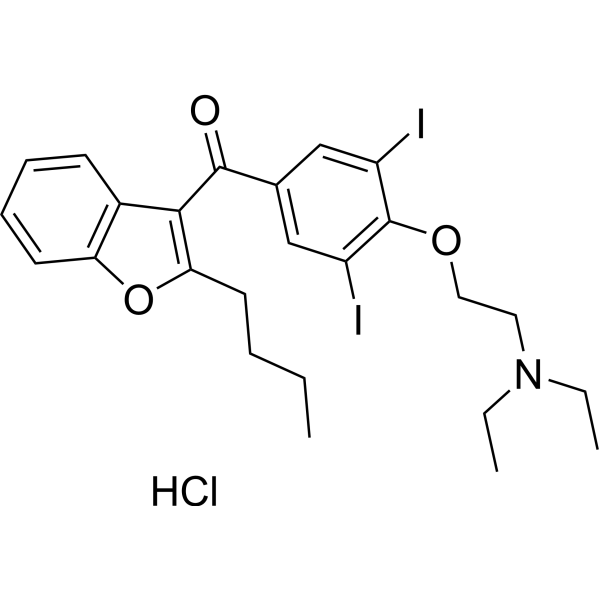
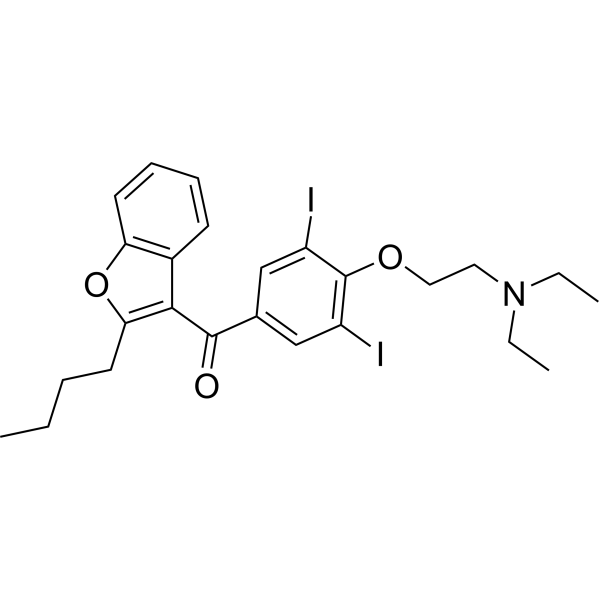
    Amiodarone hydrochloride, a benzofuran-based Class III antiarrhythmic agent, inhibits WT outward ionic current (IhERG) tails with an IC50 of ∼45 nM . Amiodarone hydrochloride induces cell proliferation and myofibroblast differentiation via ERK1/2 and p38 MAPK signaling in fibroblasts . Amiodarone hydrochloride can be used in the research of both supraventricular and ventricular arrhythmias .
    Amiodarone hydrochloride
  • HY-B0259
    Indapamide
    1 Publications Verification

    Potassium Channel Cardiovascular Disease
    Indapamide is an orally active sulphonamide diuretic agent, that can reduce blood pressure by decreasing vascular reactivity and peripheral vascular resistance. Indapamide is also can reduce left ventricular hypertrophy .
    Indapamide
  • HY-B0432A
    Propafenone hydrochloride
    2 Publications Verification

    SA-79 hydrochloride

    Sodium Channel Cardiovascular Disease
    Propafenone (hydrochloride) (SA-79 (hydrochloride)) is a class of anti-arrhythmic medication, which treats illnesses associated with rapid heart beats such as atrial and ventricular arrhythmias.
    Propafenone hydrochloride
  • HY-101415
    Coenzyme Q9
    1 Publications Verification

    Ubiquinone Q9; CoQ9; Ubiquinone 9

    Apoptosis Endogenous Metabolite Cardiovascular Disease
    Coenzyme Q9 (Ubiquinone Q9), the major form of ubiquinone in rodents, is an amphipathic molecular component of the electron transport chain that functions as an endogenous antioxidant. Coenzyme Q9 attenuates the diabetes-induced decreases in antioxidant defense mechanisms. Coenzyme Q9 improves left ventricular performance and reduces myocardial infarct size and cardiomyocyte apoptosis .
    Coenzyme Q9
  • HY-B1167

    Cardiorythmine; (+)-Ajmaline

    Sodium Channel Cardiovascular Disease
    Ajmaline (Cardiorythmine) is a sodium channel blocking, class 1A anti-arrhythmic agent. Ajmaline blocks HERG currents with an IC50 of 1 μM in HEK cells and 42.3 μM in Xenopus oocytes. Ajmaline can be used for the research of the ventricular tachyarrhythmia .
    Ajmaline
  • HY-12533
    Disopyramide
    2 Publications Verification

    Dicorantil; SC-7031

    Sodium Channel Potassium Channel Cardiovascular Disease
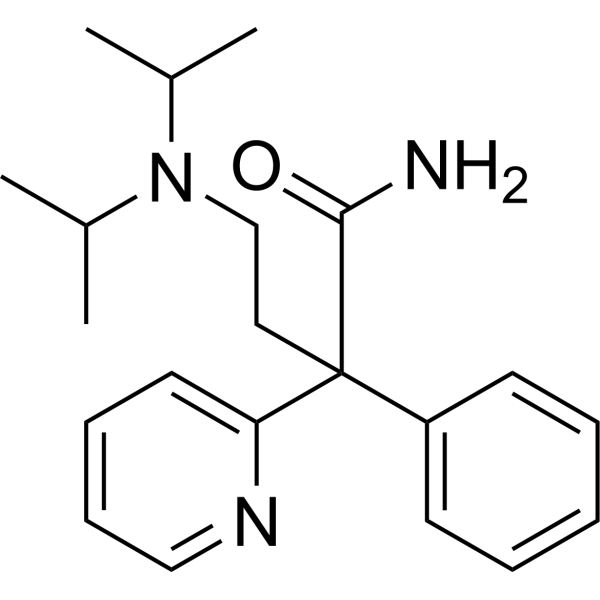
    Disopyramide (Dicorantil) is a class IA antiarrhythmic agent with efficacy in ventricular and atrial arrhythmias. Disopyramide blocks the fast inward sodium current of cardiac muscle and prolongs the duration of cardiac action potentials. Disopyramide inhibits HERG encoded potassium channels. Disopyramide also exhibits complex protein binding, and has a potent negative inotropic action .
    Disopyramide
  • HY-119850

    ARM036; S44121

    Calcium Channel Cardiovascular Disease
    Aladorian (ARM036; S44121) is a non-peptidic ryanodine receptor 2 (RyR2) stabilizer. Aladorian stabilizes RyR2 channels and rectifies abnormal Ca²⁺ handling in cardiomyocytes. Aladorian improves cardiomyocyte Ca²⁺ homeostasis independent of dystrophin restoration. Aladorian attenuates early cardiomyopathy and enhances left ventricular function in a canine muscular dystrophy model. Aladorian can be used for the research of heart failure, Duchenne muscular dystrophy-associated cardiomyopathy and muscular dystrophy .
    Aladorian
  • HY-12593
    GS967
    5+ Cited Publications

    Sodium Channel Cardiovascular Disease
    GS967 (GS-458967) is a potent, and selective inhibitor of cardiac late sodium current (late INa ) with IC50 values of 0.13 and 0.21 μM for ventricular myocytes and isolated hearts, respectively.
    GS967
  • HY-159821

    CK-4021586; CK-586

    Myosin Cardiovascular Disease
    Ulacamten (CK-4021586; CK-586) is an orally active cardiac myosin inhibitor and an inhibitor of the double-headed cardiac heavy meromyosin (HMM)ATPase (excluding single-headed myosin subfragment-1), with an EC50 of 2.9 μM. Ulacamten regulates cardiac myosin, reduces excessive myocardial contractility, and alleviates left ventricular outflow tract obstruction. Ulacamten increases the left ventricular short-axis systolic internal diameter, inhibits dobutamine-induced exacerbation of obstruction, and exerts only a mild reducing effect on left ventricular systolic function. Ulacamten also inhibits the fractional shortening of the short axis without altering calcium transients. Ulacamten shows good safety and tolerability in purpose-bred cats with naturally occurring obstructive hypertrophic cardiomyopathy .
    Ulacamten
  • HY-B0419
    Manidipine
    3 Publications Verification

    Calcium Channel Interleukin Related Cardiovascular Disease Neurological Disease Endocrinology
    Manidipine is an orally active calcium channel antagonist. Manidipine regulates the expression of cytokines (IL-1β, IL-6). Manidipine has a hypotensive effect. Manidipine can be used in the study of cardiovascular diseases (such as hypertension, myocardial ischemia-reperfusion injury, ventricular hypertrophy), kidney diseases (such as glomerular diseases), and epilepsy .
    Manidipine
  • HY-106369
    HMR 1556
    2 Publications Verification

    Potassium Channel Cardiovascular Disease
    HMR 1556, a chromanol derivative, is a potent IKs blocker with IC50s of 10.5 nM and 34 nM in canine and guinea pig left ventricular myocytes, respectively .
    HMR 1556
  • HY-12533A
    Disopyramide phosphate
    2 Publications Verification

    Dicorantil phosphate; SC-7031 phosphate

    Potassium Channel Sodium Channel Cardiovascular Disease
    Disopyramide phosphate is a class IA antiarrhythmic agent with efficacy in ventricular and atrial arrhythmias. Disopyramide phosphate blocks the fast inward sodium current of cardiac muscle and prolongs the duration of cardiac action potentials. Disopyramide phosphate inhibits HERG encoded potassium channels. Disopyramide phosphate also exhibits complex protein binding, and has a potent negative inotropic action .
    Disopyramide phosphate
  • HY-B1238
    Pronethalol
    2 Publications Verification

    (±)-Pronethalo

    Adrenergic Receptor Cardiovascular Disease Neurological Disease
    Pronethalol ((±)-Pronethalo) is a non-selective β-adrenergic antagonist. Pronethalol is a potent inhibitor of Sox2 expression. Pronethalol protects against and to reverse Digitalis-induced ventricular arrhythmias and limits the cerebral arteriovenous malformation (AVMs) .
    Pronethalol
  • HY-100634

    (±)-4-hydroxy Propranolol hydrochloride

    Adrenergic Receptor Cardiovascular Disease
    4-Hydroxypropranolol hydrochloride is a non-cardiac selective β-adrenergic receptor antagonist and a metabolite produced after oral administration of Propranolol (HY-B0573B). 4-Hydroxypropranolol hydrochloride also acts as a membrane stabilizer and possesses intrinsic sympathomimetic inhibitory activity. 4-Hydroxypropranolol hydrochloride blocks β-adrenergic receptors to antagonize the effects of catecholamines, acts as a partial β-adrenergic receptor agonist, and induces membrane stabilization. 4-Hydroxypropranolol hydrochloride alters heart rate, left ventricular contractility, and atrioventricular conduction time. 4-Hydroxypropranolol hydrochloride can be used in research related to cardiovascular and cerebrovascular diseases .
    4-Hydroxypropranolol hydrochloride
  • HY-149662

    Calcium Channel ATP Synthase Myosin Cardiovascular Disease
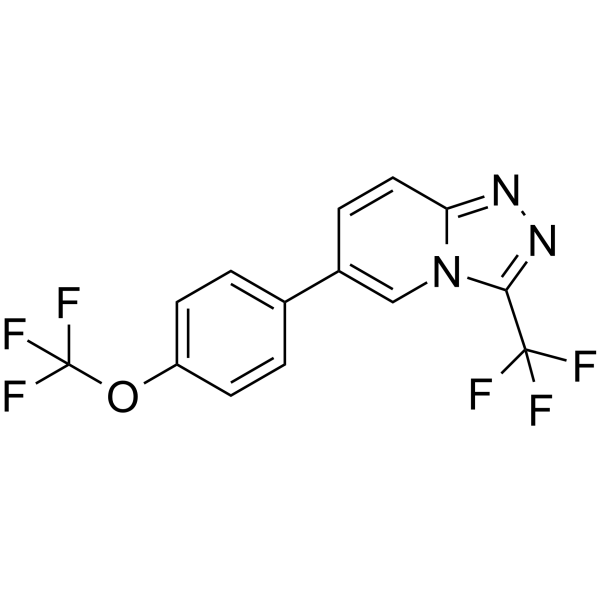
    TMDJ-035 is a high-affinity, selective RyR2 inhibitor with an EC50 of 0.0130 μM. TMDJ-035 reduces RyR2 protein expression without affecting action potential-induced Ca 2+ transients. TMDJ-035 decreases ATP content and intracellular Ca 2+ levels. TMDJ-035 inhibits arrhythmias in a CPVT mouse model carrying mutant RyR2s. TMDJ-035 has no effect on electrocardiogram parameters or cardiac systolic function. TMDJ-035 exacerbates heart failure in mouse myocardial infarction models and hypoxic cardiomyocytes by altering cardiac function, causing tissue damage, promoting inflammatory infiltration, collagen deposition, and changes in Myosin heavy chain/actin expression. TMDJ-035 can be used in studies related to heart failure, catecholaminergic polymorphic ventricular tachycardia, and arrhythmias .
    TMDJ-035
  • HY-137683A

    GDPβS trisodium

    Adenylate Cyclase Cardiovascular Disease
    Guanosine 5'-O-(2-thiodiphosphate) trisodium (GDPβS trisodium) is a non-hydrolyzable derivative of GDP. Guanosine 5'-O-(2-thiodiphosphate) trisodium acts as an inhibitor of adenylyl cyclase (AC) with a Ki value of 600 nM. In the absence of glutamic-pyruvic transaminase (GPT) in cerebral cortex membranes of rodent models, Guanosine 5'-O-(2-thiodiphosphate) trisodium partially activates AC with an EC50 of 400 nM. Guanosine 5'-O-(2-thiodiphosphate) trisodium prevents norepinephrine-induced nitric oxide release in ventricular myocytes .
    Guanosine 5'-O-2-thiodiphosphate trisodium
  • HY-112075

    Potassium Channel Calcium Channel Cardiovascular Disease
    Lidoflazine is a high affinity blocker of the HERG (human ether-a-go-go-related gene) K + channel. Lidoflazine is an antianginal calcium channel blocker that carries a significant risk of QT interval prolongation and ventricular arrhythmia .
    Lidoflazine
  • HY-W042301

    Anion Exchangers Carbonic Anhydrase Endothelin Receptor Cardiovascular Disease
    Xipamide is an orally active carbonic anhydrase (CA) inhibitor and Na +/Cl --potassium transporter inhibitor with diuretic and antihypertensive effects. Xipamide reduces NaCl reabsorption by inhibiting the Cl -/NaCO3 - anion exchanger, and increases calcium reabsorption while promoting potassium and magnesium excretion. Xipamide is mainly cleared via the renal pathway and causes a temporary decrease in glomerular filtration rate under specific conditions. Xipamide does not affect Ca 2+ signaling induced by endothelin-1 and other factors, nor does it inhibit various ion cotransport or pump activities in red blood cells. Xipamide can be used in researches related to cardiovascular diseases, hypertension (especially with left ventricular hypertrophy), advanced renal failure, and liver cirrhosis with ascites .
    Xipamide
  • HY-135121

    Ethacizin; NIK-244

    Sodium Channel Cardiovascular Disease
    Ethacizine hydrochloride (Ethacizin; NIK-244) is a longer-lasting Class Ic antiarrhythmic agent than Flecainide . Ethacizine hydrochloride (Ethacizin; NIK-244) inhibits the depolarizing current responsible for the intraatrial and His-Purkinje-ventricular conduction .
    Ethacizine hydrochloride
  • HY-14304A
    Zinterol hydrochloride
    1 Publications Verification

    MJ 9184 hydrochloride

    Adrenergic Receptor Cardiovascular Disease
    Zinterol hydrochloride (MJ 9184 hydrochloride) is a potent and selective β2-adrenoceptor agonist . Zinterol hydrochloride increases ICa in a concentration-dependent manner with an EC50 of 2.2 nM . Zinterol hydrochloride induces ventricular arrhythmias in conscious heart failure rabbits .
    Zinterol hydrochloride
  • HY-107428

    MMP Cardiovascular Disease
    PD-166793 is a potent, selective, orally active and wide-broad spectrum inhibitor of MMP, exhibiting nanomolar potency against MMP-2, MMP-3 and MMP-13 (IC50=4, 7, and 8 nM, respectively) and micromolar potency vs MMP-1, -7 and -9 (IC50=6.0, 7.2, and 7.9 μM, respectively). PD-166793 can attenuate left ventricular remodeling and dysfunction in a rat model of progressive heart failure .
    PD-166793
  • HY-A0079

    Amethocaine

    Sodium Channel Calcium Channel Neurological Disease
    Tetracaine (Amethocaine) is a sodium channel inhibitor and ryanodine receptor (RyR) inhibitor. Tetracaine blocks sodium conduction across nerve cell membranes, preventing rapid sodium ion influx and depolarization. Tetracaine exhibits biphasic effects on spontaneous sarcoplasmic reticulum Ca 2+ release in Ca 2+-overloaded ventricular myocytes, and increases sarcoplasmic reticulum Ca 2+ load. Tetracaine can be used in research related to eye diseases .
    Tetracaine
  • HY-N0062

    Others Cardiovascular Disease
    Angoroside C, a phenylpropanoid glycoside isolated from Scrophularia ningpoensis, has beneficial effects against ventricular remodeling .
    Angoroside C
  • HY-123785
    ORM-10962
    3 Publications Verification

    Na+/Ca2+ Exchanger Metabolic Disease
    ORM-10962 is a potent, highly selective sodium-calcium exchanger (NCX) inhibitor, with IC50 values of 67 and 55 nM for the reverse and forward mode inhibition, respectively. ORM-10962 shows antiarrhythmic effect .
    ORM-10962
  • HY-B0772A

    MS-551

    Potassium Channel Cardiovascular Disease
    Nifekalant hydrochloride (MS-551), a class III antiarrhythmic agent, is a IKr potassium channel blocker with an IC50 of 10 µM. Nifekalant hydrochloride can be used for refractory ventricular tachyarrhythmias research .
    Nifekalant hydrochloride
  • HY-N1924

    Crassicaulin A

    Parasite Cardiovascular Disease Infection
    Crassicauline A (Crassicaulin A) is a diester-type diterpenoid alkaloid. Crassicauline A exhibits feeding deterrent activity against adult Tribolium castaneum, with a EC50 of 1134.5 ppm. Crassicauline A induces arrhythmia at a dose of 0.10 mg/kg .
    Crassicauline A
  • HY-130335

    MJ9067

    Sodium Channel Cardiovascular Disease
    Encainide (MJ9067) is an antiarrhythmic agent with class IC activity. Encainide blocks voltage-dependent potassium channels. Encainide has the potential for life-threatening ventricular arrhythmias, symptomatic ventricular arrhythmias and supraventricular arrhythmias research .
    Encainide
  • HY-111013

    Drug Derivative Adrenergic Receptor Cardiovascular Disease
    VK-II-86 is a Carvedilol (HY-B0006) analogue lacking antagonist activity at β-adrenoceptors, in hypokalaemia. VK-II-86 prevents hypokalaemia-induced ventricular arrhythmia through multi-channel effects. VK-II-86 prevents all hypokalaemia-induced changes in ion channel activity and oxidative stress .
    VK-II-86
  • HY-119747

    Potassium Channel Cardiovascular Disease
    WAY-123223 is an orally active potassium channel (Potassium Channel) blocker. WAY-123223 prolongs the transmembrane action potential duration and cardiac refractory period of canine Purkinje fibers. In canine models, WAY-123223 increases the ventricular fibrillation threshold, restores sinus rhythm from ventricular fibrillation, and exerts antiarrhythmic effects. WAY-123223 can be used in research related to cardiovascular diseases such as arrhythmias .
    WAY-123223
  • HY-126028A

    (S)-Sotalol

    Adrenergic Receptor Cardiovascular Disease Neurological Disease
    (+)-Sotalol ((S)-Sotalol) is the S-isomer of Sotalol (HY-103196). Sotalol is an orally active, non-selective β-adrenergic receptor blocker. (+)-Sotalol is an antiarrhythmic agent. (+)-Sotalol can prolong action potential duration in isolated cardiac muscle .
    (+)-Sotalol
  • HY-121460

    Angiotensin-converting Enzyme (ACE) Cardiovascular Disease
    Spiraprilat is a potent angiotensin-converting enzyme (ACE) inhibitor. Spiraprilat has ability to improve left ventricular (LV) function and metabolism in anesthetized open-chest dogs with acute ventricular failure (ALVF) .
    Spiraprilat
  • HY-172424

    Myosin Cardiovascular Disease
    Delocamten is the inhibitor for cardiac myosin with an IC50 of 1.1 μM. Delocamten can be used in researchs of hypertrophic cardiomyopathy, left ventricular hypertrophy and diastolic dysfunction .
    Delocamten
  • HY-101415R

    Ubiquinone Q9 (Standard); CoQ9 (Standard); Ubiquinone 9 (Standard)

    Reference Standards Apoptosis Endogenous Metabolite Cardiovascular Disease
    Coenzyme Q9 (Standard) is the analytical standard of Coenzyme Q9. This product is intended for research and analytical applications. Coenzyme Q9 (Ubiquinone Q9), the major form of ubiquinone in rodents, is an amphipathic molecular component of the electron transport chain that functions as an endogenous antioxidant. Coenzyme Q9 attenuates the diabetes-induced decreases in antioxidant defense mechanisms. Coenzyme Q9 improves left ventricular performance and reduces myocardial infarct size and cardiomyocyte apoptosis .
    Coenzyme Q9 (Standard)
  • HY-16094

    BW 467C60

    Adrenergic Receptor Cardiovascular Disease Neurological Disease
    Bethanidine sulfate is an orally active antihypertensive agent and adrenergic neuron blocker. Bethanidine sulfate exerts its antihypertensive effect by inhibiting the release of norepinephrine from sympathetic nerve terminals. Bethanidine sulfate exhibits anti-ventricular arrhythmic activity. Bethanidine sulfate can be used in research related to hypertension, ventricular tachycardia, and ventricular fibrillation .
    Bethanidine sulfate
  • HY-106912A

    MK 499 free base

    Potassium Channel Cardiovascular Disease
    L-706000 (MK 499) free base is a potent hERG channel blocker with an IC50 of 32 nM. L-706000 free base is a class III antiarrhythmic agent that can be used for the study of malignant ventricular tachyarrhythmias .
    L-706000 free base
  • HY-P3678

    Neuropeptide Y Receptor Cardiovascular Disease Neurological Disease
    Neuropeptide Y (18-36) (porcine) is a competitive neuropeptide Y (NPY) cardiac receptor antagonist. Neuropeptide Y (18-36) (porcine) inhibits the binding of I-NPY to cardiac ventricular membranes in a concentration-dependent manner with an IC50 value of 158 nM and an Ki value of 140 nM. Neuropeptide Y (18-36) (porcine) can be used for the research of congestive heart failure .
    Neuropeptide Y (18-36) (porcine)
  • HY-106718

    Sodium Channel Cardiovascular Disease
    Barucainide is an Ib-class anti-arrhythmic agent (moderately blocking sodium channel). Barucainide exhibits concentration-dependent inhibitory effects on the maximum upstroke velocity (Vmax) of Purkinje fibers and ventricular muscle in dogs. Barucainide significantly shortens the action potential duration (APD). Barucainide significantly inhibits the pacemaker activity frequency of atrial tissue in rabbits and the enhanced automaticity of Purkinje fibers under normal resting potential in response to isoproterenol. Barucainide cannot inhibit the abnormal automaticity emission frequency of canine Purkinje fibers induced by barium. Barucainide can be used for research on arrhythmias .
    Barucainide
  • HY-N1982

    Others Cardiovascular Disease
    Denudatine, is primarily isolated from plants of the genera Aconitum and Delphinium . Denudatine has effects on action potential of ventricular fibers and inhibits arrhythmogenic action of aconitine .
    Denudatine
  • HY-105454

    Wy-42362

    Sodium Channel Cardiovascular Disease
    Recainam (Wy-42362) is an orally active anti-arrhythmic agent with Class I electrophysiological properties. Recainam suppresses complex ventricular arrhythmias. Racainam exhibits a good pharmacokinetic character in Sprague Dawley rats .
    Recainam
  • HY-B0432AS4

    Sodium Channel Cardiovascular Disease
    Propafenone-(phenyl-dd5) (hydrochloride) is the deuterium labeled Propafenone hydrochloride[1]. Propafenone hydrochloride is a class of anti-arrhythmic medication, which treats illnesses associated with rapid heart beats such as atrial and ventricular arrhythmias[2].
    Propafenone-(phenyl-d5) hydrochloride
  • HY-B0772

    MS-551 free base

    Potassium Channel Cardiovascular Disease
    Nifekalant (MS-551), a class III antiarrhythmic agent, is a IKr potassium channel blocker with an IC50 of 10 μM. Nifekalant can be used for refractory ventricular tachyarrhythmias research .
    Nifekalant
  • HY-116540A

    7DMB-Forskolin

    Adenylate Cyclase Cardiovascular Disease
    L 858051 (7DMB-Forskolin) dihydrochloride, an analog of Forskolin (HY-15371), is an adenylyl cyclase stimulator. L 858051 dihydrochloride directly activates adenylyl cyclase to increase intracellular, cellular, and ciliary cAMP levels. L 858051 dihydrochloride activates recombinant cyclic nucleotide-gated (E583M CNGA2) channels to induce a non-selective, Mg 2+-sensitive current in adult rat ventricular myocytes. L 858051 dihydrochloride maximally stimulates L-type Ca 2+ current in adult rat ventricular myocytes. L 858051 dihydrochloride increases total PDE3 and PDE4 activities in adult rat ventricular myocytes, with effects insensitive to PKA inhibition. L 858051 dihydrochloride serves as a tool to elevate intracellular cAMP for studying subsarcolemmal cAMP dynamics and compartmentation in adult rat ventricular myocytes .
    L 858051 dihydrochloride
  • HY-116478

    Potassium Channel Others
    L-3373 is a voltage-dependent potassium channel inhibitor with activity that reduces the effective refractory period and the dispersion of monophasic action potential duration, while significantly reducing susceptibility to ventricular fibrillation in a cat model of left ventricular hypertrophy.
    L-3373
  • HY-113322

    3-Hydroxyquinidine

    Drug Metabolite Cardiovascular Disease
    3-Hydroxyquinine is a metabolite of Quinidine (HY-B1751). 3-Hydroxyquinine prevents ventricular fibrillation and ventricular tachycardia after coronary reperfusion in an isolated rat heart reperfusion arrhythmia model in a concentration-dependent manner. 3-Hydroxyquinine can be used in the study of cardiac arrhythmias .
    3-Hydroxyquinine
  • HY-14240

    PG 530742; PGE 530742; PGE 7113313

    MMP Cardiovascular Disease
    PG 116800 (PGE 530742; PGE 7113313) is an orally active, selective and high-affinity inhibitor of MMP. PG 116800 acts as an inhibitor of ventricular remodeling, reduces left ventricular volumes and infarct zone collagen content, and improves ejection fraction. PG 116800 is generally well tolerated, but is associated with higher rates of arthralgia, joint stiffness, and dyspepsia. PG 116800 can be used for the research of myocardial infarction .
    PG 116800
  • HY-117174

    Potassium Channel Cardiovascular Disease
    L-735821 is a Potassium channel blocker and an antagonist of IKs. L-735821 inhibits the KCNQ1 channel activity with an EC50 of 0.08 μM. L-735821 can increase IKs and IKr current-voltage relations in rabbit ventricular myocytes. L-735821 fully abolishes IKs in isolated human ventricular myocytes at 100 nmol/L. L-735821 can easily enter single myocytes .
    L-735821
  • HY-B0432AS2

    Isotope-Labeled Compounds Sodium Channel Cardiovascular Disease
    Propafenone-d5 (hydrochloride) is the deuterium labeled Propafenone hydrochloride. Propafenone (SA-79) hydrochloride is a class of anti-arrhythmic medication, which treats illnesses associated with rapid heart beats such as atrial and ventricular arrhythmias[1].
    Propafenone-d5 hydrochloride
  • HY-123646

    Others Cardiovascular Disease
    RS 2135 is an antiarrhythmic compound that can suppress ischemia-induced ventricular arrhythmias .
    RS 2135
  • HY-12531

    MJ9067 hydrochloride

    Sodium Channel Cardiovascular Disease
    Encainide (MJ9067) hydrochloride is an antiarrhythmic agent with class IC activity. Encainide hydrochloride blocks voltage-dependent potassium channels. Encainide hydrochloride has the potential for life-threatening ventricular arrhythmias, symptomatic ventricular arrhythmias and supraventricular arrhythmias research .
    Encainide hydrochloride
  • HY-W181626

    DU 21445

    5-HT Receptor Cardiovascular Disease
    Tiprenolol is a β-adrenoceptor blocker. Tiprenolol can abolish the ventricular arrhythmias produced by adrenaline in dogs respired with halothane .
    Tiprenolol

Inquiry Online

Your information is safe with us. * Required Fields.

Salutation


Country or Region *

Applicant Name *


Organization Name *

Department *


Email Address *


Product Name *

Cat. No.


Requested quantity *

Phone Number *


Remarks

Inquiry Online

Inquiry Information

Product Name:
Cat. No.:
Quantity:
MCE Japan Authorized Agent:

