



ORM-10962
Based on 3 publication(s) in Google Scholar
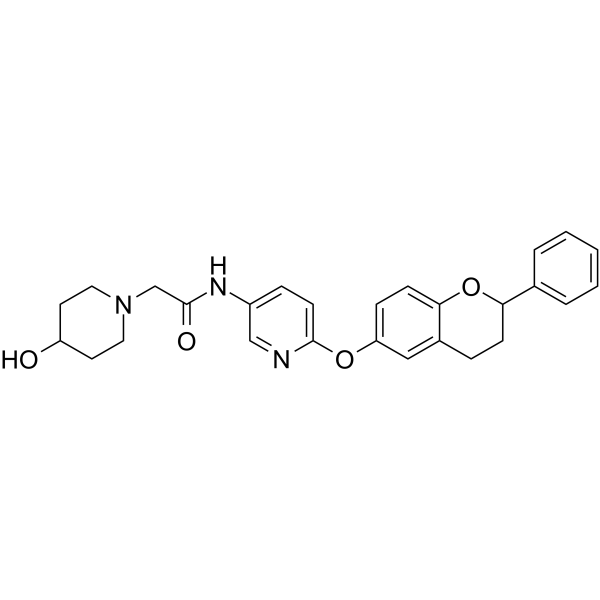
ORM-10962 is a potent, highly selective sodium-calcium exchanger (NCX) inhibitor, with IC50 values of 67 and 55 nM for the reverse and forward mode inhibition, respectively. ORM-10962 shows antiarrhythmic effect.
For research use only. We do not sell to patients.
- Purity : 99.49%
- CAS No.: 763926-98-3
- Formula: C27H29N3O4
- Molecular Weight:459.54
-
Storage:Powder -20°C, 3 years , 4°C, 2 years ; In solvent -80°C, 2 years , -20°C, 1 year

To place orders, for customer services and technical support, please contact: MedChemExpress USA
Tel: 609-228-6898 E-mail: [email protected] [email protected]


-
 Biological Activity
-
Chemical Information
-
Solvent & Solubility
- Purity & Documentation
- References
-
 Help & FAQs


-
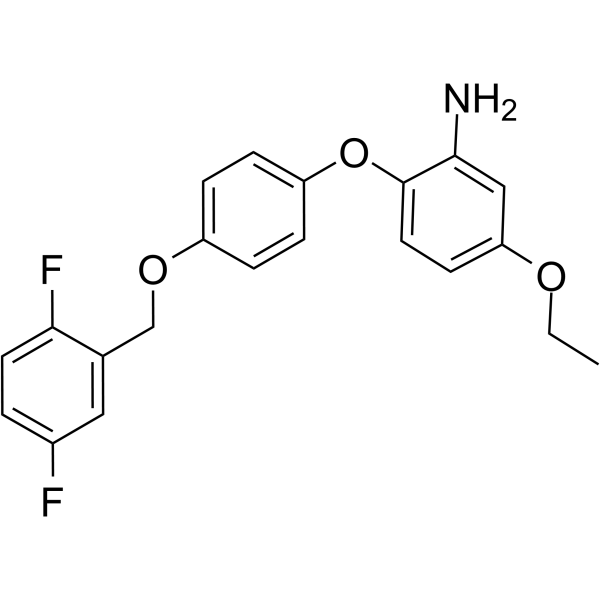
HY-15515
SEA0400Na+/Ca2+ Exchanger Inhibitor -
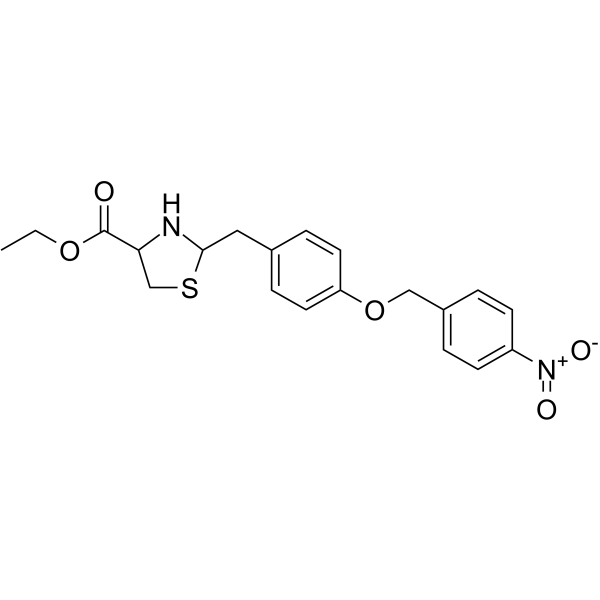
HY-107658
SN 6Na+/Ca2+ Exchanger Inhibitor -

HY-15515R
SEA0400 (Standard)Na+/Ca2+ Exchanger Inhibitor -
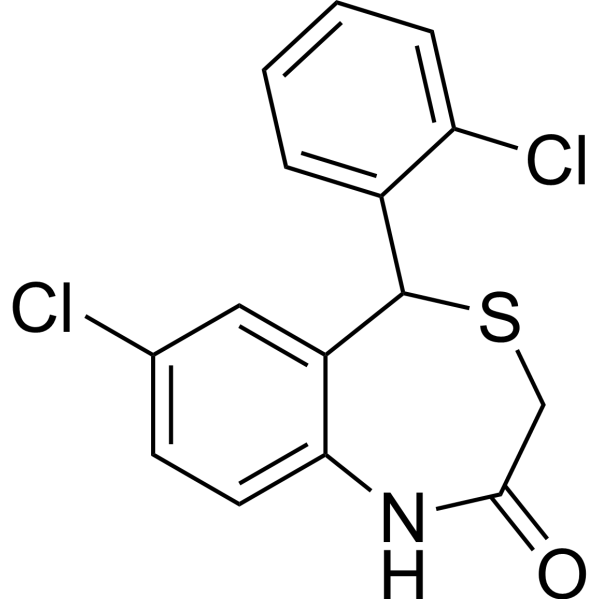
HY-15754
CGP37157Na+/Ca2+ Exchanger Inhibitor -
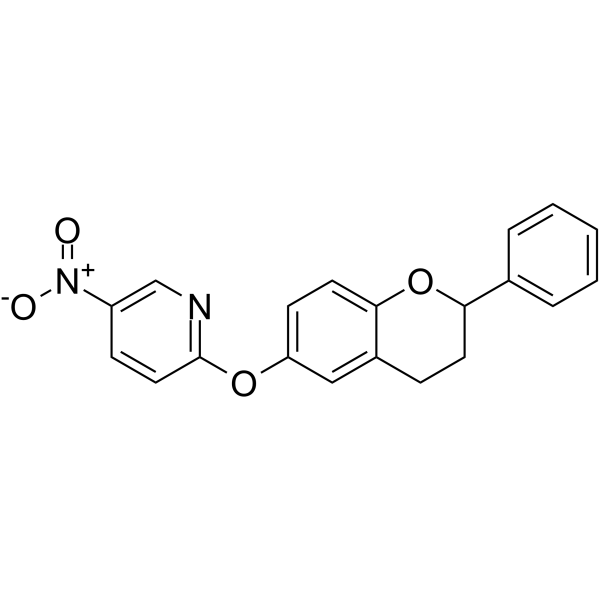
HY-128678
ORM-10103Na+/Ca2+ Exchanger Inhibitor -
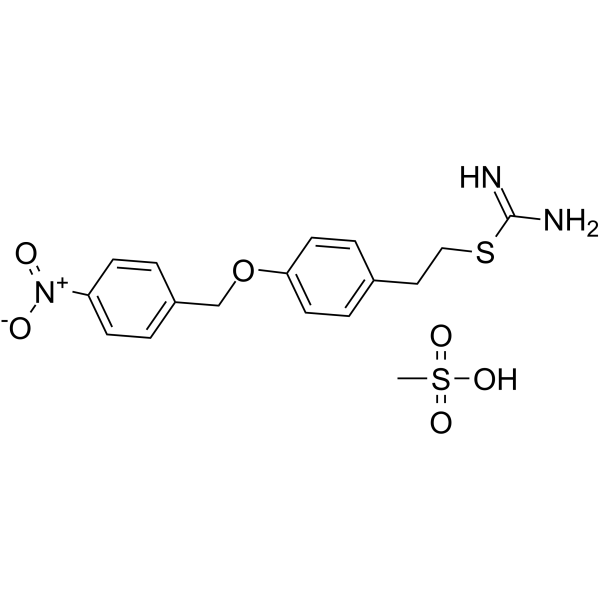
HY-15415
KB-R7943 mesylateNCXrev Inhibitor -
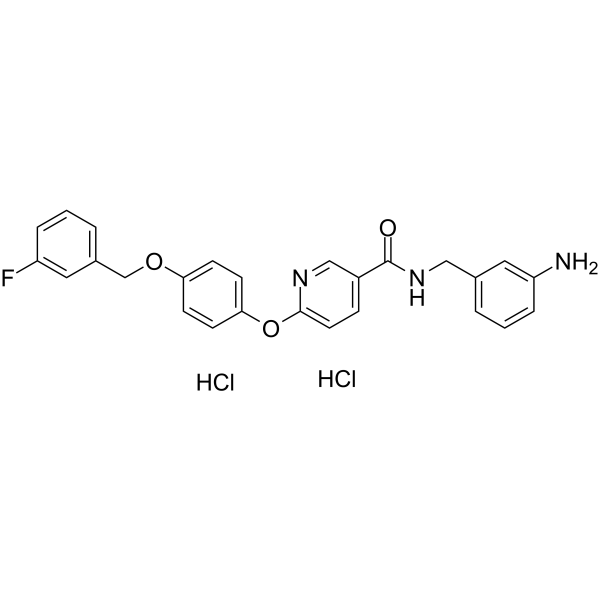
HY-136182
YM-244769 dihydrochlorideNCX Inhibitor -

HY-107658R
SN 6 (Standard)Reference Standard -
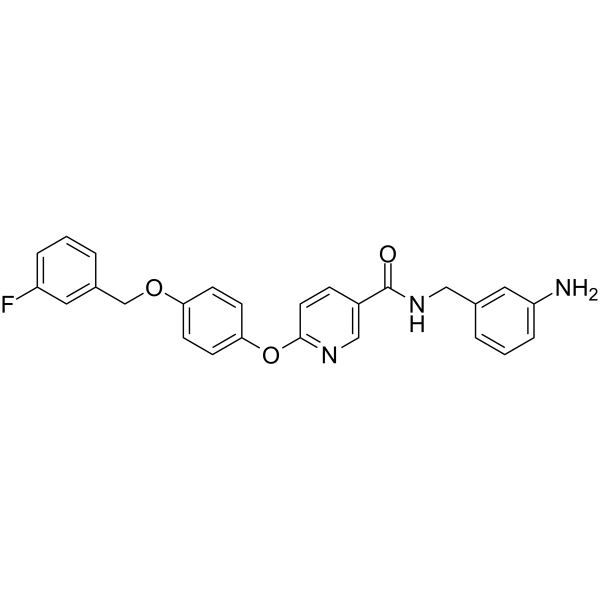
HY-136182A
YM-244769NCX Inhibitor -
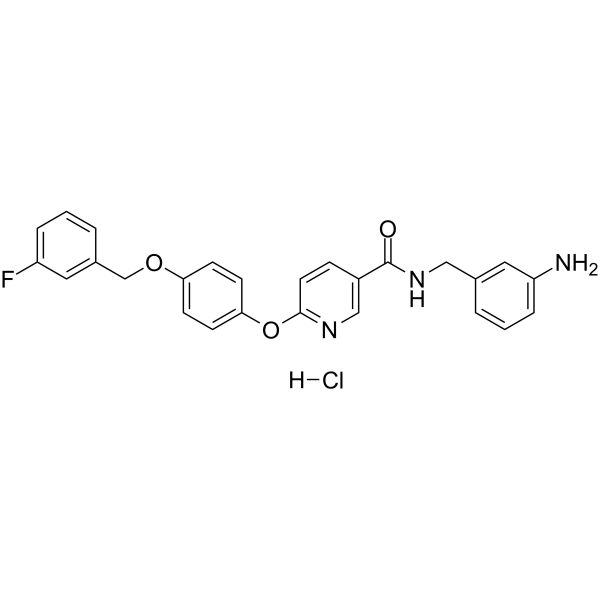
HY-107659
YM-244769 hydrochlorideNCX Inhibitor -
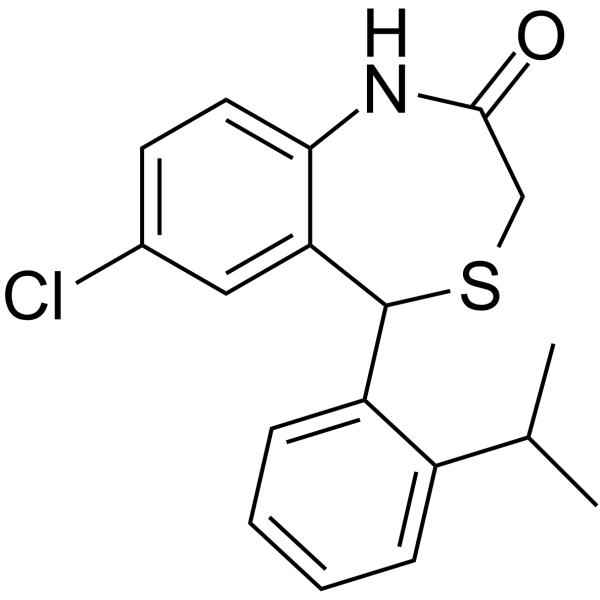
HY-117073
ITH12575mNCX Blocker -
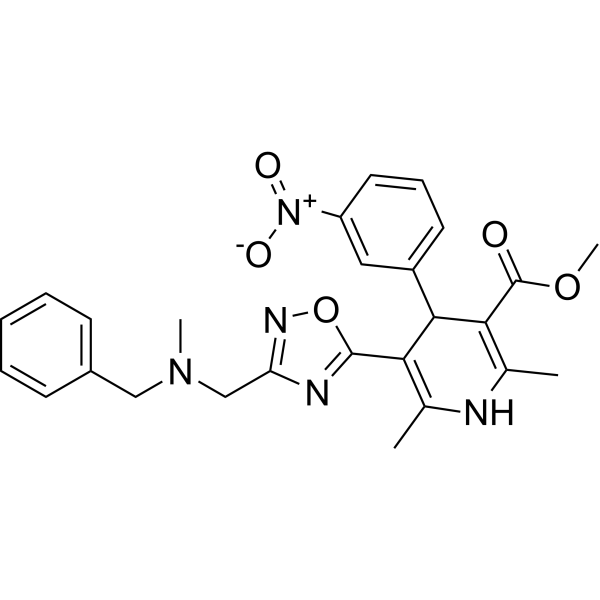
HY-19062
SM-6586Calcium Channel Antagonist
Publications Citing Use of MedChemExpress (MCE) ORM-10962
More

Biological Activity
Description
IC50 & Target
In Vitro
ORM-10962 (10 nM, 100 nM and 1 μM) decreased the NCX current in dog ventricular myocytes in a concentration-dependent manner with estimated IC50 values of 55 and 67 nM at -80 and at 20 mV, respectively[1].
MedChemExpress (MCE) has not independently confirmed the accuracy of these methods. They are for reference only.
In Vivo
MedChemExpress (MCE) has not independently confirmed the accuracy of these methods. They are for reference only.
-
Animal Model:Male guinea-pigs (250-300 g)[1]
-
Dosage:0.3 mg/kg
-
Administration:IV, 10 min before starting ouabain infusion
-
Result:Significantly delayed the development of ventricular extrasystoles (from 24±1.7 min in controls to 36.6±2.7 min in the presence of the drug) or ventricular tachycardia (from 31.8±1.8 min in controls to 40.8±2.1 min in the presence of the drug).


Chemical Information
-
CAS No. 763926-98-3
-
Appearance Solid
-
Molecular Weight 459.54
-
Formula C27H29N3O4
-
Color Light yellow to yellow
-
SMILES
O=C(NC1=CC=C(OC2=CC=C3C(CCC(C4=CC=CC=C4)O3)=C2)N=C1)CN5CCC(O)CC5
-
Shipping
Room temperature in continental US; may vary elsewhere.
-
Storage
Powder -20°C 3 years 4°C 2 years In solvent -80°C 2 years -20°C 1 year


Publications (3)
-
Journal Impact Factor
-
Most Recent
-
Sci Adv
Regulation of sodium/calcium homeostasis by BacNav gene therapy rescues cardiac dysfunction in chronic heart failure. [Abstract]2026 Mar 20;12(12):eady4551. PMID: 41861014 -
Biomed Pharmacother
Sodium glucose co-transporter 2 inhibitor empagliflozin prevents endothelial dysfunction induced by oscillatory shear stress. [Abstract]2025 Nov:192:118670. PMID: 41130096 -
Biomed Pharmacother
Sodium-glucose co-transporters (SGLT2) inhibitors prevent lipid droplets formation in vascular inflammation or lipid overload by SGLT2-independent mechanism. [Abstract]2025 Apr:185:117967. PMID: 40088775


Solvent & Solubility
In Vitro:
DMSO : 250 mg/mL (544.02 mM; Need ultrasonic; Hygroscopic DMSO has a significant impact on the solubility of product, please use newly opened DMSO)
Please refer to the solubility information to select the appropriate solvent. Once prepared, please aliquot and store the solution to prevent product inactivation from repeated freeze-thaw cycles.
Storage method and period of stock solution: -80°C, 2 years; -20°C, 1 year. When stored at -80°C, please use it within 2 years. When stored at -20°C, please use it within 1 year.
Please refer to the solubility information to select the appropriate solvent. Once prepared, please aliquot and store the solution to prevent product inactivation from repeated freeze-thaw cycles.
Storage method and period of stock solution: -80°C, 2 years; -20°C, 1 year. When stored at -80°C, please use it within 2 years. When stored at -20°C, please use it within 1 year.
Concentration (start) × Volume (start) = Concentration (final) × Volume (final)
In Vivo:
Select the appropriate dissolution method based on your experimental animal and administration route.
- For the following dissolution methods, please ensure to first prepare a clear stock solution using an In Vitro approach and then sequentially add co-solvents:
- To ensure reliable experimental results, the clarified stock solution can be appropriately stored based on storage conditions. As for the working solution for In Vivo experiments, it is recommended to prepare freshly and use it on the same day.
- The percentages shown for the solvents indicate their volumetric ratio in the final prepared solution. If precipitation or phase separation occurs during preparation, heat and/or sonication can be used to aid dissolution.
Add each solvent one by one: 10% DMSO 40% PEG300 5% Tween-80 45% Saline
Solubility: ≥ 2.08 mg/mL (4.53 mM); Clear solution
This protocol yields a clear solution of ≥ 2.08 mg/mL (saturation unknown).
Taking 1 mL working solution as an example, add 100 μL DMSO stock solution (20.8 mg/mL) to 400 μL PEG300, and mix evenly; then add 50 μL Tween-80 and mix evenly; then add 450 μL Saline to adjust the volume to 1 mL.
Preparation of Saline: Dissolve 0.9 g sodium chloride in ddH₂O and dilute to 100 mL to obtain a clear Saline solution.
Add each solvent one by one: 10% DMSO 90% (20% SBE-β-CD in Saline)
Solubility: ≥ 2.08 mg/mL (4.53 mM); Clear solution
This protocol yields a clear solution of ≥ 2.08 mg/mL (saturation unknown).
Taking 1 mL working solution as an example, add 100 μL DMSO stock solution (20.8 mg/mL) to 900 μL 20% SBE-β-CD in Saline, and mix evenly.
Preparation of 20% SBE-β-CD in Saline (4°C, storage for one week): 2 g SBE-β-CD powder is dissolved in 10 mL Saline, completely dissolve until clear.
In Vivo Dissolution Calculator
Please enter the basic information of animal experiments:
-
-
-
-
Recommended: Prepare an additional quantity of animals to account for potential losses during experiments.
Please enter your animal formula composition:
-
%DMSO +
Recommended: Keep the proportion of DMSO in working solution below 2% if your animal is weak.
-
%+
-
+%Tween-80 + +
-
%Saline +
The co-solvents required include: DMSO, . All of co-solvents are available by MedChemExpress (MCE). , Tween 80. All of co-solvents are available by MedChemExpress (MCE).
Working solution concentration: 0.22 mg/mL
Method for preparing stock solution: mg drug dissolved in μL DMSO. Stock solution concentration: mg/mL.
1. Take μL DMSO stock solution;
2. Add μL .
μL , mix evenly;
3. Then add μL Tween 80, mix evenly;
4. Then add μL
Please ensure that the stock solution in the first step is dissolved to a clear state, and add co-solvents in sequence. You can use ultrasonic heating (ultrasonic cleaner, recommended frequency 20-40 kHz), vortexing, etc. to assist dissolution.


Purity & Documentation
-
Data Sheet (272 KB)
-
SDS (251 KB)
- English - EN (251 KB)
- Français - FR (251 KB)
- Deutsch - DE (251 KB)
- Norwegian - NO (251 KB)
- Español - ES (251 KB)
- Swedish - SV (251 KB)
- Italian - IT (251 KB)
- Korean - KR (251 KB)
- Portuguese - PT (251 KB)
-
Handling Instructions (2659 KB)
References
[1]. Kohajda Z, et al. The Effect of a Novel Highly Selective Inhibitor of the Sodium/Calcium Exchanger (NCX) on Cardiac Arrhythmias in In Vitro and In Vivo Experiments. PLoS One. 2016 Nov 10;11(11):e0166041. [Content Brief]
[2]. Oravecz K, et al. Inotropic effect of NCX inhibition depends on the relative activity of the reverse NCX assessed by a novel inhibitor ORM-10962 on canine ventricular myocytes. Eur J Pharmacol. 2018 Jan 5;818:278-286. [Content Brief]
[3]. Kohajda Z, et al. Novel Na+/Ca2+ Exchanger Inhibitor ORM-10962 Supports Coupled Function of Funny-Current and Na+/Ca2+ Exchanger in Pacemaking of Rabbit Sinus Node Tissue. Front Pharmacol. 2020 Jan 29;10:1632. [Content Brief]


Complete Stock Solution Preparation Table
Please refer to the solubility information to select the appropriate solvent. Once prepared, please aliquot and store the solution to prevent product inactivation from repeated freeze-thaw cycles.
Storage method and period of stock solution: -80°C, 2 years; -20°C, 1 year. When stored at -80°C, please use it within 2 years. When stored at -20°C, please use it within 1 year.
| Optional Solvent | Concentration Solvent Mass | 1 mg | 5 mg | 10 mg | 25 mg |
|---|---|---|---|---|---|
| DMSO | 1 mM | 2.1761 mL | 10.8804 mL | 21.7609 mL | 54.4022 mL |
| 5 mM | 0.4352 mL | 2.1761 mL | 4.3522 mL | 10.8804 mL | |
| 10 mM | 0.2176 mL | 1.0880 mL | 2.1761 mL | 5.4402 mL | |
| 15 mM | 0.1451 mL | 0.7254 mL | 1.4507 mL | 3.6268 mL | |
| 20 mM | 0.1088 mL | 0.5440 mL | 1.0880 mL | 2.7201 mL | |
| 25 mM | 0.0870 mL | 0.4352 mL | 0.8704 mL | 2.1761 mL | |
| 30 mM | 0.0725 mL | 0.3627 mL | 0.7254 mL | 1.8134 mL | |
| 40 mM | 0.0544 mL | 0.2720 mL | 0.5440 mL | 1.3601 mL | |
| 50 mM | 0.0435 mL | 0.2176 mL | 0.4352 mL | 1.0880 mL | |
| 60 mM | 0.0363 mL | 0.1813 mL | 0.3627 mL | 0.9067 mL | |
| 80 mM | 0.0272 mL | 0.1360 mL | 0.2720 mL | 0.6800 mL | |
| 100 mM | 0.0218 mL | 0.1088 mL | 0.2176 mL | 0.5440 mL |


ORM-10962 Related Classifications
HY-123785 Related Classifications
 Powered by Bioz