1. Search Result
Search Result
Results for "

wheat

" in MedChemExpress (MCE) Product Catalog:

141

Inhibitors & Agonists

1

Fluorescent Dye

25

Biochemical Assay Reagents

7

Peptides

25

Natural
Products

7

Isotope-Labeled Compounds

1

Click Chemistry

2

Oligonucleotides

Cat. No. Product Name Target Research Areas Chemical Structure
  • HY-N1127
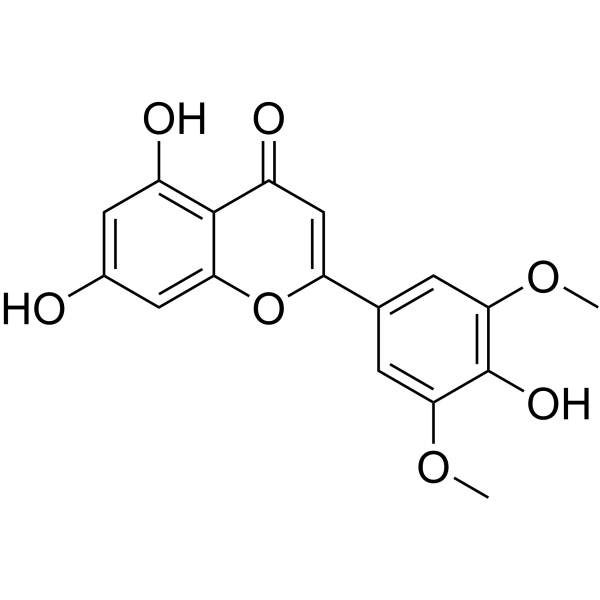
    Tricin
    Maximum Cited Publications
    7 Publications Verification

    CMV Infection Cancer
    Tricin is a natural flavonoid found in large amounts in wheat. Tricin inhibits HCMV replication by inhibiting CDK9. Tricin inhibits the proliferation and invasion of C6 glioma cells by upregulating the expression of FAK-targeting microRNA-7 .
    Tricin
  • HY-NP091
    Wheat Germ Agglutinin
    1 Publications Verification

    WGA

    Fluorescent Dye Others
    Wheat Germ Agglutinin (WGA) is a plant lectin that can be used as a probe to specifically bind biomolecules (such as polysaccharides, peptides, etc.).Wheat Germ Agglutinin (WGA) is a biological material or organic compound that can be used in life science research .
    Wheat Germ Agglutinin
  • HY-W040256

    ACP

    Endogenous Metabolite Metabolic Disease Cancer
    Acid phosphatase, wheat (ACP) is a hydrolase enzyme found in wheat. Acid phosphatase, wheat catalyses the hydrolysis of orthophosphate monoesters under acidic conditions .
    Acid phosphatase, wheat
  • HY-B2004

    Environmental Pollutants Fungal Mitochondrial Metabolism Infection
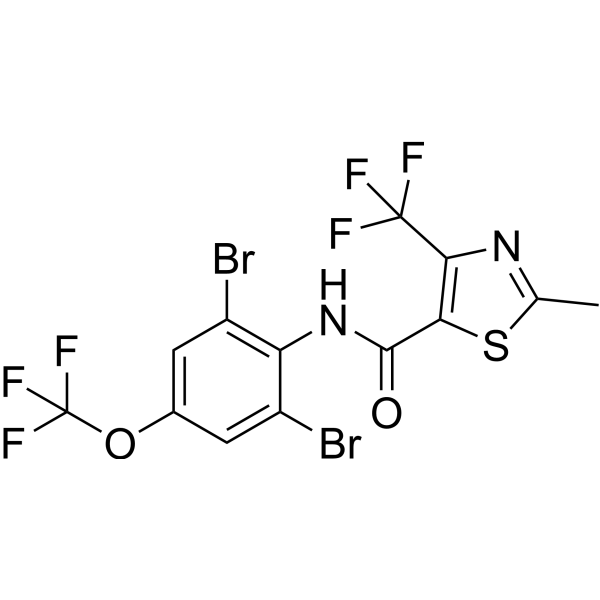
    Thifluzamide is a fungicide that inhibits fungal respiration by blocking the ubiquinone-binding site in mitochondrial complex II. Thifluzamide exhibits significant activity against Basidiomycota pathogens (such as Rhizoctonia cerealis, Ustilago and Puccinia genera) and is commonly used in studies on wheat sharp eyespot. Thifluzamide displays a dual mechanism in regulating lipid metabolism: it reduces fatty acid synthase activity to inhibit endogenous fatty acid synthesis, and increases carnitine palmitoyltransferase-I activity to accelerate fatty acid β-oxidation, thereby reducing total cholesterol and triglyceride levels in the liver. Thifluzamide also induces hepatotoxicity in zebrafish models and carries a risk of developmental toxicity. Thifluzamide inhibition of Rhizoctonia cerealis may result in low to moderate levels of drug resistance, leading to the generation of stable drug-resistant mutants .
    Thifluzamide
  • HY-N6784

    ATP Synthase Bacterial Apoptosis Antibiotic Infection Neurological Disease
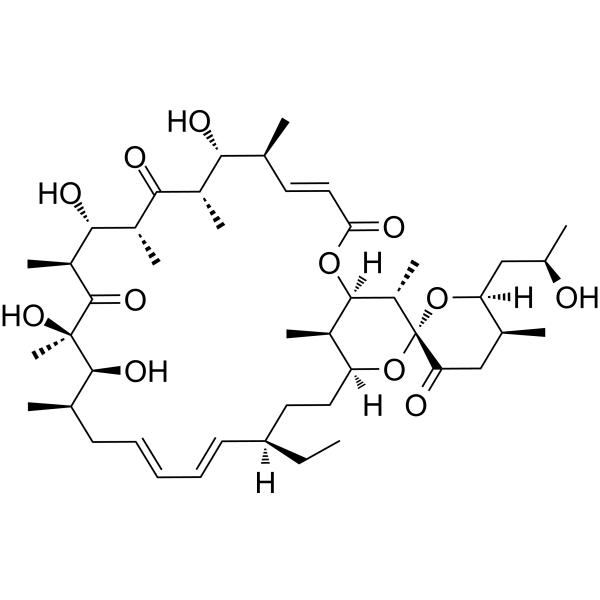
    Oligomycin B is an antibiotic that acts as a non-selective inhibitor of ATP Synthase. Oligomycin B increases mitochondrial membrane potential. Oligomycin B induces apoptosis and necrosis. Oligomycin B impairs the motility of Plasmopara viticola zoospores and induces their lysis. Oligomycin B inhibits Magnaporthe oryzae (wheat blast fungus) and suppresses the development of wheat blast. Oligomycin B reduces hyphal growth and spore germination of Botrytis cinerea, and protects Arabidopsis thaliana against Botrytis cinerea infection. Oligomycin B exacerbates cytotoxic brain edema in rats with cerebral cortical contusion, increases intracranial pressure and brain water content, and aggravates mitochondrial damage in these rats. Oligomycin B is used in studies related to grape downy mildew, traumatic brain injury, wheat blast, and gray mold .
    Oligomycin B
  • HY-N10455
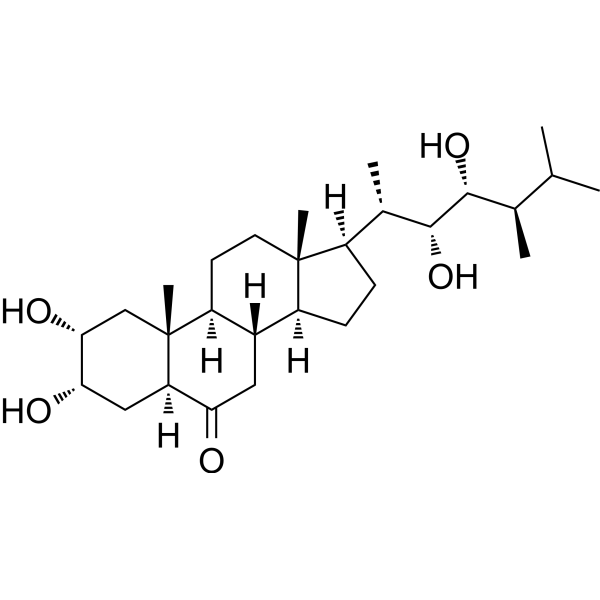
    24-Epicastasterone
    2 Publications Verification

    24-epi-Castasterone

    Drug Derivative Others
    24-Epicastasterone (24-epi-Castasterone) is a bioactive brassinosteroid and a ligand of ABCB1 and ABCB19 in Arabidopsis thaliana. 24-Epicastasterone stimulates the ATPase activity of ABCB19 and the ATP hydrolysis activity of ABCB1, which drive the efflux of substances from plant cells. 24-Epicastasterone increases the activities of catalase and guaiacol peroxidase in the roots of wheat seedlings. 24-Epicastasterone alleviates heat-induced lipid peroxidation through a ROS-dependent mechanism and enhances the heat tolerance of common wheat seedlings .
    24-Epicastasterone
  • HY-NP0147
    Wheat Germ Agglutinin (Fluorescein)
    1 Publications Verification

    WGA (Fluorescein)

    Fluorescent Dye Infection Neurological Disease
    Wheat Germ Agglutinin (WGA) Fluorescein is a classic fluorescent label that specifically binds to sugar residues such as N-acetylglucosamine, N-acetylneuraminic acid and sialic acid. Wheat Germ Agglutinin Fluorescein performs regionally differential fluorescent staining of the ocular surface epithelial glycocalyx to assess its integrity, and causes no damage to the eye at safe concentrations. Wheat Germ Agglutinin Fluorescein is also used for staining structures including red blood cells, cultured cells, bacteria and pine wood nematodes, and facilitates the isolation of wheat-associated plant-growth-promoting rhizobacterial strains. Wheat Germ Agglutinin Fluorescein can be applied to the detection of ocular glycocalyx integrity and the research of related diseases such as pine wilt disease .
    Wheat Germ Agglutinin (Fluorescein)
  • HY-NP163C

    WGA-AF555

    Fluorescent Dye Others
    Wheat germ agglutinin-AF555 (WGA-AF555) is a membrane-staining lectin conjugate that combines wheat germ agglutinin with the Alexa Fluor 555 fluorescent dye. Wheat germ agglutinin-AF555 is used for precise staining and contour delineation of cell membranes. Wheat germ agglutinin-AF555 also effectively distinguishes between surface vimentin and intracellular vimentin in cells .
    Wheat germ agglutinin-AF555
  • HY-NP163A

    WGA-AF488

    Fluorescent Dye Cancer
    Wheat germ agglutinin-AF488 (WGA-AF488) is a cell membrane-specific staining agent prepared by conjugating wheat germ agglutinin with the Alexa Fluor 488 (HY-D1304) fluorescent dye, and it binds to cell surface glycoproteins with high affinity. Wheat germ agglutinin-AF488 is applied in fluorescence microscopy and confocal imaging techniques, and it can clearly label the membrane structures of various cells including breast cancer cells, enabling high-resolution visual observation. Wheat germ agglutinin-AF488 is used in studies of breast cancer and triple-negative breast cancer to observe cell morphology and membrane dynamic changes .
    Wheat germ agglutinin-AF488
  • HY-B2024

    Environmental Pollutants Herbicide Others
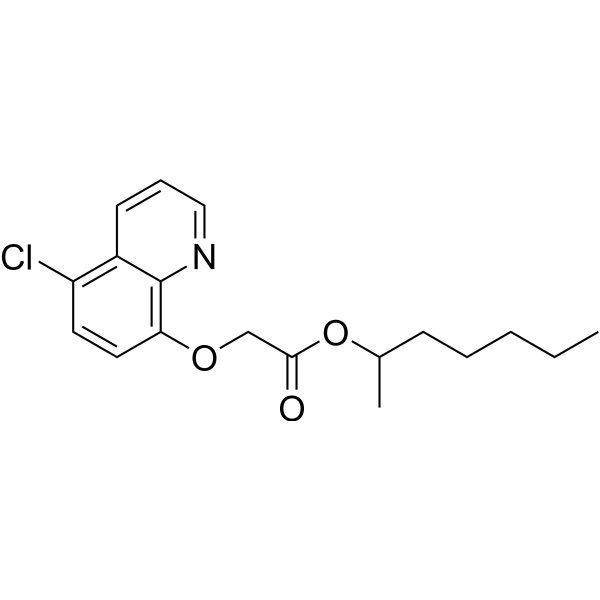
    Cloquintocet-mexyl is a herbicide safener. Cloquintocet-mexyl promotes the expression of genes related to chlorophyll synthesis (such as GTR and PPO) and chlorophyll-binding protein genes (CBP), increases the chlorophyll content, thereby promoting photosynthesis and reducing oxidative stress. Cloquintocet-mexyl improves wheat tolerance to Fomesafen (HY-B2010) .
    Cloquintocet-mexyl
  • HY-W725385

    Huanbifucaotong

    HPPD Others
    Cypyrafluone is a 4-hydroxyphenylpyruvate dioxygenase (4-HPPD) inhibitor that prevents the homogentisic acid (HGA) production. Cypyrafluone can control weed in wheat fields .
    Cypyrafluone
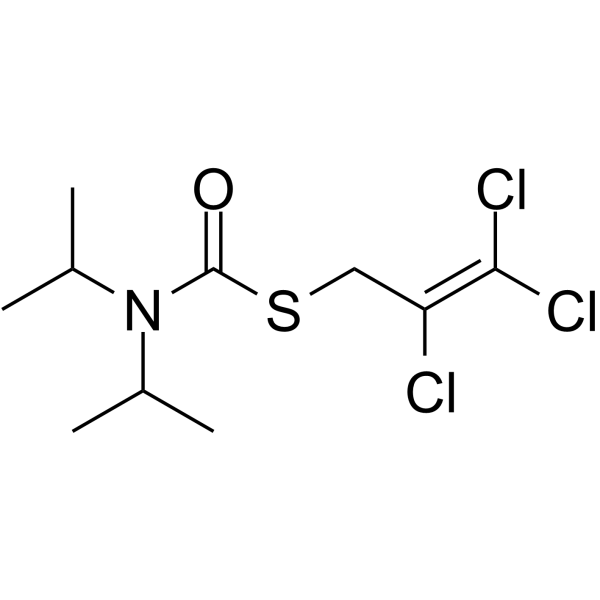
  • HY-119435

    Herbicide Environmental Pollutants Others
    Triallate is a selective thiocarbamate herbicide. Triallate regulates the biosynthesis of very-long-chain fatty acids and inhibits the elongation and division of plant cells. Triallate is used to control wild oats in barley, spring wheat, durum wheat, winter wheat and sugar beets .
    Triallate
  • HY-NP163D

    WGA-AF594

    Fluorescent Dye Cancer
    Wheat germ agglutinin-AF594 (WGA-AF594) is a plant lectin that contains the fluorescent dye AF594, which can be used to identify carbohydrate chains. Wheat germ agglutinin-AF594 can be used to assess abnormal glycosylation levels in the body. The specific glycosylation detection sites of Wheat germ agglutinin is bis-GlcNAc, SA .
    Wheat germ agglutinin-AF594
  • HY-139731

    Transketolase Herbicide Others
    Transketolase-IN-1 is a transketolase inhibitor and a herbicide. Transketolase-IN-1 inhibits weed growth and exhibits safety for maize and wheat at specified application rates. Transketolase-IN-1 can be used for the research of weed control in wheat and maize fields .
    Transketolase-IN-1
  • HY-W763569

    Environmental Pollutants Biochemical Assay Reagents Metabolic Disease
    Gluten, Wheat is a cohesive, visco-elastic proteinaceous material that can be extrated from wheat. Gluten, Wheat can be used to induce celiac disease .
    Gluten, Wheat
  • HY-136376

    Environmental Pollutants Herbicide Others
    Mefenpyr-diethyl is a pyrazoline-type herbicide safener that functions to enhance lipid biosynthesis. Mefenpyr-diethyl effectively prevents herbicide-induced phytotoxic damage caused by herbicides such as fenoxaprop-p-ethyl (HY-B2013) and mesosulfuron-methyl (HY-126987) by protecting cereal crops including wheat. Mefenpyr-diethyl significantly increases lipid content in wheat either when applied alone or in combination with the herbicide fenoxaprop-p-ethyl. The mechanism of action of Mefenpyr-diethyl does not involve the induction of glutathione S-transferase (GST) activity in wheat .
    Mefenpyr-diethyl
  • HY-D1991

    Fluorescent Dye Others
    ATTO 647 is a carborhodamine fluorophore and imaging tracer with photostable properties. ATTO 647 serves as a fluorescent probe to investigate cell membrane structure and diffusion characteristics. When conjugated with wheat germ agglutinin, ATTO 647 specifically binds to N-acetyl-β-D-glucosamine and sialic acid residues on membrane glycoproteins, enabling single-molecule tracing of glycoprotein diffusion. ATTO 647 exhibits highly stable fluorescence properties with significantly reduced blinking in mounting media such as ROXS (AA/MV) and ROXS (TX/TQ), whereas its brightness properties vary in Ibidi-MM and Vectashield. ATTO 647 can also be used to label histone H2B-GFP in fixed cells for confocal microscopy photobleaching experiments .
    ATTO 647
  • HY-P1596

    Opioid Receptor Neurological Disease
    Gluten exorphin C is an opioid peptide derived from wheat gluten. Its IC50 values are 40 μM and 13.5 μM for μ opioid and δ opioid activities in the GPI and MVD assays, respectively.
    Gluten Exorphin C
  • HY-NP0159

    WGA (Rhodamine)

    Fluorescent Dye Others
    Wheat Germ Agglutinin (WGA) Rhodamine is a plant lectin that can be used as a probe to specifically bind biomolecules (such as polysaccharides, peptides, etc.).Wheat Germ Agglutinin (WGA) Rhodamine is a biological material or organic compound that can be used in life science research .
    Wheat Germ Agglutinin (Rhodamine)
  • HY-NP163E

    WGA-AF647

    Fluorescent Dye Cancer
    Wheat germ agglutinin-AF647 (WGA-AF647) is a plant lectin that contains the fluorescent dye AF647, which can be used to identify carbohydrate chains. Wheat germ agglutinin-AF647 can be used to assess abnormal glycosylation levels in the body. The specific glycosylation detection sites of Wheat germ agglutinin is bis-GlcNAc, SA .
    Wheat germ agglutinin-AF647
  • HY-N9502

    Endogenous Metabolite Neurological Disease
    Linalool oxide is a monoterpene and found in aromatic plant essential oils and is a secondary metabolite in elongating wheat plants. Linalool oxide has antinociceptive, anticonvulsant, and anxiolytic activity. Linalool oxide can be used for the research of pain, epilepsy, anxiety disorders .
    Linalool oxide
  • HY-139161

    Environmental Pollutants Fungal Infection
    Penflufen is a highly efficient, broad-spectrum succinate dehydrogenase inhibitor (SDHI). Penflufen can be used as a fungicide and has broad bioactivity against many fungal diseases, including potato black scurf, wheat sharp eyespot, rice sheath blight, and root rot in peanut and other similar fungal diseases .
    Penflufen
  • HY-126987

    Environmental Pollutants Acetolactate Synthase (ALS) Others
    Mesosulfuron-methyl is a sulfonylurea herbicide that inhibits acetolactate synthase (ALS) and is used in research for post-emergence control of ryegrass and Avena spp. (wild oat) in wheat fields .
    Mesosulfuron-methyl
  • HY-P1742

    Opioid Receptor Metabolic Disease
    Gluten Exorphin B5 is an exogenous opioid peptides derived from wheat gluten, acts on opioid receptor, increases postprandial plasma insulin level in rats .
    Gluten Exorphin B5
  • HY-P4087

    HIV Infection Cancer
    Cys(Npys)-(Arg)9 is a synthetic cationic cell-penetrating peptide with a reversible thiol-reactive nitropyridyl (Npys) group. Cys(Npys)-(Arg)9 efficiently mediates the internalization and delivery of various "cargo" such as proteins and antibodies by forming reversible disulfide bonds with surface-exposed cysteine residues. Cys(Npys)-(Arg)9 endows TALEN proteins with cell-penetrating activity, enabling gene knockout in mammalian cells and protein transduction in wheat microspores. Cys(Npys)-(Arg)9 can be conjugated with antibodies to form cationized IgG for enhancing endosomal escape of oligonucleotides, or form siRNA delivery complexes. When the molar ratio of Cys(Npys)-(Arg)9 to loaded molecules is higher than 1:1, it exerts certain cytotoxic effects on cells. Cys(Npys)-(Arg)9 can be used in studies related to oral squamous cell carcinoma and HIV infection .
    Cys(Npys)-(Arg)9
  • HY-B1859

    Environmental Pollutants Herbicide Others
    Isoproturon belongs to the phenylurea herbicide family and is a systemic and selective herbicide. Isoproturon is widely applied for killing weeds in farmland, which can be used in the control of annual grasses and broad-leaved weeds in spring and winter wheat, winter rye and spring and winter barley .
    Isoproturon
  • HY-N1320

    Fungal Infection
    Sambutoxin is a mycotoxin. Sambutoxin can be isolated from wheat culture of Fusarium sambucinum .
    Sambutoxin
  • HY-114857

    SC1158; SQ 1

    Herbicide Others
    Clofencet (SC1158) is a wheat hybridizing agent, that produces hybrid wheat seeds through inhibition of pollen development in wheat without affecting female fertility. Clofencet improves the wheat’s vigor and its resistance to pests .
    Clofencet
  • HY-163311

    Transketolase Herbicide Others
    Transketolase-IN-6 is a potent transketolase inhibitor and a herbicide. Transketolase-IN-6 inhibits root growth of Digitaria sanguinalis, Amaranthus retroflexus, and Setaria viridis. Transketolase-IN-6 shows low phytotoxicity to wheat, maize, soybean, and cotton. Transketolase-IN-6 can be used for the research of herbicidal agent development .
    Transketolase-IN-6
  • HY-175249

    Others
    TKL-IN-2 is a herbicide and SvTKL inhibitor with an IC50 of 0.11 mg/L. TKL-IN-2 binds to the SvTKL active site, interacts with key pocket residues, and inhibits enzyme activity. TKL-IN-2 can be used for the research of weed control in maize, wheat, soybean, and cotton fields .
    TKL-IN-2
  • HY-B1869
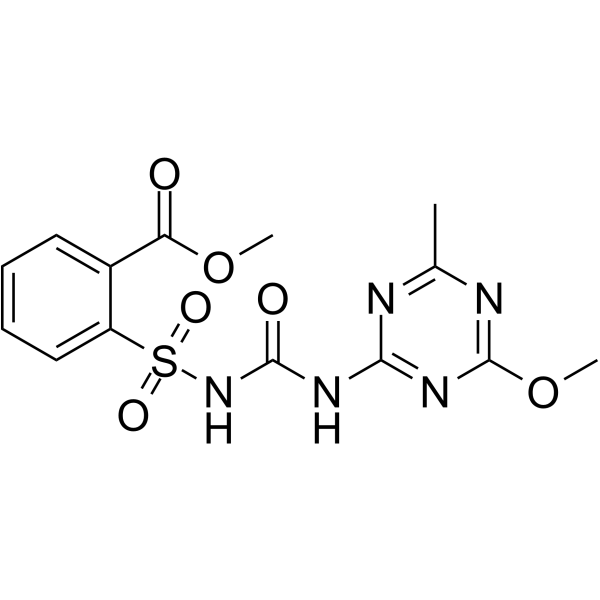
    Metsulfuron-methyl
    2 Publications Verification

    Environmental Pollutants Herbicide Others
    Metsulfuron-methyl is a systemic sulfonylurea herbicide that has been widely used to control broadleaf weeds and annual grasses in rice, corn, wheat, and barley. Metsulfuron-methyl exhibits high herbicidal activity and low mammalian toxicity, with an LD50 for rats exceeding 5000 mg/kg .
    Metsulfuron-methyl
  • HY-NP0144

    WGA (Fluorescein)

    Fluorescent Dye Others
    Succinylated Wheat Germ Agglutinin (Fluorescein) (WGA (Fluorescein)) is a fluorescent lectin that acts as a probe to specifically bind biomolecules. Succinylated Wheat Germ Agglutinin (Fluorescein) binds to cell surface glycoconjugates containing N-acetylglucosamine. Succinylated Wheat Germ Agglutinin (Fluorescein) is a selective agglutinating agent targeting specific red blood cells, thymocytes, splenocytes and lymphocytes. Succinylated Wheat Germ Agglutinin (Fluorescein) binds to fibroblasts and lymphocytes via dual binding sites in a temperature-dependent, saturable manner. Succinylated Wheat Germ Agglutinin (Fluorescein) can be used for quantitative studies of cell surface receptor glycoconjugates (Ex=495 nm, Em=515 nm) .
    Succinylated Wheat Germ Agglutinin (Fluorescein)
  • HY-NP0152

    WGA (Peroxidase)

    Fluorescent Dye Others
    Wheat Germ Agglutinin (WGA) Peroxidase is a plant lectin that can be used as a probe to specifically bind biomolecules (such as polysaccharides, peptides, etc.).Wheat Germ Agglutinin (WGA) Peroxidase is a biological material or organic compound that can be used in life science research .
    Wheat Germ Agglutinin (Peroxidase)
  • HY-NP163

    WGA-AF350

    Fluorescent Dye Cancer
    Wheat germ agglutinin-AF350 (WGA-AF350) is a plant lectin that contains the fluorescent dye AF350, which can be used to identify carbohydrate chains. Wheat germ agglutinin-AF350 can be used to assess abnormal glycosylation levels in the body. The specific glycosylation detection sites of Wheat germ agglutinin is bis-GlcNAc, SA .
    Wheat germ agglutinin-AF350
  • HY-NP0160

    WGA (Agarose)

    Fluorescent Dye Others
    Succinylated Wheat Germ Agglutinin (WGA) Agarose is a plant lectin that can serve as a probe to specifically bind biomolecules (such as polysaccharides, polypeptides, etc.). Succinylated Wheat Germ Agglutinin (WGA) Agarose is available as a biological material or organic compound for life science research .
    Succinylated Wheat Germ Agglutinin (Agarose)
  • HY-NP0189

    WGA (Biotinylated)

    Fluorescent Dye Others
    Succinylated Wheat Germ Agglutinin (WGA) Biotinylated is a plant lectin that can be used as a probe to specifically bind biomolecules (such as polysaccharides, peptides, etc.).Succinylated Wheat Germ Agglutinin (WGA) Biotinylated is a biological material or organic compound that can be used in life science research .
    Succinylated Wheat Germ Agglutinin (Biotinylated)
  • HY-B2221S2

    Isotope-Labeled Compounds Others
    U-sup>13C Cellulose high DP from wheat is the cellulose (HY-B2221) isolated from wheat, that is consist of abundant glucose and all the carbon atoms are labeled with isotope 13C .
    U-13C Cellulose high DP from wheat
  • HY-N7697D

    Reactive Oxygen Species (ROS) Cardiovascular Disease Inflammation/Immunology
    Chitoheptaose heptahydrochloride is a chitosan oligosaccharide with antioxidant, anti-inflammatory, antiapoptotic and cardioprotective activities. Chitoheptaose heptahydrochloride significantly enhances the growth and photosynthesis parameters of wheat seedlings .
    Chitoheptaose heptahydrochloride
  • HY-170473

    Biochemical Assay Reagents Others
    Wheat germ oil is an oil with nutritional value, especially its high Vitamin E content. Wheat germ oil is rich in health- beneficial bioactive compounds, such as phytosterols, tocopherols, carotenoids, and omega-3 fatty acids .
    Wheat germ oil
  • HY-NP163I

    WGA-AF 680

    Fluorescent Dye Cancer
    Wheat germ agglutinin-AF680 (WGA-AF 680) is a plant lectin that contains the fluorescent dye AF680, which can be used to identify carbohydrate chains. Wheat germ agglutinin-AF680 can be used to assess abnormal glycosylation levels in the body. The specific glycosylation detection sites of Wheat germ agglutinin is bis-GlcNAc, SA .
    Wheat germ agglutinin-AF680
  • HY-NP163J

    WGA-AF 405

    Fluorescent Dye Cancer
    Wheat germ agglutinin-AF405 (WGA-AF 405) is a plant lectin that contains the fluorescent dye AF405, which can be used to identify carbohydrate chains. Wheat germ agglutinin-AF405 can be used to assess abnormal glycosylation levels in the body. The specific glycosylation detection sites of Wheat germ agglutinin is bis-GlcNAc, SA .
    Wheat germ agglutinin-AF405
  • HY-179120

    Myosin Infection
    ZJS178 is a novel inhibitor of myosin I. ZJS178 is a fungicide that has inhibitory activity against Fusarium graminearum and can reduce DON toxin synthesis. ZJS178 can be used for research on plant diseases such as wheat scab .
    ZJS178
  • HY-W414596

    Fungal Infection
    Metconazole is a 14α-demethylation inhibitor (DMI) fungicide. Metconazole inhibits fungal ergosterol biosynthesis, inhibits mycelial growth and conidial germ tube elongation. Metconazole reduces antioxidant enzyme activities. Metconazole reduces occurrence of Fusarium crown rot in wheat .
    Metconazole
  • HY-W020020

    Environmental Pollutants Herbicide Others
    Thifensulfuron-methyl is a sulfonylurea herbicide and mainly used for control of broadleaved weeds in wheat, corn, and soybean fields .
    Thifensulfuron-methyl
  • HY-B1874

    Dosanex; Purivel; SAN 6602; SAN 7102

    Endogenous Metabolite Others
    Metoxuron (Dosanex) is a phenylurea herbicide that effectively targets and controls annual grasses and broadleaf weeds in wheat, barley, and carrot crops.
    Metoxuron
  • HY-123096

    Silthiopham; Mon65500

    Fungal Infection
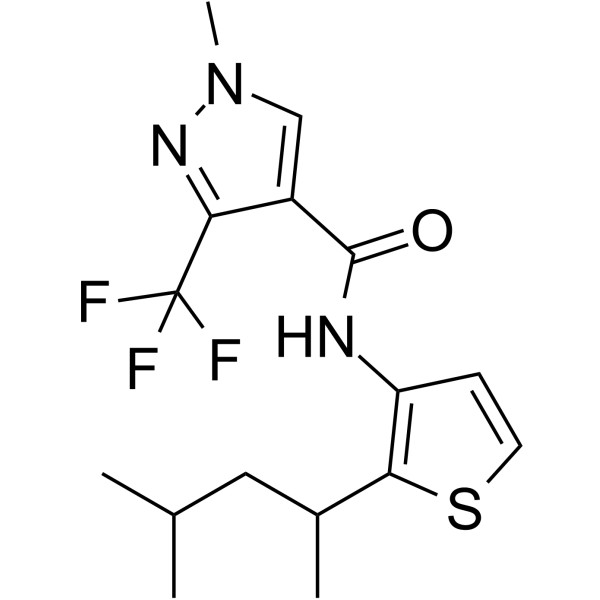
    Silthiofam (Silthiopham) is a wheat fungicide used to control take-all disease caused by the soil-borne fungus Gaeumannomyces graminis .
    Silthiofam
  • HY-161951

    Protoporphyrinogen IX oxidase Others
    PPO-IN-15 (compound (R)-I-5) is a protoporphyrinogen IX oxidase (PPO) inhibitor that is effective against resistant weeds and safer in wheat and rice .
    PPO-IN-15
  • HY-156267

    Herbicide Others
    PPO-IN-4 (compond 2i) is a potent Protoporphyrinogen oxidase (PPO) inhibitor. PPO-IN-4 can be used as a candidate herbicide for wheat, corn, and paddy fields .
    PPO-IN-4
  • HY-131325S

    Isotope-Labeled Compounds Environmental Pollutants Herbicide Others
    Simeton-d3 is deuterium labeled Simeton (HY-131325). Simeton is a methoxy-5-triazine herbicide widely used for weed control in crops such as corn, wheat, and barley .
    Simeton-d3
  • HY-B1859S1

    Isotope-Labeled Compounds Others
    Isoproturon-d3 is the deuterium labeled Isoproturon . Isoproturon belongs to the phenylurea herbicide family and is a systemic and selective herbicide. Isoproturon is widely applied for killing weeds in farmland, which can be used in the control of annual grasses and broad-leaved weeds in spring and winter wheat, winter rye and spring and winter barley .
    Isoproturon-d3

Inquiry Online

Your information is safe with us. * Required Fields.

Salutation


Country or Region *

Applicant Name *


Organization Name *

Department *


Email Address *


Product Name *

Cat. No.


Requested quantity *

Phone Number *


Remarks

Inquiry Online

Inquiry Information

Product Name:
Cat. No.:
Quantity:
MCE Japan Authorized Agent:

