



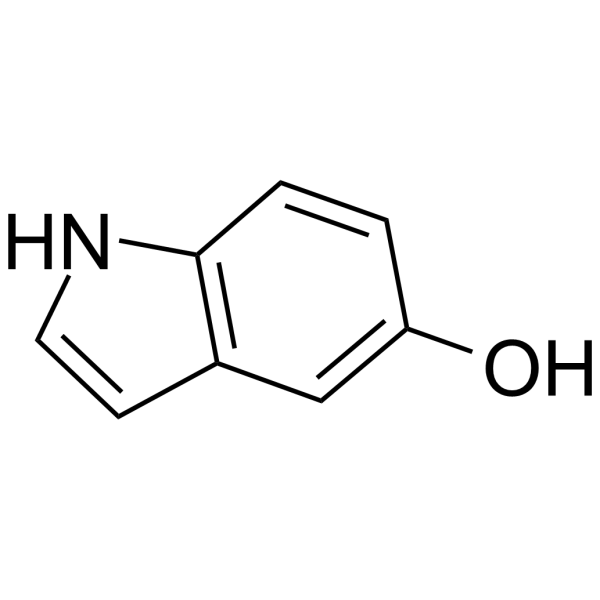
5-Hydroxyindole

Based on 1 Customer Validation
5-Hydroxyindole is an orally active hydroxylated indole and tryptophan metabolite. 5-Hydroxyindole activates α7 nicotinic acetylcholine receptors and acts on intestinal L-type calcium channels. 5-Hydroxyindole slows down the desensitization of 5-HT3 receptor-mediated ion currents in cells. 5-Hydroxyindole causes convulsions and loss of consciousness. 5-Hydroxyindole is used in the study of neuroblastoma, schizophrenia, and diseases related to intestinal motility disorders.
For research use only. We do not sell to patients.
- Purity : 99.94%
- CAS No.: 1953-54-4
- Formula: C8H7NO
- Molecular Weight:133.15
-
Storage:Powder -20°C, 3 years , 4°C, 2 years ; In solvent -80°C, 6 months , -20°C, 1 month

To place orders, for customer services and technical support, please contact: MedChemExpress USA
Tel: 609-228-6898 E-mail: [email protected] [email protected]


-
 Biological Activity
-
Chemical Information
-
Solvent & Solubility
- Purity & Documentation
- References
-
 Help & FAQs


-
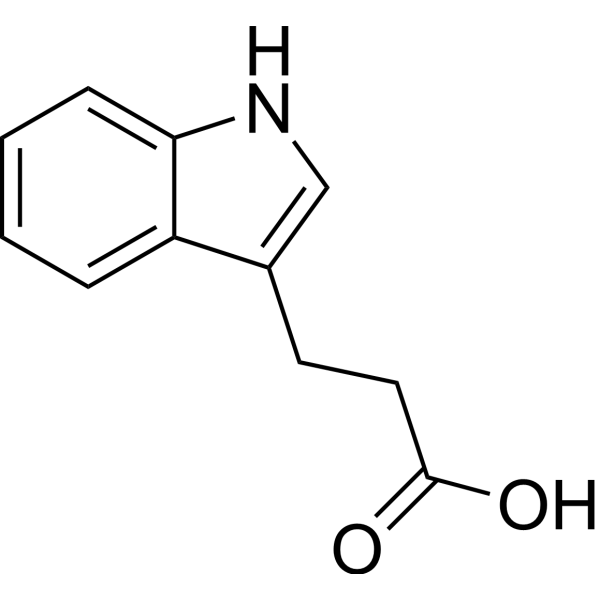
HY-W015229
3-Indolepropionic acid -
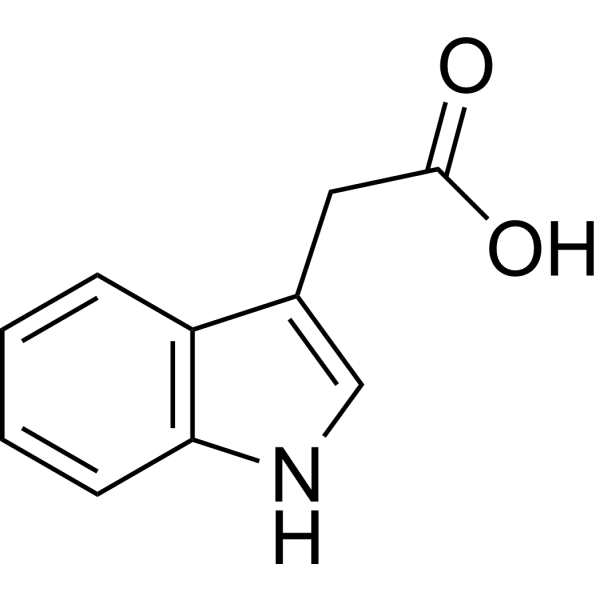
HY-18569
3-Indoleacetic acidPlant Growth Regulator -
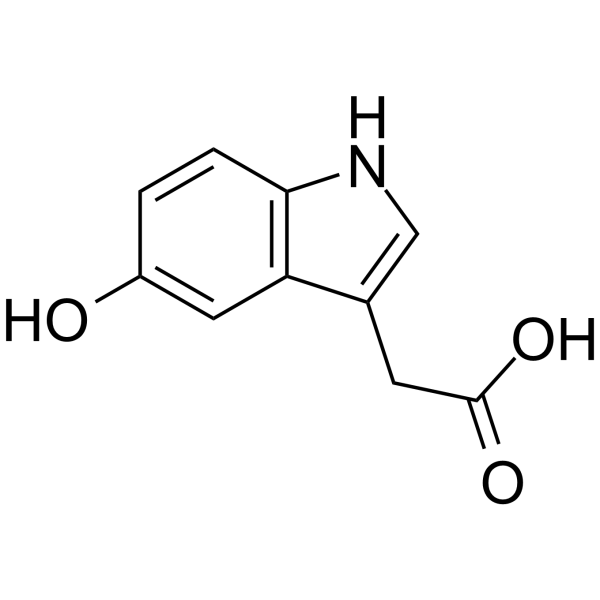
HY-W008253
5-Hydroxyindole-3-acetic acid -
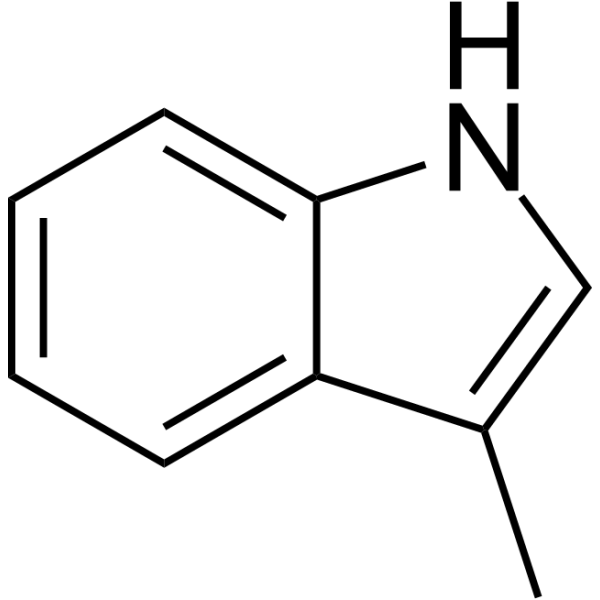
HY-W007355
SkatoleP38 Activator -
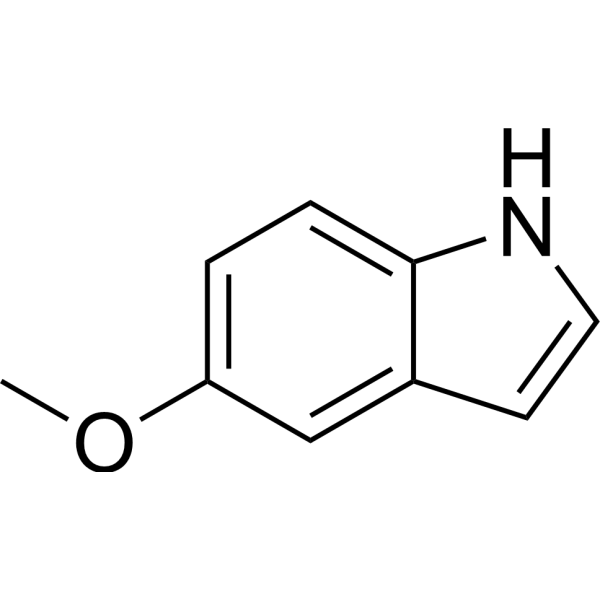
HY-W007328
5-MethoxyindoleEndogenous Metabolite -
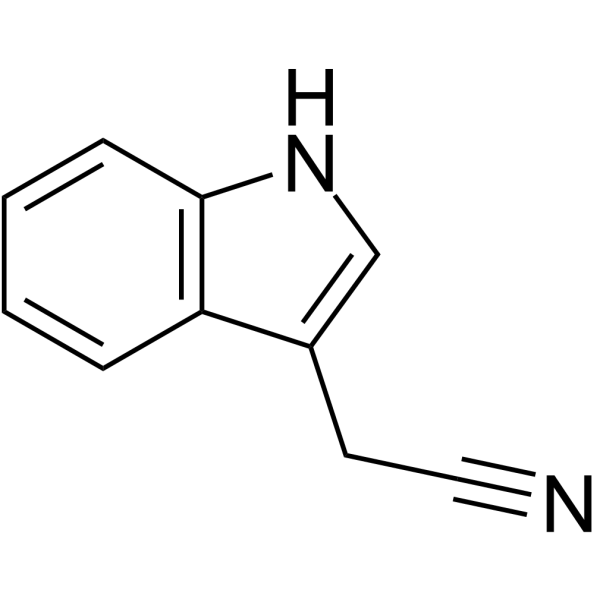
HY-Y0136
3-IndoleacetonitrileAntiviral Agent -
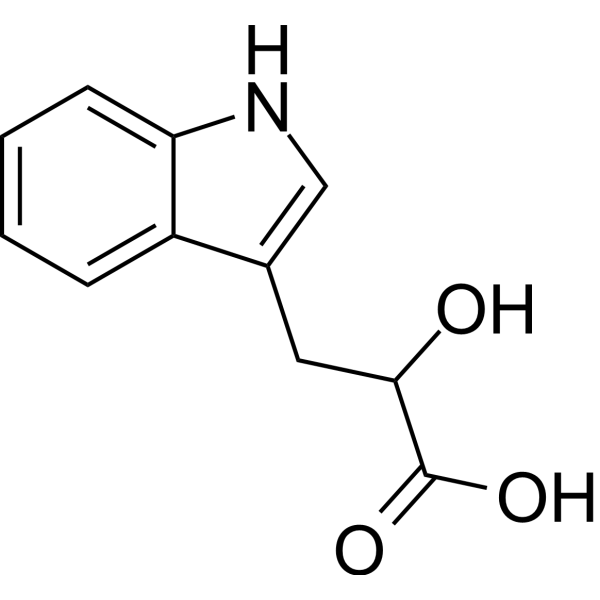
HY-113099
Indolelactic acidTryptophan Catabolite -
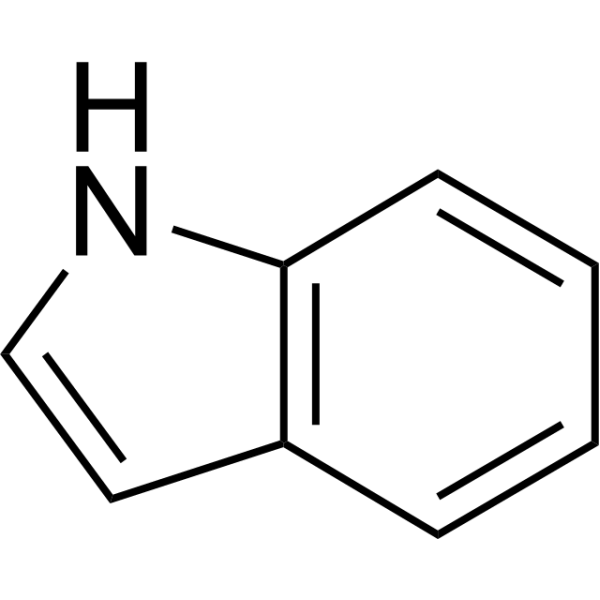
HY-W001132
Indole -

HY-W001160R
5-Hydroxyindole (Standard)Standard of 5-Hydroxyindole -
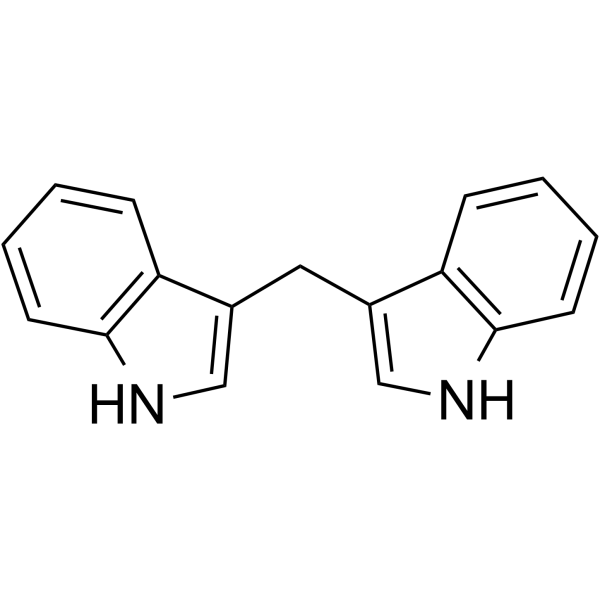
HY-15758
3,3'-DiindolylmethaneAndrogen Receptor Antagonist -
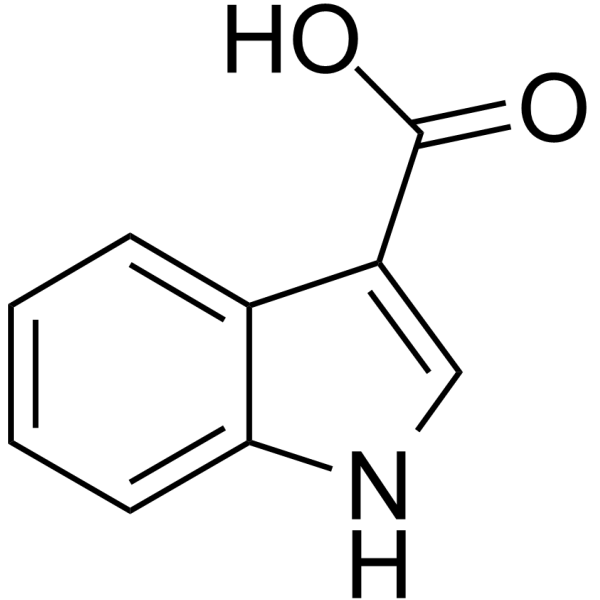
HY-40161
Indole-3-carboxylic acidEndogenous Metabolite -

HY-18569B
3-Indoleacetic acid,suitable for plant cell culturePlant Growth-Promoting Hormone


Biological Activity
Description
|
Microbial Metabolite |
L-type calcium channel |
Cellular Effect
|
Cell Line

|
Type | Value | Description | References |
|---|---|---|---|---|
| B16 | IC50 |
13 μM
Compound: 18
|
Antimelanogenic activity in mouse B16 cells assessed as inhibition of intracellular melanin accumulation after 2 days
Antimelanogenic activity in mouse B16 cells assessed as inhibition of intracellular melanin accumulation after 2 days
|
[PMID: 19524439] |
| B16 | IC50 |
68 μM
Compound: 18
|
Inhibition of catecholase activity of tyrosinase in mouse B16 cells assessed as dopachrome formation
Inhibition of catecholase activity of tyrosinase in mouse B16 cells assessed as dopachrome formation
|
[PMID: 19524439] |
In Vitro
5-Hydroxyindole (1 mM) enhances the Acetylcholine-evoked glutamate release in rat cerebellar slices[2].
5-Hydroxyindole (1-10 mM) can increase the amplitude of the maximum ion current evoked by 5-hydroxytryptamine (HY-B1473A) in mouse N1E-115 neuroblastoma cells[3].
5-Hydroxyindole (30-300 mM) increases the amplitude of the field excitatory postsynaptic potential in rat hippocampal slices[4].
5-Hydroxyindole (100 μM; 30 min) significantly increases 5-HT release from RIN14B cells[5].
MedChemExpress (MCE) has not independently confirmed the accuracy of these methods. They are for reference only.
In Vivo
5-Hydroxyindole (30 mg/kg; p.o.; daily; 11 days) significantly decreases the total gut transit time (TGTT) and increases the defecation frequency in wild-type Groningen (WTG) adult male rats[5].
MedChemExpress (MCE) has not independently confirmed the accuracy of these methods. They are for reference only.
-
Animal Model:Male Wistar rats (weight: 100-200 g, age: 3-4 weeks)[4]
-
Dosage:50, 100 mg/kg (dissolved in DMSO)
-
Administration:Intraperitoneal injection
-
Result:Caused convulsions and loss of consciousness.
Caused immobility at 50 mg/kg.
Caused clonic and tonic convulsions after a latency period of approximately 10 min, and the total duration of the convulsive activity was 15-20 min.


Chemical Information
-
CAS No. 1953-54-4
-
Appearance Solid
-
Molecular Weight 133.15
-
Formula C8H7NO
-
SMILES
OC1=CC2=C(C=C1)NC=C2
-
Structure Classification
-
Initial Source
-
Shipping
Room temperature in continental US; may vary elsewhere.
-
Storage
Powder -20°C 3 years 4°C 2 years In solvent -80°C 6 months -20°C 1 month


Solvent & Solubility
In Vitro:
DMSO : 50 mg/mL (375.52 mM; Need ultrasonic; Hygroscopic DMSO has a significant impact on the solubility of product, please use newly opened DMSO)
Please refer to the solubility information to select the appropriate solvent. Once prepared, please aliquot and store the solution to prevent product inactivation from repeated freeze-thaw cycles.
Storage method and period of stock solution: -80°C, 6 months; -20°C, 1 month. When stored at -80°C, please use it within 6 months. When stored at -20°C, please use it within 1 month.
Please refer to the solubility information to select the appropriate solvent. Once prepared, please aliquot and store the solution to prevent product inactivation from repeated freeze-thaw cycles.
Storage method and period of stock solution: -80°C, 6 months; -20°C, 1 month. When stored at -80°C, please use it within 6 months. When stored at -20°C, please use it within 1 month.
Concentration (start) × Volume (start) = Concentration (final) × Volume (final)
In Vivo:
Select the appropriate dissolution method based on your experimental animal and administration route.
- For the following dissolution methods, please ensure to first prepare a clear stock solution using an In Vitro approach and then sequentially add co-solvents:
- To ensure reliable experimental results, the clarified stock solution can be appropriately stored based on storage conditions. As for the working solution for In Vivo experiments, it is recommended to prepare freshly and use it on the same day.
- The percentages shown for the solvents indicate their volumetric ratio in the final prepared solution. If precipitation or phase separation occurs during preparation, heat and/or sonication can be used to aid dissolution.
Add each solvent one by one: 10% DMSO 40% PEG300 5% Tween-80 45% Saline
Solubility: ≥ 2.5 mg/mL (18.78 mM); Clear solution
This protocol yields a clear solution of ≥ 2.5 mg/mL (saturation unknown).
Taking 1 mL working solution as an example, add 100 μL DMSO stock solution (25.0 mg/mL) to 400 μL PEG300, and mix evenly; then add 50 μL Tween-80 and mix evenly; then add 450 μL Saline to adjust the volume to 1 mL.
Preparation of Saline: Dissolve 0.9 g sodium chloride in ddH₂O and dilute to 100 mL to obtain a clear Saline solution.
Add each solvent one by one: 10% DMSO 90% (20% SBE-β-CD in Saline)
Solubility: ≥ 2.5 mg/mL (18.78 mM); Clear solution
This protocol yields a clear solution of ≥ 2.5 mg/mL (saturation unknown).
Taking 1 mL working solution as an example, add 100 μL DMSO stock solution (25.0 mg/mL) to 900 μL 20% SBE-β-CD in Saline, and mix evenly.
Preparation of 20% SBE-β-CD in Saline (4°C, storage for one week): 2 g SBE-β-CD powder is dissolved in 10 mL Saline, completely dissolve until clear.
In Vivo Dissolution Calculator
Please enter the basic information of animal experiments:
-
-
-
-
Recommended: Prepare an additional quantity of animals to account for potential losses during experiments.
Please enter your animal formula composition:
-
%DMSO +
Recommended: Keep the proportion of DMSO in working solution below 2% if your animal is weak.
-
%+
-
+%Tween-80 + +
-
%Saline +
The co-solvents required include: DMSO, . All of co-solvents are available by MedChemExpress (MCE). , Tween 80. All of co-solvents are available by MedChemExpress (MCE).
Working solution concentration: 0.22 mg/mL
Method for preparing stock solution: mg drug dissolved in μL DMSO. Stock solution concentration: mg/mL.
1. Take μL DMSO stock solution;
2. Add μL .
μL , mix evenly;
3. Then add μL Tween 80, mix evenly;
4. Then add μL
Please ensure that the stock solution in the first step is dissolved to a clear state, and add co-solvents in sequence. You can use ultrasonic heating (ultrasonic cleaner, recommended frequency 20-40 kHz), vortexing, etc. to assist dissolution.


Purity & Documentation
-
Data Sheet (278 KB)
-
SDS (396 KB)
- English - EN (396 KB)
- Français - FR (396 KB)
- Deutsch - DE (396 KB)
- Norwegian - NO (396 KB)
- Español - ES (396 KB)
- Swedish - SV (396 KB)
- Italian - IT (396 KB)
- Korean - KR (396 KB)
- Portuguese - PT (396 KB)
-
Handling Instructions (2659 KB)
References
[1]. Huang J, et al. Effects of neuroactive metabolites of the tryptophan pathway on working memory and cortical thickness in schizophrenia. Transl Psychiatry. 2021 Apr 1;11(1):198. [Content Brief]
[2]. Zwart R, et al. 5-Hydroxyindole potentiates human alpha 7 nicotinic receptor-mediated responses and enhances acetylcholine-induced glutamate release in cerebellar slices. Neuropharmacology. 2002 Sep;43(3):374-84. [Content Brief]
[4]. Mannaioni G, et al. 5-hydroxyindole causes convulsions and increases transmitter release in the CA1 region of the rat hippocampus. Br J Pharmacol. 2003 Jan;138(1):245-53. [Content Brief]
[5]. Waclawiková B, et al. Gut bacteria-derived 5-hydroxyindole is a potent stimulant of intestinal motility via its action on L-type calcium channels. PLoS Biol. 2021 Jan 22;19(1):e3001070. [Content Brief]
[6]. Kooyman AR, et, al. 5-Hydroxyindole slows desensitization of the 5-HT3 receptor-mediated ion current in N1E-115 neuroblastoma cells. Br J Pharmacol. 1993 Feb;108(2):287-9. [Content Brief]
[7]. LaPorte M, et, al. 5-Hydroxyindoles by intramolecular alkynol-furan diels-alder cycloaddition. J Org Chem. 2013 Jan 4;78(1):167-74. [Content Brief]


Complete Stock Solution Preparation Table
Please refer to the solubility information to select the appropriate solvent. Once prepared, please aliquot and store the solution to prevent product inactivation from repeated freeze-thaw cycles.
Storage method and period of stock solution: -80°C, 6 months; -20°C, 1 month. When stored at -80°C, please use it within 6 months. When stored at -20°C, please use it within 1 month.
| Optional Solvent | Concentration Solvent Mass | 1 mg | 5 mg | 10 mg | 25 mg |
|---|---|---|---|---|---|
| DMSO | 1 mM | 7.5103 mL | 37.5516 mL | 75.1033 mL | 187.7582 mL |
| 5 mM | 1.5021 mL | 7.5103 mL | 15.0207 mL | 37.5516 mL | |
| 10 mM | 0.7510 mL | 3.7552 mL | 7.5103 mL | 18.7758 mL | |
| 15 mM | 0.5007 mL | 2.5034 mL | 5.0069 mL | 12.5172 mL | |
| 20 mM | 0.3755 mL | 1.8776 mL | 3.7552 mL | 9.3879 mL | |
| 25 mM | 0.3004 mL | 1.5021 mL | 3.0041 mL | 7.5103 mL | |
| 30 mM | 0.2503 mL | 1.2517 mL | 2.5034 mL | 6.2586 mL | |
| 40 mM | 0.1878 mL | 0.9388 mL | 1.8776 mL | 4.6940 mL | |
| 50 mM | 0.1502 mL | 0.7510 mL | 1.5021 mL | 3.7552 mL | |
| 60 mM | 0.1252 mL | 0.6259 mL | 1.2517 mL | 3.1293 mL | |
| 80 mM | 0.0939 mL | 0.4694 mL | 0.9388 mL | 2.3470 mL | |
| 100 mM | 0.0751 mL | 0.3755 mL | 0.7510 mL | 1.8776 mL |


5-Hydroxyindole Related Classifications
HY-W001160 Related Classifications
 Powered by Bioz