



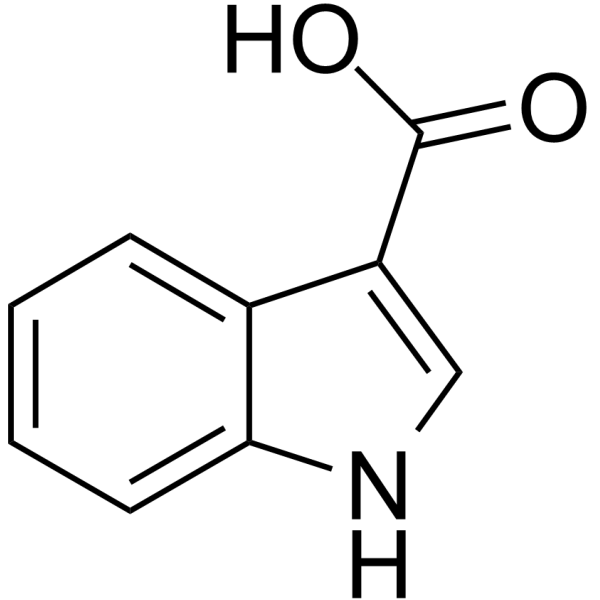
Indole-3-carboxylic acid
Based on 2 publication(s) in Google Scholar
Indole-3-carboxylic acid is an orally active urinary indolic tryptophan metabolite. Indole-3-carboxylic acid is a mediator of priming against Plectosphaerella cucumerina. Indole-3-carboxylic acid enhances the anti-colorectal cancer potency of Doxorubicin (HY-15142A) by inducing cell senescence. Indole-3-carboxylic acid can be used in liver disease research.
Para uso exclusivo en investigación. No vendemos a pacientes.
- Pureza : 99.96%
- No. CAS: 771-50-6
- Fòrmula: C9H7NO2
- Peso molecular:161.16
-
Almacenamiento:Powder -20°C, 3 years , 4°C, 2 years ; In solvent -80°C, 6 months , -20°C, 1 month

To place orders, for customer services and technical support, please contact: MedChemExpress USA
Tel: 609-228-6898 E-mail: [email protected] [email protected]


-
 Actividad biológica
-
Chemical Information
-
Solvente y solubilidad
- Protocolo
- Pureza y Documentación
- Referencias
-
 Help & FAQs


-
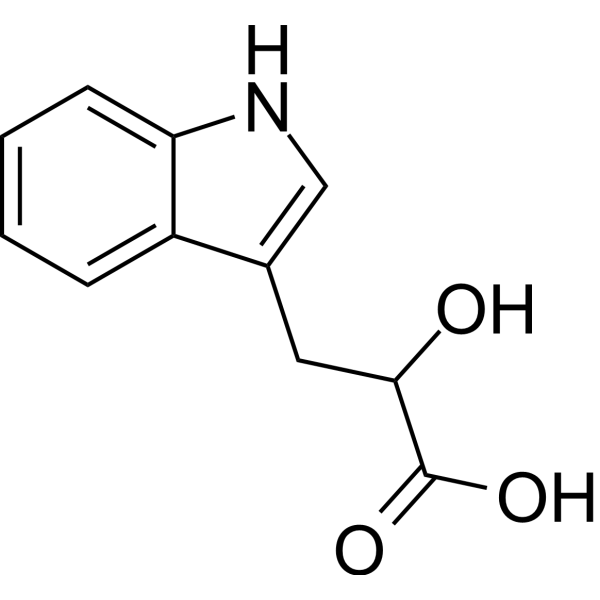
HY-113099
Indolelactic acidTryptophan Catabolite -
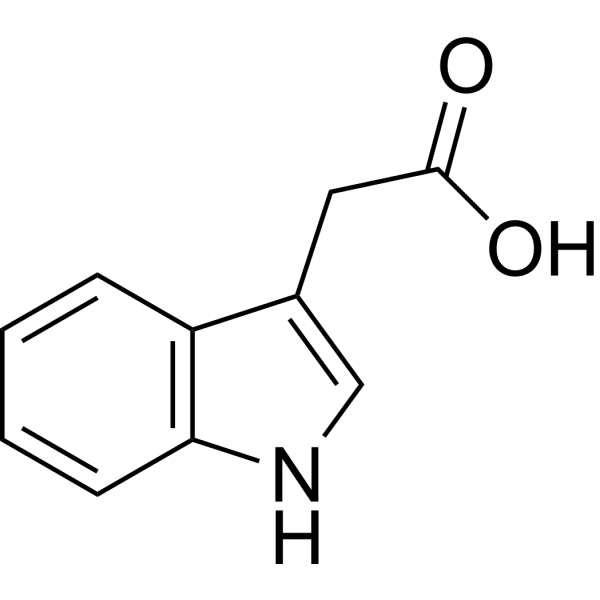
HY-18569
3-Indoleacetic acidPlant Growth Regulator -
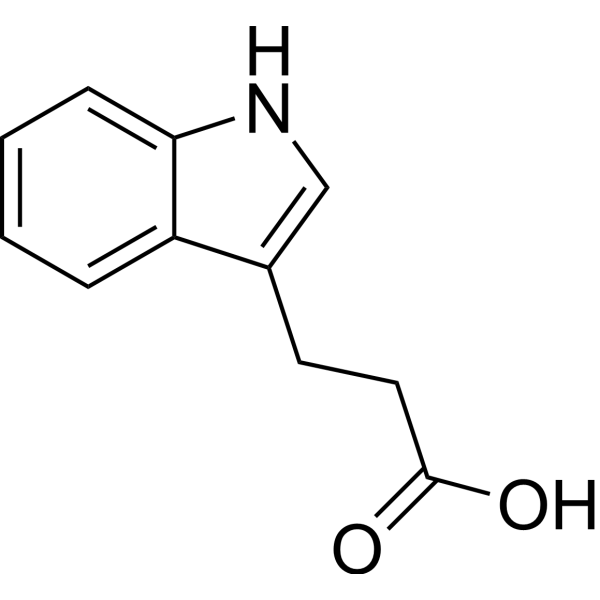
HY-W015229
3-Indolepropionic acid -

HY-40161R
Indole-3-carboxylic acid (Standard)Endogenous Metabolite -
HY-W007376
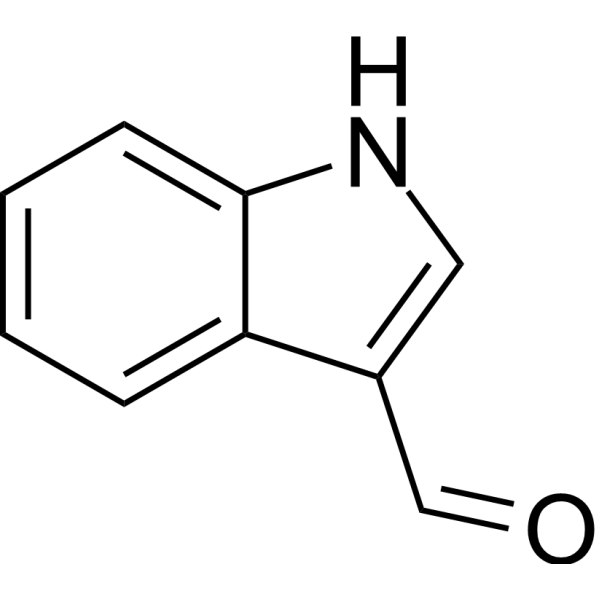
Indole-3-carboxaldehydeEndogenous Metabolite -
HY-W028393
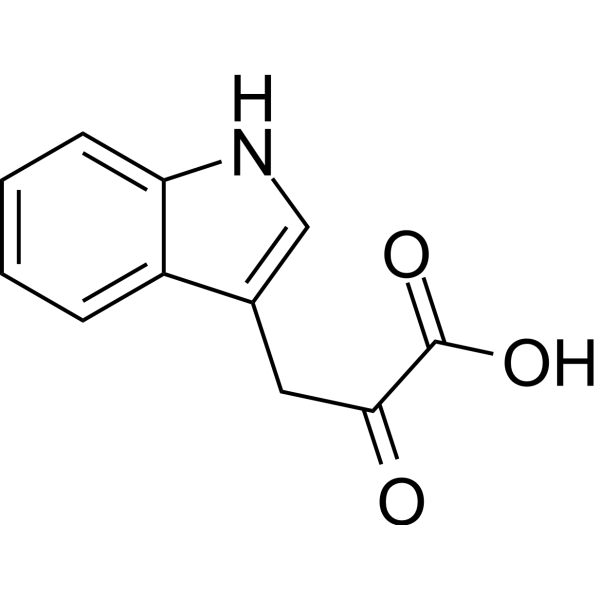
Indole-3-pyruvic acidAHR Agonist -
HY-N0324
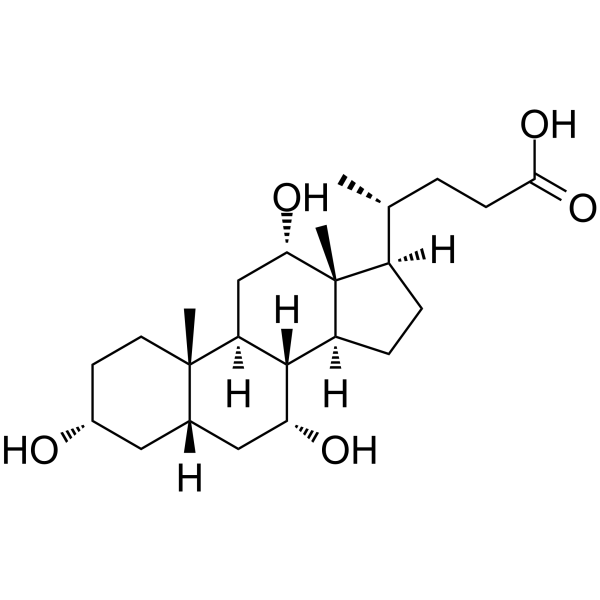
Cholic acidEndogenous Metabolite -
HY-B1777
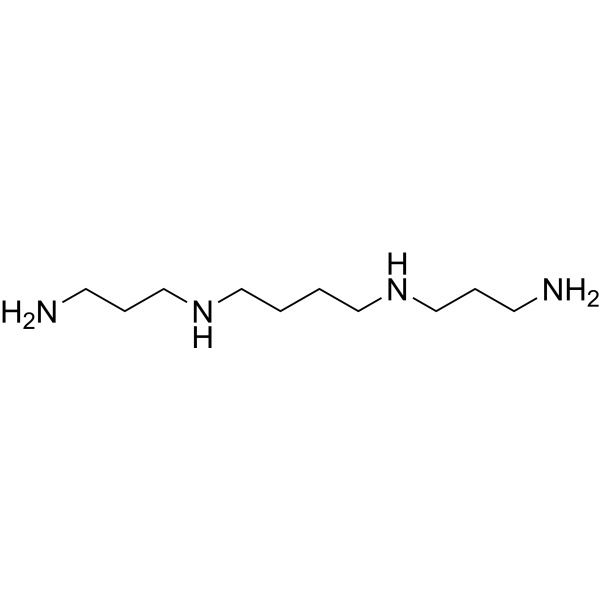
SpermineEndogenous Metabolite -
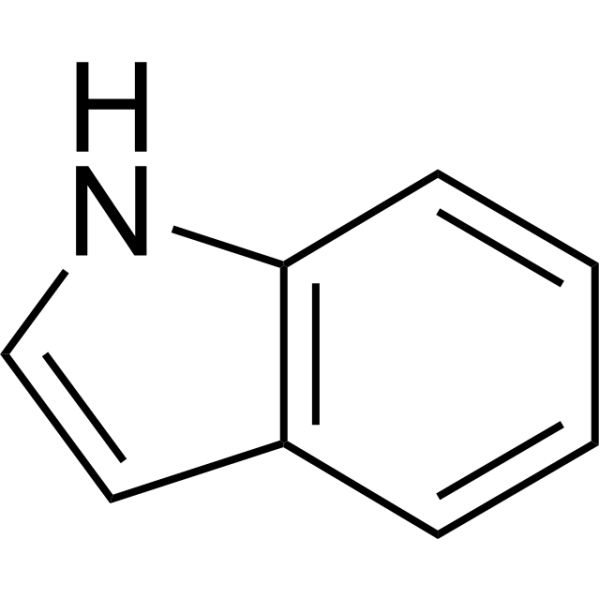
HY-W001132
Indole -
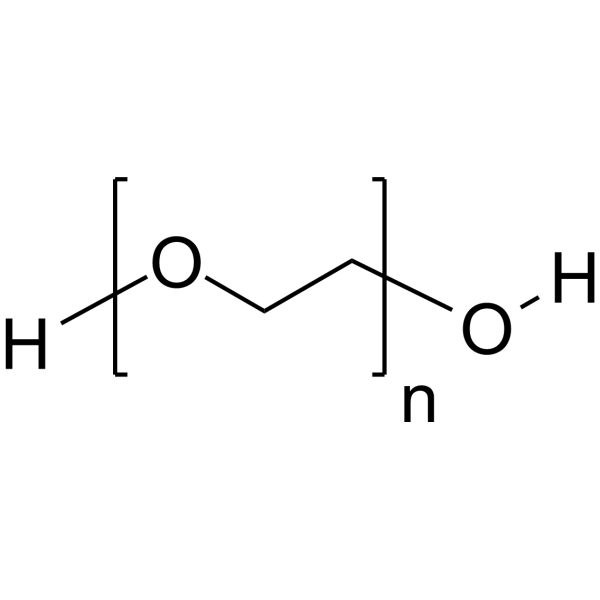
HY-Y0873
PEG300Neutral Polymer -
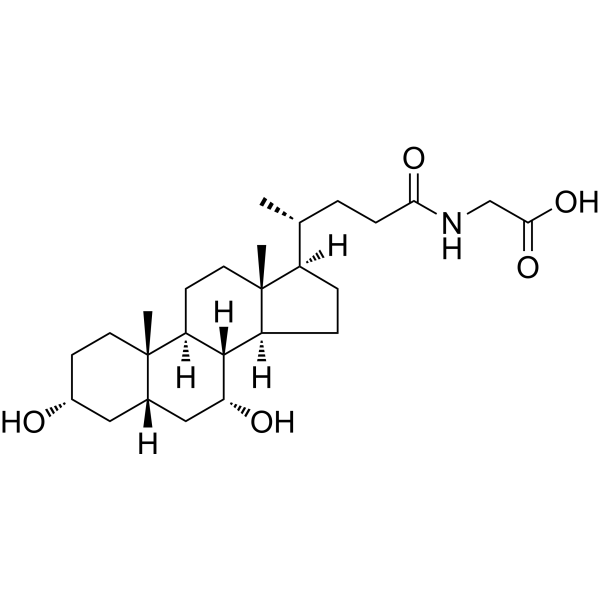
HY-N2334
Glycochenodeoxycholic acidEndogenous Metabolite -
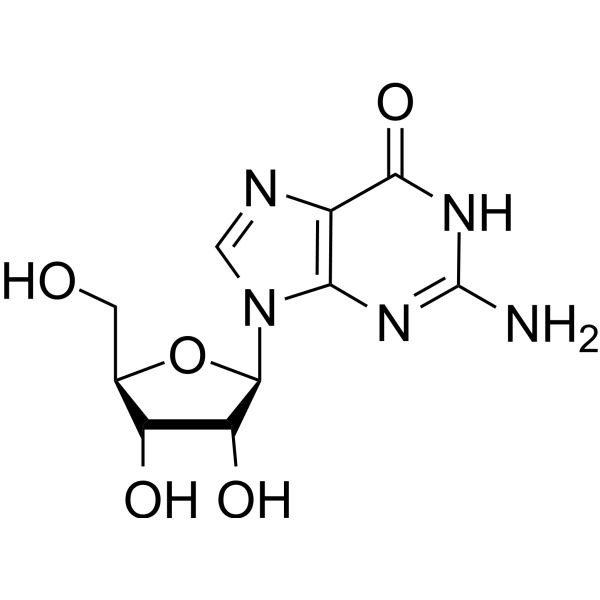
HY-N0097
GuanosineHSV Inhibitor
Publications Citing Use of MedChemExpress (MCE) Indole-3-carboxylic acid
MoreVer todos los productos específicos de isoformas Endogenous Metabolite
More

Actividad biológica
Descripciòn
IC50 & Target
[1]|
Human Endogenous Metabolite |
Cellular Effect
|
Cell Line

|
Type | Value | Description | References |
|---|---|---|---|---|
| RAW264.7 | IC50 |
>10 μM
Compound: 16
|
Antiinflammatory activity in mouse RAW264.7 cells assessed as reduction in LPS-induced NO production pretreated for 30 mins followed by LPS stimulation for 24 hrs by Griess assay
Antiinflammatory activity in mouse RAW264.7 cells assessed as reduction in LPS-induced NO production pretreated for 30 mins followed by LPS stimulation for 24 hrs by Griess assay
|
[PMID: 28499733] |
In Vitro
Indole-3-carboxylic acid (0.01-0.64 μM, 48 h) amplifies Doxorubicin (HY-15142A)-induced cell senescence, inhibiting proliferation and promoting cell cycle arrest in LS180 cells[4].
MedChemExpress (MCE) has not independently confirmed the accuracy of these methods. They are for reference only. Further protocols information, click here.
In Vivo
MedChemExpress (MCE) has not independently confirmed the accuracy of these methods. They are for reference only.


Chemical Information
-
No. CAS 771-50-6
-
Appearance Solid
-
Peso molecular 161.16
-
Fòrmula C9H7NO2
-
Color White to yellow
-
SMILES
O=C(O)C1=CNC2=CC=CC=C12
-
Structure Classification
-
Initial Source
-
Envío
Room temperature in continental US; may vary elsewhere.
-
Almacenamiento
Powder -20°C 3 years 4°C 2 years In solvent -80°C 6 months -20°C 1 month


Publications (2)
-
Journal Impact Factor
-
Most Recent
-
Cell Rep
2025 Sep 19;44(10):116326. PMID: 40975867 -
Chem Biol Interact
Fusobacterium nucleatum-derived 3-indolepropionic acid promotes colorectal cancer progression via aryl hydrocarbon receptor activation in macrophages. [Abstract]2025 Jun 1:414:111495. PMID: 40174685


Solvente y solubilidad
In Vitro:
DMSO : 100 mg/mL (620.50 mM; Need ultrasonic; Hygroscopic DMSO has a significant impact on the solubility of product, please use newly opened DMSO)
Please refer to the solubility information to select the appropriate solvent. Once prepared, please aliquot and store the solution to prevent product inactivation from repeated freeze-thaw cycles.
Storage method and period of stock solution: -80°C, 6 months; -20°C, 1 month. When stored at -80°C, please use it within 6 months. When stored at -20°C, please use it within 1 month.
Please refer to the solubility information to select the appropriate solvent. Once prepared, please aliquot and store the solution to prevent product inactivation from repeated freeze-thaw cycles.
Storage method and period of stock solution: -80°C, 6 months; -20°C, 1 month. When stored at -80°C, please use it within 6 months. When stored at -20°C, please use it within 1 month.
Concentration (start) × Volume (start) = Concentration (final) × Volume (final)
In Vivo:
Select the appropriate dissolution method based on your experimental animal and administration route.
- For the following dissolution methods, please ensure to first prepare a clear stock solution using an In Vitro approach and then sequentially add co-solvents:
- To ensure reliable experimental results, the clarified stock solution can be appropriately stored based on storage conditions. As for the working solution for In Vivo experiments, it is recommended to prepare freshly and use it on the same day.
- The percentages shown for the solvents indicate their volumetric ratio in the final prepared solution. If precipitation or phase separation occurs during preparation, heat and/or sonication can be used to aid dissolution.
Add each solvent one by one: 10% DMSO 40% PEG300 5% Tween-80 45% Saline
Solubility: ≥ 2.5 mg/mL (15.51 mM); Clear solution
This protocol yields a clear solution of ≥ 2.5 mg/mL (saturation unknown).
Taking 1 mL working solution as an example, add 100 μL DMSO stock solution (25.0 mg/mL) to 400 μL PEG300, and mix evenly; then add 50 μL Tween-80 and mix evenly; then add 450 μL Saline to adjust the volume to 1 mL.
Preparation of Saline: Dissolve 0.9 g sodium chloride in ddH₂O and dilute to 100 mL to obtain a clear Saline solution.
Add each solvent one by one: 10% DMSO 90% (20% SBE-β-CD in Saline)
Solubility: ≥ 2.5 mg/mL (15.51 mM); Clear solution
This protocol yields a clear solution of ≥ 2.5 mg/mL (saturation unknown).
Taking 1 mL working solution as an example, add 100 μL DMSO stock solution (25.0 mg/mL) to 900 μL 20% SBE-β-CD in Saline, and mix evenly.
Preparation of 20% SBE-β-CD in Saline (4°C, storage for one week): 2 g SBE-β-CD powder is dissolved in 10 mL Saline, completely dissolve until clear.
In Vivo Dissolution Calculator
Please enter the basic information of animal experiments:
-
-
-
-
Recommended: Prepare an additional quantity of animals to account for potential losses during experiments.
Please enter your animal formula composition:
-
%DMSO +
Recommended: Keep the proportion of DMSO in working solution below 2% if your animal is weak.
-
%+
-
+%Tween-80 + +
-
%Saline +
The co-solvents required include: DMSO, . All of co-solvents are available by MedChemExpress (MCE). , Tween 80. All of co-solvents are available by MedChemExpress (MCE).
Working solution concentration: 0.22 mg/mL
Method for preparing stock solution: mg drug dissolved in μL DMSO. Stock solution concentration: mg/mL.
1. Take μL DMSO stock solution;
2. Add μL .
μL , mix evenly;
3. Then add μL Tween 80, mix evenly;
4. Then add μL
Please ensure that the stock solution in the first step is dissolved to a clear state, and add co-solvents in sequence. You can use ultrasonic heating (ultrasonic cleaner, recommended frequency 20-40 kHz), vortexing, etc. to assist dissolution.

Protocolo
-
Senescence-associated β-galactosidase staining
Senescence-associated β-galactosidase staining detects β-galactosidase activity that is histochemically visible at pH 6. 0 in senescent cells, where X-gal cleavage produces an insoluble blue precipitate observable by bright-field microscopy. This activity reflects increased lysosomal β-galactosidase/lysosomal mass rather than a senescence-essential enzyme, because GLB1 depletion or genetic lysosomal β-galactosidase deficiency can abolish SA-β-gal staining while cells still undergo senescence. SA-β-gal was originally reported in senescent but not presenescent fibroblasts and keratinocytes, absent from quiescent fibroblasts and terminally differentiated keratinocytes, and increased with donor age in human skin samples. Because SA-β-gal can also appear in some non-senescent or tissue-specific contexts, interpretation should be paired with experimental controls and, when possible, independent senescence markers.


Pureza y Documentación
-
Ficha de datos (308 KB)
-
SDS (394 KB)
- English - EN (394 KB)
- Français - FR (394 KB)
- Deutsch - DE (394 KB)
- Norwegian - NO (394 KB)
- Español - ES (394 KB)
- Swedish - SV (394 KB)
- Italian - IT (394 KB)
- Korean - KR (394 KB)
- Portuguese - PT (394 KB)
-
Instrucciones de manejo (2659 KB)
Referencias
[1]. Byrd DJ, et al. The analysis of indolic tryptophan metabolites in human urine. Thin-layer chromatography and in situ quantitation. J Chromatogr. 1974 Jul 17;94(0):85-106. [Content Brief]
[2]. HARTMANN F, et al. [Indolepatterns in the urine of liver patients]. Klin Wochenschr. 1962 Jul 15;40:721-9. [Content Brief]
[3]. Gamir J, et al. Identification of indole-3-carboxylic acid as mediator of priming against Plectosphaerella cucumerina. Plant Physiol Biochem. 2012 Dec;61:169-79. [Content Brief]


Complete Stock Solution Preparation Table
Please refer to the solubility information to select the appropriate solvent. Once prepared, please aliquot and store the solution to prevent product inactivation from repeated freeze-thaw cycles.
Storage method and period of stock solution: -80°C, 6 months; -20°C, 1 month. When stored at -80°C, please use it within 6 months. When stored at -20°C, please use it within 1 month.
| Optional Solvent | Concentration Solvent Mass | 1 mg | 5 mg | 10 mg | 25 mg |
|---|---|---|---|---|---|
| DMSO | 1 mM | 6.2050 mL | 31.0251 mL | 62.0501 mL | 155.1253 mL |
| 5 mM | 1.2410 mL | 6.2050 mL | 12.4100 mL | 31.0251 mL | |
| 10 mM | 0.6205 mL | 3.1025 mL | 6.2050 mL | 15.5125 mL | |
| 15 mM | 0.4137 mL | 2.0683 mL | 4.1367 mL | 10.3417 mL | |
| 20 mM | 0.3103 mL | 1.5513 mL | 3.1025 mL | 7.7563 mL | |
| 25 mM | 0.2482 mL | 1.2410 mL | 2.4820 mL | 6.2050 mL | |
| 30 mM | 0.2068 mL | 1.0342 mL | 2.0683 mL | 5.1708 mL | |
| 40 mM | 0.1551 mL | 0.7756 mL | 1.5513 mL | 3.8781 mL | |
| 50 mM | 0.1241 mL | 0.6205 mL | 1.2410 mL | 3.1025 mL | |
| 60 mM | 0.1034 mL | 0.5171 mL | 1.0342 mL | 2.5854 mL | |
| 80 mM | 0.0776 mL | 0.3878 mL | 0.7756 mL | 1.9391 mL | |
| 100 mM | 0.0621 mL | 0.3103 mL | 0.6205 mL | 1.5513 mL |


Indole-3-carboxylic acid Related Classifications
HY-40161 Related Classifications
 Powered by Bioz