



ALK4290

Based on 1 Customer Validation
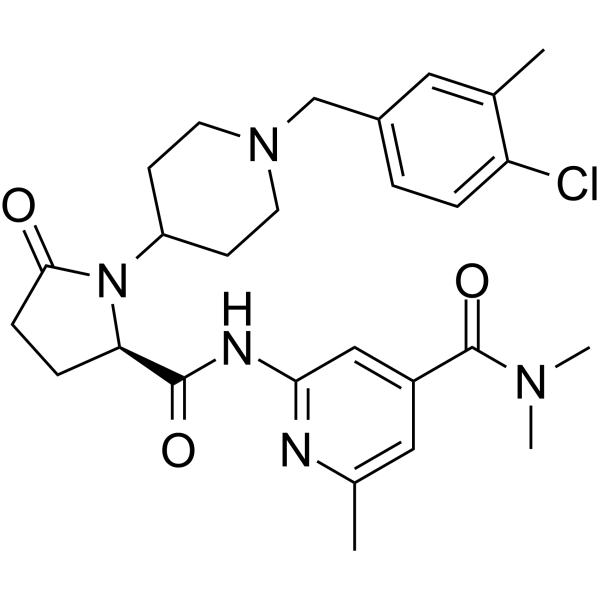
ALK4290 (AKST4290) is a potent, orally active and selective CCR3 inhibitor with a Ki of 3.2 nM. ALK4290 blocks CCR3-mediated signaling, abrogates macrophage supernatant-driven mesothelial-to-mesenchymal transition, and decreases p38 phosphorylation. ALK4290 inhibits CCL26-CCR3 axis-driven GPX2-mediated B-cell activation, and targets B cells to inhibit activation by GPX2-overexpressing tumor cells. ALK4290 can be used for the research of hepatocellular carcinome and Parkinson’s disease.
For research use only. We do not sell to patients.
- Purity : 99.79%
- CAS No.: 1251528-23-0
- Formula: C27H34ClN5O3
- Molecular Weight:512.04
-
Storage:Powder -20°C, 3 years , 4°C, 2 years ; In solvent -80°C, 6 months , -20°C, 1 month

To place orders, for customer services and technical support, please contact: MedChemExpress USA
Tel: 609-228-6898 E-mail: [email protected] [email protected]


-
 Biological Activity
-
Chemical Information
-
Solvent & Solubility
- Protocols
- Purity & Documentation
- References
-
 Help & FAQs


-
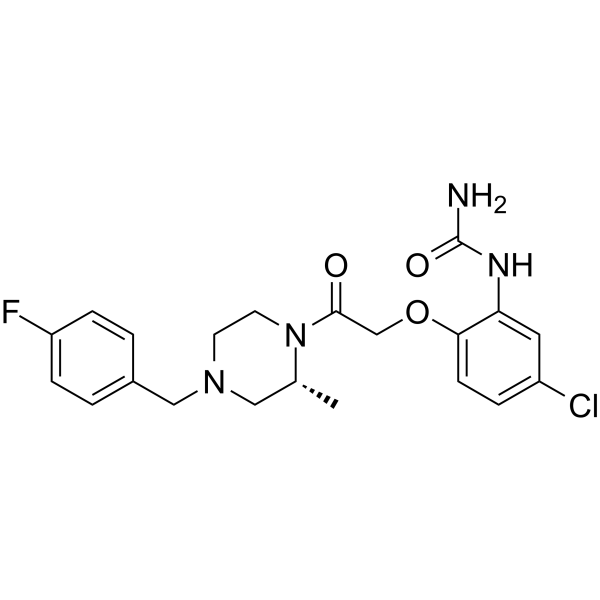
HY-12080
BX471CCR1 Antagonist -
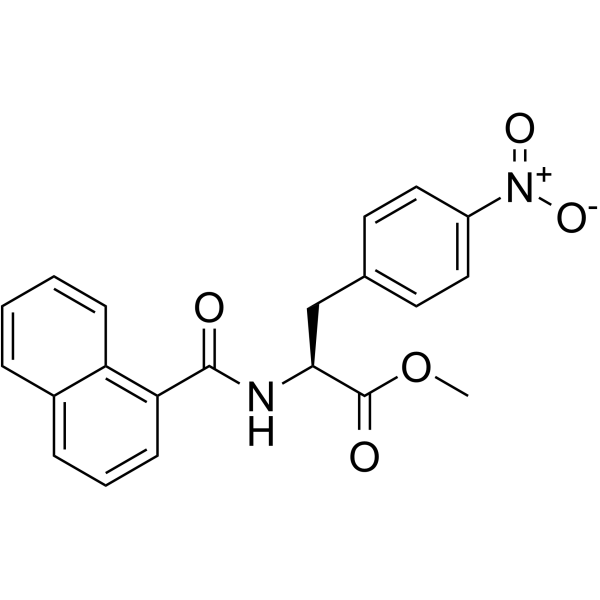
HY-103363
SB-328437CCR3 Antagonist -
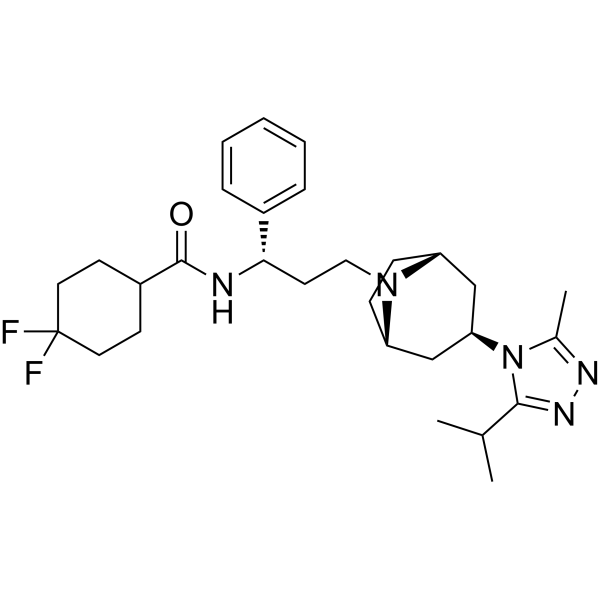
HY-13004
MaravirocCCR5 Antagonist -
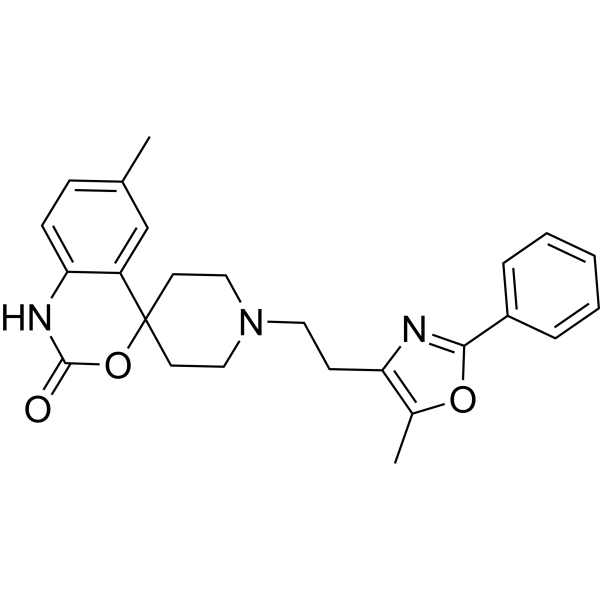
HY-15418
RS 504393CCR2 Antagonist -
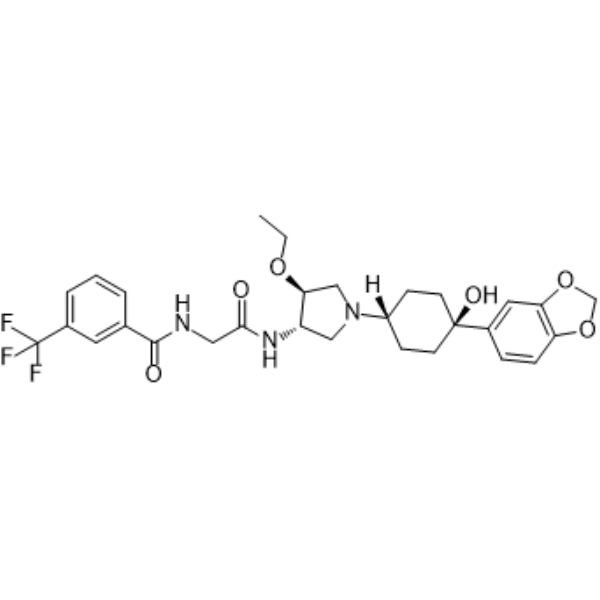
HY-50674
INCB3344CCR2 Antagonis -
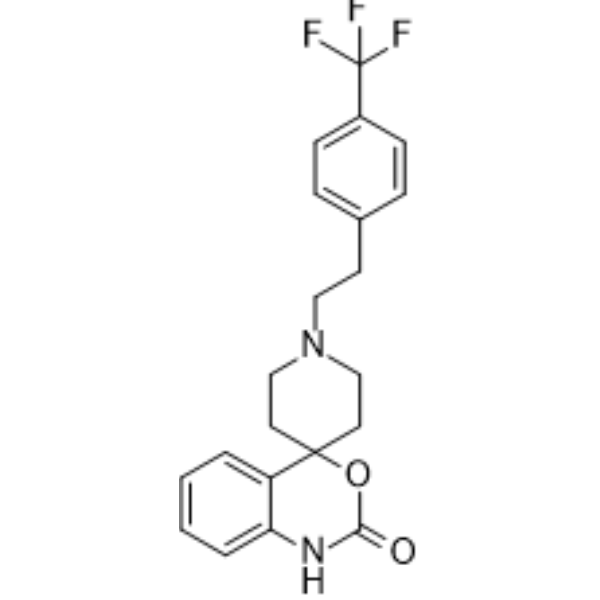
HY-18611A
AbaucinCCR Antagonist -
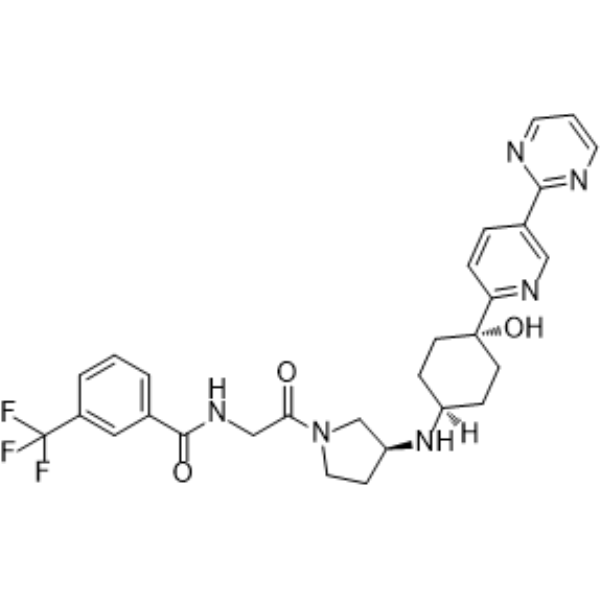
HY-13245
PF-4136309CCR2 Antagonist -
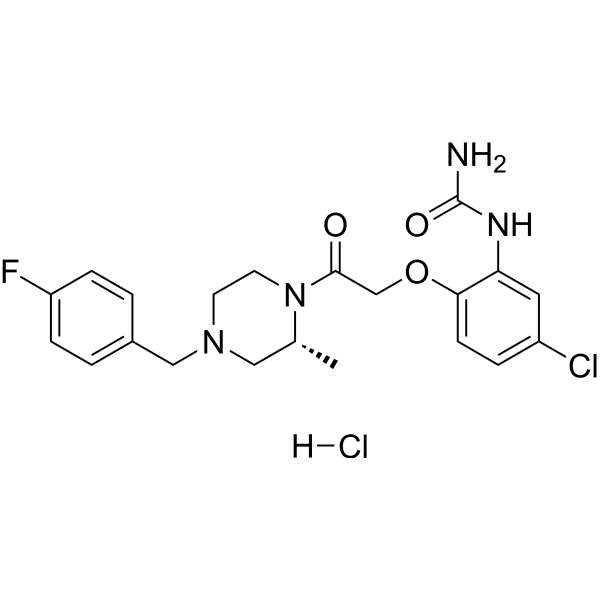
HY-12080A
BX471 hydrochlorideCCR Antagonist -
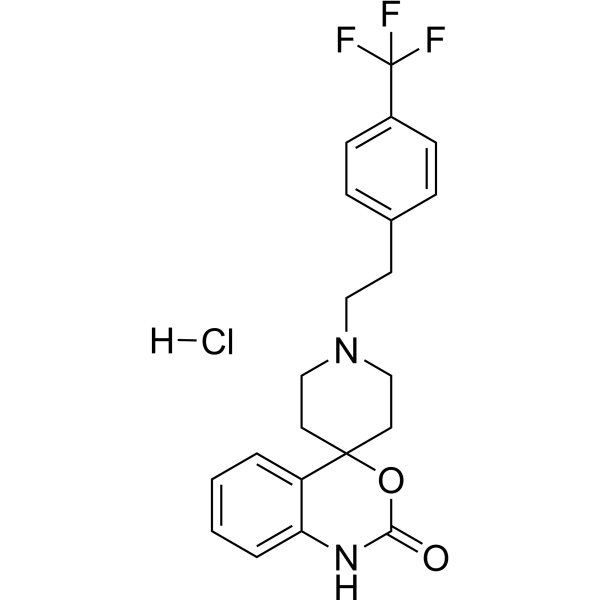
HY-18611
Abaucin hydrochlorideCCR2antagonist -
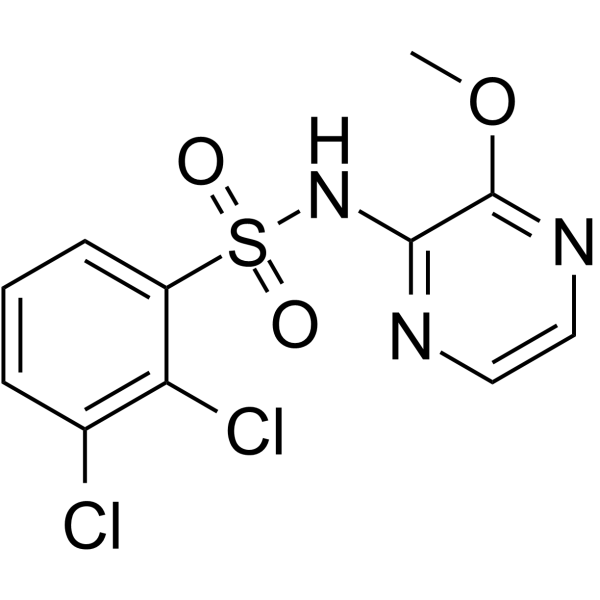
HY-U00064
AZD2098 -
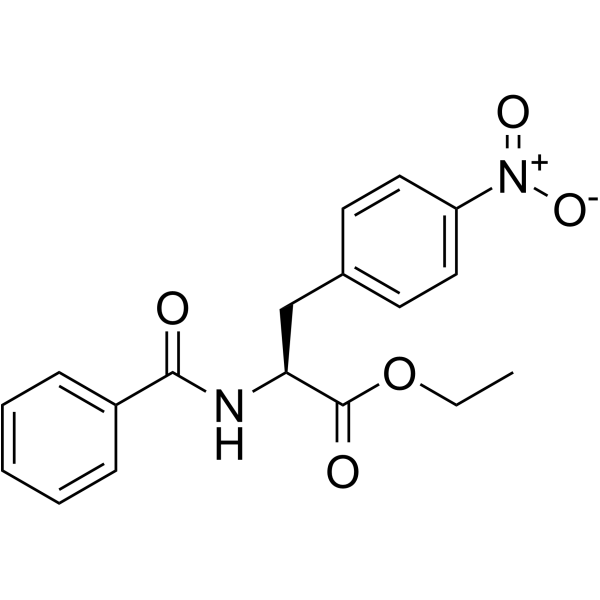
HY-103361
SB297006CCR3 Antagonist -
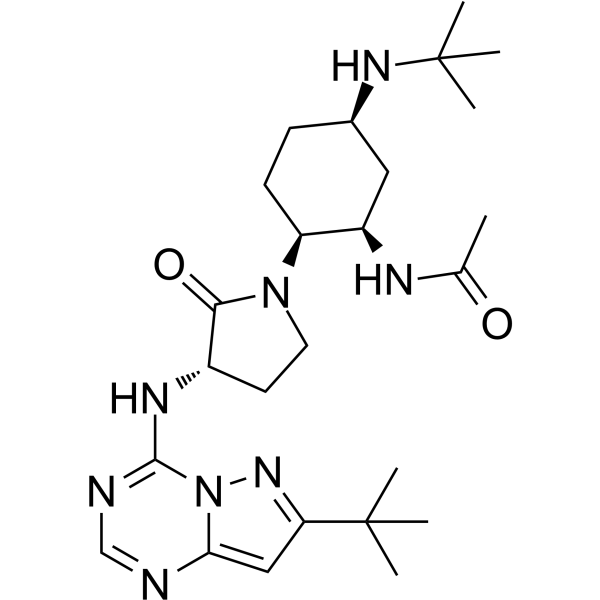
HY-109593
BMS-813160CCR2/CCR5 Antagonist


Biological Activity
Description
IC50 & Target
[3]|
CCR3 3.2 nM (Ki) |
In Vitro
ALK4290 (5 µM; 1 h) abrogates macrophage-driven mesothelial-to-mesenchymal transition in human peritoneal mesothelial cells by inhibiting the CCR3/p38 MAPK pathway[1].
MedChemExpress (MCE) has not independently confirmed the accuracy of these methods. They are for reference only.
-
Cell Line:human peritoneal mesothelial cells (HPMCs)
-
Concentration:5 µM
-
Incubation Time:1 h
-
Result:Abrogated the MMT-promoting effects of control macrophage-derived supernatant on HPMCs, reversing the reduction in E-cadherin protein expression and the increases in α-SMA, fibronectin (FN), and collagen I protein expression.
Blocked MMT in HPMCs exposed to HpMSCs-CM-treated macrophage-derived supernatant.
Decreased the phosphorylation level of p38 in HPMCs exposed to supernatant from THP1-derived macrophages treated with or without HpMSCs-CM.
Showed no significant effect on p-AKT/AKT or p-ERK/ERK ratios.
In Vivo
MedChemExpress (MCE) has not independently confirmed the accuracy of these methods. They are for reference only.


Chemical Information
-
CAS No. 1251528-23-0
-
Appearance Solid
-
Molecular Weight 512.04
-
Formula C27H34ClN5O3
-
Color White to off-white
-
SMILES
O=C(C1=CC(NC([C@@H](CC2)N(C3CCN(CC4=CC=C(Cl)C(C)=C4)CC3)C2=O)=O)=NC(C)=C1)N(C)C
-
Synonyms
AKST4290; BI144807
-
Shipping
Room temperature in continental US; may vary elsewhere.
-
Storage
Powder -20°C 3 years 4°C 2 years In solvent -80°C 6 months -20°C 1 month


Solvent & Solubility
In Vitro:
DMSO : 50 mg/mL (97.65 mM; ultrasonic and warming and heat to 60°C; Hygroscopic DMSO has a significant impact on the solubility of product, please use newly opened DMSO)
Please refer to the solubility information to select the appropriate solvent. Once prepared, please aliquot and store the solution to prevent product inactivation from repeated freeze-thaw cycles.
Storage method and period of stock solution: -80°C, 6 months; -20°C, 1 month. When stored at -80°C, please use it within 6 months. When stored at -20°C, please use it within 1 month.
Please refer to the solubility information to select the appropriate solvent. Once prepared, please aliquot and store the solution to prevent product inactivation from repeated freeze-thaw cycles.
Storage method and period of stock solution: -80°C, 6 months; -20°C, 1 month. When stored at -80°C, please use it within 6 months. When stored at -20°C, please use it within 1 month.
Concentration (start) × Volume (start) = Concentration (final) × Volume (final)
In Vivo:
Select the appropriate dissolution method based on your experimental animal and administration route.
- For the following dissolution methods, please ensure to first prepare a clear stock solution using an In Vitro approach and then sequentially add co-solvents:
- To ensure reliable experimental results, the clarified stock solution can be appropriately stored based on storage conditions. As for the working solution for In Vivo experiments, it is recommended to prepare freshly and use it on the same day.
- The percentages shown for the solvents indicate their volumetric ratio in the final prepared solution. If precipitation or phase separation occurs during preparation, heat and/or sonication can be used to aid dissolution.
Add each solvent one by one: 10% DMSO 40% PEG300 5% Tween-80 45% Saline
Solubility: ≥ 2.5 mg/mL (4.88 mM); Clear solution
This protocol yields a clear solution of ≥ 2.5 mg/mL (saturation unknown).
Taking 1 mL working solution as an example, add 100 μL DMSO stock solution (25.0 mg/mL) to 400 μL PEG300, and mix evenly; then add 50 μL Tween-80 and mix evenly; then add 450 μL Saline to adjust the volume to 1 mL.
Preparation of Saline: Dissolve 0.9 g sodium chloride in ddH₂O and dilute to 100 mL to obtain a clear Saline solution.
Add each solvent one by one: 10% DMSO 90% (20% SBE-β-CD in Saline)
Solubility: 2.5 mg/mL (4.88 mM); Suspended solution; Need ultrasonic
This protocol yields a suspended solution of 2.5 mg/mL. Suspended solution can be used for oral and intraperitoneal injection.
Taking 1 mL working solution as an example, add 100 μL DMSO stock solution (25.0 mg/mL) to 900 μL 20% SBE-β-CD in Saline, and mix evenly.
Preparation of 20% SBE-β-CD in Saline (4°C, storage for one week): 2 g SBE-β-CD powder is dissolved in 10 mL Saline, completely dissolve until clear.
In Vivo Dissolution Calculator
Please enter the basic information of animal experiments:
-
-
-
-
Recommended: Prepare an additional quantity of animals to account for potential losses during experiments.
Please enter your animal formula composition:
-
%DMSO +
Recommended: Keep the proportion of DMSO in working solution below 2% if your animal is weak.
-
%+
-
+%Tween-80 + +
-
%Saline +
The co-solvents required include: DMSO, . All of co-solvents are available by MedChemExpress (MCE). , Tween 80. All of co-solvents are available by MedChemExpress (MCE).
Working solution concentration: 0.22 mg/mL
Method for preparing stock solution: mg drug dissolved in μL DMSO. Stock solution concentration: mg/mL.
1. Take μL DMSO stock solution;
2. Add μL .
μL , mix evenly;
3. Then add μL Tween 80, mix evenly;
4. Then add μL
Please ensure that the stock solution in the first step is dissolved to a clear state, and add co-solvents in sequence. You can use ultrasonic heating (ultrasonic cleaner, recommended frequency 20-40 kHz), vortexing, etc. to assist dissolution.


Purity & Documentation
-
Data Sheet (282 KB)
-
SDS (252 KB)
- English - EN (252 KB)
- Français - FR (252 KB)
- Deutsch - DE (252 KB)
- Norwegian - NO (252 KB)
- Español - ES (252 KB)
- Swedish - SV (252 KB)
- Italian - IT (252 KB)
- Korean - KR (252 KB)
- Portuguese - PT (252 KB)
-
Handling Instructions (2659 KB)
References
[1]. Zhao X, et al. Peritoneal MSCs-derived exosomes suppress CCL24 synthesis through miR-320d delivery contributing to the improvement of peritoneal dialysis-associated fibrosis. Sci Rep. 2026;16(1):11998. Published 2026 Mar 4. [Content Brief]
[2]. Lin L, et al. GPX2+ tumor cells recruit LGALS1+ B cells via CCL26-CCR3 axis to promote immunosuppression and tumor progression in hepatocellular carcinoma. Front Immunol. 2026;17:1709855. Published 2026 Mar 20. [Content Brief]
[3]. NIVENS MC, et, al. Use of ccr3-inhibitors. US20130261153A1.
[4]. Clinical Development of AKST4290 as a Novel Parkinson’s Therapeutic.


Complete Stock Solution Preparation Table
Please refer to the solubility information to select the appropriate solvent. Once prepared, please aliquot and store the solution to prevent product inactivation from repeated freeze-thaw cycles.
Storage method and period of stock solution: -80°C, 6 months; -20°C, 1 month. When stored at -80°C, please use it within 6 months. When stored at -20°C, please use it within 1 month.
| Optional Solvent | Concentration Solvent Mass | 1 mg | 5 mg | 10 mg | 25 mg |
|---|---|---|---|---|---|
| DMSO | 1 mM | 1.9530 mL | 9.7649 mL | 19.5297 mL | 48.8243 mL |
| 5 mM | 0.3906 mL | 1.9530 mL | 3.9059 mL | 9.7649 mL | |
| 10 mM | 0.1953 mL | 0.9765 mL | 1.9530 mL | 4.8824 mL | |
| 15 mM | 0.1302 mL | 0.6510 mL | 1.3020 mL | 3.2550 mL | |
| 20 mM | 0.0976 mL | 0.4882 mL | 0.9765 mL | 2.4412 mL | |
| 25 mM | 0.0781 mL | 0.3906 mL | 0.7812 mL | 1.9530 mL | |
| 30 mM | 0.0651 mL | 0.3255 mL | 0.6510 mL | 1.6275 mL | |
| 40 mM | 0.0488 mL | 0.2441 mL | 0.4882 mL | 1.2206 mL | |
| 50 mM | 0.0391 mL | 0.1953 mL | 0.3906 mL | 0.9765 mL | |
| 60 mM | 0.0325 mL | 0.1627 mL | 0.3255 mL | 0.8137 mL | |
| 80 mM | 0.0244 mL | 0.1221 mL | 0.2441 mL | 0.6103 mL |


ALK4290 Related Classifications
HY-136788 Related Classifications
 Powered by Bioz