Others
-
Others Related Products (76524)
Related Products (76524)

-
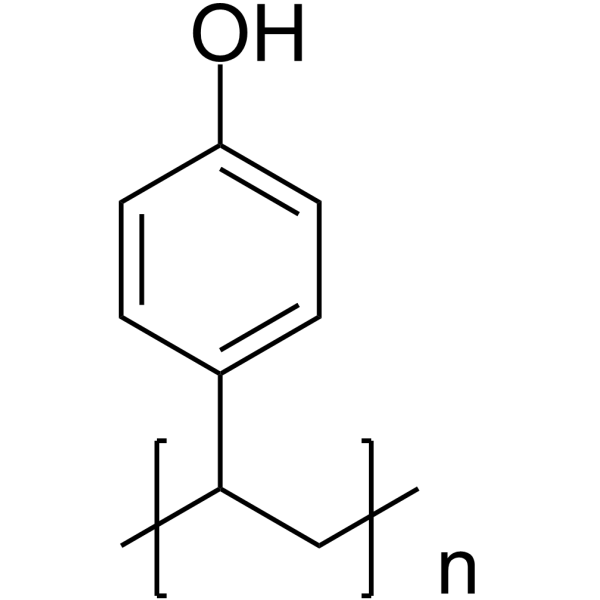
Poly(4-vinylphenol)
 0 Images
Poly(4-vinylphenol) is a polymer cross-linking agent that can be used to prepare non-toxic films. Poly(4-vinylphenol) is a sensitizer of titania for visible light photocatalysis. Poly(4-vinylphenol) also can be used as a water resistive wood adhesive, as a gate dielectric insulator in organic field effect transistors, and as a responsive surface coating.
-
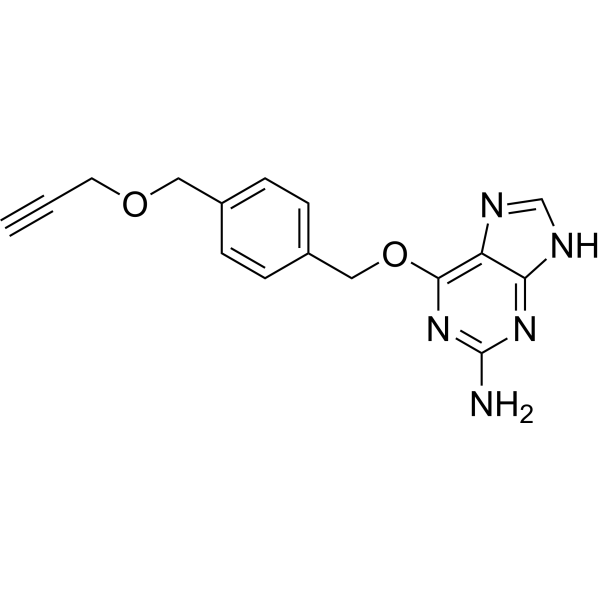
PYBG
 0 Images
PYBG acts as a versatile precursor to be facilely conjugated with various fluorescent dyes through ‘Click chemistry’ and Sonogashira coupling reactions. PYBG is a click chemistry reagent, it contains an Alkyne group and can undergo copper-catalyzed azide-alkyne cycloaddition (CuAAc) with molecules containing Azide groups.
-
4,4'-(5,6,12,13-Tetrachloro-1,3,8,10-tetraoxo-1,3,8,10-tetrahydroanthra[2,1,9-def:6,5,10-d'e'f']diisoquinoline-2,9-diyl)dibenzoic acid
![4,4'-(5,6,12,13-Tetrachloro-1,3,8,10-tetraoxo-1,3,8,10-tetrahydroanthra[2,1,9-def:6,5,10-d'e'f']diisoquinoline-2,9-diyl)dibenzoic acid](https://file.medchemexpress.com/product_pic/hy-23970.gif "Click to View 4,4'-(5,6,12,13-Tetrachloro-1,3,8,10-tetraoxo-1,3,8,10-tetrahydroanthra[2,1,9-def:6,5,10-d'e'f']diisoquinoline-2,9-diyl)dibenzoic acid Product Detail") 0 ImagesCat. No.: HY-23970CAS No.: 1103906-42-8
0 ImagesCat. No.: HY-23970CAS No.: 1103906-42-84,4'-(5,6,12,13-Tetrachloro-1,3,8,10-tetraoxo-1,3,8,10-tetrahydroanthra[2,1,9-def:6,5,10-d'e'f']diisoquinoline-2,9-diyl)dibenzoic acid is a metal-organic framework (MOF).
-
tert-Butyl N-[(1S,2S)-2-aminocyclohexyl]carbamate
![tert-Butyl N-[(1S,2S)-2-aminocyclohexyl]carbamate](https://file.medchemexpress.com/product_pic/hy-30120.gif "Click to View tert-Butyl N-[(1S,2S)-2-aminocyclohexyl]carbamate Product Detail") 0 ImagesCat. No.: HY-30120CAS No.: 180683-64-1
0 ImagesCat. No.: HY-30120CAS No.: 180683-64-1tert-Butyl N-[(1S,2S)-2-aminocyclohexyl]carbamate is a biochemical reagent that can be used as a biological material or organic compound for life science related research.
-
Mequinol-d4
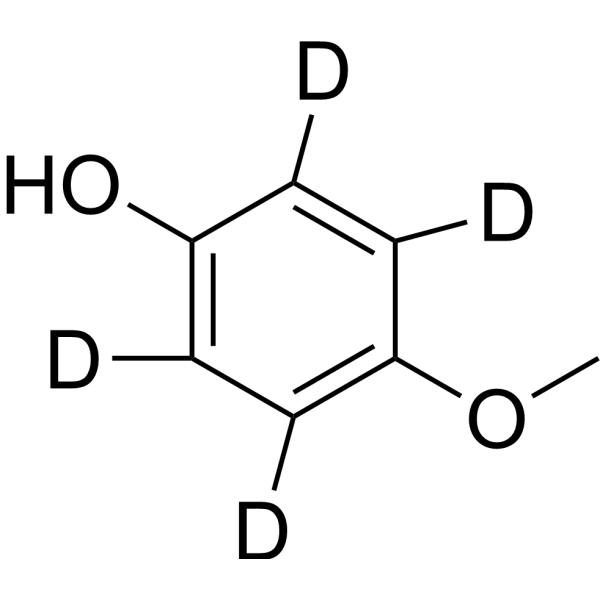 0 ImagesSynonyms: 4-Methoxyphenol-d4
Mequinol-d4 is the deuterium labeled Mequinol[1]. Mequinol (4-Methoxyphenol) is one of bioactive components in Mercurialis. Mequinol is used for skin depigmentation[2].
-
1-Bromo-3-iodobenzene-d4
 0 Images
1-Bromo-3-iodobenzene-d4 is the deuterium labeled 1-Bromo-3-iodobenzene (HY-32149). 1-Bromo-3-iodobenzene is a biochemical reagent and an important organic synthetic intermediate. 1-Bromo-3-iodobenzene can be used for the synthesis of other active compounds.
-
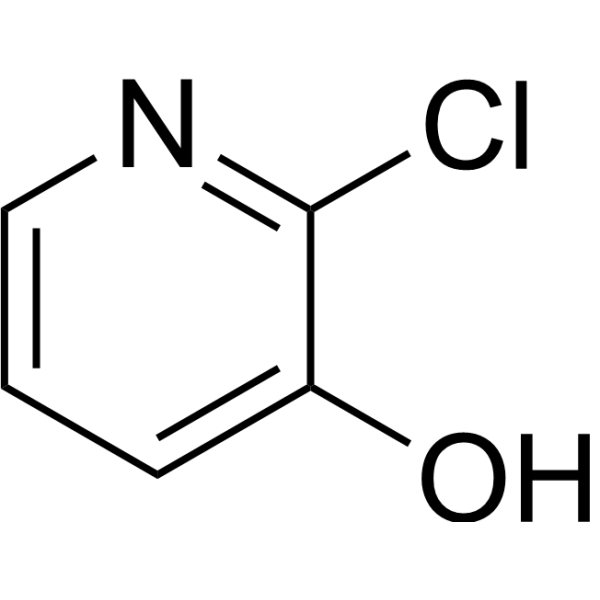
2-Chloro-3-pyridinol
 0 Images
2-Chloro-3-pyridinol is a biochemical reagent that can be used as a biological material or organic compound for life science related research. 2-Chloro-3-pyridinol can also be used in the synthesis of other active compounds. In addition, 2-Chloro-3-pyridinol is a halopyridinol disinfection by-product in drinking water samples.
-
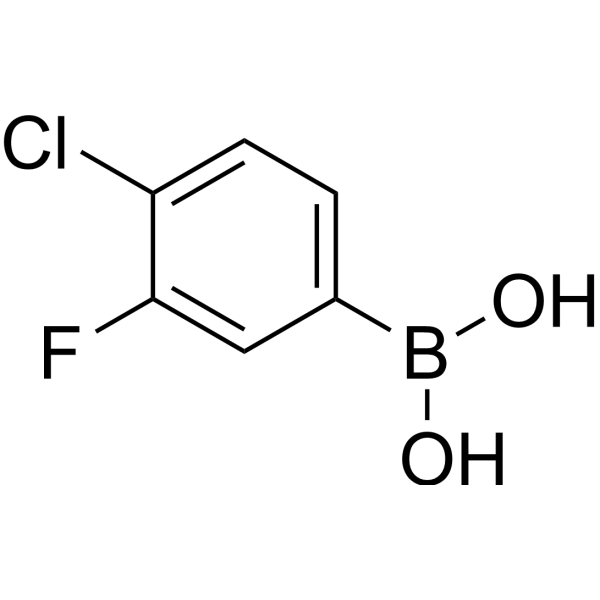
4-Chloro-3-fluorophenylboronic acid
 0 ImagesCat. No.: HY-32901CAS No.: 137504-86-0
4-Chloro-3-fluorophenylboronic acid is a biochemical reagent that can be used as a biological material or organic compound for life science related research.
-
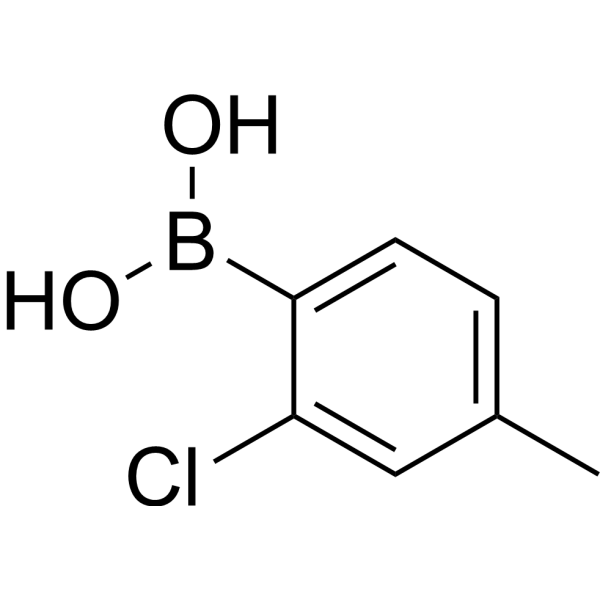
2-Chloro-4-methylphenylboronic acid
 0 Images
2-Chloro-4-methylphenylboronic acid is a biochemical reagent that can be used as a biological material or organic compound for life science related research.
-
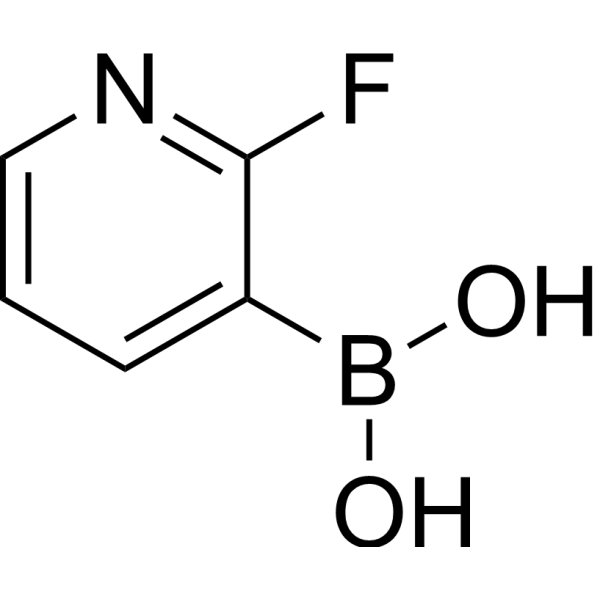
2-Fluoropyridine-3-boronic acid
 0 ImagesCat. No.: HY-32950CAS No.: 174669-73-9
2-Fluoropyridine-3-boronic acid is a biochemical reagent that can be used as a biological material or organic compound for life science related research.
-
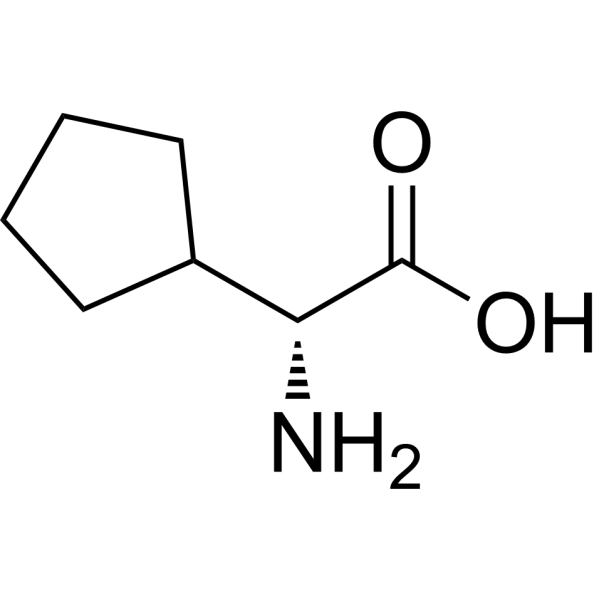
(S)-Methyl 2-amino-2-cyclopentylacetate hydrochloride
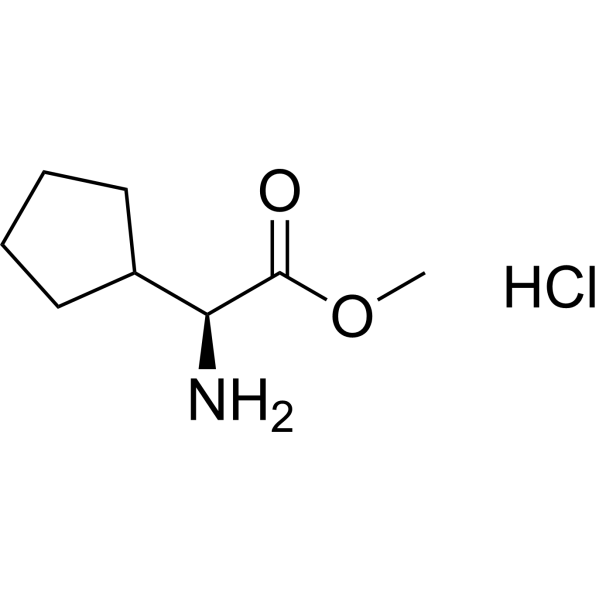 0 ImagesCat. No.: HY-33466CAS No.: 14328-62-2

-
5-Bromo-6-chloro-4-pyrimidinamine
 0 ImagesCat. No.: HY-34188CAS No.: 663193-80-4Synonyms: 5-Bromo-6-chloropyrimidin-4-amine; 4-Amino-5-bromo-6-chloropyrimidine
5-Bromo-6-chloro-4-pyrimidinamine (5-Bromo-6-chloropyrimidin-4-amine) is a kind of biological materials or organic compounds that are widely used in life science research.
-
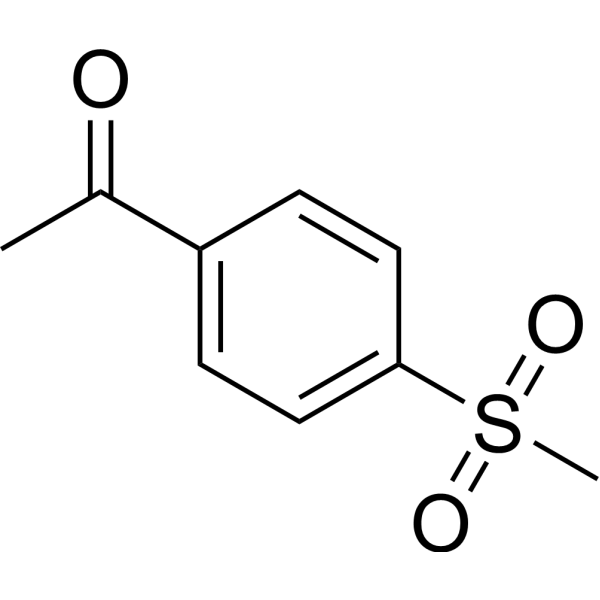
4'-(Methylsulfonyl)acetophenone
 0 Images
p-Methylsulfonylacetophenone is a biochemical reagent that can be used as a biological material or organic compound for life science related research.
-
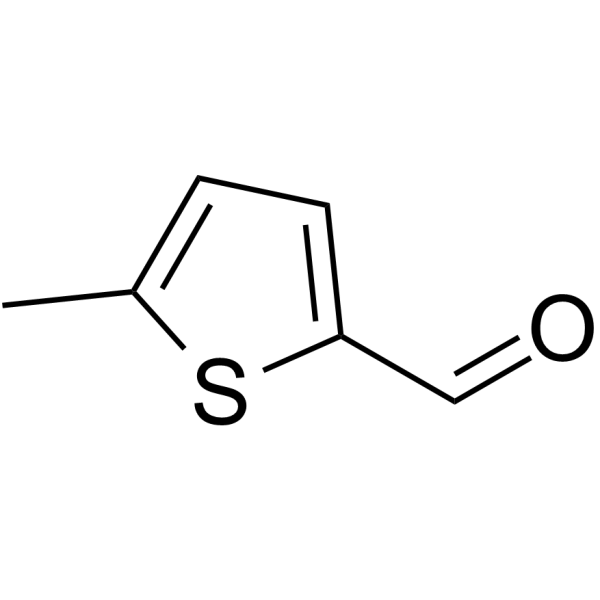
5-Methyl-2-thiophenecarboxaldehyde
 0 Images
5-Methyl-2-thiophenecarboxaldehyde acts as a candidate to microscopic third order non-linear optical (NLO) material.
-
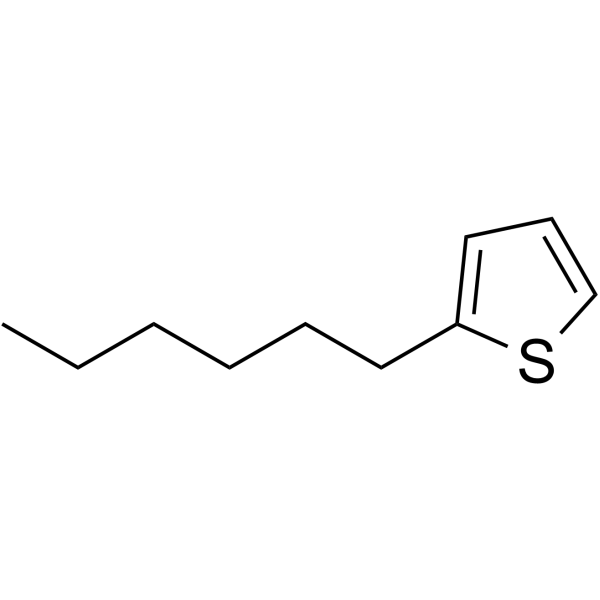
2-Hexylthiophene
 0 Images
2-Hexylthiophene is an extremely weak basic heteroaromatic compound. 2-Hexylthiophene can be used to modify and improve the molar absorption coefficient of ruthenium sensitizer
-
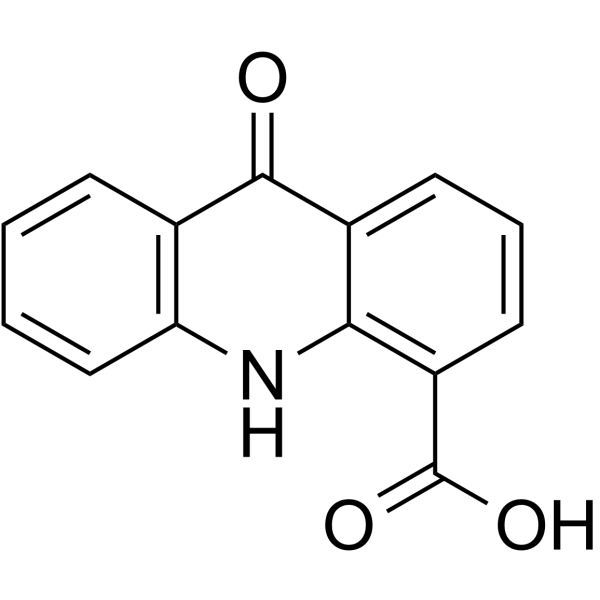
Acridone-4-carboxylic acid
 0 Images
Acridone-4-carboxylic acid (ACA) (Compound 2c) is a heme-interacting acridone derivatives that prevents free heme-mediated protein oxidation and degradation. Acridone-4-carboxylic acid inhibits protein carbonyl formation with an IC50 of 43 μM.