



Bacterial
Anything that destroys bacteria or suppresses their growth or their ability to reproduce. Heat, chemicals such as chlorine, and antibiotic drugs all have antibacterial properties. Many antibacterial products for cleaning and handwashing are sold today. Such products do not reduce the risk for symptoms of viral infectious diseases in otherwise healthy persons. This does not preclude the potential contribution of antibacterial products to reducing symptoms of bacterial diseases in the home.
All Product Categories
-
Bacterial Inhibitors
(7424)
View all products
-
Bacterial Agonists
(3)
View all products
-
Bacterial Antagonists
(9)
View all products
-
Bacterial Activators
(23)
View all products
-
Bacterial Modulators
(20)
View all products
-
Bacterial Chemicals
(2)
View all products
-
Bacterial Inducers
(7)
View all products
-
Bacterial Controls
(14)
View all products
-
Bacterial Substrates
(2)
View all products
-
Bacterial Ligand
(1)
View all products
-
Bacterial Related Products (8720)
Related Products (8720)

-
Antibodies (14)
-
Related Compound Screening Libraries (1)
-
Herbimycin A
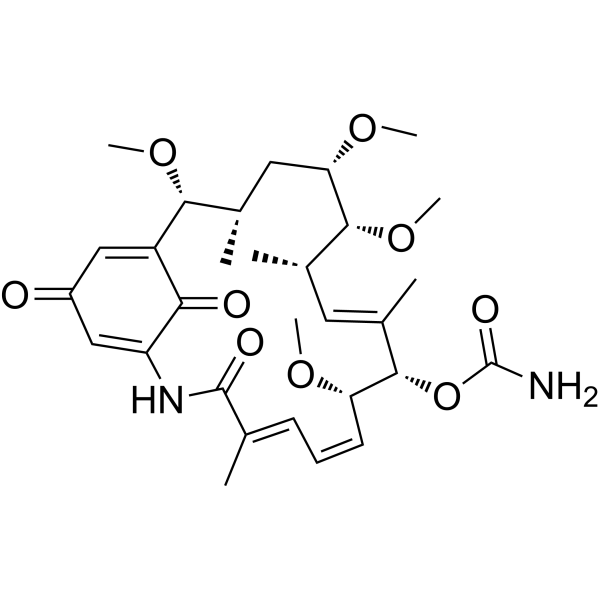 0 ImagesHerbimycin A, an ansamycin antibiotic, acts as a Src family kinase inhibitor. Herbimycin A binds to the SH domain and inhibits the activity of p60v-src and p210BCR-ABL Herbimycin A inhibits Hsp90 and impairs recovery from heat shock. Herbimycin A exhibits antiangiogenic activity in endothelial cells in vitro.
-
Polybia-MP1
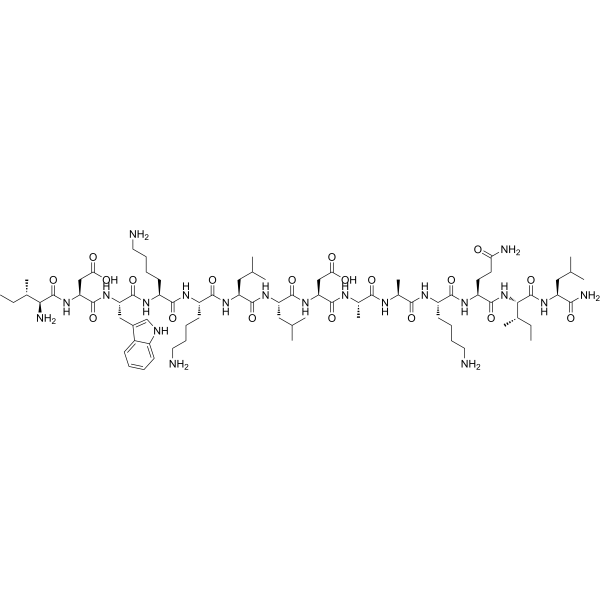 0 ImagesPolybia-MP1 is an antimicrobial peptide with antibacterial, antifungal and anticancer activities. Polybia-MP1 selectively targets cancer cells by interacting with PS and PE in the outer leaflet of cell membranes, and induces necrosis via pore formation. Polybia-MP1 exhibits antibacterial activity against Pseudomonas aeruginosa. Polybia-MP1 can be used in research related to bacterial infections, fungal infections and cancers.
-
Cephalexin-d5
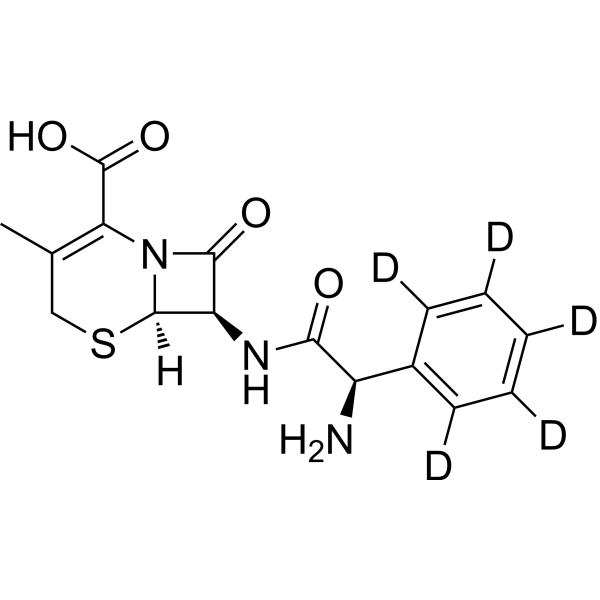 0 ImagesSynonyms: Cefalexin-d5; Cephacillin-d5Cephalexin-d5 is deuterium labeled Cephalexin. Cephalexin (Cefalexin; Cephacillin) is a potent, orally active and the first-generation?cephalosporin antibiotic. Cephalexin kills?gram-positive?and some?gram-negative bacteria?by disrupting the growth of the bacterial cell wall. Cephalexin monohydrate is used for the research of?pneumonia,?strep throat, and bacterial endocarditis, et al.
-
Sulfadimethoxine-d6
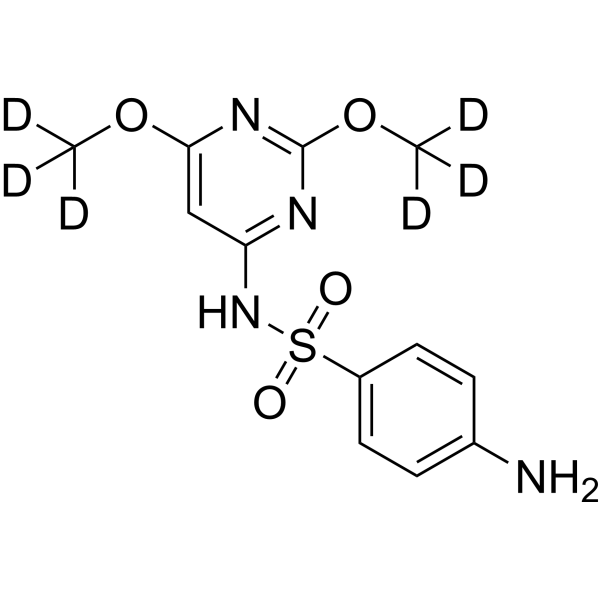 0 ImagesSynonyms: Sulphadimethoxine-d6Sulfadimethoxine-d6 is the deuterium labeled Sulfadimethoxine (HY-B0337). Sulfadimethoxine (Sulphadimethoxine) is an orally active sulfonamide antibiotic. Sulfadimethoxine reduces Eimeria-related mortality, weight loss, and lesions. Sulfadimethoxine can be used for the research of avian coccidiosis.
-
γ-Rubromycin
 0 ImagesCat. No.: HY-122777CAS No.: 27267-71-6γ-Rubromycin is a natural product from Streptomyces. γ-Rubromycin has antibacterial activity.
-
5-Chloro-2-benzothiazolinone
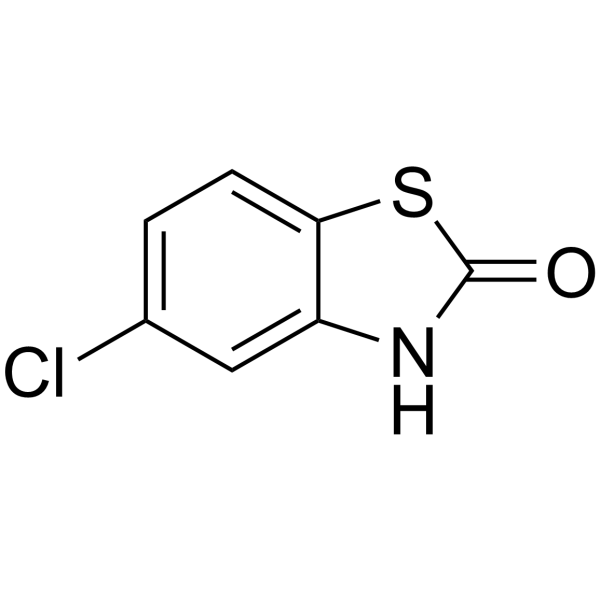 0 Images5-Chloro-2-benzothiazolinone is an antifouling agent. MEIPT-20 grafted with 5-Chloro-2-benzothiazolinone exhibits activity against Escherichia coli, Staphylococcus aureus, Pseudoalteromonas xiamenensis, as well as attached diatoms including the genus Halamphora and Nitzschia closterium.
-
Propylparaben (Standard)
 0 ImagesSynonyms: Propyl parahydroxybenzoate (Standard); Propyl 4-hydroxybenzoate (Standard)Propylparaben (Propyl parahydroxybenzoate) (Standard) is the analytical standard of Propylparaben (HY-N2026). Propylparaben (Propyl parahydroxybenzoate) is an antibacterial preservative that can be produced by plants and bacteria. Propylparaben is an orally active weak estrogen receptor agonist. Propylparaben regulates the PI3K-AKT and JNK signaling pathways, and induces oxidative stress. Propylparaben is commonly used in cosmetics, pharmaceuticals and foods, and can be used in studies related to ovarian aging and myocardial ischemia-reperfusion injury.
-
Tricosane
 0 ImagesSynonyms: N-TricosaneTricosane (N-Tricosane) is a straight-chain alkane. Tricosane exhibits a certain degree of antibacterial activity against E. coli.
-
Bestatin (Standard)
 0 ImagesCat. No.: HY-B0134RCAS No.: 58970-76-6Synonyms: Ubenimex (Standard)Bestatin (Standard) is the analytical standard of Bestatin. This product is intended for research and analytical applications. Bestatin is a natural, broad-spectrum, and competitive CD13 (Aminopeptidase N)/APN and leukotriene A4 hydrolase inhibitor. Bestatin has anticancer effects.
-
Dill apiole
 0 ImagesDill apiole is an aromatic ether, which is an important aroma component in herbs and spices such as dill (Anethum graveolens), parsley (Petroselinum crispum) and basil (Perilla frutescens). Dill apiole exhibits antimicrobial activity against Aspergillus parasiticus and Aedes aegypti.
-
Chelerythrine
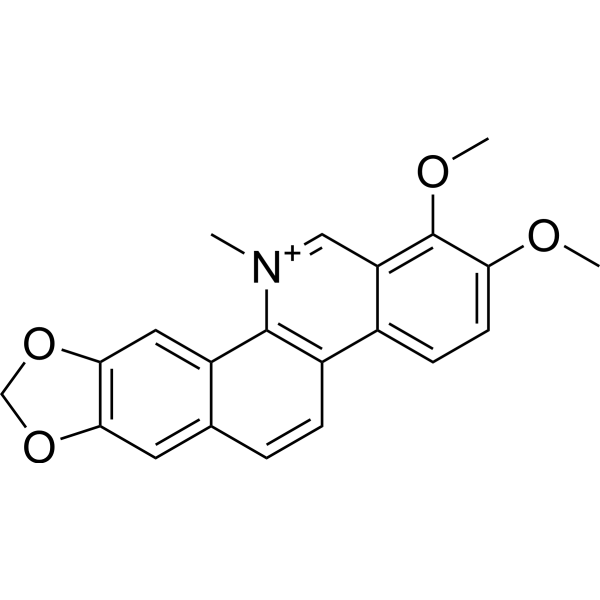 0 ImagesCat. No.: HY-N2359CAS No.: 34316-15-9Chelerythrine is an alkaloid, acts as a potent and selective Ca2+/phospholopid-dependent PKC antagonist, with an IC50 of 0.7 μM. Chelerythrine inhibits the BclXL-Bak BH3 peptide binding with IC50 of 1.5 μM. Chelerythrine triggers Apoptosis and Autophagy. Chelerythrine has antitumor, antidiabetic and anti-inflammatory activity. Chelerythrine shows antibacterial activities against Gram-positive bacteria, Staphylococcus aureus (SA), MRSA.
-
Anisofolin A
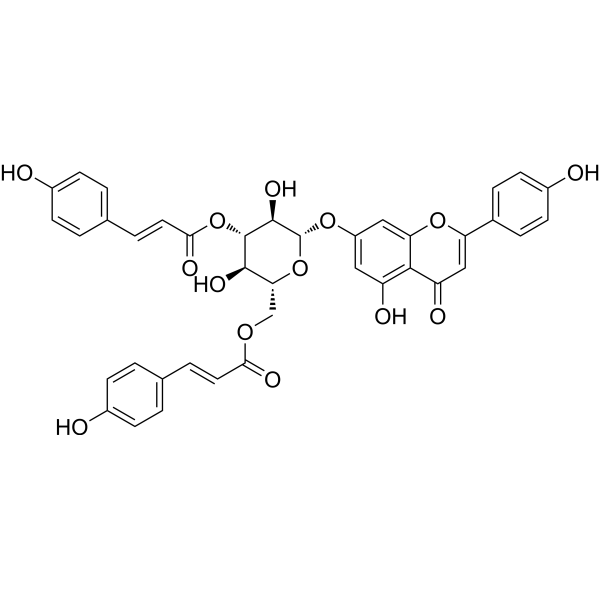 0 ImagesAnisofolin A is a flavonoid that can be isolated from Anisomeles indica. Anisofolin A has antimalarial activity (IC50: 4.39 μM), and antimycobacterium activity (IC50: 4.50 μM) against M. tuberculosis H37Ra.
-
N-Hydroxypipecolic acid (Standard)
 0 ImagesSynonyms: 1-Hydroxy-2-piperidinecarboxylic acid (Standard); NHP (Standard)N-Hydroxypipecolic acid (Standard) (1-Hydroxy-2-piperidinecarboxylic acid (Standard); NHP (Standard)) is the analytical standard of N-Hydroxypipecolic acid (HY-N7378). This product is intended for research and analytical applications. N-Hydroxypipecolic acid (1-Hydroxy-2-piperidinecarboxylic acid), a plant metabolite and a systemic acquired resistance (SAR) regulator, orchestrates SAR establishment in concert with the immune signal salicylic acid. N-Hydroxypipecolic acid accumulates systemically in the plant foliage in response to pathogen attack. N-Hydroxypipecolic acid induces SAR to bacterial and oomycete infection.
-
Sulfachloropyridazine (Standard)
 0 ImagesSulfachloropyridazine (Standard) is the analytical standard of Sulfachloropyridazine. This product is intended for research and analytical applications. Sulfachloropyridazine is a broad spectrum sulfonamide that can be used against both gram-positive and gram-negative aerobic bacteria as well as Chlamydia. Sulfachloropyridazine is also considered as a common pollutant in surface and groundwater. Sulfachloropyridazine via electro-Fenton is a model for sulfonamide antibiotics that are widespread in waters.

-
Sulbactam-d5 sodium
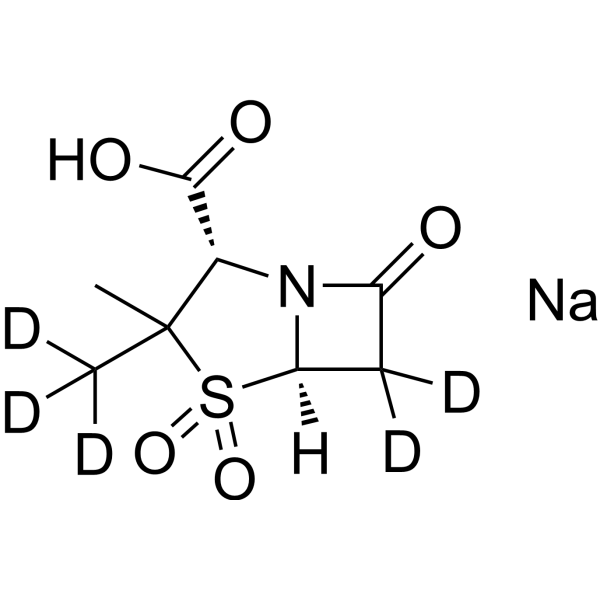 0 ImagesCat. No.: HY-B0334ASCAS No.: 1322625-44-4Sulbactam-d5 (sodium) is the deuterium labeled Sulbactam sodium. Sulbactam (CP45899) sodium is a competitive, irreversible beta-lactamase inhibitor. Sulbactam sodium shows antimicrobial activity against multidrug-resistant (MDR) acinetobacter calcoaceticus--Acinetobacter baumannii (Acb) complex.
-
Ceftaroline hydrochloride
 0 ImagesCat. No.: HY-105049APurity: 98.0%Ceftaroline hydrochloride (T-91825 hydrochloride) is a Cephalosporin compound and the active form of TAK-599 (HY-14737). T-91825 is active against both gram-positive and gram-negative bacteria. Ceftaroline hydrochloride has antibacterial activity against MRSA, MRSE, PISP, and PRSP, with MIC90 values of 2 μg/mL, 1 μg/mL, 0.13 μg/mL, and 0.25 μg/mL, respectively.
-
Tilmicosin (Standard)
 0 ImagesSynonyms: LY-177370 (Standard); EL-870 (Standard)Tilmicosin (Standard) is the analytical standard of Tilmicosin. This product is intended for research and analytical applications. Tilmicosin (LY-177370) is an orally active calcium channel antagonist and macrolide antibiotic with antimicrobial activity. Tilmicosin mainly acts on the 50S subunit of bacterial ribosomes, inhibiting protein synthesis. Tilmicosin is effective in the treatment of respiratory diseases in livestock such as cattle, sheep and pigs. In addition, Tilmicosin has immunomodulatory and anti-inflammatory effects.
-
Herniarin-d3
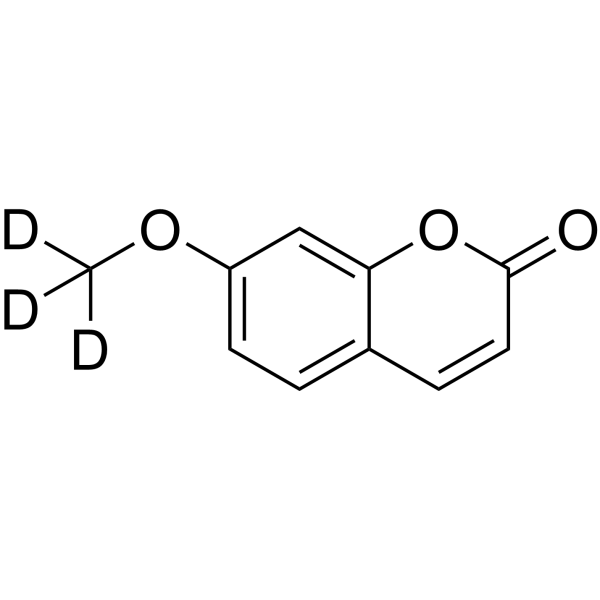 0 ImagesSynonyms: 7-Methoxycoumarin-d3; Methyl umbelliferyl ether-d3Herniarin-d3 is the deuterium labeled Herniarin (HY-N1366). Herniarin is a natural coumarin occurs in some flowering plants with anticancer effects. Herniarin results in a significant decrease in cell viability by inducing apoptosis in MCF-7 cells. Herniarin also has anti-dermatophytic activity. Herniarin can be used for the study of bladder cancer and breast cancer.
-
Narirutin (Standard)
 0 ImagesNarirutin (Standard) is the analytical standard of Narirutin. This product is intended for research and analytical applications. Narirutin, one of the active constituents isolated from citrus fruits, has antioxidant and anti-inflammatory activities. Narirutin is a shikimate kinase inhibitor with anti-tubercular potency.




