



1600535-74-7
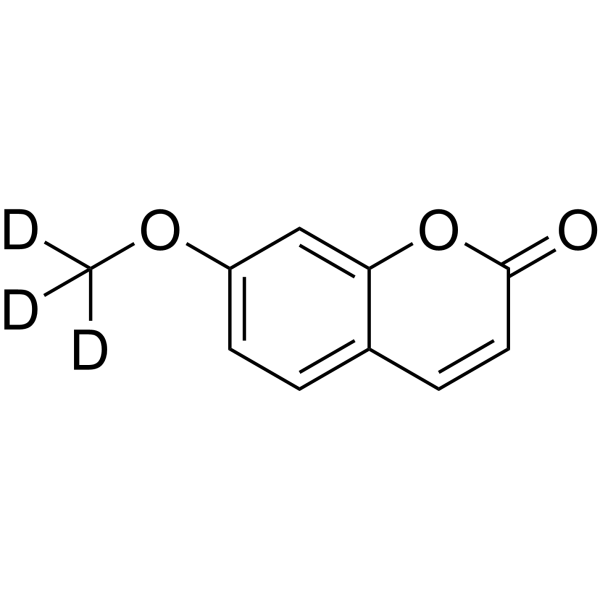
Chemical Structure
Herniarin-d3
Synonym(s): 7-Methoxycoumarin-d3;Methyl umbelliferyl ether-d3
- CAS No.: 1600535-74-7
- Formula:C10H5D3O3
- Molecular Weight:179.19
IUPAC Name: 7-(methoxy-d3)-2H-chromen-2-one
InChIKey: LIIALPBMIOVAHH-FIBGUPNXSA-N
SMILES: O=C1C=CC2=CC=C(OC([2H])([2H])[2H])C=C2O1
Biological Activity: Herniarin-d3 is the deuterium labeled Herniarin (HY-N1366). Herniarin is a natural coumarin occurs in some flowering plants with anticancer effects. Herniarin results in a significant decrease in cell viability by inducing apoptosis in MCF-7 cells. Herniarin also has anti-dermatophytic activity. Herniarin can be used for the study of bladder cancer and breast cancer[1][2].
| Cat. No. | Product Name | Purity | Description | Pricing | |||||||||||||||||||
|---|---|---|---|---|---|---|---|---|---|---|---|---|---|---|---|---|---|---|---|---|---|---|---|
|
|
Herniarin-d3 | 98.0% | Herniarin-d3 is the deuterium labeled Herniarin (HY-N1366). Herniarin is a natural coumarin occurs in some flowering plants with anticancer effects. Herniarin results in a significant decrease in cell viability by inducing apoptosis in MCF-7 cells. Herniarin also has anti-dermatophytic activity. Herniarin can be used for the study of bladder cancer and breast cancer. | ||||||||||||||||||||
|
loading...
/
|
|||||||||||||||||||||||
|
|
Herniarin (Standard) | ≥98% | Herniarin (Standard) (Methylumbelliferone (Standard)) is the analytical standard of Herniarin (HY-N1366). This product is intended for research and analytical applications. Herniarin is a natural coumarin occurs in some flowering plants with anticancer effects. Herniarin results in a significant decrease in cell viability by inducing apoptosis in MCF-7 cells. Herniarin also has anti-dermatophytic activity. Herniarin can be used for the study of bladder cancer and breast cancer. | ||||||||||||||||||||
|
loading...
/
|
|||||||||||||||||||||||
|
|
Herniarin | 99.55% | Herniarin is a natural coumarin occurs in some flowering plants with anticancer effects. Herniarin results in a significant decrease in cell viability by inducing apoptosis in MCF-7 cells. Herniarin also has anti-dermatophytic activity. Herniarin can be used for the study of bladder cancer and breast cancer. | ||||||||||||||||||||
|
loading...
/
|
|||||||||||||||||||||||
-
Similarity Score 0.89
 HY-133091R7-Ethoxycoumarin (Standard)
-
Similarity Score 0.88
 HY-W0676734-Methoxycoumarin
-
Similarity Score 0.87
 HY-N207447-Acetoxycoumarin
-
Similarity Score 0.86
 HY-N1406R6-Methylcoumarin (Standard)
-
Similarity Score 0.86
 HY-N5092R7-Methylcoumarin (Standard)
-
Similarity Score 0.86
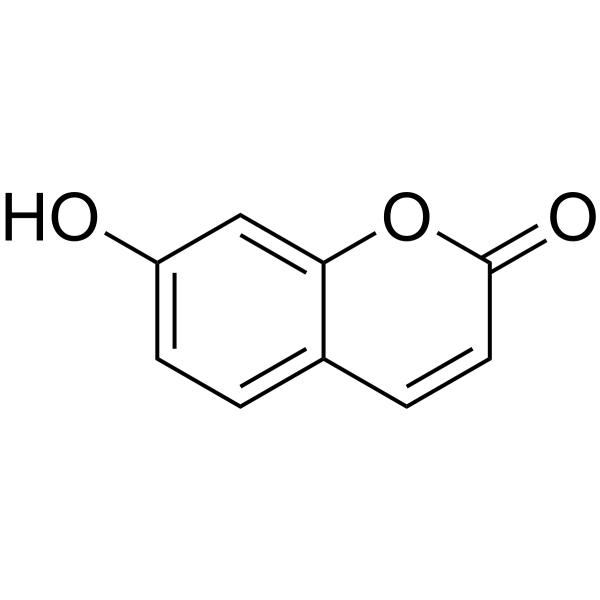 HY-N0573Umbelliferone
-
Similarity Score 0.86
 HY-W777393Umbelliferone-13C6
-
Similarity Score 0.86
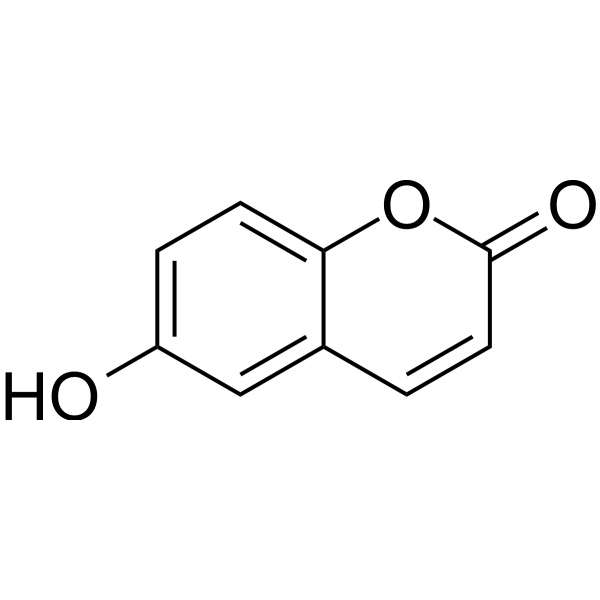 HY-N66566-Hydroxycoumarin
-
Similarity Score 0.85
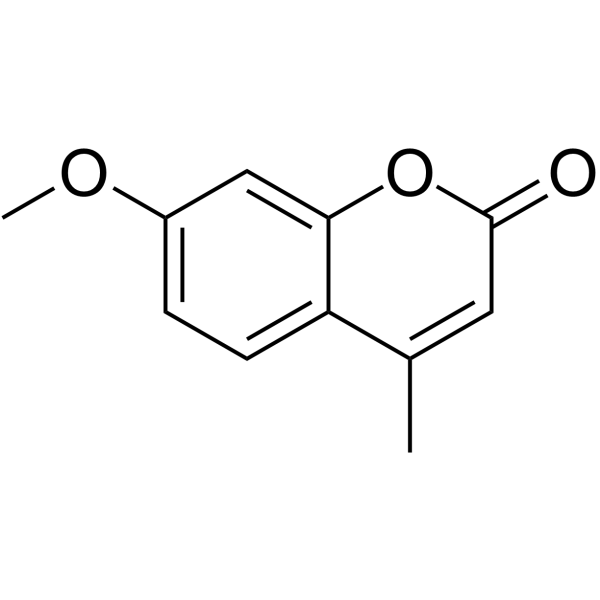 HY-D01284-Methylherniarin
-

Explore the MedChemAI to find more analogs


References
- [1]. Mousavi SH, et al. Comparative analysis of the cytotoxic effect of 7-prenyloxycoumarin compounds and herniarin on MCF-7 cell line. Avicenna J Phytomed. 2015 Nov-Dec;5(6):520-30. [Content Brief]
- [2]. Haghighitalab A, et al. Enhancement of cisplatin cytotoxicity in combination with herniarin in vitro. Drug Chem Toxicol. 2014 Apr;37(2):156-62. [Content Brief]



