



IAP
IAP (Inhibitor of apoptosis) proteins, a family of anti-apoptotic proteins, have an important role in evasion of apoptosis, as they can both block apoptosis-signaling pathways and promote survival. Eight members of this family have been described in humans (BIRC1/NAIP, BIRC2/cIAP1, BIRC3/cIAP2, BIRC4/XIAP, BIRC5/Survivin, BIRC6/Apollon, BIRC7/ML-IAP and BIRC8/ILP2).
IAP genes encode proteins that directly bind and inhibit caspases, and thus play a critical role in deciding cell fate. The IAPs are in turn regulated by endogenous proteins (second mitochondrial activator of caspases and Omi) that are released from the mitochondria during apoptosis. IAP protein family members are frequently overexpressed in cancer and contribute to tumor cell survival, chemo-resistance, disease progression, and poor prognosis. Targeting critical apoptosis regulators, like IAPs, is an attractive therapeutic way undertaken for the development of new classes of therapies for cancer.
Although best known for their ability to regulate caspases, IAPs also influence ubiquitin (Ub)-dependent pathways that modulate innate immune signaling via activation of NF-κB. Several members of the IAP family regulate innate and adaptive immunity through modulation of signal transduction pathways, cytokine production, and cell survival. The regulation of immunity by the IAPs is primarily mediated through the ubiquitin ligase function of cIAP1, cIAP2, and XIAP, the targets of which impact NF-κB and MAPK signalling pathways.
IAP Isoform Specific Products
All Product Categories
-
IAP Inhibitors
(45)
View all products
-
IAP Antagonists
(27)
View all products
-
IAP Activators
(2)
View all products
-
IAP Modulator
(1)
View all products
-
IAP Inducer
(1)
View all products
-
IAP Degraders
(11)
View all products
-
IAP Control
(1)
View all products
-
IAP Ligands
(8)
View all products
-
X-Linked Inhibitor Of Apoptosis (XIAP) Proteins
(3)
View all products
-
IAP Related Products (100)
Related Products (100)

-
Recombinant Proteins (3)
-
Antibodies (2)
-
IAP Isoform Comparison
-
XIAP BIR2/BIR2-3 inhibitor-1
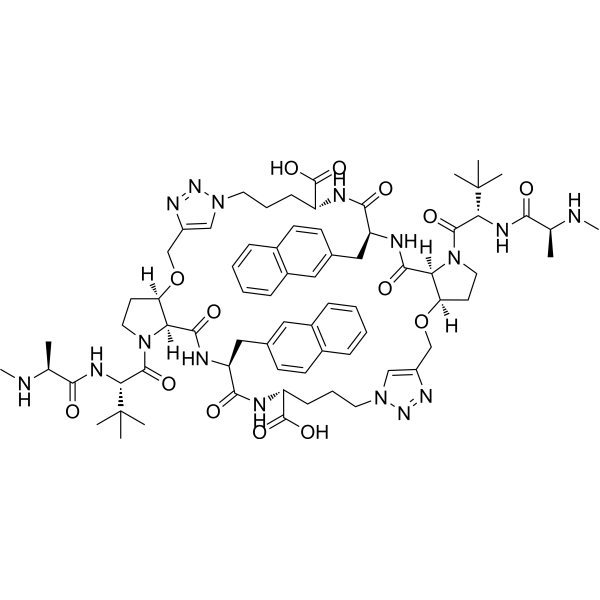 0 ImagesCat. No.: HY-160022CAS No.: 1609384-59-9
-
Ciapavir
 0 ImagesCat. No.: HY-134844CAS No.: 2433895-70-4Synonyms: SBI-0953294Ciapavir (SBI-0953294) is a HIV-1 latency-reversing agent. Ciapavir reverses latent HIV-1 reservoir in vitro and in vivo without inducing systemic T cell activation or broad cytokine release. Ciapavir degrades cIAP1 and activates non-canonical NF-κB pathway. Ciapavir can be used for the research of HIV-1 infection.
-
TP-110
 0 ImagesCat. No.: HY-118522CAS No.: 688737-95-3TP-110 is a proteasome inhibitor. TP-110 specifically inhibits the protease-like activity of the 20S proteasome, but does not affect the trypsin-like or peptidyl-glutamyl peptide hydrolysis activity. TP-110 inhibits the NF-κB pathway, activates caspase-8, -9, and -3, and causes PARP cleavage, significantly reducing the levels of cIAP-1 and XIAP. TP-110 causes cell cycle arrest at the G2/M phase and promotes apoptosis of cancer cells. TP-110 can be used in cancer research of prostate cancer and multiple myeloma, etc.
-
LSD1-IN-26
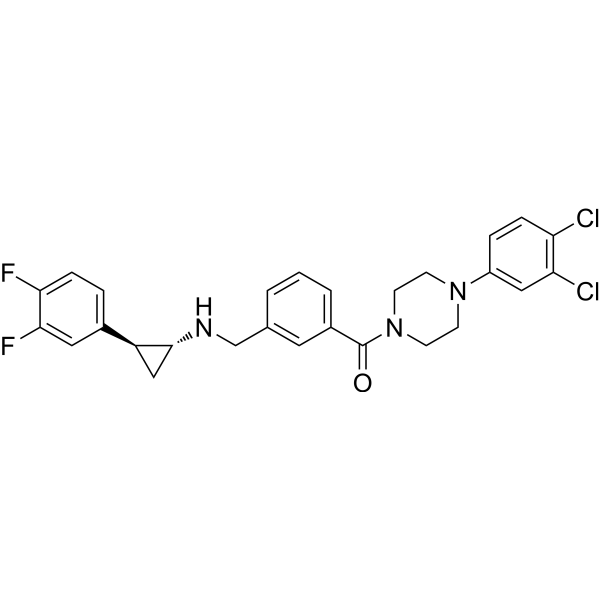 0 ImagesCat. No.: HY-149978CAS No.: 3041141-72-1
-
Topoisomerase I inhibitor 17
 0 ImagesCat. No.: HY-168739CAS No.: 2413582-45-1Topoisomerase I inhibitor 17 (Compound 7h) is a Topoisomerase I (Top1) inhibitor. Topoisomerase I inhibitor 17 reduces DDX5 and reverses the locking of Top1 activity by DDX5. Topoisomerase I inhibitor 17 induces Top1-mediated DNA damage and promotes reactive oxygen species (ROS) production. Topoisomerase I inhibitor 17 induces Apoptosis (reduces antiapoptotic proteins XIAP, Bcl-2, Survivin and up-regulates pro-apoptotic proteins Bax, γH2AX). Topoisomerase I inhibitor 17 also blocks the progression of the G2/M checkpoint and induces cell cycle arrest. Topoisomerase I inhibitor 17 significantly inhibits colony formation and cell migration in colorectal cancer cells. Topoisomerase I inhibitor 17 effectively reduces tumors in human PDX tumor mice.
-
1-Monopalmitin (Standard)
 0 ImagesSynonyms: Glyceryl palmitate (Standard)1-Monopalmitin (Glyceryl palmitate) (Standard) is the analytical standard of 1-Monopalmitin (HY-W009141). This product is intended for research and analytical applications. 1-Monopalmitin (Glyceryl palmitate) is an activator of the PI3K/Akt pathway and an inhibitor of P-glycoprotein (P-gp). 1-Monopalmitin can induce G2/M arrest and caspase-dependent apoptosis in cancer cells, while inhibiting IAPs protein expression. 1-Monopalmitin can increase drug accumulation by inhibiting P-gp activity in intestinal Caco-2 cells. 1-Monopalmitin has the ability to induce protective autophagy and apoptosis of lung cancer cells (IC50=50-58 μg/mL), with low toxicity to normal cells.
-
1-Monopalmitin-d31
 0 ImagesCat. No.: HY-W009141SSynonyms: Glyceryl palmitate-d311-Monopalmitin-d31 (Glyceryl palmitate-d31) is the deuterium labeled 1-Monopalmitin (HY-W009141). 1-Monopalmitin (Glyceryl palmitate) is an activator of the PI3K/Akt pathway and an inhibitor of P-glycoprotein (P-gp). 1-Monopalmitin can induce G2/M arrest and caspase-dependent apoptosis in cancer cells, while inhibiting IAPs protein expression. 1-Monopalmitin can increase drug accumulation by inhibiting P-gp activity in intestinal Caco-2 cells. 1-Monopalmitin has the ability to induce protective autophagy and apoptosis of lung cancer cells (IC50=50-58 μg/mL), with low toxicity to normal cells.

-
XIAP/cIAP1 antagonist-1
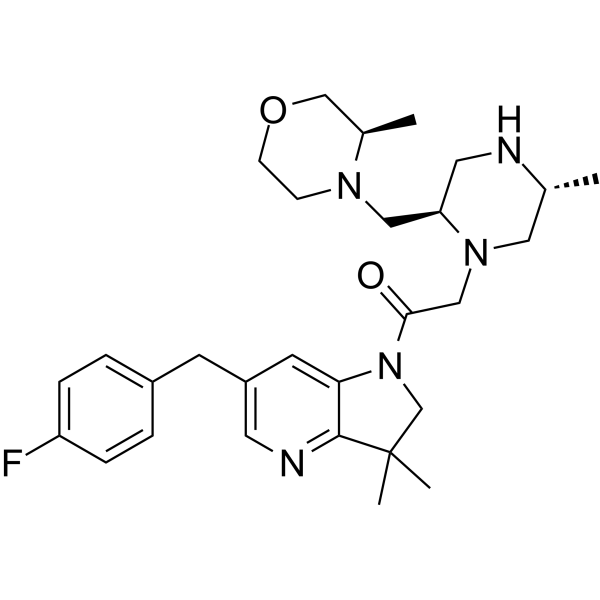 0 ImagesCat. No.: HY-102051CAS No.: 1403898-55-4
-
Embelin (Standard)
 0 ImagesSynonyms: Embelic acid (Standard); Emberine (Standard); NSC 91874 (Standard)Embelin (Standard) is the analytical standard of Embelin. This product is intended for research and analytical applications. Embelin (Embelic acid), a potent, nonpeptidic XIAP inhibitor (IC50=4.1 μM), inhibits cell growth, induces apoptosis, and activates caspase-9 in prostate cancer cells with high levels of XIAP. Embelin blocks NF-kappaB signaling pathway leading to suppression of NF-kappaB-regulated antiapoptotic and metastatic gene products. Embelin also induces autophagic and apoptotic cell death in human oral squamous cell carcinoma cells.
-
PROTAC EZH2 Degrader-21
 0 ImagesCat. No.: HY-181319CAS No.: 3093642-36-2PROTAC EZH2 Degrader-21 is an EZH2 degrader developed based on PROTAC technology. PROTAC EZH2 Degrader-21 induces the degradation of the target protein EZH2 via specific recruitment of the cIAP E3 ligase. PROTAC EZH2 Degrader-21 exhibits significant inhibitory activity in a variety of lymphoma cell lines. PROTAC EZH2 Degrader-21 can be used for research on the pathogenesis of lymphoma.
-
GDC-0152-acetamide
 0 ImagesCat. No.: HY-175446GDC-0152-acetamide is a pan-inhibitor of apoptosis protein (IAP) antagonist. GDC-0152-acetamide induces cIAP1/2 autoubiquitination and degradation, activating the non-canonical NF-κB pathway to promote TNF-α secretion and tumor cell apoptosis. GDC-0152-acetamide is promising for research of ERα-positive breast cancer.
-
MDM2/XIAP-IN-1
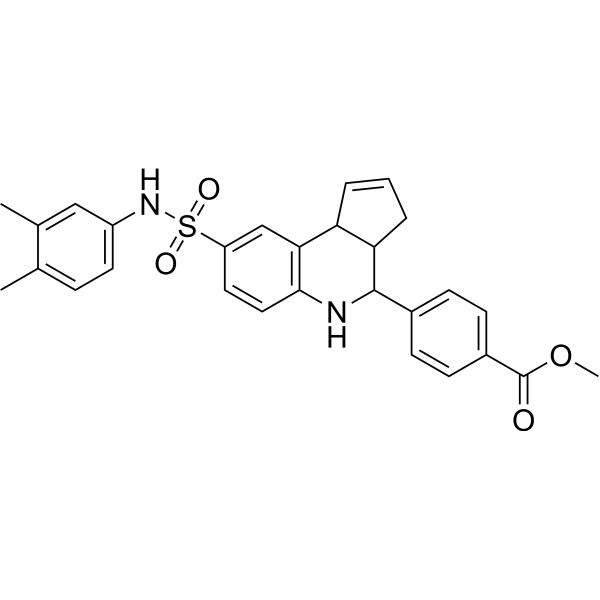 0 ImagesCat. No.: HY-153199CAS No.: 359595-95-2MDM2/XIAP-IN-1 (compound 14) is an orally active inhibitor of dual MDM2/XIAP. MDM2/XIAP-IN-1 has anti-cancer activity with an IC50 value of 0.3 μM, which can be used in cance rescrch.
-
PROTAC EZH2 Degrader-41
 0 ImagesCat. No.: HY-181410CAS No.: 3093642-41-9PROTAC EZH2 Degrader-41 is an EZH2-targeting PROTAC and cIAP E3 ubiquitin ligase recruiter. PROTAC EZH2 Degrader-41 induces EZH2 degradation via ubiquitination and proteasomal breakdown. PROTAC EZH2 Degrader-41 exerts antiproliferative effects in lymphoma cells. PROTAC EZH2 Degrader-41 can be used for the research of lymphoma.

-
XIAP BIR2/BIR2-3 inhibitor-3
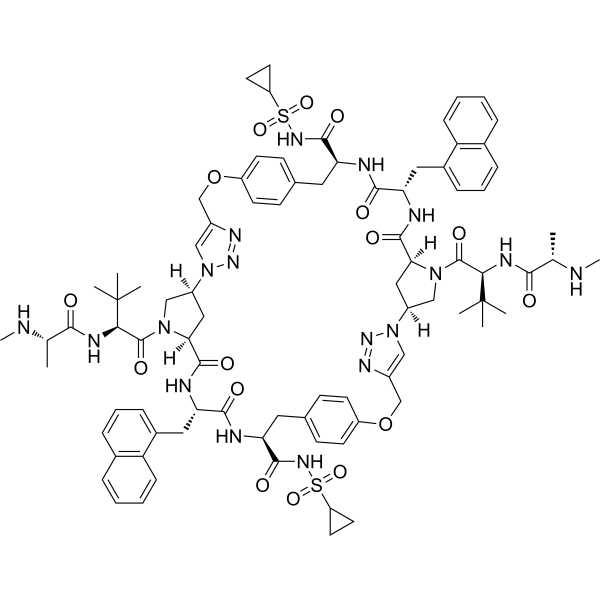 0 ImagesCat. No.: HY-160030CAS No.: 1434125-52-6
-
MRS2693 ammonium
 0 ImagesCat. No.: HY-117356ACAS No.: 911391-37-2MRS2693 ammonium is a selective P2Y6 receptor agonist. MRS2693 ammonium exerts biological effects by activating the Gq-coupled P2Y6 receptor, the ERK1/2 pathway, and the P2RY6-PLCB3-CAMKK2-PRKAA1-ULK1 signaling cascade. MRS2693 ammonium attenuates TNFα-induced NF-κB activation, stabilizes XIAP via AKT-mediated phosphorylation, induces autophagy, and reactivates PRKAA1. MRS2693 ammonium can be used in research on diseases including skeletal muscle ischemia/reperfusion injury, TNFα-induced skeletal muscle apoptosis, chronic myelomonocytic leukemia, colorectal cancer, and dry eye disease.

-
Apoptosis inducer 61
 0 ImagesCat. No.: HY-182002Apoptosis inducer 61 (Compound 4E) is an Apoptosis inducer. Apoptosis inducer 61 significantly downregulates the expression of BIRC3 and activates Apoptosis. Anticancer agent 313 exhibits anticancer activity against ER+ breast cancer cells, triple-negative breast cancer cells, and gastric cancer cells.
-
XIAP antagonist 1
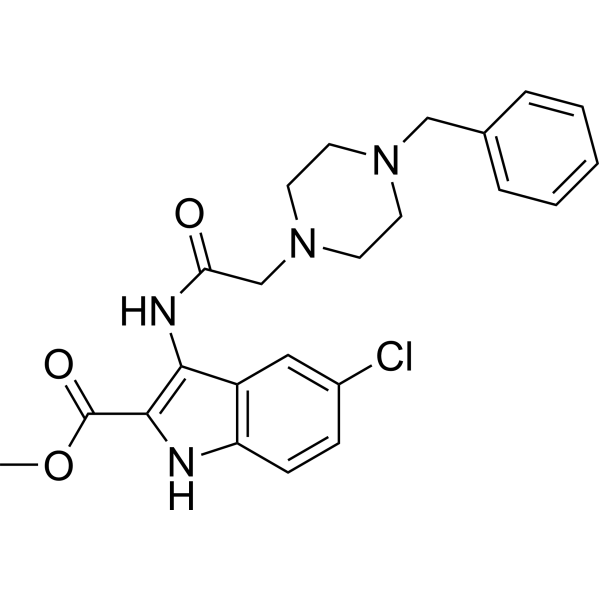 0 ImagesCat. No.: HY-157230CAS No.: 375835-04-4XIAP antagonist 1 degrades rather than inhibits XIAP, catalyzing rapid degradation of XIAP through the ubiquitin-proteasome pathway[2].




