



TGF-beta/Smad
Transforming growth factor beta
Transforming growth factor-beta (TGF-β) is a member of a superfamily of pleiotropic proteins that regulate multiple cellular processes such as growth, development and differentiation. The intracellular effectors of TGF-beta signalling, the Smad proteins, are activated by receptors and translocate into the nucleus, where they regulate transcription. Although this pathway is inherently simple, combinatorial interactions in the heteromeric receptor and Smad complexes, receptor-interacting and Smad-interacting proteins, and cooperation with sequence-specific transcription factors allow substantial versatility and diversification of TGF-beta family responses. Other signalling pathways further regulate Smad activation and function.
In addition, TGF-beta receptors activate Smad-independent pathways that not only regulate Smad signalling, but also allow Smad-independent TGF-beta responses. Aberrant TGF-β signaling is associated with a variety of diseases, such as fibrosis, cardiovascular disease and cancer. Hence, the TGF-β signaling pathway is recognized as a potential drug target.
TGF-beta/Smad Isoform Specific Products
All Product Categories
-
TGF-beta/Smad Inhibitors
(203)
View all products
-
TGF-beta/Smad Agonists
(7)
View all products
-
TGF-beta/Smad Antagonist
(1)
View all products
-
TGF-beta/Smad Activators
(36)
View all products
-
TGF-beta/Smad Modulators
(6)
View all products
-
TGF-beta/Smad Inducers
(6)
View all products
-
TGF-beta/Smad Control
(1)
View all products
-
TGF-β1 Proteins
(39)
View all products
-
TGF-β2 Proteins
(9)
View all products
-
TGF-β3 Proteins
(6)
View all products
-
Smad Family Proteins
(8)
View all products
-
SMAD2 Proteins
(2)
View all products
-
SMAD3 Proteins
(3)
View all products
-
SMAD4 Proteins
(1)
View all products
-
SMAD5 Proteins
(2)
View all products
-
TGF-β Proteins
(53)
View all products
-
TGF-beta/Smad Related Products (285)
Related Products (285)

-
Recombinant Proteins (62)
-
Antibodies (18)
-
TGF-beta/Smad Isoform Comparison
-
Trimethylamine-N-oxide-13C3
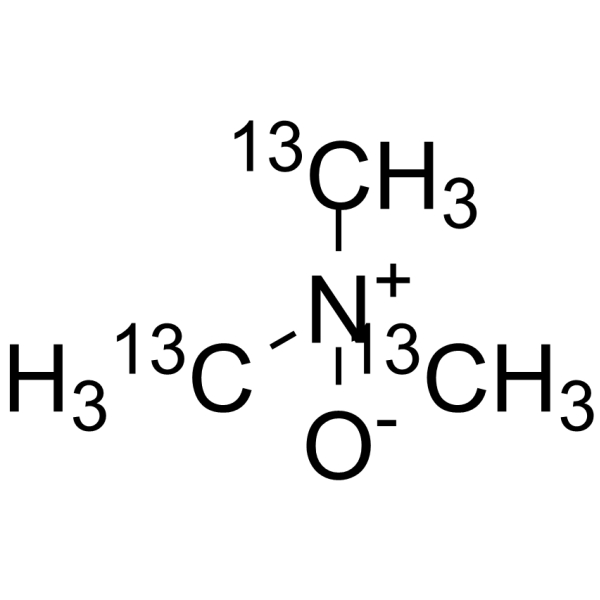 0 ImagesCat. No.: HY-116084S1CAS No.: 2413127-00-9Trimethylamine-N-oxide-13C3 is the 13C-labeled Trimethylamine N-oxide. Trimethylamine N-oxide is a gut microbe-dependent metabolite of dietary choline and other trimethylamine-containing nutrients. Trimethylamine N-oxide induces inflammation by activating the ROS/NLRP3 inflammasome. Trimethylamine N-oxide also accelerates fibroblast-myofibroblast differentiation and induces cardiac fibrosis by activating the TGF-β/smad2 signaling pathway.
-
ISTH0036
 0 ImagesCat. No.: HY-158821CAS No.: 2179222-27-4ISTH0036 is a phosphorothioate LNA-modified antisense oligonucleotide gapmer that selectively targets and downregulates TGF-β2 mRNA. ISTH0036 suppresses TGF-β2 expression, reduces choroidal neovascularization and vascular leakage, inhibits fibrosis, blocks epithelial-to-mesenchymal transition, and inhibits angiogenesis while promoting bleb survival. ISTH0036 exhibits long-lasting, dose-dependent ocular tissue distribution and target engagement in rabbit and non-human primate eyes. ISTH0036 can be used for the study of various ocular disorders, such as glaucoma and neovascular retinal diseases.
-
PDIC-DPC
 0 ImagesCat. No.: HY-184535CAS No.: 3008320-14-4PDIC-DPC is a HMGA1 inhibitor and lung-targeting agent. PDIC-DPC upregulates STING expression and enhances STING-mediated immune signaling. PDIC-DPC inhibits the TGFβ-Smad pathway and activates AMPK. PDIC-DPC forms nanocomplexes with fibrinogen β chain and vitronectin, and achieves lung-specific accumulation by binding to pulmonary endothelial receptors. PDIC-DPC reverses established pulmonary fibrosis, reduces collagen deposition, restores alveolar structure, improves pulmonary function, and inhibits in situ ESCC growth. PDIC-DPC can be used for the research of esophageal squamous cell carcinoma and idiopathic pulmonary fibrosis.
-
Trabedersen sodium scrambled negative control
 0 ImagesCat. No.: HY-142118CTrabedersen sodium scrambled negative control is the sequence scrambled negative control of Trabedersen sodium.
-
Halofuginone hydrochloride
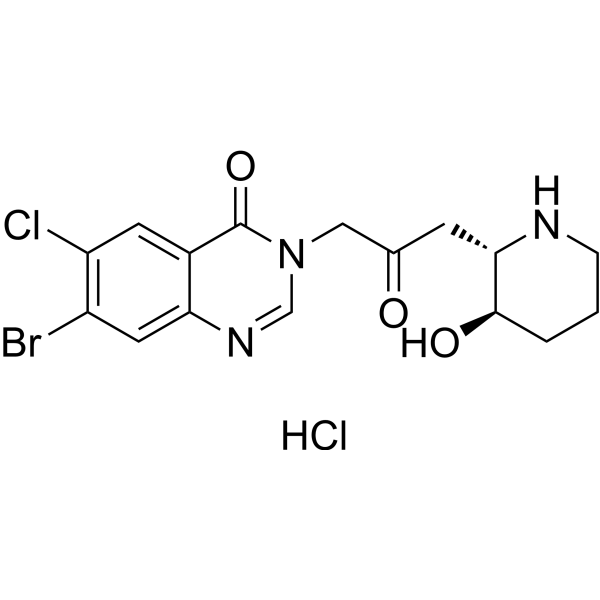 0 ImagesCat. No.: HY-N1584BCAS No.: 1217623-74-9Synonyms: RU-19110 hydrochlorideHalofuginone hydrochloride (RU-19110 hydrochloride), a Febrifugine derivative, is a competitive prolyl-tRNA synthetase inhibitor with a Ki of 18.3 nM. Halofuginone hydrochloride is a specific inhibitor of type-I collagen synthesis and attenuates osteoarthritis (OA) by inhibition of TGF-β activity. Halofuginone hydrochloride is also a potent pulmonary vasodilator by activating Kv channels and blocking voltage-gated, receptor-operated and store-operated Ca2+ channels. Halofuginone hydrochloride has anti-malaria, anti-inflammatory, anti-cancer, anti-fibrosis effects.
-
Myristoyl tetrapeptide-12
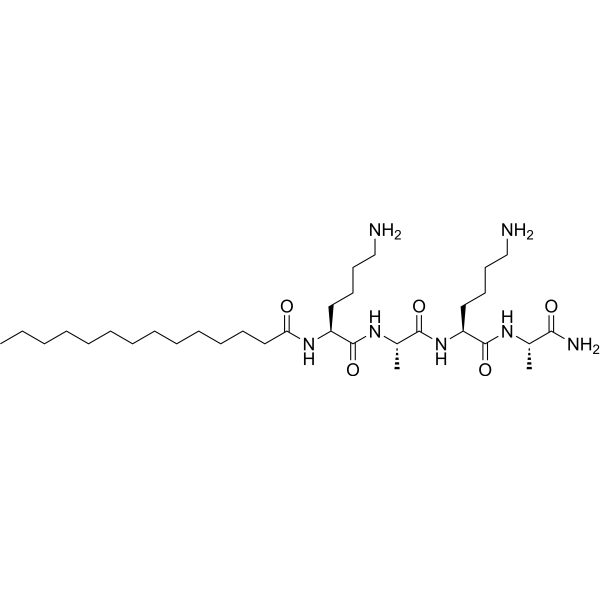 0 ImagesCat. No.: HY-W108953CAS No.: 959610-24-3
-
Ammonium chloride, for molecular biology
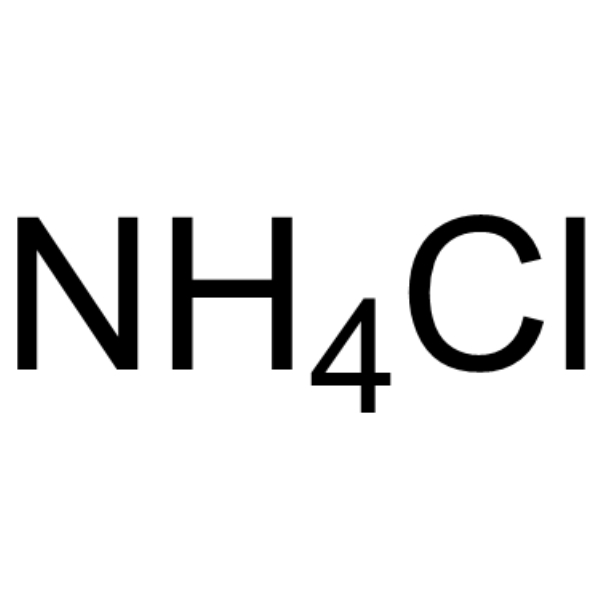 0 ImagesCat. No.: HY-Y1269DCAS No.: 12125-02-9Synonyms: Salmiac, for molecular biologyAmmonium chloride (Salmiac), for molecular biology is an inhibitor of Slc26a4 and SMAD2. Ammonium chloride, for molecular biology reduces the protein expression level of Slc26a4 in lung tissue, and attenuates ozone-induced increases in proinflammatory cytokines, inflammatory cells, pulmonary resistance, goblet cell hyperplasia, peribronchial inflammation and thiocyanate levels in mouse tissues and bronchoalveolar lavage fluid. Ammonium chloride, for molecular biology decreases the level of phosphorylated SMAD2, inhibits autophagy by reducing autophagy-related proteins, and enhances Cisplatin (HY-17394)-induced cancer cell apoptosis and DNA double-strand breaks. Ammonium chloride, for molecular biology also inhibits the TCA cycle, reduces ATP production, increases glucose utilization, regulates the levels of lactic acid, glutamic acid and ATP, and induces morphological degeneration of neuroblastoma cells. Ammonium chloride, for molecular biology can be used in studies related to ozone-induced airway injury, hepatocellular carcinoma, human cervical cancer, hepatic encephalopathy, Reye syndrome, epilepsy and neurodegenerative diseases.

-
Dalbergioidin
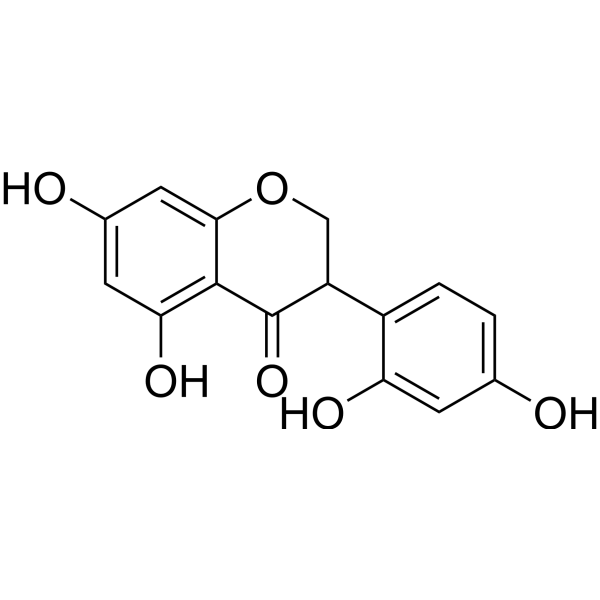 0 ImagesCat. No.: HY-N3674CAS No.: 30368-42-4Dalbergioidin, a well-known anthocyanin, ameliorates doxorubicin-induced renal fibrosis by suppressing the TGF-β signal pathway. Dalbergioidin exhibits tyrosinase inhibitory activity with an IC50 of 20 mM.
-
GED 0507-34-Levo
 0 ImagesCat. No.: HY-W109107CAS No.: 921195-93-9
-
(14S,15R)-14-Deoxyoxacyclododecindione
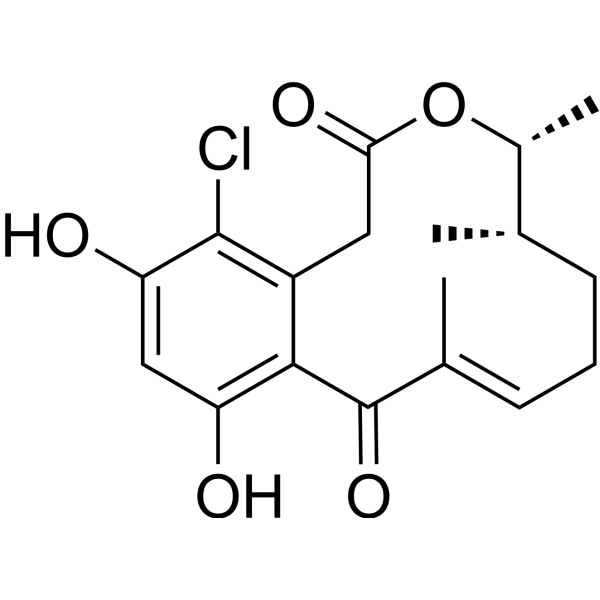 0 ImagesCat. No.: HY-162404CAS No.: 1899061-36-9(14S,15R)-14-Deoxyoxacyclododecindione (Compound 3) acts as an inhibitor of TGF-β-dependent Smad2/3 and IL-4-dependent STAT6, with IC50 values of 90 nM and 20 nM, respectively. (14S,15R)-14-deoxyoxacyclododecindione is a potent IL-4 inhibitor with an IC50
value of 20 nM. (14S,15R)-14-Deoxyoxacyclododecindione is applicable to the research of chronic inflammation and fibrotic diseases.
-
TGFβ1-IN-4
 0 ImagesCat. No.: HY-P11609TGFβ1-IN-4 is a TGF-β1 inhibitor. TGFβ1-IN-4 inhibits myofibroblast activation and epithelial-mesenchymal transition in vitro. TGFβ1-IN-4 alleviates renal fibrosis in a mouse model of renal fibrosis. TGFβ1-IN-4 can be used for research on fibrotic diseases such as renal fibrosis.
-
TAS1440 benzoate
 0 ImagesCat. No.: HY-183067ACAS No.: 2642224-15-3TAS1440 benzoate is an orally active LSD1/KDM1A inhibitor with a human IC50 of 4.8 nM. TAS1440 benzoate non-covalently binds to the histone H3-binding pocket of LSD1, inhibiting demethylase activity and disrupting repressive complexes with INSM1 and SMAD2. TAS1440 benzoate activates tumor-suppressive TGF-β and NOTCH signaling pathways via transcriptional reprogramming. TAS1440 benzoate can be used for the research of small cell lung cancer, specifically the SCLC-A subtype.
-
VDR agonist 4
 0 ImagesCat. No.: HY-178328CAS No.: 3136765-61-9VDR agonist 4 is an orally active potent VDR agonist. VDR agonist 4 exerts VDR-dependent antifibrotic activity by regulating multiple fibrosis-related genes to suppress α-SMA and collagen I production, thereby inhibiting hepatic stellate cell (HSC) activation. VDR agonist 4 improves CCl4 (HY-RS16594)-induced hepatic fibrosis in mice. VDR agonist 4 can be used for liver fibrosis research.
-
IKVAVC acetate
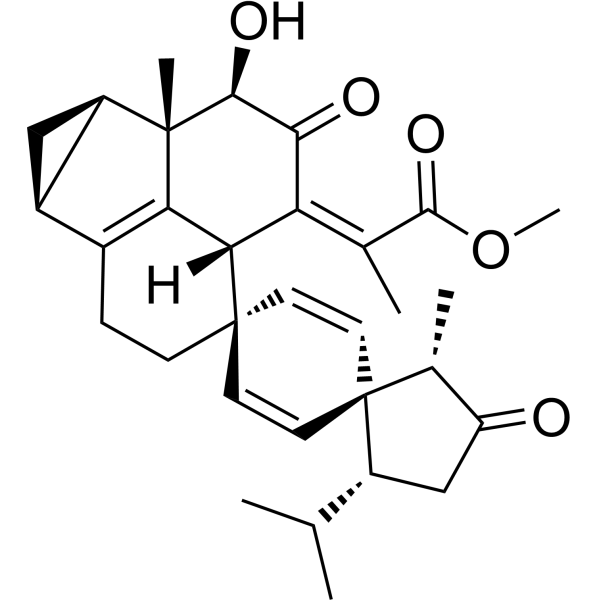
 0 ImagesCat. No.: HY-P11753AIKVAVC acetate is a derivative peptide of IKVAV with an artificially added cysteine (Cys) at its C-terminus. IKVAVC acetate retains all the biological activities of the original IKVAV, mainly acting as a neural adhesion/differentiation signaling peptide, and is equipped with an engineered linker arm that enables covalent conjugation to molecular materials. IKVAV inhibits the migration and activation of fibroblasts, downregulates the TGF-β1 signaling pathway and endoplasmic reticulum stress, and promotes nerve repair. IKVAV regulates the phenotype of macrophages, shifting them from the pro-inflammatory M1 type to the pro-reparative M2 type.
-
IKVAVC
 0 ImagesCat. No.: HY-P11753CAS No.: 1187540-64-2IKVAVC is a derivative peptide of IKVAV with an artificially added cysteine (Cys) at its C-terminus. IKVAVC retains all the biological activities of the original IKVAV, mainly acting as a neural adhesion/differentiation signaling peptide, and is equipped with an engineered linker arm that enables covalent conjugation to molecular materials. IKVAV inhibits the migration and activation of fibroblasts, downregulates the TGF-β1 signaling pathway and endoplasmic reticulum stress, and promotes nerve repair. IKVAV regulates the phenotype of macrophages, shifting them from the pro-inflammatory M1 type to the pro-reparative M2 type.
-
Colchicine derivative-1
 0 ImagesCat. No.: HY-182795Colchicine derivative-1 is a colchicine derivative. Colchicine derivative-1 exhibits cytotoxicity against various cells. Colchicine derivative-1 arrests cancer cells at the G2/M phase of the cell cycle. Colchicine derivative-1 increases the levels of MMP-2, MMP-8, MMP-9, IL-2, IL-6, IL-17A, IL-22, IL-4, and IL-5 in the blood, inhibits the gene expression of hepatic fibrinogen α, β, γ and TGF-β1, and alleviates hepatic fibrosis symptoms in mice. Colchicine derivative-1 has antifibrotic activity and can be used in studies related to hepatic fibrosis.
-
Isoviolanthin (Standard)
 0 ImagesCat. No.: HY-N6896RCAS No.: 40788-84-9Isoviolanthin (Standard) is the analytical standard of Isoviolanthin (HY-N6896). This product is intended for research and analytical applications. Isoviolanthin is a flavonoid glycoside. Isoviolanthin can be extracted from Dendrobium officinale. Isoviolanthin has a strong affinity for binding to KDM6B, CHAC2, ESCO2, and IPO4. Isoviolanthin decreases MMP-2 and MMP-9. Isoviolanthin inhibits TGF-β/Smad and PI3K/Akt/mTOR signaling pathways. Isoviolanthin increases Fhl3 expression. Isoviolanthin has cytoprotective effects. Isoviolanthin has anticancer activity against hepatocellular carcinoma.
-
LSD1-IN-34
 0 ImagesCat. No.: HY-162729CAS No.: 3048029-74-6LSD1-IN-34 (Compound 7d) is the orally active inhibitor for Lysine-specific demethylase (LSD) and monoamine oxidase (MAO), with IC50 of 4.51 and 18.46 nM, for LSD1 and MAO A. LSD1-IN-34 inhibits the Ang II-induced neonatal rat myocardial fibroblasts (NRCFs) activation, without significant toxicity (20 μM). LSD1-IN-34 inhibits TGFβ/Smad signaling pathway, and ameliorates heart failure in mice. LSD1-IN-34 exhibits good pharmacokinetic characteristics in rats.




