



TGF-beta/Smad
Transforming growth factor beta
Transforming growth factor-beta (TGF-β) is a member of a superfamily of pleiotropic proteins that regulate multiple cellular processes such as growth, development and differentiation. The intracellular effectors of TGF-beta signalling, the Smad proteins, are activated by receptors and translocate into the nucleus, where they regulate transcription. Although this pathway is inherently simple, combinatorial interactions in the heteromeric receptor and Smad complexes, receptor-interacting and Smad-interacting proteins, and cooperation with sequence-specific transcription factors allow substantial versatility and diversification of TGF-beta family responses. Other signalling pathways further regulate Smad activation and function.
In addition, TGF-beta receptors activate Smad-independent pathways that not only regulate Smad signalling, but also allow Smad-independent TGF-beta responses. Aberrant TGF-β signaling is associated with a variety of diseases, such as fibrosis, cardiovascular disease and cancer. Hence, the TGF-β signaling pathway is recognized as a potential drug target.
TGF-beta/Smad Isoform Specific Products
All Product Categories
-
TGF-beta/Smad Inhibitors
(203)
View all products
-
TGF-beta/Smad Agonists
(7)
View all products
-
TGF-beta/Smad Antagonist
(1)
View all products
-
TGF-beta/Smad Activators
(36)
View all products
-
TGF-beta/Smad Modulators
(6)
View all products
-
TGF-beta/Smad Inducers
(6)
View all products
-
TGF-beta/Smad Control
(1)
View all products
-
TGF-β1 Proteins
(39)
View all products
-
TGF-β2 Proteins
(9)
View all products
-
TGF-β3 Proteins
(6)
View all products
-
Smad Family Proteins
(8)
View all products
-
SMAD2 Proteins
(2)
View all products
-
SMAD3 Proteins
(3)
View all products
-
SMAD4 Proteins
(1)
View all products
-
SMAD5 Proteins
(2)
View all products
-
TGF-β Proteins
(53)
View all products
-
TGF-beta/Smad Related Products (285)
Related Products (285)

-
Recombinant Proteins (62)
-
Antibodies (18)
-
TGF-beta/Smad Isoform Comparison
-
Demethylzeylasteral (Standard)
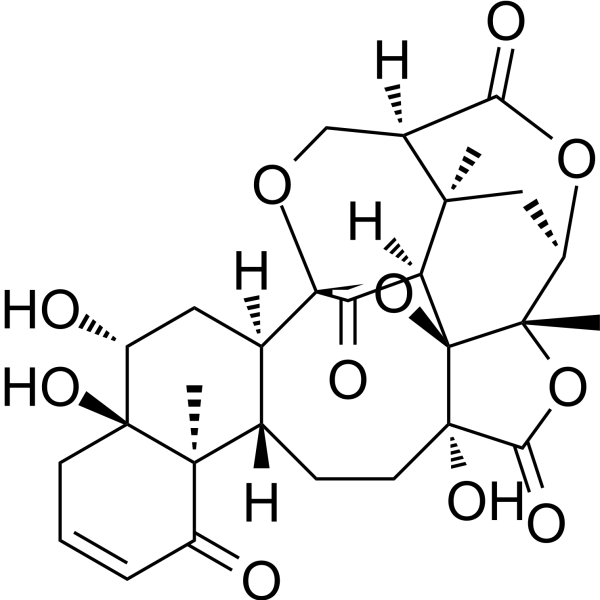
 0 ImagesDemethylzeylasteral (Standard) is the analytical standard of Demethylzeylasteral. This product is intended for research and analytical applications. Demethylzeylasteral is an orally active triterpenoid compound isolated from Tripterygium wilfordii, which has functions such as anti-inflammatory, anti-tumor, anti fertility, estrogen metabolism regulation, immune suppression, and immune system regulation .
-
Amicoumacin B
 0 ImagesAmicoumacin B can be produced by actinomycete, strain 04-5195T.. Amicoumacin B increases the expression of bone morphogenetic protein 2 (BMP-2). Amicoumacin B has inhibitory effect against C. violaceum (MIC = 250 µg/mL). Amicoumacin B has quorum sensing inhibitory activity, and reduces the expression of the C. violaceum operons vioA, vioB, vioD, and vioE, but increases the expression of vioC.
-
Relaxin H3 (human) TFA
 0 ImagesCat. No.: HY-P4890ARelaxin H3 (human) TFA is a relaxin peptide with anti-inflammatory, anti-apoptotic, anti-pyroptotic, anti-migratory, protective and anti-fibrotic activities. Relaxin H3 (human) TFA acts on RXFP1 to generate cAMP and reduce the levels of ATP and ROS. Relaxin H3 (human) TFA inhibits renal inflammatory pyroptosis (pyroptosis), NLRP3 inflammasome activation, caspase-1 activation, IL-1β/IL-18 secretion, collagen synthesis, TGF-β1 signaling pathway, Smad2 phosphorylation, myofibroblast differentiation, TIMP expression, and HRMEC migration. Relaxin H3 (human) TFA activates AMPK, upregulates MFN2 expression, improves mitochondrial quality control and membrane potential, inhibits apoptosis (apoptosis) and pyroptosis, restores retinal ultrastructure, and reverses excessive left ventricular collagen expression. Relaxin H3 (human) TFA can be used in studies related to kidney stones, nephrocalcinosis, diabetic cardiomyopathy, fibrotic cardiomyopathy, and diabetic retinopathy.
-
Nystose (Standard)
 0 ImagesNystose (Standard) is the analytical standard of Nystose. This product is intended for research and analytical applications. Nystose is a tetrasaccharide with two fructose molecules linked via beta (1→2) bonds to the fructosyl moiety of sucrose. Nystose exhibits prebiotic, immunomodulatory, and metabolism regulating activities. Nystose promotes the bone mineralization by activating the Wnt/β-catenin signaling pathway.
-
HJC0123
 0 ImagesHJC0123 is a STAT3 inhibitor. HJC0123 inhibits the proliferation of hepatic stellate cells and induces cell cycle arrest and apoptosis. HJC0123 reduces the phosphorylation, nuclear translocation and transcriptional activities of STAT3, increases the production of IL-6, inhibits the phosphorylation of Smad2/3 and down-regulates SOCS3. HJC0123 can be used in the study of liver fibrosis.
-
10,11-Dehydrocurvularin
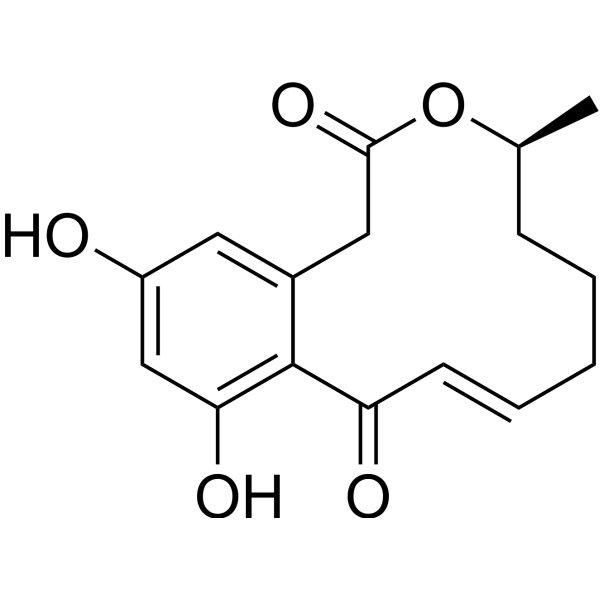 0 Images10,11-Dehydrocurvularin is a prevalent fungal phytotoxin and an antibiotic. 10,11-Dehydrocurvularin is a strong activator of the heat shock response. 10,11-Dehydrocurvularin inhibits TGF-β signalling pathway. Anti-tumorous activity.
-
Sotetsuflavone
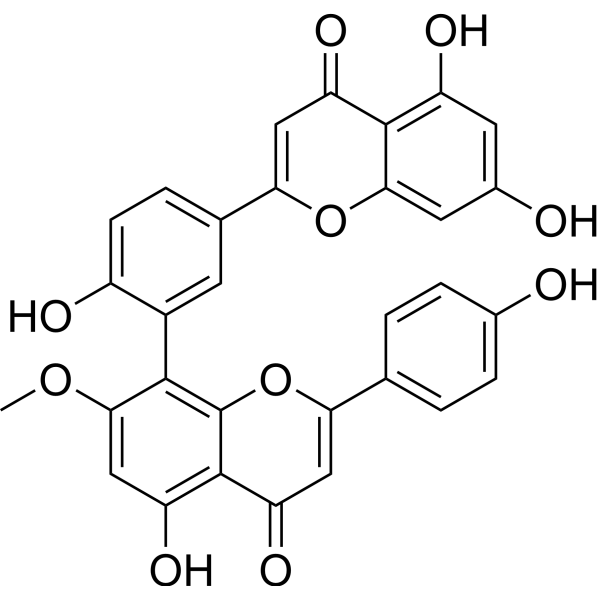 0 ImagesSotetsuflavone is a flavonoid that can be isolated from Cycas revolute. Sotetsuflavone inhibits phosphorylation of PI3K, Akt, mTOR, JNK, and p38 MAPK; modulates expression of Cyclin D1, CDK4, Bcl-2, Bax, cleaved caspases 3/9, MMP-9, TGF-β, STAT3, and β-catenin. Sotetsuflavone induces G0/G1 cell cycle arrest, apoptosis, autophagy, and intracellular ROS elevation, inhibits cancer cell proliferation. Sotetsuflavone inhibits tumor growth in mouse tumor xenograft models. Sotetsuflavone can be used for the research of non-small cell lung cancer and Crohn’s disease.
-
ROCK2-IN-12
 0 ImagesROCK2-IN-12 (Compound A25) is a selective ROCK2 inhibitor with an IC50 of 7.0 nM for ROCK2 over ROCK1. ROCK2-IN-12 has potent antifibrotic effects via the TGF-β/Smad and ROCK2/STAT3 signaling pathways. ROCK2-IN-12 significantly reduces collagen deposition and reverses fibrotic progression in Bleomycin (HY-108345)-induced pulmonary fibrosis (PF) mouse models. ROCK2-IN-12 can be used for lung diseases like pulmonary fibrosis research.
-
TAT-QFNP12 acetate
 0 ImagesCat. No.: HY-P10359ATAT-QFNP12 acetate is a peptide that blocks the NDRG2-PPM1A binding and reduces Smad2/3 phosphorylation, decreases astrocytic MMP-9 production and BBB disruption after subarachnoid hemorrhage (SAH).
-
TAS1440
 0 ImagesTAS1440 is an orally active LSD1/KDM1A inhibitor with a human IC50 of 4.8 nM. TAS1440 non-covalently binds to the histone H3-binding pocket of LSD1, inhibiting demethylase activity and disrupting repressive complexes with INSM1 and SMAD2. TAS1440 activates tumor-suppressive TGF-β and NOTCH signaling pathways via transcriptional reprogramming. TAS1440 can be used for the research of small cell lung cancer, specifically the SCLC-A subtype.

-
Hydrochlorothiazid-13C,d2
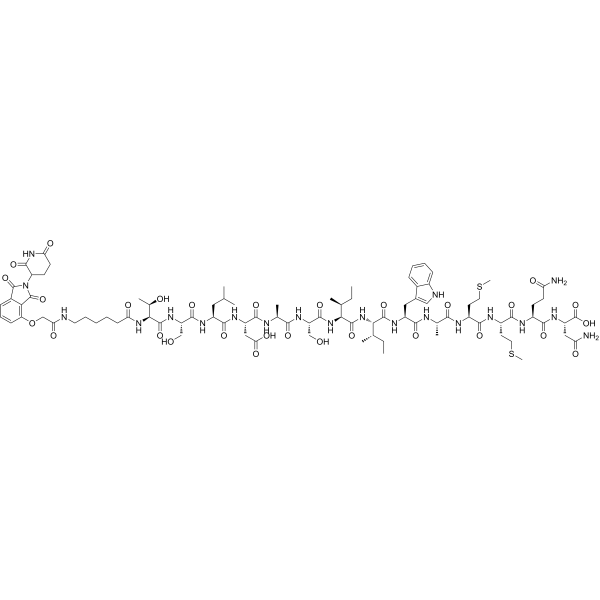
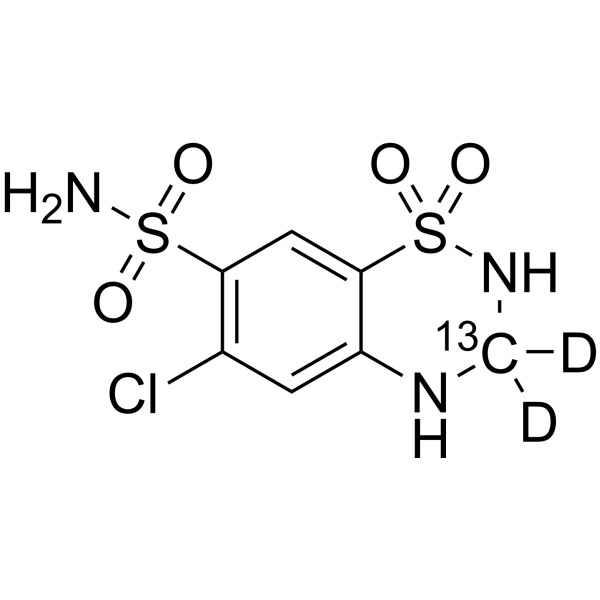 0 ImagesCat. No.: HY-B0252S1CAS No.: 1190006-03-1Synonyms: HCTZ-13C,d2Hydrochlorothiazid-13C,d2 is the 13C- and deuterium labeled Hydrochlorothiazide. Hydrochlorothiazide (HCTZ), an orally active diuretic agent of the thiazide class, inhibits transforming TGF-β/Smad signaling pathway. Hydrochlorothiazide has direct vascular relaxant effects via opening of the calcium-activated potassium (KCA) channel. Hydrochlorothiazide improves cardiac function, reduces fibrosis and has antihypertensive effect.
-
Halofuginone hydrobromide (Standard)
 0 ImagesSynonyms: RU-19110 hydrobromide (Standard)Halofuginone hydrobromide (Standard) (RU-19110 hydrobromide (Standard)) is the analytical standard of Halofuginone hydrobromide (HY-N1584A). This product is intended for research and analytical applications. Halofuginone hydrobromide (RU-19110 hydrobromide), a Febrifugine derivative, is a competitive prolyl-tRNA synthetase inhibitor with a Ki of 18.3 nM. Halofuginone hydrobromide is a specific inhibitor of type-I collagen synthesis and attenuates osteoarthritis (OA) by inhibition of TGF-β activity. Halofuginone hydrobromide is also a potent pulmonary vasodilator by activating Kv channels and blocking voltage-gated, receptor-operated and store-operated Ca2+ channels. Halofuginone hydrobromide has anti-malaria, anti-inflammatory, anti-cancer, anti-fibrosis effects.
-
Elritercept
 0 ImagesCat. No.: HY-P990720CAS No.: 2727114-26-1Synonyms: KER-050
-
ISTH0036 sodium
 0 ImagesCat. No.: HY-158821AISTH0036 sodium is a phosphorothioate LNA-modified antisense oligonucleotide gapmer that selectively targets and downregulates TGF-β2 mRNA. ISTH0036 sodium suppresses TGF-β2 expression, reduces choroidal neovascularization and vascular leakage, inhibits fibrosis, blocks epithelial-to-mesenchymal transition, and inhibits angiogenesis while promoting bleb survival. ISTH0036 sodium exhibits long-lasting, dose-dependent ocular tissue distribution and target engagement in rabbit and non-human primate eyes. ISTH0036 sodium can be used for the study of various ocular disorders, such as glaucoma and neovascular retinal diseases.
-
Halofuginone (Standard)
 0 ImagesSynonyms: RU-19110 (Standard)Halofuginone (Standard) (RU-19110 (Standard)) is the analytical standard of Halofuginone (HY-N1584). This product is intended for research and analytical applications. Halofuginone (RU-19110), a Febrifugine derivative, is a competitive prolyl-tRNA synthetase inhibitor with a Ki of 18.3 nM. Halofuginone is a specific inhibitor of type-I collagen synthesis and attenuates osteoarthritis (OA) by inhibition of TGF-β activity. Halofuginone is also a potent pulmonary vasodilator by activating Kv channels and blocking voltage-gated, receptor-operated and store-operated Ca2+ channels. Halofuginone has anti-malaria, anti-inflammatory, anti-cancer, anti-fibrosis effects.
-
(Rac)-Hesperetin-d3
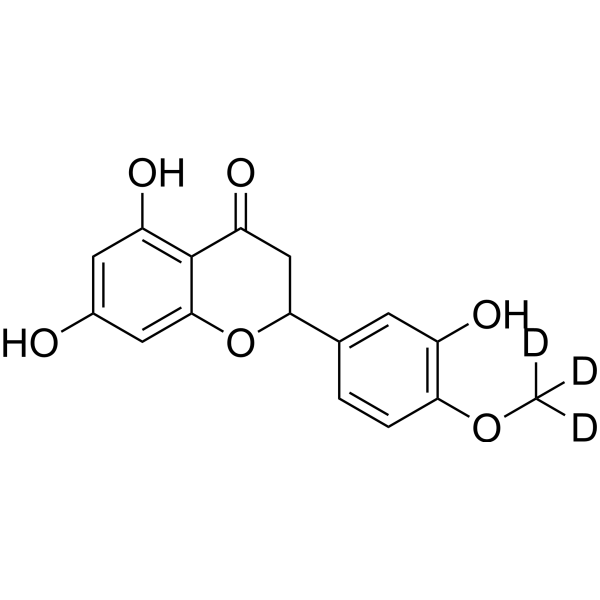 0 ImagesCat. No.: HY-N0168ASCAS No.: 1346605-26-2(Rac)-Hesperetin-d3 is the deuterium labeled (Rac)-Hesperetin. (Rac)-Hesperetin is the racemate of Hesperetin (HY-N0168), an orally active multi-target inhibitor. (Rac)-Hesperetin exhibits significant anti-tumor and anti-inflammatory activities by blocking the TGF-β1-mediated Fyn/RhoA signaling axis and the TLR4-MyD88-NF-κB inflammatory pathway. (Rac)-Hesperetin inhibits the formation of actin stress fibers and the migration and invasion of cancer cells, and is suitable for triple-negative breast cancer research. In inflammation models, (Rac)-Hesperetin effectively alleviates lung injury by reducing the release of pro-inflammatory mediators and regulating the activity of oxidative stress enzymes, and is suitable for acute lung injury research. (Rac)-Hesperetin also interferes with the entry and early replication processes of channel catfish virus, inhibits viral gene expression and progeny virus production, thereby protecting cells from virus-induced cytopathic effects.




