



iGluR
Ionotropic glutamate receptors
iGluR (ionotropic glutamate receptor) is a ligand-gated ion channel that is activated by the neurotransmitter glutamate. iGluR are integral membrane proteins compose of four large subunits that form a central ion channel pore. Sequence similarity among all known glutamate receptor subunits, including the AMPA, kainate, NMDA, and δ receptors.
AMPA receptors are the main charge carriers during basal transmission, permitting influx of sodium ions to depolarise the postsynaptic membrane. NMDA receptors are blocked by magnesium ions and therefore only permit ion flux following prior depolarisation. This enables them to act as coincidence detectors for synaptic plasticity. Calcium influx through NMDA receptors leads to persistent modifications in the strength of synaptic transmission.
iGluR Isoform Specific Products
All Product Categories
-
iGluR Inhibitors
(130)
View all products
-
iGluR Agonists
(131)
View all products
-
iGluR Antagonists
(347)
View all products
-
iGluR Activators
(35)
View all products
-
iGluR Modulators
(93)
View all products
-
iGluR MDM2 Inhibitor
(1)
View all products
-
iGluR Controls
(5)
View all products
-
iGluR Ligands
(3)
View all products
-
iGluR Related Products (828)
Related Products (828)

-
Antibodies (11)
-
iGluR Isoform Comparison
-
DNQX disodium salt
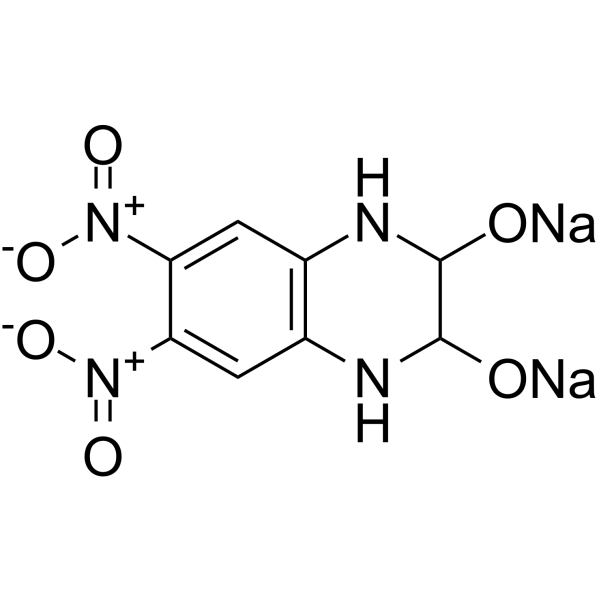 0 ImagesSynonyms: FG 9041 disodium saltDNQX (FG 9041) disodium salt, a quinoxaline derivative, is a selective, potent competitive non-NMDA glutamate receptor antagonist (IC50s = 0.5, 2 and 40 μM for AMPA, kainate and NMDA receptors, respectively).
-
NMDAR modulator 3
 0 ImagesCat. No.: HY-187147CAS No.: 342379-28-6NMDAR modulator 3 is a subunit-selective NMDA receptor potentiator targeting NMDAR receptors containing NR2C/NR2D subunits. NMDAR modulator 3 can be used for the research of schizophrenia, parkinson's disease, cognitive disorders, depression, neuropathic pain, stroke, traumatic brain injury, epilepsy, neurodegeneration.
-
L-AP5
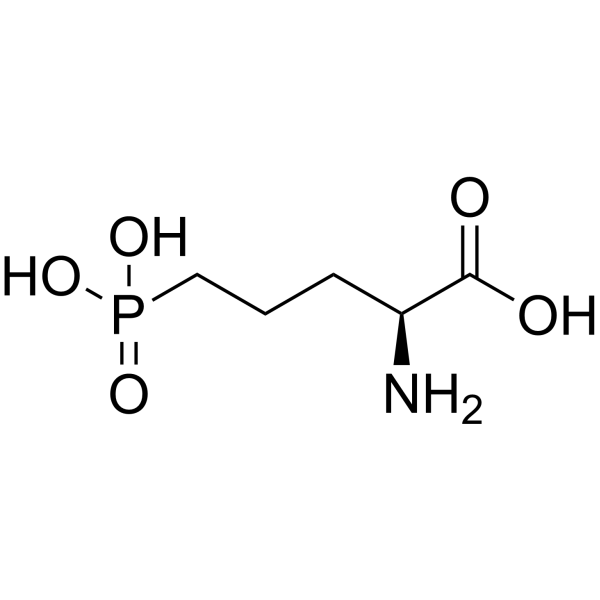 0 ImagesCat. No.: HY-100714BCAS No.: 79055-67-7Synonyms: L-APV; L-2-Amino-5-phosphonovaleric acidL-AP5 (L-APV; L-2-Amino-5-phosphonovaleric acid) is an NMDA antagonist and is the isomer of D-AP5 (HY-100714A). L-AP5 shows a relatively weak amino acid and synaptic blocking activity.
-
CNS 5161
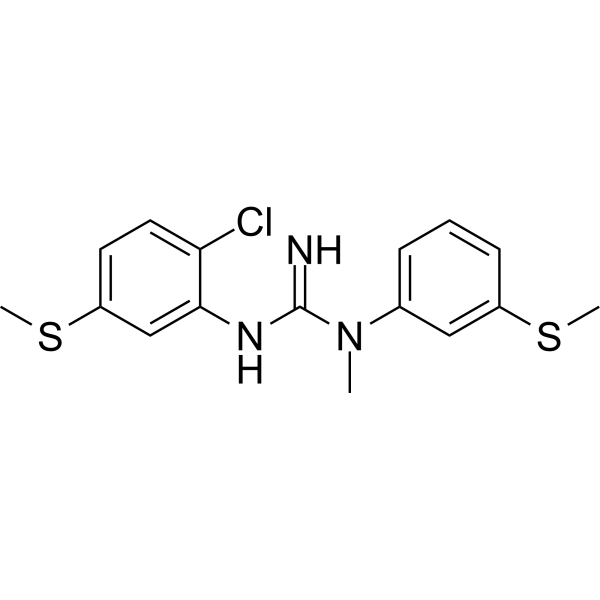 0 ImagesCat. No.: HY-101809ACAS No.: 160754-76-7CNS-5161 is a novel NMDA ion-channel antagonist that interacts with the NMDA receptor/ion channel site to produce a noncompetitive blockade of the actions of glutamate.
-
AMPA-IN-1
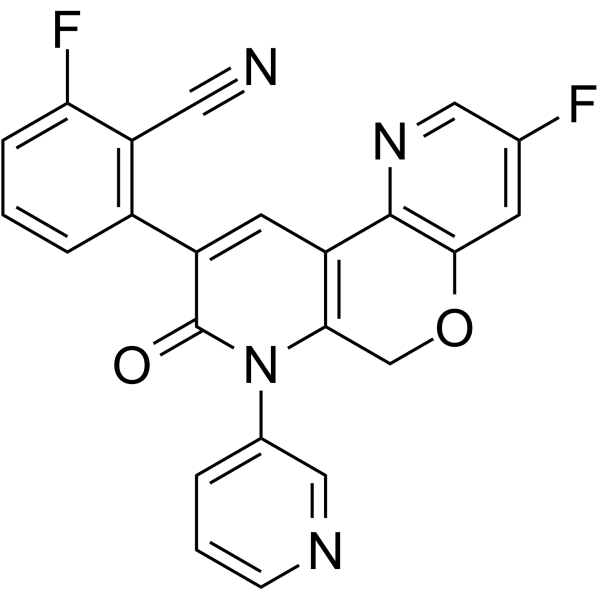 0 ImagesCat. No.: HY-145761CAS No.: 2097604-91-4AMPA-IN-1 is a potent inhibitor of AMPA receptor. AMPA receptors are receptors that are widely expressed in the brain, and play a central role in the regulation of fast excitatory synaptic transmission and synaptic plasticity. AMPA-IN-1 has the potential for the research of various central diseases including epilepsy (extracted from patent WO2017082288A1, compound 14).
-
AMPA receptor modulator-6
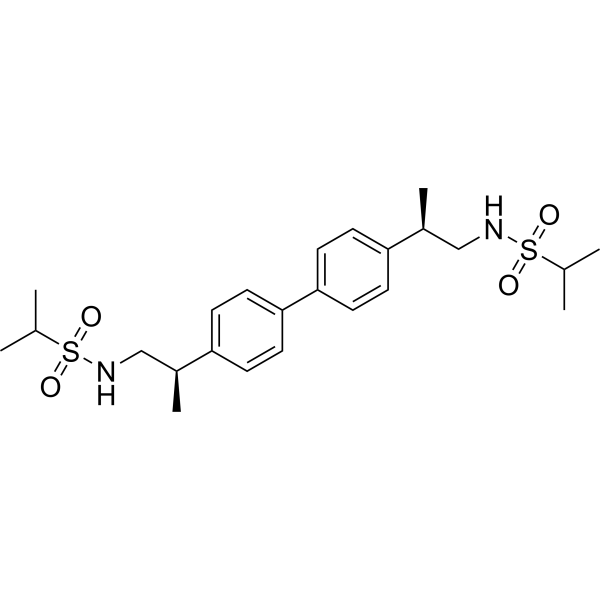 0 ImagesCat. No.: HY-155628CAS No.: 516491-33-1AMPA receptor modulator-6 is an AMPA receptor positive allosteric modulator (PAM). AMPA receptor modulator-6 can be used in the study of neurological diseases.
-
GPI-3000
 0 ImagesCat. No.: HY-105450CAS No.: 144301-37-1GPI-3000 is a NMDA receptor antagonist. GPI-3000 can ameliorate metabolic injury and shows neuroprotective effect. GPI-3000 can be used for the researches of metabolic and neurological disease.
-
PSD-95/nNOS PPI-IN-1
 0 ImagesCat. No.: HY-175824PSD-95/nNOS PPI-IN-1 is a inhibitor targeting the PSD-95/nNOS interaction with potential blood-brain barrier penetration. PSD-95/nNOS PPI-IN-1 binds to the PSD-95 PDZ2 domain with high affinity (Ki = 19.45 μM). PSD-95/nNOS PPI-IN-1 inhibits glutamate-induced excitotoxicity by reducing intracellular ROS levels and inhibiting apoptosis. PSD-95/nNOS PPI-IN-1 significantly reduces cerebral infarct volume in rat tMCAO models. PSD-95/nNOS PPI-IN-1 can be used for the study of acute ischemic stroke.
-
Decanoic acid-d2
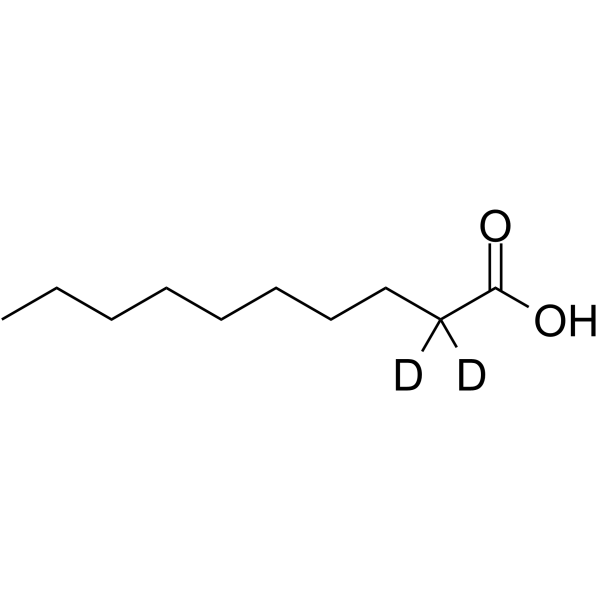 0 ImagesCat. No.: HY-W015309S2CAS No.: 62716-49-8Decanoic acid-d2 is the deuterium labeled Decanoic acid. Decanoic acid, a component of medium chain triclycerides, is a brain-penetrant and non-competitive inhibitor of AMPA receptor. Decanoic acid has antiseizure effects.
-
Caramiphen
 0 ImagesParpanil is an anticholinergic agent with NMDA receptor antagonist activity. Parpanil can be used to inhibit diseases related to cholinergic neurotransmission. Parpanil exerts its pharmacological effects by blocking cholinergic effects.
-
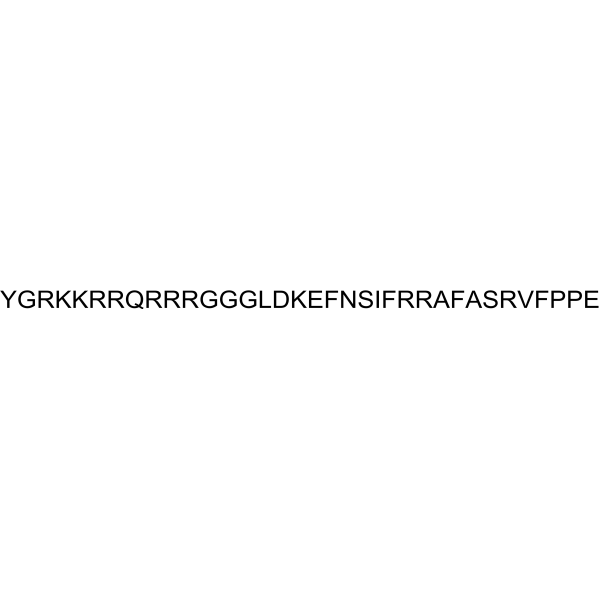
Rapastinel acetate
 0 ImagesCat. No.: HY-16728ACAS No.: 491872-39-0Synonyms: GLYX-13 acetateRapastinel (GLYX-13) acetate is a potent NMDAR modulator capable of crossing the blood-brain barrier, and it exhibits extremely high affinity for human NMDAR (EC50=0.0017-9.9 nM). Rapastinel acetate enhances ERK signaling and activates the mTOR pathway, thereby upregulating the expression of BDNF and VGF, and inducing significant neuroplastic changes such as enhanced LTP and increased mature dendritic spine density in the hippocampus. Rapastinel acetate moderately elevates the efflux of dopamine, norepinephrine and 5-HT in the prefrontal cortex, and uniquely avoids side effects of traditional antidepressants such as dissociation, addiction or sedation. Rapastinel acetate is applicable to the research of major depressive disorder and hepatocellular carcinoma.
-
UBP301
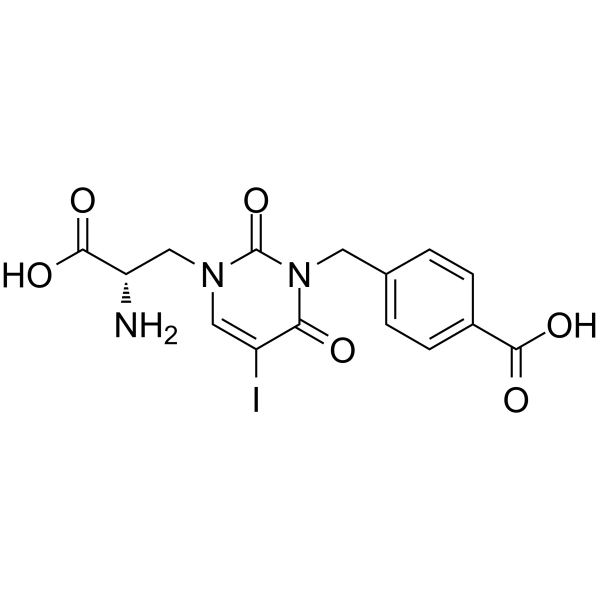 0 ImagesCat. No.: HY-107606CAS No.: 569371-10-4UBP301 is a potent and selective antagonist of kainate receptor with IC50 and KD of 164 μM and 5.94 μM, respectively. UBP301 has ∼30-fold selectivity of kainate receptor over AMPA receptor. UBP301 is the derivative of willardiine.
-
Bupivacaine hydrochloride monohydrate
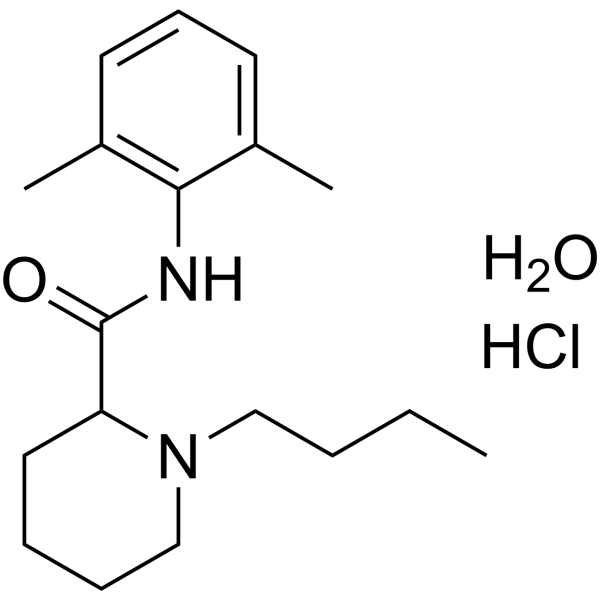 0 ImagesCat. No.: HY-W415121CAS No.: 73360-54-0Bupivacaine hydrochloride monohydrate is a NMDA receptor inhibitor. Bupivacaine hydrochloride monohydrate can block sodium, L-calcium, and potassium channels. Bupivacaine hydrochloride monohydrate potently blocks SCN5A channels with the IC50 of 69.5 μM. Bupivacaine hydrochloride monohydrate can be used for the research of chronic pain.
-
Ro 8-4304
 0 ImagesCat. No.: HY-134525CAS No.: 195988-65-9Ro 8-4304 is a non-competitive, voltage-independent and state-dependent antagonist for NMDA receptor. Ro 8-4304 inhibits 10 μM NMDA-induced currents and 100 μM NMDA-induced currents with IC50s of 2.3 μM and 0.36 μM.
-
Neramexane mesylate
 0 ImagesCat. No.: HY-138973ACAS No.: 457068-92-7Neramexane mesylate is an α9α10 cholinergic nicotinic receptors and N-methyl-D-aspartate receptors(NMDA) antagonist. Neramexane mesylate can improve moderate to severe tinnitus, and also shows neuroprotective effects.
-
NMDA receptor antagonist 6
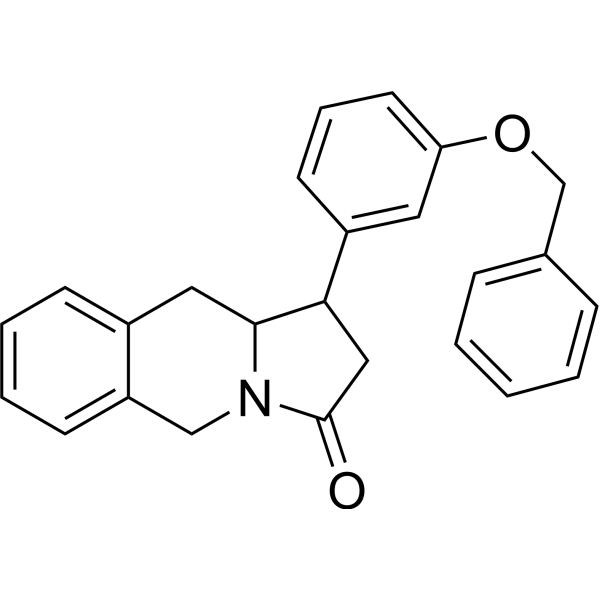 0 ImagesCat. No.: HY-155049NMDA receptor antagonist 6 (compound 13b) is an antagonist of NMDA receptor, targeting to the glycine binding site. NMDA receptor antagonist 6 shows cytoneuroprotective potency, and protects PC12 cells against NMDA-induced injury and cell apoptosis.
-
cis-ACPD
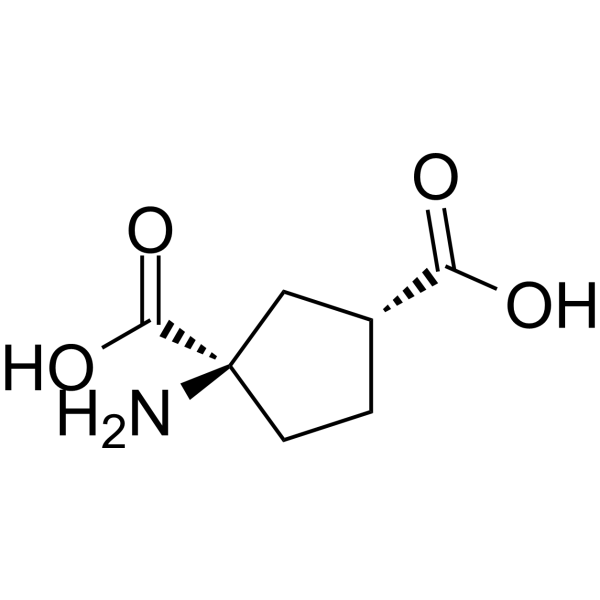 0 ImagesCat. No.: HY-19434ACAS No.: 477331-06-9cis-ACPD is a potent agonist of NMDA receptor, with an IC50 of 3.3 μM. cis-ACPD is also a selective agonist of group II mGluR, with EC50s of 13 μM and 50 μM for mGluR2 and mGluR4, respectively.
-
SePP
 0 ImagesCat. No.: HY-181828CAS No.: 3118902-53-4SePP is a blood-brain barrier-permeable NMDAR antagonist and dopamine/norepinephrine reuptake inhibitor, with a Ki of 28.7 nM for rat NMDAR. SePP exerts anticonvulsant effects. SePP can be used in research related to fragile X syndrome.
-
NMDA receptor antagonist 5
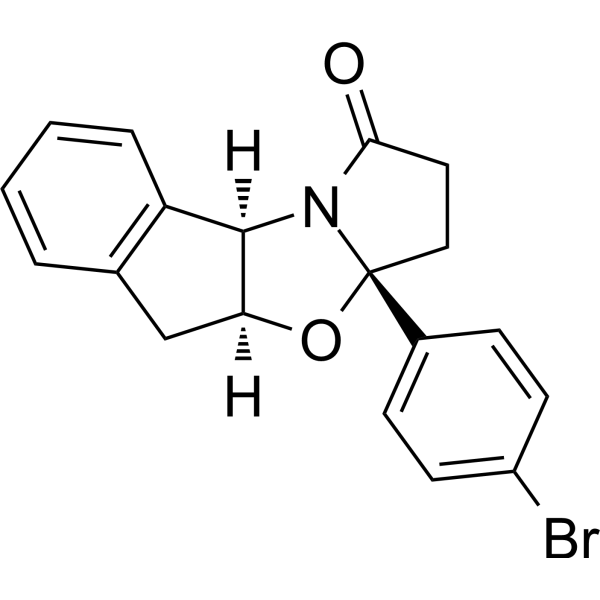 0 ImagesCat. No.: HY-146101CAS No.: 2415998-36-4NMDA receptor antagonist 5 (Compound 10e) is a potent, brain permeable and non-toxic NMDA receptor antagonist. NMDA receptor antagonist 5 can be used for neurological disorder research.




