



Isotope-Labeled Compounds
Isotope-labeled compounds are chemical substances in which some atoms in their molecules are replaced by isotope atoms. The range of stable isotope products can cover from gases to complex molecules. Isotope-labeled compounds could provide a site-specific investigation of structures, making molecules easily detectable by mass spectrometry and NMR, and maintaining the physico-chemical properties of the target molecule at the same time.
MCE isotope-labeled compounds are all stable isotope-labeled compounds and are non-radioactive labeled substances. MCE isotope-labeled compounds are unique tools for identifying and understanding biological and chemical processes. Stable isotope-labeled products are now getting more and more popular among scientists. The scope of application is gradually penetrating into various scientific fields, such as life sciences, food and medicine, agriculture, environment, geology, etc. Stable isotope-labeled compounds have a wide range of applications in the Life Science areas, such as Metabolomics, Proteomics, Clinical studies, Deuterium drugs, etc.
All Product Categories
-
Isotope-Labeled Compounds Related Products (11100)
Related Products (11100)

-
KRAS 2B G12D mutant, Arg-13C6,15N4, Lys-13C6,15N2
 0 ImagesCat. No.: HY-176359SKRAS 2B G12D mutant, Arg-13C36, 15N4, Lys-13C6, 15N2 is the 13C- and 15N-labeled KRAS 2B G12D mutant.
-
Kevetrin-13C2,15N3 hydrochloride
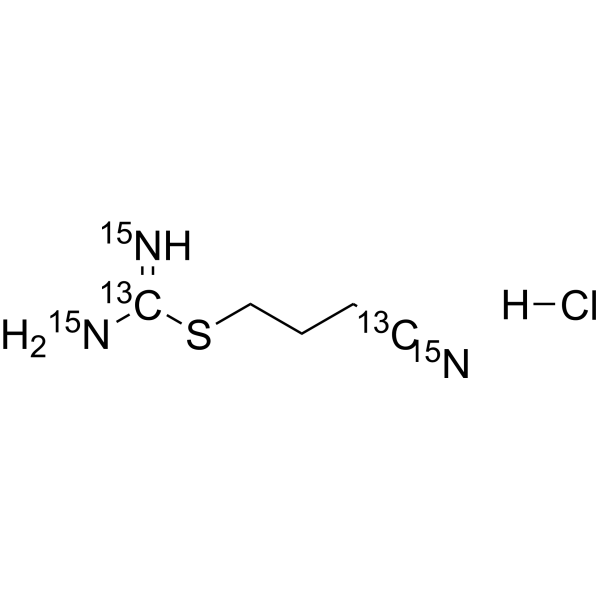 0 ImagesCat. No.: HY-16271SCAS No.: 2300178-72-5Synonyms: 4-Isothioureidobutyronitrile-13C2,15N3 hydrochloride; thioureidobutyronitrile-13C2,15N3 hydrochlorideKevetrin (hydrochloride)-13C2,15N3 is the 13C-labeled and 15N-labeled Kevetrin (hydrochloride). Kevetrin hydrochloride is a small molecule and activator of the tumor suppressor protein p53, with potential antineoplastic activity.
-
Methyl linolenate-13C18
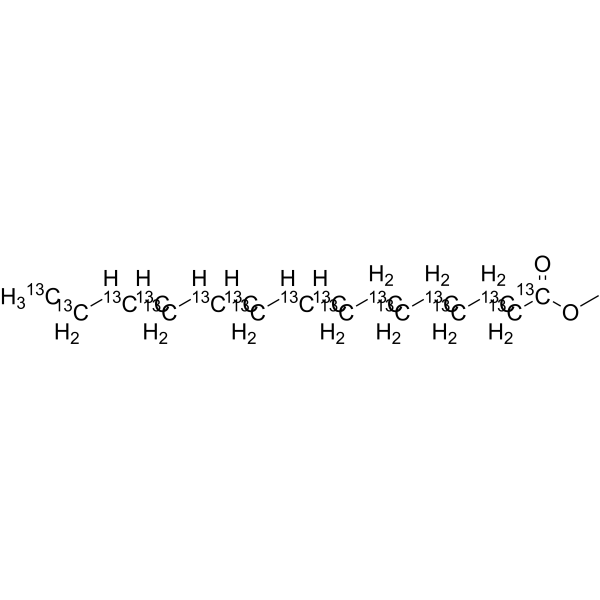 0 ImagesCat. No.: HY-21268SSynonyms: Linolenic acid methyl ester-13C18Methyl linolenate-13C18 is the 13C labeled Methyl linolenate. Methyl linolenate is a polyunsaturated fattly acid (PUFA). It is used in studies on the mechanisms and prevention of oxidation/peroxidation of unsaturated fatty acids. The IC50 is 60 uM.
-
Diphenylmethanol-d10
 0 ImagesCat. No.: HY-W004059S1CAS No.: 74563-01-2Synonyms: Benzhydrol-d10Diphenylmethanol-d10 (Benzhydrol-d10) is the deuterium labeled Benzhydrol (HY-W004059). Diphenylmethanol is a biochemical reagent that can be used as a biological material or organic compound for life science related research.
-
N-Acetyl Retigabine-d3 dihydrochloride
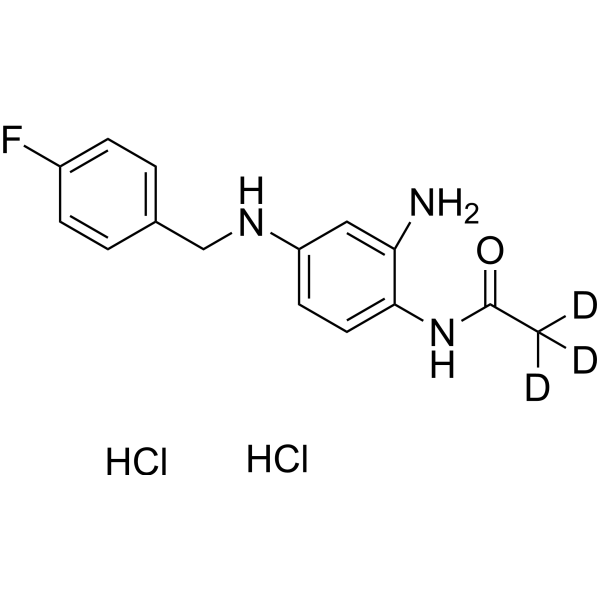 0 ImagesCat. No.: HY-144157SCAS No.: 2749395-13-7N-Acetyl Retigabine-d3 (dihydrochloride) is the deuterium labeled N-Acetyl Retigabine dihydrochloride.
-
(S)-Stiripentol-d9
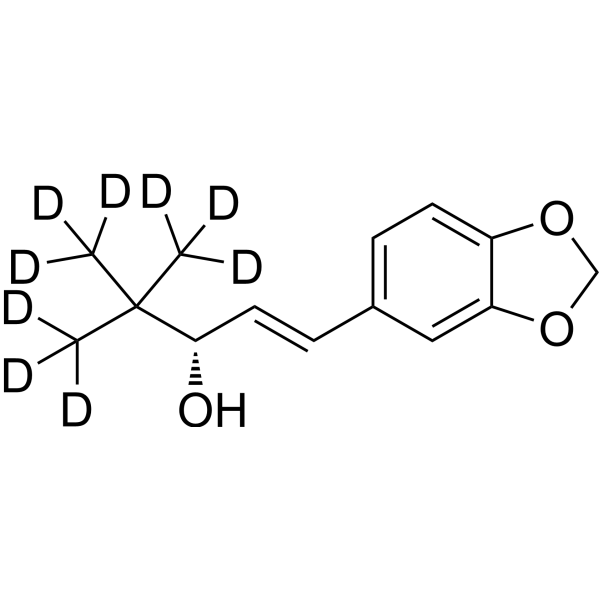 0 ImagesCat. No.: HY-143808S(S)-Stiripentol-d9 is the deuterium labeled (S)-Stiripentol.
-
DL-Lysine-15N2 hydrochloride
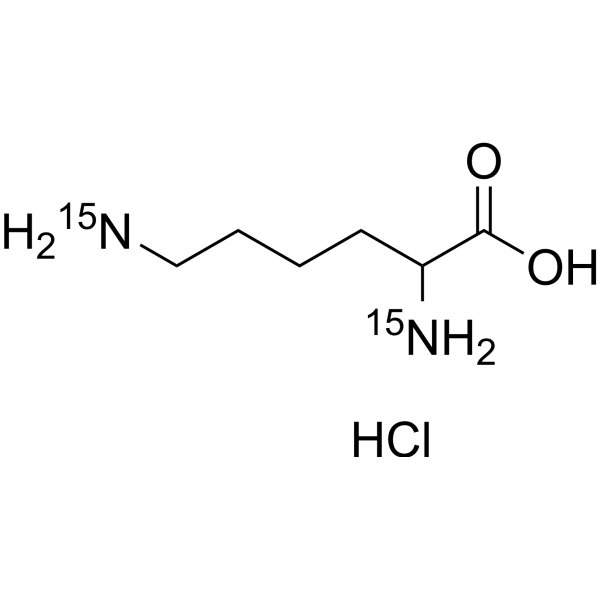 0 ImagesCat. No.: HY-B2236S3Synonyms: (±)-2,6-Diaminocaproic acid-15N2 hydrochloride
-
tert-Butyl 4-methylpiperazine-1-carboxylate-d8
 0 ImagesCat. No.: HY-W700253CAS No.: 1189436-83-6tert-Butyl 4-methylpiperazine-1-carboxylate-d8 is the deuterium labeled tert-Butyl 4-methylpiperazine-1-carboxylate (HY-W050208).
-
N-Nitrosoephedrine-d3
 0 ImagesCat. No.: HY-W754725N-Nitrosoephedrine-d3 is the deuterium labeled N-Nitrosoephedrine.
-
Didesmethylsibutramine-d7 hydrochloride
 0 ImagesCat. No.: HY-110034SCAS No.: 1188263-87-7Synonyms: BTS 54-505-d7 free acidDidesmethylsibutramine-d7 (BTS 54-505-d7) hydrochloride is deuterium labeled Didesmethylsibutramine hydrochloride.
-
Meta-Fexofenadine-d6
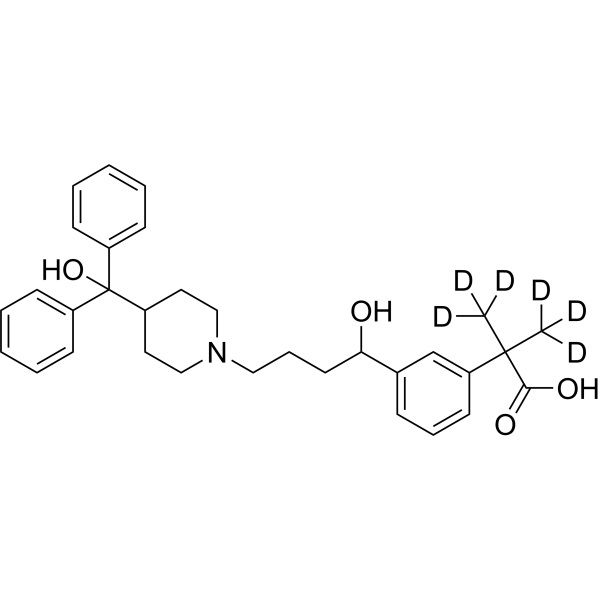 0 ImagesCat. No.: HY-100657SSynonyms: meta-MDL-16455-d6; meta-Terfenadine carboxylate-d6Meta-Fexofenadine-d6 is the deuterium labeled meta-Fexofenadine. meta-Fexofenadine (meta-MDL-16455) is an impurity of Fexofenadine. Fexofenadine, a H1R antagonist, is an anti-allergic agent used in seasonal allergic rhinitis and chronic idiopathic urticarial.
-
(1-Bromoethyl)benzene-d3
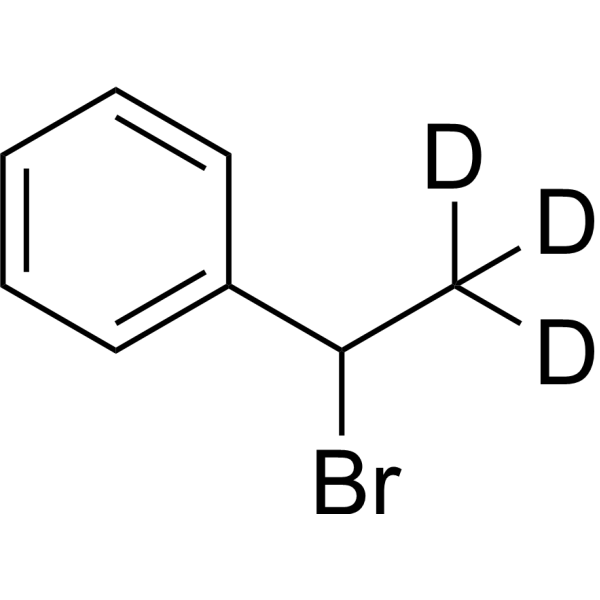 0 Images(1-Bromoethyl)benzene-d3 is the deuterium labeled (1-Bromoethyl)benzene.
-
5-Hydroxymethyl Tolterodine-d14 formate
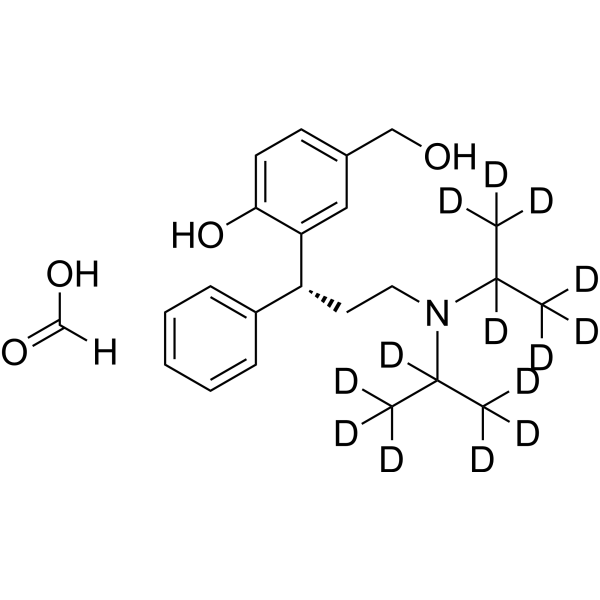 0 ImagesCat. No.: HY-76570S15-Hydroxymethyl Tolterodine-d14 (formate) is deuterium labeled (Rac)-5-Hydroxymethyl Tolterodine. (Rac)-5-Hydroxymethyl Tolterodine ((Rac)-Desfesoterodine), an active metabolite of Tolterodine, is a mAChR antagonist (Ki values of 2.3 nM, 2 nM, 2.5 nM, 2.8 nM, and 2.9 nM for M1, M2, M3, M4, and M5 receptors, respectively). (Rac)-5-Hydroxymethyl Tolterodine can be used for overactive bladder research.
-
(R)-Mirtazapine-d3
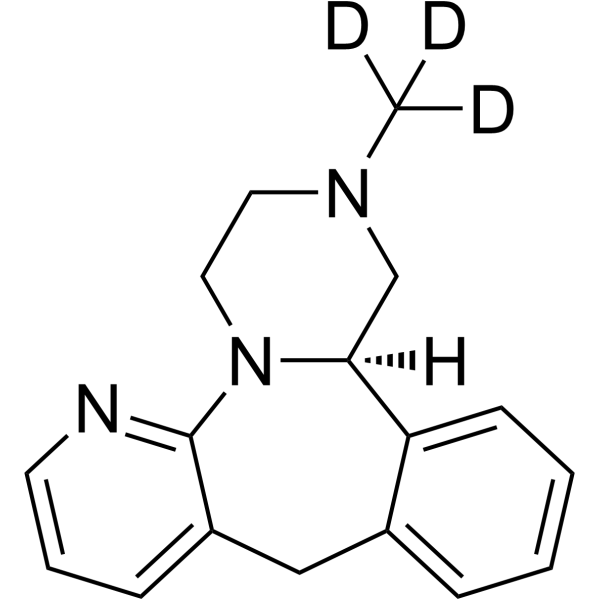 0 ImagesCat. No.: HY-B0352BSCAS No.: 2751591-56-5Synonyms: (R)-Org3770-d3; (R)-6-Azamianserin-d3(R)-Mirtazapine-d3 is a deuterium labeled (R)-Mirtazapine. (R)-Mirtazapine is a R(−)-enantiomer of Mirtazapine with antinociceptive properties in an animal model of acute thermal nociception. (R)-Mirtazapine is a 5-HT3 receptor antagonist. (R)-Mirtazapine is mainly metabolized by CYP3A4[1].
-
L-Lysine6-13C dihydrochloride
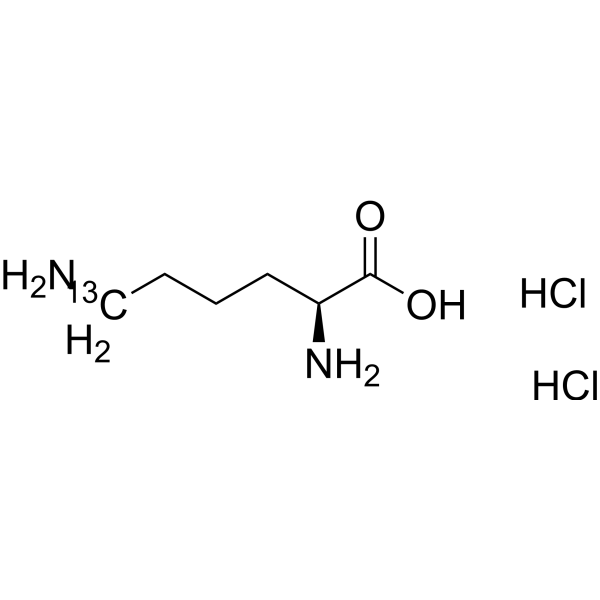 0 ImagesCat. No.: HY-W009762S1CAS No.: 1217466-44-8L-Lysine6-13C (dihydrochloride) is a 13C-labeled L-Lysine dihydrochloride.
-
Glucoraphanin sodium-d5
 0 ImagesCat. No.: HY-W745582Glucoraphanin sodium-d5 is the deuterium labeled Glucoraphanin sodium.
-
1,2-Dimyristoyl-sn-glycero-3-phosphoethanolamine-d54
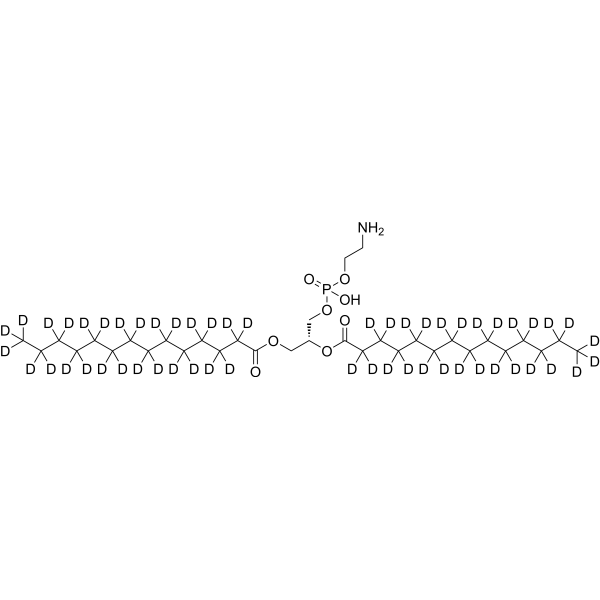 0 ImagesSynonyms: DMPE-d541,2-Dimyristoyl-sn-glycero-3-phosphoethanolamine (DMPE)-d54 is the deuterated-labeled 1,2-Dimyristoyl-sn-glycero-3-phosphoethanolamine (DMPE) (HY-W013078). 1,2-Dimyristoyl-sn-glycero-3-phosphoethanolamine (DMPE) is a zwitterionic saturated phosphatidylethanolamine bearing two myristoyl (C14:0) chains, and serves as a model membrane component, a neutral lipid component of lipid nanoparticles, and a cocoa butter crystallization nucleating agent. 1,2-Dimyristoyl-sn-glycero-3-phosphoethanolamine is used in nucleic acid delivery, construction of artificial cell membrane models, and research on urothelial carcinoma.
-
Methotrexate-d3
 0 ImagesCat. No.: HY-W745173Methotrexate-d3 Triglutamate Trifluoroacetate is the deuterium labeled Methotrexate Triglutamate Trifluoroacetate.
-
N,O-Didesmethylvenlafaxine-d3
 0 ImagesCat. No.: HY-W700149CAS No.: 1189468-67-4N,O-Didesmethylvenlafaxine-d3 is the deuterium labeled N,O-Didesmethylvenlafaxine (HY-138818). N,O-Didesmethylvenlafaxine (NODVFX) is a metabolite of Venlafaxine (VFX; HY-B0196). Venlafaxine (Wy 45030) is an orally active, potent serotonin (5-HT)/norepinephrine (NE) reuptake dual inhibitor.
-
2-Benzyloxy-benzoic Acid Benzyl Ester-13C6
 0 ImagesCat. No.: HY-W778173CAS No.: 1330189-10-02-Benzyloxy-benzoic Acid Benzyl Ester-13C6 is the 13C-labeled Benzyl 2-(benzyloxy)benzoate (HY-W702475).



