



mAChR3 Agonist
- 1
- 2
-
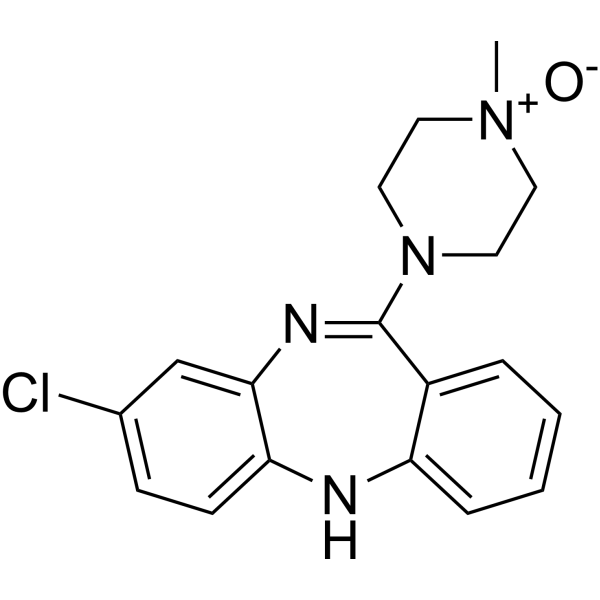
Clozapine N-oxide
 0 Images
Clozapine N-oxide is a major metabolite of Clozapine and a human muscarinic designer receptors (DREADDs) agonist. Clozapine N-oxide activates the DREADD receptor hM3Dq and hM4Di. Clozapine N-oxide can't cross the blood-brain barrier. Clozapine is a potent dopamine antagonist and also a potent and selective muscarinic M4 receptor (EC50=11 nM) agonist.
-
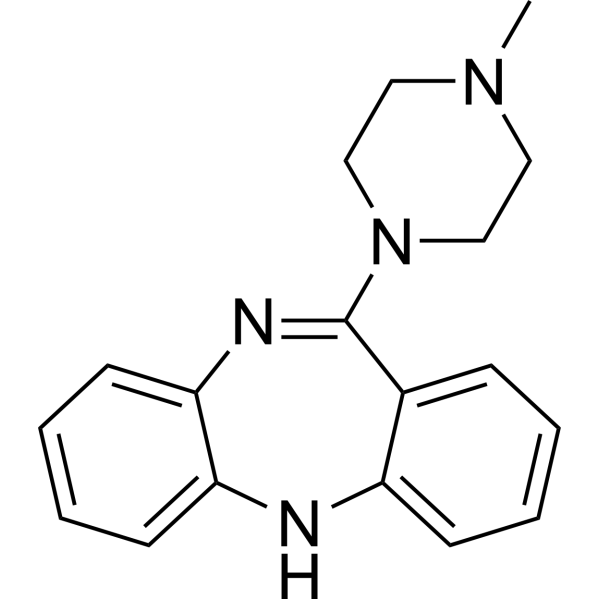
Deschloroclozapine
 0 Images
Deschloroclozapine, a metabolite of Clozapine, is a highly potent muscarinic DREADDs agonist, with blood-brain barrier permeability. Deschloroclozapine binds to DREADD receptor subtypes hM3Dq and hM4Di with Ki of 6.3 and 4.2 nM, respectively. [11C]-Deschloroclozapine is developed as a promising PET tracer for DREADD imaging.
-
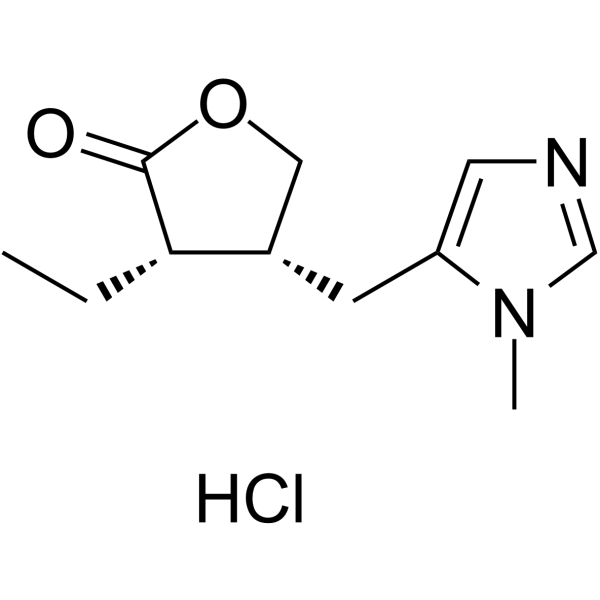
Pilocarpine Hydrochloride
 0 Images
Pilocarpine Hydrochloride is an orally active, selective M3 muscarinic acetylcholine receptor agonist. Pilocarpine Hydrochloride can induce seizures and is used in research on conditions such as epilepsy, dry mouth (xerostomia), and elevated intraocular pressure.
-
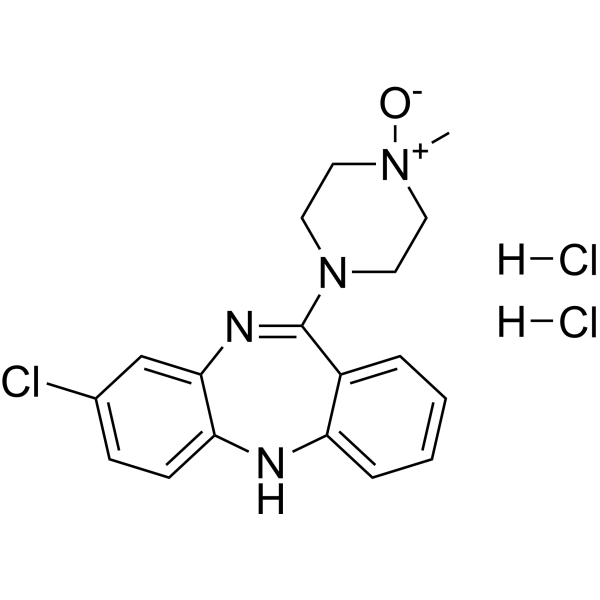
Clozapine N-oxide dihydrochloride
 0 Images
Clozapine N-oxide dihydrochloride is a major metabolite of Clozapine and a human muscarinic designer receptors (DREADDs) agonist. Clozapine N-oxide dihydrochloride activates the DREADD receptor hM3Dq and hM4Di. Clozapine N-oxide dihydrochloride cannot cross the blood-brain barrier. Clozapine is a potent dopamine antagonist and also a potent and selective muscarinic M4 receptor (EC50=11 nM) agonist.
-
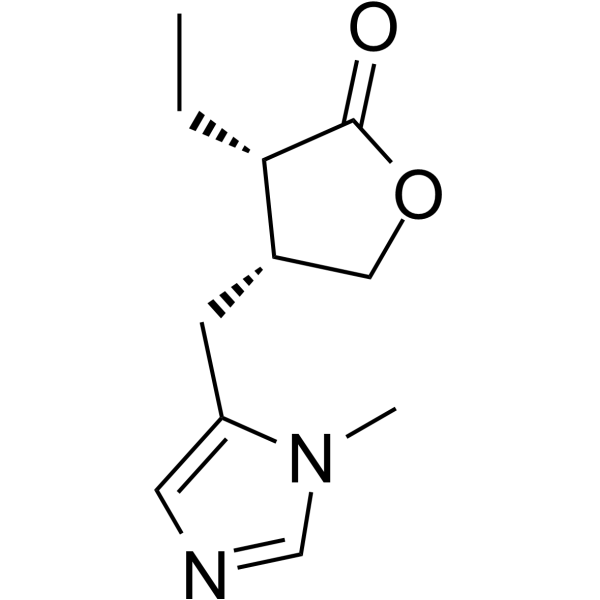
Pilocarpine
 0 Images
Pilocarpine is an orally active, selective M3 muscarinic acetylcholine receptor agonist. Pilocarpine can induce seizures. Pilocarpine is used in research on conditions such as epilepsy, dry mouth (xerostomia), and elevated intraocular pressure.
-
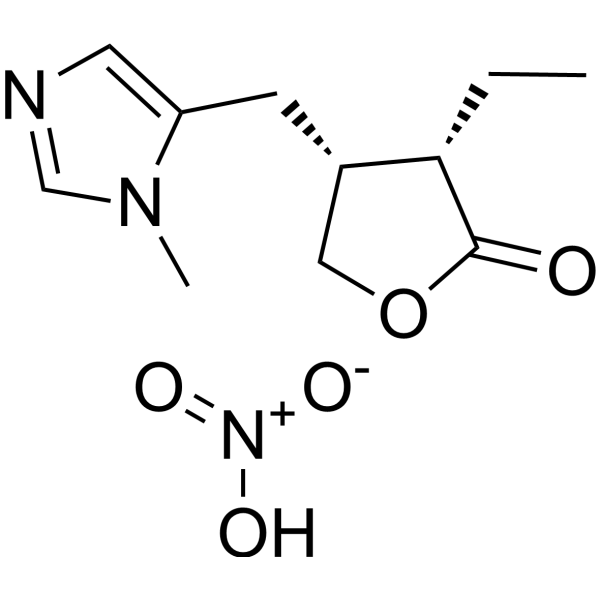
Pilocarpine nitrate
 0 Images
Pilocarpine nitrate is an orally active, selective M3 muscarinic acetylcholine receptor agonist. Pilocarpine nitrate can induce seizures and is used in research on conditions such as epilepsy, dry mouth (xerostomia), and elevated intraocular pressure.
-
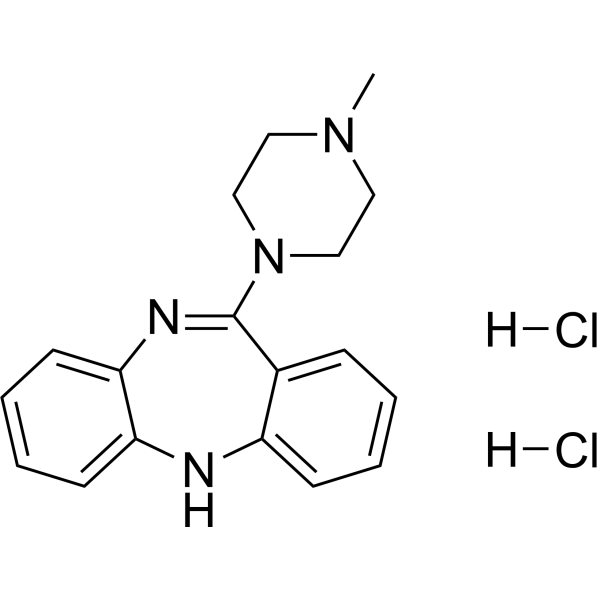
Deschloroclozapine dihydrochloride
 0 ImagesCat. No.: HY-42110APurity: 99.87%
Deschloroclozapine dihydrochloride, a metabolite of Clozapine, is a highly potent muscarinic DREADDs agonist, with blood-brain barrier permeability. Deschloroclozapine dihydrochloride binds to DREADD receptor subtypes hM3Dq and hM4Di with Ki of 6.3 and 4.2 nM, respectively. [11C]-Deschloroclozapine dihydrochloride is developed as a promising PET tracer for DREADD imaging.
-
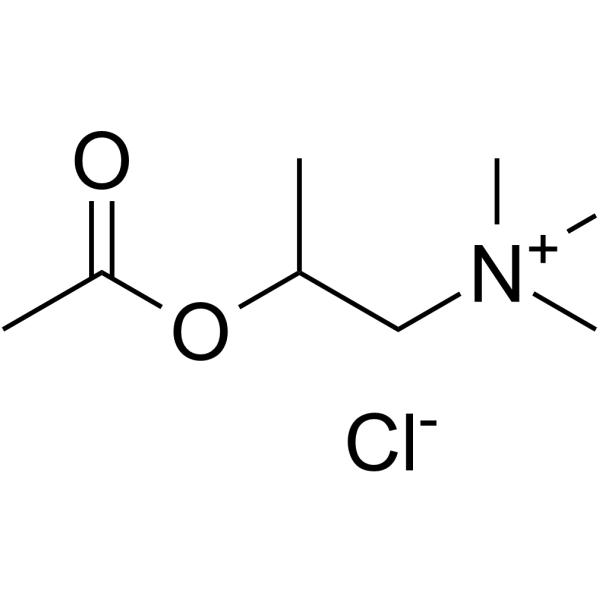
Methacholine chloride
 0 Images
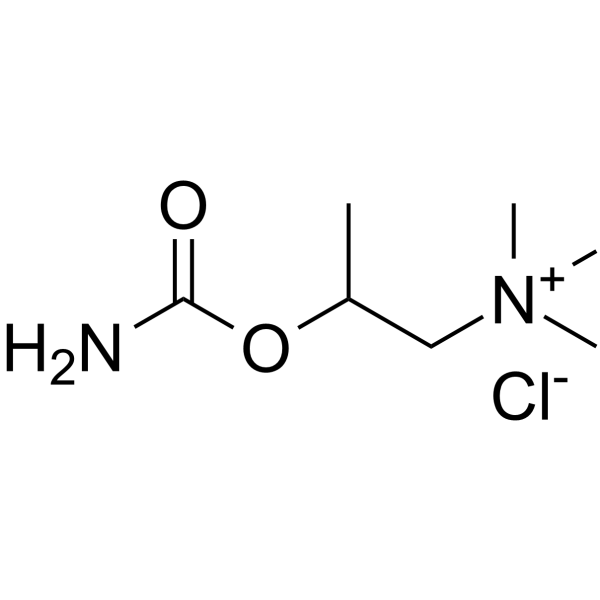
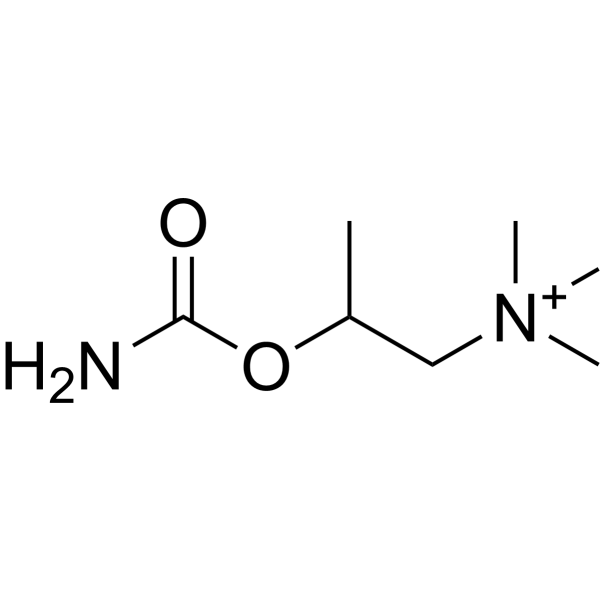
Methacholine (Acetyl-β-methylcholine) choride is a potent muscarinic-3 (M3) agonist. Methacholine choride acts directly on acetylcholine receptors on smooth muscle causing bronchoconstriction and airway narrowing. Methacholine choride shows a high sensitivity to identify bronchial hyperresponsiveness (BHR). Methacholine choride can be used to measure airway hyperresponsiveness (AHR) as a diagnostic aid in the assessment of individuals with asthma-like symptoms and normal resting expiratory flow rates.
-
Iperoxo
 0 Images
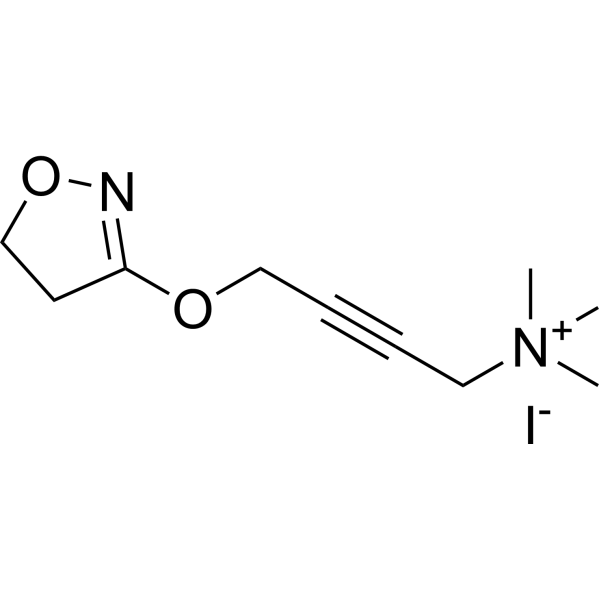
Iperoxo is a potent superagonist of muscarinic acetylcholine receptor (mAChR) that activates M1, M2 and M3 receptors with pEC50 of 9.87, 10.1 and 9.78. Iperoxo can be used for direct probing activation-related conformational transitions of muscarinic receptors when labeled with tritium.
-
Cevimeline hydrochloride
 0 ImagesSynonyms: AF102B hydrochloride
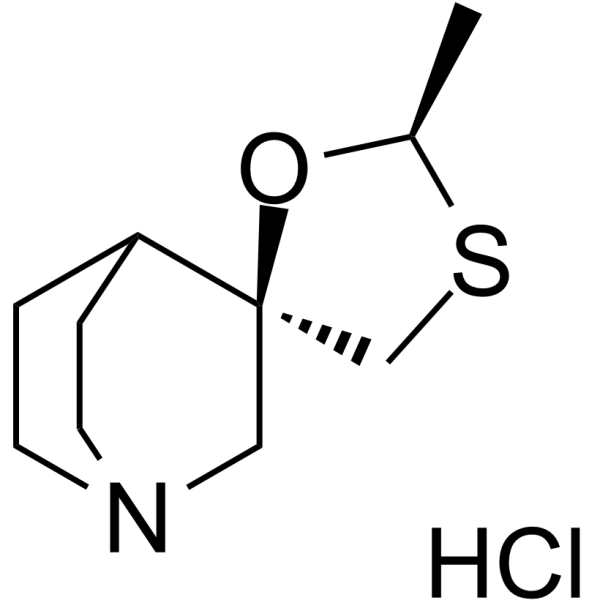
Cevimeline hydrochloride (AF102B hydrochloride) is a quinuclidine derivative of acetylcholine and a selective and orally active muscarinic M1 and M3 receptor agonist. Cevimeline hydrochloride stimulates secretion by the salivary glands and can be used as a sialogogue for xerostomia. Cevimeline hydrochloride can cross the blood-brain barrier (BBB).
-
DREADD agonist 21 dihydrochloride
 0 Images
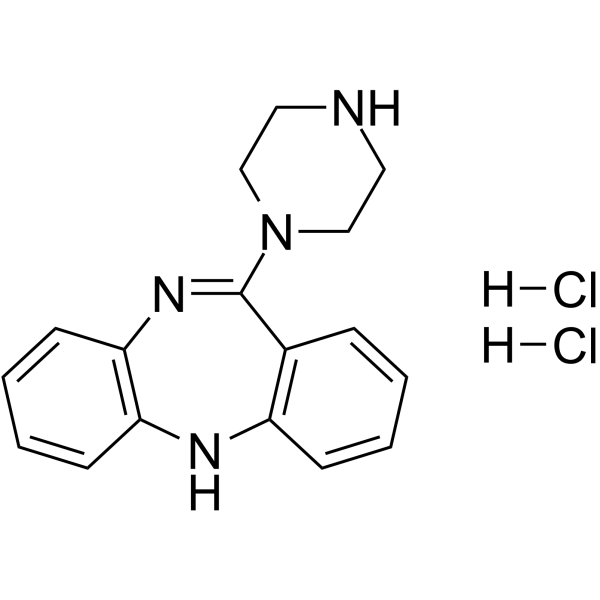
DREADD agonist 21 dihydrochloride is a potent human muscarinic acetylcholine M3 receptors (hM3Dq) agonist (EC50=1.7 nM).
-
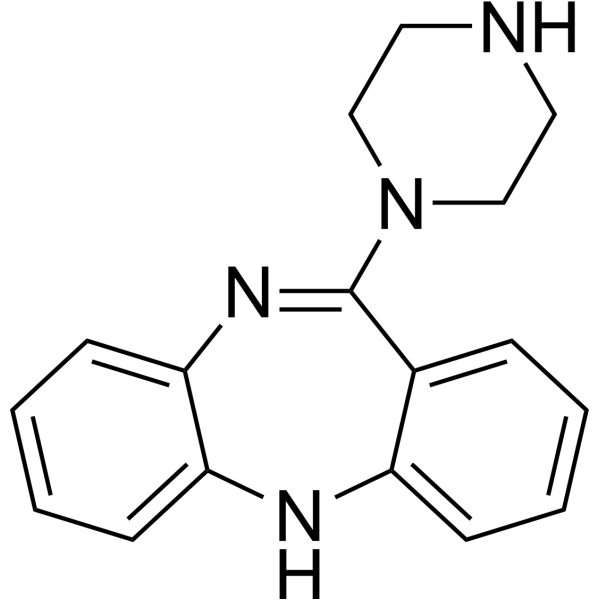
DREADD agonist 21
 0 Images
DREADD agonist 21 is a potent human muscarinic acetylcholine M3 receptors (hM3Dq) agonist (EC50=1.7 nM).
-
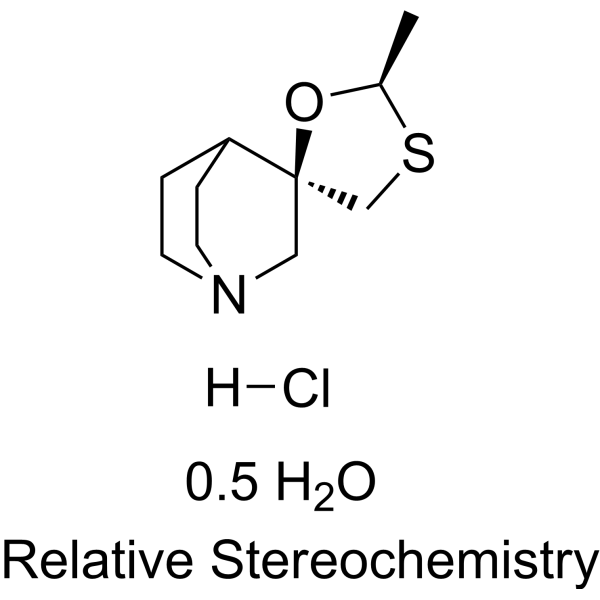
Cevimeline hydrochloride hemihydrate
 0 ImagesSynonyms: SNI-2011; AF102B hydrochloride hemihydrate
Cevimeline hydrochloride hemihydrate (SNI-2011) is a quinuclidine derivative of acetylcholine and a selective and orally active muscarinic M1 and M3 receptor agonist. Cevimeline hydrochloride hemihydrate stimulates secretion by the salivary glands and can be used as a sialogogue for xerostomia. Cevimeline hydrochloride hemihydrate can cross the blood-brain barrier (BBB).
-
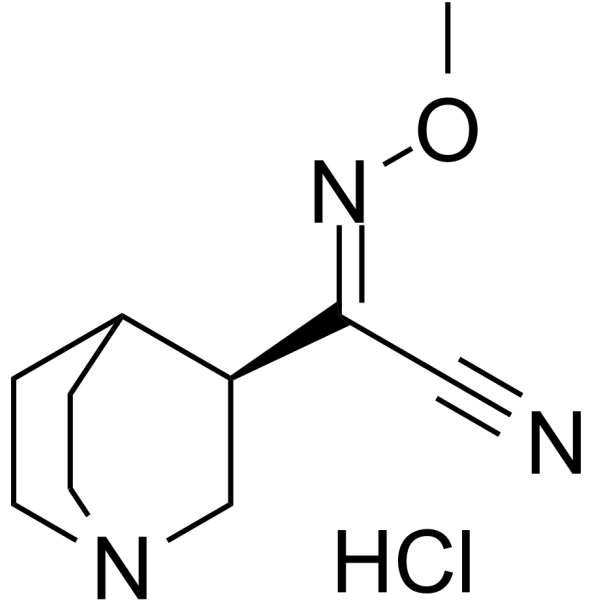
Sabcomeline hydrochloride
 0 ImagesSynonyms: SB-202026 hydrochloride; Memric hydrochloride
Sabcomeline (SB-202026; Memric) hydrochloride is a muscarinic receptor agonist capable of crossing the blood-brain barrier. Sabcomeline hydrochloride exhibits affinity for all hM1 to hM5 subtypes (pKi=6.72-7.23), and shows near-full agonism at the hM3 receptor, inducing extracellular acidification. Sabcomeline hydrochloride alters the binding kinetics of dopamine D2 receptors through neural network regulation. Sabcomeline hydrochloride also causes minimal cardiovascular changes, effectively reverses spatial memory deficits in rodents and induces conditioned taste aversion. Sabcomeline hydrochloride is an important tool compound in studies of Alzheimer's disease and related neurodegenerative diseases.
-
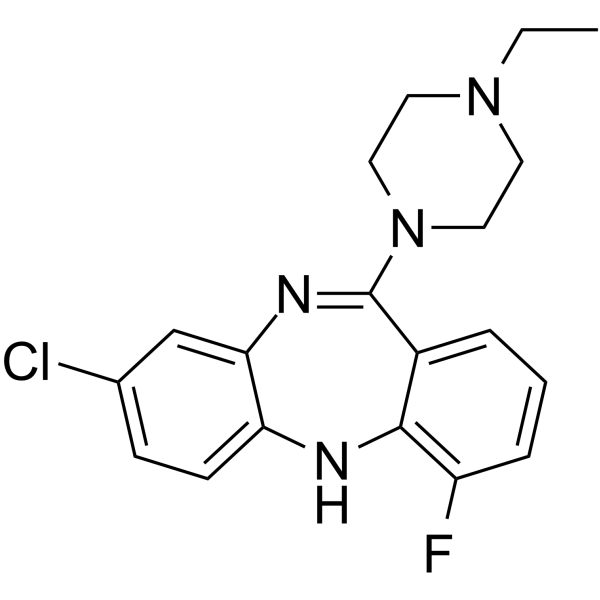
JHU37160
 0 Images
JHU37160 is a potent and brain-penetrant DREADD agonist, with EC50s of 18.5 nM and 0.2 nM for hM3Dq and hM4Di DREADDs in HEK-293 cells, respectively. JHU37160 exhibits selective [3H]Clozapine displacement from DREADDs and not from other Clozapine-binding sites in mice brain tissue.
-
JHU37152
 0 Images
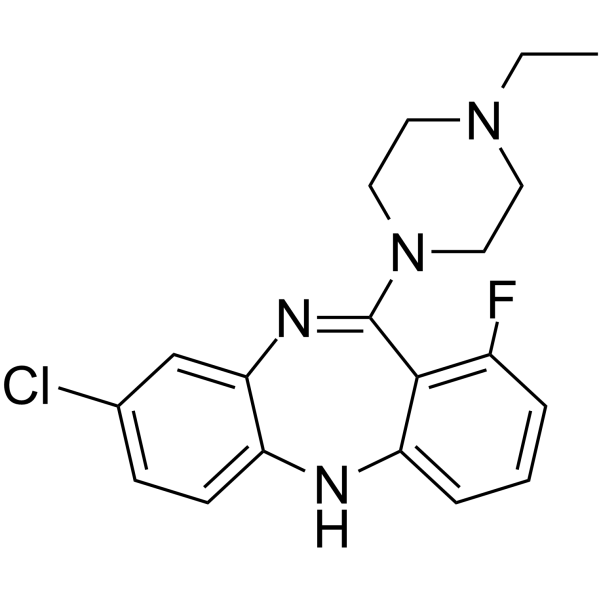
JHU37152 is a potent and brain-penetrant DREADD agonist, with EC50s of 5 nM and 0.5 nM for hM3Dq and hM4Di DREADDs in HEK-293 cells, respectively. JHU37152 exhibits selective [3H]Clozapine displacement from DREADDs and not from other Clozapine-binding sites in mice brain tissue.
-
Cevimeline
 0 ImagesSynonyms: AF102B
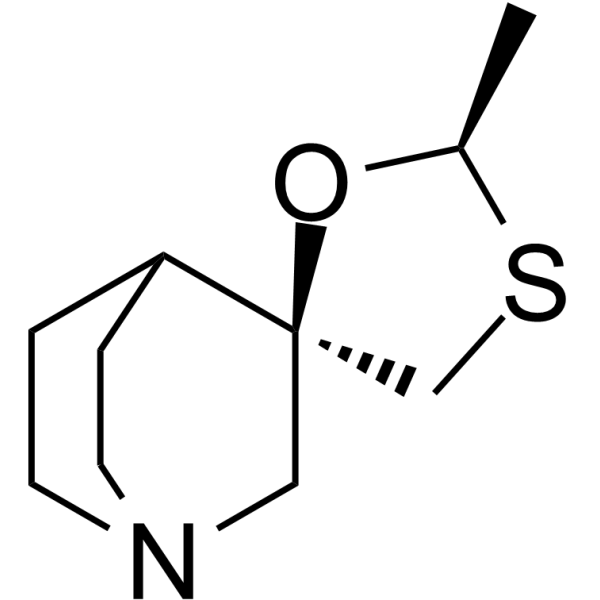
Cevimeline (AF-102B) is a quinuclidine derivative of acetylcholine and a selective and orally active muscarinic M1 and M3 receptor agonist. Cevimeline stimulates secretion by the salivary glands and can be used as a sialogogue for xerostomia. Cevimeline can cross the blood-brain barrier (BBB).
-
Milameline hydrochloride
 0 ImagesCat. No.: HY-107650CAS No.: 139886-04-7Synonyms: CI 979 hydrochloride; RU 35926 hydrochloride
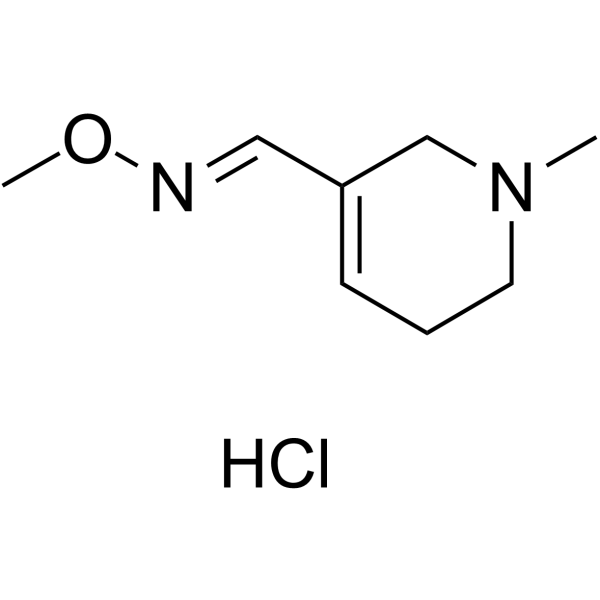
Milameline (CI 979; RU35926) hydrochloride is a nonselective, partical and orally active muscarinic receptor agonist that improves cognition. Milameline hydrochloride has equal affinity for different subtypes of human muscarinic receptors with IC50 of 1.3 µM for M1-, 1.1 µM for M2-, 1.5 µM for M3-, and 1.9 µM for M4-muscarinic receptors. Milameline hydrochloride has a higher affinity for sites [3H]CMD (IC50 = 20 nM), than [3H]QNB, (IC50 = 3059 nM). Milameline hydrochloride produces both central and peripheral cholinergic effects and reverses the cognitive deficits induced by Scopolamine (HY-N0296). Milameline hydrochloride can be used for the study of Alzheimer’s Disease.
- 1
- 2



