



Anti-Mouse PD-1 Antibody (J43)
Based on 3 publication(s) in Google Scholar
Anti-Mouse PD-1 Antibody (J43) is a kind of armenian hamster IgG antibody inhibitor, targeting to mouse PD-1. Anti-Mouse PD-1 Antibody (J43) inhibits the interaction of PD-1 with PD-L1. Anti-Mouse PD-1 Antibody (J43) can be used for the researches of cancer and immunology, such as breast cancer and colon cancer.
For research use only. We do not sell to patients.
- Purity : 99.75%
- Molecular Weight:150 kDa
-
Storage:
Please store the product under the recommended conditions in the Certificate of Analysis.


To place orders, for customer services and technical support, please contact: MedChemExpress USA
Tel: 609-228-6898 E-mail: [email protected] [email protected]


-
 Biological Activity
-
Chemical Information
- Purity & Documentation
- References
-
 Help & FAQs


Publications Citing Use of MedChemExpress (MCE) Anti-Mouse PD-1 Antibody (J43)
More

Biological Activity
Description
Isotype
Armenian Hamster IgG
Recommend Isotype Controls
Species Reactivity
Mouse
IC50 & Target
PD-1
In Vivo
Anti-Mouse PD-1 Antibody (J43) (200 μg, i.p., at days 4, 8, 14, 18) suppresses tumor growth companied with anti-CD4 (HY-P990792) in B16F10 or Colon 26 tumor mice models[2].
Anti-Mouse PD-1 Antibody (J43) (500 μg/mouse at day 14 and 250 μg/mouse every other day from day 16 to 32, i.p.) induces fatal hypersensitivity in the inflammatory 4T1 breast cancer model[3].
Anti-Mouse PD-1 Antibody (J43) (200 μg, i.p., twice per week for 2 weeks) increases survival rate combined with R428 or SGI-7079 in ID8 tumor-bearing mice models[4].
MedChemExpress (MCE) has not independently confirmed the accuracy of these methods. They are for reference only.
-
Animal Model:MCA 205 tumor mice models[1]
-
Dosage:10 μg
-
Administration:Intratumorally injection
-
Result:Inhibited tumor growth and prolonged survival.
-
Animal Model:B16F10 or Colon 26 tumor mice models[2]
-
Dosage:200 μg
-
Administration:Intraperitoneal injection, at days 4, 8, 14, 18, companied with anti-CD4 (HY-P990792)
-
Result:Suppressed tumor growth and prolonged survival.
Increased the number of PD-1+ tumor-reactive CD8+ T cells in the circulation.
Gene ID
Accession
Conjugated
Unconjugated
Reconsititution
The product can be reconstituted/diluted with sterile PBS or saline.
Format
-
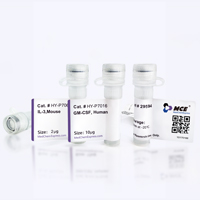
Product Image
Application
in vivo blocking of PD-1/PD-L signaling; in vitro PD-1 neutralization; Western blot


Chemical Information
-
Appearance Liquid
-
Molecular Weight 150 kDa
-
Color Colorless to light yellow
-
SMILES
[Anti-Mouse PD-1 Antibody (J43)]
-
Formulation
Please refer to the lot-specific COA for specific buffer information.
-
Storage
Please store the product under the recommended conditions in the Certificate of Analysis.


Publications (3)
-
Journal Impact Factor
-
Most Recent
-
Nat Chem Biol
2026 May 27. PMID: 42204309 -
Adv Sci (Weinh)
RBM10 Deficiency Promotes Anti-PD-1 Resistance in LUAD via STING Alternative Splicing-Driven CCL7 Signaling and Macrophage Polarization. [Abstract]2026 Jun 22:e22159. PMID: 42325102 -
Small
Lung Tissue-Targeting STING mRNA-LNPs Inhibits Tumor Progression and Induces Systemic Anti-Tumor Immunity in Non-Small Cell Lung Cancer. [Abstract]2025 Sep 15:e04715. PMID: 40948207


Purity & Documentation
-
Data Sheet (263 KB)
-
SDS (251 KB)
- English - EN (251 KB)
- Français - FR (251 KB)
- Deutsch - DE (251 KB)
- Norwegian - NO (251 KB)
- Español - ES (251 KB)
- Swedish - SV (251 KB)
- Italian - IT (251 KB)
- Korean - KR (251 KB)
- Portuguese - PT (251 KB)
-
Inhibitory Antibodies User Guide (603 KB)
References
[1]. Kleinpeter P, et al. Vectorization in an oncolytic vaccinia virus of an antibody, a Fab and a scFv against programmed cell death -1 (PD-1) allows their intratumoral delivery and an improved tumor-growth inhibition. Oncoimmunology. 2016 Sep 9;5(10):e1220467. [Content Brief]
[2]. Ueha S, et al. Robust Antitumor Effects of Combined Anti-CD4-Depleting Antibody and Anti-PD-1/PD-L1 Immune Checkpoint Antibody Treatment in Mice. Cancer Immunol Res. 2015 Jun;3(6):631-40. [Content Brief]
[3]. Monjazeb AM, et al. Mouse Preclinical Cancer Immunotherapy Modeling Involving Anti-PD-1 Therapies Reveals the Need to Use Mouse Reagents to Mirror Clinical Paradigms. Cancers (Basel). 2021 Feb 10;13(4):729. [Content Brief]
[4]. Guo Z, et al. Axl inhibition induces the antitumor immune response which can be further potentiated by PD-1 blockade in the mouse cancer models. Oncotarget. 2017 Sep 21;8(52):89761-89774. [Content Brief]

Calculators
Concentration (start) × Volume (start) = Concentration (final) × Volume (final)


Anti-Mouse PD-1 Antibody (J43) Related Classifications
HY-P990824 Related Classifications
 Powered by Bioz