



SMARCB1 Antibody (YA2018)
(Synonyms: SMARCB1; BAF47; hSNF5; INI1; RDT; RTPS1; Sfh1p; SMARCB1; SNF5 homolog; SNF5L1; Snr1; SWI/SNF comp)
Based on 1 Customer Validation
SMARCB1 Antibody (YA2018) is a Rabbit-derived and non-conjugated IgG monoclonal antibody, targeting to SMARCB1.
-
Host:
Rabbit
-
Isotype:
IgG
-
Application:
WB, IHC-F, IHC-P, ICC/IF, IP
-
Reactivity :
Human, Mouse
-
Formulation:
Supplied in 50mM Tris-Glycine(pH 7.4), 0.15M NaCl, 40% Glycerol, 0.01% Sodium azide and 0.05% BSA
-
Conjugation:
Non-conjugated


To place orders, for customer services and technical support, please contact: MedChemExpress USA
Tel: 609-228-6898 E-mail: [email protected] [email protected]





Applications
| Application |
WB

WB: Western Blot
|
IHC-P
IHC-P: Immunohistochemistry-Paraffin
|
IHC-F
IHC-F: Immunohistochemistry-Frozen
|
ICC/IF
ICC/IF: Immunocytochemistry/
Immunofluorescence |
IP
IP: Immunoprecipitation
|
|---|---|---|---|---|---|
| Dilution Ratio | 1:500-1:1000 | 1:50-1:100 | 1:50-1:100 | 1:50-1:200 | 1:20 |


Product Details
SMARCB1 Antibody (YA2018) is a Rabbit-derived and non-conjugated IgG monoclonal antibody, targeting to SMARCB1.
-
Host Rabbit

-
Clonality Recombinant,Monoclonal

-
Species ReactivityHuman, Mouse
-
Observed Molecular WeightObserved band size: 44 kDa
Note: Due to possible protein modifications or aggregation, the molecular weight should be confirmed by actual measurement, and the predicted value is for reference only.

-
Calculated Molecular Weight Predicted band size: 44 kDa

Entrez Gene: 6598 Human ; 20587 Mouse ; 361825 Rat
SwissProt: Q12824 Human ; Q9Z0H3 Mouse ;
OMIM: 609322 Human
Recombinant protein of human SNF5
Endogenous
Affinity Purified
Non-conjugated
Unmodified
IgG


Product Properties
-
Appearance
Solution
-
Formulation
Supplied in 50mM Tris-Glycine(pH 7.4), 0.15M NaCl, 40% Glycerol, 0.01% Sodium azide and 0.05% BSA
-
Concentration
Batch-dependent, Please check the COA for the concentration of each lot. Check Lot Concentration
-
Storage & Stability
Stored at -20°C for 1 year. Avoid repeated freeze / thaw cycles.
-
Shipping
Shipping with blue ice.


Verification Images
-
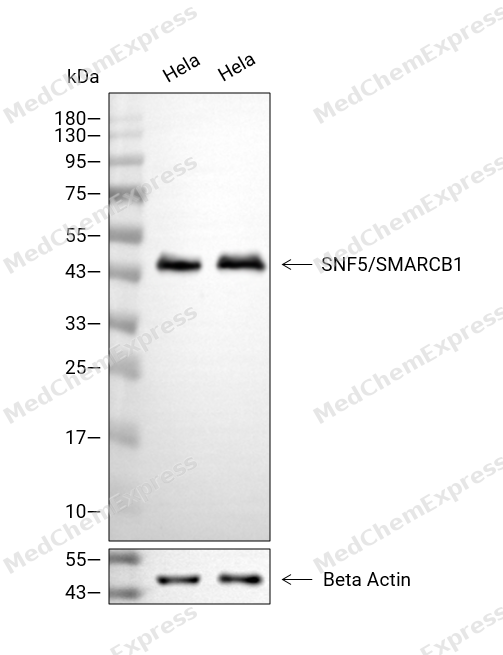 Western blot analysis of extracts from Hela (lane 2(20μg), Hela (lane 3(40μg), using SNF5/SMARCB1 Antibody. Proteins were transferred to a PVDF membrane and blocked with 5% BSA in TBST for 2 hour at room temperature. The primary antibody and Loading control antibody (Beta Actin, HY-P80438, 1/3000) was used in 5% BSA in TBST at 4°C overnight. Goat Anti-Mouse/Rabbit IgG-HRP Secondary Antibody (HY-P8004/HY-P8001, 1/10,000) was used for 1 hour at room temperature.
 -
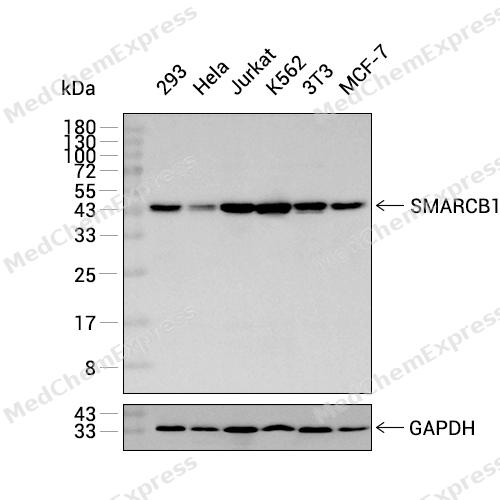 Western blot analysis was performed on extracts from 293 (lane 1, 15 μg), Hela (lane 2, 15 μg), Jurkat (lane 3, 15 μg), K562 (lane 4, 15 μg), 3T3 (lane 5, 15 μg), and MCF-7 (lane 6, 15 μg) using SMARCB1 Rabbit mAb.Proteins were transferred to a PVDF membrane and blocked with 5% non-fat milk in TBST at 4°C overnight.The primary antibody (1:1000 dilution) and the loading control antibody (GAPDH, HY-P80137, 1:60000 dilution) were incubated in 5% non-fat milk in TBST for 1 hour at 37°C.Goat Anti-Rabbit IgG-HRP Secondary Antibody (1:20000 dilution) was then applied for 40 minutes at 37°C.
 -
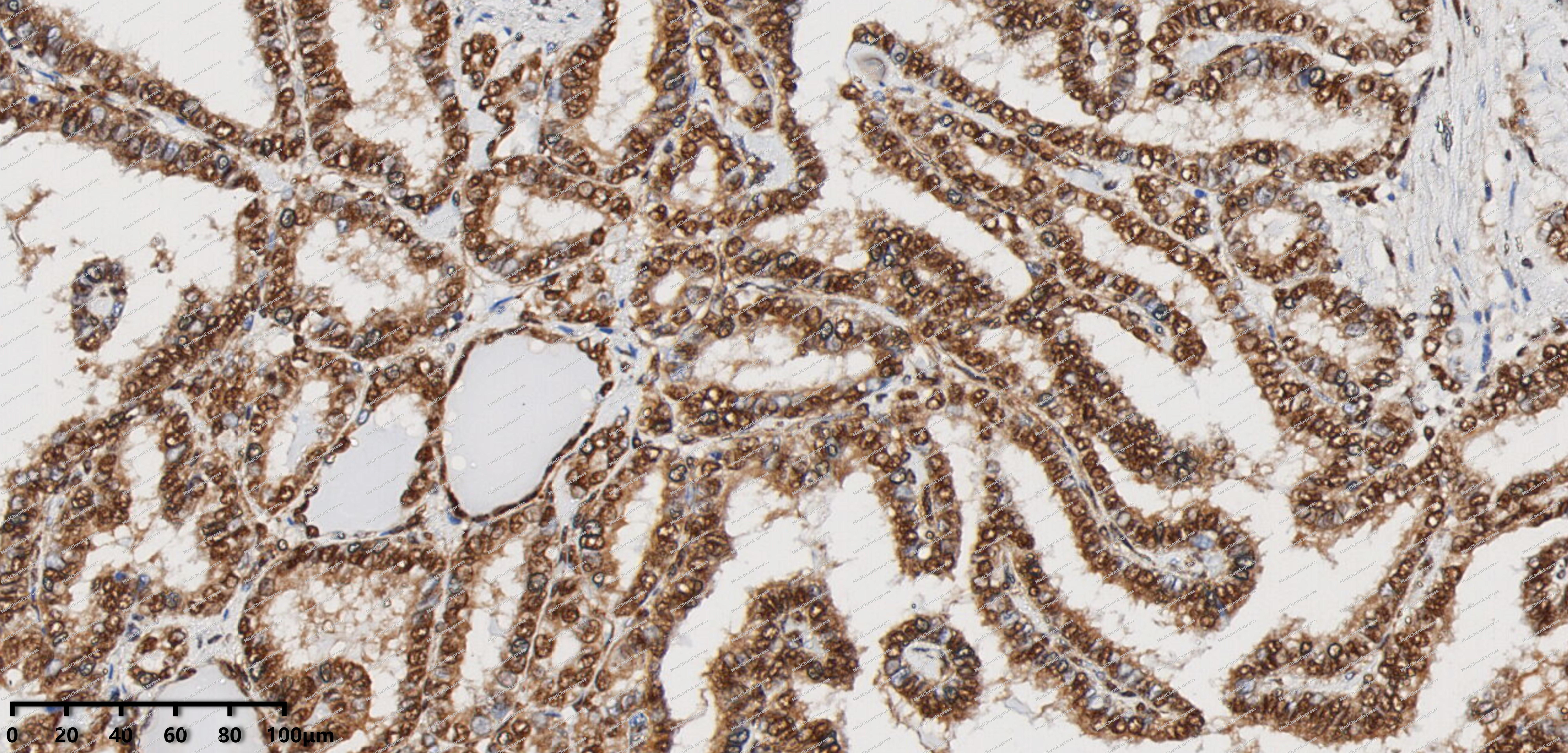 Immunohistochemical analysis of paraffin-embedded human Papillary Thyroid Carcinoma tissue using SMARCB1 antibody was performed. The section was pretreated using high-temperature mediated EDTA antigen retrieval buffer (pH 9.0), for 20 minutes. The tissues were incubated with primary antibody (HY-P82273, 1:400 dilution) at room temperature for 20 minutes. Detection was performed using an HRP conjugated compact polymer system. DAB was used as the chromogen. The tissues were counterstained with hematoxylin and mounted with neutral balsam mounting medium.
 -
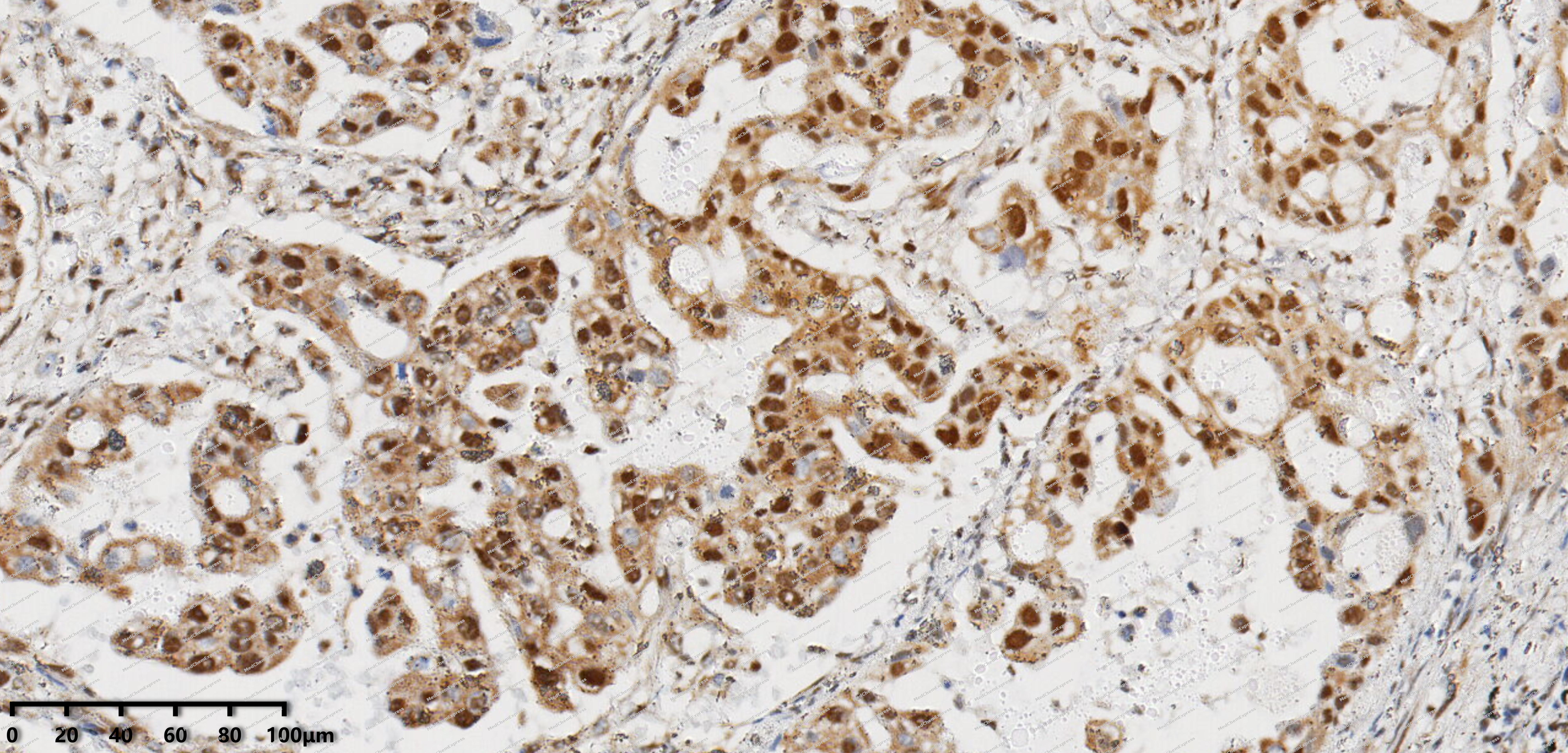 Immunohistochemical analysis of paraffin-embedded human Non-Small Cell Lung Cancer tissue using SMARCB1 antibody was performed. The section was pretreated using high-temperature mediated EDTA antigen retrieval buffer (pH 9.0), for 20 minutes. The tissues were incubated with primary antibody (HY-P82273, 1:400 dilution) at room temperature for 20 minutes. Detection was performed using an HRP conjugated compact polymer system. DAB was used as the chromogen. The tissues were counterstained with hematoxylin and mounted with neutral balsam mounting medium.
 -
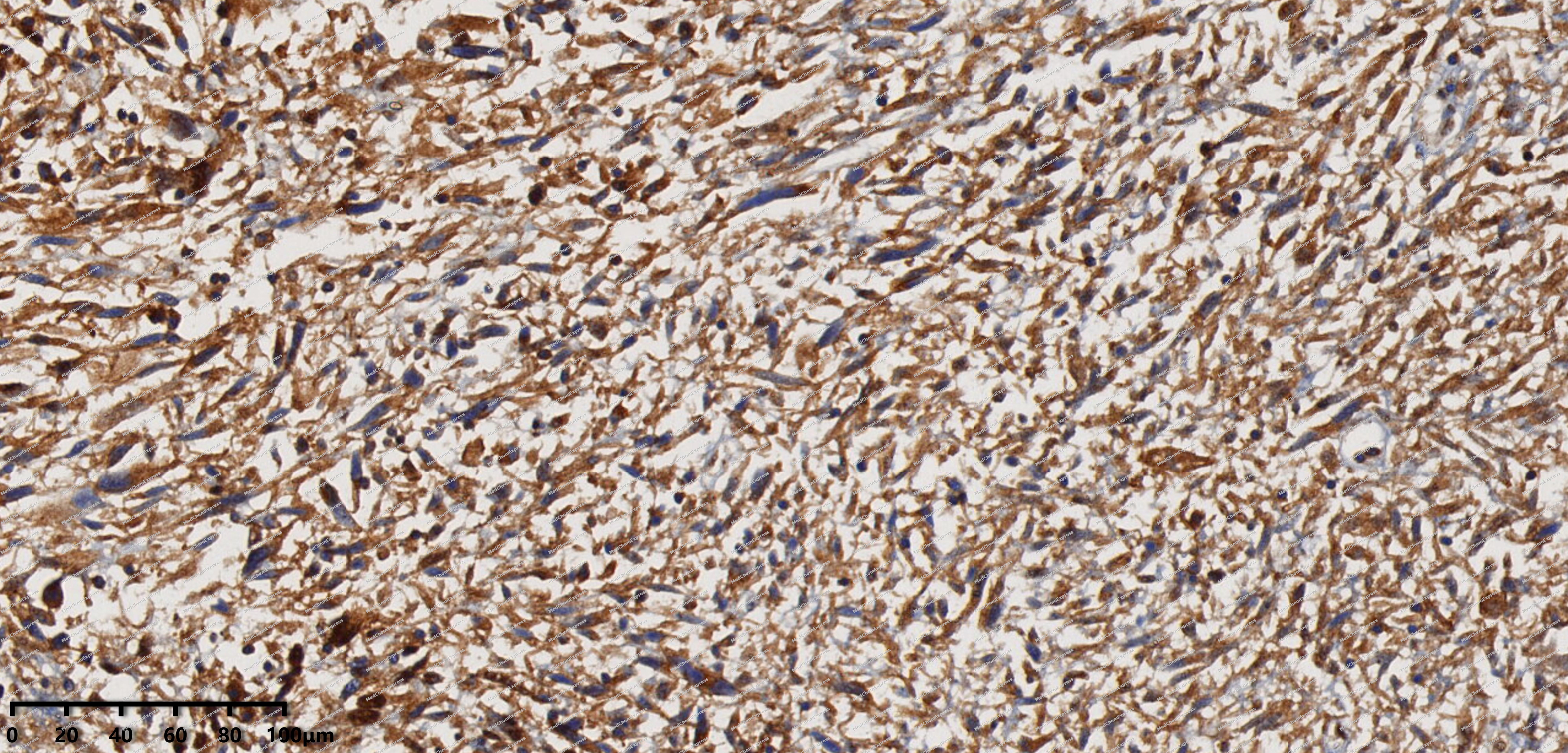 Immunohistochemical analysis of paraffin-embedded human osteosarcoma tissue using SMARCB1 antibody was performed. The section was pretreated using high-temperature mediated EDTA antigen retrieval buffer (pH 9.0), for 20 minutes. The tissues were incubated with primary antibody (HY-P82273, 1:400 dilution) at room temperature for 20 minutes. Detection was performed using an HRP conjugated compact polymer system. DAB was used as the chromogen. The tissues were counterstained with hematoxylin and mounted with neutral balsam mounting medium.
 -
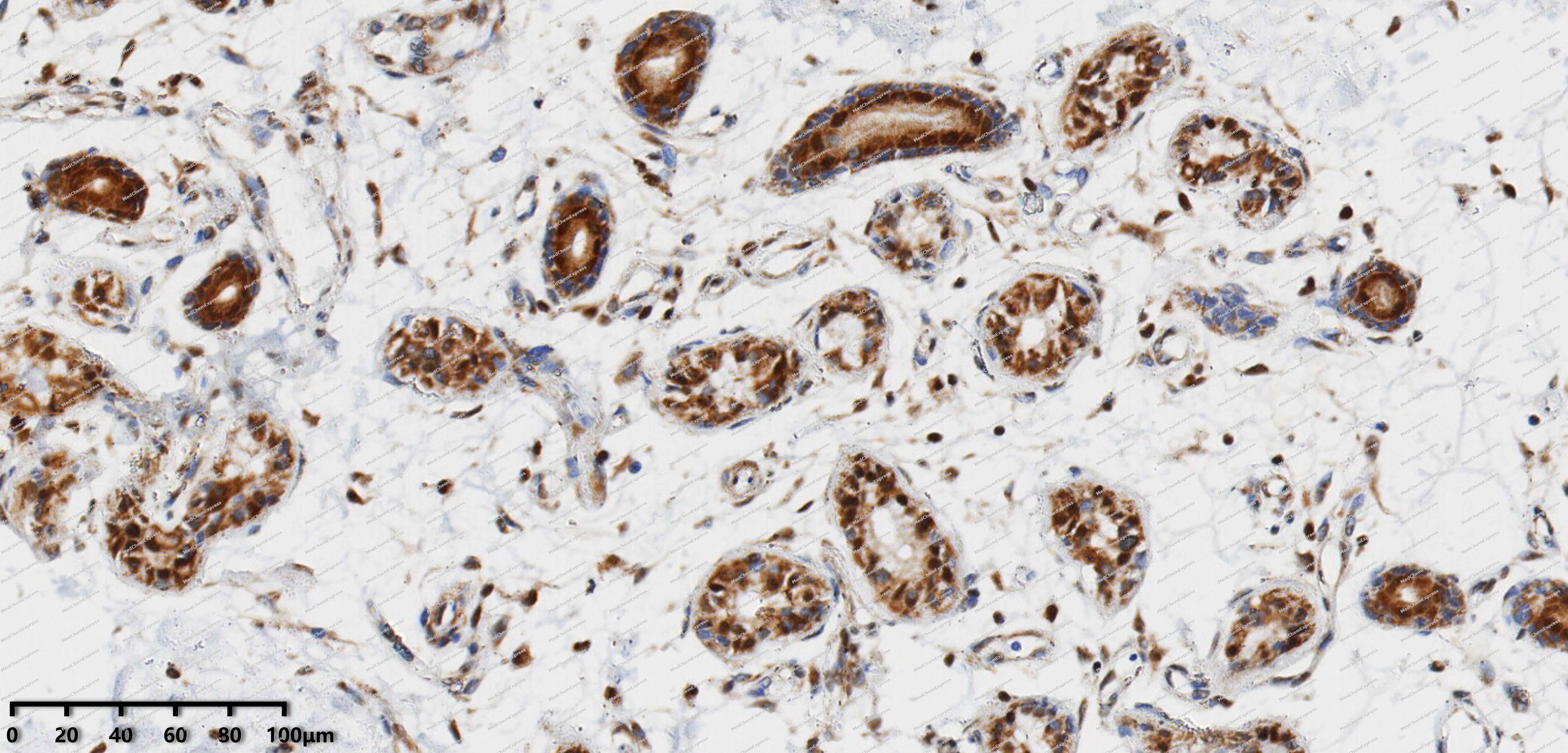 Immunohistochemical analysis of paraffin-embedded human clear cell sarcoma tissue using SMARCB1 antibody was performed. The section was pretreated using high-temperature mediated EDTA antigen retrieval buffer (pH 9.0), for 20 minutes. The tissues were incubated with primary antibody (HY-P82273, 1:400 dilution) at room temperature for 20 minutes. Detection was performed using an HRP conjugated compact polymer system. DAB was used as the chromogen. The tissues were counterstained with hematoxylin and mounted with neutral balsam mounting medium.
 -
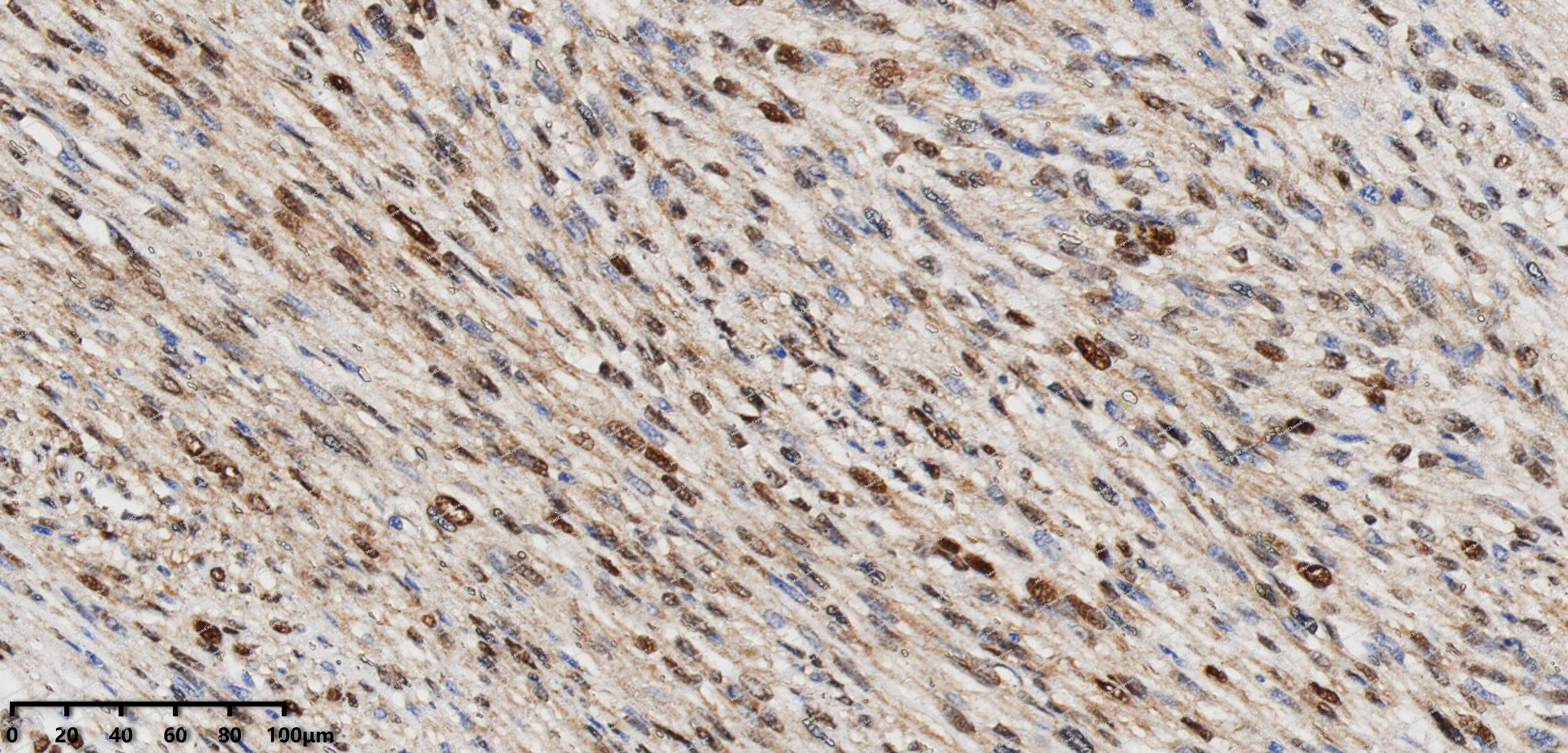 Immunohistochemical analysis of paraffin-embedded human myosarcoma tissue using SMARCB1 antibody was performed. The section was pretreated using high-temperature mediated EDTA antigen retrieval buffer (pH 9.0), for 20 minutes. The tissues were incubated with primary antibody (HY-P82273, 1:400 dilution) at room temperature for 20 minutes. Detection was performed using an HRP conjugated compact polymer system. DAB was used as the chromogen. The tissues were counterstained with hematoxylin and mounted with neutral balsam mounting medium.
 -
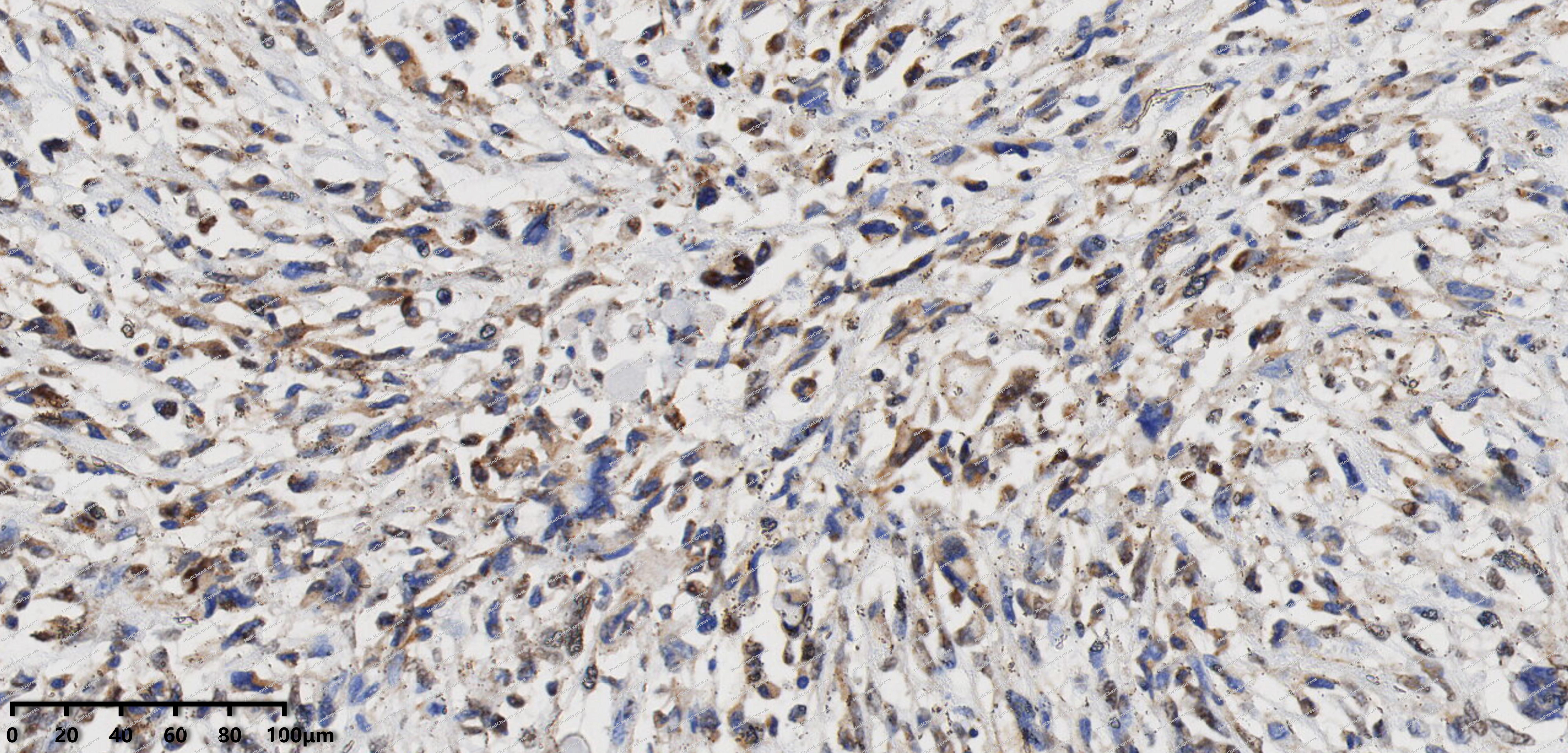 Immunohistochemical analysis of paraffin-embedded human soft tissue sarcoma tissue using SMARCB1 antibody was performed. The section was pretreated using high-temperature mediated EDTA antigen retrieval buffer (pH 9.0), for 20 minutes. The tissues were incubated with primary antibody (HY-P82273, 1:400 dilution) at room temperature for 20 minutes. Detection was performed using an HRP conjugated compact polymer system. DAB was used as the chromogen. The tissues were counterstained with hematoxylin and mounted with neutral balsam mounting medium.
 -
 Immunocytochemistry analysis of Hela cells labeling SMARCB1 with SMARCB1 Antibody (HY-P82273) at 1/100 dilution. Cells were fixed in 4% paraformaldehyde for 15 minutes at room temperature, permeabilized with 0.1% Triton X-100 in PBS for 15 minutes at room temperature, then blocked with quick block buffer for 10 minutes at room temperature. Cells were then incubated with SMARCB1 Antibody (HY-P82273) at 1/100 dilution in quick block buffer overnight at 4 ℃. AF488-conjugated Goat Anti-Rabbit IgG H&L (HY-P8002, Green) was used as the secondary antibody at 1/1,000 dilution. PBS instead of the primary antibody was used as the secondary antibody only control. The Nuclear counterstain was DAPI (Blue).
 -
 Immunocytochemistry analysis of Hela cells labeling SMARCB1 with SMARCB1 Antibody (HY-P82273) at 1/200 dilution. Cells were fixed in 4% paraformaldehyde for 15 minutes at room temperature, permeabilized with 0.1% Triton X-100 in PBS for 15 minutes at room temperature, then blocked with quick block buffer for 10 minutes at room temperature. Cells were then incubated with SMARCB1 Antibody (HY-P82273) at 1/200 dilution in quick block buffer overnight at 4 ℃. AF488-conjugated Goat Anti-Rabbit IgG H&L (HY-P8002, Green) was used as the secondary antibody at 1/1,000 dilution. PBS instead of the primary antibody was used as the secondary antibody only control. The Nuclear counterstain was DAPI (Blue).


Background
-
Function
SMARCB1 encodes a core SWI/SNF/BAF chromatin-remodeling subunit that supports chromatin access and transcriptional regulation[1]. Mechanistically, SMARCB1 enables BAF-mediated enhancer activation and helps activate bivalent promoters through opposition to Polycomb repression[2]. In malignant rhabdoid tumor models, biallelic SMARCB1 loss defines disease biology and rewires patient-specific distal enhancers linked to MYC expression[3][4]. Compared with related BAF assemblies, SMARCB1-containing complexes preferentially occupy enhancers, whereas BRD9-containing SMARCB1-lacking complexes localize at promoters and enhancers and create a BRD9 vulnerability after SMARCB1 loss[5]. SMARCB1 has two splice isoforms generated by alternative splicing within exon 2, producing 385- and 376-amino-acid proteins[6]. For experimental applications, SMARCB1-deficient models support studies of enhancer regulation, Polycomb antagonism, MYC-driven oncogenic transcription, and BRD9 dependency[2][3][5].- SMARCB1 links BAF chromatin remodeling to enhancer activation and Polycomb-opposed promoter regulation. - SMARCB1-deficient tumor models enable mechanistic studies of MYC enhancers and BRD9 vulnerability.
-
Subcellular Localization
Nucleus
-
Isoforms & Post-Translational Modification
Q12824 has 2 isomers: Q12824-1: 44141 Da (predicted); Q12824-2: 43158 Da (predicted).
-
Subunit
Component of the multiprotein chromatin-remodeling complexes SWI/SNF: SWI/SNF-A (BAF), SWI/SNF-B (PBAF) and related complexes. The canonical complex contains a catalytic subunit (either SMARCA4/BRG1/BAF190A or SMARCA2/BRM/BAF190B) and at least SMARCE1, ACTL6A/BAF53, SMARCC1/BAF155, SMARCC2/BAF170, and SMARCB1/SNF5/BAF47. Other subunits specific to each of the complexes may also be present permitting several possible combinations developmentally and tissue specific (Probable). Component of the BAF complex, which includes at least actin (ACTB), ARID1A/BAF250A, ARID1B/BAF250B, SMARCA2/BRM, SMARCA4/BRG1/BAF190A, ACTL6A/BAF53, ACTL6B/BAF53B, SMARCE1/BAF57 SMARCC1/BAF155, SMARCC2/BAF170, SMARCB1/SNF5/INI1, and one or more SMARCD1/BAF60A, SMARCD2/BAF60B, or SMARCD3/BAF60C. In muscle cells, the BAF complex also contains DPF3 (PubMed:18765789, PubMed:8895581). Component of neural progenitors-specific chromatin remodeling complex (npBAF complex) composed of at least, ARID1A/BAF250A or ARID1B/BAF250B, SMARCD1/BAF60A, SMARCD3/BAF60C, SMARCA2/BRM/BAF190B, SMARCA4/BRG1/BAF190A, SMARCB1/BAF47, SMARCC1/BAF155, SMARCE1/BAF57, SMARCC2/BAF170, PHF10/BAF45A, ACTL6A/BAF53A and actin. Component of neuron-specific chromatin remodeling complex (nBAF complex) composed of at least, ARID1A/BAF250A or ARID1B/BAF250B, SMARCD1/BAF60A, SMARCD3/BAF60C, SMARCA2/BRM/BAF190B, SMARCA4/BRG1/BAF190A, SMARCB1/BAF47, SMARCC1/BAF155, SMARCE1/BAF57, SMARCC2/BAF170, DPF1/BAF45B, DPF3/BAF45C, ACTL6B/BAF53B and actin (By similarity). Component of the SWI/SNF-B (PBAF) chromatin remodeling complex, at least composed of SMARCA4/BRG1, SMARCB1/BAF47/SNF5, ACTL6A/BAF53A or ACTL6B/BAF53B, SMARCE1/BAF57, SMARCD1/BAF60A, SMARCD2/BAF60B, perhaps SMARCD3/BAF60C, SMARCC1/BAF155, SMARCC2/BAF170, PBRM1/BAF180, ARID2/BAF200 and actin (PubMed:26601204). Binds to double-stranded DNA. Interacts with CEBPB (when not methylated) (PubMed:20111005). Interacts with PIH1D1 (PubMed:22368283). Interacts with MYK and MAEL (PubMed:10319872). Interacts with PPP1R15A (PubMed:10490642, PubMed:12016208). Interacts with DPF2 (PubMed:20460684). Interacts with YWHAZ (PubMed:16959763). Interacts with ERCC6 (PubMed:24874740). Interacts with FOS, FOSB isoform 1 and 2, FOSL1 and FOSL2 (By similarity)
-
SwissProt ID
-
Synonyms
SMARCB1; BAF47; hSNF5; INI1; RDT; RTPS1; Sfh1p; SMARCB1; SNF5 homolog; SNF5L1; Snr1; SWI/SNF comp
-
Research Field
Epigenetics and Nuclear Signaling


Documentation
-
Data Sheet (261 KB)
-
SDS (252 KB)
- English - EN (252 KB)
- Français - FR (252 KB)
- Deutsch - DE (252 KB)
- Norwegian - NO (252 KB)
- Español - ES (252 KB)
- Swedish - SV (252 KB)
- Italian - IT (252 KB)
- Korean - KR (252 KB)
- Portuguese - PT (252 KB)
-
User Guide for Antibodies (1077 KB)
References
[1]. SMARCB1 gene information from NCBI.
[2]. Nakayama RT, et al. SMARCB1 is required for widespread BAF complex-mediated activation of enhancers and bivalent promoters. Nat Genet. 2017 Nov;49(11):1613-1623. [Content Brief]
[3]. Versteege I, et al. Truncating mutations of hSNF5/INI1 in aggressive paediatric cancer. Nature. 1998 Jul 9;394(6689):203-6. [Content Brief]
[4]. Liu NQ, et al. SMARCB1 loss activates patient-specific distal oncogenic enhancers in malignant rhabdoid tumors. Nat Commun. 2023 Dec 1;14(1):7762. [Content Brief]
[5]. Wang X, et al. BRD9 defines a SWI/SNF sub-complex and constitutes a specific vulnerability in malignant rhabdoid tumors. Nat Commun. 2019;10(1):1881. [Content Brief]
[6]. Bruder CE, et al. The mouse ortholog of the human SMARCB1 gene encodes two splice forms. Biochem Biophys Res Commun. 1999 Apr 21;257(3):886-90. [Content Brief]

 Powered by Bioz
