



Physalaemin
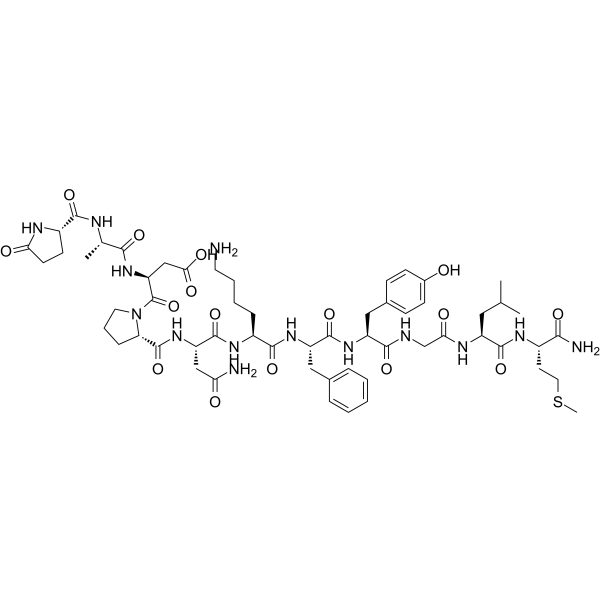
Physalaemin, a non-mammalian tachykinin, binds selectively to neurokinin-1 (NK1) receptor with high affinity.
Nur für Forschungszwecke. Wir verkaufen nicht an Patienten.
- CAS. Nr.: 2507-24-6
- Formel: C58H84N14O16S
- Molecular Weight:1265.44
-
Speicherung:
Please store the product under the recommended conditions in the Certificate of Analysis.

To place orders, for customer services and technical support, please contact: MedChemExpress USA
Tel: 609-228-6898 E-mail: [email protected] [email protected]


-
 Biologische Aktivität
-
Chemical Information
- Reinheit & Dokumentation
- Verweise
-
 Help & FAQs


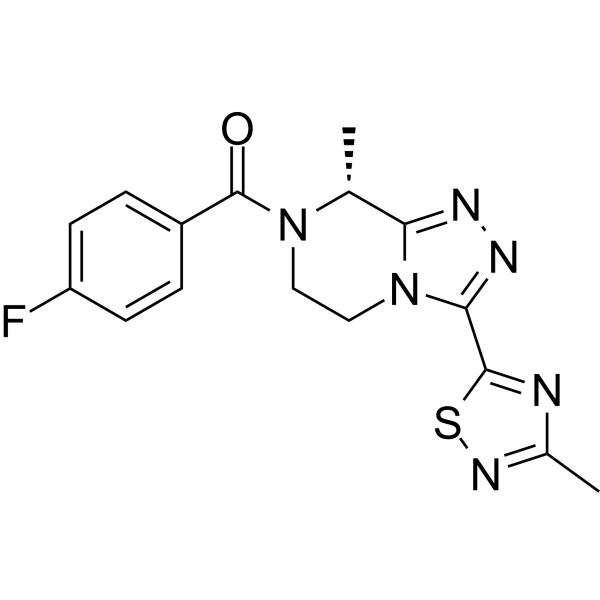
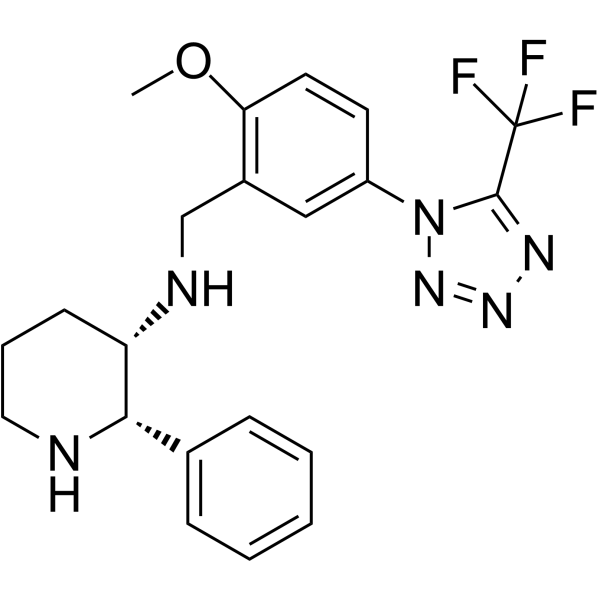
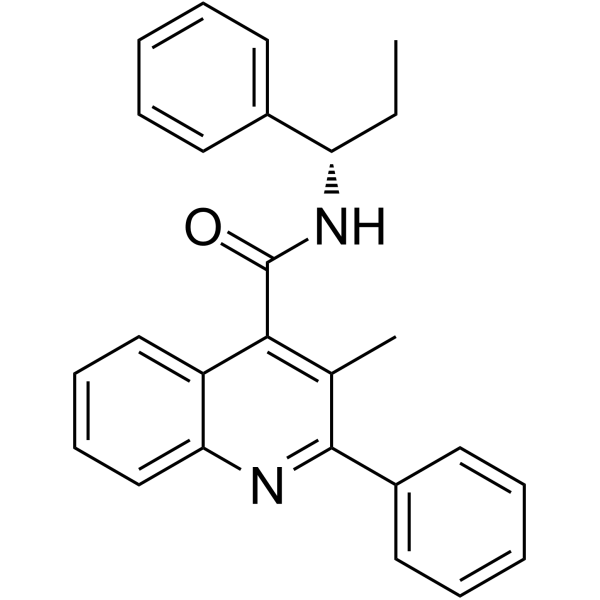
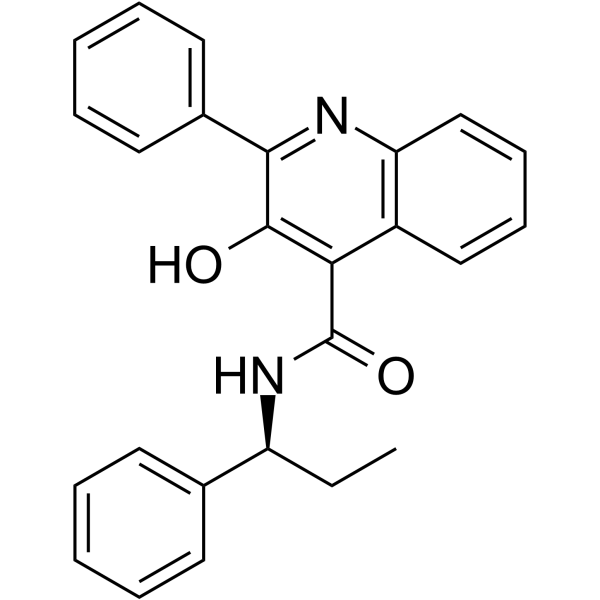
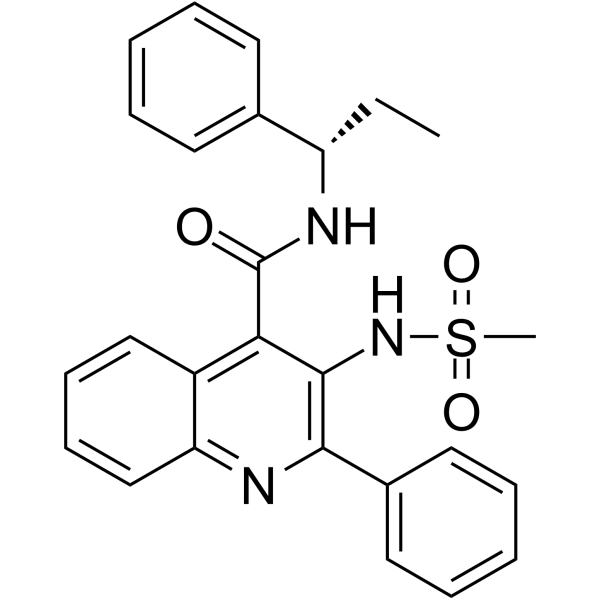
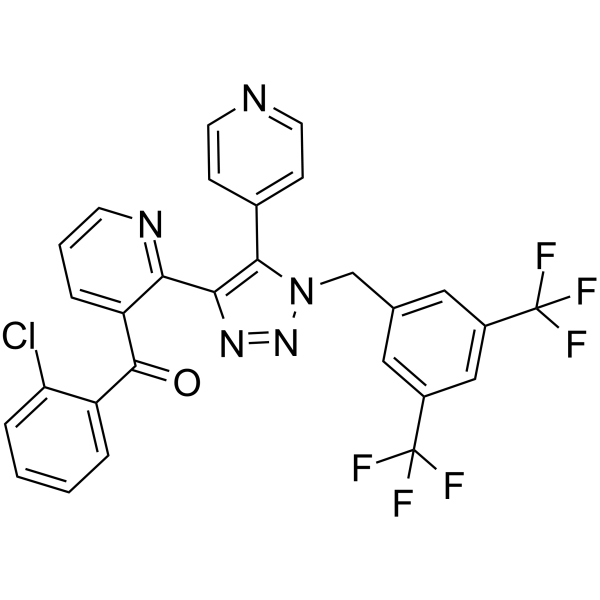
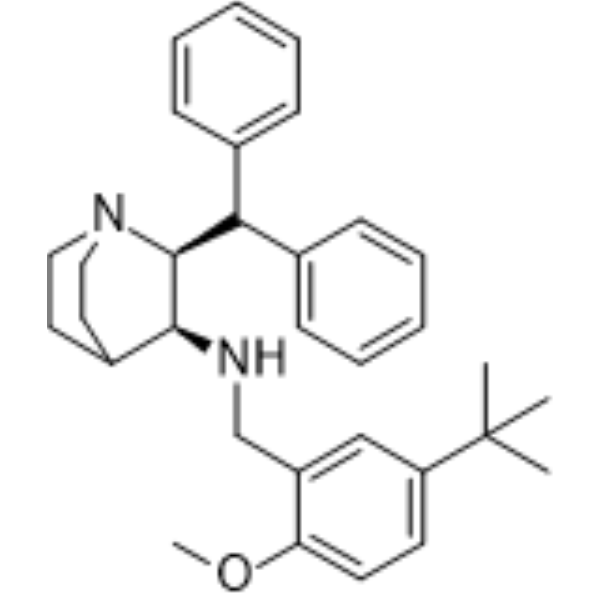


Biologische Aktivität
|
NK1R |
Physalaemin (PHY), an undecapeptide with the sequence pGlu-Ala-Asp-Pro-Asn-Lys-Phe-Tyr-Gly-Leu-Met-NH2, is a member of the tachykinin family of neuropeptides. PHY is very close to the mammalian tachykinin substance P (SP) in its function and chemical composition, and SP is well studied and characterized[1]. Physalaemin is a bradykinin potentiating peptide (BPP-5a)[2].
MedChemExpress (MCE) has not independently confirmed the accuracy of these methods. They are for reference only.


Chemical Information
-
CAS. Nr. 2507-24-6
-
Molecular Weight 1265.44
-
Formel C58H84N14O16S
-
SMILES
OC(C=C1)=CC=C1C[C@@H](C(NCC(N[C@@H](CC(C)C)C(N[C@H](C(N)=O)CCSC)=O)=O)=O)NC([C@H](CC2=CC=CC=C2)NC([C@H](CCCCN)NC([C@H](CC(N)=O)NC([C@H]3N(CCC3)C([C@H](CC(O)=O)NC([C@H](C)NC([C@H]4NC(CC4)=O)=O)=O)=O)=O)=O)=O)=O
-
Sequence
GLP-Ala-Asp-Pro-Asn-Lys-Phe-Tyr-Gly-Leu-Met-NH2
-
Sequence Shortening
{Glp}-ADPNKFYGLM-NH2
-
Structure Classification
-
Initial Source
African frog Kassina senegalensis
-
Versand
Room temperature in continental US; may vary elsewhere.
-
Speicherung
Please store the product under the recommended conditions in the Certificate of Analysis.


Reinheit & Dokumentation
Verweise
[1]. Grace CR, et al. Solution conformation of non-mammalian tachykinin physalaemin in lipid micelles by nuclear magnetic resonance. Biopolymers. 2011;96(3):252-9. [Content Brief]
[2]. Kobayashi J, Hydrolytic cleavage of pyroglutamyl-peptide bond. V. selective removal of pyroglutamic acid from biologically active pyroglutamylpeptides in high concentrations of aqueous methanesulfonic acid. Chem Pharm Bull (Tokyo). 2006 Jun;54(6):827-31. [Content Brief]

Calculators
Konzentration (Stammlösung) × Volumen (Stammlösung) = Konzentration (Ziellösung) × Volumen (Ziellösung)


Physalaemin Related Classifications
HY-P0255 Related Classifications
 Powered by Bioz