



HBV Reverse Transcriptase
-
HBV Reverse Transcriptase (5)

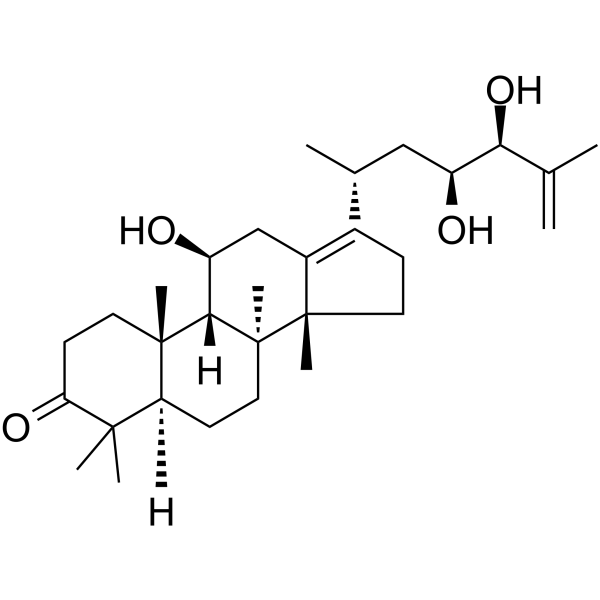
- 分子式: C30H48O4
- 分子量: 472.70
Alisol G (25-Anhydroalisol A) is a human carboxylesterase 2 (hCES2) inhibitor with an IC50 of 3.85 μM. Alisol G exhibits cytotoxic activity against human cancer cells, antibacterial activity against Gram-positive strains, and anti-hepatitis B virus activity. Alisol G can be used in research related to lung cancer, breast cancer, prostate cancer, bacterial infections, and HBV infections.

- 分子式: C28H32O9
- 分子量: 512.55

- 分子式: C18H22ClNO6
- 分子量: 383.82
Acutumidine is a chlorinated alkaloid present in the cultured roots of Menispermum dauricum and Hypserpa nitida Miers. Acutumidine exhibits anti-HBV activity, with an IC50 value of 2.023 mM against hepatitis B virus surface antigen. Acutumidine can be used in studies related to hepatitis B.

- 分子式: C12H14N4O3
- 分子量: 262.26
7-Deazaneplanocin A is a carbocyclic nucleoside analog with anti-HCV activity and anti-HBV activity (EC50 0.60 µM). 7-Deazaneplanocin A exhibits activity against vaccinia virus and variola virus in vitro, with low cytotoxicity. 7-Deazaneplanocin A is applicable to studies related to viral infections.

- 分子式: C224H291N88O112P19S19
- 分子量: 7205.96
Cleruvirsen is a hepatitis B virus surface antigen (HBsAg) inhibitor with anti-hepatitis B virus (HBV) activity. Cleruvirsen can be used for hepatitis B-related research[1].



