



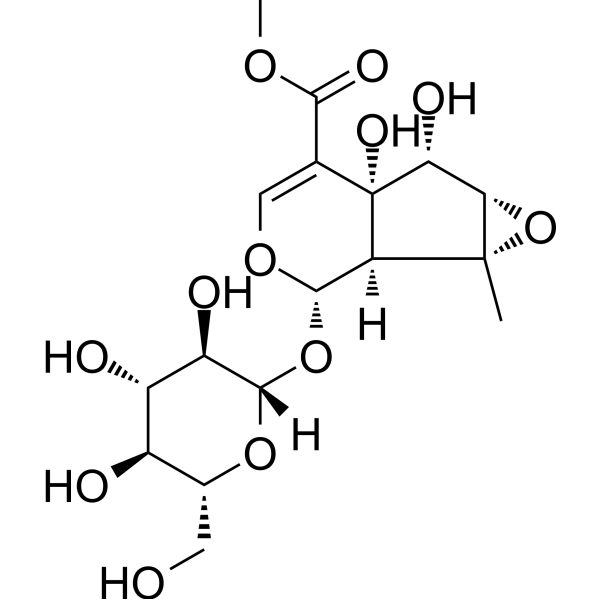
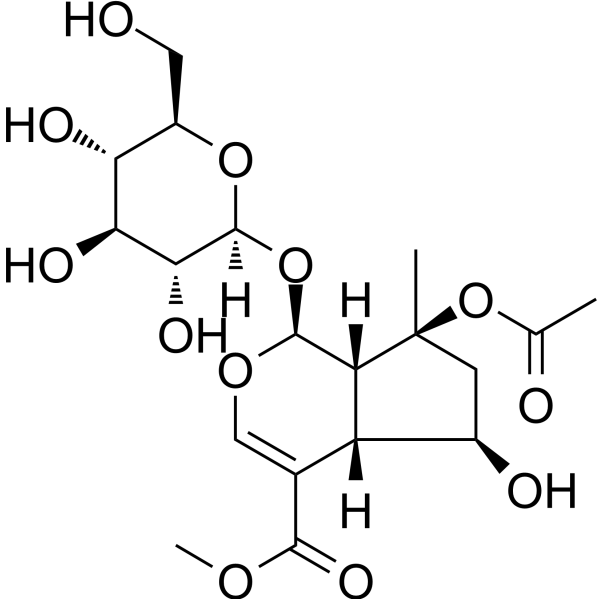
Sesamoside

Based on 1 Customer Validation
Sesamoside is an orally active anti-inflammatory, anti-hypoxic and analgesic agent. Sesamoside inhibits the phosphorylation of ERK and JNK, downregulates NLRP3 expression, restricts the nuclear localization of P65, regulates AKR1B1 expression, and reduces the expression of TRPV1 gene in the spinal cord. Sesamoside reduces the production of TNF-α, IL-6, IL-1β, iNOS and NO, restores cellular metabolism and organ function, and alleviates cold and mechanical hyperalgesia. Sesamoside can be used in research related to septic shock, high-altitude pulmonary edema and neuropathic pain.
연구목적의 판매만을 진행합니다. 환자를 대상으로 한 판매는 하지 않습니다.
- Purity : 99.77%
- CAS No.: 117479-87-5
- 화학식: C17H24O12
- 분자량:420.37
-
보관:
4°C, protect from light
* In solvent : -80°C, 6 months; -20°C, 1 month (protect from light)

To place orders, for customer services and technical support, please contact: MedChemExpress USA
Tel: 609-228-6898 E-mail: [email protected] [email protected]


-
 Biological Activity
-
Chemical Information
-
용액&용해도
- Protocol
- 순도&문서
- References
-
 Help & FAQs




Biological Activity
제품 설명
In Vitro
Sesamoside (25-500 µM; 12 h) shows no cytotoxicity in mouse Raw264.7 cells even at concentrations up to 200 µM, with an IC50 of 246.4 µM, and only induces significant apoptosis at the concentration of 500 µM[1].
Sesamoside (25-200 µM; 6-24 h) dose-dependently and time-dependently inhibits the LPS (HY-D1056)-induced upregulation of TNF-α, IL-6, IL-1β and iNOS mRNA expression as well as NO production in mouse Raw264.7 cells[1].
Sesamoside (200 µM; 6-24 h) inhibits LPS-induced activation of the NF-κB/MAPK pathway in mouse Raw264.7 cells by reducing the phosphorylation levels of ERK and JNK, and downregulating NLRP3 protein expression in a time-dependent manner[1].
Sesamoside (200 µM; 6-24 h) inhibits LPS-induced nuclear localization of P65 in murine Raw264.7 cells in a time-dependent manner at the concentration of 200 µM[1].
Sesamoside binds tightly to human aldose reductase (AR/AKR1B1) with a binding energy of -5.5 kcal/mol[2].
Pretreatment of human bronchial epithelial BEAS-2B cells with sesamoside (200 μM; 6 h) significantly attenuates hypoxia-induced upregulation of AR, ERK, VEGF-α and TNF-α mRNA expression, elevates hypoxia-downregulated IL-10 mRNA expression, and reduces hypoxia-induced IL-6 secretion, but exerts no significant effect on HIF-1α mRNA expression[2].
Pretreatment of human bronchial epithelial BEAS-2B cells with sesamoside (200 μM; 6 h) reduces hypoxia-induced IL-6 secretion[2].
MedChemExpress (MCE) has not independently confirmed the accuracy of these methods. They are for reference only.
-
Cell Line:mouse Raw264.7 macrophage cells
-
Concentration:25, 50, 100, 200, 500 µM
-
Incubation Time:12 h
-
Result:Showed almost no cytotoxicity at concentrations up to 200 µM, with an IC50 value of 246.4 µM.
Induced 31.61% apoptosis at 500 µM, while concentrations up to 200 µM caused negligible apoptosis.
-
Cell Line:mouse Raw264.7 macrophage cells
-
Concentration:25, 50, 100, 200 µM (6 h incubation); 200 µM (6, 12, 24 h incubation)
-
Incubation Time:6 h (25-200 µM); 6, 12, 24 h (200 µM)
-
Result:Blocked LPS-induced increases in TNF-α, IL-6, IL-1β, and iNOS mRNA transcription at 25-200 µM for 6 h, with 200 µM showing the strongest effect.
Significantly inhibited mRNA transcription of all four targets and reduced NO production at 200 µM for 6, 12, or 24 h, with the inhibitory effect generally increasing with longer incubation times.
-
Cell Line:mouse Raw264.7 macrophage cells
-
Concentration:200 µM
-
Incubation Time:6, 12, 24 h
-
Result:Inhibited LPS-induced phosphorylation of ERK and JNK, and downregulated NLRP3 protein expression, with the inhibitory effect increasing in a time-dependent manner over 6-24 h.
-
Cell Line:mouse Raw264.7 macrophage cells
-
Concentration:200 µM
-
Incubation Time:6, 12, 24 h
-
Result:Restricted LPS-induced nuclear translocation of P65 in a time-dependent manner, with the lowest nuclear P65 intensity observed after 24 h of treatment.
-
Cell Line:human bronchial epithelial BEAS-2B cells
-
Concentration:200 μM (pre-treatment); 800 μM (CoCl2, hypoxia induction)
-
Incubation Time:6 h (pre-treatment); 6 h (hypoxia induction)
-
Result:Significantly reduced the hypoxia-induced upregulation of AR, ERK, and VEGF-α mRNA expression compared to the hypoxia-only group.
Significantly reduced the hypoxia-induced upregulation of TNF-α mRNA expression compared to the hypoxia-only group.
Significantly increased the hypoxia-downregulated IL-10 mRNA expression compared to the hypoxia-only group.
Partially reduced the upregulation of IL-6 mRNA expression compared to the hypoxia-only group, but the effect was not statistically significant.
Significantly reduced the hypoxia-induced increase in IL-6 concentration in cell supernatant compared to the hypoxia-only group.
Partially reduced TNF-α secretion compared to the hypoxia-only group, but the effect was not statistically significant.
Had no significant impact on hypoxia-downregulated HIF-1α mRNA expression compared to the hypoxia-only group.
-
Cell Line:human bronchial epithelial BEAS-2B cells
-
Concentration:200 μM (pre-treatment); 800 μM (CoCl2, hypoxia induction)
-
Incubation Time:6 h (pre-treatment); 6 h (hypoxia induction)
-
Result:Significantly reduced the hypoxia-induced increase in IL-6 concentration in cell supernatant compared to the hypoxia-only group.
Partially reduced TNF-α secretion compared to the hypoxia-only group, but the effect was not statistically significant.
In Vivo
Sesamoside (5-7.5 mg/kg; i.p., p.o.; single dose) alleviates Paclitaxel (HY-B0015)-induced cold and mechanical peripheral neuropathy in mice, with 7.5 mg/kg doses (both intraperitoneal and oral) showing consistent efficacy, and oral 7.5 mg/kg sesamoside reducing spinal TRPV1 gene expression[3].
MedChemExpress (MCE) has not independently confirmed the accuracy of these methods. They are for reference only.
-
Animal Model:Kunming mice (male, 8-10 weeks old, specific pathogen-free, intraperitoneal injection of 10 mg/kg LPS)[1]
-
Dosage:1 mg/kg; 5 mg/kg; 10 mg/kg
-
Administration:i.p.; single dose
-
Result:Significantly alleviated LPS-induced multi-organ damage to the heart, liver, spleen, lungs, and kidneys, reducing tissue congestion, edema, bleeding foci, and inflammatory cell infiltration in a dose-dependent manner.
Dose-dependently reduced mRNA transcription of pro-inflammatory cytokines TNF-α, IL-6, IL-1β, and iNOS in spleen tissue.
Inhibited LPS-induced phosphorylation of ERK and JNK, decreased protein expression of NLRP3 and P65 in spleen tissue.
Dose-dependently reduced nuclear localization of P65 in multiple organs.
-
Animal Model:C57BL/6 (male, 6-week-old, peripheral neuropathy induced by paclitaxel)[3]
-
Dosage:5 mg/kg; 7.5 mg/kg
-
Administration:i.p.; single dose; p.o.; single dose
-
Result:Significantly reduced cold hypersensitivity (decreased response frequency in acetone drop tests) and increased mechanical sensitivity threshold (increased 50% threshold value in von Frey filament tests) at 7.5 mg/kg i.p. compared to paclitaxel + PBS controls.
Showed no significant effect on cold or mechanical hypersensitivity at 5 mg/kg i.p. compared to paclitaxel + PBS controls.
Significantly reduced cold hypersensitivity at 5 mg/kg and 7.5 mg/kg p.o. compared to paclitaxel + PBS controls.
Significantly increased mechanical sensitivity threshold at 7.5 mg/kg p.o. compared to paclitaxel + PBS controls.
Showed no significant effect on mechanical sensitivity threshold at 5 mg/kg p.o. compared to paclitaxel + PBS controls.
Significantly downregulated spinal TRPV1 gene expression at 7.5 mg/kg p.o. compared to paclitaxel + PBS controls.
Showed no significant effect on spinal TRPV1 gene expression at 5 mg/kg p.o. compared to paclitaxel + PBS controls.


Chemical Information
-
CAS No. 117479-87-5
-
Appearance Solid
-
분자량 420.37
-
화학식 C17H24O12
-
Color White to off-white
-
SMILES
O=C(OC)C1=CO[C@@H](O[C@@]2([H])[C@H](O)[C@@H](O)[C@H](O)[C@@H](CO)O2)[C@@]3([H])[C@]1(O)[C@H](O)[C@H]4[C@]3(C)O4
-
Structure Classification
-
선적
Room temperature in continental US; may vary elsewhere.
-
보관
4°C, protect from light
* In solvent : -80°C, 6 months; -20°C, 1 month (protect from light)


용액&용해도
In Vitro:
DMSO : 100 mg/mL (237.89 mM; Need ultrasonic; Hygroscopic DMSO has a significant impact on the solubility of product, please use newly opened DMSO)
Please refer to the solubility information to select the appropriate solvent. Once prepared, please aliquot and store the solution to prevent product inactivation from repeated freeze-thaw cycles.
Storage method and period of stock solution: -80°C, 6 months; -20°C, 1 month (protect from light). When stored at -80°C, please use it within 6 months. When stored at -20°C, please use it within 1 month.
Please refer to the solubility information to select the appropriate solvent. Once prepared, please aliquot and store the solution to prevent product inactivation from repeated freeze-thaw cycles.
Storage method and period of stock solution: -80°C, 6 months; -20°C, 1 month (protect from light). When stored at -80°C, please use it within 6 months. When stored at -20°C, please use it within 1 month.
Concentration (start) × Volume (start) = Concentration (final) × Volume (final)
In Vivo:
Select the appropriate dissolution method based on your experimental animal and administration route.
- For the following dissolution methods, please ensure to first prepare a clear stock solution using an In Vitro approach and then sequentially add co-solvents:
- To ensure reliable experimental results, the clarified stock solution can be appropriately stored based on storage conditions. As for the working solution for In Vivo experiments, it is recommended to prepare freshly and use it on the same day.
- The percentages shown for the solvents indicate their volumetric ratio in the final prepared solution. If precipitation or phase separation occurs during preparation, heat and/or sonication can be used to aid dissolution.
Add each solvent one by one: 10% DMSO 40% PEG300 5% Tween-80 45% Saline
Solubility: ≥ 2.5 mg/mL (5.95 mM); Clear solution
This protocol yields a clear solution of ≥ 2.5 mg/mL (saturation unknown).
Taking 1 mL working solution as an example, add 100 μL DMSO stock solution (25.0 mg/mL) to 400 μL PEG300, and mix evenly; then add 50 μL Tween-80 and mix evenly; then add 450 μL Saline to adjust the volume to 1 mL.
Preparation of Saline: Dissolve 0.9 g sodium chloride in ddH₂O and dilute to 100 mL to obtain a clear Saline solution.
Add each solvent one by one: 10% DMSO 90% (20% SBE-β-CD in Saline)
Solubility: ≥ 2.5 mg/mL (5.95 mM); Clear solution
This protocol yields a clear solution of ≥ 2.5 mg/mL (saturation unknown).
Taking 1 mL working solution as an example, add 100 μL DMSO stock solution (25.0 mg/mL) to 900 μL 20% SBE-β-CD in Saline, and mix evenly.
Preparation of 20% SBE-β-CD in Saline (4°C, storage for one week): 2 g SBE-β-CD powder is dissolved in 10 mL Saline, completely dissolve until clear.
In Vivo Dissolution Calculator
Please enter the basic information of animal experiments:
-
-
-
-
Recommended: Prepare an additional quantity of animals to account for potential losses during experiments.
Please enter your animal formula composition:
-
%DMSO +
Recommended: Keep the proportion of DMSO in working solution below 2% if your animal is weak.
-
%+
-
+%Tween-80 + +
-
%Saline +
The co-solvents required include: DMSO, . All of co-solvents are available by MedChemExpress (MCE). , Tween 80. All of co-solvents are available by MedChemExpress (MCE).
Working solution concentration: 0.22 mg/mL
Method for preparing stock solution: mg drug dissolved in μL DMSO. Stock solution concentration: mg/mL. * In solvent : -80°C, 6 months; -20°C, 1 month (protect from light)
1. Take μL DMSO stock solution;
2. Add μL .
μL , mix evenly;
3. Then add μL Tween 80, mix evenly;
4. Then add μL
Please ensure that the stock solution in the first step is dissolved to a clear state, and add co-solvents in sequence. You can use ultrasonic heating (ultrasonic cleaner, recommended frequency 20-40 kHz), vortexing, etc. to assist dissolution.


순도&문서
-
Data Sheet (294 KB)
-
SDS (252 KB)
- English - EN (252 KB)
- Français - FR (252 KB)
- Deutsch - DE (252 KB)
- Norwegian - NO (252 KB)
- Español - ES (252 KB)
- Swedish - SV (252 KB)
- Italian - IT (252 KB)
- Korean - KR (252 KB)
- Portuguese - PT (252 KB)
-
Handling Instructions (2659 KB)
References
[1]. Song D, et al. The amelioration effect of sesamoside on inflammatory response in septic shock. BMC Immunol. 2025;26(1):15. Published 2025 Mar 6. [Content Brief]
[2]. Song D, et al. The Anti-Hypoxic Mechanism of Sesamoside Determined Using Network Pharmacology. Dose Response. 2024;22(3):15593258241282574. Published 2024 Sep 7. [Content Brief]
[3]. Park KT, et al. Phlomidis Radix Extract Alleviates Paclitaxel-Induced Neuropathic Pain by Modulating Spinal TRPV1 in Mice. Plants (Basel). 2023 Nov 10;12(22):3819. [Content Brief]
[4]. Fuji Y, et al. Chemical characterization and biological activity in young sesame leaves (Sesamum indicum L.) and changes in iridoid and polyphenol content at different growth stages. PLoS One. 2018;13(3):e0194449. Published 2018 Mar 27. [Content Brief]
[5]. Yu Y, et al. Hedyotis chrysotricha aqueous extract inhibits hepatitis B surface antigen and viral replication via hepatocyte nuclear factor 4α regulation. Phytomedicine. 2025 Jul 25;143:156726. [Content Brief]


Complete Stock Solution Preparation Table
Please refer to the solubility information to select the appropriate solvent. Once prepared, please aliquot and store the solution to prevent product inactivation from repeated freeze-thaw cycles.
Storage method and period of stock solution: -80°C, 6 months; -20°C, 1 month (protect from light). When stored at -80°C, please use it within 6 months. When stored at -20°C, please use it within 1 month.
| Optional Solvent | Concentration Solvent Mass | 1 mg | 5 mg | 10 mg | 25 mg |
|---|---|---|---|---|---|
| DMSO | 1 mM | 2.3789 mL | 11.8943 mL | 23.7886 mL | 59.4714 mL |
| 5 mM | 0.4758 mL | 2.3789 mL | 4.7577 mL | 11.8943 mL | |
| 10 mM | 0.2379 mL | 1.1894 mL | 2.3789 mL | 5.9471 mL | |
| 15 mM | 0.1586 mL | 0.7930 mL | 1.5859 mL | 3.9648 mL | |
| 20 mM | 0.1189 mL | 0.5947 mL | 1.1894 mL | 2.9736 mL | |
| 25 mM | 0.0952 mL | 0.4758 mL | 0.9515 mL | 2.3789 mL | |
| 30 mM | 0.0793 mL | 0.3965 mL | 0.7930 mL | 1.9824 mL | |
| 40 mM | 0.0595 mL | 0.2974 mL | 0.5947 mL | 1.4868 mL | |
| 50 mM | 0.0476 mL | 0.2379 mL | 0.4758 mL | 1.1894 mL | |
| 60 mM | 0.0396 mL | 0.1982 mL | 0.3965 mL | 0.9912 mL | |
| 80 mM | 0.0297 mL | 0.1487 mL | 0.2974 mL | 0.7434 mL | |
| 100 mM | 0.0238 mL | 0.1189 mL | 0.2379 mL | 0.5947 mL |


Sesamoside Related Classifications
HY-N0412 Related Classifications
 Powered by Bioz