



Raptinal
Based on 12 publication(s) in Google Scholar
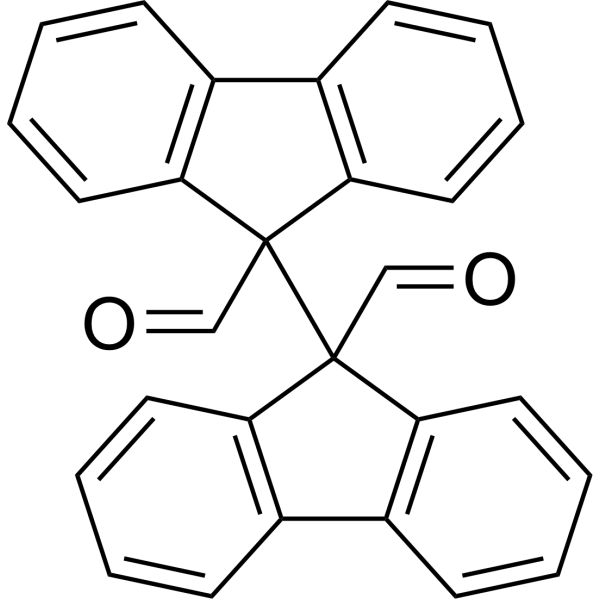
Raptinal, a agent that directly activates caspase-3, initiates intrinsic pathway caspase-dependent apoptosis. Raptinal is able to rapidly induce cancer cell death by directly activating the effector caspase-3, bypassing the activation of initiator caspase-8 and caspase-9.
For research use only. We do not sell to patients.
- Assay : 99.54%
- CAS No.: 1176-09-6
- Formula: C28H18O2
- Molecular Weight:386.44
-
Storage:Powder -20°C, 3 years , 4°C, 2 years ; In solvent -80°C, 6 months , -20°C, 1 month

To place orders, for customer services and technical support, please contact: MedChemExpress USA
Tel: 609-228-6898 E-mail: [email protected] [email protected]


-
 Biological Activity
-
Chemical Information
-
Solvent & Solubility
- Protocols
- Purity & Documentation
- References
-
 Help & FAQs


-
HY-12466
Z-DEVD-FMKCaspase-3 Inhibitor -
HY-12305
Q-VD-OPhPan-caspase Inhibitor -
HY-13205
BelnacasanCaspase-1 Inhibitor -
HY-15141
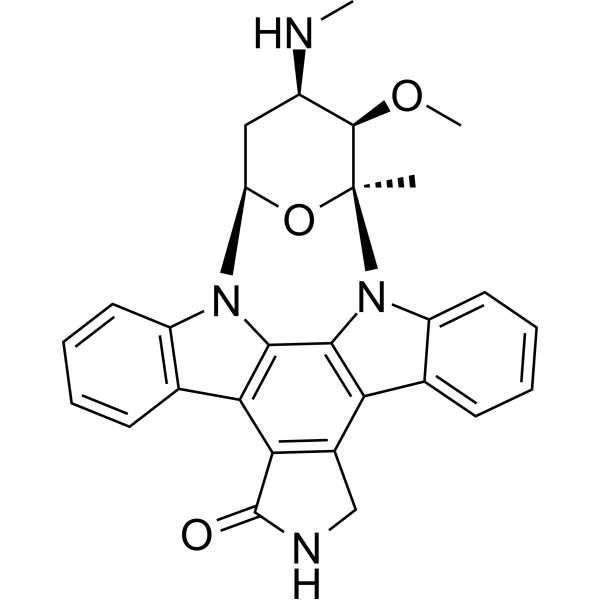
StaurosporinePKC/PKA Inhibitor -
HY-16658B
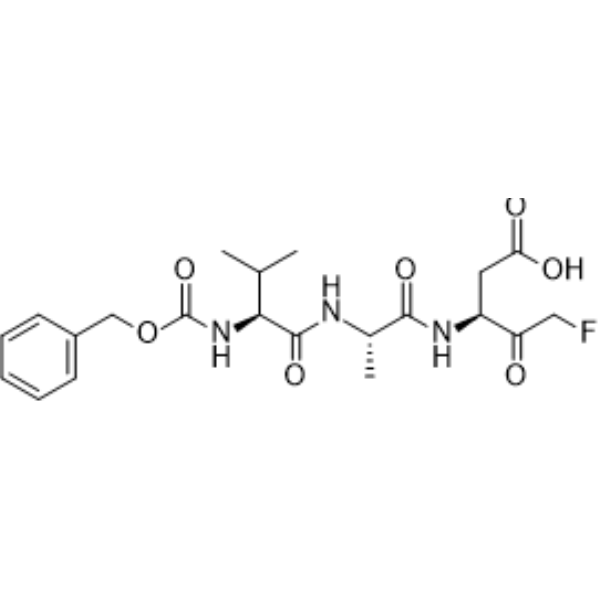
Z-VAD-FMKPan-Caspase Inhibitor -
HY-13523
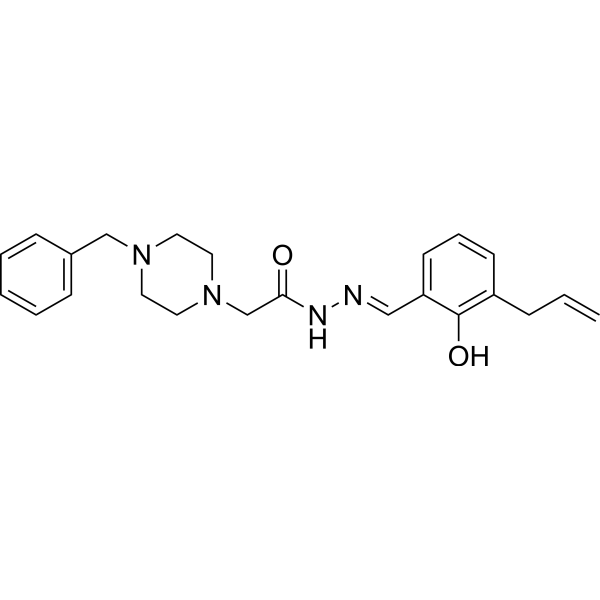
PAC-1Caspase Activator -
HY-12163
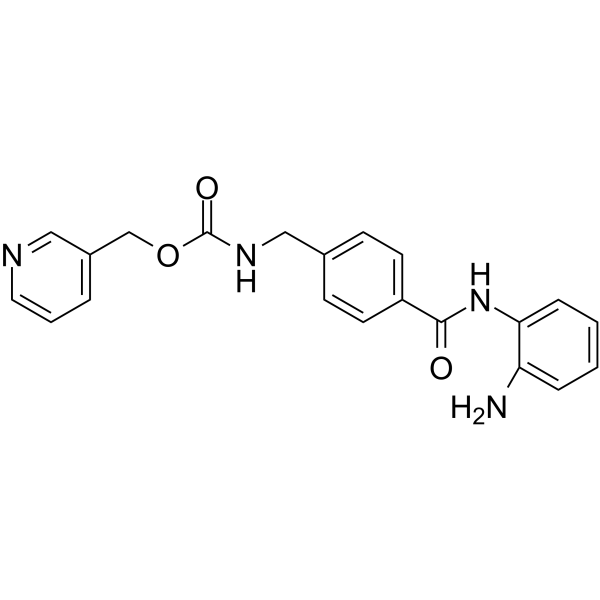
EntinostatHDAC Class I Inhibitor -
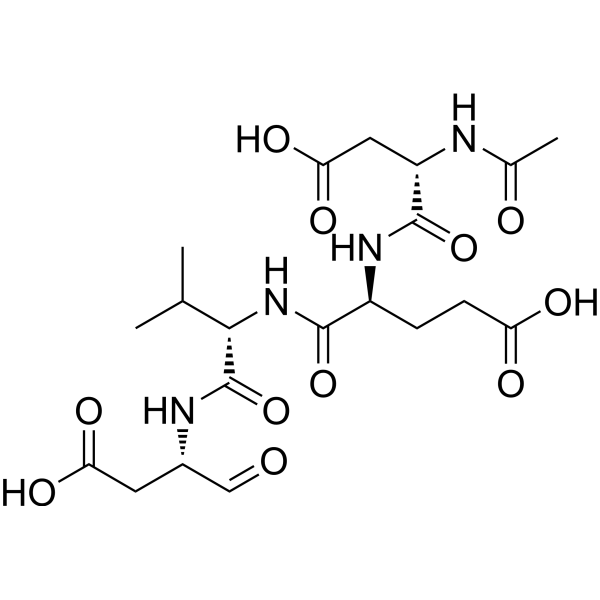
HY-P1001
Ac-DEVD-CHOCaspase-3 Inhibitor -
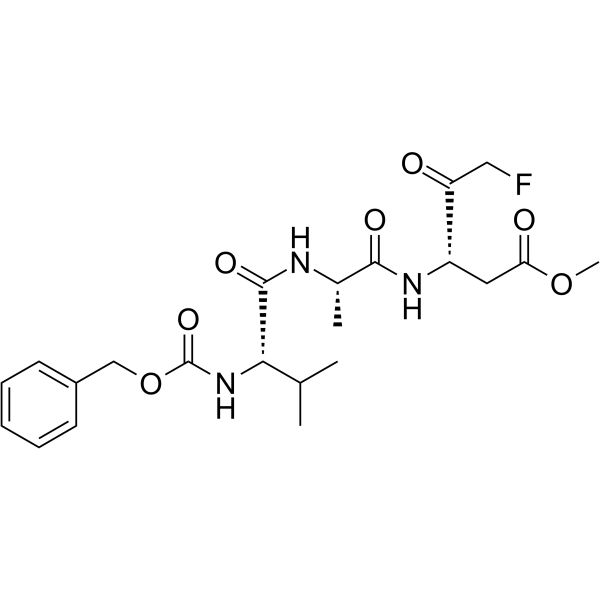
HY-16658
Z-VAD(OMe)-FMKPan-caspase Inhibitor -
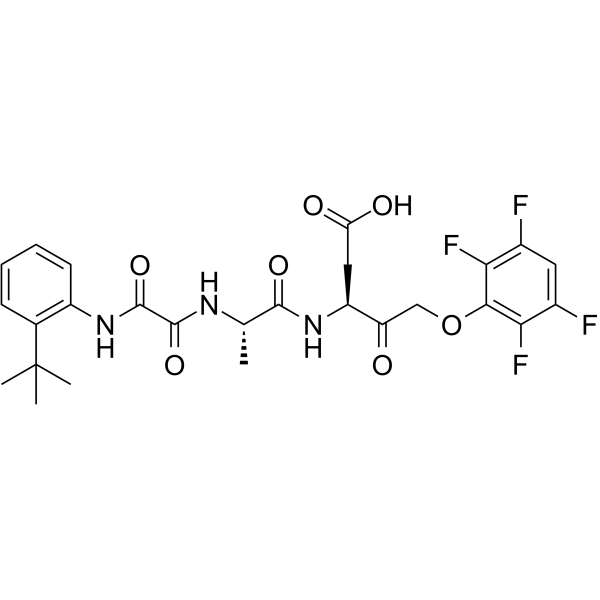
HY-10396
Emricasanpan-Caspase Inhibitor -
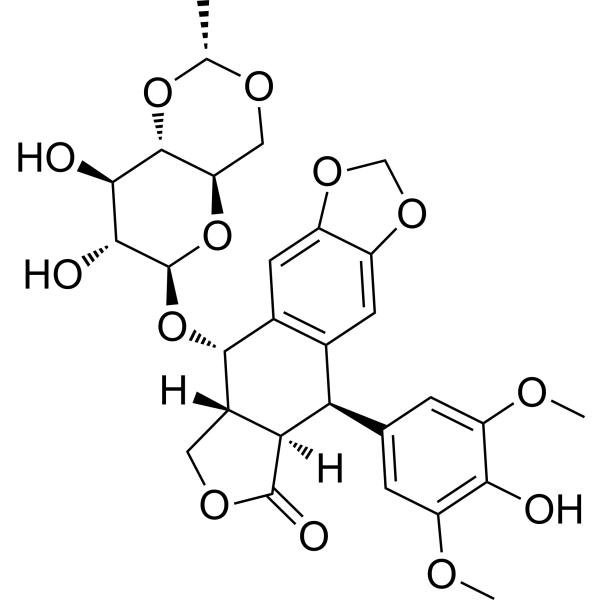
HY-13629
EtoposideTopoisomerase II Inhibitor -
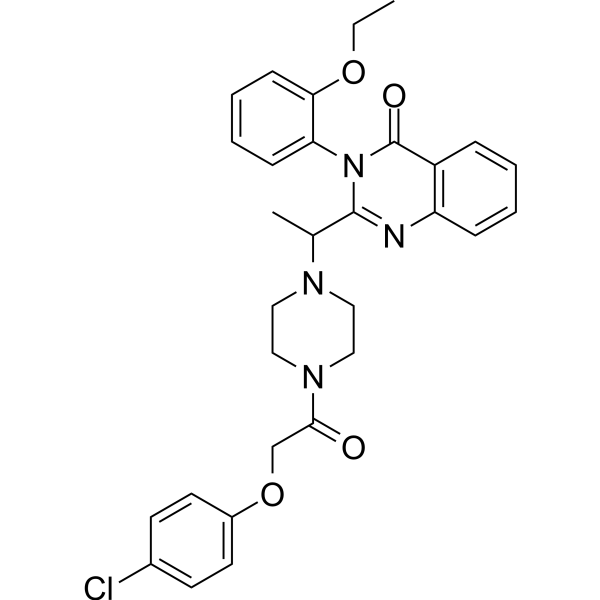
HY-15763
ErastinFerroptosis Inducer
Publications Citing Use of MedChemExpress (MCE) Raptinal
More- Nat Cell Biol. 2026 Apr;28(4):812-827. [Abstract]
- Adv Sci (Weinh). 2026 Apr;13(21):e14863. [Abstract]
- Sci Adv. 2025 Aug 15;11(33):eadx6587. [Abstract]
- Part Fibre Toxicol. 2024 Mar 7;21(1):13. [Abstract]
- Cell Chem Biol. 2026 Aug 20;33(8):1117-1134.e6.
- Cancer Immunol Res. 2025 Jun 4;13(6):939-956. [Abstract]
- Cell Syst. 2024 Jul 17;15(7):597-609.e4. [Abstract]
- Front Immunol. 2023 Nov 23;14:1282710. [Abstract]
- Neurochem Int. 2024 Sep:178:105788. [Abstract]
- Sci Rep. 2025 Apr 17;15(1):13280. [Abstract]
- Exp Neurol. 2025 Nov:393:115371. [Abstract]
- bioRxiv. 2026 Jul 20.
 Customer Validation & Images

-
In Vivo Efficacy Study
-
WB
-
Cell Proliferation/Viability Assay
-
Apoptosis Analysis
-
WB
All Caspase Isoforms
More

Biological Activity
Description
IC50 & Target
[1]|
Caspase 3 |
In Vitro
H. pylori infection-induced apoptosis resistance in gastric epithelial cells triggered by Raptinal[1].
Treatment with 10 μM of Raptinal for 2 h induces the cleavage of pro-caspase-3 into it’s active form in human gastric cancer cell lines AGS, MKN28, MKN45[1].
Raptinal initiates intrinsic pathway caspase-dependent apoptosis within minutes in multiple cell lines. Raptinal induces death against various cancer and non-cancerous cell lines with 24 hour IC50 values between 0.7-3.4 μM, indicating activity across a wide variety of cell lines[2].
MedChemExpress (MCE) has not independently confirmed the accuracy of these methods. They are for reference only.
-
Cell Line:Human Lymphoma U-937, SKW 6.4, or Jurkat cell lines
-
Concentration:0.7-3.4 μM
-
Incubation Time:24 hours
-
Result:The IC50 values of Raptinal against U-937, SKW 6.4, or Jurkat cell lines were 1.1±0.1, 0.7±0.3, 2.7±0.9 μM, respectively.
-
Cell Line:Human gastric cancer cell lines AGS, MKN28, MKN45
-
Concentration:10 μM
-
Incubation Time:2 hours
-
Result:Induced apoptosis by activating caspase-3 within 30 min at a concentration of 10 μM.
Treatment with 10 μM of Raptinal for 2 h induced the cleavage of pro-caspase-3 into it’s active form in all three cell lines.
In Vivo
Raptinal (20 mg/kg; administered intraperitoneally; once daily for 3 consecutive days for B16-F10 and 4 consecutive days for 4T1 models) exerts anticancer activity in vivo[2].
C57BL/6 mice are administered intravenous Raptinal across a range of dosages as a one-time injection. When administered intravenously at a dosage of 37.5 mg/kg, the peak plasma concentration and elimination half-life of Raptinal are 54.4±0.9 μg/mL and 92.1±5.8 minutes, respectively. Single-dose intravenous Raptinal is well tolerated across a wide dose range (15-60 mg/kg) and does not cause hematologic toxicity as assessed 7 days post-administration[2].
MedChemExpress (MCE) has not independently confirmed the accuracy of these methods. They are for reference only.
-
Animal Model:C57BL/6 and BALB/c female mice (6-8 weeks old) bearing the B16-F10 model or 4T1 models[2]
-
Dosage:20 mg/kg
-
Administration:Administered intraperitoneally; once daily for 3 consecutive days for B16-F10 and 4 consecutive days for 4T1 models
-
Result:Retard tumor volume and tumor mass by 60% relative to controls in the B16-F10 model.
Similar efficacy was observed for the 4T1 murine breast cancer tumor model with 50% growth inhibition after treatment.


Chemical Information
-
CAS No. 1176-09-6
-
Appearance Solid
-
Molecular Weight 386.44
-
Formula C28H18O2
-
Color White to off-white
-
SMILES
O=CC1(C2(C=O)C3=C(C4=C2C=CC=C4)C=CC=C3)C5=C(C6=C1C=CC=C6)C=CC=C5
-
Shipping
Room temperature in continental US; may vary elsewhere.
-
Storage
Powder -20°C 3 years 4°C 2 years In solvent -80°C 6 months -20°C 1 month


Publications (12)
-
Journal Impact Factor
-
Most Recent
-
Nat Cell Biol
TOLLIP targets GSDME-NT-carrying endocytic vesicles for autophagy to regulate pyroptosis and chemotherapy efficacy. [Abstract]2026 Apr;28(4):812-827. PMID: 41803502 -
Adv Sci (Weinh)
Irgm1 Improves Postinfarction Cardiac Repair by Promoting Neutrophil Clearance and Efferocytosis. [Abstract]2026 Apr;13(21):e14863. PMID: 41738282 -
Sci Adv
2025 Aug 15;11(33):eadx6587. PMID: 40815641 -
Part Fibre Toxicol
Exposure to high dose of polystyrene nanoplastics causes trophoblast cell apoptosis and induces miscarriage. [Abstract]2024 Mar 7;21(1):13. PMID: 38454452
Raptinal purchased from MedChemExpress. Usage Cited in: Part Fibre Toxicol. 2024 Mar 7;21(1):13. [Abstract]
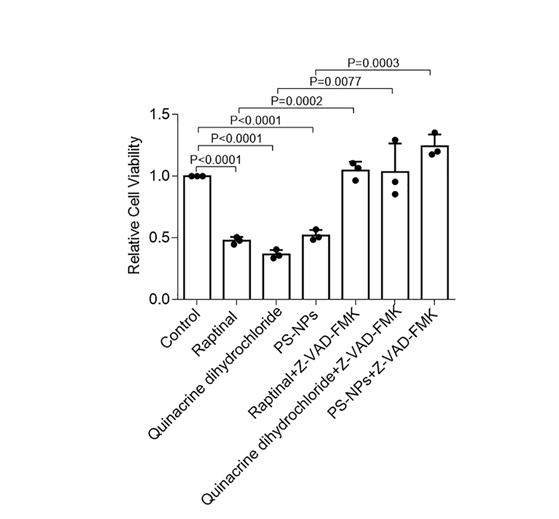
Cell viability of trophoblast cells treated with 10 μM Raptinal, 15 μM Quinacrine dihydrochloride, or 500 μg/mL PS-NPs, and co-treated with 10 μM Z-VAD-FMK for 48 h.
-
-
Cancer Immunol Res
In Situ Delivery of Gasdermin E mRNA Promotes Antitumor Immunity via Creatine-Elicited Type I Interferon Signaling in Monocytes. [Abstract]2025 Jun 4;13(6):939-956. PMID: 40168141 -
Cell Syst
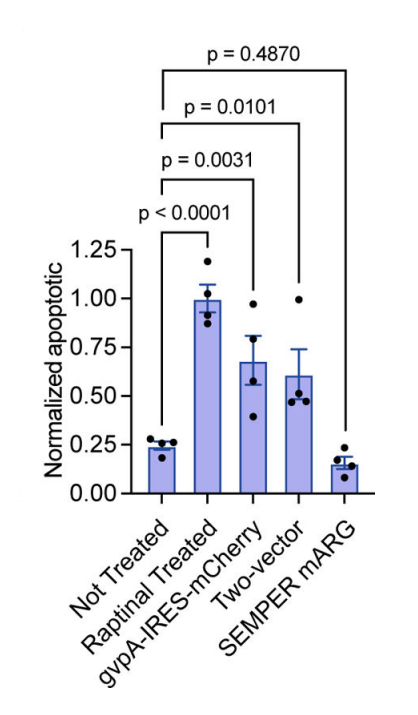
SEMPER: Stoichiometric expression of mRNA polycistrons by eukaryotic ribosomes for compact, ratio-tunable multi-gene expression. [Abstract]2024 Jul 17;15(7):597-609.e4. PMID: 38971149
Raptinal purchased from MedChemExpress. Usage Cited in: Cell Syst. 2024 Jul 17;15(7):597-609.e4. [Abstract]
Annexin V staining assays to quantify the number of apoptotic cells following expression of mARG vectors. HEK293T cells transfected with pgvpA-IRES-mCherry with the start codon removed in front of gvpA were used to establish a baseline (Not Treated). A subset of these cells was treated with Raptinal (10 μM; 18 h) to induce apoptosis (Raptinal Treated). Other cell populations were transfected solely with a fully functional pgvpA-IRES-mCherry (gvpA-IRES-mCherry), the two-vector system (Two-vector), or the ACC/ACC SEMPER mARG plasmid (SEMPER mARG).
-
Front Immunol
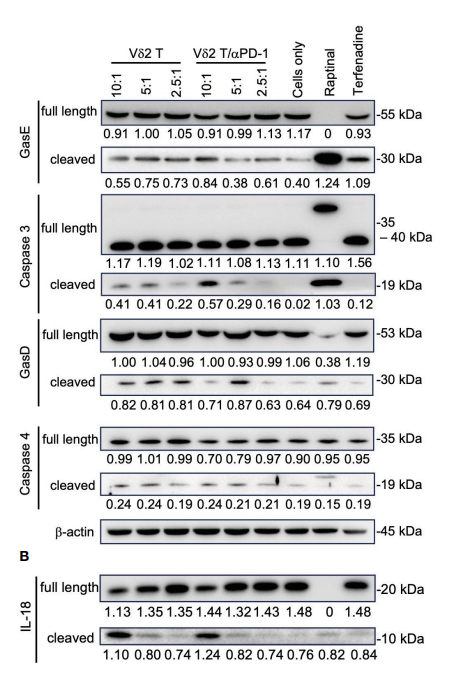
Anti-PD1 does not improve pyroptosis induced by γδ T cells but promotes tumor regression in a pleural mesothelioma mouse model. [Abstract]2023 Nov 23;14:1282710. PMID: 38077396
Raptinal purchased from MedChemExpress. Usage Cited in: Front Immunol. 2023 Nov 23;14:1282710. [Abstract]
Vδ2 T cells induce pyroptosis in mesothelioma cells. Analysis of protein expression level of gasdermin (Gas)E, caspase 3, GasD, caspase 4, and IL-18, following 6 h of co-culture between Vδ2 T cells and MSTO-luc. Controls include Raptinal (10 μM; 6 h) and terfenadine, or cells only.
-
Neurochem Int
Pharmacological inhibition of cGAS ameliorates postoperative cognitive dysfunction by suppressing caspase-3/GSDME-dependent pyroptosis. [Abstract]2024 Sep:178:105788. PMID: 38843953 -
Sci Rep
Ocifisertib alleviates the gasdermin D-independent pyroptosis of nucleus pulposus cells by targeting GSDME. [Abstract]2025 Apr 17;15(1):13280. PMID: 40247083 -
Exp Neurol
KIF23 inhibition protects against perioperative neurocognitive disorders by hindering ROS/caspase-3/GSDME-mediated pyroptosis. [Abstract]2025 Nov:393:115371. PMID: 40639436
Raptinal purchased from MedChemExpress. Usage Cited in: Exp Neurol. 2025 Nov:393:115371. [Abstract]
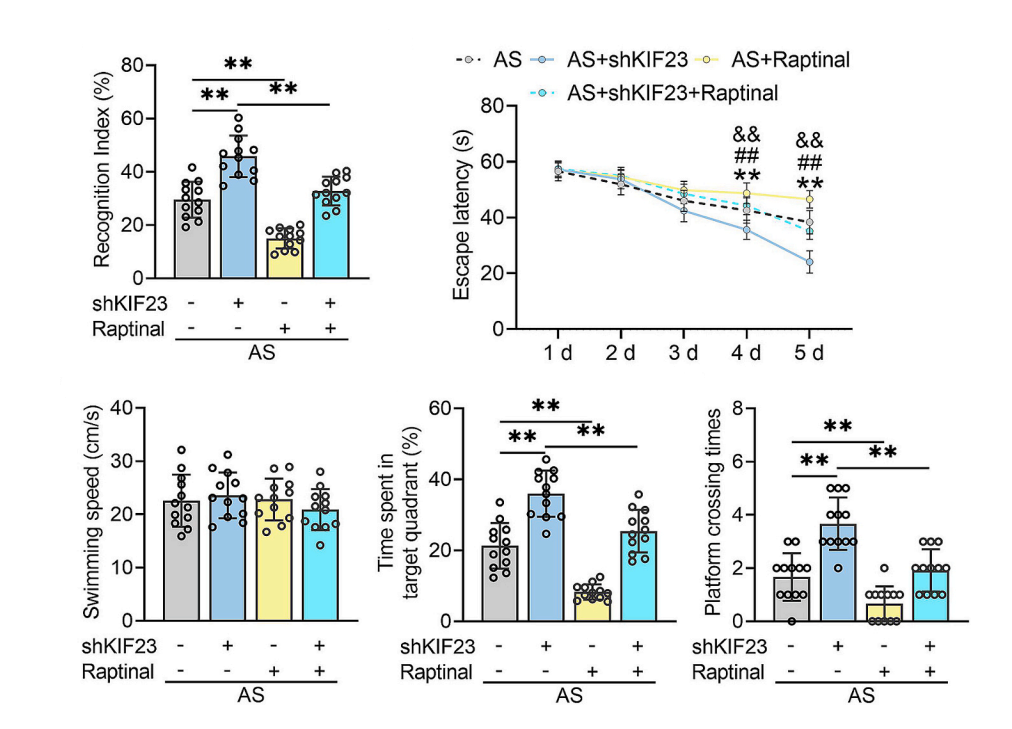
Raptinal (20 mg/kg; i.p. 30 min before modeling) reverses the favorable effects of AAV9-shKIF23 on the memory ability of PND mice.
Raptinal purchased from MedChemExpress. Usage Cited in: Exp Neurol. 2025 Nov:393:115371. [Abstract]
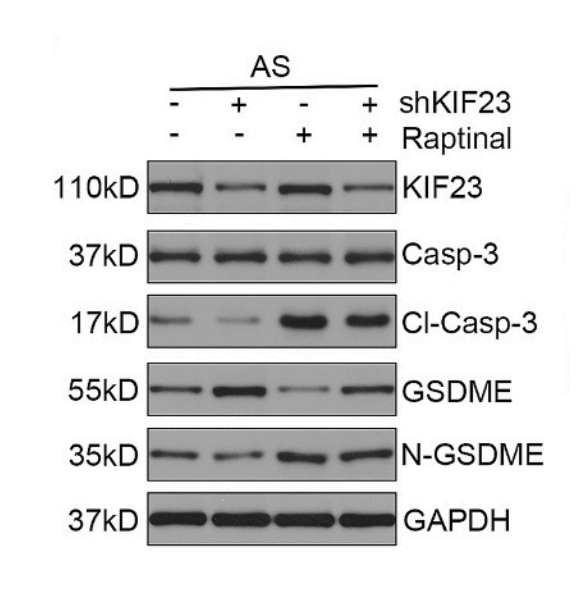
Gel images of KIF23, caspase-3, cleaved caspase-3, GSDME, and N-GSDME in the hippocampus following the Raptinal (20 mg/kg; i.p. 30 min before modeling) treatments.
-


Solvent & Solubility
In Vitro:
DMSO : 20 mg/mL (51.75 mM; ultrasonic and warming and heat to 60°C; Hygroscopic DMSO has a significant impact on the solubility of product, please use newly opened DMSO)
Please refer to the solubility information to select the appropriate solvent. Once prepared, please aliquot and store the solution to prevent product inactivation from repeated freeze-thaw cycles.
Storage method and period of stock solution: -80°C, 6 months; -20°C, 1 month. When stored at -80°C, please use it within 6 months. When stored at -20°C, please use it within 1 month.
Please refer to the solubility information to select the appropriate solvent. Once prepared, please aliquot and store the solution to prevent product inactivation from repeated freeze-thaw cycles.
Storage method and period of stock solution: -80°C, 6 months; -20°C, 1 month. When stored at -80°C, please use it within 6 months. When stored at -20°C, please use it within 1 month.
Concentration (start) × Volume (start) = Concentration (final) × Volume (final)
In Vivo:
Select the appropriate dissolution method based on your experimental animal and administration route.
- For the following dissolution methods, please ensure to first prepare a clear stock solution using an In Vitro approach and then sequentially add co-solvents:
- To ensure reliable experimental results, the clarified stock solution can be appropriately stored based on storage conditions. As for the working solution for In Vivo experiments, it is recommended to prepare freshly and use it on the same day.
- The percentages shown for the solvents indicate their volumetric ratio in the final prepared solution. If precipitation or phase separation occurs during preparation, heat and/or sonication can be used to aid dissolution.
Add each solvent one by one: 10% DMSO 40% PEG300 5% Tween-80 45% Saline
Solubility: ≥ 2.5 mg/mL (6.47 mM); Clear solution
This protocol yields a clear solution of ≥ 2.5 mg/mL (saturation unknown).
Taking 1 mL working solution as an example, add 100 μL DMSO stock solution (25.0 mg/mL) to 400 μL PEG300, and mix evenly; then add 50 μL Tween-80 and mix evenly; then add 450 μL Saline to adjust the volume to 1 mL.
Preparation of Saline: Dissolve 0.9 g sodium chloride in ddH₂O and dilute to 100 mL to obtain a clear Saline solution.
In Vivo Dissolution Calculator
Please enter the basic information of animal experiments:
-
-
-
-
Recommended: Prepare an additional quantity of animals to account for potential losses during experiments.
Please enter your animal formula composition:
-
%DMSO +
Recommended: Keep the proportion of DMSO in working solution below 2% if your animal is weak.
-
%+
-
+%Tween-80 + +
-
%Saline +
The co-solvents required include: DMSO, . All of co-solvents are available by MedChemExpress (MCE). , Tween 80. All of co-solvents are available by MedChemExpress (MCE).
Working solution concentration: 0.22 mg/mL
Method for preparing stock solution: mg drug dissolved in μL DMSO. Stock solution concentration: mg/mL.
1. Take μL DMSO stock solution;
2. Add μL .
μL , mix evenly;
3. Then add μL Tween 80, mix evenly;
4. Then add μL
Please ensure that the stock solution in the first step is dissolved to a clear state, and add co-solvents in sequence. You can use ultrasonic heating (ultrasonic cleaner, recommended frequency 20-40 kHz), vortexing, etc. to assist dissolution.


Purity & Documentation
-
Data Sheet (297 KB)
-
SDS (393 KB)
- English - EN (393 KB)
- Français - FR (393 KB)
- Deutsch - DE (393 KB)
- Norwegian - NO (393 KB)
- Español - ES (393 KB)
- Swedish - SV (393 KB)
- Italian - IT (393 KB)
- Korean - KR (393 KB)
- Portuguese - PT (393 KB)
-
Handling Instructions (2659 KB)
References
[1]. Yanheng Chen, et al. H. pylori infection confers resistance to apoptosis via Brd4-dependent BIRC3 eRNA synthesis. Cell Death Dis. 2020 Aug 21;11(8):667. [Content Brief]
[2]. Rahul Palchaudhuri,et al. A Small Molecule that Induces Intrinsic Pathway Apoptosis with Unparalleled Speed. Cell Rep. 2015 Dec 1;13(9):2027-36. [Content Brief]


Complete Stock Solution Preparation Table
Please refer to the solubility information to select the appropriate solvent. Once prepared, please aliquot and store the solution to prevent product inactivation from repeated freeze-thaw cycles.
Storage method and period of stock solution: -80°C, 6 months; -20°C, 1 month. When stored at -80°C, please use it within 6 months. When stored at -20°C, please use it within 1 month.
| Optional Solvent | Concentration Solvent Mass | 1 mg | 5 mg | 10 mg | 25 mg |
|---|---|---|---|---|---|
| DMSO | 1 mM | 2.5877 mL | 12.9386 mL | 25.8772 mL | 64.6931 mL |
| 5 mM | 0.5175 mL | 2.5877 mL | 5.1754 mL | 12.9386 mL | |
| 10 mM | 0.2588 mL | 1.2939 mL | 2.5877 mL | 6.4693 mL | |
| 15 mM | 0.1725 mL | 0.8626 mL | 1.7251 mL | 4.3129 mL | |
| 20 mM | 0.1294 mL | 0.6469 mL | 1.2939 mL | 3.2347 mL | |
| 25 mM | 0.1035 mL | 0.5175 mL | 1.0351 mL | 2.5877 mL | |
| 30 mM | 0.0863 mL | 0.4313 mL | 0.8626 mL | 2.1564 mL | |
| 40 mM | 0.0647 mL | 0.3235 mL | 0.6469 mL | 1.6173 mL | |
| 50 mM | 0.0518 mL | 0.2588 mL | 0.5175 mL | 1.2939 mL |


Raptinal Related Classifications
HY-121320 Related Classifications
 Powered by Bioz