602 Results for "

bovine

" in MedChemExpress (MCE) Product Catalog:
Products (602)

602 Results for "bovine" in MCE Product Catalog:

Cat. No.: HY-182780
Target:  

Drug Derivative

Research Areas:  

Cancer

LSPN925 is an anticancer agent. LSPN925 exhibits cytotoxic and antiproliferative activities against tumor cells. LSPN925 has predicted oral bioavailability, low risks of hepatotoxicity and acute toxicity, and no risk of cardiotoxicity. LSPN925 can be used for the research of ovarian cancer, melanoma and breast cancer .
Cat. No.: HY-P701355
Purity:  ≥ 90%, as determined by reducing SDS-PAGE.
Synonyms: ABCC1; Multidrug resistance-associated protein 1; ATP-binding cassette sub-family C member 1; Glutathione-S-conjugate-translocating ATPase ABCC1; Leukotriene C(4) transporter; LTC4 transporter
Species:  
Source:  
Cat. No.: HY-103322
CAS No.: 1135306-29-4
Target:  

PKA Potassium Channel

Research Areas:  

Metabolic Disease Cancer

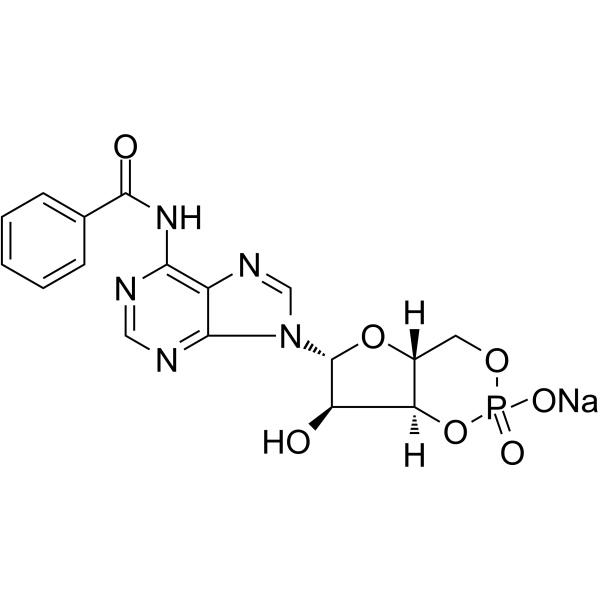
6-Bnz-cAMP sodium, a derivative of cyclic adenosine monophosphate (cAMP), is a selective PKA activator with inhibitory activity against the bTREK-1 K + channel. 6-Bnz-cAMP sodium does not activate the Epac signaling pathway. It inhibits the bTREK-1 K + channel via a voltage-independent, ATP-dependent mechanism that is independent of the PKA/Epac/calmodulin kinase/MAP kinase pathway. 6-Bnz-cAMP sodium activates CREB phosphorylation to regulate osteoblast-specific gene expression, induces osteoblast differentiation, promotes extracellular matrix mineralization, supports osteoblast proliferation, and shows no cytotoxicity toward osteoblasts. It can be used in studies related to bone tissue repair and regeneration .
Cat. No.: HY-120267
CAS No.: 19231-60-8
Target:  

Casein Kinase

Research Areas:  

Cardiovascular Disease

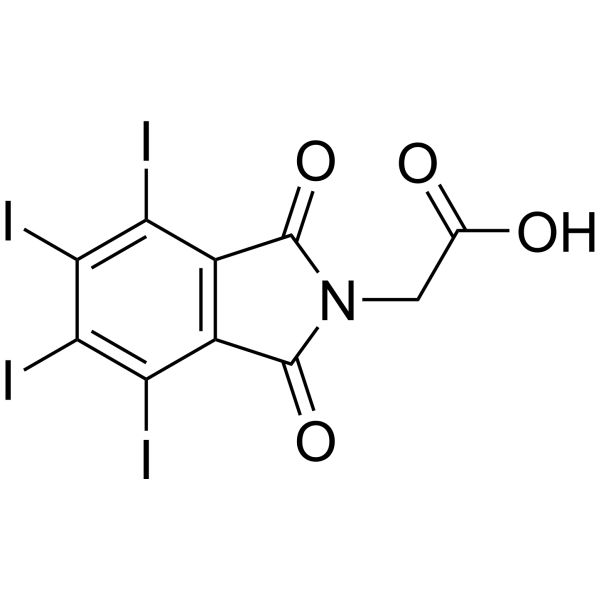
TID43 is a CK2 inhibitor, with an IC50 of 0.3 μM. TID43 can be used for anti-angiogenic research .
Cat. No.: HY-13614
CAS No.: 610787-07-0
E7974 is a selective inhibitor of α-tubulin (α-tubulin) with an IC50 of 3.9 μM. E7974 disrupts mitotic spindle formation, induces G2-M phase cell cycle arrest, initiates apoptosis, activates caspase-3, and induces poly (ADP-ribose) polymerase cleavage. E7974 reduces the area of choroidal neovascularization in mouse models, and exerts anti-angiogenic effects when loaded in modified micelles. E7974 can be used in research related to cancer and choroidal neovascularization .
Cat. No.: HY-W040176
CAS No.: 799268-45-4
Synonyms: N-Palmitoyl-tyrosine phosphoric acid ammonium
N-PTyrosine PA (N-Palmitoyl-tyrosine phosphoric acid) ammonium is a lysophosphatidic acid (LPA) receptor modulator, which exhibits weak inhibitory activity against LPA1 and partial agonist properties towards LPA5. N-PTyrosine PA ammonium inhibits the activation of LPA receptors and downstream responses by competing with agonists for binding sites. N-PTyrosine PA ammonium can induce morphological changes and aggregation, and also inhibit LPA-induced morphological changes through receptor desensitization caused by pre-incubation. N-PTyrosine PA ammonium can be used in the research of related diseases such as atherosclerosis and acute ischemic syndromes (e.g., unstable angina, myocardial infarction, stroke) .
Cat. No.: HY-P11816
Research Areas:  

Cancer

DOTA-cTMTP1 is a cyclic tumor-homing peptide precursor molecule. DOTA-cTMTP1 selectively binds to XPNPEP2 on highly metastatic tumor cells, accumulates and retains in hepatocellular carcinoma tumors, and maintains a high tumor-to-liver contrast over time in small animal models. After radiolabeling with 68Ga, DOTA-cTMTP1 forms a PET probe for positron emission tomography (PET) imaging of hepatocellular carcinoma (HCC).
Cat. No.: HY-W051199
CAS No.: 4210-66-6
Synonyms: o-Phosphohomoserine
O-Phosphono-L-homoserine (o-Phosphohomoserine) is an intermediate in threonine synthesis in bacteria and plants, and can also be hijacked by MetM in some Streptomyces species to enter a novel methionine synthesis pathway. O-Phosphono-L-homoserine acts as a weak antagonist of the NMDA receptor. O-Phosphono-L-homoserine can be used as a substrate for studies on amino acid metabolism of the aspartate family, a control for mechanism studies of PLP enzymes, and a reference for structure-activity relationship studies of NMDA receptor ligands .
Cat. No.: HY-W686762
CAS No.: 219704-16-2
Research Areas:  

Neurological Disease

m,p-Dimethyl PPE is a D4 dopamine receptor ligand. m,p-Dimethyl PPE promotes GDP/GTP exchange of the G protein α-subunit, dissociates the receptor-G protein complex, stabilizes the low-affinity receptor state, and inhibits adenylate cyclase activity. m,p-Dimethyl PPE inhibits Forskolin (HY-15371)-induced melatonin synthesis in retinal photoreceptor cells and reduces the efficacy of full agonists when used in combination. m,p-Dimethyl PPE can be used in studies related to attention-deficit hyperactivity disorder .
Cat. No.: HY-W997836
CAS No.: 74923-08-3
Synonyms: 4-AHP
Target:  

Endogenous Metabolite

Research Areas:  

Cancer

4-Amino-3-hydroxyphenylalanine dihydrochloride (4-AHP) is a photodegradation product of eumelanin. 4-Amino-3-hydroxyphenylalanine dihydrochloride can be used to investigate the development of cutaneous melanoma and age-related macular degeneration .
Cat. No.: HY-130579
CAS No.: 728944-69-2
Purity:  ≥95.0%
Synonyms: L-VNIO hydrochloride
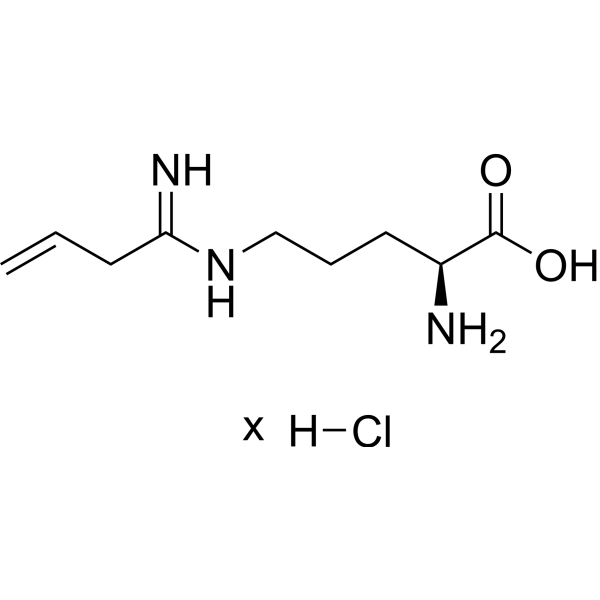
Vinyl-L-NIO (L-VNIO) hydrochloride is a neuronal nitric oxide synthase (NOS) inhibitor with a rat Ki of 0.10 μM. Vinyl-L-NIO hydrochloride inhibits NADPH oxidase activity, attenuates renal fibrosis, inflammation, oxidative stress indices, and albuminuria. Vinyl-L-NIO hydrochloride can be used for the research of parkinson's disease, migraine headache, and hypertension .
Cat. No.: HY-Y0131
CAS No.: 19847-12-2
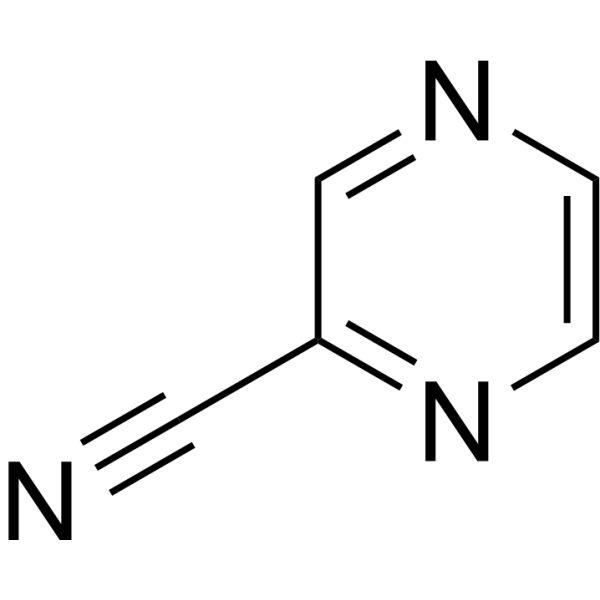
Pyrazine-2-carbonitrile is a biochemical reagent that can be used as a biological material or organic compound for life science related research .
Cat. No.: HY-106587B
CAS No.: 41932-42-7
Synonyms: Clorotepine dimaleate
Octoclothepin (Clorotepine) dimaleate is a D2 dopamine receptor antagonist and 5-HT2 serotonin receptor antagonist , with Ki values ​​of 0.67 nM, 0.57 nM, and 0.19 nM for the dopamine D2, 5-HT2A, and 5-HT2C receptors, respectively. Octoclothepin dimaleate also binds to adrenergic receptors, with Ki values ​​of 0.66 nM, 0.56 nM, and 0.77 nM for α1a, α1b, and α1d, respectively. Octoclothepin dimaleate can be used in schizophrenia research .
Cat. No.: HY-P11111
CAS No.: 1501983-51-2
Target:  

Drug Derivative

Research Areas:  

Others

QP5 is an Amelogenin (HY-P71627)-derived peptide. QP5 binds to hydroxyapatite and demineralized enamel surfaces, temporarily stabilizes amorphous calcium phosphate (ACP), and regulates the crystallization of hydroxyapatite. QP5 promotes remineralization of artificial enamel caries in vitro, and acts synergistically with fluoride to enhance enamel caries remineralization. QP5 can be used in studies related to enamel caries and early enamel caries .
Cat. No.: HY-W751362
CAS No.: 14176-10-4
Cetiedil is a vasodilator and potassium channel blocker with anti-sickle cell and analgesic activities. Cetiedil increases cyclic adenosine monophosphate levels, relaxes vascular smooth muscle, and blocks the action of Bradykinin (HY-P0206). Cetiedil inhibits platelet aggregation, reduces plasma fibrinogen concentration and blood viscosity, suppresses sickling of sickle red blood cells and improves their filterability, and decreases irreversible sickle cells. Cetiedil binds to calmodulin, inhibits Ca 2+-dependent potassium permeability of erythrocyte membranes, increases sodium permeability of erythrocytes, and regulates polymorphonuclear leukocyte function. Cetiedil can be used in research related to intermittent claudication, arteriosclerosis obliterans, diabetic arteriosclerosis, Raynaud's disease, angina pectoris, and sickle cell anemia .
Cat. No.: HY-151759
CAS No.: 2129525-69-3
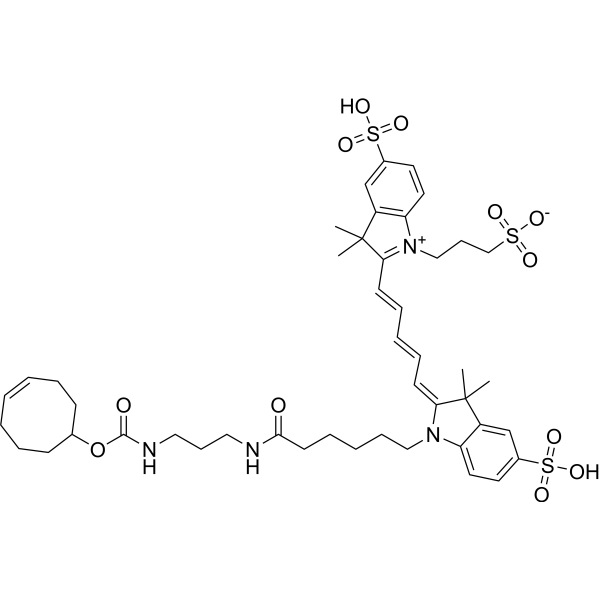
Sulfo-Cy5-TCO is a water-soluble sulfonated Cy5 fluorescent reagent containing trans-cyclooctene (TCO). Sulfo-Cy5-TCO undergoes an inverse electron demand Diels‑Alder reaction with tetrazine-labeled fixed breast cancer cells to achieve cell labeling. Sulfo-Cy5-TCO is used for fluorescent labeling and imaging of biological samples such as proteins and cells .
Cat. No.: HY-183946
CAS No.: 761436-62-8
Target:  

FAK

Research Areas:  

Cancer

NVP-TAC544 is a focal adhesion kinase (FAK) inhibitor. NVP-TAC544 inhibits angiogenesis. NVP-TAC544 can be used for the research of melanoma (primary or metastatic) .
Cat. No.: HY-45509
CAS No.: 1208070-53-4
Synonyms: RAD150
Target:  

Androgen Receptor

Research Areas:  

Neurological Disease

TLB 150 Benzoate (RAD150) is a nonsteroidal androgen receptor modulator with an IC50 value of 0.13 μM. TLB 150 Benzoate spontaneously cyclizes under physiological conditions to form RAD 179, resulting in a persistent, reversible, and slow neuronal conduction blockade. TLB 150 Benzoate can be used for research on neurological diseases .
Cat. No.: HY-182301
CAS No.: 112227-15-3
Target:  

Renin

Research Areas:  

Cardiovascular Disease

CP 71362 is a renin inhibitor, a highly potent substrate-analog transition state mimic with antihypertensive properties. CP 71362 exhibits significant inhibitory activity against plasma renin from rats, dogs, and humans (IC50 values are 3 nM, 0.0033 nM, and 20 nM, respectively). CP 71362 reduces the mean arterial pressure of anesthetized and conscious sodium-depleted animals in a dose-dependent manner, and has pharmacokinetic characteristics of rapid elimination and short duration of action. CP 71362 can be used in research related to hypertension and congestive heart failure .
Cat. No.: HY-N18431
CAS No.: 129744-24-7
Synonyms: ST-A TFA
Stellettamide A TFA is a marine toxin found in a marine sponge. Stellettamide A TFA is a calmodulin inhibitor. Stellettamide A TFA can inhibit Ca 2+/Mg 2+ ATPase, phosphodiesterase, myosin light chain , and Mg 2+-ATPase. Stellettamide A TFA inhibits high K +- and Ca 2+-induced contraction in permeabilized smooth muscle. Stellettamide A TFA exhibits antifungal activity against Mortierella remannianus. Stellettamide A TFA can be used for the research of fungal infection .

