7 Results for "

12(S)-HETE

" in MedChemExpress (MCE) Product Catalog:
Products (7)

7 Results for "12(S)-HETE" in MCE Product Catalog:

Cat. No.: HY-124404A
CAS No.: 54397-83-0
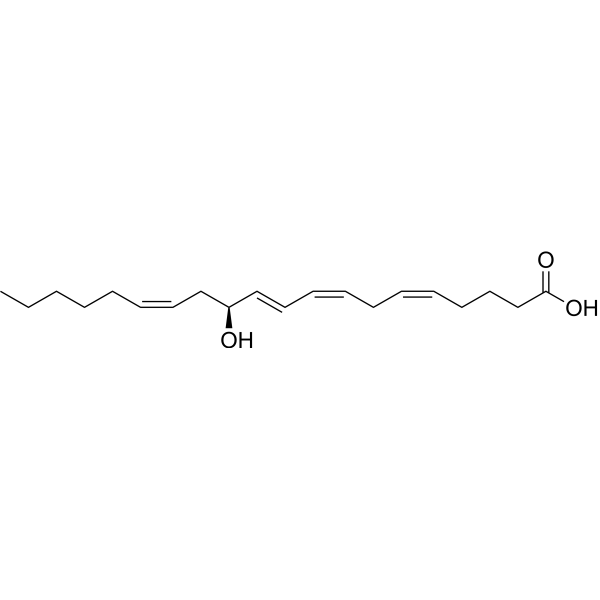
12(S)-HETE is a metabolite of Arachidonic acid, AA (HY-109590). 12(S)-HETE promotes ERK and P38 MAPK phosphorylation, stimulates DNA synthesis and cell proliferation in cancer cells. 12(S)-HETE facilitates wound healing of injured murine-lung-derived microvascular endothelial cell monolayers. 12(S)-HETE can be used for the research of pancreatic cancer .
loading...
    loading...
2
2 Cited Publications
Cat. No.: HY-B0881
CAS No.: 968-81-0
Target:  

Potassium Channel

Research Areas:  

Metabolic Disease Cancer

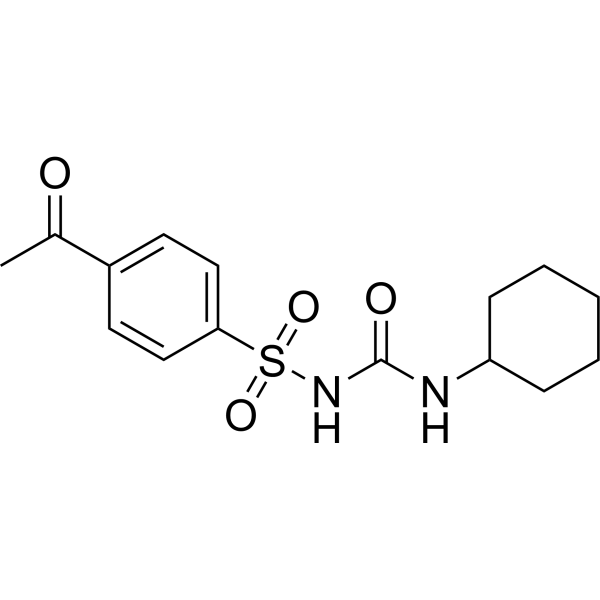
Acetohexamide is an orally active first-generation sulfonylurea agent used in research related to type 2 diabetes and cancer. Acetohexamide exerts reductase activity in human erythrocytes. Acetohexamide stimulates the pancreas to secrete insulin. Acetohexamide inhibits ATP-sensitive potassium channels in the β cells of the pancreas. Acetohexamide can inhibit the formation of circular chemorepellent induced defects (CCIDs) in lymphendothelial cell (LEC) monolayers. Acetohexamide inhibits markers of epithelial-to-mesenchymal-transition and migration. Acetohexamide suppresses the synthesis of 12(S)-HETE. Acetohexamide can potentiate hypoglycaemic action .
loading...
    loading...
Cat. No.: HY-117085
CAS No.: 522-53-2
Research Areas:  

Cancer

Lobaric acid is a depsipeptide metabolite isolated from Stereocaulon lichen with antioxidant, antiproliferative, antiviral and enzyme inhibitory activities. Lobaric acid scavenges superoxide free radicals (IC50=97.9 μM) and inhibits cancer cell proliferation (EC50 of 15.2-63.9 μg/mL against leukemia, colorectal, gastric, breast, ovarian, prostate, pancreatic and lung cancer cell lines). Lobaric acid inhibits protein tyrosine phosphatase 1B (PTP1B; IC50=0.87 μM for human recombinant enzyme) and 12(S)-HETE produced by 12(S)-lipoxygenase (IC50=28.5 μM). Lobaric acid (250 μM) also reduced pathological changes in tobacco leaves infected with tobacco mosaic virus (TMV).
loading...
    loading...
Cat. No.: HY-123023
CAS No.: 84807-90-9
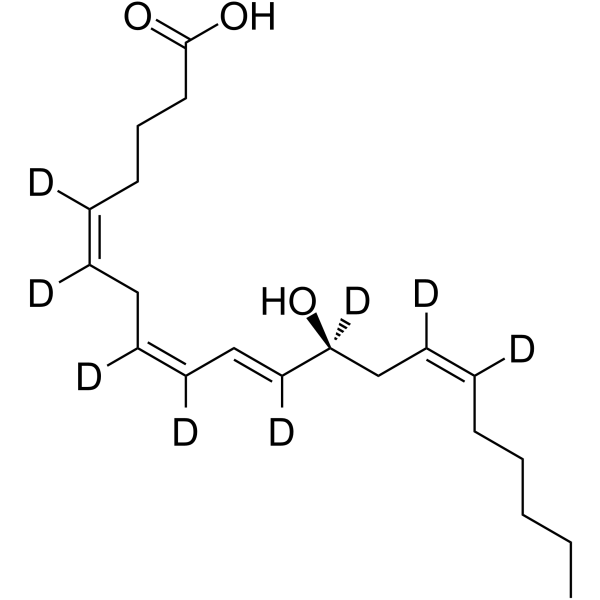
12(S)-HETE-d8 contains eight deuterium atoms at the 5, 6, 8, 9, 11, 12, 14 and 15 positions. 12(S)-HETE-d8 is intended for use as an internal standard for the quantification of 12(S)-HETE by GC- or LC-mass spectrometry (MS). 12(S)-HETE-d8 is the predominant lipoxygenase product of mammalian platelets. It enhances tumor cell adhesion to endothelial cells, fibronectin, and the subendothelial matrix at 0.1 µM.
loading...
    loading...
Cat. No.: HY-142976
CAS No.: 121842-79-3
Target:  

Endogenous Metabolite

Research Areas:  

Inflammation/Immunology

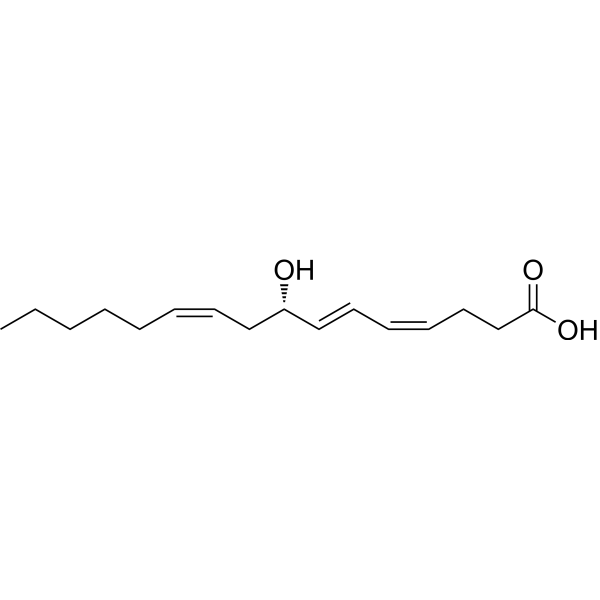
Tetranor-12(S)-HETE is the major β-oxidation product resulting from peroxisomal metabolism of 12(S)-HETE (HY-124404A) in numerous tissues. 12(S)‐HETE to tetranor‐12(S)‐HETE conversion could be a marker for psoriasis .
loading...
    loading...
Cat. No.: HY-B0881R
CAS No.: 968-81-0
Acetohexamide (Standard) is the analytical standard of Acetohexamide. This product is intended for research and analytical applications. Acetohexamide is an orally active first-generation sulfonylurea agent used in research related to type 2 diabetes and cancer. Acetohexamide exerts reductase activity in human erythrocytes. Acetohexamide stimulates the pancreas to secrete insulin. Acetohexamide inhibits ATP-sensitive potassium channels in the β cells of the pancreas. Acetohexamide can inhibit the formation of circular chemorepellent induced defects (CCIDs) in lymphendothelial cell (LEC) monolayers. Acetohexamide inhibits markers of epithelial-to-mesenchymal-transition and migration. Acetohexamide suppresses the synthesis of 12(S)-HETE. Acetohexamide can potentiate hypoglycaemic action .
loading...
    loading...
Cat. No.: HY-N16694
CAS No.: 34539-84-9
6,7-Dehydroferruginol is a diterpenoid compound that can be isolated from the dichloromethane extract of Juniperus communis wood. At a concentration of 100 μg/mL, 6,7-Dehydroferruginol showed no inhibitory activity against 12(S)-LOX and did not inhibit the production of 12(S)-HETE .
loading...
    loading...

