Search Result
Results for "
2-adrenoceptor
" in MedChemExpress (MCE) Product Catalog:
33
Isotope-Labeled Compounds
| Cat. No. |
Product Name |
Target |
Research Areas |
Chemical Structure |
-
- HY-17034A
-
|
(+)-Medetomidine hydrochloride; (S)-Medetomidine hydrochloride
|
Adrenergic Receptor
|
Infection
Cancer
|
|
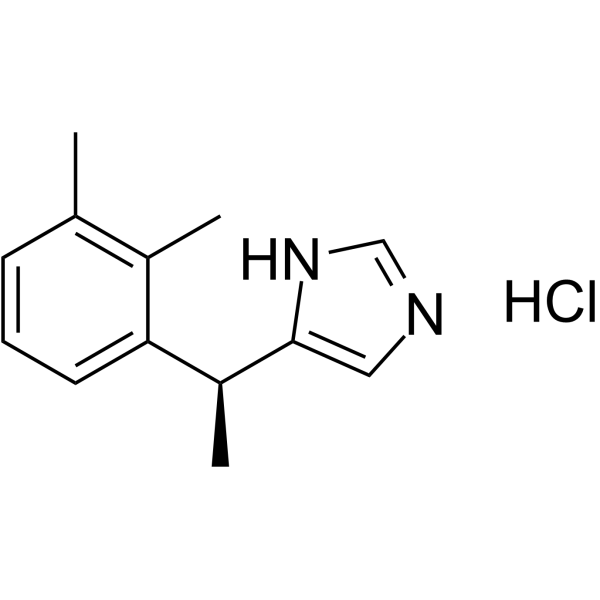
Dexmedetomidine hydrochloride ((+)-Medetomidine hydrochloride) is a potent, selective and orally active agonist of α2-adrenoceptor, with a Ki of 1.08 nM. Dexmedetomidine hydrochloride shows 1620-fold selectivity against α1-adrenoceptor. Dexmedetomidine hydrochloride exhibits anxiolysis, sedation, and modest analgesia effects [2] .
|
-
-
- HY-12719
-
|
(+)-Medetomidine; (S)-Medetomidine
|
Adrenergic Receptor
|
Neurological Disease
Cancer
|
|
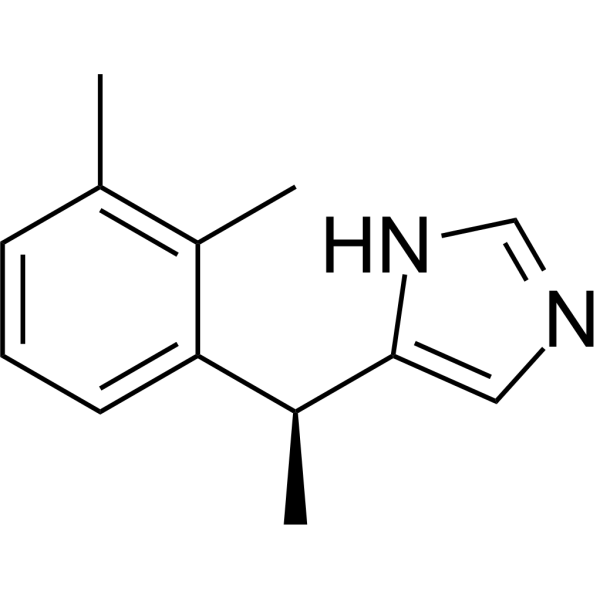
Dexmedetomidine ((+)-Medetomidine) is a potent, selective and orally active agonist of α2-adrenoceptor, with a Ki of 1.08 nM. Dexmedetomidine shows 1620-fold selectivity against α1-adrenoceptor. Dexmedetomidine exhibits anxiolysis, sedation, and modest analgesia effects [2] .
|
-
-
- HY-B0409A
-
-
-
- HY-12380A
-
-
-
- HY-14301
-
|
BI1744
|
Adrenergic Receptor
|
Inflammation/Immunology
Endocrinology
|
|
Olodaterol (BI1744) is a selective, long acting β2-adrenoceptor (β2-AR) agonist (EC50=0.1 nM and pKi= 9.14 for human β2-adrenoceptor, respectively). Olodaterol can be used for chronic obstructive pulmonary disease (COPD) and pulmonary fibrosis [2] .
|
-
-
- HY-12380
-
-
-
- HY-12710
-
|
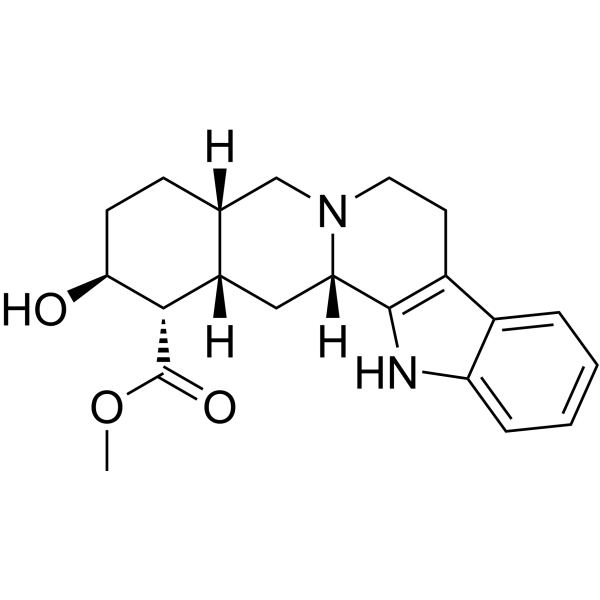
α-Yohimbine; Corynanthidine; Isoyohimbine
|
Adrenergic Receptor
|
Cancer
|
|
Rauwolscine is a selective α2-adrenoceptor antagonist that inhibits tumor growth and induces apoptosis .
|
-
-
- HY-B0976
-
|
Th-1165; Phenoterol
|
Adrenergic Receptor
|
Inflammation/Immunology
Endocrinology
|
|
Fenoterol (Th-1165), a sympathomimetic agent, is a selective and orally active β2-adrenoceptor agonist. Fenoterol is an effective bronchodilator and can be used for bronchospasm associated with asthma, bronchitis and other obstructive airway diseases research [2].
|
-
-
- HY-B0976A
-
|
Th-1165a; Phenoterol hydrobromide
|
Adrenergic Receptor
|
Inflammation/Immunology
Endocrinology
|
|
Fenoterol hydrobromide (Th-1165a), a sympathomimetic agent, is a selective and orally active β2-adrenoceptor agonist. Fenoterol hydrobromide is an effective bronchodilator and can be used for bronchospasm associated with asthma, bronchitis and other obstructive airway diseases research [2].
|
-
-
- HY-N1163
-
|
(-)-Tetrahydroalstonine
|
Adrenergic Receptor
Atg8/LC3
Akt
mTOR
|
Neurological Disease
Endocrinology
|
|
Tetrahydroalstonine ((-)-Tetrahydroalstonine) is an indole alkaloid and a selective α₂-adrenergic receptor antagonist. Tetrahydroalstonine exhibits certain neuroprotective effects. Tetrahydroalstonine can regulate autophagy-lysosomal function by activating the Akt/mTOR pathway, significantly reducing OGD/R-induced primary cortical neuronal injury [2] .
|
-
-
- HY-100490
-
|
|
Imidazoline Receptor
Adrenergic Receptor
Apoptosis
Autophagy
|
Cardiovascular Disease
Cancer
|
|
Rilmenidine, an innovative antihypertensive agent, is an orally active, selective I1 imidazoline receptor agonist. Rilmenidine is an alpha 2-adrenoceptor agonist. Rilmenidine induces autophagy. Rilmenidine acts both centrally by reducing sympathetic overactivity and in the kidney by inhibiting the Na +/H + antiport. Rilmenidine modulates proliferation and stimulates the proapoptotic protein Bax thus inducing the perturbation of the mitochondrial pathway and apoptosis in human leukemic K562 cells [2] .
|
-
-
- HY-B0010
-
|
(±)Formoterol fumarate
|
Adrenergic Receptor
|
Inflammation/Immunology
|
|
Formoterol fumarate ((±)Formoterol fumarate) is a selective β2-adrenoceptor agonist. Formoterol fumarate is at least as β2-adrenoceptor selective as Salbutamol (HY-B1037) and Terbutaline (HY-B0802A). Formoterol fumarate abolishs the contraction induced by Acetylcholine in bronchioles. Formoterol fumarate can be used for the research of chronic obstructive pulmonary disease and bronchial asthma [2].
|
-
-
- HY-B1810
-
|
C-78 free base
|
Adrenergic Receptor
|
Inflammation/Immunology
Endocrinology
|
|
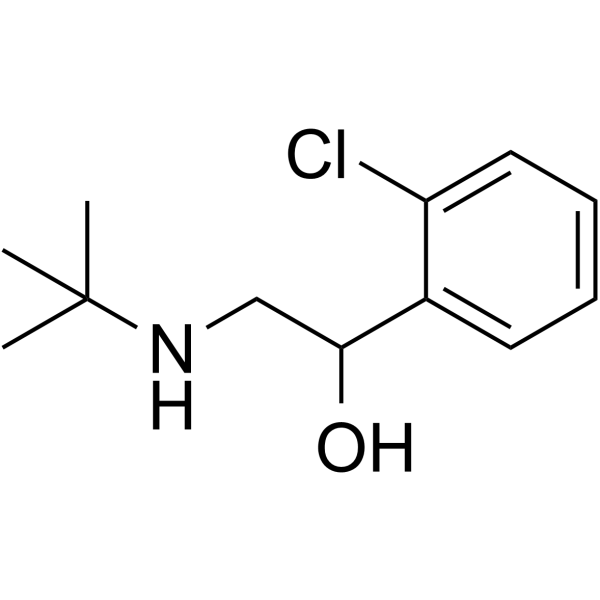
Tulobuterol (C-78 free base) is a long-acting β2-adrenoceptor agonist, which reduces the frequency of exacerbations of chronic obstructive pulmonary disease and bronchial asthma. Tulobuterol is also a sympathomimetic agent used as a transdermal patch, and increases normal diaphragm muscle strength .
|
-
-
- HY-100490B
-
|
|
Imidazoline Receptor
Adrenergic Receptor
Apoptosis
Autophagy
|
Cardiovascular Disease
Cancer
|
|
Rilmenidine phosphate, an innovative antihypertensive agent, is an orally active, selective I1 imidazoline receptor agonist. Rilmenidine phosphate is an alpha 2-adrenoceptor agonist. Rilmenidine phosphate induces autophagy. Rilmenidine phosphate acts both centrally by reducing sympathetic overactivity and in the kidney by inhibiting the Na +/H + antiport. Rilmenidine phosphate modulates proliferation and stimulates the proapoptotic protein Bax thus inducing the perturbation of the mitochondrial pathway and apoptosis in human leukemic K562 cells [2] .
|
-
-
- HY-12463
-
|
|
Adrenergic Receptor
|
Inflammation/Immunology
|
|
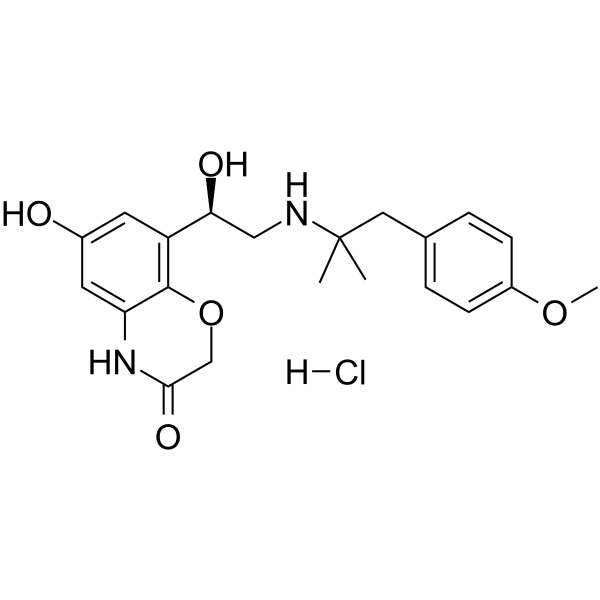
Carmoterol hydrochloride is a highly potent, selective and long-acting β2-adrenoceptor agonist with the pEC50 of 10.19. Carmoterol has 53 times higher affinity for the β2-adrenoceptors than for the β1-adrenoceptors. Carmoterol hydrochloride can be used for the research of asthma and chronic obstructive pulmonary disease (COPD) [2].
|
-
-
- HY-17034
-
|
|
Adrenergic Receptor
|
Neurological Disease
Endocrinology
|
|
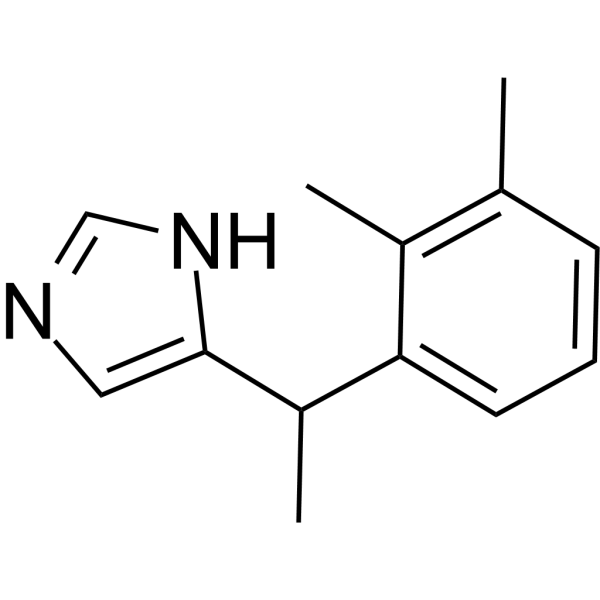
Medetomidine is an orally active α2-adrenoceptor agonist (Ki: 1.08 nM). Medetomidine has sedative and analgesic effects. Medetomidine can cause peripheral vasoconstriction through the activation of α2 adrenoceptors on blood vessels [2] .
|
-
-
- HY-W744625
-
|
BI1744-d3 hydrochloride
|
Isotope-Labeled Compounds
Adrenergic Receptor
|
Endocrinology
|
|
Olodaterol-d3 hydrochloride (BI1744-d3 hydrochloride) is the deuterium labeled Olodaterol hydrochloride (HY-14301A). Olodaterol (BI1744) hydrochloride is a selective, long acting β2-adrenoceptor (β2-AR) agonist (EC50=0.1 nM and pKi= 9.14 for human β2-adrenoceptor, respectively). Olodaterol can be used for chronic obstructive pulmonary disease (COPD) and pulmonary fibrosis [2] .
|
-
-
- HY-12724
-
|
|
Adrenergic Receptor
Parasite
|
Cardiovascular Disease
Cancer
|
|
Guanabenz is an orally active α-2-adrenoceptor agonist. Guanabenz has antihypertensive effect and antiparasitic activity. Guanabenz interferes ER stress-signalling and has protective effects in cardiac myocytes. Guanabenz also is used for the research of high blood pressure [2] .
|
-
-
- HY-12980
-
|
GSK961081; TD-5959
|
Adrenergic Receptor
mAChR
|
Inflammation/Immunology
Endocrinology
|
|
Batefenterol (GSK961081;TD-5959) is a novel muscarinic receptor antagonist and β2-adrenoceptor agonist; displays high affinity for hM2, hM3 muscarinic and hβ2-adrenoceptor with Ki values of 1.4, 1.3 and 3.7 nM, respectively.
|
-
-
- HY-14301A
-
|
BI1744 hydrochloride
|
Adrenergic Receptor
|
Inflammation/Immunology
Endocrinology
|
|
Olodaterol (BI1744) hydrochloride is a selective, long acting β2-adrenoceptor (β2-AR) agonist (EC50=0.1 nM and pKi= 9.14 for human β2-adrenoceptor, respectively). Olodaterol can be used for chronic obstructive pulmonary disease (COPD) and pulmonary fibrosis [2] .
|
-
-
- HY-17034B
-
|
MPV785
|
Adrenergic Receptor
|
Neurological Disease
Endocrinology
|
|
Medetomidine hydrochloride is an orally active α2-adrenoceptor agonist (Ki: 1.08 nM). Medetomidine hydrochloride has sedative and analgesic effects. Medetomidine hydrochloride can cause peripheral vasoconstriction through the activation of α2 adrenoceptors on blood vessels [2] .
|
-
-
- HY-101355B
-
|
CGP 20712 mesylate
|
Adrenergic Receptor
|
Cardiovascular Disease
|
|
CGP 20712 A (CGP 20712 mesylate) is a highly selective β1-adrenoceptor antagonist with an IC50 of 0.7 nM. CGP 20712 A exhibits ~10,000-fold selectivity over β2-adrenoceptors .
|
-
-
- HY-12724A
-
|
|
Parasite
Adrenergic Receptor
|
Cardiovascular Disease
Cancer
|
|
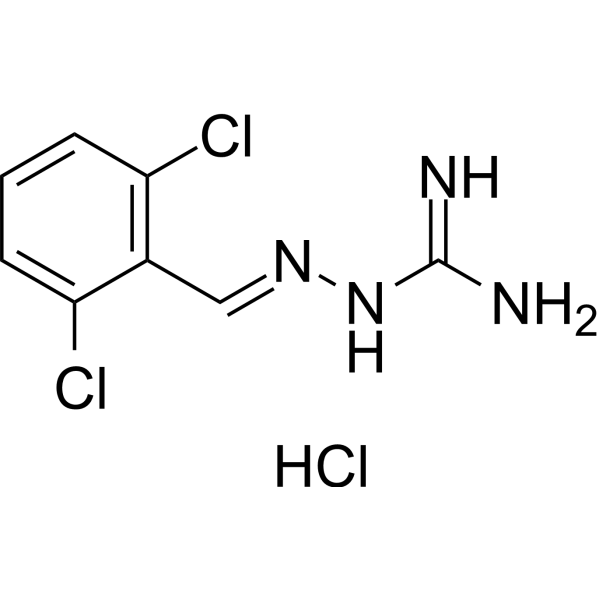
Guanabenz hydrochloride is an orally active α-2-adrenoceptor agonist. Guanabenz hydrochloride has antihypertensive effect and antiparasitic activity. Guanabenz hydrochloride interferes ER stress-signalling and has protective effects in cardiac myocytes. Guanabenz hydrochloride also is used for the research of high blood pressure [2] .
|
-
-
- HY-100490A
-
|
|
Imidazoline Receptor
Adrenergic Receptor
Apoptosis
Autophagy
|
Cardiovascular Disease
Cancer
|
|
Rilmenidine hemifumarate, an innovative antihypertensive agent, is an orally active, selective I1 imidazoline receptor agonist. Rilmenidine hemifumarate is an alpha 2-adrenoceptor agonist. Rilmenidine hemifumarate induces autophagy. Rilmenidine hemifumarate acts both centrally by reducing sympathetic overactivity and in the kidney by inhibiting the Na +/H + antiport. Rilmenidine hemifumarate modulates proliferation and stimulates the proapoptotic protein Bax thus inducing the perturbation of the mitochondrial pathway and apoptosis in human leukemic K562 cells [2] .
|
-
-
- HY-14304A
-
|
MJ 9184 hydrochloride
|
Adrenergic Receptor
|
Cardiovascular Disease
|
|
Zinterol hydrochloride (MJ 9184 hydrochloride) is a potent and selective β2-adrenoceptor agonist . Zinterol hydrochloride increases ICa in a concentration-dependent manner with an EC50 of 2.2 nM [2]. Zinterol hydrochloride induces ventricular arrhythmias in conscious heart failure rabbits .
|
-
-
- HY-135490
-
|
|
Adrenergic Receptor
Phosphodiesterase (PDE)
|
Inflammation/Immunology
|
|
Reproterol is a selective β2-adrenoceptor agonist and cAMP phosphodiesterase (PDE) inhibitor. Reproterol inhibits adenylate cyclase-induced phosphodiesterase activity. Reproterol inhibits histamine release from mast cells. Reproterol is applicable to research related to asthma .
|
-
-
- HY-108901
-
|
|
Adrenergic Receptor
|
Neurological Disease
Inflammation/Immunology
|
|
Formoterol hemifumarate hydrate is a selective, long-acting beta 2-adrenoceptor agonist. Formoterol is a bronchodilator used for the research of the asthma and chronic obstructive pulmonary disease (COPD). Formoterol hemifumarate hydrate induces mitochondrial biogenesis and promotes cognitive recovery after traumatic brain injury [2] .
|
-
-
- HY-103197
-
|
RX821002 hydrochloride
|
Adrenergic Receptor
|
Neurological Disease
|
|
2-Methoxyidazoxan monohydrochloride (RX821002 hydrochloride) is a highly selective alpha 2-adrenoceptor antagonist with little or no imidazoline antagonist effect. RX 821002 has markedly higher affinity for (guinea-pig) alpha 2D-adrenoceptors (pKd 9.7) than for (rabbit) alpha 2A-adrenoceptors (pKd 8.2) [2].
|
-
-
- HY-111144
-
|
AZD0548; LAS100977
|
Adrenergic Receptor
|
Inflammation/Immunology
|
|
Abediterol (LAS100977) is an inhaled long-acting β2-adrenoceptor agonist (LABA) and can be used for the research of asthma and chronic obstructive pulmonary disease (COPD) .
|
-
-
- HY-B1416A
-
-
-
- HY-50291
-
-
-
- HY-106769
-
-
-
- HY-14301AR
-
|
BI1744 hydrochloride (Standard)
|
Reference Standards
Adrenergic Receptor
|
Inflammation/Immunology
Endocrinology
|
|
Olodaterol (hydrochloride) (Standard) is the analytical standard of Olodaterol (hydrochloride). This product is intended for research and analytical applications. Olodaterol (BI1744) hydrochloride is a selective, long acting β2-adrenoceptor (β2-AR) agonist (EC50=0.1 nM and pKi= 9.14 for human β2-adrenoceptor, respectively). Olodaterol can be used for chronic obstructive pulmonary disease (COPD) and pulmonary fibrosis [2] .
|
-
-
- HY-17034BS1
-
|
MPV785-13C,d3
|
Isotope-Labeled Compounds
Adrenergic Receptor
|
Endocrinology
|
|
Medetomidine-13C,d3 (hydrochloride) is a deuterated labeled Medetomidine (hydrochloride) . Medetomidine hydrochloride is an orally active α2-adrenoceptor agonist (Ki: 1.08 nM). Medetomidine hydrochloride has sedative and analgesic effects. Medetomidine hydrochloride can cause peripheral vasoconstriction through the activation of α2 adrenoceptors on blood vessels [2] .
|
-
-
- HY-103203
-
-
-
- HY-N3298
-
|
|
Adrenergic Receptor
|
Cardiovascular Disease
Neurological Disease
|
|
Meranzin is an absorbed bioactive compound from the Traditional Chinese Medicine (TCM) Chaihu-Shugan-San (CSS). Meranzin, isolated from leaves of Murraya exotica L., regulates the shared alpha 2-adrenoceptor and involves the AMPA-ERK1/2–BDNF signaling pathway. Meranzin has the potential for the prevention of the comorbidity of atherosclerosis and depression [2].
|
-
-
- HY-136409R
-
|
C10-HSL (Standard)
|
Reference Standards
Bacterial
Reactive Oxygen Species (ROS)
|
Infection
|
|
Formoterol (hemifumarate hydrate) (Standard) is the analytical standard of Formoterol (hemifumarate hydrate). This product is intended for research and analytical applications. Formoterol hemifumarate hydrate is a selective, long-acting beta 2-adrenoceptor agonist. Formoterol is a bronchodilator used for the research of the asthma and chronic obstructive pulmonary disease (COPD). Formoterol hemifumarate hydrate induces mitochondrial biogenesis and promotes cognitive recovery after traumatic brain injury [2] .
|
-
-
- HY-103212A
-
|
B-HT 933 hydrochloride; Oxazoloazepin hydrochloride
|
Adrenergic Receptor
|
Cardiovascular Disease
|
|
Azepexole hydrochloride (B-HT 933 dihydrochloride; Oxazoloazepin dihydrochloride) is a selective agonist for α 2-adrenoceptor, with pKi of 8.3, 7.6, and 7.5 for α2A-, α2B- and α2C-adrenoceptor subtypes, resepctively. Azepexole dihydrochloride causes concentration-dependent inhibition of peristaltic contractions with IC50 of 78.72 nM. Azepexole hydrochloride exhibits antitussive and analgesic efficacy [2].
|
-
-
- HY-155879
-
-
-
- HY-119868
-
|
Butoxamin
|
Adrenergic Receptor
|
Metabolic Disease
|
|
Butaxamine (Butoxamin) is a potent, selective and orally active β2-adrenoceptor antagonist. Butaxamine shows antiosteoporotic activity .
|
-
-
- HY-N3198A
-
|
(-)-Sophoramine
|
Adrenergic Receptor
|
Cardiovascular Disease
|
|
Sophoramine ((-)-Sophoramine) is a prejunctional α2-adrenoceptor inhibitor that can be found in the seeds of Sophora alopecuroides. Sophoramine inhibits prejunctional α2-adrenoceptors to facilitate norepinephrine release from adrenergic nerves. Sophoramine shows cytotoxic activity against human cancer cells, positive inotropic activity, and activity in rodent arrhythmia models. Sophoramine can be used for the research of arrhythmias [2].
|
-
-
- HY-B0010S
-
-
-
- HY-A0008
-
-
-
- HY-101355A
-
-
-
- HY-148529
-
|
(±)-DG5128 free base; DG5128 free base
|
Adrenergic Receptor
|
Cardiovascular Disease
Metabolic Disease
|
|
Midaglizole ((±)-DG5128 free base, DG5128 free base) is a potent α2-adrenoceptor antagonist. Midaglizole is a hypoglycemic agent. Midaglizole increases blood pressure and reduces blood glucose levels in vivo [2] .
|
-
-
- HY-136435
-
-
-
- HY-19942A
-
-
-
- HY-B0409S
-
-
-
- HY-136935
-
|
|
Adrenergic Receptor
|
Endocrinology
|
|
Alloyohimbine, an alkaloid, is a selective α2-adrenoceptor antagonist with K Dα1, K Dα2 of 0.28 μM and 0.006 μM, respectively .
|
-
-
- HY-106769C
-
|
GR50360 hydrochloride
|
Adrenergic Receptor
|
Neurological Disease
|
|
Fluparoxan hydrochloride is an orally active, selective and competitive alpha 2-adrenoceptor antagonist. Fluparoxan hydrochloride is an anti-depressant agent [2].
|
-
- HY-100704A
-
-
- HY-10998
-
-
- HY-14304
-
|
MJ 9184
|
Adrenergic Receptor
|
Cardiovascular Disease
|
|
Zinterol (MJ 9184) is a potent and selective β2-adrenoceptor agonist . Zinterol increases ICa in a concentration-dependent manner with an EC50 of 2.2 nM [2].
|
-
- HY-17034BR
-
|
MPV785 (Standard)
|
Adrenergic Receptor
Reference Standards
|
Neurological Disease
Endocrinology
|
|
Medetomidine (hydrochloride) (Standard) is the analytical standard of Medetomidine (hydrochloride). This product is intended for research and analytical applications. Medetomidine hydrochloride is an orally active α2-adrenoceptor agonist (Ki: 1.08 nM). Medetomidine hydrochloride has sedative and analgesic effects. Medetomidine hydrochloride can cause peripheral vasoconstriction through the activation of α2 adrenoceptors on blood vessels [2] .
|
-
- HY-12712
-
|
|
Adrenergic Receptor
|
Neurological Disease
|
|
L-657743 is a highly potent, highly selective, and orally active α2-adrenoceptor antagonist. L-657743 can be used in the research of neurological diseases such as depression .
|
-
- HY-100850
-
-
- HY-108901R
-
|
|
Reference Standards
Adrenergic Receptor
|
Neurological Disease
Inflammation/Immunology
|
|
Formoterol (hemifumarate hydrate) (Standard) is the analytical standard of Formoterol (hemifumarate hydrate). This product is intended for research and analytical applications. Formoterol hemifumarate hydrate is a selective, long-acting beta 2-adrenoceptor agonist. Formoterol is a bronchodilator used for the research of the asthma and chronic obstructive pulmonary disease (COPD). Formoterol hemifumarate hydrate induces mitochondrial biogenesis and promotes cognitive recovery after traumatic brain injury [2] .
|
-
- HY-103212
-
|
B-HT 933 dihydrochloride; Oxazoloazepin dihydrochloride
|
Adrenergic Receptor
|
Cardiovascular Disease
Endocrinology
|
|
Azepexole (B-HT 933) dihydrochloride is a potent and selective alpha 2-adrenoceptor agonist with pKis of 8.3, 7.6, and 7.5 for α2A-, α2B- and α2C-adrenoceptor subtypes, resepctively . Azepexole dihydrochloride causes concentration-dependent inhibition of peristaltic contractions (IC50= 78.72 nM) [2].
|
-
- HY-N3298R
-
|
|
Reference Standards
Adrenergic Receptor
|
Cardiovascular Disease
Neurological Disease
|
|
Meranzin (Standard) is the analytical standard of Meranzin. This product is intended for research and analytical applications. Meranzin is an absorbed bioactive compound from the Traditional Chinese Medicine (TCM) Chaihu-Shugan-San (CSS). Meranzin, isolated from leaves of Murraya exotica L., regulates the shared alpha 2-adrenoceptor and involves the AMPA-ERK1/2–BDNF signaling pathway. Meranzin has the potential for the prevention of the comorbidity of atherosclerosis and depression [2].
|
-
- HY-100490S
-
|
|
Isotope-Labeled Compounds
Imidazoline Receptor
Adrenergic Receptor
Apoptosis
Autophagy
|
Cardiovascular Disease
Cancer
|
|
Rilmenidine-d4 is the deuterium labeled Rilmenidine. Rilmenidine, an innovative antihypertensive agent, is an orally active, selective I1 imidazoline receptor agonist. Rilmenidine is an alpha 2-adrenoceptor agonist. Rilmenidine induces autophagy. Rilmenidine acts both centrally by reducing sympathetic overactivity and in the kidney by inhibiting the Na+/H+ antiport. Rilmenidine modulates proliferation and stimulates the proapoptotic protein Bax thus inducing the perturbation of the mitochondrial pathway and apoptosis in human leukemic K562 cells [2] .
|
-
- HY-103197R
-
|
RX821002 hydrochloride (Standard)
|
Reference Standards
Adrenergic Receptor
|
Neurological Disease
|
|
2-Methoxyidazoxan (monohydrochloride) (Standard) is the analytical standard of 2-Methoxyidazoxan (monohydrochloride). This product is intended for research and analytical applications. 2-Methoxyidazoxan monohydrochloride (RX821002 hydrochloride) is a highly selective alpha 2-adrenoceptor antagonist with little or no imidazoline antagonist effect. RX 821002 has markedly higher affinity for (guinea-pig) alpha 2D-adrenoceptors (pKd 9.7) than for (rabbit) alpha 2A-adrenoceptors (pKd 8.2) [2].
|
-
- HY-136498AR
-
|
|
Reference Standards
Drug Metabolite
|
Infection
|
|
Rilmenidine (phosphate) (Standard) is the analytical standard of Rilmenidine (phosphate). This product is intended for research and analytical applications. Rilmenidine phosphate, an innovative antihypertensive agent, is an orally active, selective I1 imidazoline receptor agonist. Rilmenidine phosphate is an alpha 2-adrenoceptor agonist. Rilmenidine phosphate induces autophagy. Rilmenidine phosphate acts both centrally by reducing sympathetic overactivity and in the kidney by inhibiting the Na+/H+ antiport. Rilmenidine phosphate modulates proliferation and stimulates the proapoptotic protein Bax thus inducing the perturbation of the mitochondrial pathway and apoptosis in human leukemic K562 cells [2] .
|
-
- HY-100490BR
-
|
|
Reference Standards
Imidazoline Receptor
Adrenergic Receptor
Apoptosis
Autophagy
|
Cardiovascular Disease
Cancer
|
|
Rilmenidine (phosphate) (Standard) is the analytical standard of Rilmenidine (phosphate). This product is intended for research and analytical applications. Rilmenidine phosphate, an innovative antihypertensive agent, is an orally active, selective I1 imidazoline receptor agonist. Rilmenidine phosphate is an alpha 2-adrenoceptor agonist. Rilmenidine phosphate induces autophagy. Rilmenidine phosphate acts both centrally by reducing sympathetic overactivity and in the kidney by inhibiting the Na+/H+ antiport. Rilmenidine phosphate modulates proliferation and stimulates the proapoptotic protein Bax thus inducing the perturbation of the mitochondrial pathway and apoptosis in human leukemic K562 cells [2] .
|
-
- HY-100490R
-
|
|
Reference Standards
Imidazoline Receptor
Adrenergic Receptor
Apoptosis
Autophagy
|
Cardiovascular Disease
Cancer
|
|
Rilmenidine (Standard) is the analytical standard of Rilmenidine. This product is intended for research and analytical applications. Rilmenidine, an innovative antihypertensive agent, is an orally active, selective I1 imidazoline receptor agonist. Rilmenidine is an alpha 2-adrenoceptor agonist. Rilmenidine induces autophagy. Rilmenidine acts both centrally by reducing sympathetic overactivity and in the kidney by inhibiting the Na+/H+ antiport. Rilmenidine modulates proliferation and stimulates the proapoptotic protein Bax thus inducing the perturbation of the mitochondrial pathway and apoptosis in human leukemic K562 cells [2] .
|
-
- HY-100490AR
-
|
|
Reference Standards
Imidazoline Receptor
Adrenergic Receptor
Apoptosis
Autophagy
|
Cardiovascular Disease
Cancer
|
|
Rilmenidine (hemifumarate) (Standard) is the analytical standard of Rilmenidine (hemifumarate). This product is intended for research and analytical applications. Rilmenidine hemifumarate, an innovative antihypertensive agent, is an orally active, selective I1 imidazoline receptor agonist. Rilmenidine hemifumarate is an alpha 2-adrenoceptor agonist. Rilmenidine hemifumarate induces autophagy. Rilmenidine hemifumarate acts both centrally by reducing sympathetic overactivity and in the kidney by inhibiting the Na+/H+ antiport. Rilmenidine hemifumarate modulates proliferation and stimulates the proapoptotic protein Bax thus inducing the perturbation of the mitochondrial pathway and apoptosis in human leukemic K562 cells [2] .
|
-
- HY-106874B
-
|
rel-RS-15385-197
|
Adrenergic Receptor
|
Neurological Disease
|
|
rel-Delequamine (rel-RS-15385-197) is an orally active, brain-penetrant, potent and selective M2-adrenoceptor antagonist and α2-adrenoceptor antagonist. rel-Delequamine has a pKi of 9.45 for α2-adrenoceptors in the rat cortex. rel-Delequamine augments K +-evoked release of noradrenaline with an EC50 of 1 nM .
|
-
- HY-106769A
-
|
(3aR,9aR)-GR50360 hydrochloride
|
Others
|
Neurological Disease
|
|
(3aR,9aR)-Fluparoxan ((3aR,9aR)-GR50360) hydrochloride is a compound that can be used to synthesize and prevent and improve neurodevelopmental disorders .
|
-
- HY-135487
-
|
AR-C68397AA free base; AR-C68397XX
|
Dopamine Receptor
Adrenergic Receptor
|
Neurological Disease
|
|
Sibenadet (AR-C68397AA free base) is a dual dopamine D2/β2-adrenoceptor agonist with selective β2-adrenoceptor agonism. Sibenadet inhibits capsaicin-induced plasma protein extravasation in rat trachea. Sibenadet suppresses edema from sensory nerve fiber activation by activating β2-adrenoceptor. Sibenadet is promising for research of chronic obstructive pulmonary disease (COPD) .
|
-
- HY-U00165
-
-
- HY-101683
-
-
- HY-103201
-
-
- HY-U00206
-
-
- HY-19942
-
-
- HY-136435S1
-
-
- HY-12980R
-
|
GSK961081 (Standard); TD-5959 (Standard)
|
Adrenergic Receptor
mAChR
Reference Standards
|
Inflammation/Immunology
Endocrinology
|
|
Batefenterol (Standard) is the analytical standard of Batefenterol. This product is intended for research and analytical applications. Batefenterol (GSK961081;TD-5959) is a novel muscarinic receptor antagonist and β2-adrenoceptor agonist; displays high affinity for hM2, hM3 muscarinic and hβ2-adrenoceptor with Ki values of 1.4, 1.3 and 3.7 nM, respectively.
|
-
- HY-W263279
-
|
(E)-Wy-8678
|
Adrenergic Receptor
|
Cardiovascular Disease
Neurological Disease
|
|
(E)-Guanabenz ((E)-Wy-8678) is an orally active central α2-adrenoceptor agonist. (E)-Guanabenz has antihypertensive activity, acts via stimulating central α2-adrenoceptors, and reducing net sympathetic outflow into the periphery. (E)-Guanabenz also directly binds to and inhibits GADD34, and has neuroprotective activity. (E)-Guanabenz can be used for researching hypertension and Parkinson disease [2].
|
-
- HY-B0409AR
-
-
- HY-U00183
-
-
- HY-117024
-
|
AZD0548 napadisylate; LAS100977 napadisylate
|
Adrenergic Receptor
|
Inflammation/Immunology
|
|
Abediterol napadisylate is an inhaled long-acting β2-adrenoceptor agonist (LABA) and can be used for the research of asthma and chronic obstructive pulmonary disease (COPD) .
|
-
- HY-17034R
-
|
|
Adrenergic Receptor
Reference Standards
|
Neurological Disease
Endocrinology
|
|
Medetomidine (Standard) is the analytical standard of Medetomidine. This product is intended for research and analytical applications. Medetomidine is an orally active α2-adrenoceptor agonist (Ki: 1.08 nM). Medetomidine has sedative and analgesic effects. Medetomidine can cause peripheral vasoconstriction through the activation of α2 adrenoceptors on blood vessels [2] .
|
-
- HY-12380AR
-
-
- HY-12380R
-
|
MPV-1248 hydrochloride (Standard)
|
Adrenergic Receptor
Reference Standards
|
Neurological Disease
Endocrinology
|
|
Atipamezole (hydrochloride) (Standard) is the analytical standard of Atipamezole (hydrochloride). This product is intended for research and analytical applications. Atipamezole (MPV-1248) hydrochloride is a potent α2-adrenoceptor antagonist with a Ki of 1.6 nM .
|
-
- HY-W717221
-
|
|
Isotope-Labeled Compounds
Adrenergic Receptor
|
Neurological Disease
|
|
Medetomidine-d5 (d5-Major) is the deuterium labeled Medetomidine (HY-17034). Medetomidine is an orally active α2-adrenoceptor agonist (Ki: 1.08 nM). Medetomidine has sedative and analgesic effects. Medetomidine can cause peripheral vasoconstriction through the activation of α2 adrenoceptors on blood vessels [2] .
|
-
- HY-A0008R
-
-
- HY-106973A
-
|
CHF 1035
|
Dopamine Receptor
Adrenergic Receptor
|
Cardiovascular Disease
|
|
Nolomirole (CHF 1035) hydrochloride is an orally active and selective DA2 dopaminergic receptor/α2-adrenoceptor agonist. Nolomirole attenuates the heart failure signs in the Monocrotaline (HY-N0750)-induced congestive heart failure model. Nolomirole increases cardiac output [2].
|
-
- HY-W759997
-
-
- HY-106973
-
|
CHF 1035 free base
|
Dopamine Receptor
Adrenergic Receptor
|
Cardiovascular Disease
|
|
Nolomirole (CHF 1035) is an orally active and selective DA2 dopaminergic receptor/α2-adrenoceptor agonist. Nolomirole attenuates the heart failure signs in the Monocrotaline (HY-N0750)-induced congestive heart failure model. Nolomirole increases cardiac output [2] .
|
-
- HY-14297
-
|
|
Adrenergic Receptor
|
Endocrinology
|
|
Milveterol is a long-acting β(2)-adrenoceptor agonist with high binding activity. Milveterol exhibits high potency in vitro and a prolonged duration of action in a guinea pig bronchoprotection model. Milveterol has been structurally optimized to show enhanced binding potency compared to its parent monomer .
|
-
- HY-101061
-
|
|
Adrenergic Receptor
|
Cardiovascular Disease
|
|
2-MPMDQ is a potent and selective α1-adrenoceptor (Ki=0.37 nM) antagonist over α2-adrenoceptor (Ki=1740 nM). 2-MPMDQ is potent anti-hypertensive agent and has the potential for hypertension research .
|
-
- HY-157796
-
|
|
Adrenergic Receptor
|
Metabolic Disease
|
|
β2AR agonist 4 (compound A19) is a potent and selective β2-Adrenoceptor agonist with an EC50 of 3.7 pM. β2AR agonist 4 suppresses the inflammatory cytokines and leukocytes upregulation and improves lung function in COPD rat model .
|
-
- HY-169791
-
|
|
5-HT Receptor
|
Neurological Disease
|
|
ECPLA, a lysergamide lysergic acid diethylamidean (LSD) analog, is a potent 5-HT2A agonist (EC50 of 14.6 nM) for Gq-mediated calcium flux. ECPLA has high affinity for most serotonin receptors, α2-adrenoceptors, and D2-like dopamine receptors .
|
-
- HY-B1416AR
-
|
|
Adrenergic Receptor
Imidazoline Receptor
|
Cardiovascular Disease
Metabolic Disease
|
|
Efaroxan (hydrochloride) (Standard) is the analytical standard of Efaroxan (hydrochloride). This product is intended for research and analytical applications. Efaroxan hydrochloride is a potent, selective and orally active α2-adrenoceptor antagonist, with antidiabetic activity. Efaroxan hydrochloride is a selective I1-Imidazoline receptor antagonist. Efaroxan hydrochloride can be used for the research of cardiovascular disease [2] .
|
-
- HY-107155
-
|
|
Adrenergic Receptor
Ornithine decarboxylase (ODC)
|
Cardiovascular Disease
|
|
β-Blocker B-24/76 is a beta adrenoceptor blocker. β-Blocker B-24/76 exhibits beta 1-adrenoceptor blocking and beta 2-adrenoceptor stimulating properties. β-Blocker B-24/76 can suppress the increased ornithine decarboxylase activity in hypertrophied hearts. β-Blocker B-24/76 can be used for the research of cardiovascular disease .
|
-
- HY-124950A
-
|
(+)-GR114297A
|
Drug Isomer
|
Metabolic Disease
|
|
(+)-Picumeterol is a configurations of Picumeterol (HY-124950). Picumeterol is a potent and selective β2-adrenoceptor agonist with bronchodilator and anti-bronchoconstrictor effects .
|
-
- HY-137909
-
-
- HY-123285
-
|
5-Desbromo, 5-chloro brimonidine
|
Adrenergic Receptor
|
Neurological Disease
|
|
UK 14819 (5-Desbromo, 5-chloro brimonidine) is an α2-adrenoceptor agonist. UK 14819 inhibits stimulation-induced contractions of rabbit distal colon with an IC50 of 6.66 nM .
|
-
- HY-B1416
-
-
- HY-118390
-
|
|
Adrenergic Receptor
Drug Derivative
|
Cardiovascular Disease
|
|
Jingsongling is a Xylazine analog and anesthetic agent. Jingsongling causes bradycardia and hypertension by mediating α2-adrenoceptors. Jingsongling inhibits canine gastric motility through mediation of α1 and α2 adrenergic receptors [2] .
|
-
- HY-103203A
-
-
- HY-B0976R
-
|
Th-1165 (Standard); Phenoterol (Standard)
|
Adrenergic Receptor
Reference Standards
|
Inflammation/Immunology
Endocrinology
|
|
Fenoterol (Standard) is the analytical standard of Fenoterol. This product is intended for research and analytical applications. Fenoterol (Th-1165), a sympathomimetic agent, is a selective and orally active β2-adrenoceptor agonist. Fenoterol is an effective bronchodilator and can be used for bronchospasm associated with asthma, bronchitis and other obstructive airway diseases research [2].
|
-
- HY-14561A
-
|
RX 781094 hydrochloride
|
Adrenergic Receptor
Imidazoline Receptor
|
Neurological Disease
Endocrinology
|
|
Idazoxan hydrochloride (RX 781094 hydrochloride) is an α2-adrenoceptor antagonist and is also a imidazoline receptors (IRs) antagonist competitively antagonized the centrally induced hypotensive effect of imidazoline-like agents (IMs). Idazoxan hydrochloride also improves motor symptoms in Parkinson’s disease, L-DOPA-induced dyskinesias, and experimental Parkinsonism [2].
|
-
- HY-B0010B
-
|
(±)Formoterol
|
Adrenergic Receptor
|
Inflammation/Immunology
|
|
Formoterol ((±)Formoterol) is an orally active β2-selective agonist. Formoterol potently relaxes the peripheral airways through stimulating the beta 2-adrenoceptors selectively as is the case in the central airways and that it significantly inhibits IgE-mediated slow reactive substance of anaphylaxis (SRS-A) release through beta-adrenoceptor stimulation .
|
-
- HY-148529R
-
|
(±)-DG5128 free base (Standard); DG5128 free base (Standard)
|
Adrenergic Receptor
Reference Standards
|
Cardiovascular Disease
Metabolic Disease
|
|
Midaglizole (Standard) is the analytical standard of Midaglizole. This product is intended for research and analytical applications. Midaglizole ((±)-DG5128 free base; DG5128 free base) is a potent α2-adrenoceptor antagonist. Midaglizole is a hypoglycemic agent. Midaglizole increases blood pressure and reduces blood glucose levels in vivo [2] .
|
-
- HY-157502S
-
-
- HY-101822
-
-
- HY-12707
-
-
- HY-W042920A
-
|
|
Adrenergic Receptor
|
Neurological Disease
|
|
TDIQ hydrochloride is an analog of Amphetamine with high affinity for α2-adrenergic receptor. TDIQ hydrochloride is a selective α2-adrenoceptor ligand with the Ki values of 75 nM, 95 nM, and 65 nM for α2A-, α2B-, and α2C-adrenergic receptors, respectively .
|
-
- HY-12707A
-
-
- HY-12707B
-
-
- HY-124950
-
|
GR114297A
|
Adrenergic Receptor
|
Others
|
|
Picumeterol (GR114297A) is a potent and selective β2-adrenoceptor agonist with bronchodilator and anti-bronchoconstrictor effects. Picumeterol produces long-lasting relaxation of airways smooth muscle both in vitro and in vivo. Picumeterol is cleared from plasma through a rapid and extensive hepatic metabolism. Picumeterol is proming for rasearch of asthma and related diseases [2].
|
-
- HY-159686
-
|
|
Adrenergic Receptor
|
Inflammation/Immunology
Endocrinology
|
|
Aclidinium is a long-acting muscarinic antagonist and long-acting β2-adrenoceptor (β2-AR) agonist with bronchodilator activity. Aclidinium can reduce hyperinflation of the lungs and increase lung function and exercise endurance time. Aclidinium is used in research on chronic obstructive pulmonary disease (COPD) .
|
-
- HY-101355AR
-
|
|
Adrenergic Receptor
Reference Standards
|
Neurological Disease
Endocrinology
|
|
CGP 20712 (dihydrochloride) (Standard) is the analytical standard of CGP 20712 (dihydrochloride). This product is intended for research and analytical applications. CGP 20712 dihydrochloride is a highly selective β1-adrenoceptor antagonist with an IC50 of 0.7 nM. CGP 20712 dihydrochloride exhibits ~10,000-fold selectivity over β2-adrenoceptors .
|
-
- HY-12707C
-
-
- HY-W011733
-
|
C-78
|
Adrenergic Receptor
Influenza Virus
Antibiotic
|
Infection
Inflammation/Immunology
Endocrinology
|
|
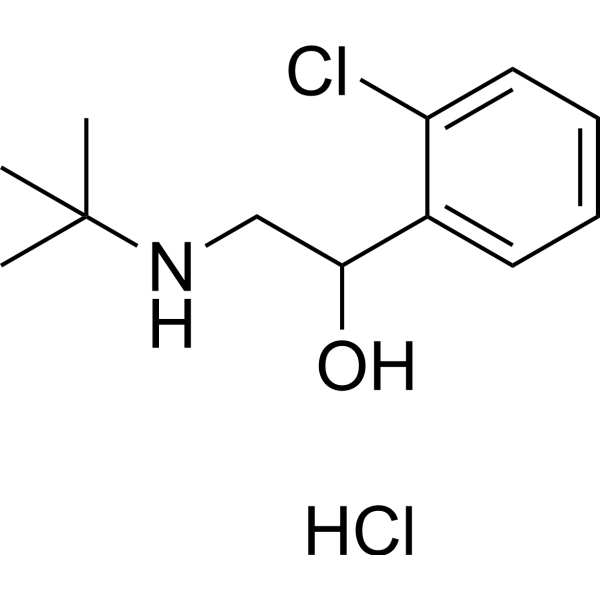
Tulobuterol hydrochloride (C-78) is a long-acting β2-adrenoceptor agonist, which reduces the frequency of exacerbations of chronic obstructive pulmonary disease and bronchial asthma. Tulobuterol hydrochloride is also a sympathomimetic agent used as a transdermal patch, increases normal diaphragm muscle strength . Tulobuterol hydrochloride inhibit rhinovirus replication and modulate airway inflammation [2].
|
-
- HY-109075
-
|
|
Adrenergic Receptor
|
Neurological Disease
|
|
Tasipimidine is an orally active and selective α2A-adrenoceptor agonist with a pEC50 of 7.57 for human α2A-adrenoceptors and an EC50 of 5.7 nM for rat α2-adrenoceptor. Tasipimidine can be utilized in research related to situational anxiety and fear [2].
|
-
- HY-101355BR
-
|
CGP 20712 mesylate (Standard)
|
Reference Standards
Adrenergic Receptor
|
Cardiovascular Disease
|
|
CGP 20712 A (Standard) is the analytical standard of CGP 20712 A. This product is intended for research and analytical applications. CGP 20712 A (CGP 20712 mesylate) is a highly selective β1-adrenoceptor antagonist with an IC50 of 0.7 nM. CGP 20712 A exhibits ~10,000-fold selectivity over β2-adrenoceptors .
|
-
- HY-12980A
-
|
GSK961081 Succinate; TD-5959 Succinate
|
Adrenergic Receptor
mAChR
|
Neurological Disease
|
|
Batefenterol Succinate (GSK961081 Succinate) is a first-of-its-kind inhaled bifunctional bronchodilator with smooth muscle relaxant properties. The activities of Batefenterol Succinate include acting as a smooth muscle parasympathetic antagonist and a beta2-adrenoceptor agonist. Batefenterol Succinate is used to improve respiratory function, especially in patients with chronic obstructive pulmonary disease (COPD) .
|
-
- HY-109075A
-
|
|
Adrenergic Receptor
|
Neurological Disease
|
|
Tasipimidine sulfate is an orally active and selective α2A-adrenoceptor agonist with a pEC50 of 7.57 for human α2A-adrenoceptors and an EC50 of 5.7 nM for rat α2-adrenoceptor. Tasipimidine sulfate can be utilized in research related to situational anxiety and fear [2].
|
-
- HY-124270
-
|
AR-C68397AA
|
Dopamine Receptor
Adrenergic Receptor
|
Inflammation/Immunology
|
|
Sibenadet hydrochloride (AR-C68397AA) is a dual D2 dopamine receptor, beta2-adrenoceptor agonist with bronchodilator activity. Investigation in animal models of key chronic obstructive pulmonary disease (COPD) symptoms has demonstrated that Sibenadet hydrochloride effectively inhibits sensory nerve activity, thereby reducing reflex cough, mucus production and tachypnoea.
|
-
- HY-160932
-
|
|
Adrenergic Receptor
|
Endocrinology
|
|
RS-15385-198 is the enantiomer of Delequamine (RS-15385-197) (HY-106874). RS-15385-198 exhibits a pKi of 6.32 for α2-adrenoceptors in the rat cortex. RS-15385-198 is an antagonist for UK-14304 (HY-B0659) in the rat vas deferens and in the guinea-pig ileum .
|
-
- HY-12724AR
-
|
|
Parasite
Adrenergic Receptor
Reference Standards
|
Cardiovascular Disease
Cancer
|
|
Guanabenz (hydrochloride) (Standard) is the analytical standard of Guanabenz (hydrochloride). This product is intended for research and analytical applications. Guanabenz hydrochloride is an orally active α-2-adrenoceptor agonist. Guanabenz hydrochloride has antihypertensive effect and antiparasitic activity. Guanabenz hydrochloride interferes ER stress-signalling and has protective effects in cardiac myocytes. Guanabenz hydrochloride also is used for the research of high blood pressure [2] .
|
-
- HY-B1810S
-
|
C-78-d9
|
Isotope-Labeled Compounds
Adrenergic Receptor
|
Inflammation/Immunology
Endocrinology
|
|
Tulobuterol-d9 (hydrochloride) is the deuterium labeled Tulobuterol. Tulobuterol (C-78 free base) is a long-acting β2-adrenoceptor agonist, which reduces the frequency of exacerbations of chronic obstructive pulmonary disease and bronchial asthma. Tulobuterol is also a sympathomimetic agent used as a transdermal patch, and increases normal diaphragm muscle strength .
|
-
- HY-B0354A
-
-
- HY-B0528
-
|
|
Adrenergic Receptor
Endogenous Metabolite
|
Neurological Disease
Endocrinology
|
|
Octopamine is a biogenic monoamine structurally related to noradrenaline, acts as a neurohormone, a neuromodulator and a neurotransmitter in invertebrates. Octopamine can stimulate alpha2-adrenoceptors (ARs) in Chinese hamster ovary cells transfected with human alpha2-ARs. Octopamine increased glycogenolysis, glycolysis, oxygen uptake, gluconeogenesis and the portal perfusion pressure [2] .
|
-
- HY-B0976AR
-
|
Th-1165a (Standard); Phenoterol hydrobromide (Standard)
|
Reference Standards
Adrenergic Receptor
|
Inflammation/Immunology
Endocrinology
|
|
Fenoterol (hydrobromide) (Standard) is the analytical standard of Fenoterol (hydrobromide). This product is intended for research and analytical applications. Fenoterol hydrobromide (Th-1165a), a sympathomimetic agent, is a selective and orally active β2-adrenoceptor agonist. Fenoterol hydrobromide is an effective bronchodilator and can be used for bronchospasm associated with asthma, bronchitis and other obstructive airway diseases research [2].
|
-
- HY-B1810R
-
|
C-78 free base (Standard)
|
Reference Standards
Adrenergic Receptor
|
Inflammation/Immunology
Endocrinology
|
|
Tulobuterol (Standard) is the analytical standard of Tulobuterol. This product is intended for research and analytical applications. Tulobuterol (C-78 free base) is a long-acting β2-adrenoceptor agonist, which reduces the frequency of exacerbations of chronic obstructive pulmonary disease and bronchial asthma. Tulobuterol is also a sympathomimetic agent used as a transdermal patch, and increases normal diaphragm muscle strength .
|
-
- HY-50291R
-
|
4-Hydroxytulobuterol (Standard)
|
Adrenergic Receptor
Reference Standards
|
Cardiovascular Disease
Endocrinology
|
|
HOKU-81 (Standard) is the analytical standard of HOKU-81. This product is intended for research and analytical applications. HOKU-81 (4-Hydroxytulobuterol) is one of the metabolites of Tulobuterol (HY-B1810). HOKU-81 is a potent and selective β2-adrenoceptor stimulant. HOKU-81 has bronchodilating effect [2].
|
-
- HY-B0352
-
-
- HY-17034AR
-
|
(+)-Medetomidine hydrochloride (Standard); (S)-Medetomidine hydrochloride (Standard)
|
Reference Standards
Adrenergic Receptor
|
Neurological Disease
Endocrinology
Cancer
|
|
Dexmedetomidine (hydrochloride) (Standard) is the analytical standard of Dexmedetomidine (hydrochloride). This product is intended for research and analytical applications. Dexmedetomidine hydrochloride ((+)-Medetomidine hydrochloride) is a potent, selective and orally active agonist of α2-adrenoceptor, with a Ki of 1.08 nM. Dexmedetomidine hydrochloride shows 1620-fold selectivity against α1-adrenoceptor. Dexmedetomidine hydrochloride exhibits anxiolysis, sedation, and modest analgesia effects [2] .
|
-
- HY-103203R
-
|
|
Reference Standards
Adrenergic Receptor
|
Neurological Disease
|
|
ST91 (Standard) is the analytical standard of ST91 (HY-103203). This product is intended for research and analytical applications. ST91 is a α2-adrenoceptor (α2AR) agonist. ST91 activates both α2AAR and non-α2AAR subtypes to produce spinal antinociception [2] .
|
-
- HY-203894
-
|
Defekton
|
Dopamine Receptor
Adrenergic Receptor
5-HT Receptor
|
Neurological Disease
|
|
Carpipramine (Defekton) is an antipsychotic agent that belongs to the iminodibenzyl class. Carpipramine is a potent dopamine antagonist which blocks alpha 1- and alpha 2-adrenoceptors. Carpipramine also has antagonist properties with respect to serotonin (5-ΗΤ2) receptors. Carpipramine exhibits antipsychotic and anti-depressant effects. Carpipramine can be used for the research of neurological disease, such as post-traumatic stress disorder (PTSD) and depression .
|
-
- HY-B0528A
-
|
(±)-p-Octopamine hydrochloride
|
Adrenergic Receptor
Endogenous Metabolite
|
Neurological Disease
Endocrinology
|
|
Octopamine ((±)-p-Octopamine) hydrochloride, a biogenic monoamine structurally related to noradrenaline, acts as a neurohormone, a neuromodulator and a neurotransmitter in invertebrates. Octopamine hydrochloride can stimulate alpha2-adrenoceptors (ARs) in Chinese hamster ovary cells transfected with human alpha2-ARs. Octopamine hydrochloride increased glycogenolysis, glycolysis, oxygen uptake, gluconeogenesis and the portal perfusion pressure [2] .
|
-
- HY-12719R
-
|
(+)-Medetomidine (Standard); (S)-Medetomidine (Standard)
|
Reference Standards
Adrenergic Receptor
|
Neurological Disease
Cancer
|
|
Dexmedetomidine (Standard) is the analytical standard of Dexmedetomidine. This product is intended for research and analytical applications. Dexmedetomidine ((+)-Medetomidine) is a potent, selective and orally active agonist of α2-adrenoceptor, with a Ki of 1.08 nM. Dexmedetomidine shows 1620-fold selectivity against α1-adrenoceptor. Dexmedetomidine exhibits anxiolysis, sedation, and modest analgesia effects [2] .
|
-
- HY-123008
-
|
|
Adrenergic Receptor
Phosphodiesterase (PDE)
|
Others
|
|
Reproterol hydrochloride is a dual-acting beta2-adrenoceptor agonist and phosphodiesterase inhibitor. Reproterol hydrochloride is more potent than albuterol and feterol in stimulating cAMP production in human monocytes, demonstrating its potential in enhancing airway function. Furthermore, Reproterol significantly inhibited the production of LTB4, indicating its anti-inflammatory properties. Reproterol hydrochloride may have inhibitory effects in respiratory diseases such as asthma and COPD .
|
-
- HY-B0354AR
-
|
|
Reference Standards
5-HT Receptor
Adrenergic Receptor
|
Cardiovascular Disease
Endocrinology
|
|
Urapidil (hydrochloride) (Standard) is the analytical standard of Urapidil (hydrochloride). This product is intended for research and analytical applications. Urapidil hydrochloride is an orally active α1-adrenoceptor antagonist and 5-HT1A receptor agonist with a pIC50 of 6.13 and 4.38 against α1- and α2-adrenoceptor, respectively. Urapidil hydrochloride shows antihypertensive effect [2].
|
-
- HY-B0976AS
-
|
|
Isotope-Labeled Compounds
Adrenergic Receptor
|
Inflammation/Immunology
Endocrinology
|
|
Fenoterol-d6 (hydrobromide) (Th-1165a-d6) is the deuterium labeled Fenoterol hydrobromide. Fenoterol hydrobromide (Th-1165a), a sympathomimetic agent, is a selective and orally active β2-adrenoceptor agonist. Fenoterol hydrobromide is an effective bronchodilator and can be used for bronchospasm associated with asthma, bronchitis and other obstructive airway diseases research [2].
|
-
- HY-17034AS
-
|
(+)-Medetomidine-13C,d3 hydrochloride; (S)-Medetomidine-13C,d3 hydrochloride
|
Isotope-Labeled Compounds
Adrenergic Receptor
|
Neurological Disease
Endocrinology
Cancer
|
|
Dexmedetomidine- 13C,d3 (hydrochloride) is the 13C- and deuterium labeled Dexmedetomidine (hydrochloride). Dexmedetomidine hydrochloride ((+)-Medetomidine hydrochloride) is a potent, selective and orally active agonist of α2-adrenoceptor, with a Ki of 1.08 nM. Dexmedetomidine hydrochloride shows 1620-fold selectivity against α1-adrenoceptor. Dexmedetomidine hydrochloride exhibits anxiolysis, sedation, and modest analgesia effects [2] .
|
-
- HY-14561AR
-
|
RX 781094 hydrochloride (Standard)
|
Adrenergic Receptor
Imidazoline Receptor
Reference Standards
|
Neurological Disease
Endocrinology
|
|
Idazoxan (hydrochloride) (Standard) is the analytical standard of Idazoxan (hydrochloride). This product is intended for research and analytical applications. Idazoxan hydrochloride (RX 781094 hydrochloride) is an α2-adrenoceptor antagonist and is also a imidazoline receptors (IRs) antagonist competitively antagonized the centrally induced hypotensive effect of imidazoline-like agents (IMs). Idazoxan hydrochloride also improves motor symptoms in Parkinson’s disease, L-DOPA-induced dyskinesias, and experimental Parkinsonism [2].
|
-
- HY-106865
-
|
|
Dopamine Receptor
Adrenergic Receptor
|
Cardiovascular Disease
|
|
Mivazerol is a selective α2-adrenoceptor agonist. Mivazerol decreases the spontaneous release of serotonin (5-HT) and significantly inhibits the immobilization stress-induced enhancement of norepinephrine (NE), dopamine (DA) and dihydroxyphenylacetic acid (DOPAC). Mivazerol inhibits intrathecal release of glutamate evoked by halothane withdrawal in rats, and exerts neuroprotective effects in forebrain ischemia rats. Mivazerol can be used for myocardial ischemia research [2] .
|
-
- HY-121312
-
|
ST-600
|
Adrenergic Receptor
|
Cardiovascular Disease
|
|
Flutonidine (ST-600) is a Clonidine (HY-12721) analogue that shows antihypertensive and sympatholytic effects. The initial hypertension produced by Flutonidine is due to stimulation of the peripheral α1, α2 adrenoceptors and the subsequent fall in blood pressure is due to the stimulation of central α2 adrenoceptors. Flutonidine reduces the arrhythmogenic and lethal effects of ouabain. Flutonidine is promising for research of ventricular arrhythmias caused by cardiac glycosides [2].
|
-
- HY-W011733R
-
|
C-78 (Standard)
|
Reference Standards
Adrenergic Receptor
Influenza Virus
Antibiotic
|
Infection
Inflammation/Immunology
Endocrinology
|
|
Tulobuterol (hydrochloride) (Standard) is the analytical standard of Tulobuterol (hydrochloride). This product is intended for research and analytical applications. Tulobuterol hydrochloride (C-78) is a long-acting β2-adrenoceptor agonist, which reduces the frequency of exacerbations of chronic obstructive pulmonary disease and bronchial asthma. Tulobuterol hydrochloride is also a sympathomimetic agent used as a transdermal patch, increases normal diaphragm muscle strength . Tulobuterol hydrochloride inhibit rhinovirus replication and modulate airway inflammation [2].
|
-
- HY-B0352S2
-
-
- HY-12707R
-
-
- HY-106874A
-
|
RS-15385-197 hydrochloride
|
Adrenergic Receptor
|
Neurological Disease
|
|
Delequamine (RS-15385-197) hydrochloride is an orally active and selective α2-adrenergic receptor antagonist with a pKi of 9.5 for α2-adrenoceptors in rat cortex. Delequamine hydrochloride shows >1000 fold selectivity against 5-HT1A receptors and α1-adrenoceptors. Delequamine hydrochloride can be used for the study of erectile dysfunction .
|
-
- HY-106874
-
|
RS-15385-197
|
Adrenergic Receptor
|
Neurological Disease
|
|
Delequamine (RS-15385-197) is an orally active and selective α2-adrenergic receptor antagonist with a pKi of 9.5 for α2-adrenoceptors in rat cortex. Delequamine shows >1000 fold selectivity against 5-HT1A receptors and α1-adrenoceptors. Delequamine can be used for the study of erectile dysfunction .
|
-
- HY-161836
-
|
|
Adrenergic Receptor
|
Cardiovascular Disease
|
|
α2AR agonist 1 (compound S6a), a new morpholine-containing pyrimidinone, acts as an agonist of α2-adrenoceptor. α2AR agonist 1 induces a concentration-dependent relaxation on aortic ring pre-contracted with Phenylephrine (HY-B0769; pEC50=6.81). α2AR agonist 1 increases NOx and NO levels in HUVECs .
|
-
- HY-B0352S3
-
-
- HY-B0528AS
-
|
(±)-p-Octopamine-d4 hydrochloride
|
Adrenergic Receptor
Endogenous Metabolite
|
Neurological Disease
Endocrinology
|
|
Octopamine-d4 (hydrochloride) is the deuterium labeled Octopamine hydrochloride. Octopamine ((±)-p-Octopamine) hydrochloride, a biogenic monoamine structurally related to noradrenaline, acts as a neurohormone, a neuromodulator and a neurotransmitter in invertebrates. Octopamine hydrochloride can stimulate alpha2-adrenoceptors (ARs) in Chinese hamster ovary cells transfected with human alpha2-ARs. Octopamine hydrochloride increased glycogenolysis, glycolysis, oxygen uptake, gluconeogenesis and the portal perfusion pressure [2] .
|
-
- HY-148527
-
|
AZD8999
|
Adrenergic Receptor
mAChR
|
Others
|
|
LAS190792 (AZD8999) is a potent muscarinic antagonist and β2-adrenoceptor agonist with pIC50 8.9, 8.8, 8.8, 9.2, 8.2, 7.5, 9.1, 5.6 for M1, M2, M3, M4, M5, β1, β2, β3, respectively. LAS190792 can be used as a bronchodilator .
|
-
- HY-B0352R
-
-
- HY-106388A
-
|
|
Adrenergic Receptor
|
Neurological Disease
|
|
Fadolmidine hydrochloride is a novel, selective α2-adrenoceptor (α2-AR) agonist with EC50 values of 0.4 nM, 4.9 nM and 0.5 nM for 2A, 2B and 2C, respectively. Fadolmidine hydrochloride has been effective against various submodalities of pain such as heat pain, mechanical pain, and visceral pain. Fadolmidine hydrochloride inhibits also electrically evoked contractions in rat vas deferens [2].
|
-
- HY-106388
-
|
|
Adrenergic Receptor
|
Neurological Disease
|
|
Fadolmidine is a novel, selective α2-adrenoceptor (α2-AR) agonist with EC50 values of 0.4 nM, 4.9 nM and 0.5 nM for 2A, 2B and 2C, respectively. Fadolmidine has been effective against various submodalities of pain such as heat pain, mechanical pain, and visceral pain. Fadolmidine inhibits also electrically evoked contractions in rat vas deferens [2].
|
-
- HY-101338
-
|
RS-79948 hydrochloride
|
Adrenergic Receptor
|
Neurological Disease
|
|
RS-79948-197 is a non-imidazoline α2-adrenoceptor antagonist. RS-79948-197 shows Kd values of 0.42 nM, 0.18 nM, 0.19 nM, 0.60 nM, 0.46 nM, and 0.77 nM for rat α2A, rat α2B, rat α2C, human α2A, human α2B, and human α2C, respectively [2].
|
-
- HY-N8268R
-
|
3α,12α-Dihydroxynorcholanic acid (Standard)
|
Drug Metabolite
Reference Standards
|
Metabolic Disease
|
|
Reproterol (hydrochloride) (Standard) is the analytical standard of Reproterol (hydrochloride). This product is intended for research and analytical applications. Reproterol hydrochloride is a dual-acting beta2-adrenoceptor agonist and phosphodiesterase inhibitor. Reproterol hydrochloride is more potent than albuterol and feterol in stimulating cAMP production in human monocytes, demonstrating its potential in enhancing airway function. Furthermore, Reproterol significantly inhibited the production of LTB4, indicating its anti-inflammatory properties. Reproterol hydrochloride may have inhibitory effects in respiratory diseases such as asthma and COPD .
|
-
- HY-101338A
-
|
RS-79948 hydrochloride hemihydrate
|
Adrenergic Receptor
|
Neurological Disease
|
|
RS-79948-197 hemihydrate is a non-imidazoline α2-adrenoceptor antagonist. RS-79948-197 hemihydrate shows Kd values of 0.42 nM, 0.18 nM, 0.19 nM, 0.60 nM, 0.46 nM, and 0.77 nM for rat α2A, rat α2B, rat α2C, human α2A, human α2B, and human α2C, respectively [2].
|
-
- HY-B0528AR
-
|
(±)-p-Octopamine hydrochloride (Standard)
|
Reference Standards
Adrenergic Receptor
Endogenous Metabolite
|
Neurological Disease
Endocrinology
|
|
Octopamine (hydrochloride) (Standard) is the analytical standard of Octopamine (hydrochloride). This product is intended for research and analytical applications. Octopamine ((±)-p-Octopamine) hydrochloride, a biogenic monoamine structurally related to noradrenaline, acts as a neurohormone, a neuromodulator and a neurotransmitter in invertebrates. Octopamine hydrochloride can stimulate alpha2-adrenoceptors (ARs) in Chinese hamster ovary cells transfected with human alpha2-ARs. Octopamine hydrochloride increased glycogenolysis, glycolysis, oxygen uptake, gluconeogenesis and the portal perfusion pressure [2] .
|
-
- HY-123008R
-
|
|
Phosphodiesterase (PDE)
Adrenergic Receptor
Reference Standards
|
Others
|
|
Reproterol (hydrochloride) (Standard) is the analytical standard of Reproterol (hydrochloride). This product is intended for research and analytical applications. Reproterol hydrochloride is a dual-acting beta2-adrenoceptor agonist and phosphodiesterase inhibitor. Reproterol hydrochloride is more potent than albuterol and feterol in stimulating cAMP production in human monocytes, demonstrating its potential in enhancing airway function. Furthermore, Reproterol significantly inhibited the production of LTB4, indicating its anti-inflammatory properties. Reproterol hydrochloride may have inhibitory effects in respiratory diseases such as asthma and COPD .
|
-
- HY-100850R
-
|
Benodaine hydrochloride (Standard)
|
Adrenergic Receptor
Reference Standards
|
Inflammation/Immunology
Endocrinology
|
|
Piperoxan (hydrochloride) (Standard) is the analytical standard of Piperoxan (hydrochloride) (HY-100850). This product is intended for research and analytical applications. Piperoxan (Benodaine) hydrochloride is an α2 adrenoceptor antagonist. Piperoxan hydrochloride is the first-generation antihistamine.
|
-
- HY-120802
-
|
AZD-8871; LAS191351
|
mAChR
Adrenergic Receptor
|
Inflammation/Immunology
|
|
Navafenterol (AZD-8871) is an inhaled dual-acting, potent, selective, and long-lasting M3-antagonist/β2-agonist (MABA) with long-lasting effects and favorable safety profile. The pIC50 is 9.5 for human M3 receptor, and the pEC50 is 9.5 for β2-adrenoceptor. Navafenterol can be used for the research of chronic obstructive pulmonary disease (COPD). Bronchoprotective and antisialagogue effects. Favorable cardiovascular profile .
|
-
- HY-101690
-
-
- HY-13974
-
|
|
Adrenergic Receptor
|
Neurological Disease
|
|
S32212 is a serotonin type 2C receptor inverse agonist and an 2 adrenoceptor antagonist. S32212 exhibits antidepressant activity and can reduce immobility time in forced-swim test in rats .
|
-
- HY-120802A
-
|
AZD-8871 saccharinate; LAS191351 saccharinate
|
mAChR
Adrenergic Receptor
|
Infection
Inflammation/Immunology
|
|
Navafenterol (AZD-8871) saccharinate is an inhaled dual-acting, potent, selective, and long-lasting M3-antagonist/β2-agonist (MABA) with long-lasting effects and favorable safety profile. The pIC50 is 9.5 for human M3 receptor, and the pEC50 is 9.5 for β2-adrenoceptor. Navafenterol saccharinate can be used for the research of chronic obstructive pulmonary disease (COPD). Bronchoprotective and antisialagogue effects. Favorable cardiovascular profile .
|
-
- HY-139748
-
|
|
Antibiotic
Bacterial
|
Infection
|
|
S32212 is a serotonin type 2C receptor inverse agonist and an α2 adrenoceptor antagonist. S32212 exhibits antidepressant activity and can reduce immobility time in forced-swim test in rats .
|
-
- HY-101392S
-
|
|
Imidazoline Receptor
Monoamine Oxidase
Adrenergic Receptor
|
Neurological Disease
Cancer
|
|
Harmane-d is the deuterium labeled Harmane. Harmane, a β-Carboline alkaloid (BCA), is a potent neurotoxin that causes severe action tremors and psychiatric manifestations. Harmane shows 1000-fold selectivity for I1-Imidazoline receptor (IC50=30 nM) over α2-adrenoceptor (IC50=18 μM). Harmane is also a potent and selective inhibitor of monoamine oxidase (MAO) (IC50s=0.5 and 5 μM for human MAO A/B, respectively) [2] .
|
-
- HY-14300S2
-
-
- HY-101392S1
-
-
- HY-182635
-
|
|
Adrenergic Receptor
Sodium Channel
Potassium Channel
|
Cardiovascular Disease
Neurological Disease
|
|
ICI 147798 is an orally effective β-adrenoceptor antagonist with a pKB of 9.1 (in guinea pig right atrium) and 8.8 (in guinea pig trachea). ICI 147798 acts as a diuretic and intraocular pressure-lowering agent. ICI 147798 blocks β-adrenoceptors, inhibits isoproterenol-induced tachycardia and vasodepressor responses, exhibits slowly dissociating, insurmountable antagonism against β1-adrenoceptors, and shows surmountable competitive antagonism against β2-adrenoceptors. ICI 147798 induces natriuresis and kaliuresis, inhibits sodium transport, and reduces intraocular pressure [2] .
|
-
- HY-107327
-
|
(±)-Carazolol; DL-Carazolol; Suacron
|
Adrenergic Receptor
|
Cardiovascular Disease
|
|
Carazolol is a β1/β2 adrenoceptor antagonist of high potency used in the research of hypertension. Carazolol is also a potent, selective β3-adrenoceptor agonist .
|
-
- HY-44667
-
|
|
Adrenergic Receptor
Drug Metabolite
|
Others
|
|
Deacetylmoxisylyte is an orally active metabolite in plasma of the prodrug Moxisylyte. Deacetylmoxisylyte exhibits similar affinity and selectivity for rabbit corpus cavernosum and urethra. Deacetylmoxisylyte has IC50 values of 400 and 1200 nM for alpha-1 and alpha-2 adrenoceptors .
|
-
- HY-163702
-
|
|
Adrenergic Receptor
mAChR
|
Inflammation/Immunology
|
|
CHF-6550 is an antagonist for muscarinic M3 receptor and an agonist for β2 adrenoceptor (MABA), with pKi of 9.3 and 10.6, respectively. CHF-6550 exhibits good hepatocyte clearance in rat models and good pharmacokinetic characteristics in guinea pigs .
|
-
- HY-101392R
-
|
|
Reference Standards
Imidazoline Receptor
Monoamine Oxidase
Adrenergic Receptor
|
Neurological Disease
Cancer
|
|
Harmane (Standard) is the analytical standard of Harmane. This product is intended for research and analytical applications. Harmane, a β-Carboline alkaloid (BCA), is a potent neurotoxin that causes severe action tremors and psychiatric manifestations. Harmane shows 1000-fold selectivity for I1-Imidazoline receptor (IC50=30 nM) over α2-adrenoceptor (IC50=18 μM). Harmane is also a potent and selective inhibitor of monoamine oxidase (MAO) (IC50s=0.5 and 5 μM for human MAO A/B, respectively). Harmane exhibits comutagenic effect [2] .
|
-
- HY-148524
-
|
|
mAChR
Adrenergic Receptor
|
Cardiovascular Disease
|
|
β2AR/M-receptor agonist-1 (example 131) is a muscarinic antagonist and β2 adrenoceptor agonist (MABA). β2AR/M-receptor agonist-1 shows potency to β2 adrenoceptor with an EC50 value of 9.2 nM. β2AR/M-receptor agonist-1 also has potency to muscarinic receptor with a Ki value of 30.2 nM. β2AR/M-receptor agonist-1 shows MABA potency with an EC50 value of 4.0 nM .
|
-
- HY-W517264
-
|
BM 51052 hydrochloride
|
Adrenergic Receptor
|
Cardiovascular Disease
|
|
Carazolol (BM 51052) hydrochloride is a highly potent antagonist of β1/β2 adrenoceptor. Carazolol hydrochloride is also a potent, selective β3-adrenoceptor agonist. Carazolol hydrochloride can be used in the research of hypertension .
|
-
- HY-B0194A
-
|
|
Adrenergic Receptor
Apoptosis
Akt
Wnt
β-catenin
|
Neurological Disease
Endocrinology
Cancer
|
|
Tizanidine hydrochloride, a skeletal muscle relaxant, is an orally effective central α2-adrenoceptor agonist (IC50 = 6.9 nmol). Tizanidine hydrochloride primarily exerts muscle relaxation effects by inhibiting the release of excitatory amino acids (glutamate and aspartate) from the presynaptic terminals of spinal cord interneurons. Tizanidine hydrochloride has anti-injury activity and can inhibit gastrointestinal (GI) transport. Tizanidine hydrochloride can inhibit the proliferation, migration, and invasion of lung cancer cells and induce cell apoptosis by upregulating Nischarin and inhibiting the AKT and Wnt3a/β-catenin signaling pathways. Tizanidine hydrochloride can be used to treat spasticity caused by diseases such as multiple sclerosis (MS), stroke, and spinal cord injury (SCI) [2] .
|
-
- HY-B0194
-
|
|
Adrenergic Receptor
Apoptosis
Akt
Wnt
β-catenin
|
Neurological Disease
Endocrinology
Cancer
|
|
Tizanidine, a skeletal muscle relaxant, is an orally effective central α2-adrenoceptor agonist (IC50 = 6.9 nmol). Tizanidine primarily exerts muscle relaxation effects by inhibiting the release of excitatory amino acids (glutamate and aspartate) from the presynaptic terminals of spinal cord interneurons. Tizanidine has anti-injury activity and can inhibit gastrointestinal (GI) transport. Tizanidine can inhibit the proliferation, migration, and invasion of lung cancer cells and induce cell apoptosis by upregulating Nischarin and inhibiting the AKT and Wnt3a/β-catenin signaling pathways. Tizanidine can be used to treat spasticity caused by diseases such as multiple sclerosis (MS), stroke, and spinal cord injury (SCI) [2] .
|
-
- HY-167939
-
|
|
Adrenergic Receptor
|
Inflammation/Immunology
|
|
(R)-Bambuterol is a β2-receptor agonist with anti-asthmatic and colitis-improving activity. (R)-Bambuterol is indicated for the treatment of asthma and chronic obstructive pulmonary disease and has the advantage of a once-daily dosing and a favorable side effect profile. (R)-Bambuterol significantly reduced disease severity in a mouse model of colitis, more effectively than (RS)-Bambuterol or (S)-Bambuterol. (R)-Bambuterol can significantly reduce the levels of inflammatory cytokines and reduce the infiltration of macrophages in mice with colitis. (R)-Bambuterol also increases β2-adrenoceptor levels and reduces the expression of IL-6, IL-17 and other related proteins in colon tissue in a dose-dependent manner .
|
-
- HY-148525
-
|
β2AR/M-receptor agonist-2
|
mAChR
Adrenergic Receptor
|
Cardiovascular Disease
Inflammation/Immunology
|
|
β2AR/M-receptor agonist-2 (compound 15) is a muscarinic antagonist and β2 adrenoceptor agonist (MABA). β2AR/M-receptor agonist-2 shows potency to β2 adrenoceptor with an EC50 value of 3.7 nM. β2AR/M-receptor agonist-2 also has potency to human cloned M3 receptor with a Ki value of 0.73 nM. β2AR/M-receptor agonist-2 is a potent bronchodilator, it can be used for the research of chronic obstructive pulmonary disease (COPD) .
|
-
- HY-107327R
-
|
(±)-Carazolol (Standard); DL-Carazolol (Standard); Suacron (Standard)
|
Reference Standards
Adrenergic Receptor
|
Cardiovascular Disease
|
|
Carazolol (Standard) is the analytical standard of Carazolol. This product is intended for research and analytical applications. Carazolol is a β1/β2 adrenoceptor antagonist of high potency used in the research of hypertension. Carazolol is also a potent, selective β3-adrenoceptor agonist .
|
-
- HY-B0194R
-
|
|
Reference Standards
Adrenergic Receptor
Apoptosis
Akt
Wnt
β-catenin
|
Neurological Disease
Endocrinology
Cancer
|
|
Tizanidine (Standard) is the analytical standard of Tizanidine (HY-B0194). This product is intended for research and analytical applications. Tizanidine, a skeletal muscle relaxant, is an orally effective central α2-adrenoceptor agonist (IC50 = 6.9 nmol). Tizanidine primarily exerts muscle relaxation effects by inhibiting the release of excitatory amino acids (glutamate and aspartate) from the presynaptic terminals of spinal cord interneurons. Tizanidine has anti-injury activity and can inhibit gastrointestinal (GI) transport. Tizanidine can inhibit the proliferation, migration, and invasion of lung cancer cells and induce cell apoptosis by upregulating Nischarin and inhibiting the AKT and Wnt3a/β-catenin signaling pathways. Tizanidine can be used to treat spasticity caused by diseases such as multiple sclerosis (MS), stroke, and spinal cord injury (SCI).
|
-
- HY-B0194S
-
|
|
Isotope-Labeled Compounds
Adrenergic Receptor
Apoptosis
Akt
Wnt
β-catenin
|
Neurological Disease
Endocrinology
Cancer
|
|
Tizanidine-d4 is the deuterium labeled Tizanidine (HY-B0194). Tizanidine, a skeletal muscle relaxant, is an orally effective central α2-adrenoceptor agonist (IC50 = 6.9 nmol). Tizanidine primarily exerts muscle relaxation effects by inhibiting the release of excitatory amino acids (glutamate and aspartate) from the presynaptic terminals of spinal cord interneurons. Tizanidine has anti-injury activity and can inhibit gastrointestinal (GI) transport. Tizanidine can inhibit the proliferation, migration, and invasion of lung cancer cells and induce cell apoptosis by upregulating Nischarin and inhibiting the AKT and Wnt3a/β-catenin signaling pathways. Tizanidine can be used to treat spasticity caused by diseases such as multiple sclerosis (MS), stroke, and spinal cord injury (SCI).
|
-
- HY-B0194AR
-
|
|
Reference Standards
Adrenergic Receptor
Apoptosis
Akt
Wnt
β-catenin
|
Neurological Disease
Endocrinology
Cancer
|
|
Tizanidine hydrochloride (Standard) is the analytical standard of Tizanidine hydrochloride (HY-B0194A). This product is intended for research and analytical applications. Tizanidine hydrochloride, a skeletal muscle relaxant, is an orally effective central α2-adrenoceptor agonist (IC50 = 6.9 nmol). Tizanidine hydrochloride primarily exerts muscle relaxation effects by inhibiting the release of excitatory amino acids (glutamate and aspartate) from the presynaptic terminals of spinal cord interneurons. Tizanidine hydrochloride has anti-injury activity and can inhibit gastrointestinal (GI) transport. Tizanidine hydrochloride can inhibit the proliferation, migration, and invasion of lung cancer cells and induce cell apoptosis by upregulating Nischarin and inhibiting the AKT and Wnt3a/β-catenin signaling pathways. Tizanidine hydrochloride can be used to treat spasticity caused by diseases such as multiple sclerosis (MS), stroke, and spinal cord injury (SCI).
|
-
- HY-B0194AS
-
|
|
Isotope-Labeled Compounds
Adrenergic Receptor
Apoptosis
Akt
Wnt
β-catenin
|
Neurological Disease
Endocrinology
Cancer
|
|
Tizanidine-d4 hydrochloride is deuterium labeled Tizanidine hydrochloride (HY-B0194A). Tizanidine hydrochloride, a skeletal muscle relaxant, is an orally effective central α2-adrenoceptor agonist (IC50 = 6.9 nmol). Tizanidine hydrochloride primarily exerts muscle relaxation effects by inhibiting the release of excitatory amino acids (glutamate and aspartate) from the presynaptic terminals of spinal cord interneurons. Tizanidine hydrochloride has anti-injury activity and can inhibit gastrointestinal (GI) transport. Tizanidine hydrochloride can inhibit the proliferation, migration, and invasion of lung cancer cells and induce cell apoptosis by upregulating Nischarin and inhibiting the AKT and Wnt3a/β-catenin signaling pathways. Tizanidine hydrochloride can be used to treat spasticity caused by diseases such as multiple sclerosis (MS), stroke, and spinal cord injury (SCI).
|
-
- HY-107327S
-
|
(±)-Carazolol-d7; DL-Carazolol-d7; Suacron-d7
|
Isotope-Labeled Compounds
Adrenergic Receptor
|
Cardiovascular Disease
|
|
Carazolol-d7 is the deuterium labeled Carazolol (HY-107327). Carazolol is a highly potent antagonist of β1/β2 adrenoceptor. Carazolol is also a potent, selective β3-adrenoceptor agonist. Carazolol can be used in the research of hypertension .
|
-
- HY-14302
-
|
GR33343X
|
Adrenergic Receptor
|
Inflammation/Immunology
Endocrinology
|
|
Salmeterol (GR33343X) is a potent and selective human β2 adrenoceptor agonist. Salmeterol shows potent stimulation of cAMP accumulation in CHO cells expressing human β2, β1 and β3 adrenoceptors with pEC50s of 9.6, 6.1, and 5.9, respectively .
|
-
- HY-107327S1
-
|
|
Adrenergic Receptor
Isotope-Labeled Compounds
|
Cardiovascular Disease
|
|
Carazolol-d7 (hydrochloride) is the deuterium labeled Carazolol hydrochloride (HY-W517264). Carazolol hydrochloride is a highly potent antagonist of β1/β2 adrenoceptor. Carazolol hydrochloride is also a potent, selective β3-adrenoceptor agonist. Carazolol hydrochloride can be used in the research of hypertension .
|
-
- HY-W777156
-
|
|
Isotope-Labeled Compounds
Adrenergic Receptor
|
Cardiovascular Disease
|
|
Carazolol-d6 (hydrochloride) is deuterium labeled Carazolol hydrochloride (HY-W517264). Carazolol hydrochloride is a highly potent antagonist of β1/β2 adrenoceptor. Carazolol hydrochloride is also a potent, selective β3-adrenoceptor agonist. Carazolol hydrochloride can be used in the research of hypertension .
|
-
- HY-17453
-
|
GR 33343X xinafoate
|
Adrenergic Receptor
|
Inflammation/Immunology
Endocrinology
|
|
Salmeterol (GR 33343X) xinafoate is a potent and selective human β2 adrenoceptor agonist. Salmeterol shows potent stimulation of cAMP accumulation in CHO cells expressing human β2, β1 and β3 adrenoceptors with pEC50s of 9.6, 6.1, and 5.9, respectively .
|
-
- HY-101345
-
-
- HY-135119
-
|
|
Adrenergic Receptor
|
Inflammation/Immunology
Endocrinology
|
|
Salmeterol-d3 is a deuterium labeled Salmeterol. Salmeterol is a potent and selective human β2 adrenoceptor agonist. Salmeterol shows potent stimulation of cAMP accumulation in CHO cells expressing human β2, β1 and β3 adrenoceptors with pEC50s of 9.6, 6.1, and 5.9, respectively .
|
-
- HY-14302S1
-
|
GR33343X-d5
|
Isotope-Labeled Compounds
Adrenergic Receptor
|
Endocrinology
|
|
Salmeterol-d5 is a deuterated labeled Salmeterol . Salmeterol (GR33343X) is a potent and selective human β2 adrenoceptor agonist. Salmeterol shows potent stimulation of cAMP accumulation in CHO cells expressing human β2, β1 and β3 adrenoceptors with pEC50s of 9.6, 6.1, and 5.9, respectively [2].
|
-
- HY-17453S
-
|
GR 33343X-d3 xinafoate
|
Isotope-Labeled Compounds
Adrenergic Receptor
|
Inflammation/Immunology
Endocrinology
|
|
Salmeterol-d3 (xinafoate) is the deuterium labeled Salmeterol xinafoate. Salmeterol (GR 33343X) xinafoate is a potent and selective human β2 adrenoceptor agonist. Salmeterol shows potent stimulation of cAMP accumulation in CHO cells expressing human β2, β1 and β3 adrenoceptors with pEC50s of 9.6, 6.1, and 5.9, respectively .
|
-
- HY-B0374
-
|
BDF5895
|
Imidazoline Receptor
Adrenergic Receptor
LDLR
|
Cardiovascular Disease
Neurological Disease
|
|
Moxonidine (BDF5895) is an orally active imidazoline type 1 receptor (I1-R) agonist. Moxonidine activates imidazoline I1 receptors and α2 adrenoceptors, affecting oxidized low-density lipoprotein uptake. Moxonidine reduces atherosclerotic lesions and lowers blood pressure. Moxonidine can be used in the study of hypertension, heart failure, and atherosclerosis [2] .
|
-
- HY-14302R
-
|
GR33343X (Standard)
|
Adrenergic Receptor
Reference Standards
|
Inflammation/Immunology
Endocrinology
|
|
Salmeterol (Standard) is the analytical standard of Salmeterol. This product is intended for research and analytical applications. Salmeterol (GR33343X) is a potent and selective human β2 adrenoceptor agonist. Salmeterol shows potent stimulation of cAMP accumulation in CHO cells expressing human β2, β1 and β3 adrenoceptors with pEC50s of 9.6, 6.1, and 5.9, respectively .
|
-
- HY-B0374A
-
|
BDF5895 hydrochloride
|
Imidazoline Receptor
Adrenergic Receptor
LDLR
|
Cardiovascular Disease
Neurological Disease
|
|
Moxonidine (BDF5895) hydrochloride is an orally active imidazoline type 1 receptor (I1-R) agonist. Moxonidine hydrochloride activates imidazoline I1 receptors and α2 adrenoceptors, affecting oxidized low-density lipoprotein uptake. Moxonidine hydrochloride reduces atherosclerotic lesions and lowers blood pressure. Moxonidine hydrochloride can be used in the study of hypertension, heart failure, and atherosclerosis [2] .
|
-
- HY-17453S1
-
|
GR 33343X-13C6 xinafoate
|
Isotope-Labeled Compounds
Adrenergic Receptor
|
Inflammation/Immunology
Endocrinology
|
|
Salmeterol- 13C6 (xinafoate) is the 13C6 labeled Salmeterol (xinafoate). Salmeterol (GR 33343X) xinafoate is a potent and selective human β2 adrenoceptor agonist. Salmeterol shows potent stimulation of cAMP accumulation in CHO cells expressing human β2, β1 and β3 adrenoceptors with pEC50s of 9.6, 6.1, and 5.9, respectively.
|
-
- HY-17453R
-
|
GR 33343X xinafoate (Standard)
|
Reference Standards
Adrenergic Receptor
|
Inflammation/Immunology
Endocrinology
|
|
Salmeterol (xinafoate) (Standard) is the analytical standard of Salmeterol (xinafoate). This product is intended for research and analytical applications. Salmeterol (GR 33343X) xinafoate is a potent and selective human β2 adrenoceptor agonist. Salmeterol shows potent stimulation of cAMP accumulation in CHO cells expressing human β2, β1 and β3 adrenoceptors with pEC50s of 9.6, 6.1, and 5.9, respectively .
|
-
- HY-B0374R
-
|
BDF5895 (Standard)
|
Reference Standards
Imidazoline Receptor
Adrenergic Receptor
LDLR
|
Cardiovascular Disease
Neurological Disease
|
|
Moxonidine (Standard) is the analytical standard of Moxonidine (HY-B0374). This product is intended for research and analytical applications. Moxonidine (BDF5895) is an orally active imidazoline type 1 receptor (I1-R) agonist. Moxonidine activates imidazoline I1 receptors and α2 adrenoceptors, affecting oxidized low-density lipoprotein uptake. Moxonidine reduces atherosclerotic lesions and lowers blood pressure. Moxonidine can be used in the study of hypertension, heart failure, and atherosclerosis [2] .
|
-
- HY-B0374S1
-
|
BDF5895-d7
|
Imidazoline Receptor
Isotope-Labeled Compounds
Adrenergic Receptor
LDLR
|
Cardiovascular Disease
Neurological Disease
|
|
Moxonidine-d7 is deuterated labeled Moxonidine (HY-B0374). Moxonidine (BDF5895) is an orally active imidazoline type 1 receptor (I1-R) agonist. Moxonidine activates imidazoline I1 receptors and α2 adrenoceptors, affecting oxidized low-density lipoprotein uptake. Moxonidine reduces atherosclerotic lesions and lowers blood pressure. Moxonidine can be used in the study of hypertension, heart failure, and atherosclerosis [2] .
|
-
- HY-B0374AR
-
|
BDF5895 hydrochloride (Standard)
|
Imidazoline Receptor
Adrenergic Receptor
LDLR
Reference Standards
|
Cardiovascular Disease
Neurological Disease
|
|
Moxonidine hydrochloride (Standard) is the analytical standard of Moxonidine hydrochloride (HY-B0374A). This product is intended for research and analytical applications. Moxonidine (BDF5895) is an orally active imidazoline type 1 receptor (I1-R) agonist. Moxonidine activates imidazoline I1 receptors and α2 adrenoceptors, affecting oxidized low-density lipoprotein uptake. Moxonidine reduces atherosclerotic lesions and lowers blood pressure. Moxonidine can be used in the study of hypertension, heart failure, and atherosclerosis [2] .
|
-
- HY-B0374AS
-
|
BDF5895-13C,d3 hydrochloride
|
Imidazoline Receptor
Isotope-Labeled Compounds
Adrenergic Receptor
LDLR
|
Cardiovascular Disease
Neurological Disease
|
|
Moxonidine- 13C,d3 hydrochloride is 13C and deuterated labeled Moxonidine hydrochloride (HY-B0374A). Moxonidine (BDF5895) is an orally active imidazoline type 1 receptor (I1-R) agonist. Moxonidine activates imidazoline I1 receptors and α2 adrenoceptors, affecting oxidized low-density lipoprotein uptake. Moxonidine reduces atherosclerotic lesions and lowers blood pressure. Moxonidine can be used in the study of hypertension, heart failure, and atherosclerosis [2] .
|
-
- HY-B0374S2
-
|
BDF5895-d3
|
Isotope-Labeled Compounds
Imidazoline Receptor
Adrenergic Receptor
LDLR
|
Cardiovascular Disease
Neurological Disease
|
|
Moxonidine-d3 (BDF5895-d3) is deuterium labeled Moxonidine (HY-B0374). Moxonidine (BDF5895) is an orally active imidazoline type 1 receptor (I1-R) agonist. Moxonidine activates imidazoline I1 receptors and α2 adrenoceptors, affecting oxidized low-density lipoprotein uptake. Moxonidine reduces atherosclerotic lesions and lowers blood pressure. Moxonidine can be used in the study of hypertension, heart failure, and atherosclerosis [2] .
|
-
- HY-165456
-
|
|
Adrenergic Receptor
Vasopressin Receptor
|
Endocrinology
|
|
AGN-190851 is a potent and selective agonist of α2-adrenergic receptor (α2 adrenoceptor). AGN-190851 induces dose-dependent water diuresis in rats, and inhibits vasopressin V2 receptor in a species-dependent manner in vitro, thereby suppressing cAMP production. AGN-190851 enhances the contraction of porcine myometrium. AGN 190851 can be used in studies on renal diuretic mechanisms, pharmacology of α2-adrenergic receptor subtypes, and parturition [2].
|
-
- HY-B0374S
-
|
|
Isotope-Labeled Compounds
Imidazoline Receptor
Adrenergic Receptor
LDLR
|
Cardiovascular Disease
Neurological Disease
|
|
Moxonidine-d4 (BDF5895-d4) is the deuterium labeled Moxonidine (HY-B0374). Moxonidine (BDF5895) is an orally active imidazoline type 1 receptor (I1-R) agonist. Moxonidine activates imidazoline I1 receptors and α2 adrenoceptors, affecting oxidized low-density lipoprotein uptake. Moxonidine reduces atherosclerotic lesions and lowers blood pressure. Moxonidine can be used in the study of hypertension, heart failure, and atherosclerosis [2] .
|
-
- HY-15746
-
|
|
Adrenergic Receptor
|
Cardiovascular Disease
Endocrinology
Cancer
|
|
Dobutamine hydrochloride is a synthetic catecholamine that acts on α1-AR, β1-AR, β2-AR (α-1, β-1 andβ-2 adrenoceptors). Dobutamine hydrochloride is a selective β1-AR agonist, relatively weak activity at α1-AR and β2-AR. Dobutamine hydrochloride can increase cardiac output and correct hypoperfusion [2] .
|
-
- HY-15746A
-
|
|
Adrenergic Receptor
|
Cardiovascular Disease
Endocrinology
Cancer
|
|
Dobutamine is a synthetic catecholamine that acts on α1-AR, β1-AR, β2-AR (α-1, β-1 andβ-2 adrenoceptors). Dobutamine is a selective β1-AR agonist, relatively weak activity at α1-AR and β2-AR. Dobutamine can increase cardiac output and correct hypoperfusion [2] .
|
-
- HY-15746B
-
|
|
Adrenergic Receptor
|
Cardiovascular Disease
Endocrinology
Cancer
|
|
Dobutamine tartrate is a synthetic catecholamine that acts on α1-AR, β1-AR, β2-AR (α-1, β-1 andβ-2 adrenoceptors). Dobutamine tartrate is a selective β1-AR agonist, relatively weak activity at α1-AR and β2-AR. Dobutamine tartrate can increase cardiac output and correct hypoperfusion [2] .
|
-
- HY-15746S1
-
|
|
Isotope-Labeled Compounds
Adrenergic Receptor
|
Cardiovascular Disease
Endocrinology
|
|
(rac)-Dobutamine-d6 (hydrochloride) is a labelled racemic Dobutamine hydrochloride. Dobutamine hydrochloride is a synthetic catecholamine that acts on α1-AR, β1-AR, β2-AR (α-1, β-1 andβ-2 adrenoceptors). Dobutamine hydrochloride is a selective β1-AR agonist, relatively weak activity at α1-AR and β2-AR. Dobutamine hydrochloride can increase cardiac output and correct hypoperfusion [2] .
|
-
- HY-15746S
-
|
|
Isotope-Labeled Compounds
Adrenergic Receptor
|
Cardiovascular Disease
Endocrinology
|
|
(rac)-Dobutamine-d4 (hydrochloride) is a labelled racemic Dobutamine hydrochloride. Dobutamine hydrochloride is a synthetic catecholamine that acts on α1-AR, β1-AR, β2-AR (α-1, β-1 andβ-2 adrenoceptors). Dobutamine hydrochloride is a selective β1-AR agonist, relatively weak activity at α1-AR and β2-AR. Dobutamine hydrochloride can increase cardiac output and correct hypoperfusion [2] .
|
-
- HY-15746R
-
|
|
Reference Standards
Adrenergic Receptor
|
Cardiovascular Disease
Endocrinology
Cancer
|
|
Dobutamine (hydrochloride) (Standard) is the analytical standard of Dobutamine (hydrochloride). This product is intended for research and analytical applications. Dobutamine hydrochloride is a synthetic catecholamine that acts on α1-AR, β1-AR, β2-AR (α-1, β-1 andβ-2 adrenoceptors). Dobutamine hydrochloride is a selective β1-AR agonist, relatively weak activity at α1-AR and β2-AR. Dobutamine hydrochloride can increase cardiac output and correct hypoperfusion [2] .
|
-
| Cat. No. |
Product Name |
Category |
Target |
Chemical Structure |
-
- HY-12710
-
-
-
- HY-N1163
-
-
-
- HY-B0528A
-
-
-
- HY-B0528AR
-
|
(±)-p-Octopamine hydrochloride (Standard)
|
Structural Classification
Monophenols
Phenols
Endogenous metabolite
Source Classification
|
Reference Standards
Adrenergic Receptor
Endogenous Metabolite
|
|
Octopamine (hydrochloride) (Standard) is the analytical standard of Octopamine (hydrochloride). This product is intended for research and analytical applications. Octopamine ((±)-p-Octopamine) hydrochloride, a biogenic monoamine structurally related to noradrenaline, acts as a neurohormone, a neuromodulator and a neurotransmitter in invertebrates. Octopamine hydrochloride can stimulate alpha2-adrenoceptors (ARs) in Chinese hamster ovary cells transfected with human alpha2-ARs. Octopamine hydrochloride increased glycogenolysis, glycolysis, oxygen uptake, gluconeogenesis and the portal perfusion pressure [2] .
|
-
-
- HY-N3298
-
-
-
- HY-136409R
-
|
C10-HSL (Standard)
|
Microorganisms
Source Classification
|
Reference Standards
Bacterial
Reactive Oxygen Species (ROS)
|
|
Formoterol (hemifumarate hydrate) (Standard) is the analytical standard of Formoterol (hemifumarate hydrate). This product is intended for research and analytical applications. Formoterol hemifumarate hydrate is a selective, long-acting beta 2-adrenoceptor agonist. Formoterol is a bronchodilator used for the research of the asthma and chronic obstructive pulmonary disease (COPD). Formoterol hemifumarate hydrate induces mitochondrial biogenesis and promotes cognitive recovery after traumatic brain injury [2] .
|
-
-
- HY-N3198A
-
-
-
- HY-B0528
-
|
|
Monophenols
Microorganisms
Phenols
Source Classification
|
Adrenergic Receptor
Endogenous Metabolite
|
|
Octopamine is a biogenic monoamine structurally related to noradrenaline, acts as a neurohormone, a neuromodulator and a neurotransmitter in invertebrates. Octopamine can stimulate alpha2-adrenoceptors (ARs) in Chinese hamster ovary cells transfected with human alpha2-ARs. Octopamine increased glycogenolysis, glycolysis, oxygen uptake, gluconeogenesis and the portal perfusion pressure [2] .
|
-
-
- HY-136935
-
-
-
- HY-101392R
-
|
|
Alkaloids
other families
Plants
Source Classification
|
Reference Standards
Imidazoline Receptor
Monoamine Oxidase
Adrenergic Receptor
|
|
Harmane (Standard) is the analytical standard of Harmane. This product is intended for research and analytical applications. Harmane, a β-Carboline alkaloid (BCA), is a potent neurotoxin that causes severe action tremors and psychiatric manifestations. Harmane shows 1000-fold selectivity for I1-Imidazoline receptor (IC50=30 nM) over α2-adrenoceptor (IC50=18 μM). Harmane is also a potent and selective inhibitor of monoamine oxidase (MAO) (IC50s=0.5 and 5 μM for human MAO A/B, respectively). Harmane exhibits comutagenic effect [2] .
|
-
-
- HY-N3298R
-
-
-
- HY-N8268R
-
|
3α,12α-Dihydroxynorcholanic acid (Standard)
|
Animals
Source Classification
|
Drug Metabolite
Reference Standards
|
|
Reproterol (hydrochloride) (Standard) is the analytical standard of Reproterol (hydrochloride). This product is intended for research and analytical applications. Reproterol hydrochloride is a dual-acting beta2-adrenoceptor agonist and phosphodiesterase inhibitor. Reproterol hydrochloride is more potent than albuterol and feterol in stimulating cAMP production in human monocytes, demonstrating its potential in enhancing airway function. Furthermore, Reproterol significantly inhibited the production of LTB4, indicating its anti-inflammatory properties. Reproterol hydrochloride may have inhibitory effects in respiratory diseases such as asthma and COPD .
|
-
| Cat. No. |
Compare |
Product Name |
Species |
Source |
Image |
Compare Products
|
| Products |
|
| Cat. No. |
|
| Species |
|
| Source |
|
| Tag |
|
| Accession |
|
| Gene ID |
|
| Molecular Weight |
|
| Purity |
|
| Endotoxin Level |
|
| Biological Activity |
|
| Appearance |
|
| Formulation |
|
| Storage & Stability |
|
| Shipping |
|
| Free Sample |
Yes
No
|
| Size |
* This product has been "discontinued".
Optimized version of product available:
|
| Cat. No. |
Product Name |
Chemical Structure |
-
- HY-W744625
-
|
|
|
Olodaterol-d3 hydrochloride (BI1744-d3 hydrochloride) is the deuterium labeled Olodaterol hydrochloride (HY-14301A). Olodaterol (BI1744) hydrochloride is a selective, long acting β2-adrenoceptor (β2-AR) agonist (EC50=0.1 nM and pKi= 9.14 for human β2-adrenoceptor, respectively). Olodaterol can be used for chronic obstructive pulmonary disease (COPD) and pulmonary fibrosis [2] .
|
-
-
- HY-17034BS1
-
|
|
|
Medetomidine-13C,d3 (hydrochloride) is a deuterated labeled Medetomidine (hydrochloride) . Medetomidine hydrochloride is an orally active α2-adrenoceptor agonist (Ki: 1.08 nM). Medetomidine hydrochloride has sedative and analgesic effects. Medetomidine hydrochloride can cause peripheral vasoconstriction through the activation of α2 adrenoceptors on blood vessels [2] .
|
-
-
- HY-B0010S
-
|
|
|
Formoterol-d6 is the deuterium labeled Formoterol. Formoterol ((±)Formoterol) is a potent, selective and long-acting β2-adrenoceptor agonist .
|
-
-
- HY-B0194S
-
|
|
|
Tizanidine-d4 is the deuterium labeled Tizanidine (HY-B0194). Tizanidine, a skeletal muscle relaxant, is an orally effective central α2-adrenoceptor agonist (IC50 = 6.9 nmol). Tizanidine primarily exerts muscle relaxation effects by inhibiting the release of excitatory amino acids (glutamate and aspartate) from the presynaptic terminals of spinal cord interneurons. Tizanidine has anti-injury activity and can inhibit gastrointestinal (GI) transport. Tizanidine can inhibit the proliferation, migration, and invasion of lung cancer cells and induce cell apoptosis by upregulating Nischarin and inhibiting the AKT and Wnt3a/β-catenin signaling pathways. Tizanidine can be used to treat spasticity caused by diseases such as multiple sclerosis (MS), stroke, and spinal cord injury (SCI).
|
-
-
- HY-135119
-
|
|
|
Salmeterol-d3 is a deuterium labeled Salmeterol. Salmeterol is a potent and selective human β2 adrenoceptor agonist. Salmeterol shows potent stimulation of cAMP accumulation in CHO cells expressing human β2, β1 and β3 adrenoceptors with pEC50s of 9.6, 6.1, and 5.9, respectively .
|
-
-
- HY-B0409S
-
|
|
|
Clonidine-d4 is the deuterium labeled Clonidine. Clonidine hydrochloride is an agonist of α2-adrenoceptor and potent antihypertensive agent [2] .
|
-
-
- HY-17034AS
-
|
|
|
Dexmedetomidine- 13C,d3 (hydrochloride) is the 13C- and deuterium labeled Dexmedetomidine (hydrochloride). Dexmedetomidine hydrochloride ((+)-Medetomidine hydrochloride) is a potent, selective and orally active agonist of α2-adrenoceptor, with a Ki of 1.08 nM. Dexmedetomidine hydrochloride shows 1620-fold selectivity against α1-adrenoceptor. Dexmedetomidine hydrochloride exhibits anxiolysis, sedation, and modest analgesia effects [2] .
|
-
-
- HY-B0352S3
-
|
|
|
Mirtazapine-d4 hydrochloride is deuterated labeled Mirtazapine (HY-B0352). Mirtazapine (Org3770) is a potent and orally active noradrenergic and specific serotonergic antidepressant (NaSSA) agent. Mirtazapine is also a 5-HT2, 5-HT3, histamine H1 receptor and α2-adrenoceptor antagonist with pKi values of 8.05, 8.1, 9.3 and 6.95, respectively [2].
|
-
-
- HY-B0374S
-
|
|
|
Moxonidine-d4 (BDF5895-d4) is the deuterium labeled Moxonidine (HY-B0374). Moxonidine (BDF5895) is an orally active imidazoline type 1 receptor (I1-R) agonist. Moxonidine activates imidazoline I1 receptors and α2 adrenoceptors, affecting oxidized low-density lipoprotein uptake. Moxonidine reduces atherosclerotic lesions and lowers blood pressure. Moxonidine can be used in the study of hypertension, heart failure, and atherosclerosis [2] .
|
-
-
- HY-100490S
-
|
|
|
Rilmenidine-d4 is the deuterium labeled Rilmenidine. Rilmenidine, an innovative antihypertensive agent, is an orally active, selective I1 imidazoline receptor agonist. Rilmenidine is an alpha 2-adrenoceptor agonist. Rilmenidine induces autophagy. Rilmenidine acts both centrally by reducing sympathetic overactivity and in the kidney by inhibiting the Na+/H+ antiport. Rilmenidine modulates proliferation and stimulates the proapoptotic protein Bax thus inducing the perturbation of the mitochondrial pathway and apoptosis in human leukemic K562 cells [2] .
|
-
-
- HY-136435S1
-
|
|
|
Mapenterol-d6 (hydrochloride) is the deuterium labeled Mapenterol hydrochloride. Mapenterol hydrochloride is a type of β2-adrenoceptor agonist [2].
|
-
-
- HY-W717221
-
|
|
|
Medetomidine-d5 (d5-Major) is the deuterium labeled Medetomidine (HY-17034). Medetomidine is an orally active α2-adrenoceptor agonist (Ki: 1.08 nM). Medetomidine has sedative and analgesic effects. Medetomidine can cause peripheral vasoconstriction through the activation of α2 adrenoceptors on blood vessels [2] .
|
-
-
- HY-W759997
-
|
|
|
Reproterol-d3 is the deuterium labeled Reproterol (HY-135490). Reproterol is a dual acting β2-adrenoceptor agonist and PDE inhibitor. The theophylline constituent of Reproterol inhibits phosphodiesterase activity induced by adenylyl cyclase. Reproterol has the potential for asthma research [2].
|
-
-
- HY-157502S
-
|
|
|
Buctopamine-d9 is the deuterium labeled Buctopamine. Buctopamine is a β2 adrenoceptor agonist .
|
-
-
- HY-B1810S
-
|
|
|
Tulobuterol-d9 (hydrochloride) is the deuterium labeled Tulobuterol. Tulobuterol (C-78 free base) is a long-acting β2-adrenoceptor agonist, which reduces the frequency of exacerbations of chronic obstructive pulmonary disease and bronchial asthma. Tulobuterol is also a sympathomimetic agent used as a transdermal patch, and increases normal diaphragm muscle strength .
|
-
-
- HY-B0976AS
-
|
|
|
Fenoterol-d6 (hydrobromide) (Th-1165a-d6) is the deuterium labeled Fenoterol hydrobromide. Fenoterol hydrobromide (Th-1165a), a sympathomimetic agent, is a selective and orally active β2-adrenoceptor agonist. Fenoterol hydrobromide is an effective bronchodilator and can be used for bronchospasm associated with asthma, bronchitis and other obstructive airway diseases research [2].
|
-
-
- HY-B0352S2
-
|
|
|
Mirtazapine-d4 is deuterium labeled Mirtazapine. Mirtazapine (Org3770) is a potent and orally active noradrenergic and specific serotonergic antidepressant (NaSSA) agent. Mirtazapine is also a 5-HT2, 5-HT3, histamine H1 receptor and α2-adrenoceptor antagonist with pKi values of 8.05, 8.1, 9.3 and 6.95, respectively [2].
|
-
-
- HY-B0528AS
-
|
|
|
Octopamine-d4 (hydrochloride) is the deuterium labeled Octopamine hydrochloride. Octopamine ((±)-p-Octopamine) hydrochloride, a biogenic monoamine structurally related to noradrenaline, acts as a neurohormone, a neuromodulator and a neurotransmitter in invertebrates. Octopamine hydrochloride can stimulate alpha2-adrenoceptors (ARs) in Chinese hamster ovary cells transfected with human alpha2-ARs. Octopamine hydrochloride increased glycogenolysis, glycolysis, oxygen uptake, gluconeogenesis and the portal perfusion pressure [2] .
|
-
-
- HY-101392S
-
|
|
|
Harmane-d is the deuterium labeled Harmane. Harmane, a β-Carboline alkaloid (BCA), is a potent neurotoxin that causes severe action tremors and psychiatric manifestations. Harmane shows 1000-fold selectivity for I1-Imidazoline receptor (IC50=30 nM) over α2-adrenoceptor (IC50=18 μM). Harmane is also a potent and selective inhibitor of monoamine oxidase (MAO) (IC50s=0.5 and 5 μM for human MAO A/B, respectively) [2] .
|
-
-
- HY-14300S2
-
|
|
|
Vilanterol-d12 (GW642444-d12) is deuterium labeled Vilanterol. Vilanterol (GW642444) is a long-acting β2-adrenoceptor (β2-AR) agonist with 24 h activity. The pEC50s for β2-AR,β1-AR and β3-AR is 10.37±0.05, 6.98±0.03 and 7.36±0.03, respectively.
|
-
-
- HY-101392S1
-
|
|
|
Harmane-d2 is the deuterium labeled Harmane. Harmane, a β-Carboline alkaloid (BCA), is a potent neurotoxin that causes severe action tremors and psychiatric manifestations. Harmane shows 1000-fold selectivity for I1-Imidazoline receptor (IC50=30 nM) over α2-adrenoceptor (IC50=18 μM). Harmane is also a potent and selective inhibitor of monoamine oxidase (MAO) (IC50s=0.5 and 5 μM for human MAO A/B, respectively) [2] .
|
-
-
- HY-B0194AS
-
|
|
|
Tizanidine-d4 hydrochloride is deuterium labeled Tizanidine hydrochloride (HY-B0194A). Tizanidine hydrochloride, a skeletal muscle relaxant, is an orally effective central α2-adrenoceptor agonist (IC50 = 6.9 nmol). Tizanidine hydrochloride primarily exerts muscle relaxation effects by inhibiting the release of excitatory amino acids (glutamate and aspartate) from the presynaptic terminals of spinal cord interneurons. Tizanidine hydrochloride has anti-injury activity and can inhibit gastrointestinal (GI) transport. Tizanidine hydrochloride can inhibit the proliferation, migration, and invasion of lung cancer cells and induce cell apoptosis by upregulating Nischarin and inhibiting the AKT and Wnt3a/β-catenin signaling pathways. Tizanidine hydrochloride can be used to treat spasticity caused by diseases such as multiple sclerosis (MS), stroke, and spinal cord injury (SCI).
|
-
-
- HY-107327S
-
|
|
|
Carazolol-d7 is the deuterium labeled Carazolol (HY-107327). Carazolol is a highly potent antagonist of β1/β2 adrenoceptor. Carazolol is also a potent, selective β3-adrenoceptor agonist. Carazolol can be used in the research of hypertension .
|
-
-
- HY-107327S1
-
|
|
|
Carazolol-d7 (hydrochloride) is the deuterium labeled Carazolol hydrochloride (HY-W517264). Carazolol hydrochloride is a highly potent antagonist of β1/β2 adrenoceptor. Carazolol hydrochloride is also a potent, selective β3-adrenoceptor agonist. Carazolol hydrochloride can be used in the research of hypertension .
|
-
-
- HY-W777156
-
|
|
|
Carazolol-d6 (hydrochloride) is deuterium labeled Carazolol hydrochloride (HY-W517264). Carazolol hydrochloride is a highly potent antagonist of β1/β2 adrenoceptor. Carazolol hydrochloride is also a potent, selective β3-adrenoceptor agonist. Carazolol hydrochloride can be used in the research of hypertension .
|
-
-
- HY-14302S1
-
|
|
|
Salmeterol-d5 is a deuterated labeled Salmeterol . Salmeterol (GR33343X) is a potent and selective human β2 adrenoceptor agonist. Salmeterol shows potent stimulation of cAMP accumulation in CHO cells expressing human β2, β1 and β3 adrenoceptors with pEC50s of 9.6, 6.1, and 5.9, respectively [2].
|
-
-
- HY-17453S
-
|
|
|
Salmeterol-d3 (xinafoate) is the deuterium labeled Salmeterol xinafoate. Salmeterol (GR 33343X) xinafoate is a potent and selective human β2 adrenoceptor agonist. Salmeterol shows potent stimulation of cAMP accumulation in CHO cells expressing human β2, β1 and β3 adrenoceptors with pEC50s of 9.6, 6.1, and 5.9, respectively .
|
-
-
- HY-17453S1
-
|
|
|
Salmeterol- 13C6 (xinafoate) is the 13C6 labeled Salmeterol (xinafoate). Salmeterol (GR 33343X) xinafoate is a potent and selective human β2 adrenoceptor agonist. Salmeterol shows potent stimulation of cAMP accumulation in CHO cells expressing human β2, β1 and β3 adrenoceptors with pEC50s of 9.6, 6.1, and 5.9, respectively.
|
-
-
- HY-B0374S1
-
|
|
|
Moxonidine-d7 is deuterated labeled Moxonidine (HY-B0374). Moxonidine (BDF5895) is an orally active imidazoline type 1 receptor (I1-R) agonist. Moxonidine activates imidazoline I1 receptors and α2 adrenoceptors, affecting oxidized low-density lipoprotein uptake. Moxonidine reduces atherosclerotic lesions and lowers blood pressure. Moxonidine can be used in the study of hypertension, heart failure, and atherosclerosis [2] .
|
-
-
- HY-B0374AS
-
|
|
|
Moxonidine- 13C,d3 hydrochloride is 13C and deuterated labeled Moxonidine hydrochloride (HY-B0374A). Moxonidine (BDF5895) is an orally active imidazoline type 1 receptor (I1-R) agonist. Moxonidine activates imidazoline I1 receptors and α2 adrenoceptors, affecting oxidized low-density lipoprotein uptake. Moxonidine reduces atherosclerotic lesions and lowers blood pressure. Moxonidine can be used in the study of hypertension, heart failure, and atherosclerosis [2] .
|
-
-
- HY-B0374S2
-
|
|
|
Moxonidine-d3 (BDF5895-d3) is deuterium labeled Moxonidine (HY-B0374). Moxonidine (BDF5895) is an orally active imidazoline type 1 receptor (I1-R) agonist. Moxonidine activates imidazoline I1 receptors and α2 adrenoceptors, affecting oxidized low-density lipoprotein uptake. Moxonidine reduces atherosclerotic lesions and lowers blood pressure. Moxonidine can be used in the study of hypertension, heart failure, and atherosclerosis [2] .
|
-
-
- HY-15746S
-
|
|
|
(rac)-Dobutamine-d4 (hydrochloride) is a labelled racemic Dobutamine hydrochloride. Dobutamine hydrochloride is a synthetic catecholamine that acts on α1-AR, β1-AR, β2-AR (α-1, β-1 andβ-2 adrenoceptors). Dobutamine hydrochloride is a selective β1-AR agonist, relatively weak activity at α1-AR and β2-AR. Dobutamine hydrochloride can increase cardiac output and correct hypoperfusion [2] .
|
-
-
- HY-15746S1
-
|
|
|
(rac)-Dobutamine-d6 (hydrochloride) is a labelled racemic Dobutamine hydrochloride. Dobutamine hydrochloride is a synthetic catecholamine that acts on α1-AR, β1-AR, β2-AR (α-1, β-1 andβ-2 adrenoceptors). Dobutamine hydrochloride is a selective β1-AR agonist, relatively weak activity at α1-AR and β2-AR. Dobutamine hydrochloride can increase cardiac output and correct hypoperfusion [2] .
|
-
Your information is safe with us. * Required Fields.
Inquiry Information
- Product Name:
- Cat. No.:
- Quantity:
- MCE Japan Authorized Agent:

