6 Results for "

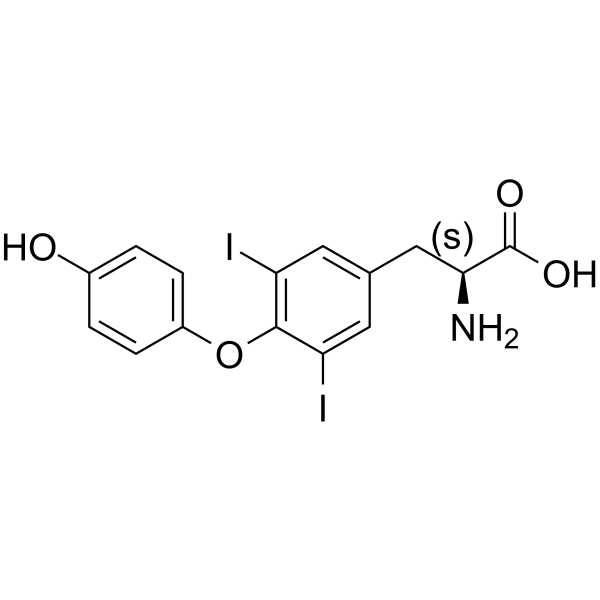
3,5-Diiodo-L-thyronine

" in MedChemExpress (MCE) Product Catalog:
Products (6)

6 Results for "3,5-Diiodo-L-thyronine" in MCE Product Catalog:

Cat. No.: HY-114557
CAS No.: 1041-01-6
Purity:  99.38%
Synonyms: 3,5-Diiodo-L-thyronine
NSC 90469 (3,5-Diiodo-L-thyronine) is an orally active thyroid hormone derivative. NSC 90469 inhibits JNK phosphorylation and NF-κB acetylation, blocks SIRT1 protein expression, induces elevated PGC-1α levels, and stimulates COX activity. NSC 90469 enhances UCP1-mediated thermogenesis, increases hepatic Dio1 activity, inhibits TSH levels and hypothalamic-pituitary-thyroid axis function, enhances lipid metabolism, and regulates energy metabolism via the mitochondrial pathway. NSC 90469 prevents blood glucose reduction, reduces urinary albumin excretion, inhibits renal matrix expansion, decreases TGF-β1 expression, and reduces renal fibronectin and type Ⅳ collagen deposition. NSC 90469 also increases energy expenditure and prevents diet-induced overweight. NSC 90469 can be used in studies related to diabetic nephropathy, hypothyroidism, non-alcoholic fatty liver disease, and diet-induced obesity .
loading...
    loading...
Cat. No.: HY-114557R
CAS No.: 1041-01-6
Synonyms: 3,5-Diiodo-L-thyronine (Standard)
NSC 90469 (Standard) is the analytical standard of NSC 90469. This product is intended for research and analytical applications. NSC 90469 (3,5-Diiodo-L-thyronine) is an orally active thyroid hormone derivative. NSC 90469 inhibits JNK phosphorylation and NF-κB acetylation, blocks SIRT1 protein expression, induces elevated PGC-1α levels, and stimulates COX activity. NSC 90469 enhances UCP1-mediated thermogenesis, increases hepatic Dio1 activity, inhibits TSH levels and hypothalamic-pituitary-thyroid axis function, enhances lipid metabolism, and regulates energy metabolism via the mitochondrial pathway. NSC 90469 prevents blood glucose reduction, reduces urinary albumin excretion, inhibits renal matrix expansion, decreases TGF-β1 expression, and reduces renal fibronectin and type Ⅳ collagen deposition. NSC 90469 also increases energy expenditure and prevents diet-induced overweight. NSC 90469 can be used in studies related to diabetic nephropathy, hypothyroidism, non-alcoholic fatty liver disease, and diet-induced obesity .
loading...
    loading...
Cat. No.: HY-114557S
Synonyms: 3,5-Diiodo-L-thyronine-d4
NSC 90469-d4 (3,5-Diiodo-L-thyronine-d4) is the deuterium labeled NSC 90469 (HY-114557). NSC 90469 is an endogenous metabolite.
loading...
    loading...
Cat. No.: HY-P3567
CAS No.: 159600-82-5
Target:  

Melanocortin Receptor

Research Areas:  

Neurological Disease

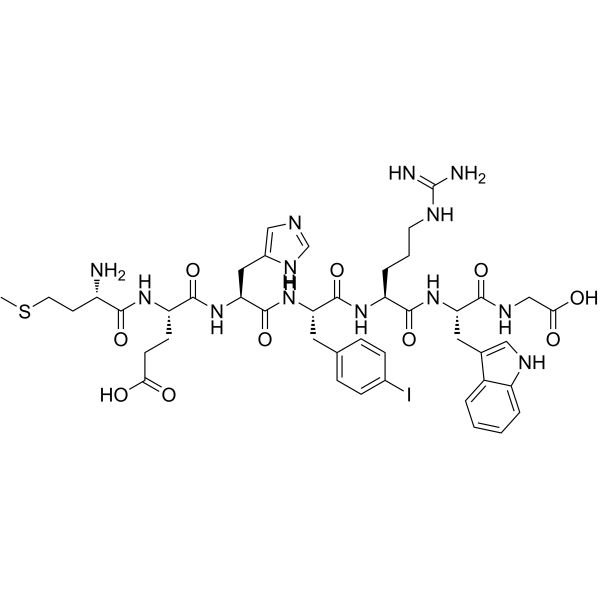
(p-Iodo-Phe7)-ACTH (4-10) is a adrenocorticotrophic hormone (ACTH) derivative, which is produced and secreted by the anterior pituitary gland. (p-Iodo-Phe7)-ACTH (4-10) serves as a melanocortin (MC) receptor antagonist and inhibits α-melanocyte-stimulating hormone (α-MSH)-induced excessive grooming behavior in rats .
loading...
    loading...
Cat. No.: HY-P2434
CAS No.: 846569-60-6
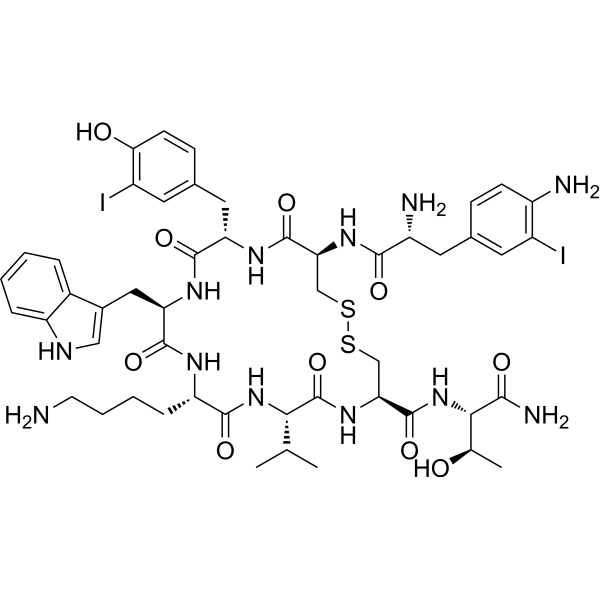
AP102 is a dual SSTR2/SSTR5-specific somatostatin analog (SSA). AP102 is a disulfide-bridged octapeptide SSA containing synthetic iodinated amino acids. AP102 binds with subnanomolar affinity to SSTR2 and SSTR5 (IC50: 0.63 and 0.65 nM, respectively). AP102 does not bind to SSTR1 or SSTR3. AP102 can be used for acromegaly and neuroendocrine tumors research .
loading...
    loading...
Cat. No.: HY-P3994
CAS No.: 128551-40-6
Research Areas:  

Others

[3,5 Diiodo-Tyr7] Peptide T is a threonine derivative .
loading...
    loading...

