1. Search Result
Search Result
Results for "

4-Ethylphenyl

" in MedChemExpress (MCE) Product Catalog:

16

Inhibitors & Agonists

8

Peptides

3

Natural
Products

4

Isotope-Labeled Compounds

Cat. No. Product Name Target Research Areas Chemical Structure
  • HY-W674241

    Endogenous Metabolite Apoptosis Bcl-2 Family Reactive Oxygen Species (ROS) Neurological Disease Cancer
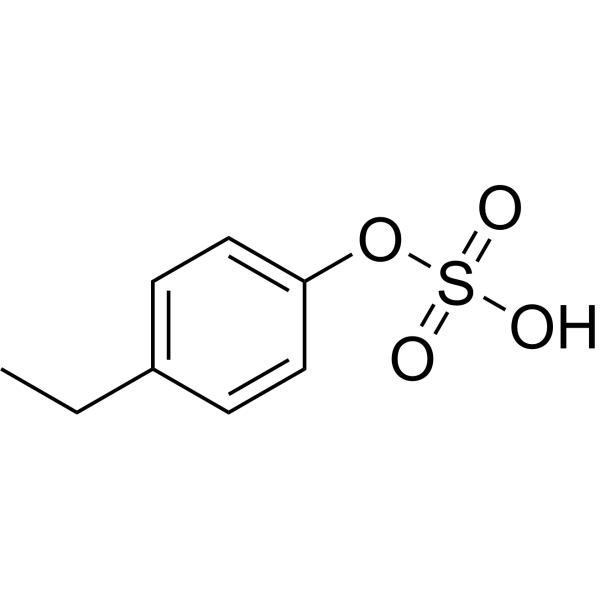
    4-Ethylphenyl sulfate is an orally active and brain-penetrant gut microbial metabolite. 4-Ethylphenyl sulfate downregulates Bcl2 expression, upregulates Bax expression, and induces cancer cell apoptosis via the endogenous apoptotic pathway. 4-Ethylphenyl sulfate induces G2/M cell cycle arrest and reactive oxygen species (ROS) production. 4-Ethylphenyl sulfate impairs oligodendrocyte maturation, reduces oligodendrocyte-neuron interactions, decreases axonal myelination levels, and shifts the oligodendrocyte population toward immature precursor cells. 4-Ethylphenyl sulfate alters brain region-specific neural activity and functional connectivity in mice, and correlates with anxiety-like behaviors in mice .
    4-Ethylphenyl sulfate
  • HY-134124

    Reactive Oxygen Species (ROS) Metabolic Disease
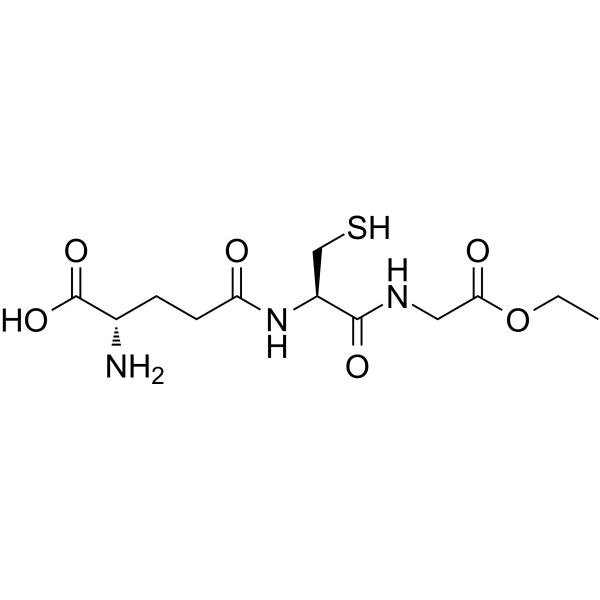
    Glutathione ethyl ester is a cell-permeable GSH donor and provides an efficient supply of GSH to the oocyte. Glutathione ethyl ester shows positive effect on the in vitro production of embryos by enhancement of the antioxidative defense .
    Glutathione ethyl ester
  • HY-W012836
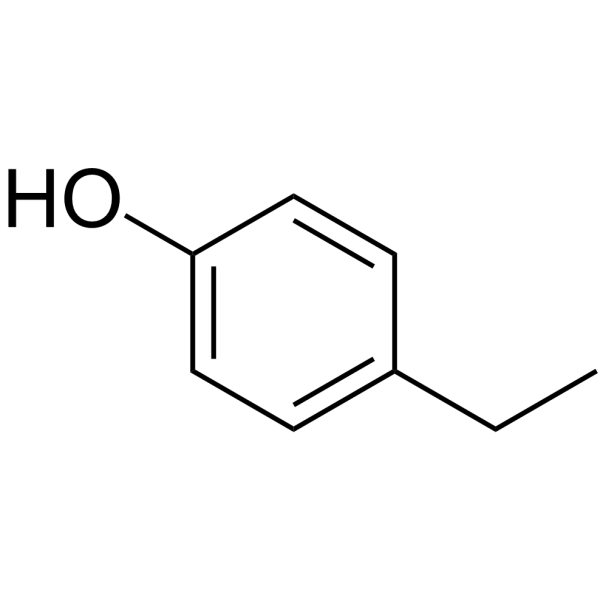
    4-Ethylphenol
    1 Publications Verification

    Environmental Pollutants Endogenous Metabolite Neurological Disease
    4-Ethylphenol is a volatile phenolic compound associated with off-odour in wine. 4-Ethylphenol is a phenolic compound that can be synthesized by intestinal flora. 4-Ethylphenol will be converted to 4-ethylphenyl sulfate (HY-W674241) by Lactobacillus plantarum .
    4-Ethylphenol
  • HY-W674241A

    Endogenous Metabolite Apoptosis Bcl-2 Family Reactive Oxygen Species (ROS) Neurological Disease Cancer
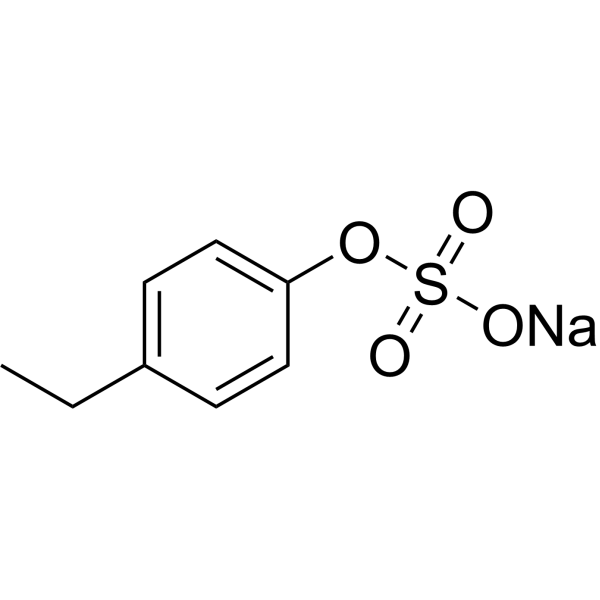
    4-Ethylphenyl sulfate sodium is an orally active and brain-penetrant gut microbial metabolite. 4-Ethylphenyl sulfate sodium downregulates Bcl2 expression, upregulates Bax expression, and induces cancer cell apoptosis via the endogenous apoptotic pathway. 4-Ethylphenyl sulfate sodium induces G2/M cell cycle arrest and reactive oxygen species (ROS) production. 4-Ethylphenyl sulfate sodium impairs oligodendrocyte maturation, reduces oligodendrocyte-neuron interactions, decreases axonal myelination levels, and shifts the oligodendrocyte population toward immature precursor cells. 4-Ethylphenyl sulfate sodium alters brain region-specific neural activity and functional connectivity in mice, and correlates with anxiety-like behaviors in mice .
    4-Ethylphenyl sulfate sodium
  • HY-W012836S1

    Isotope-Labeled Compounds Endogenous Metabolite Neurological Disease
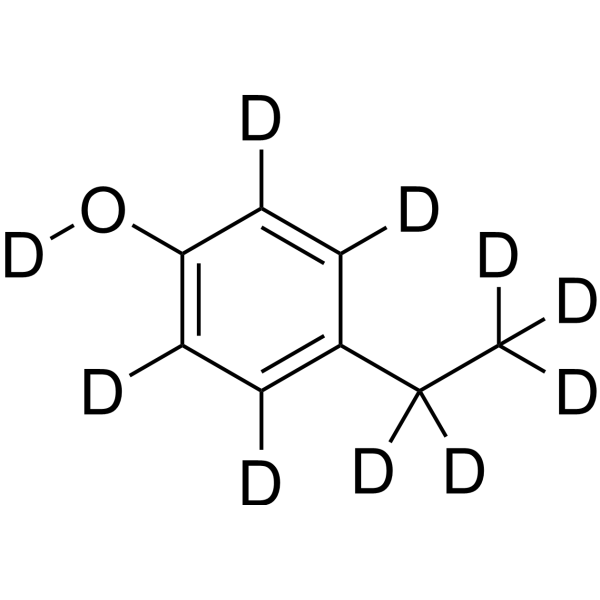
    4-Ethylphenol-d10 is the deuterium labeled 4-Ethylphenol (HY-W012836). 4-Ethylphenol is a volatile phenolic compound associated with off-odour in wine. 4-Ethylphenol is a phenolic compound that can be synthesized by intestinal flora. 4-Ethylphenol will be converted to 4-ethylphenyl sulfate (HY-W674241) by Lactobacillus plantarum .
    4-Ethylphenol-d10
  • HY-W012836S

    Isotope-Labeled Compounds Endogenous Metabolite Neurological Disease
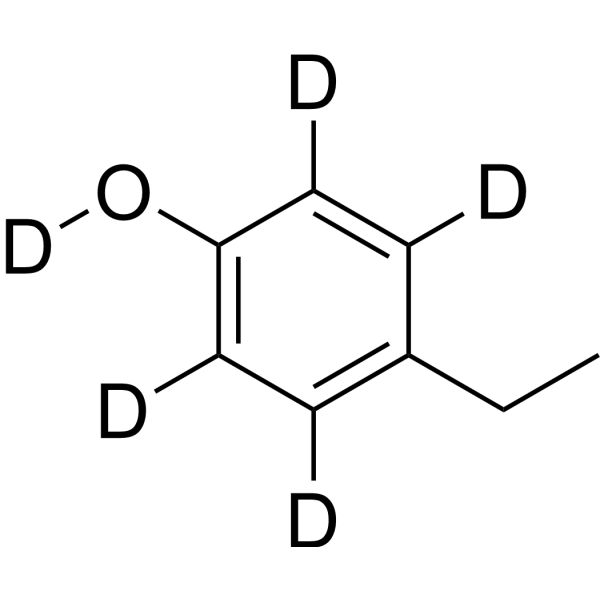
    4-Ethylphenol-d5 is the deuterium labeled 4-Ethylphenol (HY-W012836). 4-Ethylphenol is a volatile phenolic compound associated with off-odour in wine. 4-Ethylphenol is a phenolic compound that can be synthesized by intestinal flora. 4-Ethylphenol will be converted to 4-ethylphenyl sulfate (HY-W674241) by Lactobacillus plantarum .
    4-Ethylphenol-d5
  • HY-W012836R

    Reference Standards Endogenous Metabolite Neurological Disease
    4-Ethylphenol (Standard) is the analytical standard of 4-Ethylphenol (HY-W012836). This product is intended for research and analytical applications. 4-Ethylphenol is a volatile phenolic compound associated with off-odour in wine. 4-Ethylphenol is a phenolic compound that can be synthesized by intestinal flora. 4-Ethylphenol will be converted to 4-ethylphenyl sulfate (HY-W674241) by Lactobacillus plantarum .
    4-Ethylphenol (Standard)
  • HY-P10563

    BHV-1100

    CD38 Cancer
    Noraramtide (BHV-1100) is an antibody recruitment molecule. Noraramtide can specifically bind to CD38 molecules to recruit natural killer (NK) cells. Noraramtide enhances the ability of NK cells to kill tumor cells through antibody-dependent cellular cytotoxicity (ADCC). This mechanism allows NK cells to more effectively recognize and eliminate tumor cells while avoiding mutual killing between NK cells. Noraramtide can be used for the study of autologous cancer immunity .
    Noraramtide
  • HY-P3350

    Bacterial Infection
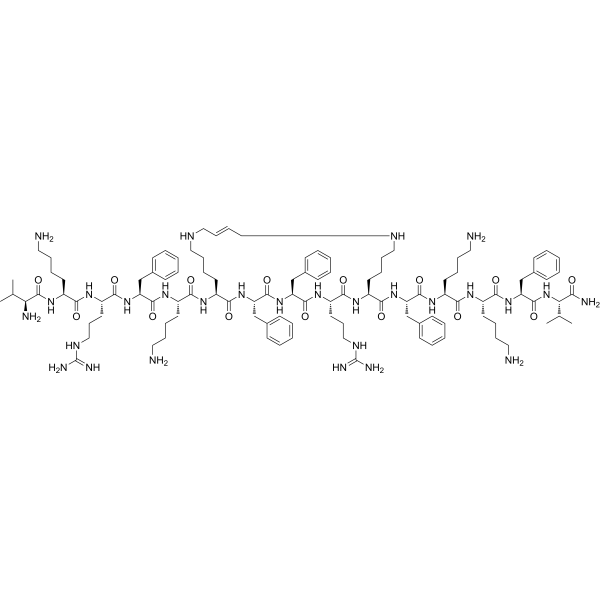
    LS-BF1 is a stable and low toxic cationic antimicrobial peptide. LS-BF1 displays broad spectrum of antibacterial activity, including the challenging ESKAPE pathogens, by cell membrane disruptive mechanism. LS-BF1 shows good in vivo efficacy for elimination of bacteria in a mouse infection model[1].
    LS-BF1
  • HY-P3066

    d(CH2)5Tyr(Et)VAVP

    Vasopressin Receptor Metabolic Disease
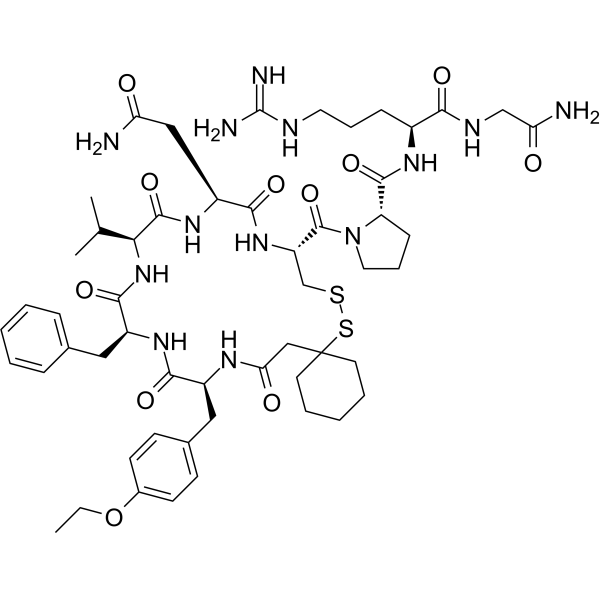
    SKF 100398 (d(CH2)5Tyr(Et)VAVP), an arginine vasopressin (AVP) analogue, is a specific antagonist of the antidiuretic effect of exogenous and endogenous AVP .
    SKF 100398
  • HY-157419

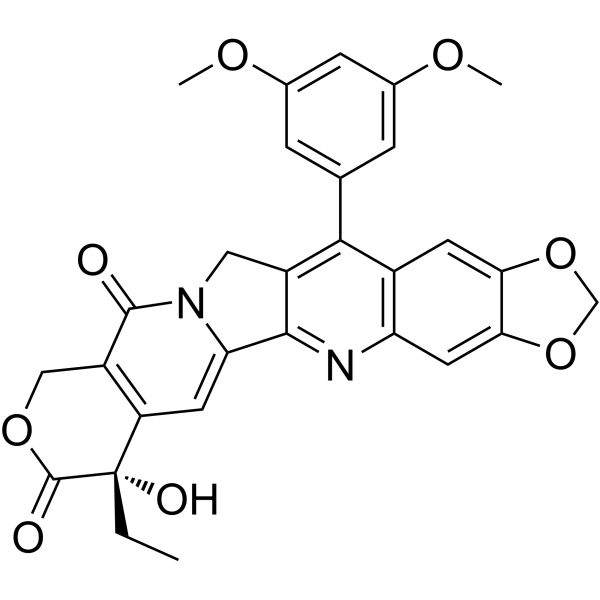
    7-(4-Ethylphenyl)-FL118

    Apoptosis Cancer
    FL77-24, a FL118 analog and apoptosis inducer, possesses antitumor activity, with IC50 values of 99.4 nM, 118 nM, <6.4 nM, 28.5 nM and <6.4 nM in HCT116, HepG2, MCF-7, A549 and HeLa cells, respectively. FL77-24 mainly causes cell cycle arrest in S and G2/M phases .
    FL77-24
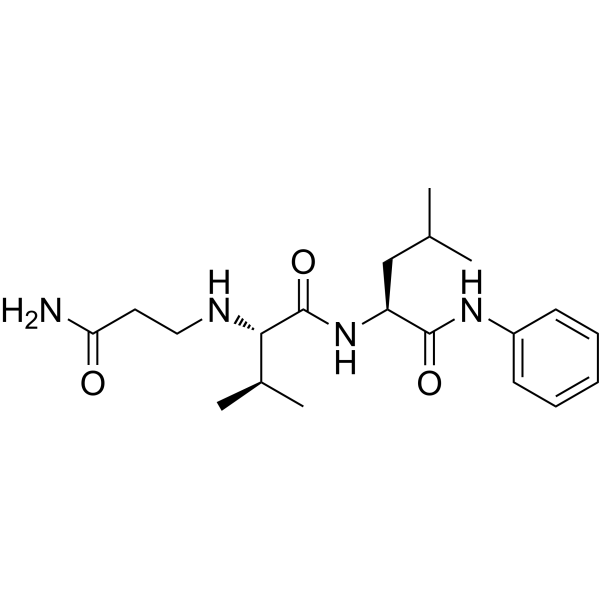
  • HY-P10828

    Virus Protease Infection Inflammation/Immunology
    MAPI is a polypeptide irreversible 3C cysteine protease (SV3CP) inhibitor. MAPI inhibits SV3CP by covalently binding its C-terminal Michael-acceptor extension to the active site thiol of SV3CP Cys 139. MAPI is promising for research of noroviruses infection .
    MAPI
  • HY-W012836S2

    Isotope-Labeled Compounds Endogenous Metabolite Neurological Disease
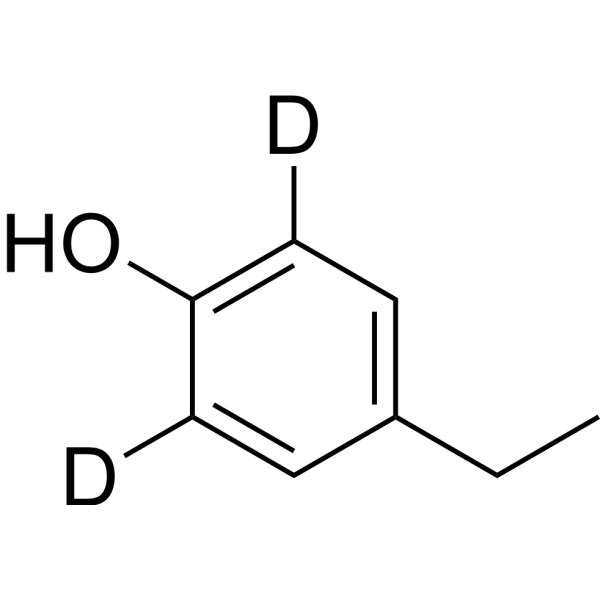
    4-Ethylphenol-d2 is deuterated labeled 4-Ethylphenol (HY-W012836). 4-Ethylphenol is a volatile phenolic compound associated with off-odour in wine. 4-Ethylphenol is a phenolic compound that can be synthesized by intestinal flora. 4-Ethylphenol will be converted to 4-ethylphenyl sulfate (HY-W674241) by Lactobacillus plantarum .
    4-Ethylphenol-d2
  • HY-W753473

    Isotope-Labeled Compounds Endogenous Metabolite Neurological Disease
    4-Ethylphenol-d9 is the deuterium labeled 4-Ethylphenol (HY-W012836). 4-Ethylphenol is a volatile phenolic compound associated with off-odour in wine. 4-Ethylphenol is a phenolic compound that can be synthesized by intestinal flora. 4-Ethylphenol will be converted to 4-ethylphenyl sulfate (HY-W674241) by Lactobacillus plantarum .
    4-Ethylphenol-d9
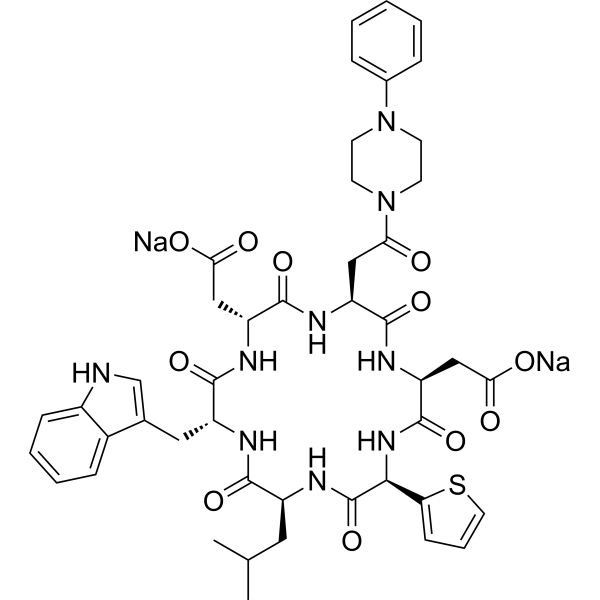
  • HY-105168

    Endothelin Receptor Cardiovascular Disease
    TAK 044 is an antagonist of Endothelin Receptor. TAK 044 strongly inhibits ET-induced deterioration in various animal models. TAK 044 can be used in study ET-related diseases such as acute myocardial infarction,acute renal failure, acute hepatic malfunction, and subarachnoid hemorrhage .
    TAK 044
  • HY-P4948

    Biochemical Assay Reagents Others
    Coumarin-phalloidin is a kind of phalloidin labeled with Coumarin (HY-N0709). Coumarin-phalloidin is a new type of actin probe that can be used for triple immunofluorescence microscopic observation of the cell skeleton .
    Coumarin-Phalloidin

Inquiry Online

Your information is safe with us. * Required Fields.

Salutation


Country or Region *

Applicant Name *


Organization Name *

Department *


Email Address *


Product Name *

Cat. No.


Requested quantity *

Phone Number *


Remarks

Inquiry Online

Inquiry Information

Product Name:
Cat. No.:
Quantity:
MCE Japan Authorized Agent:

