1. Search Result
Search Result
Results for "

Aβ42 aggregation

" in MedChemExpress (MCE) Product Catalog:

26

Inhibitors & Agonists

4

Peptides

4

Natural
Products

1

Isotope-Labeled Compounds

Targets Recommended:
Cat. No. Product Name Target Research Areas Chemical Structure
  • HY-N0373
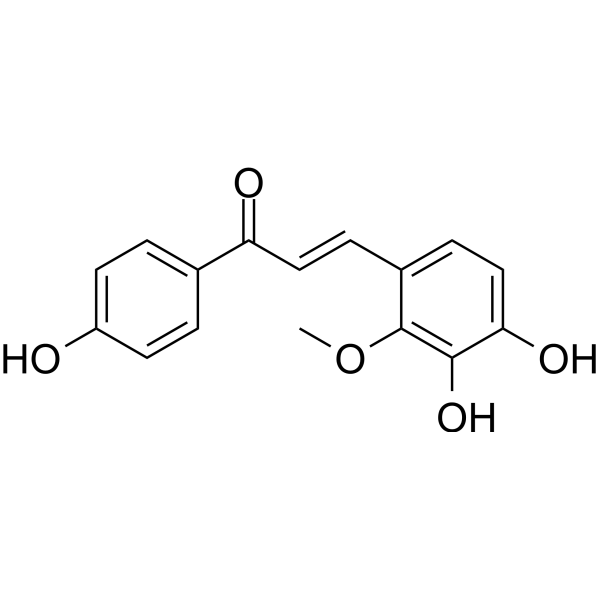
    Licochalcone B
    10+ Cited Publications

    Amyloid-β Apoptosis NOD-like Receptor (NLR) Neurological Disease
    Licochalcone B is an extract from the root of Glycyrrhiza uralensis. Licochalcone B inhibits amyloid β (42) self-aggregation (IC50=2.16 μM) and disaggregate pre-formed Aβ42 fibrils, reduce metal-induced Aβ42 aggregation through chelating metal ionsLicochalcone B inhibits phosphorylation of NF-κB p65 in LPS signaling pathway. Licochalcone B inhibits growth and induces apoptosis of NSCLC cells. Licochalcone B specifically inhibits the NLRP3 inflammasome by disrupting NEK7‐NLRP3 interaction .
    Licochalcone B
  • HY-114508

    3-Phenylpropiophenone; β-Phenylpropiophenone

    Amyloid-β Neurological Disease
    Dihydrochalcone (3-Phenylpropiophenone) is a aggregation inhibitor. Dihydrochalcone destabilizes Aβ17-42 protofibrils by disrupting the β-sheet of β1 region. Dihydrochalcone destabilizes both U-shaped Aβ40/Aβ42 protofibrils and S-shaped Aβ42 protofibrils by binding to the protofibril cavity. Dihydrochalcone is the main component of daemonorops draco tree .
    Dihydrochalcone
  • HY-149764

    Amyloid-β Neurological Disease
    Aβ42 agonist-2 (compound 7b) is a small molecule compound that can promote Aβ42 aggregation. Aβ42 agonist-2 can interact with Aβ42 oligomers and pentamers to promote nontoxic aggregate self-assembly and rapid fibril formation. Aβ42 agonist-2 prevents Aβ42-induced cytotoxicity in HT22 hippocampal neuronal cells .
    Aβ42 agonist-2
  • HY-121815

    Amyloid-β Neurological Disease
    TDI-2760 is an aggregation inhibitor with an IC50 of 1.67 μM. TDI-2760 can inhibit the Aβ-fibrinogen interaction and Aβ aggregation, and also modulate the contact system activation induced by Aβ42. TDI-2760 can be used in research related to vascular abnormalities and Aβ aggregation in Alzheimer's disease .
    TDI-2760
  • HY-P3846

    Amyloid-β Neurological Disease
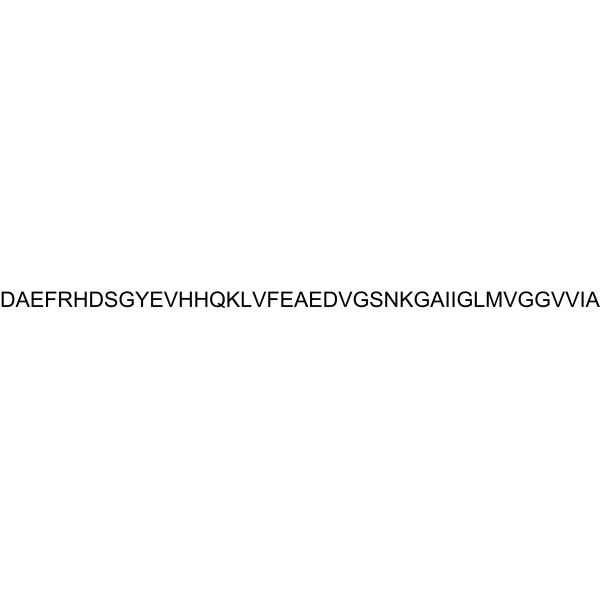
    (Glu20)-Amyloid β-Protein (1-42) is a slower fibrillizing variant of amyloid β-protein (Aβ). The Glu20 mutation reduces the aggregation propensity of Aβ42 and prevents accumulation of the slowly fibrillizing peptide. Amyloid β-protein is the primary component of both vascular and parenchymal amyloid deposits in Alzheimer's disease .
    (Glu20)-Amyloid β-Protein (1-42)
  • HY-149763

    Amyloid-β Neurological Disease
    Aβ42 agonist-1 is a compound that can promote Aβ42 aggregation. Aβ42 agonist-1 can interact with Aβ42 oligomers and pentamers to promote nontoxic aggregate self-assembly and rapid fibril formation. Aβ42 agonist-1 prevents Aβ42-induced cytotoxicity in HT22 hippocampal neuronal cells .
    Aβ42 agonist-1
  • HY-146139

    Amyloid-β Neurological Disease
    Aβ-IN-3 (compound 1) is a potent amyloid β (Aβ) inhibitor. Aβ-IN-3 inhibits Aβ42 aggregation. However, Aβ-IN-3 can not alleviate the neurotoxicity of Aβ42 in SH-SY5Y cells. Aβ-IN-3 can not change the aggregation state of Aβ42 into a nontoxic one .
    Aβ-IN-3
  • HY-146140

    Amyloid-β Neurological Disease
    Aβ-IN-4 (compound 12) is a potent amyloid β (Aβ) inhibitor. Aβ-IN-4 inhibits Aβ42 aggregation. However, Aβ-IN-4 can not alleviate the neurotoxicity of Aβ42 in SH-SY5Y cells. Aβ-IN-4 can not change the aggregation state of Aβ42 into a nontoxic one .
    Aβ-IN-4
  • HY-B1588S

    Amyloid-β HIV 11β-HSD Infection Neurological Disease Inflammation/Immunology
    Carbenoxolone-d4 is deuterium labeled Carbenoxolone. Carbenoxolone, a semi-synthetic derivative of glycyrrhetinic acid, has previously been used for the management of dyspepsia and peptic ulcer because of its anti-inflammatory properties . Carbenoxolone, a general hemichannel and gap junction inhibitor, has the therapeutic potential of carbenoxolone in the research of chronic liver disease . Carbenoxolone is a suitable candidate for the inhibition of Aβ42 aggregation and the therapeutic potential of Cbx against AD . Carbenoxolone is small molecule Pannexin1 (Panx1,is an ATP release channel) inhibitor, attenuate Panx1 channel activity through modulation of the first extracellular loop .Carbenoxolone is an 11β-hydroxysteroid dehydrogenase type 1 (11β-HSD1) inhibitor that converts inactive glucocorticoid into an active form. Carbenoxolone has antiviral activity against DENV infection targeting the virus itself .
    Carbenoxolone-d4
  • HY-P10876

    Amyloid-β Neurological Disease
    mcK6A1 is an inhibitor for the aggregation of amyloid-β (), that selectively binds to the 16KLVFFA21 segment of Aβ42, forms an extended β-folded structure, and inhibits the formation of Aβ42 oligomers. mcK6A1 can be used in research of Alzheimer's disease and other amyloid-related diseases .
    mcK6A1
  • HY-N0373R

    Reference Standards Amyloid-β Apoptosis NOD-like Receptor (NLR) Neurological Disease
    Licochalcone B (Standard) is the analytical standard of Licochalcone B. This product is intended for research and analytical applications. Licochalcone B is an extract from the root of Glycyrrhiza uralensis. Licochalcone B inhibits amyloid β (42) self-aggregation (IC50=2.16 μM) and disaggregate pre-formed Aβ42 fibrils, reduce metal-induced Aβ42 aggregation through chelating metal ionsLicochalcone B inhibits phosphorylation of NF-κB p65 in LPS signaling pathway. Licochalcone B inhibits growth and induces apoptosis of NSCLC cells. Licochalcone B specifically inhibits the NLRP3 inflammasome by disrupting NEK7‐NLRP3 interaction .
    Licochalcone B (Standard)
  • HY-146251

    Cholinesterase (ChE) Amyloid-β Neurological Disease
    BuChE-IN-6 (compound 1b) is a potent and selective BuChE (butyrylcholinesterase) inhibitor, with IC50 values of 0.46 and 0.51 μM for eqBuChE and hBuChE, respectively. BuChE-IN-6 also inhibits Aβ42 self-aggregation .
    BuChE-IN-6
  • HY-N12321

    Others Metabolic Disease
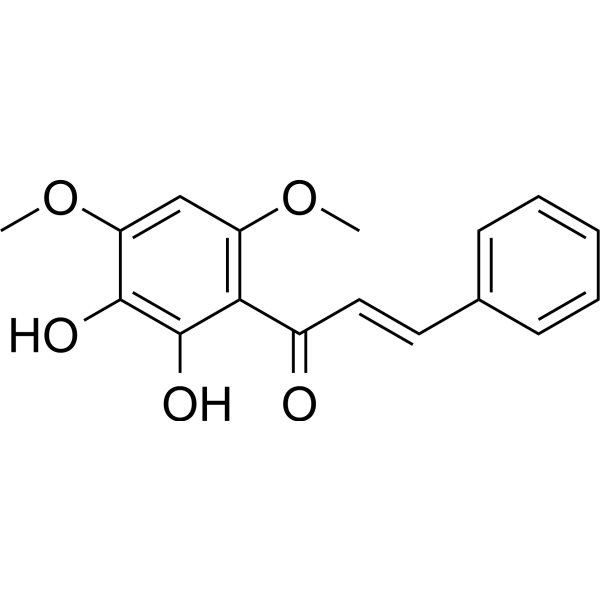
    2',3'-Dihydroxy-4',6'-dimethoxychalcone (compound 1) can inhibit Amyloid β-protein (Aβ42) fibrillization and aggregation. 2',3'-Dihydroxy-4',6'-dimethoxychalcone has oral activity and can be detected in the brain .
    2',3'-Dihydroxy-4',6'-dimethoxychalcone
  • HY-162832

    Amyloid-β Neurological Disease
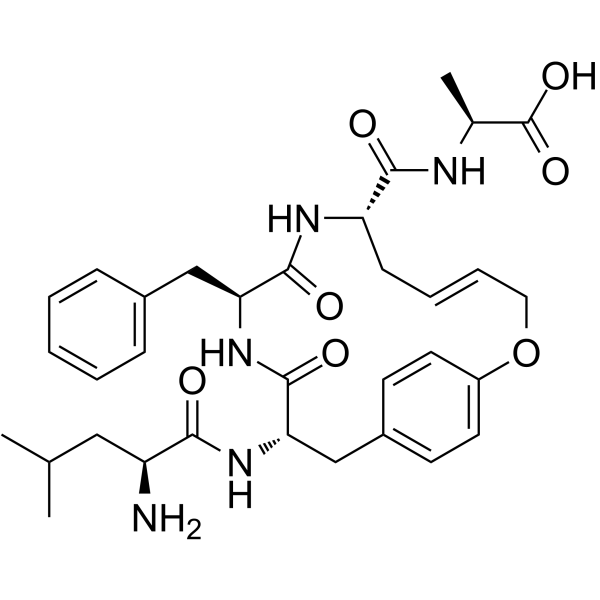
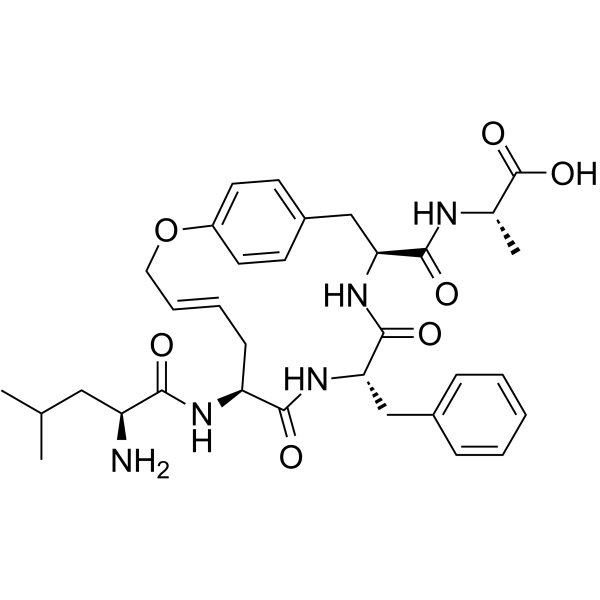
    Amyloid-β-IN-1 (compound 13) is a synthetic peptide containing the hydrophobic C-terminal region "VVIA-NH2" and its reverse sequence "AIVV-NH2" of Aβ42, which is an inhibitor. Amyloid-β-IN-1 can inhibit Aβ aggregation and has neuroprotective effects .
    Amyloid-β-IN-1
  • HY-173144

    Cholinesterase (ChE) Reactive Oxygen Species (ROS) Interleukin Related Lactate Dehydrogenase Amyloid-β Neurological Disease Inflammation/Immunology
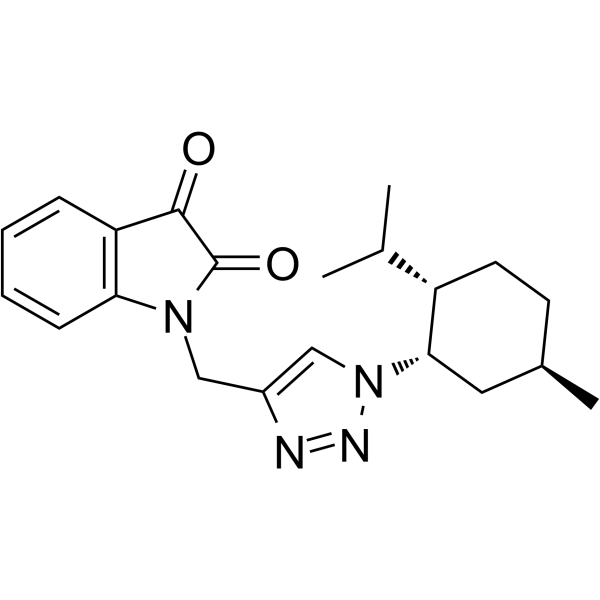
    AChE-IN-85 (Compound 7k) is an AChE inhibitor with an IC50 of 0.083 μM. AChE-IN-85 can inhibit the release of NO, the production of TNF-α and IL-1β, the levels of LDH and ROS, as well as the aggregation of Aβ42. AChE-IN-85 has anti-inflammatory and neuroprotective effects and can be used in the research of diseases such as Alzheimer's disease .
    AChE-IN-85
  • HY-175658

    Cholinesterase (ChE) Amyloid-β Tau Protein Neurological Disease
    AChE/BChE-IN-29 is an AChE/BChE inhibitor. AChE/BChE-IN-29 exhibits balanced dual cholinesterase inhibitory activity with IC50 values of 2.1 μM for Electrophorus electricus AChE (eeAChE) and 6.3 μM for equine serum butyrylcholinesterase (eqBChE). AChE/BChE-IN-29 effectively inhibits amyloid-β (Aβ42) aggregation and tau protein aggregation in E. coli cell models. AChE/BChE-IN-29 can be used for the study of Alzheimer’s disease (AD) .
    AChE/BChE-IN-29
  • HY-P10824

    Amyloid-β Neurological Disease
    RI-OR2-TAT is a brain-penetrant inhibitor of β-Amyloid oligomerization, which is produced by adding the HIV protein transduction domain TAT to RI-OR2. RI-OR2-TAT binds to Aβ42 fibrils with a Kd value of 58-125 nM. RI-OR2-TAT reduces aggregation and plaque levels, reduces activation of microglia and oxidative damage, and increases the number of young neurons in the dentate gyrus .
    RI-OR2-TAT
  • HY-173282

    Amyloid-β Neurological Disease
    aggregation-IN-2 (Compound 8i) is an inhibitor of amyloid-β protein (Aβ42) aggregation, showing approximately 91% inhibition of Aβ42 aggregation at 25 μM. It also exhibits Aβ42 disaggregation effects and antioxidant activity. Aβ aggregation-IN-2 can be used for research in the field of Alzheimer's disease .
    Aβ aggregation-IN-2
  • HY-169103

    NO Synthase COX Cholinesterase (ChE) Amyloid-β Neurological Disease Inflammation/Immunology
    Neuroprotective agent 5 (compound 28) is a brain permeabilizing agent with anti-neuritis, anti-oxidative damage and neuroprotective effects. Neuroprotective agent 5 exhibits a potent NO inhibitory effect (EC50=0.49 μM), inhibits the release of proinflammatory factors PGE2 and TNF-α, downregulates the expression of iNOS and COX-2 proteins, and promotes the polarization of BV-2 cells from the proinflammatory M1 phenotype to the anti-inflammatory M2 phenotype. In addition, Neuroprotective agent 5 can also inhibit acetylcholinesterase (AChE) activity and Aβ42 aggregation in a dose-dependent manner. Neuroprotective agent 5 can be used for the study of Alzheimer's disease .
    Neuroprotective agent 5
  • HY-144752

    Cyclic spermine

    Amyloid-β Neurological Disease
    cSPM (Cyclic spermine) is a Aβ42 inhibitor. cSPM could suppress the aggregation of three different peptides, Aβ42, amylin and insulin, and decreases cytotoxicity .
    cSPM
  • HY-181178

    Amyloid-β Neurological Disease
    (Mor-Cor)Ag(III) is a blood-brain barrier-penetrant silver(III) corrole complex that penetrates the blood-brain barrier. (Mor-Cor)Ag(III) scavenges reactive oxygen species induced by Aβ42 and disrupts Aβ42 aggregation, attenuating Aβ42-induced neuronal hyperactivity. (Mor-Cor)Ag(III) can be used for the research of Alzheimer's disease .
    (Mor-Cor)Ag(III)
  • HY-N9379

    Others Others
    Fissistigine A is an alkaloid separated of the basic fractions from Formosan Fissistigma glaucescens, F. oldhamii and Goniothalamus amuyon . Fissistigine A has a weak inhibitory effect on amyloid beta 42 aggregation (IC50 50 µM).
    Fissistigine A
  • HY-172101

    Cholinesterase (ChE) Monoamine Oxidase Amyloid-β Neurological Disease
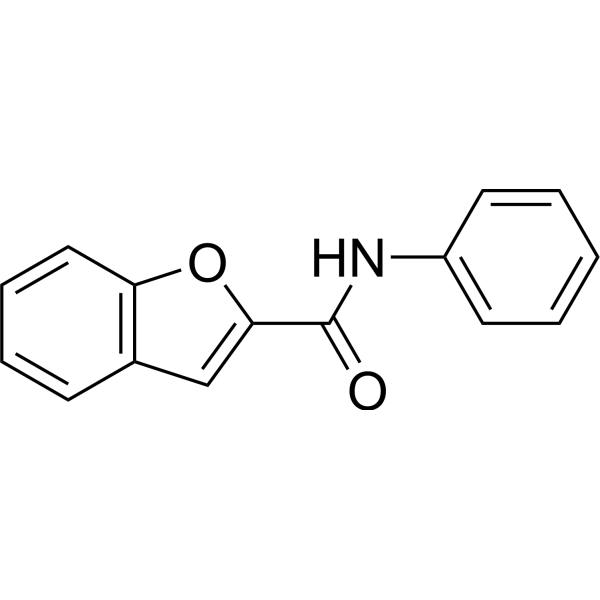
    AChE/MAO-B-IN-7 (VAV-8) is a blood-brain permeable dual inhibitor of acetylcholinesterase (AchE) and MAO-B agent. AChE/MAO-B-IN-7 can also inhibit Aβ42 aggregation for use in Alzheimer's disease (AD) research .
    AChE/MAO-B-IN-7
  • HY-116942

    Amyloid-β Neurological Disease
    2002-H20 is an inhibitor of Aβ42-induced cytotoxicity, with the activity of reducing the cytotoxicity of Alzheimer's disease Aβ peptide by binding to it. 2002-H20 protects cells and reduces Aβ toxicity by promoting fibril formation, possibly by accelerating Aβ aggregation. The screening method of 2002-H20 effectively identifies compounds that reduce Aβ toxicity and presents potential inhibitory leads .
    2002-H20
  • HY-180843

    Tau Protein Amyloid-β Cholinesterase (ChE) Monoamine Oxidase Reactive Oxygen Species (ROS) Neurological Disease
    Aβ/tau aggregation-IN-4 (Compound D21) is an Aβ/tau aggregation inhibitor. Aβ/tau aggregation-IN-4 promotes the degradation of Aβ40/42 (Aβ40, IC50 = 2.151 μM; Aβ42, IC50 = 3.622 μM). Aβ/tau aggregation-IN-4 shows selective AChE inhibition (IC50: 5.56 μM). Aβ/tau aggregation-IN-4 inhibits MAO-A and MAO-B with IC50s of 0.59 μM and 0.09 μM, respectively. Aβ/tau aggregation-IN-4 suppresses intracellular ROS levels. Aβ/tau aggregation-IN-4 can be used in the research of Alzheimer's disease .
    Aβ/tau aggregation-IN-4
  • HY-P11677

    Neurological Disease
    CPO_Aβ17-21P is a apoE/Aβ interaction inhibitor with an IC50 of 1.02 nM. CPO_Aβ17-21P significantly inhibits ApoE4-mediated aggregation of Aβ40 and Aβ42. CPO_Aβ17-21P significantly improves cognitive function and comprehensively alleviates Alzheimer's disease (AD)-related pathologies in mouse models. CPO_Aβ17-21P is applicable to the research of AD .
    CPO_Aβ17-21P

Inquiry Online

Your information is safe with us. * Required Fields.

Salutation


Country or Region *

Applicant Name *


Organization Name *

Department *


Email Address *


Product Name *

Cat. No.


Requested quantity *

Phone Number *


Remarks

Inquiry Online

Inquiry Information

Product Name:
Cat. No.:
Quantity:
MCE Japan Authorized Agent:

