497 Results for "

ACSL4/GPX4 axis

" in MedChemExpress (MCE) Product Catalog:
Products (497)

497 Results for "ACSL4/GPX4 axis" in MCE Product Catalog:

551
551 Publications Verification
Cat. No.: HY-100218A
CAS No.: 1219810-16-8
Purity:  99.90%
Synonyms: (1S,3R)-RSL3
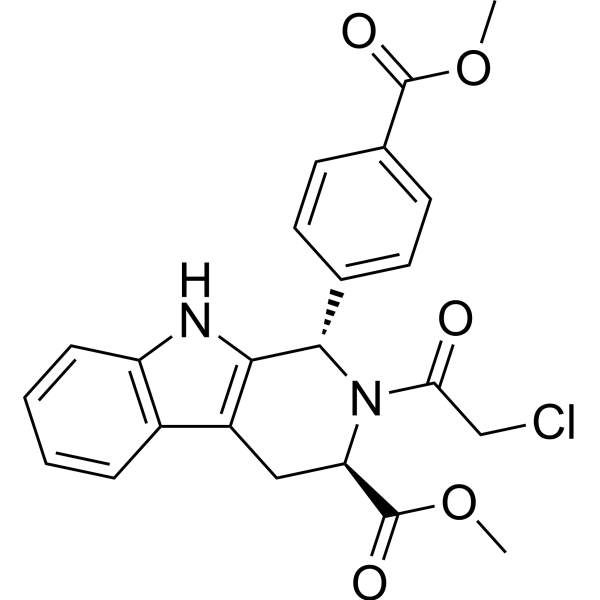
RSL3 ((1S,3R)-RSL3) is an inhibitor of glutathione peroxidase 4 (GPX4) (ferroptosis activator), reduces the expression of GPX4 protein, and induces ferroptotic death of head and neck cancer cell. RSL3 increases the expression of p62 and Nrf2 and inactivates Keap1 in HN3-rslR cells .
loading...
    loading...
63
63 Cited Publications
Cat. No.: HY-112654
CAS No.: 2183470-12-2
Purity:  99.83%
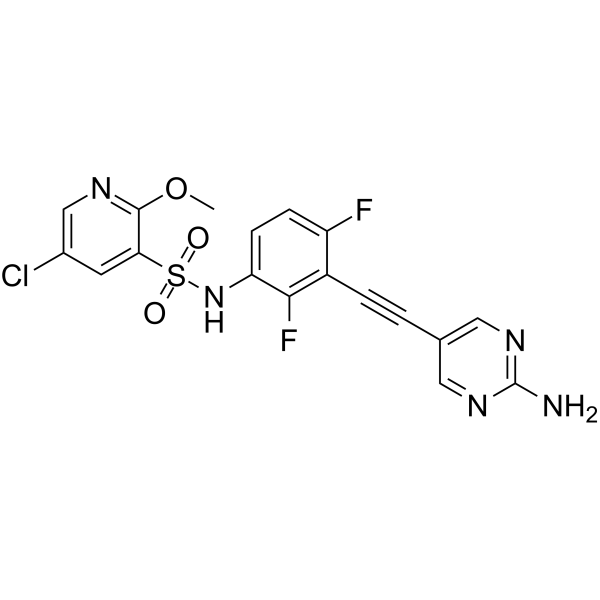
GCN2iB is an ATP-competitive, selective GCN2 inhibitor with an IC50 of 2.4 nM. GCN2iB inhibits the activation of the GCN2 pathway and upregulates GPX4. GCN2iB enhances the anticancer effect of ASNase against acute lymphoblastic leukemia. GCN2iB increases left ventricular ejection fraction, while reducing fasting blood glucose and myocardial fibrosis. GCN2iB can be used in research related to acute lymphoblastic leukemia, acute myeloid leukemia and diabetic cardiomyopathy .
loading...
    loading...
33
33 Cited Publications
Cat. No.: HY-100003
CAS No.: 1360705-96-9
Purity:  99.66%
Research Areas:  

Cancer

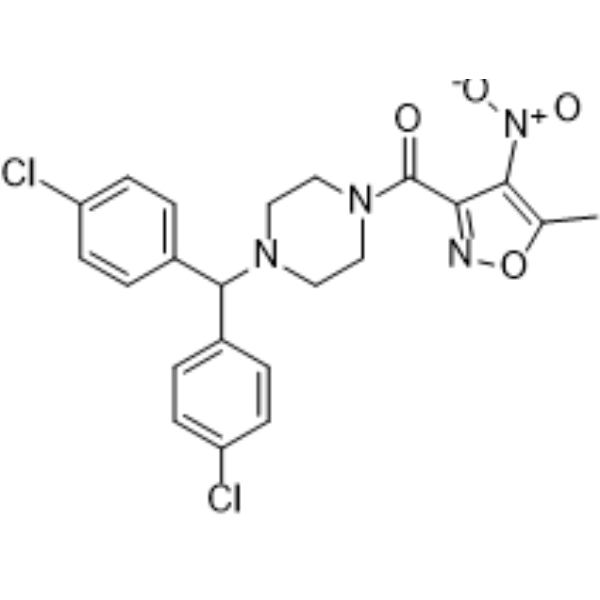
ML-210 is a selective and covalent glutathione peroxidase 4 (GPX4) inhibitor with an EC50 of 30 nM. ML-210 binds the GPX4 selenocysteine residue. ML-210 has anti-cancer activity .
loading...
    loading...
33
33 Cited Publications
Cat. No.: HY-136057
CAS No.: 150651-39-1
Purity:  99.96%
Research Areas:  

Cancer

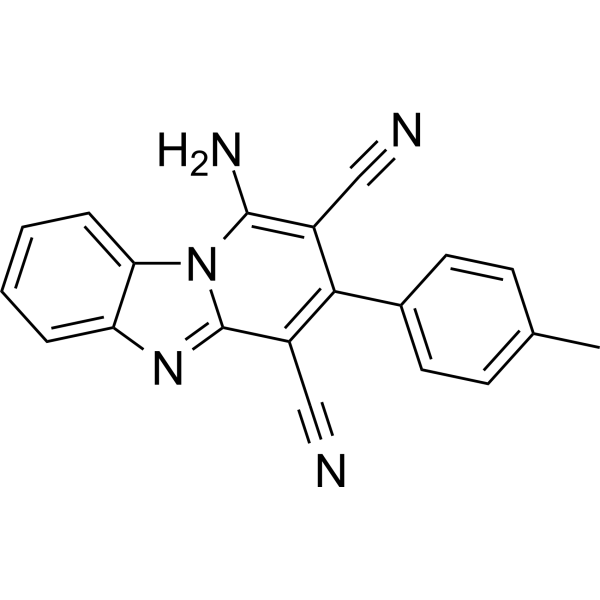
iFSP1 is a potent, selective and glutathione-independent inhibitor of ferroptosis suppressor protein 1 (FSP1) (AIFM2) with an EC50 of 103 nM. iFSP1 selectively induces ferroptosis in GPX4-knockout cells which overexpressed FSP1. iFSP1 is able to sensitize a variety of human cancer cell lines to the ferroptosis inducer, such as (1S,3R)-RSL3 (HY-100218A) .
loading...
    loading...
27
27 Cited Publications
Cat. No.: HY-103087
CAS No.: 1083162-61-1
Purity:  98.03%
Target:  

Ferroptosis

Research Areas:  

Others

FIN56 is a specific inducer of ferroptosis. FIN56 induces ferroptosis by inducing degradation of GPX4. FIN56 also binds to and activates squalene synthase .
loading...
    loading...
23
23 Cited Publications
Cat. No.: HY-P80450
Synonyms: Phospholipid hydroperoxide glutathione peroxidase GPX4, PHGPX, Glutathione peroxidase 4, GPX-4, GSHPx-4, GPX4

Host:  

Rabbit

Application:  

WB, IHC-P, ICC/IF, FC

Reactivity:  

Human, Mouse, Rat

loading...
    loading...
18
18 Cited Publications
Cat. No.: HY-100002
CAS No.: 1035072-16-2
Purity:  99.46%
Research Areas:  

Cancer

ML162 is a covalent glutathione peroxidase 4 (GPX4) inhibitor. ML162 has a selective lethal effect on mutant RAS oncogene-expressing cell lines
loading...
    loading...
18
18 Cited Publications
Cat. No.: HY-15193
CAS No.: 1181770-72-8
Purity:  99.94%
EMD638683 is an orally active SGK1 inhibitor with an IC50 of 3 μM. EMD638683 exhibits strong inhibition against SGK1, moderate inhibition against SGK2 and SGK3, and shows excellent selectivity for other AGC kinase family members. EMD638683 has antihypertensive activity by inhibiting SGK1, and independently of the blood pressure-lowering effect, it effectively prevents heart inflammation and fibrosis caused by hypertension by inhibiting the cardiac NLRP3 inflammation body/ IL-1β axis. EMD638683 promotes apoptosis of colon cancer cells and sensitizes radiotherapy. EMD638683 (S-Form) can be used in research related to hypertension, hypertensive heart damage, and colon cancer .
loading...
    loading...
15
15 Cited Publications
Cat. No.: HY-144806
CAS No.: 3033069-84-7
Purity:  99.64%
Target:  

PI3K Akt Apoptosis

Research Areas:  

Cancer

PI3K/AKT-IN-1 is an effective PI3K/AKT dual inhibitor (IC50 of 6.99, 4.01 and 3.36 μM for PI3Kγ, PI3Kδ and AKT, respectively). PI3K/AKT-IN-1 has anticancer activity and acts by inhibiting PI3K/AKT axis and inducing caspase 3 dependent apoptosis .
loading...
    loading...
14
14 Cited Publications
Cat. No.: HY-129457
CAS No.: 869298-31-7
Purity:  ≥98.0%
Target:  

Ferroptosis

Research Areas:  

Cancer

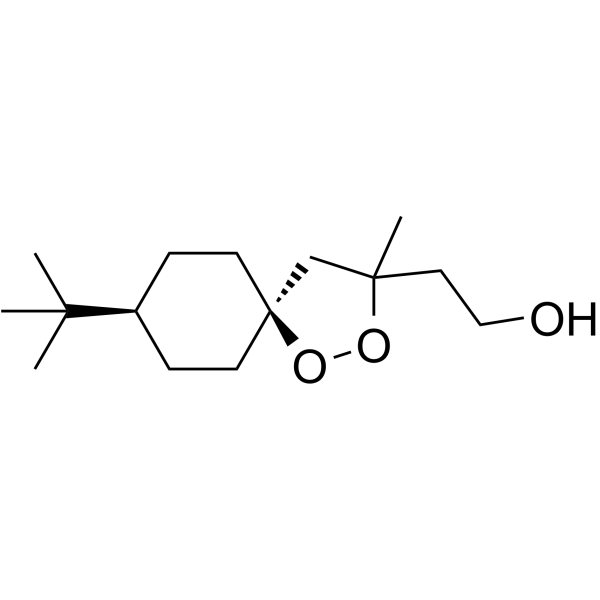
FINO2 is a potent ferroptosis inducer. FINO2 inhibits GPX4 activity. FINO2 is a stable oxidant that oxidizes ferrous iron and stable at varying pH levels. FINO2 causes widespread lipid peroxidation .
loading...
    loading...
8
8 Cited Publications
Cat. No.: HY-115627
CAS No.: 2143896-83-5
Purity:  99.94%
Synonyms: GPX4-Activator-1d4
Research Areas:  

Inflammation/Immunology

PKUMDL-LC-101-D04 (GPX4-Activator-1d4) is a glutathione peroxidase 4 (GPX4) allosteric activator (pEC50=4.7). PKUMDL-LC-101-D04 can inhibit ferroptosis and inflammation .
loading...
    loading...
8
8 Cited Publications
Cat. No.: HY-110066
CAS No.: 39025-23-5
Purity:  99.30%
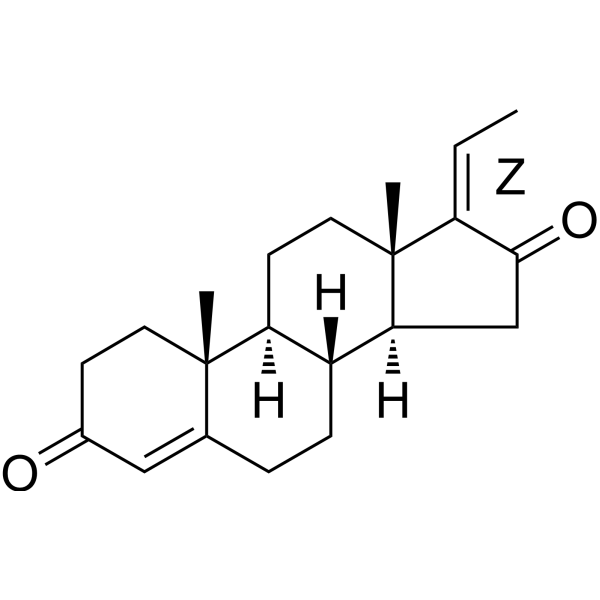
(Z)-Guggulsterone, a constituent of Indian Ayurvedic medicinal plant Commiphora mukul, inhibits the growth of human prostate cancer cells by causing apoptosis. (Z)-Guggulsterone inhibits angiogenesis by suppressing the VEGF–VEGF-R2–Akt signaling axis . (Z)-Guggulsterone is also a potent FXR antagonist. (Z)-Guggulsterone reduces ACE2 expression and SARS-CoV-2 infection .
loading...
    loading...
7
7 Cited Publications
Cat. No.: HY-B1811
CAS No.: 11000-17-2
Synonyms: Arginine vasopressin; Antidiuretic hormone
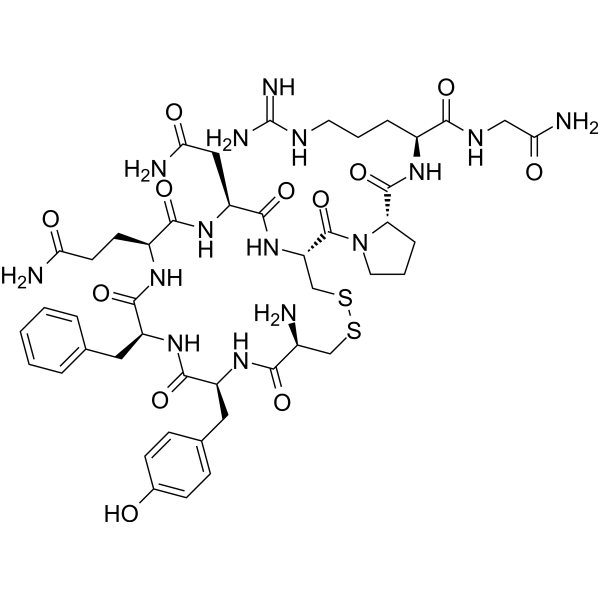
Vasopressin is a cyclic nonapeptide that is synthesized centrally in the hypothalamus. Vasopressin participates in the hypothalamic-pituitary-adrenal axis, and regulates pituitary corticotropin secretion by potentiating the stimulatory effects of corticotropin releasing factor. Vasopressin also can act as a neurotransmitter, exerting its action by binding to specific G protein-coupled receptors .
loading...
    loading...
7
7 Cited Publications
Cat. No.: HY-B0294
CAS No.: 31430-15-6
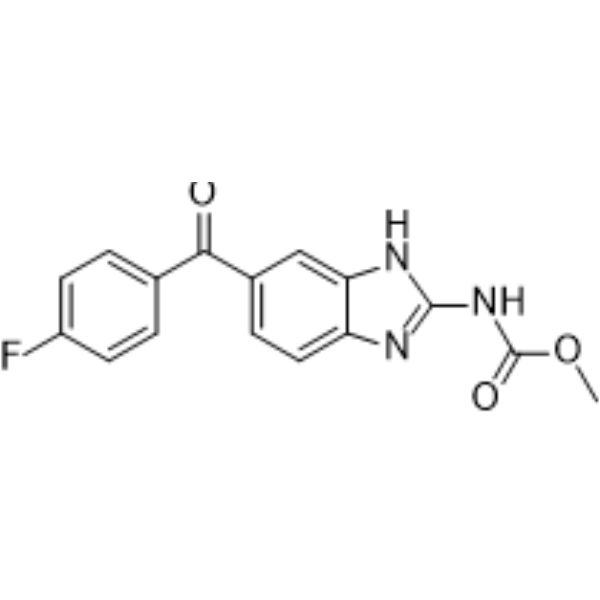
Flubendazole is an anthelmintic drug based on altering microtubule structure, inhibition of tubulin polymerization and disruption of microtubule function. Flubendazole induces apoptosis in human colorectal cancer (CRC) by blocking the STAT3 signaling axis and activation of autophagy. Flubendazole induces P53 expression and reduced Cyclin B1 and p-cdc2 expression. Flubendazole is an antitumor agent. Flubendazole can be used for worm and intestinal parasites .
loading...
    loading...
6
6 Cited Publications
Cat. No.: HY-138153
CAS No.: 2421119-60-8
Purity:  99.54%
Research Areas:  

Cancer

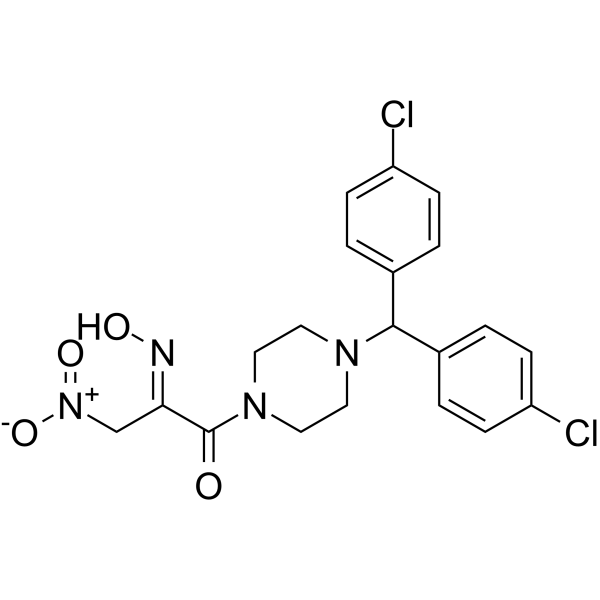
JKE-1674 is an orally active glutathione peroxidase 4 (GPX4) inhibitor and an active metabolite of GPX4 inhibitor ML-210. JKE-1674, an analog of ML-210 in which the nitroisoxazole ring is replaced with an α-nitroketoxime. JKE-1674 can convert into a nitrile oxide JKE-1777. JKE-1674 kills LOX-IMVI cells in a manner that is equipotent to ML-210 and is completely rescued by ferroptosis inhibitors .
loading...
    loading...
6
6 Cited Publications
Cat. No.: HY-N0816
CAS No.: 55916-51-3
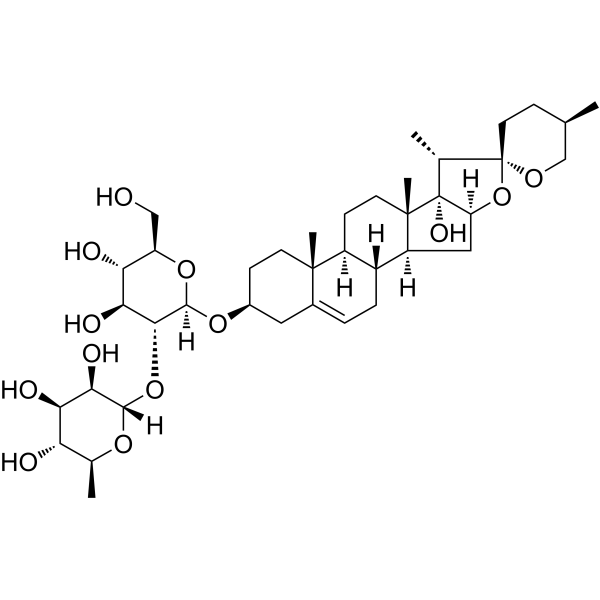
Polyphyllin VI, an active saponin, possess anti-cancer activities. Polyphyllin VI induces G2/M cell cycle arrest and triggers apoptosis. Polyphyllin VI induces caspase-1-mediated pyroptosis via the induction of ROS/NF-κB/NLRP3/GSDMD signal axis in non-small cell lung cancer .
loading...
    loading...
6
6 Cited Publications
Cat. No.: HY-113308
CAS No.: 516-90-5
Purity:  98.06%
Taurolithocholic acid is an orally active bile acid and antiviral agent. Taurolithocholic acid upregulates FADS2 by activating the TGR5-PI3K/AKT-SREBP2 signaling axis, inhibits SFTSV-induced ferroptosis (Ferroptosis), viral replication and viral entry of HBV/HDV, while reducing the release of IL-1β, lipid ROS and LDH. While exerting antiviral protective effects, Taurolithocholic acid also stimulates the recycling of hepatocellular membrane transporters, impairs canalicular bile acid secretion function, and induces hepatocyte cholestasis, apoptosis and acute hepatocellular injury. Taurolithocholic acid serves as an experimental model compound for hepatocellular cholestasis. At concentrations ≤200 μM, Taurolithocholic acid shows no cytotoxicity and does not activate the interferon pathway. Taurolithocholic acid not only protects mice from lethal SFTSV infection but also is suitable for studies related to severe fever with thrombocytopenia syndrome and cholestasis [4].
loading...
    loading...
6
6 Cited Publications
Cat. No.: HY-113308A
CAS No.: 6042-32-6
Purity:  99.81%
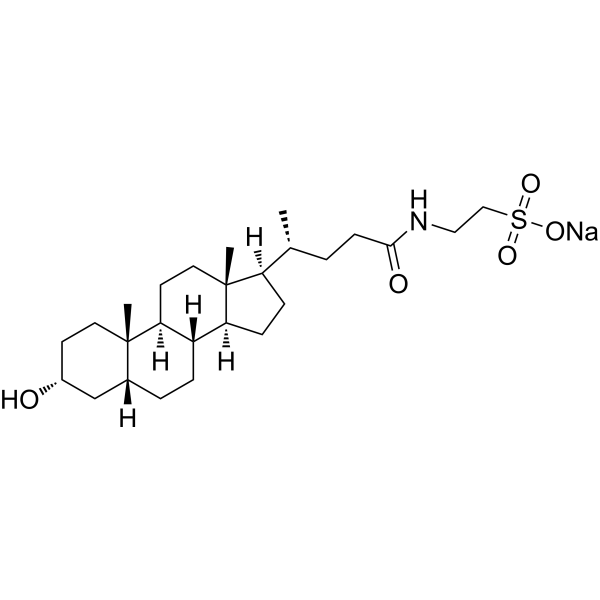
Taurolithocholic acid sodium salt is an orally active bile acid and antiviral agent. Taurolithocholic acid sodium salt upregulates FADS2 by activating the TGR5-PI3K/AKT-SREBP2 signaling axis, inhibits SFTSV-induced ferroptosis, viral replication and viral entry of HBV/HDV, while reducing the release of IL-1β, lipid ROS and LDH. While exerting antiviral protective effects, Taurolithocholic acid sodium salt also stimulates the recycling of hepatocellular membrane transporters, impairs canalicular bile acid secretion function, and induces hepatocyte cholestasis, apoptosis and acute hepatocellular injury. Taurolithocholic acid sodium salt serves as an experimental model compound for hepatocellular cholestasis. At concentrations ≤200 μM, Taurolithocholic acid sodium salt shows no cytotoxicity and does not activate the interferon pathway. Taurolithocholic acid sodium salt not only protects mice from lethal SFTSV infection but also is suitable for studies related to severe fever with thrombocytopenia syndrome and cholestasis [4].
loading...
    loading...
6
6 Cited Publications
Cat. No.: HY-138794
CAS No.: 2417089-74-6
Purity:  99.60%
Research Areas:  

Cancer

XL177A is a covalent USP7 inhibitor that blocks the deubiquitinase activity of USP7. XL177A destabilizes non-canonical PRC1 complexes or KDM6A and reduces chromatin deposition of H2AK119Ub, thereby relieving the repression of neuronal differentiation programs. Meanwhile, XL177A also regulates the ELOF1-UVSSA-USP7-nuclear β-catenin axis, decreasing the transcription levels of related proteins and the accumulation of nuclear β-catenin. XL177A exerts antiviral effects by reducing the expression levels of coronavirus receptors, and exhibits inhibitory activity against APC-mutated colorectal cancer cells, neuroblastoma, and coronaviruses including SARS-CoV-2 variants. XL177A is mainly used in studies related to colorectal cancer, neuroblastoma, and coronavirus infections [4].
loading...
    loading...
5
5 Cited Publications
Cat. No.: HY-P80692
Synonyms: Phospholipid hydroperoxide glutathione peroxidase; mitochondrial; PHGPX; EC 1.11.1.12; Glutathione peroxidase 4; GPX-4; GSHPx-4

Host:  

Rabbit

Application:  

WB, IHC-F, IHC-P, ICC/IF

Reactivity:  

Human, Mouse, Rat

loading...
    loading...

