4 Results for "

Aerobacter aerogenes

" in MedChemExpress (MCE) Product Catalog:
Products (4)

4 Results for "Aerobacter aerogenes" in MCE Product Catalog:

1
1 Cited Publications
Cat. No.: HY-W010040
CAS No.: 156-39-8
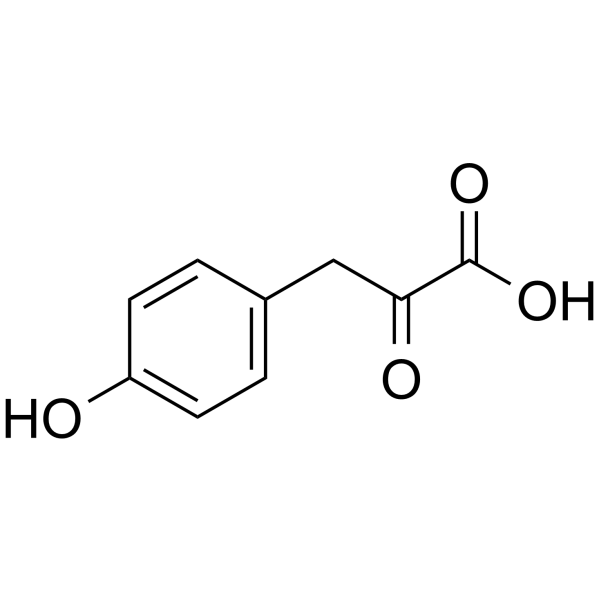
4-Hydroxyphenylpyruvic acid is an intermediate in the metabolism of the amino acid phenylalanine. 4-Hydroxyphenylpyruvic acid is a substrate of 4-hydroxyphenylpyruvic acid dioxygenase (HPPA). 4-Hydroxyphenylpyruvic acid can be used in the study of HPD-related diseases, such as type III tyrosinemia and hawkinsinuria .
loading...
    loading...
Cat. No.: HY-N14664
CAS No.: 539-35-5
Synonyms: Mycobacidin; Cinnamonin; Acidomycin
Actithiazic acid is a thiazolidinone antibiotic that targets biotin synthase. Actithiazic acid interferes with essential bacterial metabolism by inhibiting the final step of biotin synthesis (conversion of desthiobiotin to biotin, IC50 = 0.45 μM). Actithiazic acid can be used in studies related to mycobacterial infections .
loading...
    loading...
Cat. No.: HY-P2972A
Research Areas:  

Metabolic Disease

Sulfatase, Aerobacter aerogenes (EC 3.1.6.1) is an esterase that catalyzes the hydrolysis of sulfate esters. Sulfatase, together with sulfotransferases, constitutes the main catalytic mechanism for the synthesis and hydrolysis of sulfate esters.
loading...
    loading...
Cat. No.: HY-184081
CAS No.: 5118-17-2
Target:  

Bacterial

Research Areas:  

Infection

Furazolium hydrochloride is a broad-spectrum antibacterial agent with inhibitory activity against a variety of Gram-positive and Gram-negative Bacterial strains. In a gelatin-acacia complex coacervate system, Furazolium hydrochloride exhibits protein-binding properties, where protein binding dominates at low concentrations, while micellization occurs at high concentrations. Furazolium hydrochloride does not alter the water permeability of cellulose membranes, and it can induce delayed-type hypersensitivity reactions in guinea pigs, with cross-reactivity observed in animals sensitized with aflatoxin B1. Furazolium hydrochloride can be used in studies related to bacterial infections and local wound infections .
loading...
    loading...

