13 Results for "

Akt/FoxO3

" in MedChemExpress (MCE) Product Catalog:
Products (13)

13 Results for "Akt/FoxO3" in MCE Product Catalog:

66
66 Publications Verification
Cat. No.: HY-15186
CAS No.: 1001264-89-6
Purity:  99.79%
Synonyms: GDC-0068; RG7440
Target:  

Organoid Akt Apoptosis

Research Areas:  

Cancer

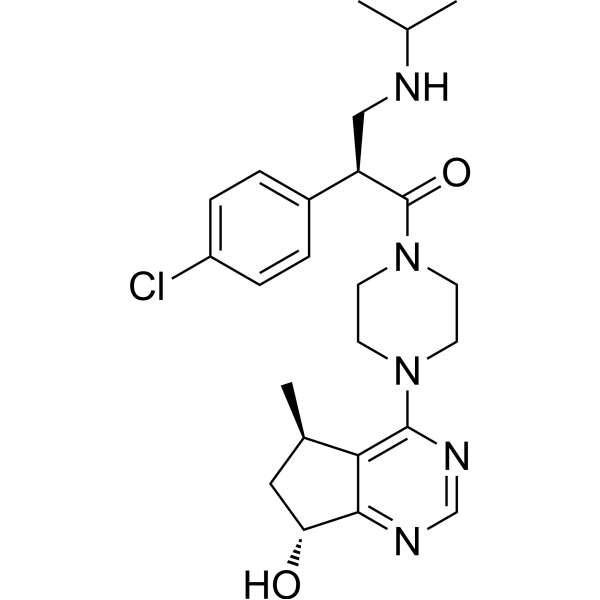
Ipatasertib (GDC-0068) is an orally active, highly selective and ATP-competitive pan-Akt inhibitor with IC50 values of 5, 18, 8 nM for Akt1/2/3, respectively. Ipatasertib synchronously activates FoxO3a and NF-κB through inhibition of Akt leading to p53-independent activation of PUMA. Ipatasertib also induces apoptosis in cancer cells and inhibits tumor growth in xenograft mouse models .
loading...
    loading...
10
10 Cited Publications
Cat. No.: HY-15615A
CAS No.: 1616632-77-9
Purity:  99.89%
Synonyms: TIC10; ONC-201
Target:  

TNF Receptor Apoptosis

Research Areas:  

Cancer

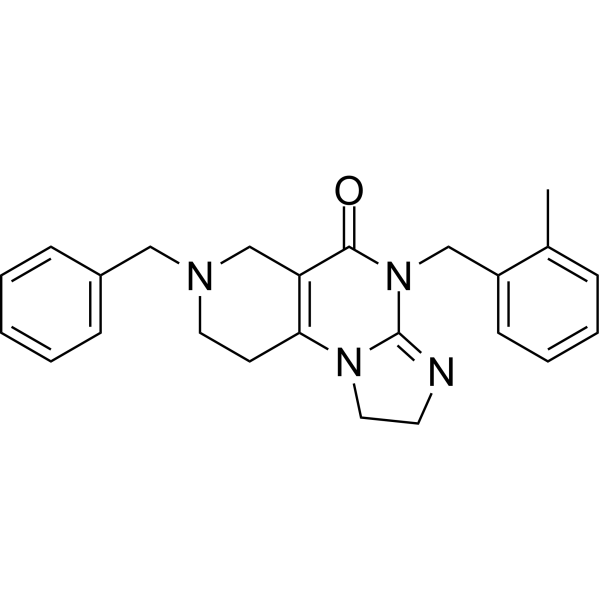
Dordaviprone (TIC10) is a potent, orally active, and stable tumor necrosis factor-related apoptosis-inducing ligand (TRAIL) inducer which acts by inhibiting Akt and ERK, consequently activating Foxo3a and significantly inducing cell surface TRAIL. Dordaviprone can cross the blood-brain barrier .
loading...
    loading...
7
7 Cited Publications
Cat. No.: HY-16558
CAS No.: 487-52-5
Synonyms: 2’,3,4,4’-tetrahydroxy Chalcone
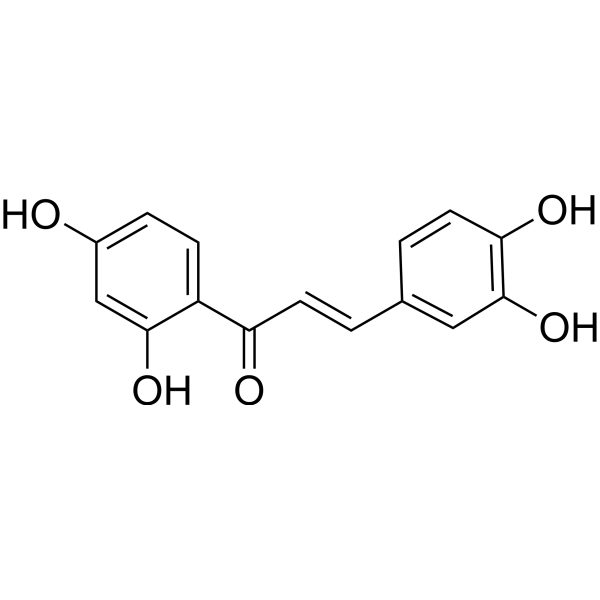
Butein is a cAMP-specific PDE inhibitor with an IC50 of 10.4 μM for PDE4 . Butein is a specific protein tyrosine kinase inhibitor with IC50s of 16 and 65 μM for EGFR and p60 c-src in HepG2 cells . Butein sensitizes HeLa cells to Cisplatin through AKT and ERK/p38 MAPK pathways by targeting FoxO3a . Butein is a SIRT1 activator (STAC).
loading...
    loading...
5
5 Cited Publications
Cat. No.: HY-N2255
CAS No.: 25127-29-1
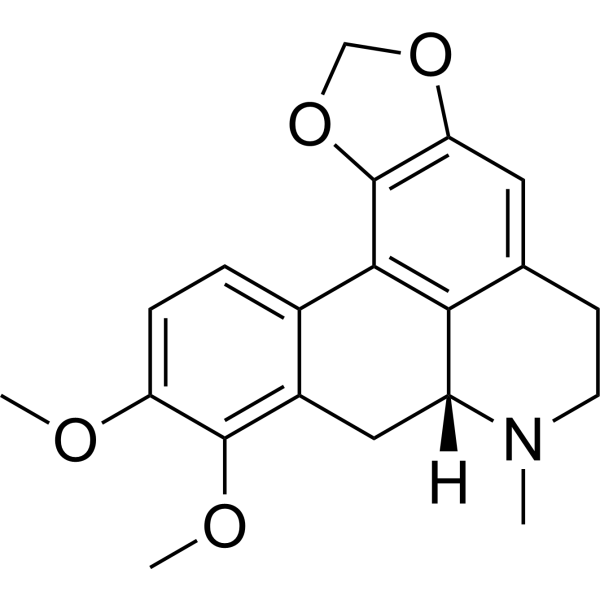
Crebanine is an isoquinoline-like alkaloid that can be derived from Stephania. Crebanine is an antagonist of the α7-nAChR with an IC50 of 19.1 μM. Crebanine suppresses the proliferation, migration, and invasion of cancer cells, triggers reactive oxygen species (ROS) burst, and promotes apoptosis. Crebanine inhibits the AKT/FoxO3a, NF-κB and MAPK signaling pathways. Crebanine attenuates NOX2 hyperactivation, exhibits antioxidant properties by reducing reactive oxygen species and peroxidation in microglia cells. Crebanine inhibits voltage-dependent Na + current in guinea-pig ventricular myocytes. Crebanine has high inhibitory activity against gram-positive animal pathogenic bacteria. Crebanine ameliorates ischemia-reperfusion brain damage in middle cerebral artery occlusion and reperfusion (MCAO/R) rats. Crebanine significantly improves Scopolamine (HY-N0296)-induced cognitive deficits in ICR mice. Crebanine can be used for the study of hepatocellular carcinoma (HCC), cerebral ischemia and Alzheimer's disease .
loading...
    loading...
Cat. No.: HY-176902
CAS No.: 31863-82-8
Target:  

ROCK Akt FOXO Apoptosis

Research Areas:  

Cancer

NSC126188 is a RhoB inducer. NSC126188 can induce apoptosis by inhibiting Akt/FoxO3 signaling. NSC126188 can be used for the research of cancer, such as prostate cancer .
loading...
    loading...
Cat. No.: HY-125535
CAS No.: 1290069-19-0
OSU-53 is an orally active AMPK activator and mTOR inhibitor, with an IC50 of 0.3 μM for AMPK, an EC50 of 2-5 μM for AMPK, and an IC50 of 8.23 μM for mTOR. OSU-53 inhibits the Akt signaling pathway, directly activates AMPK by binding to its autoinhibitory domain, reduces IKKβ-mediated phosphorylation of Foxo3a, blocks Akt-mediated phosphorylation of MDM2, and promotes the nuclear localization and stabilization of Foxo3a, while directly inhibiting mTOR. OSU-53 inhibits epithelial-mesenchymal transition (EMT), induces epithelial phenotype, suppresses invasion and metastasis, induces autophagy, inhibits the activation of ERK and Akt, reduces the secretion of nitric oxide and proinflammatory cytokines, and inhibits the migration of MDSC; at high doses, it induces MDSC apoptosis, attenuates the immunosuppressive effect of MDSC, reduces MDSC levels, and blocks incision-induced mechanical hyperalgesia. OSU-53 can be used in studies related to breast cancer, prostate cancer, thyroid cancer, melanoma and postoperative pain .
loading...
    loading...
Cat. No.: HY-16558R
CAS No.: 487-52-5
Synonyms: 2’,3,4,4’-tetrahydroxy Chalcone (Standard)
Butein (Standard) is the analytical standard of Butein. This product is intended for research and analytical applications. Butein is a cAMP-specific PDE inhibitor with an IC50 of 10.4 μM for PDE4 . Butein is a specific protein tyrosine kinase inhibitor with IC50s of 16 and 65 μM for EGFR and p60c-src in HepG2 cells . Butein sensitizes HeLa cells to Cisplatin through AKT and ERK/p38 MAPK pathways by targeting FoxO3a . Butein is a SIRT1 activator (STAC).
loading...
    loading...
Cat. No.: HY-15186C
CAS No.: 1491138-24-9
Synonyms: GDC-0068 tosylate; RG7440 tosylate
Target:  

Organoid Akt Apoptosis

Research Areas:  

Cancer

Ipatasertib (GDC-0068) tosylate is an orally active, highly selective and ATP-competitive pan-Akt inhibitor with IC50 values of 5, 18, 8 nM for Akt1/2/3, respectively. Ipatasertib tosylate synchronously activates FoxO3a and NF-κB through inhibition of Akt leading to p53-independent activation of PUMA. Ipatasertib tosylate also induces apoptosis in cancer cells and inhibits tumor growth in xenograft mouse models .
loading...
    loading...
Cat. No.: HY-122894
CAS No.: 2589088-07-1
Research Areas:  

Cancer

Ch-319 is a Triphenyltin (IV) carboxylate derivative. Ch-319 reduces androgen receptor expression, AKT and PRAS40 phosphorylation levels, and increases FOXO3a expression. Ch-319 increases Apoptosis. Ch-319 can be used in the research of prostate cancer .
loading...
    loading...
Cat. No.: HY-116604
CAS No.: 4425-23-4
Synonyms: PD 139530
Target:  

PI3K Akt

Research Areas:  

Cancer

RLX (PD 139530) is a PI3K/Akt/FoxO3a signaling inhibitor, possessing significant therapeutic potential in experimental colon cancer. RLX can effectively modulate the tumor microenvironment, enhancing the efficacy of cancer immunotherapy. RLX demonstrates the ability to improve the retention time of therapeutic agents within the tumor microenvironment by utilizing advanced nanoparticle delivery systems. RLX can be integrated with various treatment modalities, such as chemotherapy and radiotherapy, to enhance overall tumor therapy effectiveness .
loading...
    loading...
Cat. No.: HY-116604A
CAS No.: 21314-60-3
Synonyms: PD 139530 hydrochloride
Target:  

PI3K Akt

Research Areas:  

Cancer

RLX (PD 139530) hydrochloride is the hydrochloride of RLX (HY-116604). RLX is a PI3K/Akt/FoxO3a signaling inhibitor, possessing significant therapeutic potential in experimental colon cancer. RLX can effectively modulate the tumor microenvironment, enhancing the efficacy of cancer immunotherapy. RLX demonstrates the ability to improve the retention time of therapeutic agents within the tumor microenvironment by utilizing advanced nanoparticle delivery systems. RLX can be integrated with various treatment modalities, such as chemotherapy and radiotherapy, to enhance overall tumor therapy effectiveness .
loading...
    loading...
Cat. No.: HY-119884
CAS No.: 1261080-40-3
Research Areas:  

Cancer

DC-120 is an ATP-competitive AKT inhibitor, with particular activity against AKT1 (an IC50 of 0.153 μM). DC-120 functionally blocks AKT kinase activity and reduces the phosphorylation levels of FOXO3a and GSK-3β. DC-120 induces cancer cell apoptosis (apoptosis) and inhibits cancer cell proliferation. DC-120 activates the mTORC1 pathway via the Ca 2+/calmodulin (calmodulin)/hVps34 signaling pathway. DC-120 abrogates AKT-mediated inhibition of CRAF, thereby activating the MEK/ERK MAPK pathway. DC-120 exerts anti-tumor activity in a nude mouse hepatocellular carcinoma xenograft model. DC-120 can be used for hepatocellular carcinoma-related research .
loading...
    loading...
Cat. No.: HY-183402
CAS No.: 917813-60-6
Synonyms: GO-Y026
Research Areas:  

Cancer

FLLL12 (GO-Y026) is a curcumin analog anticancer agent. FLLL12 inhibits the phosphorylation of AKT, Bcl-2, Bid, EGFR, mTOR, FOXO1a, FOXO3a, STAT3, HER2/neu, as well as pancreatic AKT/STAT3; upregulates the expression of Bim and DR5; and activates PTPs. FLLL12 regulates downstream pathways, induces mitochondria-mediated and DR5-dependent extrinsic apoptosis, inhibits cancer cell viability, proliferation, anchorage-independent growth and migration, and exerts a synergistic effect with Doxorubicin (HY-15142A). FLLL12 can be used in research related to head and neck squamous cell carcinoma, breast cancer, prostate cancer, pancreatic cancer, lung cancer, colon cancer and colorectal cancer .
loading...
    loading...
  • 1

