
1. Search Result
Search Result
Results for "

BHK

" in MedChemExpress (MCE) Product Catalog:

18

Inhibitors & Agonists

1

Fluorescent Dye

2

Biochemical Assay Reagents

3

Peptides

1

Natural
Products

1

Oligonucleotides

Cat. No. Product Name Target Research Areas Chemical Structure
  • HY-23430

    Biochemical Assay Reagents Others
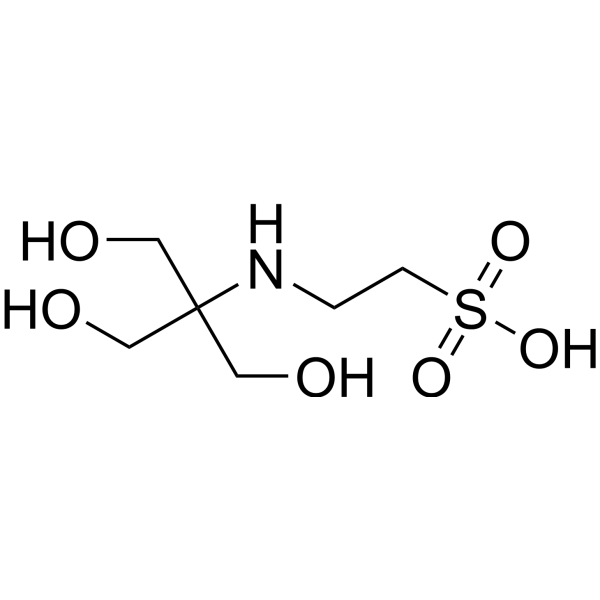
    TES is an excellent hydrogen ion buffer. TES has characteristics such as an appropriate dissociation constant, a low metal-binding constant, and high water solubility. TES can be used in the research of mammalian cell culture, viruses, and so on .
    TES
  • HY-P6306
    CS-6253
    1 Publications Verification

    Apolipoprotein Amyloid-β Neurological Disease Metabolic Disease
    CS-6253 is an agonist of ABCA1. CS-6253 can regulate lipoprotein metabolism, promote high-density lipoprotein biogenesis, and cellular cholesterol efflux. CS-6253 also has certain neuroprotective effects and can clear from the brain. CS-6253 can be used for research on cholesterol metabolism and diseases such as Alzheimer’s disease .
    CS-6253
  • HY-W590549

    DODAC

    Liposome Cancer
    Dioleyldimethylammonium chloride (DODAC) is a positively charged lipid promoter with membrane-disrupting activity, which is often formulated into cationic liposomes with dioleoylphosphatidylethanolamine. Dioleyldimethylammonium chloride is used in gene transfection research; through electrostatic interactions, it effectively promotes the binding of programmable fusion vesicles to cells and induces membrane disruption. Dioleyldimethylammonium chloride is also applied in studies on L1210 leukemia and LS180 human colon cancer .
    Dioleyldimethylammonium chloride
  • HY-121138

    ARDP0006; DHDNE

    Flavivirus Dengue Virus Virus Protease Infection
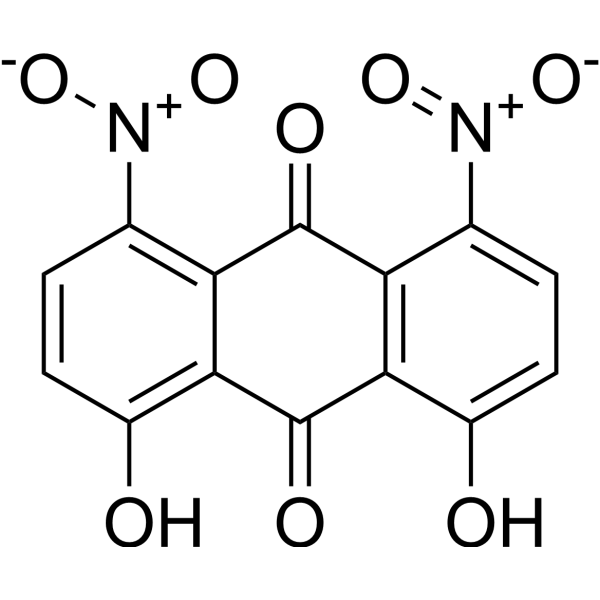
    1,8-Dihydroxy-4,5-dinitroanthraquinone (ARDP0006; DHDNE) is a potent inhibitor of serine proteinase NS2B/3, the dengue viral protein. 1,8-Dihydroxy-4,5-dinitroanthraquinone has intermolecular proteinase activity and viral inhibition ability with IC50s of 432 μM and 4.2 μM, respectively. Meanwhile 1,8-Dihydroxy-4,5-dinitroanthraquinone inhibits NS2B/3 cleavage in BHK-21 cells at a dose ranging from 4.2 μM to 432 μM .
    1,8-Dihydroxy-4,5-dinitroanthraquinone
  • HY-122914
    KRAS inhibitor-3
    1 Publications Verification

    Ras Cancer
    KRAS inhibitor-3 is an inhibitor of KRAS inhibitor. KRAS inhibitor-3 binds to WT and oncogenic KRAS mutants with high affinity (KD: 0.28 μM for KRAS WT, 0.63 μM for KRAS G12C, 0.37 μM for KRAS G12D, 0.74 μM for KRAS Q61H). KRAS inhibitor-3 also disrupts interaction of KRAS with Raf .
    KRAS inhibitor-3
  • HY-P6306A
    CS-6253 TFA
    1 Publications Verification

    Apolipoprotein Amyloid-β Neurological Disease Metabolic Disease
    CS-6253 TFA is an agonist of ABCA1. CS-6253 TFA can regulate lipoprotein metabolism, promote high-density lipoprotein biogenesis, and cellular cholesterol efflux. CS-6253 TFA also has certain neuroprotective effects and can clear from the brain. CS-6253 TFA can be used for research on cholesterol metabolism and diseases such as Alzheimer’s disease .
    CS-6253 TFA
  • HY-W674245

    ATP-binding cassette (ABC) transporters Cardiovascular Disease
    10-Hydroxyhexadecanoic acid is a hydroxy fatty acid found in Camembert cheese. 10-Hydroxyhexadecanoic acid can promote cholesterol efflux from ABCA1 and ABCG1, preventing the accumulation of excess cholesterol in cells. 10-Hydroxyhexadecanoic acid can be used in anti-atherosclerosis research .
    10-Hydroxyhexadecanoic acid
  • HY-P2624

    PAK Metabolic Disease
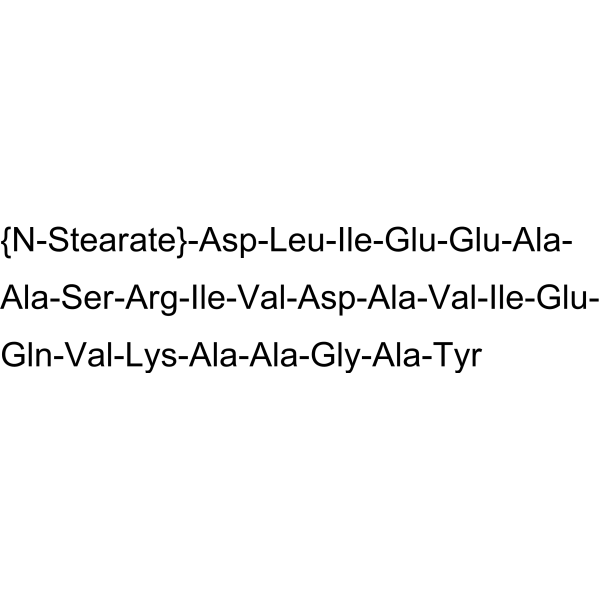
    st-Ht31 is a membrane-permeable peptide inhibitor of protein kinase A (PKA) anchoring. st-Ht31 induces robust cholesterol/phospholipid efflux. st-Ht31 completely reverses foam cell formation and restores the metabolic health of macrophage .
    st-Ht31
  • HY-139663

    Glycosidase Infection
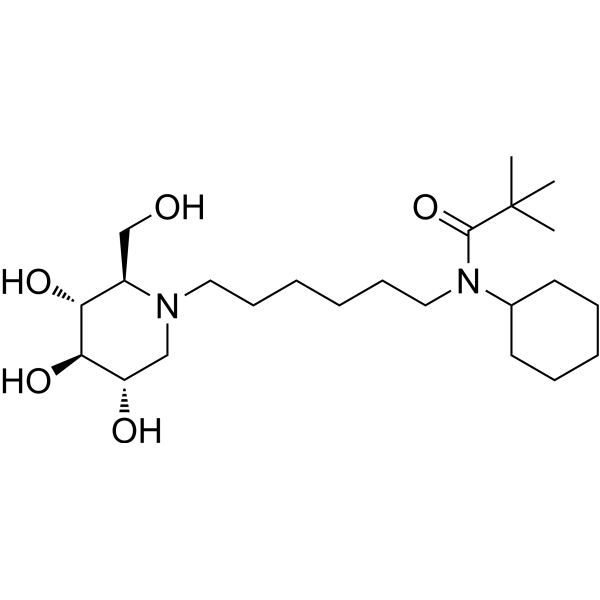
    IHVR-17028 is a potent and broad-spectrum antiviral agent. IHVR-17028 exhibits antiviral activity against BVDV, TCRV and DENV with EC50 values of 0.4 μM, 0.26 μM, 0.3 μM, respectively. IHVR-17028 is a potent ER α-glucosidase I inhibitor with an IC50 of 0.24 μM. IHVR-17028 can be used for infectious diseases research .
    IHVR-17028
  • HY-148310

    Virus Protease Infection
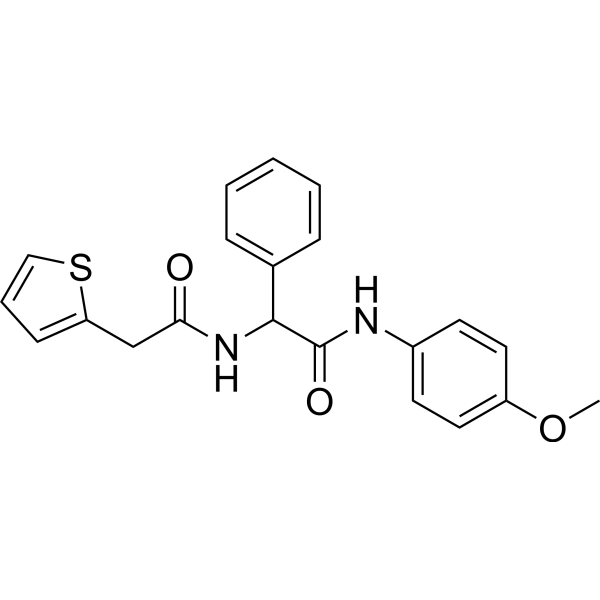
    Flaviviruses-IN-2 (compound 78) is a potent flaviviruses inhibitor. Flaviviruses-IN-2 reduces the WNV (West Nile virus) protease activity, with inhibition of 56% .
    Flaviviruses-IN-2
  • HY-NP0144

    WGA (Fluorescein)

    Fluorescent Dye Others
    Succinylated Wheat Germ Agglutinin (Fluorescein) (WGA (Fluorescein)) is a fluorescent lectin that acts as a probe to specifically bind biomolecules. Succinylated Wheat Germ Agglutinin (Fluorescein) binds to cell surface glycoconjugates containing N-acetylglucosamine. Succinylated Wheat Germ Agglutinin (Fluorescein) is a selective agglutinating agent targeting specific red blood cells, thymocytes, splenocytes and lymphocytes. Succinylated Wheat Germ Agglutinin (Fluorescein) binds to fibroblasts and lymphocytes via dual binding sites in a temperature-dependent, saturable manner. Succinylated Wheat Germ Agglutinin (Fluorescein) can be used for quantitative studies of cell surface receptor glycoconjugates (Ex=495 nm, Em=515 nm) .
    Succinylated Wheat Germ Agglutinin (Fluorescein)
  • HY-136575

    Virus Protease Infection
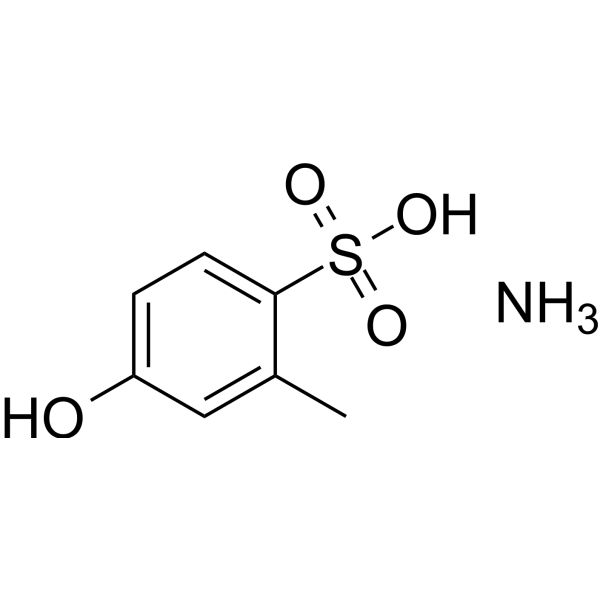
    4-Hydroxy-2-methylbenzenesulfonic acid ammonium is an impurity of Policresulen. Policresulen is a potent NS2B/NS3 protease inhibitor with an IC50 of 0.48 μg/mL. Policresulen effectively inhibits the replication of DENV2 virus in BHK-21 cells with an IC50 of 4.99 μg/mL. Policresulen acted as a competitive inhibitor of the protease, and slightly affected the protease stability .
    4-Hydroxy-2-methylbenzenesulfonic acid ammonium
  • HY-136573

    Virus Protease Infection
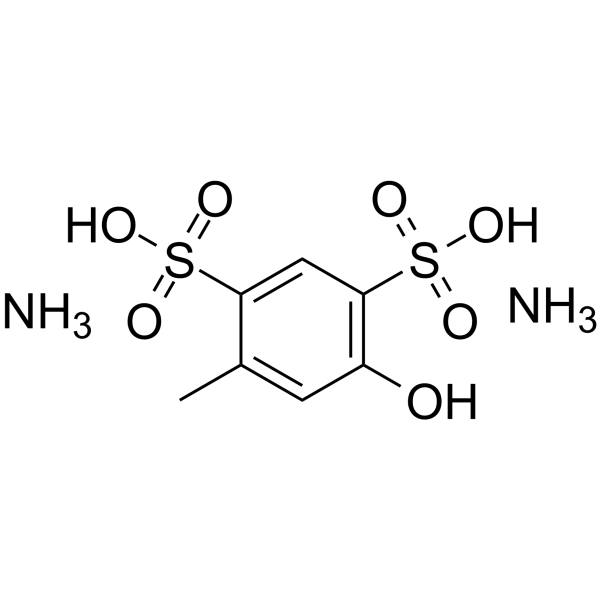
    5-Hydroxytoluene-2,4-disulphonic acid diammonium is an impurity of Policresulen. Policresulen is a potent NS2B/NS3 protease inhibitor with an IC50 of 0.48 μg/mL. Policresulen effectively inhibits the replication of DENV2 virus in BHK-21 cells with an IC50 of 4.99 μg/mL. Policresulen acted as a competitive inhibitor of the protease, and slightly affected the protease stability .
    5-Hydroxytoluene-2,4-disulphonic acid diammonium
  • HY-18679

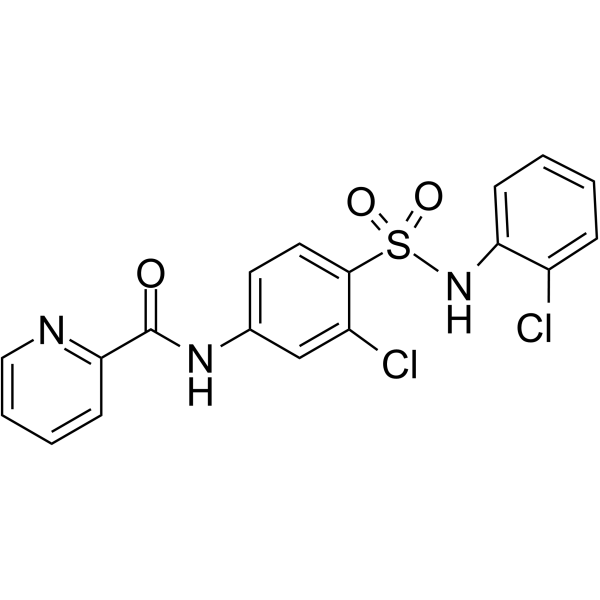
    mGluR Neurological Disease
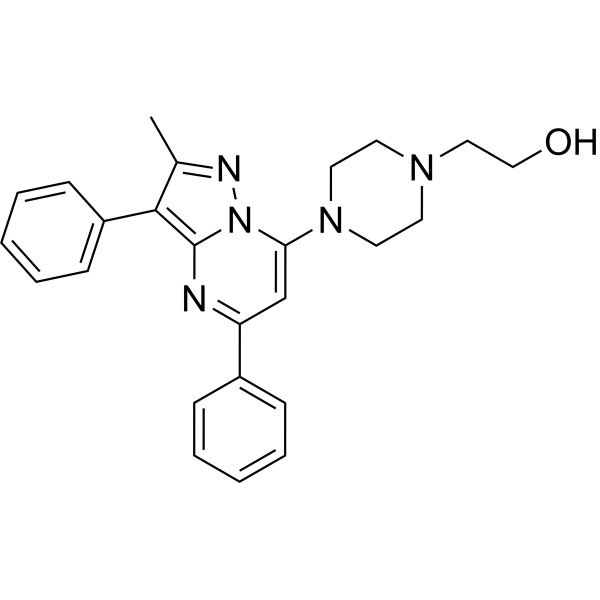
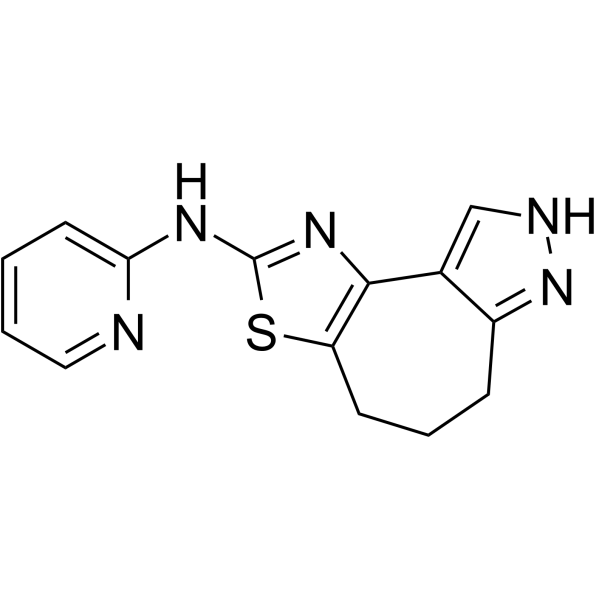
    TC-N 22A is a potent, selective, orally active and brain-permeable mGlu4 PAM with an EC50 of 9 nM in human mGlu4-expressing BHK cells. TC-N 22A is less active (EC50>10 μM) in agonist and PAM model at mGlu 1, 2, 3, 5, and 7 receptors. TC-N 22A has the potential for research of CNS disease in vivo .
    TC-N 22A
  • HY-136574

    Virus Protease Infection
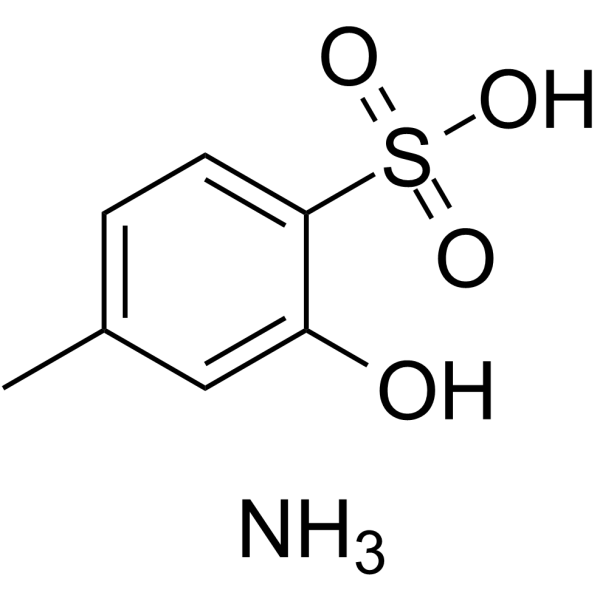
    2-Hydroxy-4-methylbenzenesulphonic acid ammonium is an impurity of Policresulen. Policresulen is a potent NS2B/NS3 protease inhibitor with an IC50 of 0.48 μg/mL. Policresulen effectively inhibits the replication of DENV2 virus in BHK-21 cells with an IC50 of 4.99 μg/mL. Policresulen acted as a competitive inhibitor of the protease, and slightly affected the protease stability .
    2-Hydroxy-4-methylbenzenesulphonic acid ammonium
  • HY-N14947

    Quinone Reductase Cancer
    Pterulinic acid is a coenzyme I: Coenzyme Q oxidoreductase inhibitor. he IC50 (μg/mL) L1210 and HL60 of Pterulinic acid to mammalian cell lines are 50 and 20 respectively. HeLaS3 25; BHK is 100 .
    Pterulinic acid
  • HY-D1749

    Fluorescent Dye Others
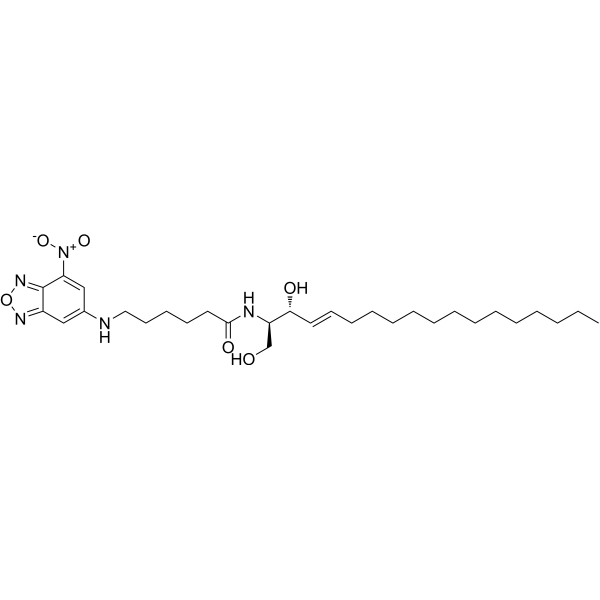
    C6 NBD L-threo-ceramide is a cell-permeable analog of ceramides that is tagged with a fluorescent group C6 nitrobenzoxadiazole (C6 NBD). It is rapidly transferred between liposomes, labels the Golgi apparatus, and is metabolized to C6 NBD sphingomyelin in BHK cells and V79 fibroblasts.
    C6 NBD L-threo-ceramide
  • HY-163034

    Apoptosis Reactive Oxygen Species (ROS) Cancer
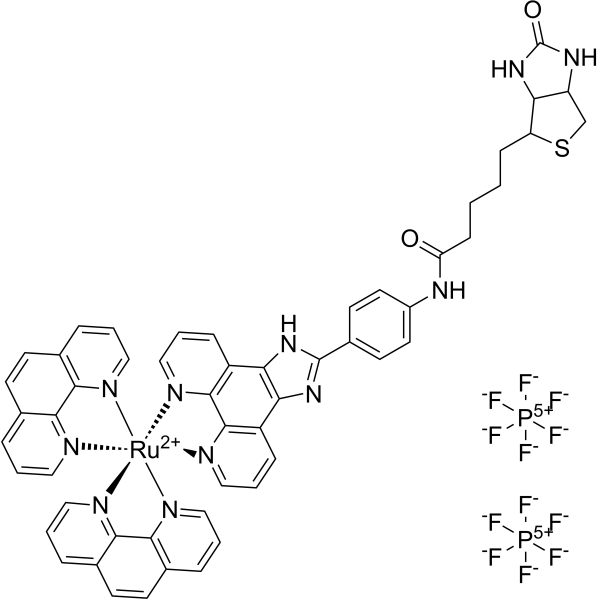
    Antitumor photosensitizer-5 (Ru2) is a photosensitizer which effectively target tumor mitochondria with an IC50 of 0.3 μM for phototoxicity to A549 cells. Under 460 nm light irradiation, antitumor photosensitizer-5 induces the generation of reactive oxygen species and NADH depletion, causes mitochondrial damage and activation of caspase-3, inducing apoptosis and suppressing cell migration. Antitumor photosensitizer-5 has the potential to prevent the growth of malignant tumors, therefore, shows the potential to be applied to photodynamic therapy .
    Antitumor photosensitizer-5

Inquiry Online

Your information is safe with us. * Required Fields.

Salutation


Country or Region *

Applicant Name *


Organization Name *

Department *


Email Address *


Product Name *

Cat. No.


Requested quantity *

Phone Number *


Remarks

Inquiry Online

Inquiry Information

Product Name:
Cat. No.:
Quantity:
MCE Japan Authorized Agent:

