
1. Search Result
Search Result
Results for "

Bisphosphonate

" in MedChemExpress (MCE) Product Catalog:

67

Inhibitors & Agonists

1

Fluorescent Dyes

1

Peptides

9

Isotope-Labeled Compounds

Cat. No. Product Name Target Research Areas Chemical Structure
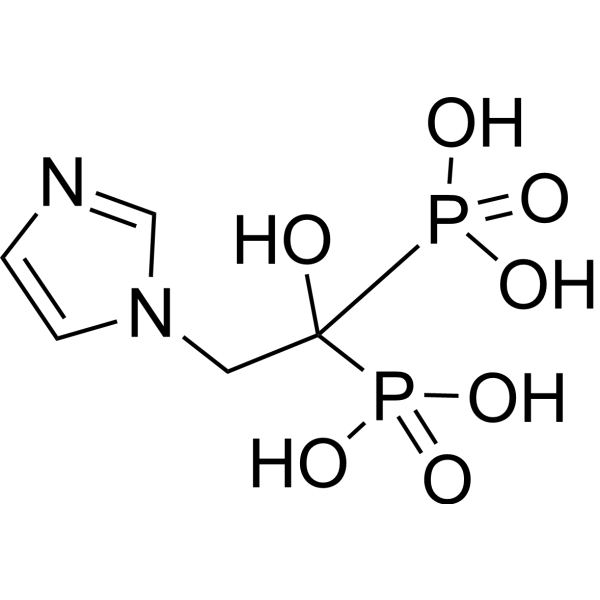
  • HY-13777
    Zoledronic Acid
    Maximum Cited Publications
    24 Publications Verification

    Zoledronate; CGP 42446; CGP42446A; ZOL 446

    Apoptosis Autophagy Bacterial Metabolic Disease Cancer
    Zoledronic Acid (Zoledronate) is a third-generation bisphosphonate (BP), with potent anti-resorptive activity. Zoledronic Acid inhibits the differentiation and apoptosis of osteoclasts. Zoledronic Acid also has anti-cancer effects .
    Zoledronic Acid
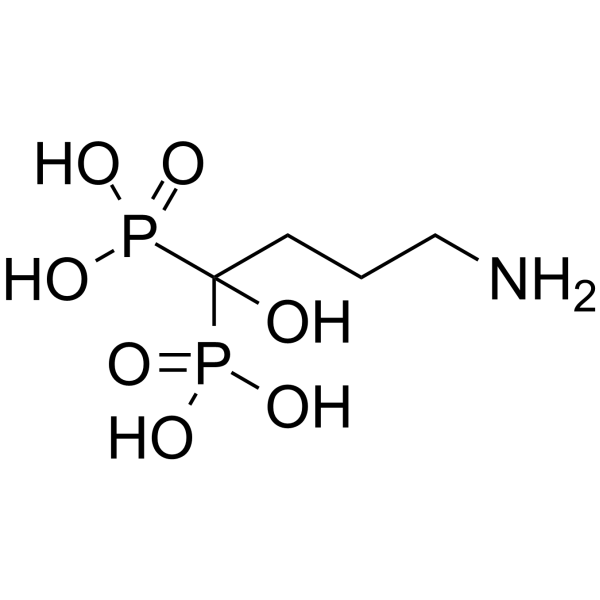
  • HY-B0631
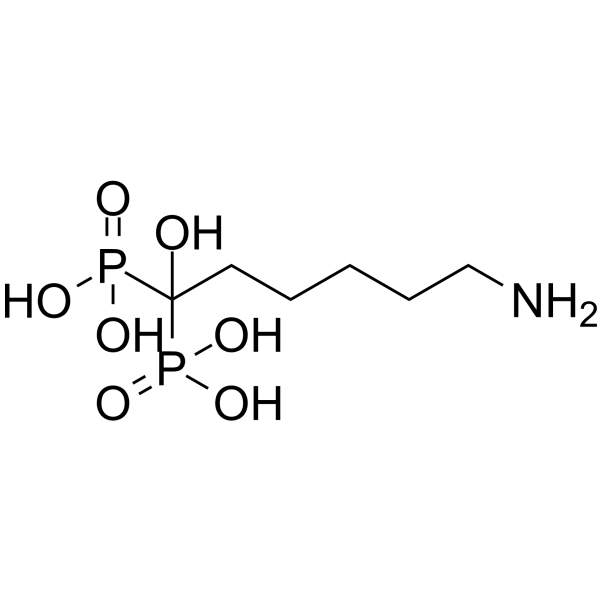
    Alendronic acid
    5+ Cited Publications

    NF-κB Interleukin Related Metabolic Disease
    Alendronate acid is an orally active bisphosphonate which binds to bone surfaces and inhibits bone resorption by osteoclasts. Alendronate acid induces skeletal alterations in the chicken embryonic development model. Alendronate acid can be used for osteoporosis research .
    Alendronic acid
  • HY-108309
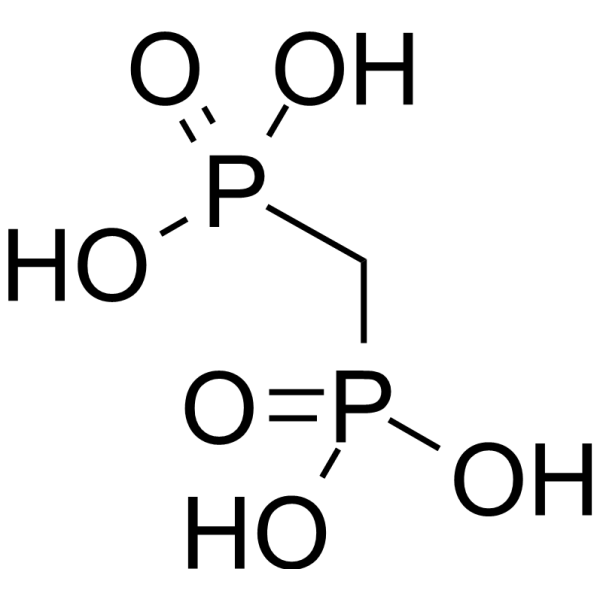
    Medronic acid
    1 Publications Verification

    Methylenediphosphonic acid

    Biochemical Assay Reagents Others
    Medronic acid (Methylenediphosphonic acid) is a methylene-substituted bisphosphonate. Medronic acid has an affinity for the surface of hydroxyapatite crystals in the bone matrix and adheres to them. Medronic acid can be used in complex with radioisotopes in bone imaging. Due to its strong metal chelating ability, medronic acid is also used as a water treatment chemical. In addition, medronic acid is used as a solvent additive to improve peak shape and signal of metal-sensitive metabolites in LC/MS analysis .
    Medronic acid
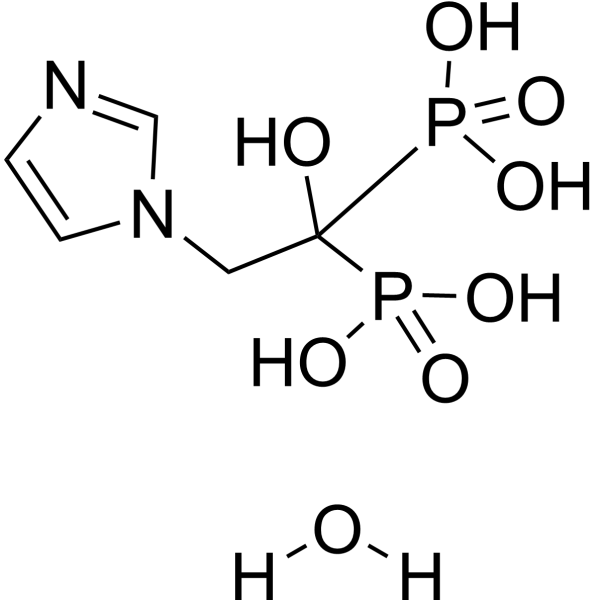
  • HY-13777A
    Zoledronic acid monohydrate
    Maximum Cited Publications
    24 Publications Verification

    Zoledronate monohydrate; CGP 42446 monohydrate; CGP42446A monohydrate; ZOL 446 monohydrate

    Apoptosis Autophagy Bacterial Metabolic Disease Cancer
    Zoledronic acid monohydrate (Zoledronate monohydrate) is a third-generation bisphosphonate (BP), with potent anti-resorptive activity. Zoledronic acid monohydrate inhibits the differentiation and apoptosis of osteoclasts. Zoledronic acid monohydrate also has anti-cancer effects .
    Zoledronic acid monohydrate
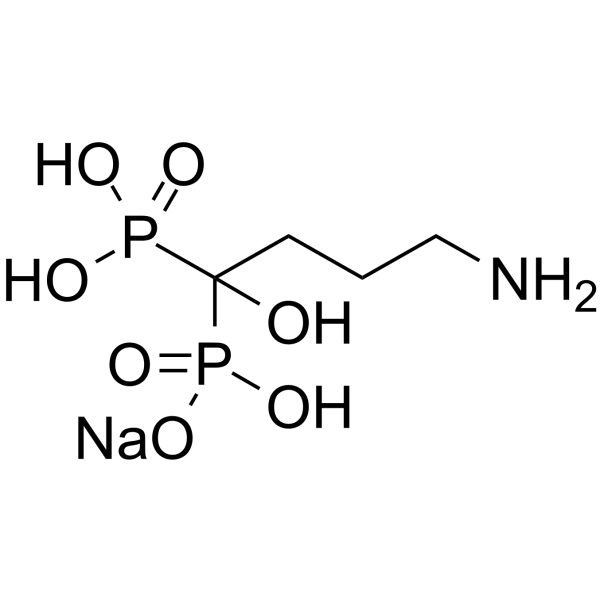
  • HY-108685
    Alendronate sodium
    5+ Cited Publications

    Alendronic acid monosodium salt

    NF-κB Interleukin Related Metabolic Disease
    Alendronate sodium is an orally active bisphosphonate which binds to bone surfaces and inhibits bone resorption by osteoclasts. Alendronate sodium induces skeletal alterations in the chicken embryonic development model. Alendronate sodium can be used for osteoporosis research .
    Alendronate sodium
  • HY-B0302
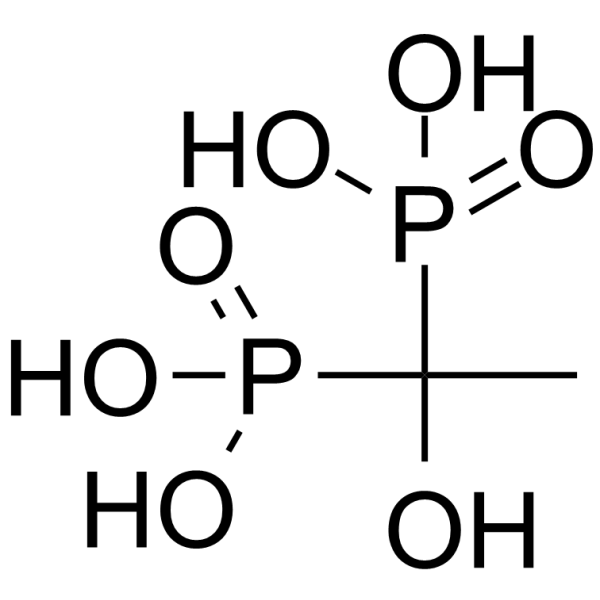
    Etidronic acid
    1 Publications Verification

    Etidronate; HEDPA; HEDP

    Environmental Pollutants Apoptosis Metabolic Disease Cancer
    Etidronic acid (Etidronate) is an orally and intravenously active bisphosphonate. Etidronic acid inhibits resorption of bone, reduces arterial calcification and can be used for osteoporosis research. Etidronic acid has anticancer activity. Etidronic acid is a chelating agent and can be used to remove heavy metal in water .
    Etidronic acid
  • HY-B0657A
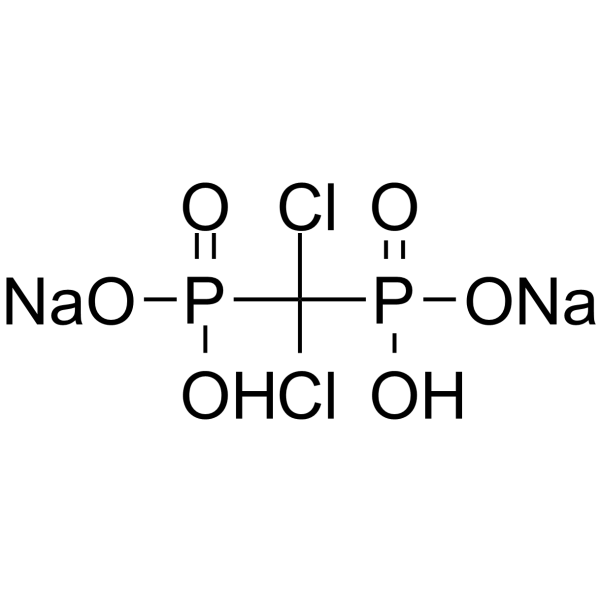
    Clodronic acid disodium salt
    4 Publications Verification

    Clodronate disodium salt

    Apoptosis Metabolic Disease Cancer
    Clodronic acid (Clodronate) disodium salt is an orally active bisphosphonate. Clodronic acid disodium salt inhibits osteoclast-mediated bone resorption. Clodronic acid disodium salt reduces skeletal event risk in malignant bone disease, impairs malignant osteolysis, blocks bone matrix growth-factor release, induces apoptosis in osteoclasts and macrophages. Clodronic acid disodium salt is effective in the maintenance or improvement of bone mineral density. Clodronic acid disodium salt can be used for the research of multiple myeloma and postmenopausal osteoporosis .
    Clodronic acid disodium salt
  • HY-B0302A
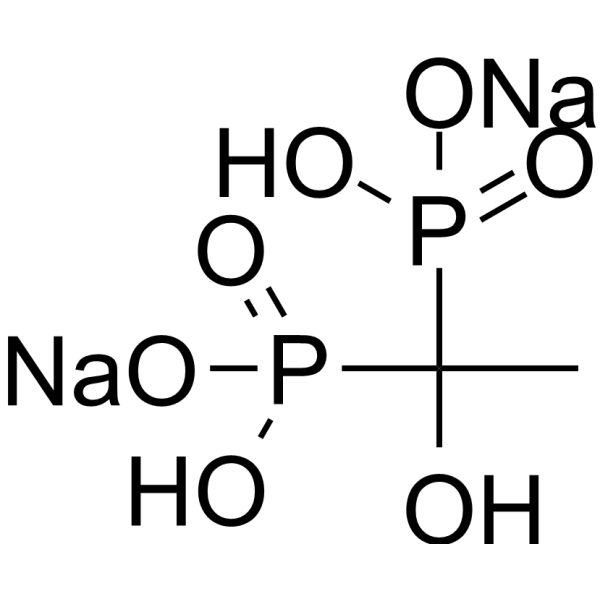
    Etidronic acid disodium
    1 Publications Verification

    Etidronate disodium; HEDPA disodium; HEDP disodium

    Apoptosis Metabolic Disease Cancer
    Etidronic acid (Etidronate) disodium is an orally and intravenously active bisphosphonate. Etidronic acid disodium inhibits resorption of bone, reduces arterial calcification and can be used for osteoporosis research. Etidronic acid disodium has anticancer activity. Etidronic acid disodium is a chelating agent and can be used to remove heavy metal in water .
    Etidronic acid disodium
  • HY-B0148
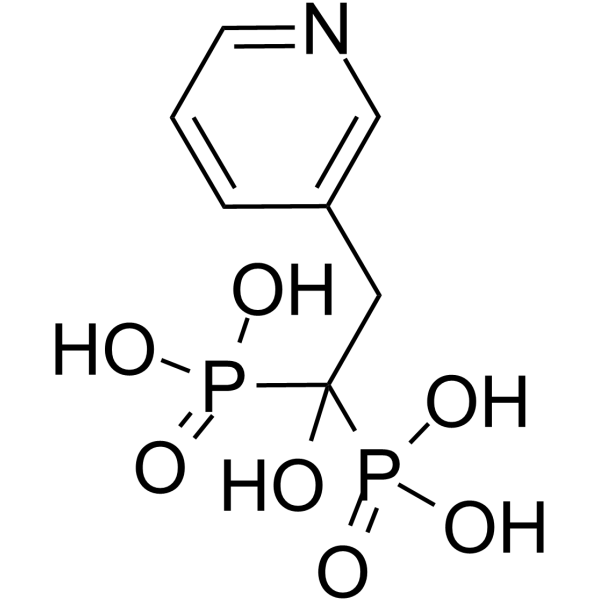
    Risedronic acid
    2 Publications Verification

    Risedronate

    Parasite Apoptosis Infection Metabolic Disease Cancer
    Risedronic acid (Risedronate) is a bisphosphonate and potent antiresorptive agent. Risedronic acid induces Apoptosis. Risedronic acid inhibits the transfer of farnesyl pyrophosphate groups to parasite proteins. Risedronic acid inhibits osteoclast-mediated bone resorption and alters bone metabolism. Risedronic acid inhibits blood-stage Plasmodium falciparum (IC50 of 20.3 μM) .
    Risedronic acid
  • HY-150168

    Bacterial Infection
    TH-Z145, a lipophilic bisphosphonate, is a FPPS inhibitor (IC50: 210 nM) .
    TH-Z145
  • HY-107794
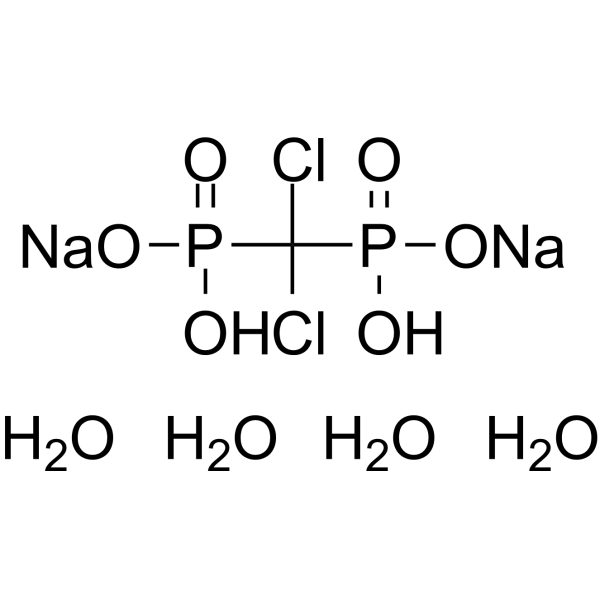
    Clodronate disodium tetrahydrate
    4 Publications Verification

    Disodium clodronate tetrahydrate

    Apoptosis Neurological Disease Inflammation/Immunology Cancer
    Clodronate disodium tetrahydrate (Disodium clodronate tetrahydrate) is first-generation bisphosphonate, with anti-osteoporotic, anti-inflammatory and analgesic effects. Clodronate disodium tetrahydrate is a selective, potent, reversible and Cl - competitive vesicular nucleotide transporter (VNUT) inhibitor, with an IC50 of 15.6 nM. Clodronate disodium tetrahydrate inhibits vesicular ATP release from neurons and reduces chronic neuropathic and inflammatory pain .
    Clodronate disodium tetrahydrate
  • HY-A0213A
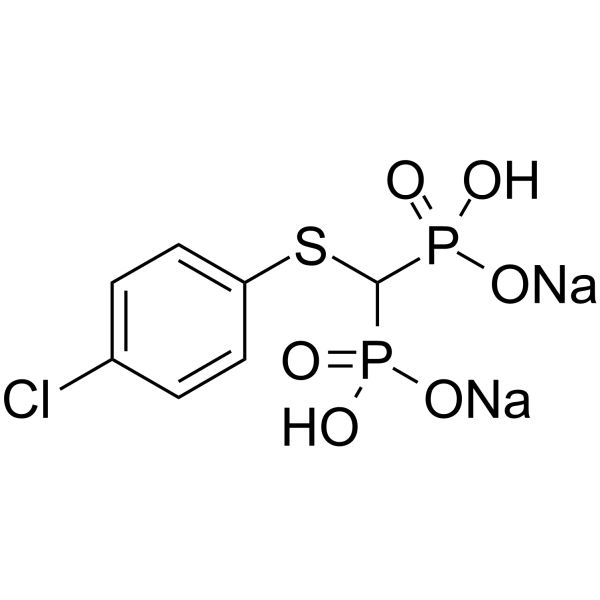
    Tiludronate disodium
    1 Publications Verification

    Tiludronic acid disodium

    Proton Pump Inflammation/Immunology
    Tiludronate (Tiludronic Acid) disodium, an orally active bisphosphonate, can act an osteoregulator. Tiludronate is used for the research of the metabolic bone disorders. Tiludronate is a potent inhibitor of the osteoclast vacuolar H(+)-ATPase. Antiresorptive and anti-inflammatory properties .
    Tiludronate disodium
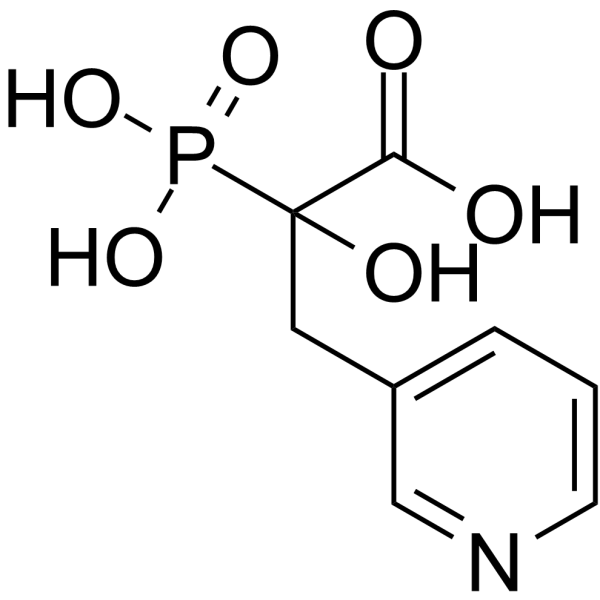
  • HY-16011
    NE 10790
    2 Publications Verification

    3-PEHPC

    Farnesyl Transferase Others
    NE 10790, a poor farnesyl pyrophosphate synthase inhibitor, is a phosphonocarboxylate analogue of the potent bisphosphonate risedronate and is a weak antiresorptive agent.
    NE 10790
  • HY-B0119
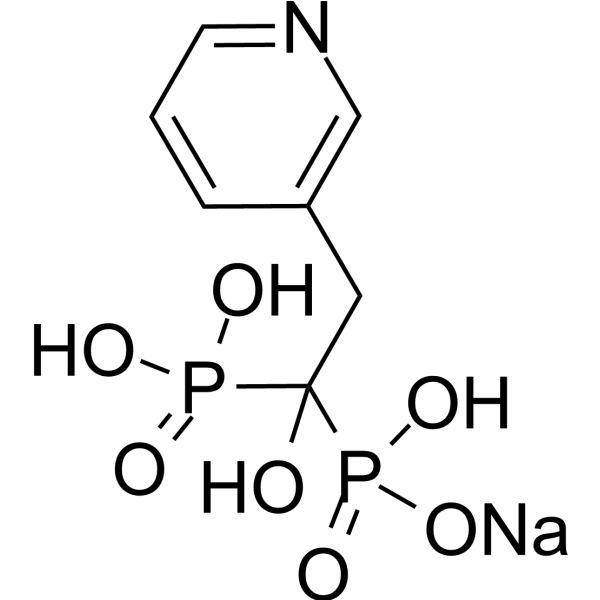
    Risedronic acid sodium
    2 Publications Verification

    Risedronate sodium

    Parasite Apoptosis Infection Metabolic Disease Cancer
    Risedronic acid (Risedronate) sodium, a bisphosphonate, is a potent anti-resorption agent that inhibits osteoclast-mediated bone resorption and changes the bone metabolism. Risedronic acid sodium suppresses osteoblast differentiation and induced caspase- and isoprenoid depletion-dependent apoptosis. Risedronic acid sodium inhibits blood stages of Plasmodium falciparum (IC50 of 20.3 μM). Risedronic acid sodium inhibits the transfer of the farnesyl pyrophosphate group to parasite proteins .
    Risedronic acid sodium
  • HY-B0012
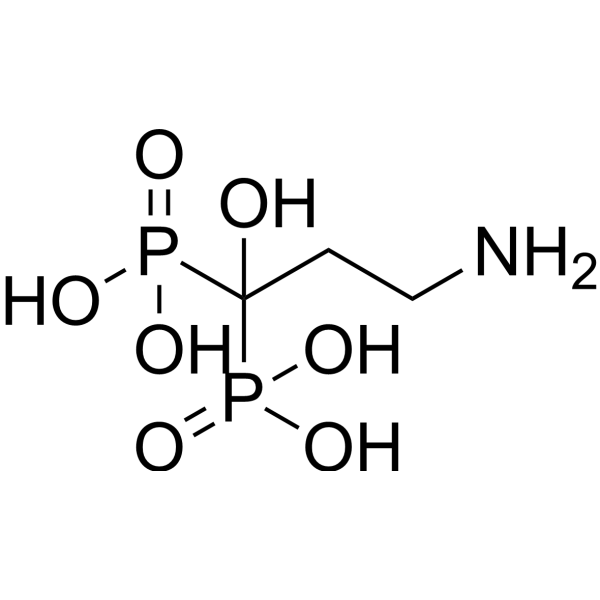
    Pamidronic acid
    1 Publications Verification

    RANKL/RANK Toll-like Receptor (TLR) Wnt β-catenin Metabolic Disease Inflammation/Immunology Cancer
    Pamidronic acid, the second-generation nitrogen-containing bisphosphonate, is an inhibitor of bone loss. Pamidronic acid significantly inhibits subchondral bone loss in early osteoarthritis by upregulating the expression of OPG in cartilage and subchondral bone, and inhibiting the expression of RANKL and MMP-9 in both tissues, as well as TLR-4 in cartilage, thereby alleviating cartilage degeneration. Additionally, Pamidronic acid can inhibit the signaling of Wnt and β-catenin, and is applicable for research on osteoporosis and osteosarcoma .
    Pamidronic acid
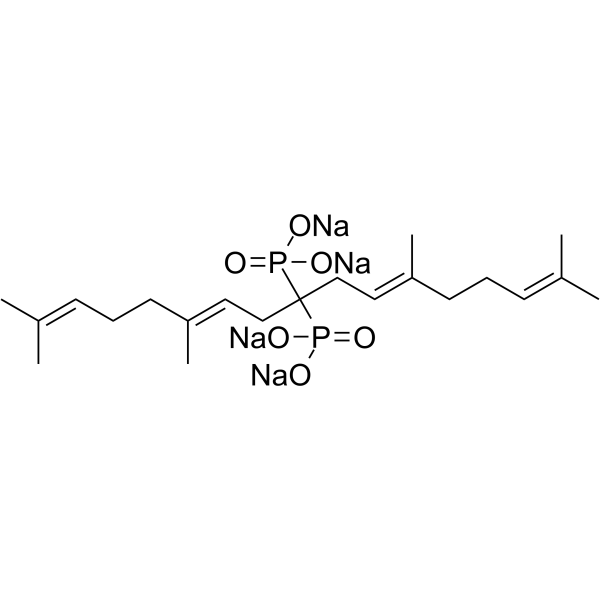
  • HY-U00145
    Digeranyl bisphosphonate
    3 Publications Verification

    DGBP

    Ras Inflammation/Immunology
    Digeranyl bisphosphonate (DGBP) is a potent geranylgeranylpyrophosphate (GGPP) synthase inhibitor, which inhibits geranylgeranylation of Rac1.
    Digeranyl bisphosphonate
  • HY-48917

    Phospholipase Apoptosis Inflammation/Immunology
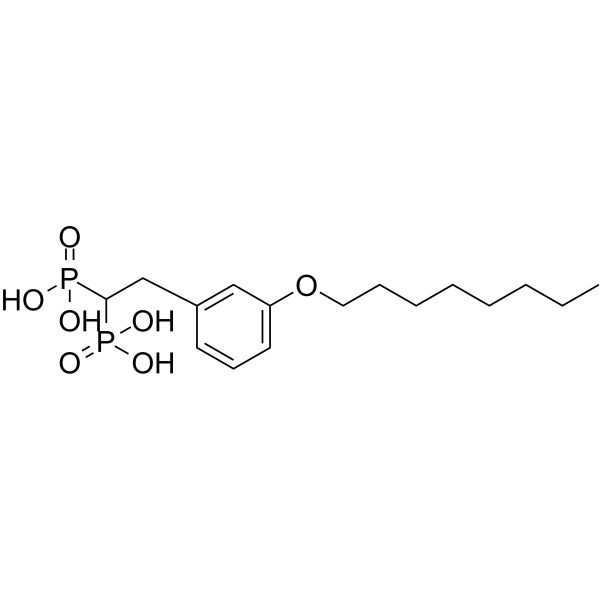
    C10 Bisphosphonate is an acid sphingomyelinase (aSMase) inhibitor with an IC50 of 0.02 μM in rats. C10 Bisphosphonate inhibits Dexamethasone (HY-14648)-induced cell apoptosis (apoptosis) and alleviates platelet-activating factor (PAF)-induced pulmonary edema. C10 Bisphosphonate can be used for the research of pulmonary edema .
    C10 Bisphosphonate
  • HY-B0012A
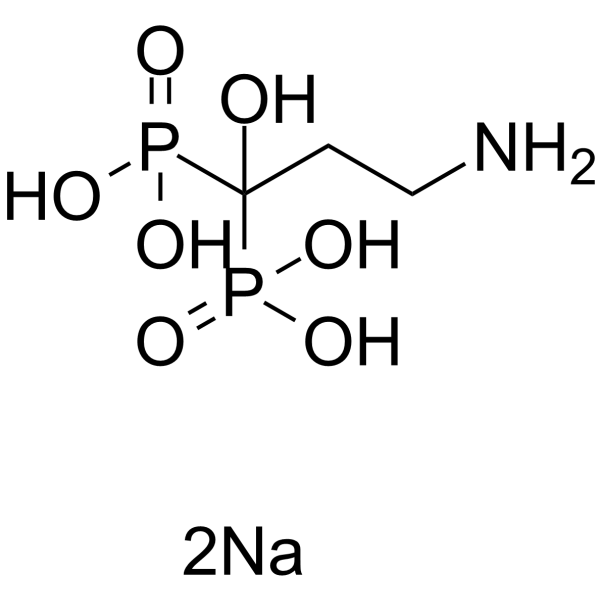
    Pamidronate disodium
    1 Publications Verification

    CGP 23339A

    RANKL/RANK Toll-like Receptor (TLR) Wnt β-catenin Metabolic Disease Inflammation/Immunology Cancer
    Pamidronate disodium (CGP 23339A), the second-generation nitrogen-containing bisphosphonate, is an inhibitor of bone loss. Pamidronate disodium significantly inhibits subchondral bone loss in early osteoarthritis by upregulating the expression of osteoprotegerin in cartilage and subchondral bone, and inhibiting the expression of RANKL and MMP-9 in both tissues, as well as TLR-4 in cartilage, thereby alleviating cartilage degeneration. Additionally, Pamidronate disodium can inhibit the signaling of Wnt and β-catenin, and is applicable for research on osteoporosis and osteosarcoma .
    Pamidronate disodium
  • HY-B0730
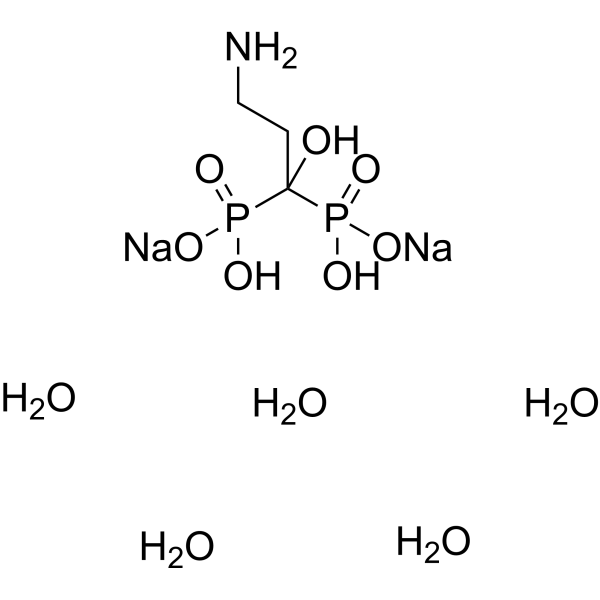
    Pamidronate disodium pentahydrate
    1 Publications Verification

    RANKL/RANK Toll-like Receptor (TLR) Wnt β-catenin Metabolic Disease Inflammation/Immunology Cancer
    Pamidronate disodium pentahydrate, the second-generation nitrogen-containing bisphosphonate, is an inhibitor of bone loss. Pamidronate disodium pentahydrate significantly inhibits subchondral bone loss in early osteoarthritis by upregulating the expression of osteoprotegerin in cartilage and subchondral bone, and inhibiting the expression of RANKL and MMP-9 in both tissues, as well as TLR-4 in cartilage, thereby alleviating cartilage degeneration. Additionally, Pamidronate disodium pentahydrate can inhibit the signaling of Wnt and β-catenin, and is applicable for research on osteoporosis and osteosarcoma .
    Pamidronate disodium pentahydrate
  • HY-B0657
    Clodronic acid
    4 Publications Verification

    Clodronate

    Apoptosis Metabolic Disease Cancer
    Clodronic acid (Clodronate) is an orally active bisphosphonate. Clodronic acid inhibits osteoclast-mediated bone resorption. Clodronic acid reduces skeletal event risk in malignant bone disease, impairs malignant osteolysis, blocks bone matrix growth-factor release, induces apoptosis in osteoclasts and macrophages. Clodronic acid is effective in the maintenance or improvement of bone mineral density. Clodronic acid can be used for the research of multiple myeloma and postmenopausal osteoporosis .
    Clodronic acid
  • HY-150167

    Bacterial Infection
    TH-Z93, a lipophilic bisphosphonate, is a FPPS inhibitor (IC50: 90 nM) .
    TH-Z93
  • HY-113752

    Parasite Infection
    MMV019313 is a potent, non-bisphosphonate inhibitor of farnesyl/geranylgeranyl diphosphate synthase (FPPS/GGPPS) with an IC50 of 0.82 µM. MMV019313 has activity against P. falciparum (Parasite) .
    MMV019313
  • HY-107093

    Apoptosis Cancer
    MBC-11 is a first-in-class conjugate of the bone-targeting bisphosphonate etidronate covalently linked to the antimetabolite cytarabine (araC). MBC-11 has the potential for tumor-induced bone disease (TIBD) research .
    MBC-11
  • HY-108309R

    Methylenediphosphonic acid (Standard)

    Biochemical Assay Reagents Reference Standards Others
    Medronic acid (Standard) is the analytical standard of Medronic acid. This product is intended for research and analytical applications. Medronic acid (Methylenediphosphonic acid) is a methylene-substituted bisphosphonate. Medronic acid has affinity for and adheres to the surface of hydroxyapatite crystals in the bone matrix. Medronic acid can be used in bone imaging, while being complexed with radioisotopes. Due to its strong metal-chelating ability, Medronic acid can also be used as a water treatment chemical .
    Medronic acid (Standard)
  • HY-B2097

    YM 175; Bisphonal

    Farnesyl Transferase Metabolic Disease
    Incadronate disodium (YM 175) is a bisphosphonate with strong inhibitory activity on bone resorption. Incadronate disodium indirectly stimulates renal 25-hydroxyvitamin D-1-hydroxylase by increasing circulating parathyroid hormone. Incadronate disodium, a cholesterol-lowering agent, is a potent inhibitor of rat liver microsomal squalene synthase (Ki=57 nM). Incadronate disodium inhibits sterol biosynthesis in mouse macrophage J774 cells (IC50=64 μM). Incadronate disodium has the potential for malignant tumors research .
    Incadronate disodium
  • HY-A0213

    Tiludronic acid

    Proton Pump Inflammation/Immunology
    Tiludronate (Tiludronic Acid), an orally active bisphosphonate, can act an osteoregulator. Tiludronate is used for the research of the metabolic bone disorders. Tiludronate is a potent inhibitor of the osteoclast vacuolar H(+)-ATPase. Antiresorptive and anti-inflammatory properties .
    Tiludronate
  • HY-B0515A

    Others Cancer
    Ibandronic acid is a highly effective nitrogen-containing bisphosphonate that can be used for osteoporosis.
    Ibandronic acid
  • HY-D2133

    Alendronate-Cy5

    Fluorescent Dye Others
    Cy5-ALN (Alendronate-Cy5) is a fluorescently labeled bisphosphonate probe .
    Cy5-ALN
  • HY-118224

    Parasite Infection
    BPH-715 is a bisphosphonate, inhibits Plasmodium liver-stage growth, with an IC50 of 10 μM for Plasmodium exoerythrocytic forms in HepG2 cells .
    BPH-715
  • HY-B0631S

    Isotope-Labeled Compounds Cancer
    Alendronic acid-d6 is the deuterium labeled Alendronic acid. Alendronic acid, a bisphosphonate, is a farnesyl diphosphate synthase (FDPS) inhibitor. Alendronic acid inhibits osteoclast-mediated bone resorption. Alendronic acid shows efficacy in postmenopausal osteoporosis, malignant hypercalcemia and Paget’s disease .
    Alendronic acid-d6
  • HY-B0148R

    Risedronate (Standard)

    Parasite Reference Standards Apoptosis Infection Metabolic Disease Cancer
    Risedronic acid (Standard) (Risedronate (Standard)) is the analytical standard of Risedronic acid (HY-B0148). This product is intended for research and analytical applications. Risedronic acid (Risedronate) is a bisphosphonate and potent antiresorptive agent. Risedronic acid induces Apoptosis. Risedronic acid inhibits the transfer of farnesyl pyrophosphate groups to parasite proteins. Risedronic acid inhibits osteoclast-mediated bone resorption and alters bone metabolism. Risedronic acid inhibits blood-stage Plasmodium falciparum (IC50 of 20.3 μM).
    Risedronic acid (Standard)
  • HY-B0148S

    Risedronate-d4

    Isotope-Labeled Compounds Parasite Apoptosis Infection Metabolic Disease Cancer
    Risedronic acid-d4 (Risedronate-d4) is the deuterium labeled Risedronic acid (HY-B0148). Risedronic acid (Risedronate) is a bisphosphonate and potent antiresorptive agent. Risedronic acid induces Apoptosis. Risedronic acid inhibits the transfer of farnesyl pyrophosphate groups to parasite proteins. Risedronic acid inhibits osteoclast-mediated bone resorption and alters bone metabolism. Risedronic acid inhibits blood-stage Plasmodium falciparum (IC50 of 20.3 μM) .
    Risedronic acid-d4
  • HY-13777B

    Zoledronate disodium tetrahydrate; CGP 42446 disodium tetrahydrate; CGP42446A disodium tetrahydrate; ZOL 446 disodium tetrahydrate

    Apoptosis Autophagy Bacterial Metabolic Disease Cancer
    Zoledronic Acid (Zoledronate) disodium tetrahydrate is a third-generation bisphosphonate (BP), with potent anti-resorptive activity. Zoledronic Acid disodium tetrahydrate inhibits the differentiation and apoptosis of osteoclasts. Zoledronic Acid disodium tetrahydrate also has anti-cancer effects .
    Zoledronic acid disodium tetrahydrate
  • HY-19295

    CXCR Inflammation/Immunology Endocrinology
    TRK-530 sodium is an orally active bisphosphonate. TRK-530 sodium inhibits CINC-1. TRK-530 sodium inhibits dental calculus formation. TRK-530 sodium also inhibits paw edema, joint destruction and osteomyelitis .
    TRK-530 sodium
  • HY-13777S1

    Zoledronate-d3; CGP 42446-d3; CGP42446A-d3; ZOL 446-d3

    Isotope-Labeled Compounds Apoptosis Bacterial Autophagy Metabolic Disease Cancer
    Zoledronic acid-d3 (Zoledronate-d3) is the deuterium labeled Zoledronic acid (HY-13777). Zoledronic Acid (Zoledronate) is a third-generation bisphosphonate (BP), with potent anti-resorptive activity. Zoledronic Acid inhibits the differentiation and apoptosis of osteoclasts. Zoledronic Acid also has anti-cancer effects .
    Zoledronic acid-d3
  • HY-A0213AS

    Tiludronic acid-d5 sodium

    Isotope-Labeled Compounds Proton Pump Inflammation/Immunology
    Tiludronate-d5 (sodium)mis the deuterium labeled Tiludronate disodium. Tiludronate (Tiludronic Acid) disodium, an orally active bisphosphonate, can act an osteoregulator. Tiludronate is used for the research of the metabolic bone disorders. Tiludronate is a potent inhibitor of the osteoclast vacuolar H(+)-ATPase. Antiresorptive and anti-inflammatory properties .
    Tiludronate-d5 sodium
  • HY-144128

    Apoptosis Cancer
    hGGPPS-IN-1 (Compound 18b) is a potent inhibitor of the human geranylgeranyl pyrophosphate synthase (hGGPPS). hGGPPS-IN-1 is an analogue of C-2-substituted thienopyrimidine-based bisphosphonates (C2-ThP-BPs). hGGPPS-IN-1 induces target-selective apoptosis of multiple myeloma (MM) cells and exhibits antimyeloma activity in vivo .
    hGGPPS-IN-1
  • HY-136829

    Apoptosis Others
    BPH-675 is a large bisphosphonate inhibitor with long hydrophobic side chains and a potent and selective geranylgeranyl diphosphate synthase (GGPPS) inhibitor with an IC50 of 0.71 μM. GGPPS inhibitor promotes HUVEC apoptosis .
    BPH-675
  • HY-A0213B

    Tiludronic acid disodium hemihydrate

    Proton Pump Metabolic Disease
    Tiludronate (Tiludronic Acid) disodium hemihydrate, an orally active bisphosphonate, can act an osteoregulator. Tiludronate disodium hemihydrate is used for the research of the metabolic bone disorders. Tiludronate disodium hemihydrate is a potent inhibitor of the osteoclast vacuolar H +-ATPase. Antiresorptive and anti-inflammatory properties .
    Tiludronate disodium hemihydrate
  • HY-13777R

    Zoledronate (Standard); CGP 42446 (Standard); CGP42446A (Standard); ZOL 446 (Standard)

    Reference Standards Apoptosis Autophagy Bacterial Metabolic Disease Cancer
    Zoledronic Acid (Standard) is the analytical standard of Zoledronic Acid. This product is intended for research and analytical applications. Zoledronic Acid (Zoledronate) is a third-generation bisphosphonate (BP), with potent anti-resorptive activity. Zoledronic Acid inhibits the differentiation and apoptosis of osteoclasts. Zoledronic Acid also has anti-cancer effects .
    Zoledronic Acid (Standard)
  • HY-13777AR

    Zoledronate monohydrate (Standard); CGP 42446 monohydrate (Standard); CGP42446A monohydrate (Standard); ZOL 446 monohydrate (Standard)

    Reference Standards Apoptosis Autophagy Bacterial Metabolic Disease Cancer
    Zoledronic acid (monohydrate) (Standard) is the analytical standard of Zoledronic acid (monohydrate). This product is intended for research and analytical applications. Zoledronic acid monohydrate (Zoledronate monohydrate) is a third-generation bisphosphonate (BP), with potent anti-resorptive activity. Zoledronic acid monohydrate inhibits the differentiation and apoptosis of osteoclasts. Zoledronic acid monohydrate also has anti-cancer effects .
    Zoledronic acid monohydrate (Standard)
  • HY-13777S

    Zoledronate-d5; CGP 42446-d5; CGP42446A-d5; ZOL 446-d5

    Bacterial Apoptosis Autophagy Isotope-Labeled Compounds Metabolic Disease Cancer
    Zoledronic acid-d5 is deuterated labeled Zoledronic Acid (HY-13777). Zoledronic Acid (Zoledronate) is a third-generation bisphosphonate (BP), with potent anti-resorptive activity. Zoledronic Acid inhibits the differentiation and apoptosis of osteoclasts. Zoledronic Acid also has anti-cancer effects .
    Zoledronic acid-d5
  • HY-119001

    Survivin Cancer
    BKM1644, an acyl-tyrosine bisphosphonate amide derivative, exhibits potent anti-cancer activity. BKM1644 effectively inhibits the proliferation of metastatic, castration-resistant prostate cance (mCRPC) cells. BKM1644 sensitizes mCRPC cells to Docetaxel (HY-B0011) and retards the bone metastatic growth of prostate cance .
    BKM1644
  • HY-B0515AS1

    Apoptosis Isotope-Labeled Compounds Cancer
    Ibandronic acid-d3 is the deuterium labeled Ibandronic acid. Ibandronic acid is a highly potent nitrogen-containing bisphosphonate used for the treatment of osteoporosis.
    Ibandronic acid-d3
  • HY-B0515AS

    Apoptosis Isotope-Labeled Compounds Cancer
    Ibandronic Acid-d3 (sodium) is the deuterium labeled Ibandronic acid. Ibandronic acid is a highly potent nitrogen-containing bisphosphonate used for the treatment of osteoporosis[1][2].
    Ibandronic Acid-d3 sodium salt
  • HY-107093B

    Apoptosis Cancer
    MBC-11 triethylamine is a first-in-class conjugate of the bone-targeting bisphosphonate etidronate covalently linked to the antimetabolite cytarabine (araC). MBC-11 triethylamine has the potential for tumor-induced bone disease (TIBD) research .
    MBC-11 triethylamine
  • HY-107093A

    Apoptosis Cancer
    MBC-11 trisodium is a first-in-class conjugate of the bone-targeting bisphosphonate HEDP covalently linked to the antimetabolite Ara-C. MBC-11 trisodium has the potential for tumor-induced bone disease (TIBD) research .
    MBC-11 trisodium
  • HY-108685S

    Alendronic acid-d4 monosodium salt

    Isotope-Labeled Compounds Metabolic Disease Cancer
    Alendronate-d4 (sodium) (Alendronic acid-d4 (monosodium salt)) is deuterium labeled Alendronate sodium. Alendronate sodium is an orally active nitrogen-containing bisphosphonate. Alendronate sodium potently inhibits bone resorption. Alendronate sodium is used for the research of postmenopausal osteoporosis .
    Alendronate-d4 sodium
  • HY-106431

    Olpadronate; OLP

    Farnesyl Transferase Metabolic Disease Cancer
    Olpadronic acid (Olpadronate) is an orally active amino-bisphosphonate and inhibits bone resorption. Olpadronic acid also prevents bone destruction and tumor growth in the skeletal prostate cancer mouse model. Olpadronic acid can be used for research of osteoporosis, malignancies and rheumatoid arthritis .
    Olpadronic acid
  • HY-106431R

    Olpadronate (Standard); OLP (Standard)

    Reference Standards Others Metabolic Disease Cancer
    Olpadronic acid (Standard) is the analytical standard of Olpadronic acid. This product is intended for research and analytical applications. Olpadronic acid (Olpadronate) is an orally active amino-bisphosphonate and inhibits bone resorption. Olpadronic acid also prevents bone destruction and tumor growth in the skeletal prostate cancer mouse model. Olpadronic acid can be used for research of osteoporosis, malignancies and rheumatoid arthritis .
    Olpadronic acid (Standard)

Inquiry Online

Your information is safe with us. * Required Fields.

Salutation


Country or Region *

Applicant Name *


Organization Name *

Department *


Email Address *


Product Name *

Cat. No.


Requested quantity *

Phone Number *


Remarks

Inquiry Online

Inquiry Information

Product Name:
Cat. No.:
Quantity:
MCE Japan Authorized Agent:

