



Tiludronate disodium
Based on 1 publication(s) in Google Scholar
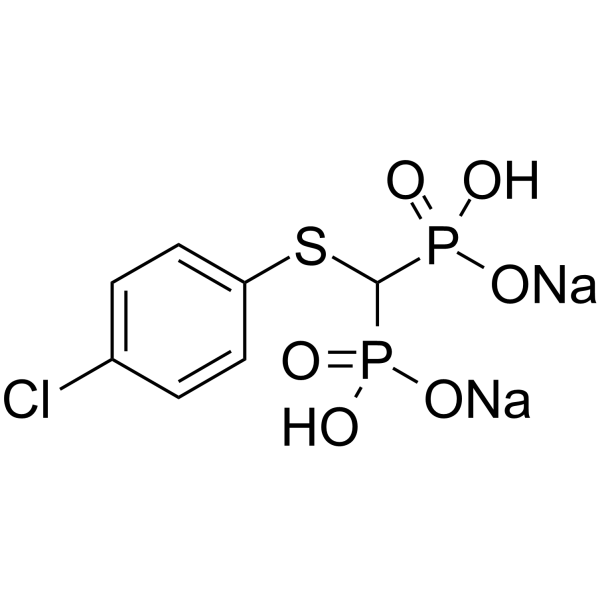
Tiludronate (Tiludronic Acid) disodium, an orally active bisphosphonate, can act an osteoregulator. Tiludronate is used for the research of the metabolic bone disorders. Tiludronate is a potent inhibitor of the osteoclast vacuolar H(+)-ATPase. Antiresorptive and anti-inflammatory properties.
For research use only. We do not sell to patients.
- Purity : 99.98%
- CAS No.: 149845-07-8
- Formula: C7H7ClNa2O6P2S
- Molecular Weight:362.57
-
Storage:
-20°C, sealed storage, away from moisture
* In solvent : -80°C, 6 months; -20°C, 1 month (sealed storage, away from moisture)

To place orders, for customer services and technical support, please contact: MedChemExpress USA
Tel: 609-228-6898 E-mail: [email protected] [email protected]


-
 Biological Activity
-
Chemical Information
-
Solvent & Solubility
- Protocols
- Purity & Documentation
- References
-
 Help & FAQs


-
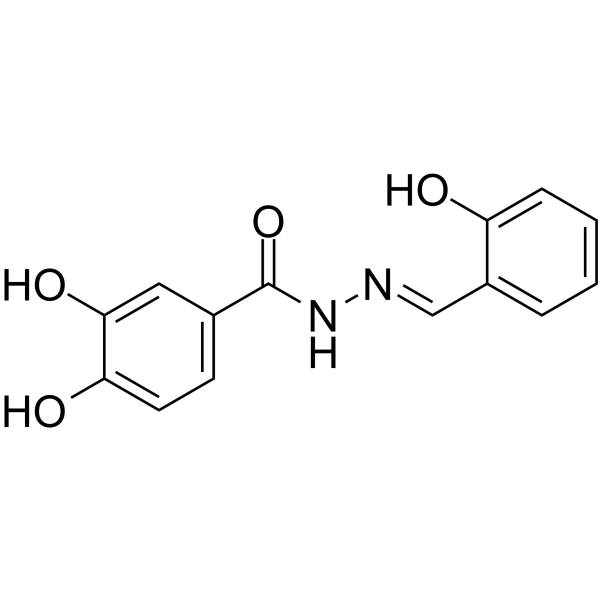
HY-135474
KM91104v-ATPase a3-B2 Inhibitor -
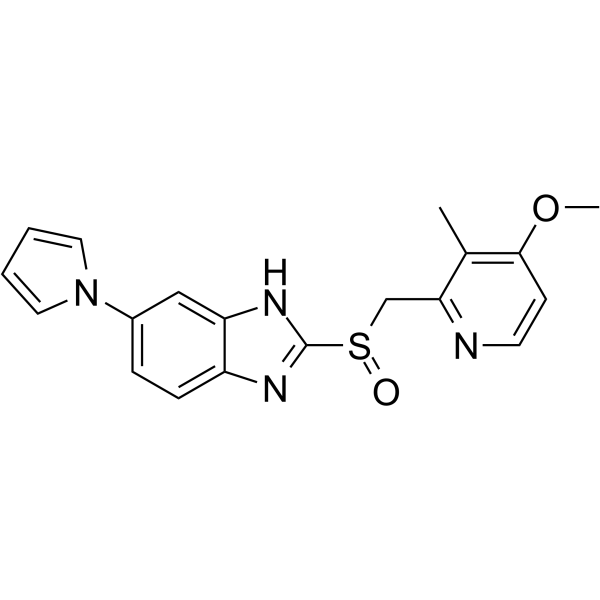
HY-101664
IlaprazoleProton Pump Inhibitor -
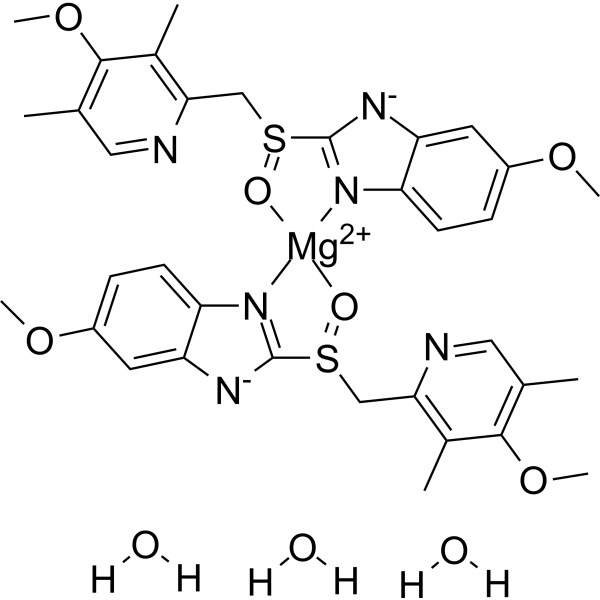
HY-17022
Esomeprazole magnesium trihydrateH+, K+-ATPase Inhibitor -
HY-100007
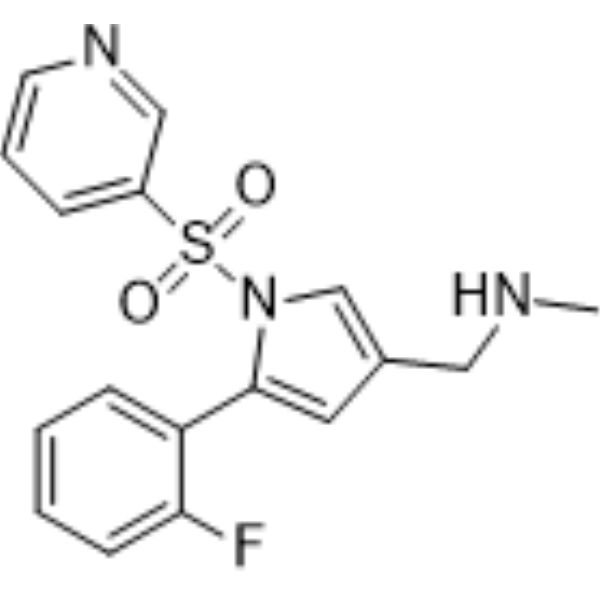
VonoprazanPotassium-Competitive Acid Blocker -
HY-128738
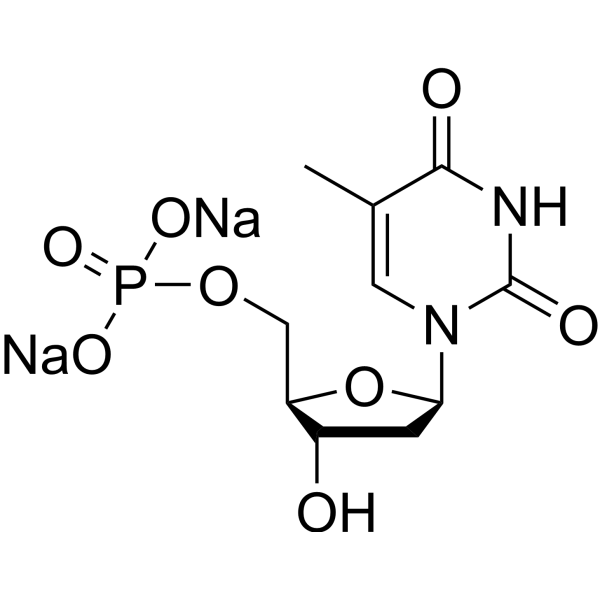
Thymidine-5'-monophosphate disodium saltNucleotide -
HY-103261
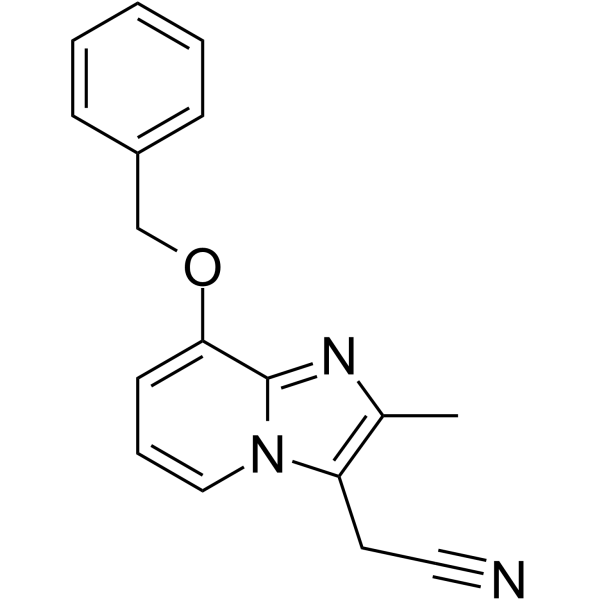
SCH28080H+/K+-ATPase Inhibitor -
HY-B1446
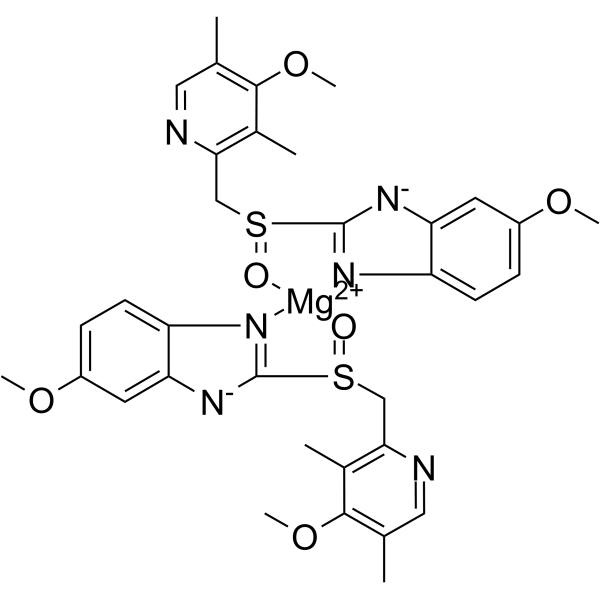
Esomeprazole magnesiumH+, K+-ATPase Inhibitor -
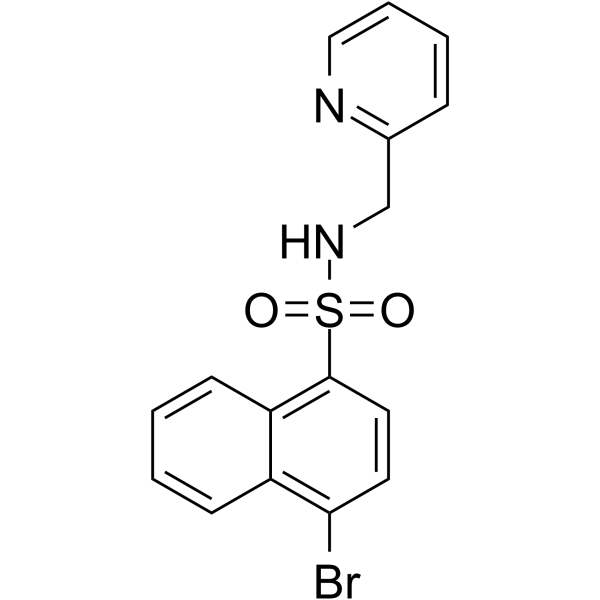
HY-118115
PyrabactinABA Agonist -
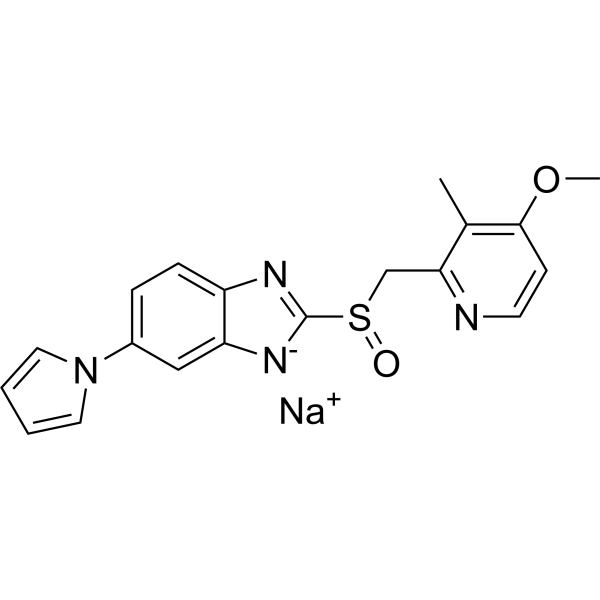
HY-B2145
Ilaprazole sodiumProton Pump Inhibitor -
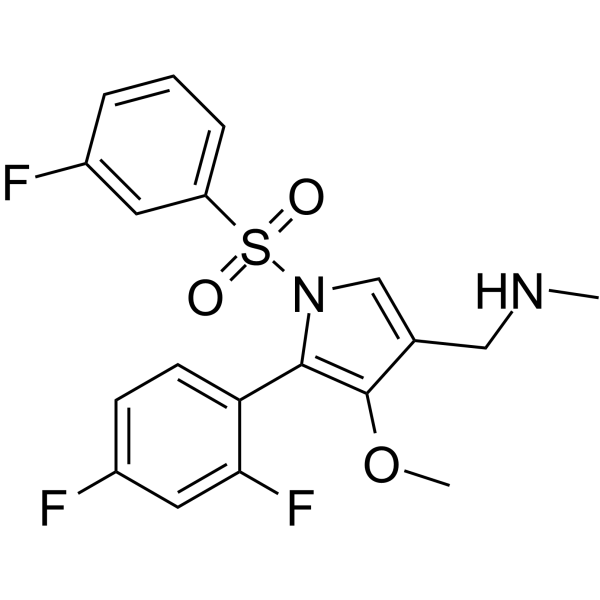
HY-109079
AbeprazanProton Pump/Potassium-competitive Acid Inhibitor -
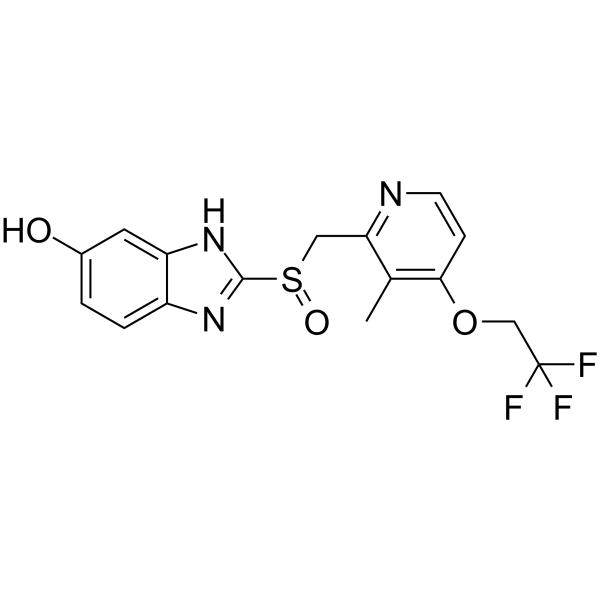
HY-118283
5-HydroxylansoprazoleProton-pump Inhibitor -
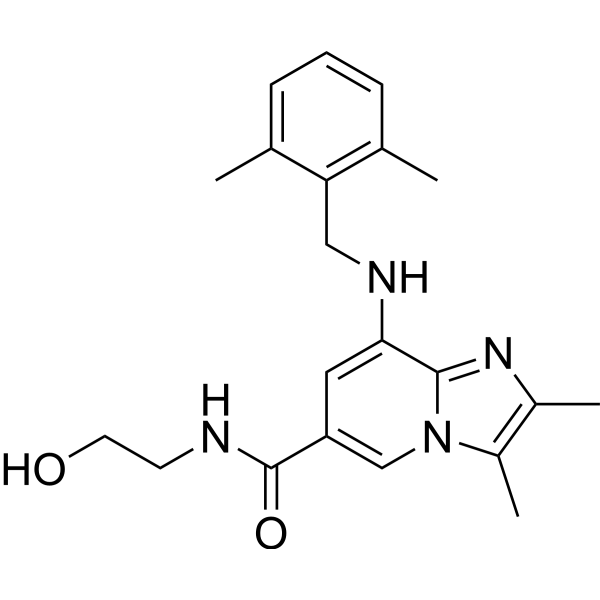
HY-100412
LinaprazanProton Pump Inhibitor
Publications Citing Use of MedChemExpress (MCE) Tiludronate disodium
More

Biological Activity
Description
In Vitro
The ability of Tiludronate to inhibit proton transport is 5-fold higher in kidney-derived vesicles (IC50=1.1 mM) and 10,000-fold higher in vesicles derived from osteoclasts (IC50=466 nM). Tiludronate also potently inhibits proton transport in yeast microsomal preparations (IC50=3.5 microM) and inhibits the activity of purified yeast V-ATPase. The inhibition of the osteoclast V-ATPase-mediated proton transport by Tiludronate is rapid, pH-dependent, and reversible[3].
MedChemExpress (MCE) has not independently confirmed the accuracy of these methods. They are for reference only.
In Vivo
MedChemExpress (MCE) has not independently confirmed the accuracy of these methods. They are for reference only.


Chemical Information
-
CAS No. 149845-07-8
-
Appearance Solid
-
Molecular Weight 362.57
-
Formula C7H7ClNa2O6P2S
-
Color White to off-white
-
SMILES
O=P(O)(O[Na])C(P(O)(O[Na])=O)SC1=CC=C(Cl)C=C1
-
Synonyms
Tiludronic acid disodium
-
Shipping
Room temperature in continental US; may vary elsewhere.
-
Storage
-20°C, sealed storage, away from moisture
* In solvent : -80°C, 6 months; -20°C, 1 month (sealed storage, away from moisture)


Publications (1)
-
Journal Impact Factor
-
Most Recent
-
Cell Rep
ZDHHC3-mediated SCAP S-acylation promotes cholesterol biosynthesis and tumor immune escape in hepatocellular carcinoma. [Abstract]2024 Nov 9;43(11):114962. PMID: 39522165


Solvent & Solubility
In Vitro:
H2O : 62.5 mg/mL (172.38 mM; Need ultrasonic)
Please refer to the solubility information to select the appropriate solvent. Once prepared, please aliquot and store the solution to prevent product inactivation from repeated freeze-thaw cycles.
Storage method and period of stock solution: -80°C, 6 months; -20°C, 1 month (sealed storage, away from moisture). When stored at -80°C, please use it within 6 months. When stored at -20°C, please use it within 1 month.
* Note: If you choose water as the stock solution, please dilute it to the working solution, then filter and sterilize it with a 0.22 μm filter before use.
Please refer to the solubility information to select the appropriate solvent. Once prepared, please aliquot and store the solution to prevent product inactivation from repeated freeze-thaw cycles.
Storage method and period of stock solution: -80°C, 6 months; -20°C, 1 month (sealed storage, away from moisture). When stored at -80°C, please use it within 6 months. When stored at -20°C, please use it within 1 month.
* Note: If you choose water as the stock solution, please dilute it to the working solution, then filter and sterilize it with a 0.22 μm filter before use.
Concentration (start) × Volume (start) = Concentration (final) × Volume (final)


Purity & Documentation
-
Data Sheet (276 KB)
-
SDS (779 KB)
- English - EN (779 KB)
- Français - FR (779 KB)
- Deutsch - DE (779 KB)
- Norwegian - NO (779 KB)
- Español - ES (779 KB)
- Swedish - SV (779 KB)
- Italian - IT (779 KB)
- Korean - KR (779 KB)
- Portuguese - PT (779 KB)
-
Handling Instructions (2659 KB)
References
[1]. Reginster JY, et al. Prevention of postmenopausal bone loss by tiludronate. Lancet. 1989 Dec 23-30;2(8678-8679):1469-71. [Content Brief]
[2]. Nunes NLT, et al. Effects of local administration of tiludronic acid on experimental periodontitis in diabetic rats. J Periodontol. 2018 Jan;89(1):105-116. [Content Brief]
[3]. Bonjour JP, et al. Tiludronate: bone pharmacology and safety. Bone. 1995;17(5 Suppl):473S-477S. [Content Brief]
[4]. David P, et al. The bisphosphonate tiludronate is a potent inhibitor of the osteoclast vacuolar H(+)-ATPase. J Bone Miner Res. 1996;11(10):1498-1507. [Content Brief]


Complete Stock Solution Preparation Table
Please refer to the solubility information to select the appropriate solvent. Once prepared, please aliquot and store the solution to prevent product inactivation from repeated freeze-thaw cycles.
Storage method and period of stock solution: -80°C, 6 months; -20°C, 1 month (sealed storage, away from moisture). When stored at -80°C, please use it within 6 months. When stored at -20°C, please use it within 1 month.
| Optional Solvent | Concentration Solvent Mass | 1 mg | 5 mg | 10 mg | 25 mg |
|---|---|---|---|---|---|
| H2O | 1 mM | 2.7581 mL | 13.7904 mL | 27.5809 mL | 68.9522 mL |
| 5 mM | 0.5516 mL | 2.7581 mL | 5.5162 mL | 13.7904 mL | |
| 10 mM | 0.2758 mL | 1.3790 mL | 2.7581 mL | 6.8952 mL | |
| 15 mM | 0.1839 mL | 0.9194 mL | 1.8387 mL | 4.5968 mL | |
| 20 mM | 0.1379 mL | 0.6895 mL | 1.3790 mL | 3.4476 mL | |
| 25 mM | 0.1103 mL | 0.5516 mL | 1.1032 mL | 2.7581 mL | |
| 30 mM | 0.0919 mL | 0.4597 mL | 0.9194 mL | 2.2984 mL | |
| 40 mM | 0.0690 mL | 0.3448 mL | 0.6895 mL | 1.7238 mL | |
| 50 mM | 0.0552 mL | 0.2758 mL | 0.5516 mL | 1.3790 mL | |
| 60 mM | 0.0460 mL | 0.2298 mL | 0.4597 mL | 1.1492 mL | |
| 80 mM | 0.0345 mL | 0.1724 mL | 0.3448 mL | 0.8619 mL | |
| 100 mM | 0.0276 mL | 0.1379 mL | 0.2758 mL | 0.6895 mL |
* Note: If you choose water as the stock solution, please dilute it to the working solution, then filter and sterilize it with a 0.22 μm filter before use.


Tiludronate disodium Related Classifications
HY-A0213A Related Classifications
 Powered by Bioz